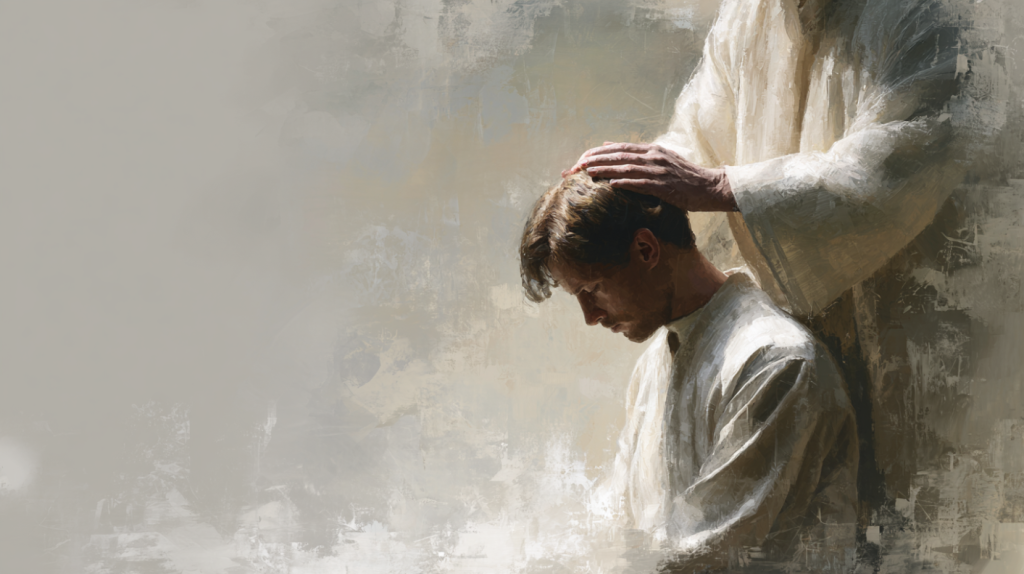
As you prepare to teach Doctrine and Covenants 84 in Sunday School this week, you’ll be diving into a powerful section about the priesthood, the responsibilities that come with it, and the blessings the Lord promises to those who faithfully serve Him. This revelation helps us understand more about how the priesthood works, why it matters, and how the Lord invites all of us—men and women—to come unto Him through obedience and faith. To help you create an engaging and meaningful class experience, we’ve gathered a collection of thought-provoking questions, simple object lesson ideas, and personal sharing prompts. These teaching tools are designed to encourage participation, invite the Spirit, and help your class apply the principles of this section to their everyday lives.
To download our free lesson help + customizable Canva Template, click here: https://otherthanamom.myflodesk.com/dc84
I have access to God’s priesthood power and blessings.
Engaging Questions:
- What does it mean to you personally to have access to God’s priesthood power?
- Can you think of a time when you felt the blessings of the priesthood in your life? What happened?
- How have you seen priesthood power bless people who don’t hold the priesthood themselves?
- What’s the difference between holding the priesthood and accessing its power through faith and covenants?
- Why is it important to understand that priesthood power is meant to bless everyone—not just those with callings or titles?
- How does participating in ordinances like baptism, the sacrament, or temple worship connect you to priesthood power?
- What are some ways you can prepare yourself to receive more of God’s power in your daily life?
- Who in your life has used their priesthood authority or influence to bless others with humility and love?
- How can women and men work together to access and honor priesthood power in their homes and communities?
- What is one thing you can do this week to invite more of God’s priesthood power into your life or the life of someone else?
Object Lessons:
1. The Power Cord and the Device
Materials:
- A lamp, phone, or device
- A power cord
Lesson Overview:
Show the device unplugged. It’s capable but not functioning fully. Plug it in and turn it on. Explain that the priesthood is like a power source—and covenants are the cord that connect us to that power. Anyone who makes and honors covenants can receive strength, healing, guidance, and miracles.
Discussion Points:
- How have you felt God’s power in your life through covenants or ordinances?
- What keeps us “plugged in” to that power?
2. The Faucet and the Water
Materials:
- A pitcher or faucet and a cup
Lesson Overview:
Turn on the water and fill the cup. Emphasize that the faucet is a channel, not the source—it directs the water to where it’s needed. Priesthood holders are channels, but God is the source, and His blessings flow to all who prepare to receive.
Discussion Points:
- How do ordinances help us receive God’s blessings?
- What can you do to open your heart to that flow?
3. The Key and the Door
Materials:
- A key and a door (real or symbolic)
Lesson Overview:
Use the key to unlock a door and explain that priesthood authority is like a key—it opens access to sacred blessings (temple, sacrament, revelation). Through our own covenants and faith, we can enter into the blessings God wants to give us.
Discussion Points:
- What “doors” has the priesthood opened in your life?
- How can we prepare to receive more of those blessings?
4. The Flashlight and the Batteries
Materials:
- A flashlight, with and without batteries
Lesson Overview:
A flashlight without batteries has all the parts but can’t shine. Add the batteries and turn it on. The priesthood is the power source that makes ordinances effective and brings spiritual light to our lives.
Discussion Points:
- What are the “batteries” that keep you connected to God’s power?
- How does faith in the priesthood help us through dark times?
5. The Umbrella of Protection
Materials:
- An umbrella
- Paper cutouts labeled with blessings (e.g., “comfort,” “guidance,” “healing,” “truth”)
Lesson Overview:
Hold the umbrella over someone as a symbol of spiritual protection through priesthood covenants. Place the blessing cutouts under the umbrella. Emphasize that all who live worthily can enjoy the sheltering power of God’s priesthood, even if they don’t hold it themselves.
Discussion Points:
- What priesthood blessings have you experienced in your life?
- How can we better honor and rely on those blessings?
6. The Solar Panel (Receiving and Storing Power)
Materials:
- Picture of a solar panel or a small solar-powered item
Lesson Overview:
Explain that a solar panel doesn’t create power—it receives and stores it. Likewise, priesthood holders don’t generate power—they are instruments. Everyone can “store spiritual power” through ordinances and covenant living.
Discussion Points:
- How can we be more receptive to the Spirit and priesthood blessings?
- What can we do daily to draw on that power?
Personal Sharing Prompts:
- Think of a time when you received a priesthood blessing and felt the Lord’s love and power. What did that experience teach you about His awareness of you?
- Think of a time when you prayed for strength or healing and felt supported through priesthood power. How did that confirm God’s presence in your life?
- Think of a time when you witnessed a priesthood ordinance—like baptism, confirmation, or the sacrament—that touched your heart. What stood out to you?
- Think of a time when you served or ministered to someone and felt the Lord working through you. How did that help you recognize the reality of priesthood authority and power?
- Think of a time when temple covenants helped you access God’s priesthood blessings. What strength or guidance came from keeping those covenants?
- Think of a time when the priesthood brought peace or protection to your home or family. How did that experience increase your gratitude for the Lord’s power?
- Think of a time when someone exercised priesthood keys or authority in a way that blessed your life. How did that moment help you sustain and trust God’s chosen servants?
- Think of a time when you taught or testified about priesthood power. How did the Spirit confirm its truth to you?
- Think of a time when you realized that priesthood blessings are available to all who make and keep covenants. How did that expand your understanding of God’s love?
- Think of a time when accessing the priesthood—through prayer, ordinances, or service—helped you feel spiritually renewed. How did that draw you closer to Jesus Christ?
The priesthood is obtained with an oath and covenant.
Engaging Questions:
- What does it mean to you that the priesthood involves both an oath and a covenant with God?
- Why do you think God attaches such sacred promises to the priesthood?
- What responsibilities come with the priesthood covenant—not just for those who hold it, but for everyone who benefits from it?
- How does understanding the seriousness of priesthood covenants influence the way we serve in the Church or in our homes?
- How have you seen someone honor their priesthood covenant through quiet, consistent service?
- What are some ways women and men can work together to support and uphold the blessings and purposes of the priesthood?
- Doctrine and Covenants 84:33–44 speaks of sanctification and receiving “all that [the] Father hath.” How do those promises affect the way you view the priesthood?
- What blessings have you experienced in your life because someone kept their priesthood covenants?
- How can you personally sustain those who have made priesthood covenants and are trying to live them well?
- What’s one way you can more fully honor your relationship to the priesthood covenant this week—through faith, service, or support?
Object Lessons:
1. The Two-Way Contract
Materials:
- Two pieces of paper labeled “God’s Promises” and “Our Promises”
- A pen
Lesson Overview:
Have someone sign one sheet labeled “Our Promises” (representing things like obeying God, serving others, magnifying callings). Then read from the “God’s Promises” sheet (e.g., receiving His Spirit, being sanctified, eternal life). This shows how the priesthood covenant is a mutual agreement—God binds Himself to us when we bind ourselves to Him.
Discussion Points:
- What are some things God promises in return for faithful priesthood service?
- Why do covenants make our relationship with God more meaningful?
2. The Locked Safe
Materials:
- A small lockbox or safe
- A key labeled “Oath and Covenant”
Lesson Overview:
Show the box and say it contains valuable blessings (e.g., eternal life, divine power). It can only be accessed with the key—the oath and covenant of the priesthood. This represents how God reserves His greatest blessings for those who are willing to make and keep sacred promises.
Discussion Points:
- Why would God require covenants before giving His greatest blessings?
- How does making an oath increase our commitment?
3. The Fire and the Iron
Materials:
- A piece of iron or metal, and a visual of a forge or fire
Lesson Overview:
Explain that iron becomes strong and useful when it’s tempered in fire. The oath and covenant of the priesthood is like that fire—it shapes and strengthens the individual into someone the Lord can use. It’s not just a gift; it’s a refining process.
Discussion Points:
- How have covenants helped refine or strengthen you?
- Why is commitment necessary to access real spiritual power?
4. The Power Line Connection
Materials:
- Picture of a power line, or a cord plugged into a power source
Lesson Overview:
A power cord must be connected at both ends to work—like a covenant. The priesthood only becomes effective when both God and the holder are connected through promises made and kept. One-sided connections don’t deliver power.
Discussion Points:
- What happens when one side of the covenant is neglected?
- How does keeping our promises to God allow His power to flow through us?
5. The Team Handshake
Materials:
- No materials needed—just demonstrate a handshake or gesture representing commitment
Lesson Overview:
A team handshake or sports contract symbolizes mutual trust and shared goals. Explain that an oath and covenant is a sacred handshake with God—He entrusts us with His work, and we commit to honor Him.
Discussion Points:
- What responsibilities come with the priesthood?
- How does the Lord help us fulfill our end of the covenant?
6. The “If-Then” Promise Chart
Materials:
- A T-chart labeled “IF I…” and “THEN GOD WILL…”
Lesson Overview:
On one side, list commitments like “serve faithfully,” “magnify callings,” “live worthily.” On the other side, list God’s promises like “be sanctified,” “inherit eternal life,” and “be called His own.” This visualizes the mutual nature of the priesthood covenant.
Discussion Points:
- How does seeing both sides help you value the covenant more?
- What blessings come when we treat priesthood service as sacred?
Personal Sharing Prompts:
- Think of a time when you witnessed someone make sacred priesthood covenants. How did that moment help you understand the seriousness and beauty of those promises?
- Think of a time when you felt the weight and joy of your own priesthood responsibilities. How did that deepen your relationship with the Savior?
- Think of a time when you saw someone honor their priesthood through quiet, faithful service. How did their example influence you?
- Think of a time when making or keeping a covenant helped you access greater spiritual strength. What blessings followed your faithfulness?
- Think of a time when the promises of the oath and covenant of the priesthood gave you hope or direction. What specific phrase or truth stood out to you?
- Think of a time when someone used their priesthood authority to bless your life in a meaningful way. How did you feel God’s love through them?
- Think of a time when you prepared to receive the priesthood or support someone who was. How did the Spirit help you feel the importance of that step?
- Think of a time when you saw a priesthood holder magnify their calling in a way that blessed your family or ward. What did you learn from their example?
- Think of a time when you felt increased power to serve, teach, or testify because of covenants you had made. How did the Lord magnify your efforts?
- Think of a time when you were reminded that priesthood covenants are not just about authority—they are about becoming like Christ. How did that shape your choices?
Living by the word of God brings light and truth into my life.
Engaging Questions:
- What does “light and truth” mean to you, and how have you felt it in your life?
- Can you think of a time when following God’s word helped you make a better decision or feel more peace?
- How does regularly studying the scriptures bring light into your daily life?
- What’s one scripture or teaching that has helped you see the world—or yourself—more clearly?
- Why do you think the Lord connects obedience to His word with receiving greater light (see D&C 84:45–46)?
- What’s the difference between simply reading God’s word and truly living it?
- Have you ever felt “spiritually in the dark”? What helped bring light back into your life?
- What distractions or habits might keep us from recognizing or receiving light and truth?
- How can you help someone else find light in God’s word, even if they’re struggling to believe it right now?
- What’s one way you can live God’s word more fully this week—and invite more light into your life as a result?
Object Lessons:
1. Flashlight in the Dark
Materials:
- A flashlight
- A darkened room or box
Lesson Overview:
Turn off the lights and try to walk or find something without the flashlight. Then turn it on and point out how even a small amount of light changes everything. God’s word works the same way—even a little can guide us powerfully.
Discussion Points:
- When has a verse or prompting brought light into your life?
- How can we keep the “batteries” of spiritual light charged?
2. The Dirty Mirror and the Word
Materials:
- A mirror smudged with something like lotion
- A cloth and scripture verse taped to it
Lesson Overview:
Try to see clearly in the dirty mirror—then clean it with the cloth marked “God’s Word.” As it clears, you can see yourself better. Living by God’s word cleans our spiritual vision so we see truth more clearly.
Discussion Points:
- What things smudge your spiritual perspective?
- How does regular scripture study restore clarity?
3. The Candle and the Match
Materials:
- A candle and match/lighter (or battery candle)
Lesson Overview:
Light the candle and explain how a single flame chases away darkness. The word of God acts like a living flame, giving us warmth, light, and direction in an increasingly confusing world.
Discussion Points:
- How does light represent truth in your life?
- What habits help keep your spiritual light burning?
4. The Compass
Materials:
- A compass
- Optional: a simple map or directions
Lesson Overview:
Explain how a compass always points to true north, no matter the surroundings. The scriptures are like a compass—they always point toward Christ and can guide us through confusing or dark situations.
Discussion Points:
- What’s a “true north” scripture for you personally?
- How can we trust God’s word when life feels uncertain?
5. The Plant and the Light
Materials:
- A small plant, placed in light and dark environments
Lesson Overview:
Show how a plant grows toward the light. Just like a plant needs sunlight to thrive, our spirits grow and flourish when we live by God’s word, which gives light and life.
Discussion Points:
- How does your spiritual growth respond to regular exposure to God’s word?
- What does “living” by the word look like—not just reading it?
6. The Window and the Dust
Materials:
- A window or clear plastic sheet, with part of it clean and part dusty
Lesson Overview:
Hold the sheet up to a light source. Point out how clean glass lets more light through. When we live by the word of God, it’s like wiping away spiritual dust, allowing more light and truth to fill us.
Discussion Points:
- What habits or influences might block your spiritual light?
- How can you “clean your window” with scripture this week?
Personal Sharing Prompts:
- Think of a time when a specific scripture or verse brought you clarity in a confusing situation. How did that light help guide your next steps?
- Think of a time when daily scripture study made a noticeable difference in your mood, choices, or faith. What helped you recognize the light it brought?
- Think of a time when you followed a prompting that came during or after reading God’s word. What truth did you act on, and what was the result?
- Think of a time when you were in a dark or difficult place, and a gospel principle brought you peace. How did living that truth lift you?
- Think of a time when the word of God helped you recognize and resist deception or temptation. How did it strengthen your resolve?
- Think of a time when teaching or testifying of the scriptures increased your own understanding. What new truth did the Spirit help you see?
- Think of a time when you changed a habit or belief because of something you read in the scriptures. How did that change bring more light into your life?
- Think of a time when you felt spiritually lost or stagnant, but turning to the word of God helped you reconnect. What helped you come back?
- Think of a time when you saw light come into someone else’s life through their love for the scriptures. How did their example affect your own discipleship?
- Think of a time when you felt the power of Christ’s words not just inform you—but transform you. What did that moment teach you about the living power of His word?
The Lord will be with me when I am in His service.
Engaging Questions:
- When have you felt the Lord’s help while serving someone else?
- How does it change your motivation to serve when you remember the Lord is with you in it?
- What kinds of service help you feel closest to Jesus Christ?
- Have you ever taken on a calling, assignment, or act of service that felt overwhelming at first? How did the Lord strengthen you?
- Doctrine and Covenants 84:88 promises that angels will be “round about you.” What do you think that means in your own service?
- Why do you think the Lord often works through people to answer prayers and meet needs?
- How can we notice and respond to quiet promptings to serve, trusting the Lord to guide us?
- Who in your life has shown you what it looks like to serve with the Lord’s help? What did you learn from them?
- How can you stay spiritually filled so that you can give more in your service to others?
- What is one way you feel prompted to serve this week, trusting the Lord to be with you in it?
Object Lessons:
1. The Shadow Companion
Materials:
- A light source (lamp or flashlight)
Lesson Overview:
Shine a light so it casts a shadow as you walk. Point out how the shadow always follows—even if you can’t see it directly, it’s there. Likewise, the Lord walks with us when we serve Him, even if we don’t always feel His presence.
Discussion Points:
- When have you served and felt God close by?
- What does it mean to you that He goes “before your face”?
2. The Backpack Lift
Materials:
- A heavy backpack and a helper
Lesson Overview:
Have one person put on a heavy backpack and walk a few steps alone. Then have someone else lift or carry it with them. Explain that when we’re doing God’s work, He lightens the load and strengthens us through His presence and power.
Discussion Points:
- What “loads” has the Lord helped you carry in service?
- How can we trust that He’s helping when it’s still hard?
3. The Hand-in-Hand Path
Materials:
- Blindfold and simple obstacle course or walking path
- A guide to lead the blindfolded person
Lesson Overview:
Blindfold a volunteer and lead them through the course by the hand. Point out that they weren’t alone—they had help every step. Serving the Lord is often like walking in uncertainty, but He is always guiding us.
Discussion Points:
- When have you felt spiritually “blindfolded”?
- What gave you confidence to keep going?
4. The Glove and the Hand
Materials:
- A glove
Lesson Overview:
Show the glove by itself—it’s floppy and lifeless. Then put your hand in it and show how it can now act with power and purpose. When we serve God, we are like gloves filled with His hand—He empowers our efforts.
Discussion Points:
- What happens when we try to serve without the Spirit?
- How can we better “let God’s hand be in our glove”?
5. The Wind and the Sail
Materials:
- A toy sailboat or paper boat and a fan or breath of air
Lesson Overview:
Explain that a sailboat can’t move without wind. Our efforts in God’s service are moved and magnified by His power, like the wind pushing a sail. We provide the direction, but He provides the force.
Discussion Points:
- How have your efforts in serving others been strengthened by the Lord?
- What does it mean to let God “fill your sail”?
6. The Team Lift
Materials:
- A moderately heavy item (box, chair)
Lesson Overview:
Try lifting the object alone, then again with someone helping. Explain that when we serve in the Lord’s work, He lifts with us. You’re never doing His work by yourself—even if you feel alone, He is always with you.
Discussion Points:
- Why do we sometimes forget the Lord is helping us?
- How does this promise in D&C 84:88 change how you approach service?
Personal Sharing Prompts:
- Think of a time when you felt the Lord strengthen or guide you while fulfilling a Church calling or assignment. What did you learn about His presence in your efforts?
- Think of a time when you were nervous to serve but felt peace or courage as you moved forward. How did you know the Lord was with you?
- Think of a time when you served someone and felt inspired in what to say or do. How did that moment testify to you that the Lord magnifies our service?
- Think of a time when a simple act of service brought an unexpected spiritual experience. How did the Lord show you He was part of it?
- Think of a time when you were physically or emotionally tired but felt lifted as you served someone in need. What gave you the strength to continue?
- Think of a time when your service to the Lord blessed not only others—but also brought healing or help to you. How did that deepen your desire to serve?
- Think of a time when you didn’t feel “good enough” to serve, but the Lord showed you He could use you anyway. What did that teach you about His grace?
- Think of a time when you felt the Spirit confirm that your service—big or small—mattered to the Lord. What reassurance came to you?
- Think of a time when someone else’s service clearly had the Lord’s hand in it. How did their Christlike efforts strengthen your testimony?
- Think of a time when you felt the Lord’s companionship or comfort while doing His work. What helped you feel close to Him?
Everyone can contribute to the work of God.
Engaging Questions:
- What does it mean to you to be part of “the work of God”?
- What talents or qualities do you have that can help build God’s kingdom in your own way?
- Why do you think God invites everyone to be involved in His work—not just leaders or missionaries?
- Have you ever felt like your efforts were small or unnoticed? What helps you remember they still matter to God?
- Can you share an example of someone who contributed to God’s work in a quiet but powerful way?
- What are some behind-the-scenes ways people can help move the Lord’s work forward?
- How do your everyday choices—like kindness, honesty, or encouragement—contribute to God’s work?
- What role do youth, women, and new members play in building the Church and blessing others?
- How can you recognize and act on small promptings to serve or lead, even if you feel unqualified?
- What is one simple thing you can do this week to be part of God’s work right where you are?
Object Lessons:
1. The Body Parts Puzzle
Materials:
- Paper or foam cutouts of body parts (hand, eye, foot, ear, etc.)
Lesson Overview:
Assemble the body, then try to “leave one part out.” Ask: Can the body function well without an eye or a foot? No. Every part is needed. Similarly, every person matters in the Lord’s work—regardless of their role.
Discussion Points:
- What part might you represent in the body of Christ?
- How can we appreciate others’ contributions more?
2. The Lego Build
Materials:
- A small Lego set or blocks with a missing piece
Lesson Overview:
Build a simple structure, then remove one seemingly “small” piece. Show how the structure is incomplete or unstable. God’s work is like that—every piece (every person) matters.
Discussion Points:
- Have you ever felt like your part didn’t matter?
- How do small, faithful actions build God’s kingdom?
3. The Orchestra Analogy
Materials:
- Picture of an orchestra, or labels of different instruments
Lesson Overview:
Explain that some instruments play melody, others harmony, and some only occasionally. But every part contributes to the beauty of the whole. The same is true in the Church—everyone’s voice, effort, and testimony is needed.
Discussion Points:
- What might “playing your part” look like this week?
- Why does unity matter more than recognition?
4. The Light Chain
Materials:
- A strand of Christmas lights (real or a drawing)
Lesson Overview:
Plug in the strand. If one light is out or missing, the whole strand may dim or break. Each light matters. Each person’s service and faith helps keep the Church shining brightly.
Discussion Points:
- What kind of “light” can you bring to your family, ward, or community?
- How can we help others whose “light” may be dim?
5. The Patchwork Quilt
Materials:
- A picture or physical example of a patchwork quilt
Lesson Overview:
Show how each piece of fabric is different, but when sewn together, they make something beautiful and warm. God’s work is like that—diverse people, talents, and backgrounds woven together by faith and purpose.
Discussion Points:
- How does your uniqueness help God’s work?
- How can we better support each other in contributing?
6. The Tools in a Toolbox
Materials:
- A toolbox with varied tools
Lesson Overview:
Pull out different tools and describe their uses. A hammer isn’t better than a screwdriver—they just serve different purposes. Similarly, in God’s work, everyone’s gifts matter—even if they look different.
Discussion Points:
- What “tools” (spiritual gifts or talents) do you have?
- How can you use your tools this week to serve?
Personal Sharing Prompts:
- Think of a time when you felt the Lord strengthen or guide you while fulfilling a Church calling or assignment. What did you learn about His presence in your efforts?
- Think of a time when you were nervous to serve but felt peace or courage as you moved forward. How did you know the Lord was with you?
- Think of a time when you served someone and felt inspired in what to say or do. How did that moment testify to you that the Lord magnifies our service?
- Think of a time when a simple act of service brought an unexpected spiritual experience. How did the Lord show you He was part of it?
- Think of a time when you were physically or emotionally tired but felt lifted as you served someone in need. What gave you the strength to continue?
- Think of a time when your service to the Lord blessed not only others—but also brought healing or help to you. How did that deepen your desire to serve?
- Think of a time when you didn’t feel “good enough” to serve, but the Lord showed you He could use you anyway. What did that teach you about His grace?
- Think of a time when you felt the Spirit confirm that your service—big or small—mattered to the Lord. What reassurance came to you?
- Think of a time when someone else’s service clearly had the Lord’s hand in it. How did their Christlike efforts strengthen your testimony?
- Think of a time when you felt the Lord’s companionship or comfort while doing His work. What helped you feel close to Him?