Introduction
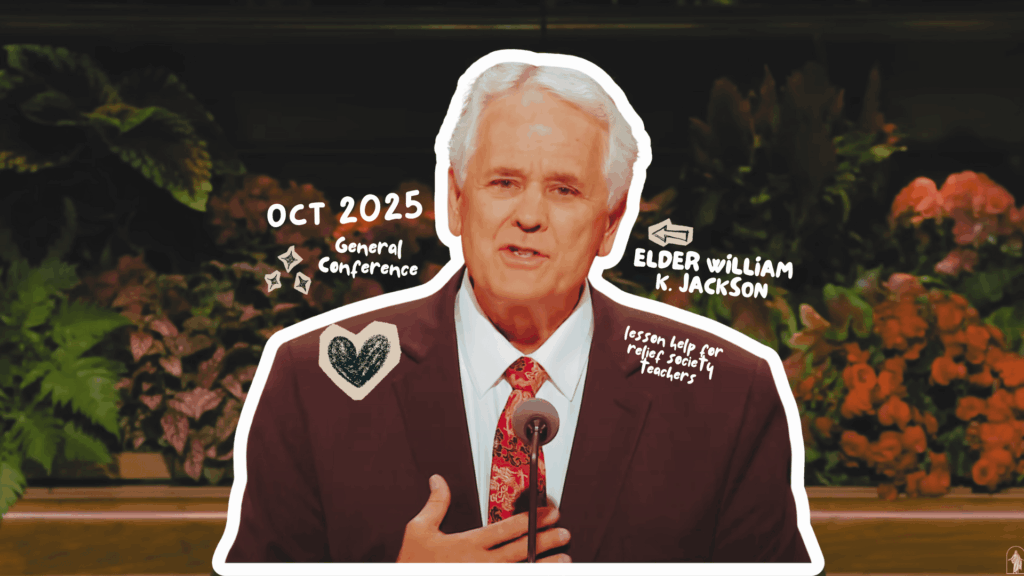
Elder William K. Jackson’s talk, “Remembering the Sheep,” is a beautiful and practical reminder that in the Lord’s Church, no one is meant to be forgotten. Every name matters. Every soul counts.
This lesson is perfect for a Relief Society setting because it gently turns our attention from programs and checklists toward people and discipleship. Elder Jackson teaches that remembering individuals—their names, needs, and stories—is part of the divine pattern of ministering set by the Savior Himself.
Through this lesson, sisters can:
- Discover how “counting and accounting” is not about numbers—but about love.
- Reflect on how to be better shepherds in their families, callings, and wards.
- Learn simple, Spirit-led ways to notice and nurture the one.
Each section below includes powerful quotes from the talk, discussion questions, object lessons, and sharing prompts to help your Relief Society lesson feel heartfelt, inclusive, and inspired.

Grab our free bundle of 50+ Presentation Backgrounds by clicking here: https://otherthanamom.myflodesk.com/freebackgrounds
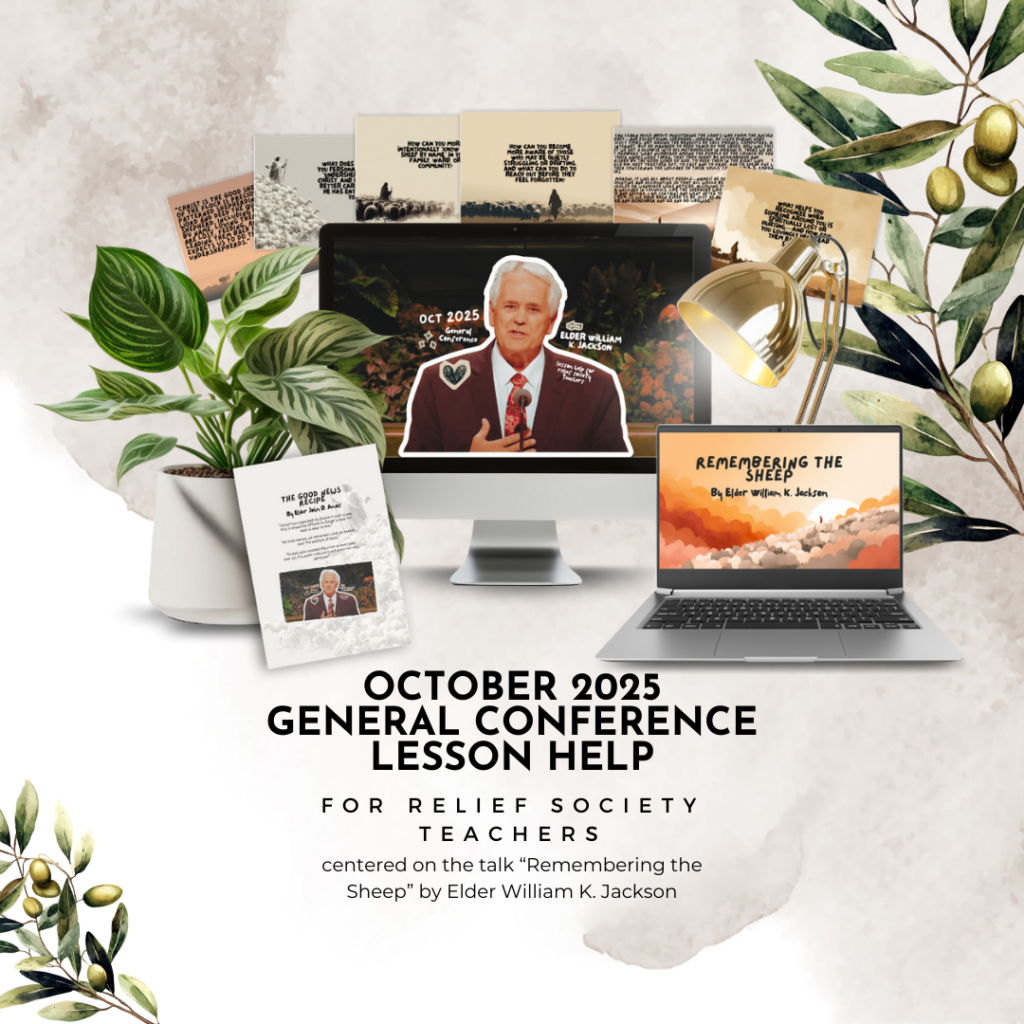
Interested in a done-for-you lesson plan with a teacher’s outline Google Doc, Canva Presentation Template, Lesson Handout Template, and themed presentation backgrounds? Click here: https://www.etsy.com/listing/4443522468/october-2025-general-conference-lesson?sr_prefetch=1&pf_from=shop_home&ref=shop_home_active_1&dd=1&logging_key=2c5f5a4581f612505cd1f8826ca7880d0ec9d179%3A4443522468
Christ, the Good Shepherd
“Christ is the Good Shepherd. Each one of the flock is precious to Him.”
“He patterned shepherding and taught us by word and deed the qualities of a good shepherd, including knowing your sheep by name, loving them, finding those that are lost, feeding, and, ultimately, leading them back home again.”
“He expects us to do the same as His undershepherds.”
10 Engaging Discussion Questions
- What does it mean to you that the Savior knows His sheep by name?
- How does understanding Christ as the “Good Shepherd” influence the way we see our ministering assignments?
- Why do you think Jesus chose the image of a shepherd to represent Himself?
- What qualities make someone a “good shepherd” in today’s Church?
- How can we better “feed” rather than just “check on” those in our care?
- When have you felt personally “found” by the Savior?
- How can Relief Society sisters help ensure no one feels forgotten in the ward?
- What does “leading them back home” look like in everyday efforts?
- Why might remembering someone’s name have spiritual significance?
- What is the difference between being assigned to minister and being called to shepherd?
5 Simple Object Lessons or Visuals
- Shepherd’s Staff or Crook – Show how a shepherd uses it to gently guide and lift. Discuss how we can spiritually “lift” others without force.
- Flock of Paper Sheep – Write each sister’s name on a sheep. Place one aside to represent the “lost” and ask what the Savior would do.
- Name Tag Activity – Have sisters write their names on tags and talk about how God knows each of them personally.
- Lantern or Flashlight – Represent Christ’s light guiding us to find those in darkness.
- Map and Compass – Illustrate how the Savior gives direction and how we can help others find their way home to Him.
10 Personal Sharing Prompts
- Share a time you felt “found” by someone following the Spirit.
- Who has been a “shepherd” in your life?
- Tell about a moment you felt prompted to reach out to someone who was struggling.
- How have you seen the Savior’s love through another person’s care?
- Share a time you felt known by name at church and how it made you feel.
- How has ministering changed your view of discipleship?
- Describe what being an “undershepherd” means to you personally.
- Tell of a time you acted on a prompting to help someone—and saw the Lord’s hand.
- What has helped you be more intentional in caring for individuals?
- How has the Savior’s example inspired you to notice the “one”?
Moroni’s Example of Ministering
“We can learn much about ministering the Lord’s way from the ancient prophet—and exceptional shepherd—Moroni.”
“They were numbered among the people of the church of Christ; and their names were taken, that they might be remembered and nourished by the good word of God.” (Moroni 6:4–5)
“For Moroni, it was all about people—names!”
10 Engaging Discussion Questions
- Why do you think Moroni emphasized names so much?
- What does it mean to be “numbered among the people of Christ”?
- How does “nourishing by the good word of God” apply to ministering today?
- How can we keep track of those we serve without making it feel like a checklist?
- What does it teach us that the ancient Church “met together oft”?
- How can councils in the Church today mirror the care shown by Moroni’s people?
- Why is remembering such a powerful form of love?
- What spiritual nourishment can you offer someone who’s struggling?
- How can we ensure our ministering feels like connection, not obligation?
- What small habits help you “remember names” in both a practical and spiritual sense?
5 Simple Object Lessons or Visuals
- Empty Chair – Set an empty chair in the room to represent those who are missing; discuss what it means to “remember them.”
- Notebook of Names – Create a simple “Moroni List” where sisters can record names they feel prompted to remember and pray for.
- Bread and Water – Use the sacrament as a visual of how we are all nourished by the Savior and reminded of Him.
- Phone Contact List – Show how a phone keeps names and numbers; invite sisters to scroll prayerfully through their contacts.
- Heart Cutouts – Write “names” on hearts to symbolize how we can carry others in our hearts daily.
10 Personal Sharing Prompts
- Who is someone you’ve seen “remembered and nourished” by love and fellowship?
- Share a time you felt seen and remembered when you most needed it.
- Talk about a moment you prayed for someone by name and saw a miracle.
- Who is a person you feel prompted to remember this week?
- How has someone “fed” your spirit when you were weary?
- Tell about a time council discussion helped someone in need.
- How has being part of Relief Society helped you feel numbered among Christ’s people?
- Share a simple way you remember others in your prayers or study.
- Who is someone the Spirit has brought to your mind lately?
- When have you felt nourished by “the good word of God”?
The Principle of Counting and Accounting
“The principle of counting and accounting works. It is the Lord’s way.”
“Like the shepherd who left the ninety and nine … we have been asked to be just as aware of our flocks—to notice and remember and go and do likewise.”
“Christ has organized His Church in such a way that it should be difficult to forget a soul, for each is dear to Him.”
10 Engaging Discussion Questions
- How can we see “counting and accounting” as a spiritual principle rather than a logistical one?
- Why do you think the Lord built His Church to make forgetting difficult?
- How can Relief Society presidencies use this principle without it feeling transactional?
- What does it look like to “notice and remember” someone in your stewardship?
- Why is it sometimes easy to assume others are being cared for?
- How can ministering companionships use this principle more effectively?
- What are simple, loving ways to “account” for people without overwhelming them?
- How can we strengthen the safety nets around the youth and new members?
- What does it teach us about God’s character that He counts everyone?
- How can “counting and accounting” deepen our personal conversion?
5 Simple Object Lessons or Visuals
- Safety Net Visual – Use string or yarn to weave a net; explain that each strand represents someone’s stewardship responsibility.
- Checklist with Hearts – Turn a to-do list into a “love list,” showing how each name represents a soul, not a number.
- Coins or Pebbles Jar – Add one for each person ministered to, visualizing that each effort matters.
- Sheep Cutouts on a Board – Move one aside to represent someone who’s wandered; show what it looks like to notice.
- Thread and Needle – Demonstrate mending a small tear; discuss how remembering repairs spiritual fabric.
10 Personal Sharing Prompts
- When have you seen careful ministering make a difference in someone’s life?
- Share a time you felt noticed by a leader or friend.
- What does it mean to you that “the Lord counts every soul”?
- Tell about a moment you realized someone was missing and followed a prompting to act.
- How has Relief Society’s organization helped strengthen your sense of belonging?
- When have you felt sustained because someone remembered you?
- What has helped you become more diligent in record keeping or follow-up?
- Share an example of someone in your ward who lives this principle naturally.
- How has counting and accountability strengthened your relationship with God?
- What can you personally do to make sure “no one is forgotten”?
Using Tools and Councils to Remember God’s Children
“The Church supplies us with reports and tools to do just that—to remember.”
“The Quarterly Report … allows us to count and account for each member multiple times and to notice those who go missing or need our help and our love.”
“These counting and accounting tools focus us in on people.”
10 Engaging Discussion Questions
- What spiritual purpose do Church tools like ministering reports or the quarterly report actually serve?
- How can leaders and teachers ensure that reports are centered on people, not percentages?
- What are some ways to turn administrative work into sacred ministering?
- How do councils help us act in unity when one member of the flock needs extra care?
- How can sisters who don’t hold leadership roles still participate in “remembering”?
- When have you seen a council or group effort truly bless someone’s life?
- How do these systems reflect the Lord’s perfect organization of His Church?
- How might keeping track of people help us better recognize miracles?
- How do you see love behind the structure and order of the gospel?
- How can we keep record-keeping spiritual rather than stressful?
5 Simple Object Lessons or Visuals
- Ledger Book or List – Show a small notebook with names written in it, representing the Savior’s care for each individual.
- Ward Directory Printout – Use it to invite sisters to choose a name to pray for this week.
- Tree Branch Visual – Each leaf represents a member; if one leaf is missing, the tree feels incomplete.
- Report Form with Heart Stickers – Use a simple ward report form, placing a heart next to each name to symbolize love over numbers.
- Calendar Page – Show that following up regularly (like council meetings) helps keep people from being forgotten over time.
10 Personal Sharing Prompts
- Share a time you saw a ward council come together to bless one person.
- How has being “counted” helped you feel like you belong?
- Who has remembered you through a thoughtful check-in or message?
- What does it mean to you that the Lord’s Church is organized with care and accountability?
- Tell about a time you were asked to help someone and saw it bless both of you.
- How have Church systems helped strengthen your personal ministering?
- When have you seen miracles come through organized effort?
- Who do you feel prompted to remember more intentionally this week?
- How can you make “reporting” more prayerful and Spirit-led?
- How does remembering others help you feel remembered by the Savior?
Lessons from Global Saints
“Within a year, on any given Sunday, there was an average of 21 young men in attendance. Thank goodness for young men who counted and accounted.”
“He went into the interview with programs, lessons, and activities. He walked out with names!”
“All they talked about were people. Names.”
10 Engaging Discussion Questions
- What do these stories from around the world teach us about simple faith and focus?
- How do global examples of devotion inspire us to improve our local efforts?
- Why do you think the Lord’s work often progresses most in humble, people-focused ways?
- How do names change the tone of leadership discussions?
- What’s the difference between talking about programs and talking about people?
- What inspires you about the example of first-generation Church members?
- How can Relief Society take a more “name-focused” approach to meetings and councils?
- How can we learn from Saints in smaller or newer congregations?
- What happens in a ward when people feel remembered and known?
- How can stories like these strengthen your testimony of the Church’s divine organization?
5 Simple Object Lessons or Visuals
- Map of the World – Mark pins for different countries to show how Saints everywhere are remembered by name.
- Blank Paper and Pen – Symbolize a leader writing down names instead of programs; the Spirit often fills in the list.
- Empty Plate vs. Full Plate – Represent the difference between a meeting focused on logistics vs. one filled with love.
- Name Jar – Write names of ward members or sisters and draw one each week to pray for or minister to.
- Envelope of Notes – Place small notes with stories of “remembering the one” to read during the lesson.
10 Personal Sharing Prompts
- Share a time a leader focused on you and how it made you feel.
- Tell about a time your ward rallied around a family or individual in need.
- Who is someone in your ward that embodies Christlike remembering?
- Share what stood out to you from the global stories in this talk.
- When have you seen simple acts of remembering multiply into miracles?
- What’s one person whose name you’ve been prompted to write down and reach out to?
- How do you feel when someone remembers a detail about your life or family?
- Who in your life has made you feel seen and known the way Christ would?
- How can we “walk out with names” after our own meetings?
- Share how the Spirit helps you recognize who needs your attention.
Applying “Counting and Accounting” in Our Modern Relief Societies
“Leaders who do this will never run out of agenda items in their council meetings!”
“The principle of counting and accounting works. It is the Lord’s way.”
“To God, who created the universe and rules over all, this work—His work and glory—is very personal.”
10 Engaging Discussion Questions
- How can Relief Society presidencies and teachers apply this principle in a modern ward setting?
- What are small but meaningful ways to “count and account” for sisters in your class?
- How can teachers remember every sister—even those who rarely attend?
- What does it look like to shepherd through prayer and follow-up?
- How can we make sure ministering interviews focus on love and stories, not statistics?
- How can we help our Relief Society become a place where no one sits alone?
- What does it mean that the Lord’s “work and glory” is personal?
- What happens to a ward culture when everyone feels seen and needed?
- How can this principle strengthen unity in the ward?
- How can we ensure that “counting” always leads to connecting?
5 Simple Object Lessons or Visuals
- Relief Society Roll Book – Write every sister’s name; discuss how to reach out to those who haven’t been seen in a while.
- Circle of Paper Dolls – Each doll labeled with a sister’s name to show unity and connection.
- Empty Relief Society Chair – Leave one seat open to represent a sister who isn’t present; invite discussion on how to fill it with love.
- String Web Activity – Pass string between sisters as they share one way they can remember each other.
- Shepherd’s Bell – Ring it as a reminder that we’re called to gather, not to let anyone wander unnoticed.
10 Personal Sharing Prompts
- Who in your Relief Society could use extra love or remembering right now?
- Share a time when being reached out to made you feel included.
- What’s one small thing you can do to remember someone this week?
- How has Relief Society helped you feel counted and valued?
- Share a time you followed a spiritual nudge to reach out and later learned why it mattered.
- When has a presidency or teacher remembered your name or need in a meaningful way?
- How can your ministering become more personal and prayerful?
- What inspires you most about being part of the Lord’s organized flock?
- How has remembering others strengthened your own faith?
- What can you do to help your Relief Society feel more like a gathering of shepherds?
Conclusion
Elder Jackson’s message reminds us that ministering is remembering. It’s not about numbers—it’s about names. It’s not about efficiency—it’s about love.
As Relief Society teachers and sisters, our call is to see others the way the Savior does—to notice, to nourish, and to never forget.
When we count and account the Lord’s way—with hearts full of compassion—we reflect the very nature of Christ, the Good Shepherd. Every act of remembering draws us closer to Him, strengthens our wards, and builds Zion right where we are.
“To God … this work—His work and glory—is very personal. And so it should be for each of us.”
Let’s make it personal. Let’s remember the sheep.