Introduction
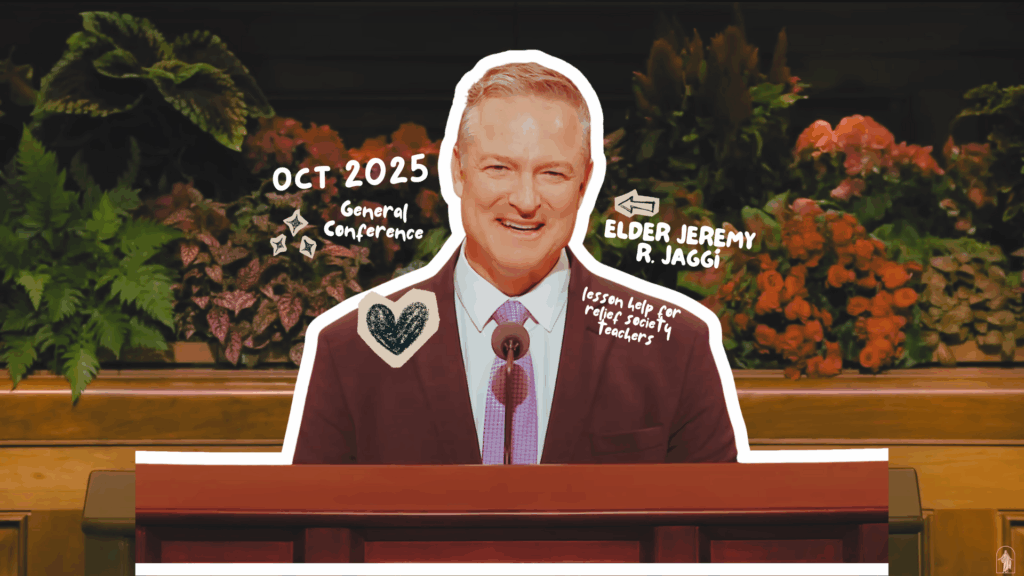
Elder Jaggi teaches that altars—the sacrament table and temple altars—are where we bind ourselves to Jesus Christ through covenants and receive mercy, protection, sanctification, healing, and rest. This help invites your class to treat weekly sacrament and temple worship as living encounters with the Savior, to reconcile before the altar, and to bring Him a real, broken, willing heart.

Grab our free bundle of 50+ Presentation Backgrounds by clicking here: https://otherthanamom.myflodesk.com/freebackgrounds
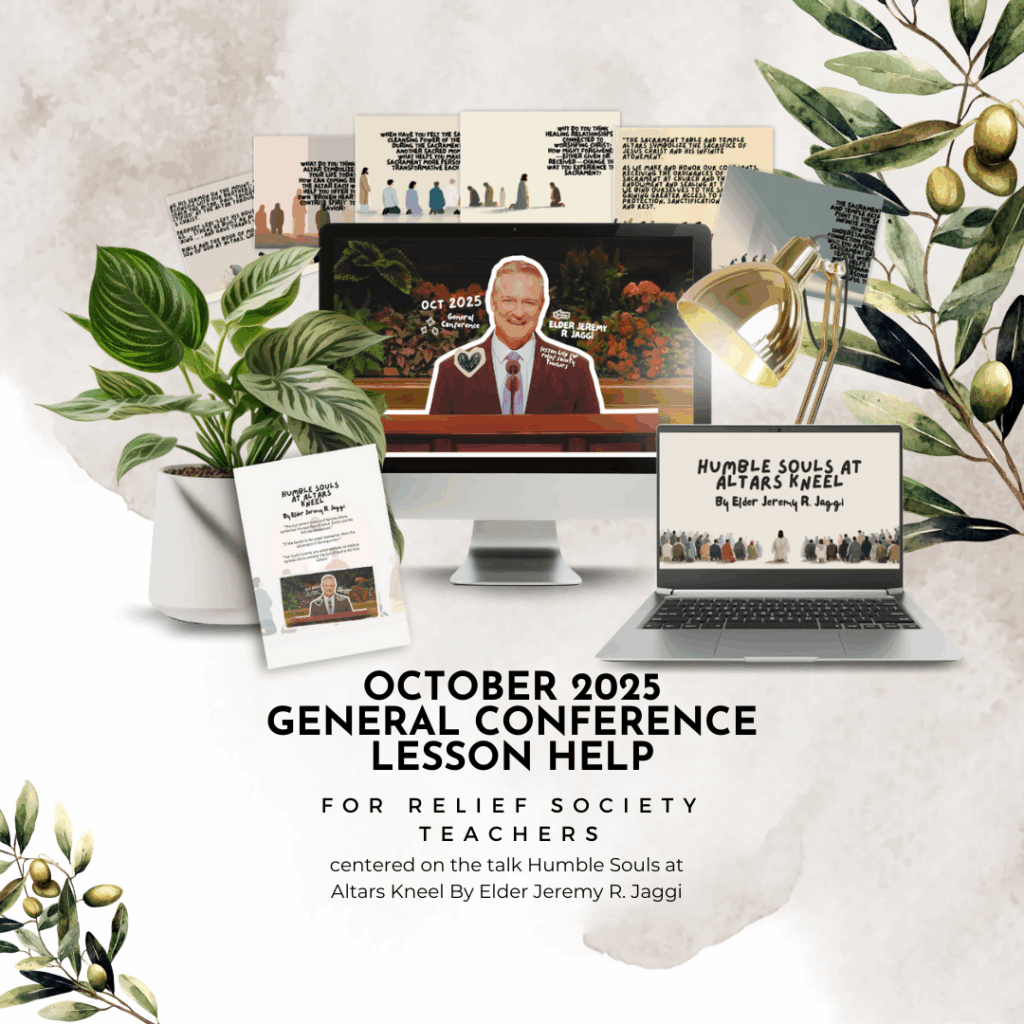
Interested in a done-for-you lesson plan with a teacher’s outline Google Doc, Canva Presentation Template, Lesson Handout Template, and themed presentation backgrounds? Click here: https://www.etsy.com/listing/4414262966/october-2025-general-conference-lesson?sr_prefetch=1&pf_from=shop_home&ref=shop_home_active_1&dd=1&logging_key=1c1964f4e6331db595a892e0791595bd55cc7dd9%3A4414262966
Section 1: Altars Across Dispensations—Why We Kneel
“The Bible and the Book of Mormon teach us to worship the Son of God at altars… ‘This is a similitude of the sacrifice of the Only Begotten.’”
Discussion Questions
- How does seeing the altar as a “similitude” of Christ change the sacrament for you?
- What do Adam & Eve’s “many days” at the altar teach about persistence?
- Why might God ask us to reconcile before approaching the altar?
- Which altar story (Abraham/Lehi/Adam & Eve) speaks to your season?
- How does the altar symbol interact with modern discipleship?
- Where do you “do all things in the name of the Son”? Where not yet?
- How is the sacrament table an altar for you personally?
- What do you carry to the altar (gratitude, grief, questions)?
- What’s the danger of routine without remembrance?
- What’s one way to prepare more intentionally before sacrament?
Object Lessons
- Small paper “altar” (folded cardstock): invite sisters to place a word (gratitude/need) on it.
- Two stones labeled “Old” and “New”: same God, same covenant pathway.
- Tear-drop sticker on a heart cutout: a broken heart becomes an offering.
- Name card “In His Name”: tuck into scriptures as a prep reminder.
- Mini tablecloth over a book: ordinary → holy when it points to Christ.
Personal Sharing Prompts
- A time the sacrament felt like a personal altar.
- What you’ve learned by coming “many days.”
- A reconciliation you made before sacrament.
- A phrase you whisper at the table.
- Where you’ve done something “in His name.”
- An altar story that mentors you.
- A routine you changed to avoid “going through motions.”
- Your altar prayer this week.
- A grief/gratitude you set on His altar.
- Your one-sentence altar testimony.
Section 2: Covenant Binding—Mercy, Protection, Power
“As we make and honor our covenants, we bind ourselves to the Savior… gaining mercy, protection, sanctification, healing, and rest.”
Discussion Questions
- What does “binding” to Christ feel like in real life?
- Which blessing (mercy/protection/sanctification/healing/rest) do you seek now?
- How have covenants functioned like guardrails for you?
- What helps you keep covenants with joy (not just grit)?
- How does the sacrament renew all our covenants?
- Where have you felt sanctified—changed, not just forgiven?
- What’s your “small, faithful” act that tightens the bind?
- How do we support sisters in keeping covenants amid chaos?
- Where does the temple anchor you midweek?
- What’s your next covenant-keeping micro-commitment?
Object Lessons
- Ribbon/yarn around a wrist (loosely): “binding” to Christ—add a knot for each promise kept.
- Umbrella prop: protection imagery under covenant cover.
- Bandage: sanctification = real healing, not cosmetic.
- Anchor card: write where temple worship steadies you.
- Rest sign (tiny “REST” card): slip into wallet.
Personal Sharing Prompts
- A mercy you’ve tasted because of covenants.
- Protection you recognized in hindsight.
- A sanctification moment (heart shift).
- A healing story (physical/mental/relational).
- Rest you found in a stormy week.
- A joyful covenant-keeping practice.
- How temple time changed a day.
- A guardrail that saved you.
- Your micro-commitment for this week.
- Your witness of covenant power.
Section 3: The Separator vs. the Connector
“If the Savior is the great connector, the adversary is the separator… He tempts us to separate from consecrated worship and Christ’s protection.”
Discussion Questions
- What “separations” show up first when you’re overwhelmed?
- What gently reconnects you fastest (music, scripture, prayer, person)?
- How does weekly sacrament disrupt the adversary’s drift?
- Where do shame/avoidance keep you from worship spaces?
- How can RS be a no-shame return ramp?
- What lies push you from the table/temple—and what’s God’s truth?
- How does “line upon line” inoculate against the wiles of the adversary?
- How do we help new friends attend sacrament immediately?
- What’s one reconnection cue you’ll watch for?
- How will you choose altar-time over screen-time this week?
Object Lessons
- Magnet & paperclips: Christ gathers; the adversary scatters.
- Door wedge: keep the door to worship open.
- “Return ramp” sign on a card: easy onramp back to the altar.
- Two jars: “Drift” vs. “Draw Near”—move a bead daily.
- Invitation card: pre-write a simple invite to sacrament.
Personal Sharing Prompts
- A separation pattern you’ve noticed.
- Your fastest reconnection practice.
- A Sunday you chose the altar over something else.
- A no-shame welcome you received.
- A lie you’ll replace with truth.
- A “line upon line” habit that protects you.
- A time you invited someone to sacrament quickly.
- Your cue that it’s time to return.
- What you’ll skip to make time for Jesus.
- Your sentence: “He connected me when…”
Section 4: Endowment & the Five Laws—Power to Go Against the Flow
“In the endowment, members are invited to live… five laws which imbue life with power and protection.”
Discussion Questions
- How have temple covenants helped you swim upstream?
- Which law has most shaped you lately? (Don’t name specifics—focus on fruits.)
- How do you carry temple power into ordinary tasks?
- What helps new adults prepare for endowment with joy?
- How can we normalize early temple worship after graduation?
- What is your weekly plan to keep a temple rhythm?
- Where have you seen reciprocal love (“I give Him my will; He gives me strength”)?
- How do you seek additional instruction from the Lord between sessions?
- What barriers can we remove for sisters to attend?
- What promise from the temple sustains you?
Object Lessons
- Upstream arrow on a sticky note: “Power to go against the flow.”
- Small white ribbon: carry temple remembrance.
- Calendar box: pencil your next trip right now.
- Key charm: covenants unlock protection/power.
- Bridge card: “Temple → Tuesday”—carry power into weekdays.
Personal Sharing Prompts
- A time temple covenants strengthened you.
- A weekday moment you felt temple power.
- Help you received preparing for the endowment.
- A joyful temple memory.
- A barrier God helped you solve.
- A law’s fruit in your life (peace, clarity, courage).
- A promise you’re holding.
- Your temple rhythm for the month.
- Someone you’ll help get to the temple.
- Your testimony of temple power.
Section 5: Reflection & Sanctification—Daily “Check-Ins” at the Altar
“When we humbly… kneel… it is an opportunity for reflection… The sacrament is a repeated invitation to repent and be renewed… ‘each piece of bread is unique.’”
Discussion Questions
- What does a daily “altar check-in” (prayer) look like for you?
- How does remembering the uniqueness of each piece change how you see others (and yourself)?
- How do you bring a broken heart without self-loathing?
- What does a contrite spirit sound like in your prayers?
- Where have you “retained a remission” by the Spirit’s companionship?
- What habit helps you prep conscientiously for sacrament?
- What “pride checks” you before you kneel?
- How do you give God your will practically?
- How do you help your family do altar check-ins?
- What renewal sign will you look for this week?
Object Lessons
- Small bread pieces (paper squares): write a name/need—pray over uniqueness.
- Mirror: “broken & beloved”—two truths at once.
- Eraser: renewal is expected; use it.
- Kneeling card: a one-sentence contrite prayer you’ll say nightly.
- Heart sticker on planner: daily altar check-in.
Personal Sharing Prompts
- Your favorite way to prepare for sacrament.
- A renewal you felt recently.
- A pride nudge the Spirit gave you.
- A time you gave God your will.
- Someone whose uniqueness you honored.
- A contrite sentence you pray.
- A remission-of-sins moment you recognized.
- A family check-in that blessed you.
- Your renewal sign for this week.
- Your reflection testimony line.
Section 6: The Bitter Cup—Placing Our Suffering on His Altar
“Because Jesus took of the bitter cup… we can lay the hard… upon the altars of the Lord and be sanctified by the Holy Ghost.”
Discussion Questions
- What burden do you need to lay on the altar today?
- How does His “intensified” suffering on the cross help you trust Him?
- What does sanctification look like while the circumstance remains?
- How can RS hold space for mental/physical health pain without platitudes?
- What scriptures speak healing to your current wound?
- How do you recognize progress (not perfection) in healing?
- Where do you see evidence that He “drank the cup” for you?
- What helps you keep laying it back down when you pick it up again?
- How do you help kids/teens bring their pain to Jesus?
- What promise are you claiming for healing?
Object Lessons
- Small cup labeled “bitter”: drop in a paper slip with your burden.
- Altar basket: place burdens inside during closing prayer.
- Bandage cross on a card: “By His stripes we are healed.”
- Breath card: 4×4 breathing before prayer—physiology + faith.
- Stone → polished pebble: sanctification over time.
Personal Sharing Prompts
- A burden you will place on His altar.
- A healing step you’ve seen.
- A scripture for your wound.
- A no-platitudes phrase that helped you.
- A time you re-laid the same burden—again.
- Help you offered a struggling teen/child.
- Evidence He drank the cup for you.
- Progress you’ll honor this week.
- A promise you’re clinging to.
- Your healing testimony sentence.
Section 7: Healing & Rest—“Come unto Me… and I will give you rest”
“When we come to the altar… we are learning about the Gift Giver… ‘Will ye not now return unto me… that I may heal you?’… ‘Ye shall find rest unto your souls.’”
Discussion Questions
- How do you distinguish escape from rest?
- What does learning of the Gift Giver look like (not just His gifts)?
- Where has He filled you “unto the consuming of [your] flesh” with love?
- What keeps you from receiving rest?
- What simple practice brings rest quickly (scripture, hymn, breath, walk)?
- How do covenants make rest portable (anywhere, anytime)?
- How can your home feel like an altar of rest?
- What’s your next act of returning so He can heal you?
- Where do you need to lay down self-reliance and yoke with Him?
- What will “rest unto your soul” look like this week?
Object Lessons
- Small pillow card: write what rest means for your soul.
- Yoke rope (two ends): demonstrate shared load with Christ.
- Lamp: light it when speaking of His rest.
- “Gift Giver” tag: note one attribute of Jesus you met this week.
- Do Not Disturb door hanger: sacred rest time with Him.
Personal Sharing Prompts
- A time His love consumed your fear.
- What rest feels like in your body/spirit.
- A way you met the Giver, not just His gifts.
- Your quick-release rest practice.
- How a covenant made rest portable.
- A home ritual that creates altar-like peace.
- Your next “return” step to be healed.
- A burden you’ll yoke with Him.
- A boundary you’ll set to protect rest.
- Your rest testimony.
Section 8: “Humble Souls at Altars Kneel”—Come Worship the Son of God
“When humble souls at altars kneel, peace abounds… Come worship the Son of God at His holy altars.”
Discussion Questions
- What does humility look like at the altar for you?
- Where do you sense Heaven’s peace during worship?
- What keeps you from kneeling—physically or spiritually?
- How can we help each other get to the altar more often?
- What will it take for your family to treat the sacrament as sacred time?
- How will you prepare to meet Him next Sunday?
- What’s your one-phrase prayer as you kneel?
- How can RS extend His outstretched arms to someone missing?
- What specific, tiny change will increase reverence in your week?
- What will you worshipfully lay before Him today?
Object Lessons
- Open hands image: posture of humility.
- Empty chair: saved for one who’s missing—whom will you invite?
- Quiet sign for 30 seconds: sit with the Spirit together.
- Altar card: write your one-phrase prayer.
- Invitation cards to sacrament/temple open house.
Personal Sharing Prompts
- A humility moment at the altar.
- Peace you noticed last Sabbath.
- A physical/spiritual kneel that changed you.
- Who you’ll bring into His arms this week.
- Your one-phrase kneeling prayer.
- A reverence habit you’ll adopt.
- A worship act you’ll do today.
- A barrier He removed so you could come.
- A time you felt “peace abounds.”
- Your concluding worship witness.
Conclusion
Elder Jaggi’s plea is tender and bold: Come to His altars. Reconcile, remember, repent, renew, and rest. In covenants we bind to the living Christ and receive mercy, protection, sanctification, healing, and rest.
Invite your sisters to choose one altar preparation (reconcile, arrive early, carry a prayer), one covenant-keeping micro-step (temple date set, daily kneel), and one person to bring into His outstretched arms. When humble souls at altars kneel, the Prince of Peace keeps His promises. 💛