Introduction
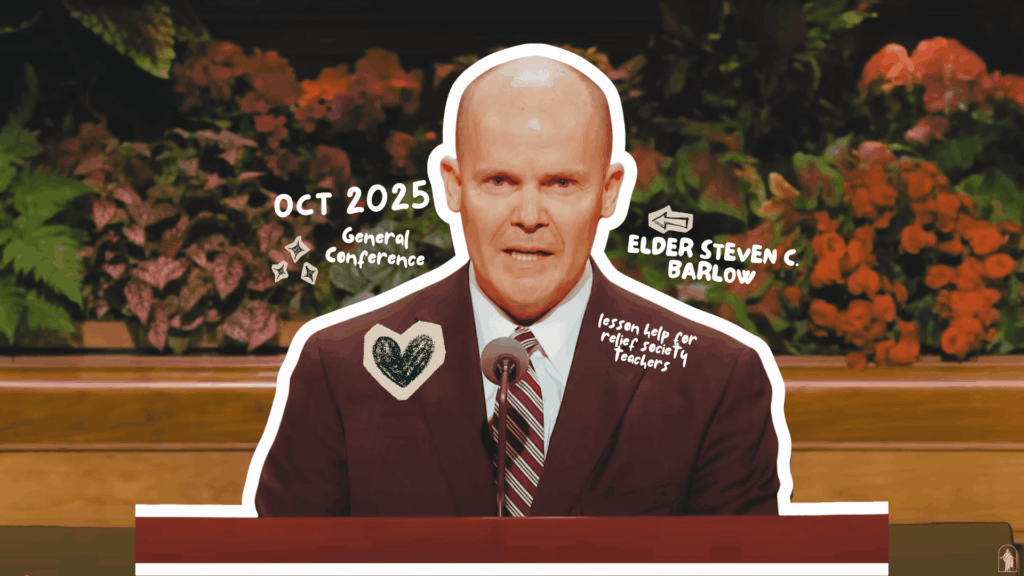
This lesson helps sisters explore one of the most intimate questions the Savior ever asked: “Lovest thou Me?”
Through this talk, Elder Barlow reminds us that showing our love for God is less about grand gestures and more about daily devotion—putting Him first, serving His children, giving thanks, and keeping His commandments with affection and intent.
This discussion-based outline is designed to help your Relief Society class:
- Recognize how God perceives our love for Him,
- Discover the specific ways He’s asked us to show that love, and
- Reflect on personal relationships—with both Him and others—in a way that feels warm, honest, and uplifting.
Each section below includes inspiring quotes, thoughtful questions, simple object lesson ideas, and sharing prompts that invite real connection.

Grab our free bundle of 50+ Presentation Backgrounds by clicking here: https://otherthanamom.myflodesk.com/freebackgrounds

Interested in a done-for-you lesson plan with a teacher’s outline Google Doc, Canva Presentation Template, Lesson Handout Template, and themed presentation backgrounds? Click here: https://www.etsy.com/listing/4414284630/october-2025-general-conference-lesson?sr_prefetch=1&pf_from=shop_home&ref=shop_home_active_1&dd=1&logging_key=9341820901975b789e616d29e31d6b7df1c4f2ea%3A4414284630
Recognizing and Giving Love
“When love is freely given and sincerely received, a virtuous cycle ensues with an increase of love between both the giver and the receiver.”
“God’s love is perfect, infinite, enduring, and ‘most sweet.’ It fills the soul with ‘exceedingly great joy.’”
“He will express His love for us in ways we individually can recognize.”
10 Engaging Discussion Questions
- What does Elder Barlow mean by a “virtuous cycle” of love?
- How does sincere love between people help us better understand God’s love?
- Why do you think it can sometimes be difficult to recognize God’s love in our daily lives?
- In what small ways has the Lord expressed His love to you “according to your understanding”?
- How can we help others recognize God’s love for them when they feel forgotten?
- What role does humility play in receiving love—both from God and from others?
- How can we better balance giving and receiving love in our relationships?
- What gospel practices (like gratitude, service, or prayer) open our eyes to love more fully?
- Why do you think Heavenly Father individualizes the way He shows His love?
- How can recognizing His love deepen our faith during hard times?
5 Simple Object Lessons or Visuals
- Mirror Lesson – Hold up a mirror. Explain that love reflects: when we show love, it bounces back.
- Sunlight and Prism – Shine light through a prism to show that one pure light (God’s love) reflects differently for each person.
- Gift Wrapped Box – Discuss how God’s love is sometimes “wrapped” in trials or timing we don’t expect.
- Heartbeat Sound – Play a steady beat to symbolize that God’s love is constant even when unseen.
- Letters in a Jar – Write moments when you’ve felt God’s love on small papers; place them in a jar labeled “Reminders of His Love.”
10 Personal Sharing Prompts
- Share a time you felt God’s love in an unexpected way.
- Tell about someone who helped you feel Heavenly Father’s awareness of you.
- Describe how you personally recognize love—from God or others.
- Talk about a moment you realized you were loved even when you didn’t feel deserving.
- When was the last time you consciously stopped to thank the Lord for His love?
- Share a favorite scripture that helps you feel His affection.
- Who in your life models Christlike love most clearly?
- When have you struggled to see God’s love, and what helped restore that vision?
- What does divine love look like for you in the midst of trials?
- Share how understanding God’s love has changed your relationship with Him.
The Beautiful Paradox: Loving God First Helps Us Feel His Love More
“Like the prodigal son’s elder brother, our focus is often centered on ourselves. … The beautiful paradox is that the more we are focused on showing our love for God, the more easily we recognize His love for us.”
“Thou shalt love the Lord thy God with all thy heart, and with all thy soul, and with all thy mind.”
10 Engaging Discussion Questions
- Why do you think it’s hard sometimes to focus on loving God first?
- What does Elder Barlow mean by the “beautiful paradox”?
- How does serving or worshiping help us feel God’s love in return?
- In what ways can focusing too much on receiving love cause spiritual frustration?
- How does this principle apply in family life, motherhood, or marriage?
- What daily habits help you realign your heart to love God first?
- How can the commandment to love God “with all thy heart” look in modern life?
- What happens when we make other things our top priority instead of God?
- How might shifting our focus from “Am I loved?” to “How can I love?” change our prayers?
- What does loving God first teach our children about trust and faith?
5 Simple Object Lessons or Visuals
- Water Pitcher & Cups – Pour water from one cup to others to show that when we’re filled by loving God first, we can pour love freely to others.
- Compass – The compass always points north; compare this to keeping our hearts aligned toward God.
- Stack of Priorities – Stack items (scriptures, phone, planner) to show what we place “on top.”
- Mirror Fogged Up – Blow warm breath on a mirror to cloud it; explain how self-focus fogs our ability to see God’s love clearly.
- Heart Cutouts – Label hearts “Family,” “Work,” “God,” and “Hobbies.” Discuss what it looks like when “God” becomes the center heart that connects all others.
10 Personal Sharing Prompts
- When have you realized your focus shifted away from God, and how did you come back?
- Share a moment you put God first and saw blessings follow.
- How do you personally “show love” to God day to day?
- Talk about a habit or distraction that once came before Him—and what changed.
- Share a time serving others helped you feel closer to Heavenly Father.
- What does it look like for you to love God “with all your heart”?
- Have you ever experienced peace while doing something that required putting Him above your comfort?
- Who in your life exemplifies loving God first?
- When have you noticed that loving God more made you feel more loved?
- Share a small way you’re trying to put Him first this week.
“Lovest Thou Me More Than These?” — Putting God First
“Jesus saith to Simon Peter, Simon, son of Jonas, lovest thou me more than these? …”
“We show our love to the Lord when we put Him above ‘these,’ and ‘these’ can be anyone, any activity, or anything that displaces Him from being the most important influence in our lives.”
“Are you willing to let God be the most important influence in your life? Will you allow His words, His commandments, and His covenants to influence what you do each day?”
10 Engaging Discussion Questions
- What might your personal “these” be—things or people that sometimes displace God from first place?
- Why do you think the Savior asked Peter this question three times?
- How can loving God more help us love others better, not less?
- What does “letting God be the most important influence” look like in daily routines?
- How can we invite Heavenly Father into our decision-making more intentionally?
- When has the Spirit gently shown you that something was taking too much priority?
- How can we show our children what it looks like to choose faith over convenience?
- What is one “less important” thing you could let go of this week to make space for spiritual growth?
- How does loving God first simplify our lives rather than complicate them?
- What are signs that our will is being “swallowed up in His”?
5 Simple Object Lessons or Visuals
- Rocks in a Jar – Fill a jar with big rocks (faith, family, service) and small pebbles (distractions). Show that putting the big rocks in first allows everything else to fit.
- Scale Balance – Place small objects on both sides of a scale to show the pull of worldly vs. spiritual priorities.
- Phone Notification – Show how notifications constantly call for our attention; discuss how we can “silence” distractions to hear the Spirit.
- Lighthouse Visual – Use an image of a lighthouse to represent the Savior—constant, guiding, always first.
- Two Arrows Signpost – One arrow labeled “Comfort,” the other “Christ.” Discuss which we follow most often.
10 Personal Sharing Prompts
- Share a time when choosing God first required sacrifice.
- Who in your life models putting God above all else?
- What “these” are currently competing for your attention or heart?
- Tell about a moment when putting the Lord first changed an outcome for good.
- Share how you prioritize your spiritual life during busy seasons.
- What helps you realign when you realize something else has become “first”?
- How does putting God first bring peace in chaos?
- When have you felt Heavenly Father guide you to let go of something temporal?
- How does trusting God’s timing show that we love Him more than our plans?
- Share a way your love for God influences your daily choices.
“Feed My Sheep” — Loving Through Service
“We show our love for Heavenly Father when we serve, listen to, love, lift, or minister to His children.”
“They see as they are seen, and know as they are known. They see others as God sees them.”
“Serving each other is an unmistakable way we show our love for God and His Beloved Son.”
10 Engaging Discussion Questions
- What does “feeding His sheep” mean to you personally?
- Why is seeing others “as God sees them” so essential to service?
- What small acts of ministering have you seen that felt divinely inspired?
- How can we avoid serving out of duty and instead serve out of love?
- What happens in a ward or family when people truly see each other?
- How can we better listen to the quiet needs of others?
- When has service softened your own heart toward someone?
- How can we balance serving others with protecting our own spiritual health?
- What can we learn from the Savior’s example as the ultimate Shepherd?
- Why do you think love and service are inseparable?
5 Simple Object Lessons or Visuals
- Loaves and Fish Basket – Use small rolls or paper fish to show how our small efforts multiply through Christ’s love.
- Plant Care Example – A thriving plant symbolizes souls that are nourished by care and consistency.
- Blanket or Shawl – Wrap a blanket around someone and explain how ministering brings warmth and comfort.
- Feeding Birds – Visualize feeding birds daily; just as they depend on consistent nourishment, so do God’s children.
- Puzzle Piece – Hand out puzzle pieces to represent how each sister completes God’s family picture when she serves.
10 Personal Sharing Prompts
- Share a time when someone’s small act of service lifted you.
- When have you felt God’s love while serving someone else?
- Talk about a time you saw someone “feed His sheep” in a quiet, Christlike way.
- How has ministering changed your perspective on love?
- What simple ways can you “feed” your family spiritually each week?
- Who is one “sheep” the Spirit has prompted you to reach out to recently?
- How has the Savior’s example influenced how you serve others?
- When have you seen miracles follow a simple act of kindness?
- Share a time service strengthened your testimony.
- What’s one small way you can show Christlike love this week?
“Confess His Hand in All Things” — Loving Through Gratitude
“In nothing doth man offend God … save those who confess not his hand in all things.”
“We show our love for God by acknowledging Him as the source of every good thing in our lives.”
“We show our love for God with an attitude of gratitude.”
10 Engaging Discussion Questions
- Why does failing to show gratitude offend God?
- How does acknowledging God’s hand change your daily mindset?
- What does “confessing His hand in all things” look like in real life?
- How can gratitude deepen our relationship with Heavenly Father?
- When have you seen gratitude turn a challenge into a blessing?
- What are subtle ways we can express thanks beyond words?
- How can we teach children to recognize the Lord’s hand in their lives?
- What’s the difference between saying “thank you” and feeling deep gratitude?
- How has gratitude helped you feel more loved by God?
- What helps you stay grateful during difficult seasons?
5 Simple Object Lessons or Visuals
- Gratitude Jar – Write down daily blessings to “confess His hand.”
- Handprint Craft – Trace your hand and write blessings on each finger.
- Before and After Picture – Show how recognizing blessings changes our “vision.”
- Thank-You Notes – Pass around blank notes to write to the Savior or someone you’re grateful for.
- Sunrise Image – Use sunrise to symbolize new light that gratitude brings each day.
10 Personal Sharing Prompts
- Share a time you clearly saw the Lord’s hand in your life.
- What are you most grateful for today, spiritually or temporally?
- When has gratitude shifted your perspective mid-trial?
- Who taught you the habit of being thankful?
- Share a time gratitude helped you through loss or disappointment.
- How do you recognize the Lord’s tender mercies in ordinary days?
- What scripture helps you remember to be grateful?
- When have you felt prompted to thank the Lord and realized He was listening?
- Who are you grateful for in your ward or family right now?
- Share how expressing gratitude has brought you peace.
“If Ye Love Me, Keep My Commandments” — Loving Through Obedience
“If ye love me, keep my commandments.”
“This kind of obedience is neither blind nor compulsory but is a sincere and willing expression of love.”
“Even though we don’t have perfect obedience yet, we try affectionate obedience now.”
“Our Heavenly Father’s goal … is not to have His children do what is right; it is to have His children choose to do what is right.”
10 Engaging Discussion Questions
- What does “affectionate obedience” mean to you?
- How is obedience an expression of love rather than compliance?
- How can we move from duty-based obedience to heartfelt devotion?
- What does choosing to obey teach us about agency and trust?
- Why do you think God values choice so much in our discipleship?
- How can we help our children see commandments as love, not restriction?
- What are signs that your obedience has become more affectionate over time?
- How can obedience strengthen our ability to hear the Spirit?
- What helps you obey even when it’s hard to understand the reason why?
- How does choosing to obey show Heavenly Father that you love Him?
5 Simple Object Lessons or Visuals
- Traffic Light Visual – Green means go, red means stop—rules keep us safe, just like commandments.
- Tethered Balloon – A balloon anchored by a string can rise but not float away—obedience anchors freedom.
- Two Paths Illustration – One smooth, one rocky; obedience lights our way forward.
- Heart and Key Symbol – The commandments are keys that open the heart to God’s blessings.
- String Maze – Show how following “command lines” leads to light at the end.
10 Personal Sharing Prompts
- Share a commandment that’s brought unexpected blessings to your life.
- Talk about a time obedience deepened your relationship with God.
- Who has modeled joyful obedience for you?
- When have you obeyed first and understood later?
- What helps you stay faithful in small daily choices?
- How do you teach obedience with love in your home?
- Share how following a prompting strengthened your testimony.
- What does “affectionate obedience” look like in motherhood or service?
- Describe a time you chose to obey out of love rather than fear.
- What commandment has been a source of comfort for you lately?
Conclusion
Elder Barlow’s message gently invites us to ask ourselves the Savior’s question—“Lovest thou Me?”—not with guilt, but with gratitude.
His talk helps Relief Society sisters see that love for God is shown through living, not just feeling: by putting Him first, feeding His sheep, recognizing His hand, and obeying out of affection and trust.
As you teach this lesson, invite your class to reflect on where they see love already flowing in their lives and how they can deepen it through simple, intentional choices. When we love Him first, we begin to see His love everywhere—in others, in our blessings, and even in our trials.