Introduction
Elder Gerrit W. Gong’s talk “’Tis Eastertide: No One Walks Alone” is a deeply moving invitation to recognize Jesus Christ walking with us in our lives—even when we do not recognize Him at first. Through the story of the road to Emmaus, Elder Gong teaches a powerful covenant pattern: Christ walks with us, teaches us through scripture, reveals Himself through ordinances, and abides with us through covenants and the Holy Ghost.
This lesson help is designed to help Relief Society teachers create meaningful, Spirit-filled discussions. The talk is divided into chronological sections, each including powerful direct quotes, discussion questions, object lesson ideas, and personal sharing prompts. This allows you to spend less time preparing structure and more time focusing on the sisters and the Spirit.

Grab our free bundle of 50+ Presentation Backgrounds by clicking here: https://otherthanamom.myflodesk.com/freebackgrounds
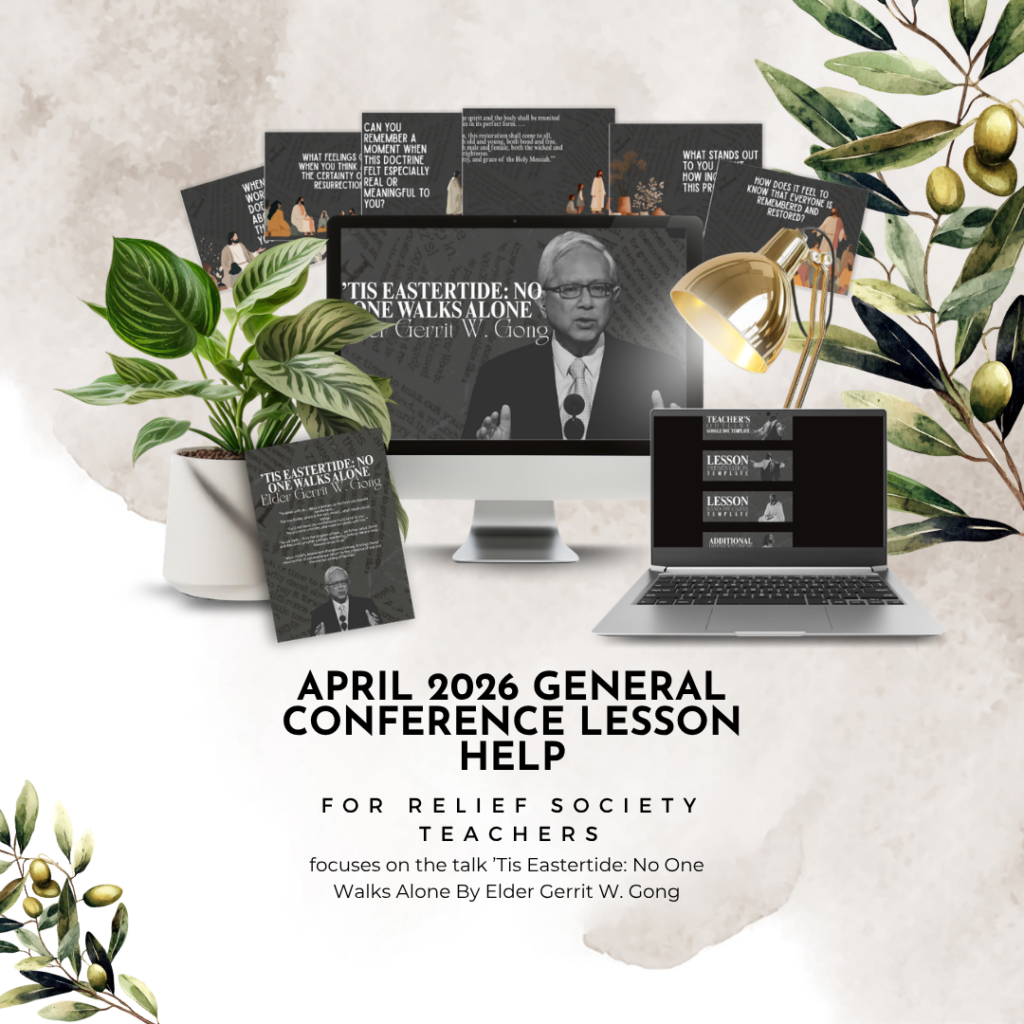
Interested in a done-for-you lesson plan with a teacher’s outline Google Doc, Canva Presentation Template, Lesson Handout Template, and themed presentation backgrounds? Click here: https://www.etsy.com/listing/4498286132/april-2026-general-conference-lesson?ref=listings_manager_grid
Section 1: The Road to Emmaus—Recognizing the Savior Walking with Us
Teach
Elder Gong begins by inviting us into the sacred story of the disciples on the road to Emmaus. Though they were grieving and did not recognize Him at first, Jesus Christ was walking with them all along.
Direct Quotes from the Talk
“Imagine we are walking to Emmaus. A stranger joins us. He sees we are sad. We tell Him, ‘Jesus of Nazareth… has been crucified.’ …
“As we walk, the stranger opens the scriptures and expounds all things concerning Jesus Christ. Our hearts burn within us…
“Our eyes are opened. We know Him—the resurrected Jesus Christ. Though we did not recognize Him before, He has been walking with us all along.”
Discussion Questions
- Why do you think the disciples did not recognize Christ at first?
- How have you experienced the Savior walking with you without realizing it?
- What does it mean to have your “heart burn within you”?
- Why is the Emmaus story so relatable to our lives?
- How does sadness sometimes affect our spiritual awareness?
- What helps us recognize Christ more clearly?
- Why does the Savior often reveal Himself gradually?
- How does this story bring comfort in lonely moments?
- What does this teach about Christ’s awareness of us?
- How can we help others recognize Him in their lives?
Object Lessons
- Walk with someone silently, then reveal you were there all along.
- Use a dim light that gradually brightens.
- Show a hidden image that becomes clear.
- Use two footprints walking together.
- Display a path labeled “Emmaus.”
Personal Sharing Prompts
- Share a time you realized Christ had been helping you all along.
- Describe a moment your heart felt “burning” with truth.
- Share how the Savior has comforted you in sadness.
- Talk about a time you didn’t recognize a blessing until later.
- Share how scripture has opened your understanding.
- Describe how you feel Christ’s presence.
- Share a moment of spiritual realization.
- Talk about how Christ has walked with you.
- Share how your faith has grown over time.
- Describe what this story means to you personally.
Section 2: Christ Reveals Himself Through Scripture and Ordinances
Teach
Elder Gong teaches a covenant pattern: Christ teaches us through scripture, and we come to know Him through ordinances—especially the sacrament.
Direct Quotes from the Talk
“As He ‘talk[s] with us by the way,’ His words in scripture can cause our hearts to burn. As He breaks and blesses the sacramental bread, His ordinances and covenants can help us know Him.”
Discussion Questions
- Why are scripture and ordinances central to knowing Christ?
- How does scripture invite revelation?
- What role does the sacrament play in recognizing the Savior?
- Why do ordinances help us “know” Him, not just learn about Him?
- How can we make sacrament more meaningful?
- What helps your heart “burn” during scripture study?
- Why does God use repeated patterns?
- How do covenants deepen understanding?
- How can we teach this pattern to our families?
- What helps you feel connected to Christ weekly?
Object Lessons
- Use a scripture and bread together.
- Show a glowing heart symbol.
- Use a weekly calendar highlighting the Sabbath.
- Display a covenant chain linking ordinances.
- Use a lamp to represent scripture light.
Personal Sharing Prompts
- Share how scripture has helped you know Christ.
- Describe a meaningful sacrament experience.
- Share how covenants have deepened your faith.
- Talk about a time you felt the Spirit strongly.
- Share how you prepare for the sacrament.
- Describe how ordinances bring clarity.
- Share how your understanding of Christ has grown.
- Talk about a favorite scripture experience.
- Share how you feel during sacrament meeting.
- Describe how this pattern works in your life.
Section 3: Christ Abides with Us Through the Holy Ghost and His Presence
Teach
Elder Gong teaches that Christ fulfills His promise to abide with us through the Holy Ghost (the First Comforter) and through His own presence (the Second Comforter).
Direct Quotes from the Talk
“To abide with us… Jesus promises us the First and Second Comforters…
“‘The Comforter, which is the Holy Ghost… shall teach you all things.’
“The Second Comforter… ‘I will not leave you comfortless: I will come to you.’
“‘We will come unto him, and make our abode with him.’”
Discussion Questions
- What does it mean for Christ to “abide” with us?
- How does the Holy Ghost act as a Comforter?
- What is the difference between the First and Second Comforters?
- How do we invite Christ to remain with us?
- Why is love and obedience tied to His presence?
- What does “make our abode with him” mean?
- How can we feel less alone through this doctrine?
- What helps us recognize the Holy Ghost?
- How does Christ personally minister to us?
- How can we create a life where He abides with us?
Object Lessons
- Use a candle that stays lit.
- Show a home labeled “abode.”
- Use a blanket to represent comfort.
- Display a heart with the word “abide.”
- Use a companion walking beside you.
Personal Sharing Prompts
- Share a time you felt the Holy Ghost comfort you.
- Describe how Christ has felt close to you.
- Share what helps you feel His presence.
- Talk about how obedience invites Him.
- Share how you recognize spiritual guidance.
- Describe a time you felt strengthened.
- Share how Christ has answered you.
- Talk about feeling less alone.
- Share how you invite the Spirit daily.
- Describe what “abiding in Christ” means to you.
Section 4: Without Christ, We Can Do Nothing
Teach
Using the metaphor of the vine and branches, Elder Gong teaches that we must remain connected to Christ to bear fruit and experience joy.
Direct Quotes from the Talk
“A branch ‘cannot bear fruit of itself.’ We without the Lord can do nothing. But ‘he that abideth in me… bringeth forth much fruit’…
“That your joy might remain… and that your joy might be full.”
Discussion Questions
- What does it mean to abide in Christ?
- Why can we not bear fruit alone?
- What kind of fruit does Christ help us produce?
- How does connection to Christ bring joy?
- What disconnects us from Him?
- How do we stay spiritually nourished?
- Why is joy a result of abiding?
- How does this metaphor apply daily?
- What helps you feel connected to Christ?
- What fruit have you seen in your life?
Object Lessons
- Use a vine and branch.
- Show a plant disconnected from roots.
- Use fruit to represent results of connection.
- Display a watering can.
- Show a thriving vs. dying plant.
Personal Sharing Prompts
- Share how Christ has helped you grow.
- Describe a time you felt spiritually nourished.
- Share what helps you stay connected.
- Talk about fruit in your life.
- Share how joy has increased through faith.
- Describe what disconnect feels like.
- Share how you return to Christ.
- Talk about a time you needed Him.
- Share how abiding has changed you.
- Describe your relationship with Him.
Section 5: Following the Prophet Brings Blessings
Teach
Elder Gong connects the pattern of abiding in Christ to sustaining and following the prophet, emphasizing unity and joyful obedience.
Direct Quotes from the Talk
“As we ‘seek… first the kingdom of God…’ we follow Jesus Christ and the Lord’s prophet willingly, obediently, joyfully. We are richly blessed as we do so.”
Discussion Questions
- Why is following the prophet connected to following Christ?
- What does joyful obedience look like?
- How does unity strengthen faith?
- Why do prophets guide us today?
- What blessings come from following prophetic counsel?
- How can we sustain leaders more fully?
- What does it mean to seek first the kingdom of God?
- How does obedience bring joy?
- What has a prophet taught that impacted you?
- How can we teach children to trust prophets?
Object Lessons
- Use a compass pointing north.
- Show a shepherd guiding sheep.
- Use a path with a guide.
- Display a picture of the prophet.
- Use a map and guide.
Personal Sharing Prompts
- Share how following the prophet blessed you.
- Describe a time you trusted prophetic counsel.
- Share how obedience brought joy.
- Talk about sustaining leaders.
- Share what you’ve learned from a prophet.
- Describe how you seek God first.
- Share how unity has strengthened you.
- Talk about how prophets guide today.
- Share a personal witness.
- Describe what this means to you.
Section 6: The Atonement Changes Everything
Teach
Elder Gong testifies that Christ’s Atonement enables resurrection, healing, reconciliation, and eternal families.
Direct Quotes from the Talk
“Jesus Christ’s Atonement changes everything. It brings literal resurrection. It can enable our return to the presence of God and the eternal uniting of families.”
Discussion Questions
- What does it mean that the Atonement changes everything?
- How has it changed your life?
- What does healing look like through Christ?
- How does it unite families?
- Why is resurrection essential?
- How does reconciliation happen?
- What part of the Atonement feels most personal?
- How can we rely on it more?
- What does it teach about God’s love?
- How can we share this message?
Object Lessons
- Use a broken object repaired.
- Show a before-and-after image.
- Use a heart healed.
- Display a cross and empty tomb.
- Use light overcoming darkness.
Personal Sharing Prompts
- Share how Christ healed you.
- Describe how the Atonement changed your life.
- Share how you’ve felt forgiveness.
- Talk about hope through Christ.
- Share how He strengthened you.
- Describe reconciliation.
- Share a moment of grace.
- Talk about resurrection hope.
- Share how Christ helped you change.
- Describe what this means to you.
Section 7: No One Walks Alone
Teach
Elder Gong concludes with a powerful invitation: just as Christ walks with us, we are invited to walk with others so no one is alone.
Direct Quotes from the Talk
“If you see someone walking alone and sad, will you please walk with them? No one sits alone, and no one should walk their road to Emmaus alone or unseen.”
Discussion Questions
- Why is this invitation so powerful?
- What does it mean to walk with someone?
- How can we notice those who feel alone?
- Why is belonging essential in the gospel?
- How does this reflect Christlike love?
- What keeps us from reaching out?
- How can Relief Society prevent loneliness?
- What small actions make a big difference?
- How does serving others help us feel Christ?
- Who might need you to walk with them?
Object Lessons
- Walk beside someone physically.
- Show two footprints walking together.
- Use a bench with one person, then two.
- Display a hand reaching out.
- Use a light shared between people.
Personal Sharing Prompts
- Share a time someone walked with you.
- Describe how you helped someone feel seen.
- Share how Christ has walked with you.
- Talk about noticing others.
- Share how connection has blessed you.
- Describe a time you reached out.
- Share how you felt less alone.
- Talk about ministering experiences.
- Share how you show love.
- Describe how you can act on this invitation.
Conclusion
Elder Gong’s message is a beautiful reminder that Jesus Christ is not distant—He is present. He walks with us, teaches us, abides with us, and strengthens us. Even when we do not recognize Him, He is there.
This lesson help allows Relief Society teachers to focus on meaningful discussion rather than structure. With organized sections, powerful quotes, and thoughtful prompts, you can help sisters recognize the Savior in their lives and feel His presence more deeply.
Most importantly, this talk invites us to act. As Christ walks with us, we are invited to walk with others. No one should feel unseen, unheard, or alone. As we live this invitation, we not only come unto Christ—we help others come unto Him as well.