Introduction
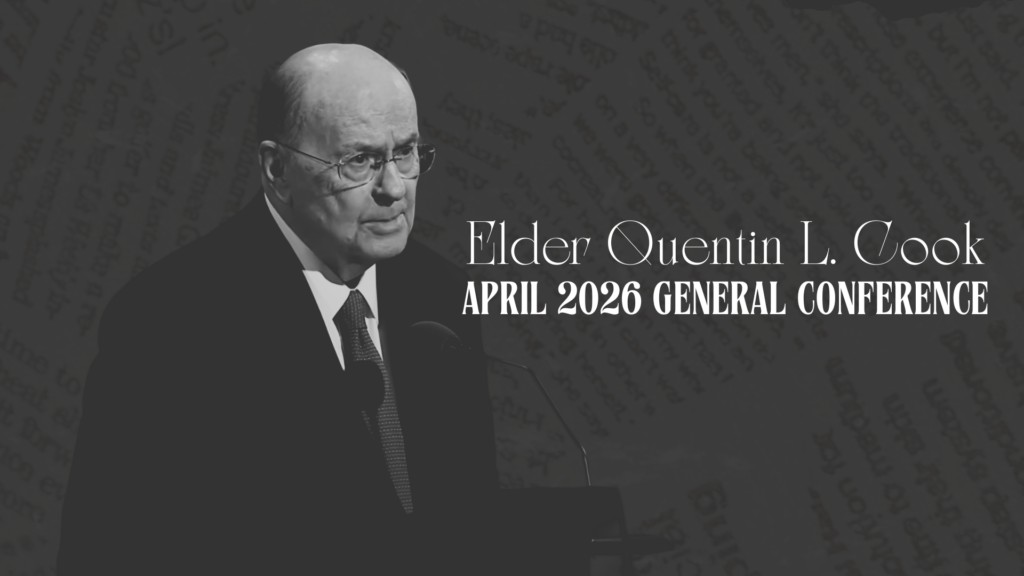
Elder Quentin L. Cook’s talk “Keys, Covenants, and Easter” is a powerful doctrinal message that weaves together the Resurrection of Jesus Christ, the Restoration of priesthood keys, the role of Elijah, and the eternal nature of families. At its core, this talk teaches that Easter is not just about what Christ did—but about what His Atonement makes possible through covenants and priesthood keys in our day.
This lesson help is designed to make Relief Society preparation both easier and deeper. The talk is broken into chronological discussion sections, each including direct quotes, engaging discussion questions, object lesson ideas, and personal sharing prompts. This allows you to focus less on organizing and more on helping sisters feel the Spirit, understand doctrine, and apply it in their lives.

Grab our free bundle of 50+ Presentation Backgrounds by clicking here: https://otherthanamom.myflodesk.com/freebackgrounds
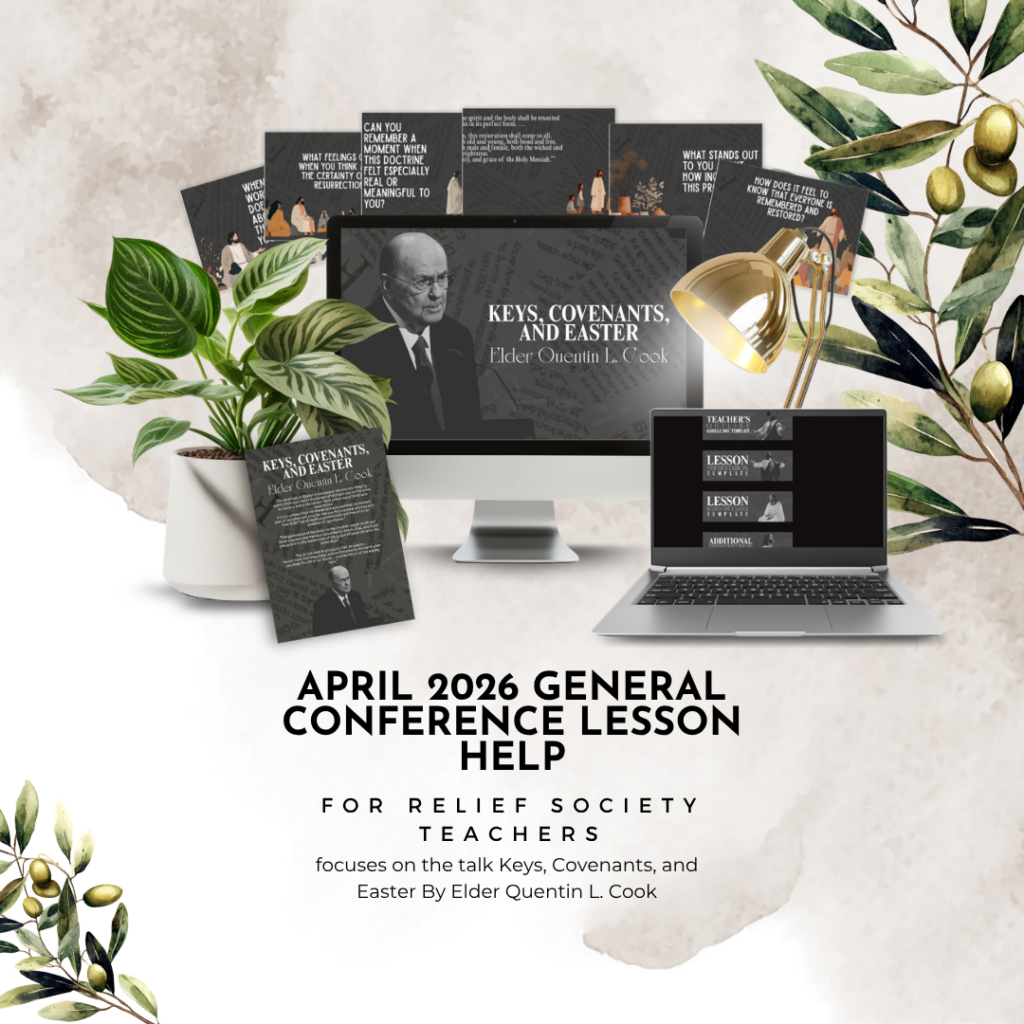
Interested in a done-for-you lesson plan with a teacher’s outline Google Doc, Canva Presentation Template, Lesson Handout Template, and themed presentation backgrounds? Click here: https://www.etsy.com/listing/4498268833/april-2026-general-conference-lesson?ref=listings_manager_grid
Section 1: Easter Centers on the Atonement and Resurrection of Jesus Christ
Teach
Elder Cook begins by anchoring everything in Easter—Gethsemane, Calvary, and the Resurrection. These events are not symbolic; they are the foundation of God’s plan and the reason all other blessings are possible.
Direct Quotes from the Talk
“Our emphasis at Easter encompasses the eternity-shaping events that occurred in the Garden of Gethsemane, on the cross at Calvary, and in the Garden Tomb where Jesus Christ was resurrected.
“It is my witness that His Atonement accomplished His Father’s plan of salvation and provides the way for everyone who has ever lived to be free of death unconditionally and free of sin on condition of repentance. Therefore, the seminal doctrines of the Resurrection and the Atonement have been accomplished by our Lord and Savior, Jesus Christ.”
Discussion Questions
- Why does Elder Cook call these events “eternity-shaping”?
- What does it mean that we are free from death unconditionally?
- Why is freedom from sin conditional?
- How does repentance connect us to Easter?
- Why must we understand the Atonement before understanding covenants?
- What part of the Savior’s sacrifice feels most personal to you?
- How does Easter change your view of your future?
- Why are the Atonement and Resurrection called “seminal doctrines”?
- How can we make Easter more meaningful in daily life?
- What does this section teach about God’s love?
Object Lessons
- Use three images: Gethsemane, the cross, and the empty tomb.
- Show a broken chain to represent freedom from death.
- Use a white cloth to symbolize repentance and cleansing.
- Place stepping stones labeled Gethsemane, Calvary, Resurrection.
- Use a light turning on in a dark room to represent hope.
Personal Sharing Prompts
- Share what Easter means to you personally.
- Describe how the Atonement has changed your life.
- Share how repentance has brought you peace.
- Talk about how the Resurrection brings hope.
- Share a time you felt Christ’s love deeply.
- Describe how you teach Easter in your home.
- Share a scripture that helps you remember the Savior.
- Talk about how Christ has helped you overcome something.
- Share how Easter strengthens your testimony.
- Describe how you feel knowing death is overcome.
Section 2: The Restoration of Priesthood Keys Is Central to the Gospel
Teach
Elder Cook connects Easter to the Restoration, specifically the Savior’s appearance in the Kirtland Temple and the restoration of priesthood keys by ancient prophets.
Direct Quotes from the Talk
“This Easter Sunday also coincides with the magnificent vision of the Savior that occurred in the Kirtland Temple on Easter Sunday of 1836—190 years ago—just one week after the Kirtland Temple was dedicated.
“The appearance of the Savior to the Prophet Joseph Smith and Oliver Cowdery and the keys committed by Moses, Elias, and Elijah are central to the Restoration of the gospel of Jesus Christ in the latter days.”
Discussion Questions
- Why is it significant that this event happened on Easter?
- What does it mean that priesthood keys are “central” to the Restoration?
- How does the Restoration connect us to Christ’s Atonement?
- Why were Moses, Elias, and Elijah involved?
- What is the difference between priesthood authority and priesthood keys?
- How do priesthood keys bless your daily life?
- Why is the Restoration ongoing in its influence?
- How does this knowledge strengthen your testimony of Joseph Smith?
- What would we be missing without restored keys?
- How can we better appreciate the Restoration?
Object Lessons
- Use a set of keys to represent priesthood keys.
- Show a timeline connecting ancient prophets to modern prophets.
- Use a door that only opens with a key.
- Draw a connection between Easter and the Kirtland Temple.
- Use labeled cards: Moses, Elias, Elijah.
Personal Sharing Prompts
- Share how the Restoration has blessed your life.
- Describe your testimony of priesthood keys.
- Share a moment you felt gratitude for Joseph Smith.
- Talk about how temple blessings have impacted you.
- Share how restored truth has changed your perspective.
- Describe how you teach the Restoration to others.
- Share what you feel when you think about Kirtland Temple events.
- Talk about how priesthood authority has blessed your family.
- Share how the Restoration strengthens your faith in Christ.
- Describe what “restored gospel” means to you.
Section 3: Elijah and the Sealing Power Unite Families Eternally
Teach
Elder Cook emphasizes Elijah’s crucial role in restoring the sealing power. Without these keys, eternal families would not exist, and the earth would be “utterly wasted.”
Direct Quotes from the Talk
“Elijah committed to Joseph Smith the priesthood keys pertaining to the sealing power to bind sacred ordinances and covenants on earth and in heaven. This includes the vicarious ordinances of salvation and exaltation that must be performed here on earth in the temples of the Lord.
“The sealing ordinances are effective after this life and in the eternities—to seal husbands and wives, parents and children. Without these keys, there are no eternal families, and ‘the whole earth would be utterly wasted.’”
Discussion Questions
- Why is Elijah’s role so central to the plan of salvation?
- What does sealing power actually do?
- Why would the earth be “utterly wasted” without it?
- How do temple ordinances connect generations?
- What does it mean to be sealed beyond this life?
- How does this doctrine affect your view of family?
- Why are vicarious ordinances necessary?
- How does family history connect to this doctrine?
- What does this teach about God’s priorities?
- How can we strengthen our connection to our ancestors?
Object Lessons
- Use a chain linking generations together.
- Show a family tree diagram.
- Use glue to represent sealing power.
- Bring a temple picture and discuss its purpose.
- Use a heart connecting past and present generations.
Personal Sharing Prompts
- Share what eternal families mean to you.
- Describe an experience doing family history work.
- Share how temple work has blessed your life.
- Talk about a connection you feel with ancestors.
- Share how sealing power brings hope.
- Describe a time temple ordinances felt sacred.
- Share how this doctrine changes your priorities.
- Talk about how you teach family history to children.
- Share what you feel about being connected eternally.
- Describe how this doctrine brings peace.
Section 4: Turning Hearts Across Generations Is Part of God’s Plan
Teach
Elder Cook explains Malachi’s prophecy and Moroni’s teachings. Turning hearts between children and ancestors is essential to God’s plan.
Direct Quotes from the Talk
“And he shall plant in the hearts of the children the promises made to the fathers, and the hearts of the children shall turn to their fathers.
“If it were not so, the whole earth would be utterly wasted at his coming.”
Discussion Questions
- What does it mean to have hearts turned to our fathers?
- Why is this connection essential to God’s plan?
- How does family history fulfill prophecy?
- What promises are made to the fathers?
- How can we help younger generations feel connected to ancestors?
- Why would the earth be incomplete without this work?
- How does this doctrine affect identity?
- What spiritual experiences have come from family history?
- How can we make this work more meaningful?
- What does this teach about eternal relationships?
Object Lessons
- Use a compass pointing backward and forward.
- Show a family timeline connecting generations.
- Use a heart symbol connecting two names.
- Display old photos of ancestors.
- Use a bridge image connecting past and present.
Personal Sharing Prompts
- Share a meaningful ancestor story.
- Describe how your heart has turned to your family.
- Share a spiritual experience with genealogy work.
- Talk about what you’ve learned from ancestors.
- Share how this doctrine affects your identity.
- Describe how you feel when doing temple work.
- Share how you involve your family in this work.
- Talk about promises you feel connected to.
- Share how this work brings joy.
- Describe how it strengthens your testimony.
Section 5: Temple Ordinances Bring Deep Spiritual Recognition
Teach
Elder Cook shares experiences with Jewish leaders visiting temples and recognizing elements connected to ancient worship and scripture.
Direct Quotes from the Talk
“When we entered the sealing room, Elder Holland was overcome with emotion… he explained that Elijah indeed had come and restored the sacred keys that allow the eternal sealing of husbands and wives and their families.
“Our Jewish friends appreciated the fact that Old Testament scriptural accounts of prophets are featured so prominently in our temples and doctrine.”
Discussion Questions
- Why did temple experiences bring recognition to these visitors?
- What does this teach about the continuity of God’s work?
- Why are temples connected to ancient scripture?
- How does the temple unify religious understanding?
- What does this teach about truth being consistent across time?
- Why did Elder Holland feel emotional in the sealing room?
- How can we deepen our own temple understanding?
- What do others recognize when they learn about our temples?
- Why is temple doctrine powerful across cultures?
- How can we better appreciate temple symbolism?
Object Lessons
- Show Old Testament scriptures alongside a temple image.
- Use a model of Solomon’s temple.
- Display oxen imagery from baptismal fonts.
- Use a map connecting ancient and modern temples.
- Show scripture references tied to temple practices.
Personal Sharing Prompts
- Share a meaningful temple experience.
- Describe how the temple connects to scripture for you.
- Share what you feel in the sealing room.
- Talk about how temple worship has deepened your faith.
- Share how others have responded to learning about temples.
- Describe a moment of spiritual recognition.
- Share how temple symbolism has taught you.
- Talk about what the temple means in your life.
- Share how the temple brings peace.
- Describe how it strengthens your relationship with God.
Section 6: You Can Feel the Spirit Without Going to Jerusalem
Teach
Elder Cook testifies that sacred experiences are not limited to physical places. We can feel the Spirit and gain testimony through study and the Holy Ghost.
Direct Quotes from the Talk
“Let me assure you that you do not need to physically visit Jerusalem to feel the same things that we felt that day…
“You can have that knowledge and confirmation by the Spirit when you study the life of our Savior, the restoration of the priesthood, and the return of the sealing keys.”
Discussion Questions
- Why is it important that spiritual experiences are not location-dependent?
- How can we feel the Spirit in everyday life?
- What role does study play in spiritual confirmation?
- Why is the Holy Ghost essential for testimony?
- How can we make sacred moments in ordinary settings?
- What helps you feel close to Christ without traveling?
- How does this principle increase accessibility of faith?
- Why do we sometimes think spiritual experiences require special settings?
- How can we invite the Spirit into our homes?
- What has helped you feel the Savior’s presence?
Object Lessons
- Use a small light to show the Spirit can be felt anywhere.
- Show scriptures as a source of connection.
- Use a quiet space demonstration.
- Hold a heart to represent internal spiritual experience.
- Use headphones to symbolize listening to the Spirit.
Personal Sharing Prompts
- Share a time you felt the Spirit in an ordinary moment.
- Describe how scripture study brings spiritual confirmation.
- Share how you feel close to Christ daily.
- Talk about a sacred moment outside a temple.
- Share how the Holy Ghost has taught you truth.
- Describe what invites the Spirit into your home.
- Share how you recognize spiritual impressions.
- Talk about how your testimony has grown.
- Share a moment of quiet spiritual clarity.
- Describe how you feel God’s presence.
Section 7: Covenants and Ordinances Bring Us Closer to Christ
Teach
Elder Cook promises that as we live covenants, we grow closer to the Savior and feel greater gratitude for His work and restored keys.
Direct Quotes from the Talk
“I promise to you on this Easter Day that as you adhere to His ordinances, covenants, and commandments, you will grow closer in your relationship with our Savior as well as your appreciation and gratitude for the sealing keys that have been restored in this dispensation.”
Discussion Questions
- How do covenants bring us closer to Christ?
- Why do ordinances deepen our relationship with Him?
- What does it mean to adhere to covenants?
- How does obedience increase gratitude?
- Why is covenant living tied to spiritual closeness?
- How can we strengthen our covenant commitment?
- What covenant feels most meaningful to you right now?
- How has living covenants changed your life?
- Why does gratitude grow through obedience?
- What invitation do you feel from this promise?
Object Lessons
- Use a path labeled ordinances → covenants → closeness to Christ.
- Show a heart growing larger to represent increased love.
- Use a ladder symbolizing spiritual progression.
- Display a temple recommend.
- Use a covenant chain linking actions to blessings.
Personal Sharing Prompts
- Share how a covenant has brought you closer to Christ.
- Describe how obedience has increased your gratitude.
- Share a time you felt strengthened by keeping commandments.
- Talk about how temple worship has blessed you.
- Share how you stay committed to covenants.
- Describe how your relationship with Christ has grown.
- Share what motivates you to keep covenants.
- Talk about a promise you have seen fulfilled.
- Share how ordinances have changed your life.
- Describe what closeness to Christ feels like.
Conclusion
Elder Cook’s talk teaches that Easter is not just a moment in history—it is the foundation for everything we hope for eternally. Because Jesus Christ suffered, died, and rose again, the sealing power could be restored. Because priesthood keys have been given again on the earth, families can be united forever. Because of covenants, we can grow closer to Christ and become who He invites us to become.
A lesson help like this allows Relief Society teachers to focus on what matters most: inviting the Spirit and helping sisters connect doctrine to their lives. With organized sections, meaningful quotes, and thoughtful questions already prepared, you can spend more time listening, guiding, and allowing the Spirit to teach.
As sisters study this talk, they can come away with a deeper understanding that keys, covenants, and Easter are all connected. Through Jesus Christ, the doors of eternity are opened, families are bound together, and every covenant path leads us back to Him.