Introduction
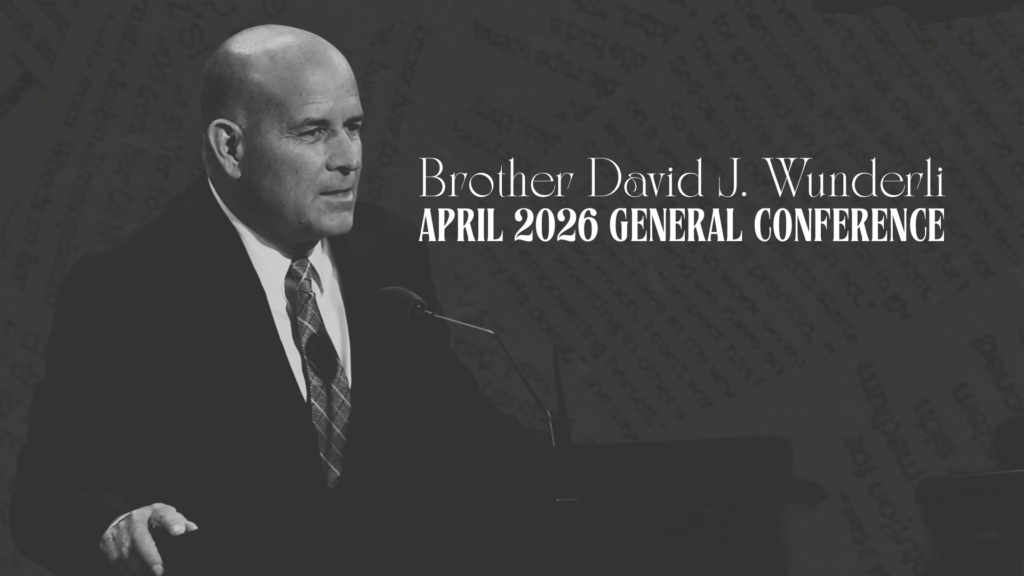
Some talks are memorable because of a phrase. Others stay with us because of an image. Brother David J. Wunderli’s talk gives us both: a child’s backpack full of rocks and a picture of Jesus Christ resting on top. It is a simple scene, but it teaches a powerful doctrine. Jesus Christ is not the weight in our lives. He is our relief.
This Relief Society lesson help is designed to make preparation easier while also going much deeper. Instead of scrambling to decide where the talk shifts or what questions to ask, you can work from a structure that follows the talk in chronological order, pulling out the strongest teaching moments as Brother Wunderli develops them. Each section includes direct quotes from the talk, discussion questions, object lesson ideas, and personal sharing prompts so the lesson can move beyond surface comments into real reflection, connection, and testimony.
This talk is especially helpful for Relief Society because it speaks so clearly to women carrying visible and invisible burdens. It addresses sorrow, sin, discouragement, daily worship, covenant living, and the steady companionship of Jesus Christ. And because the talk is built around such a memorable image, it naturally invites personal application. All quotes below come directly from the uploaded talk text.

Grab our free bundle of 50+ Presentation Backgrounds by clicking here: https://otherthanamom.myflodesk.com/freebackgrounds
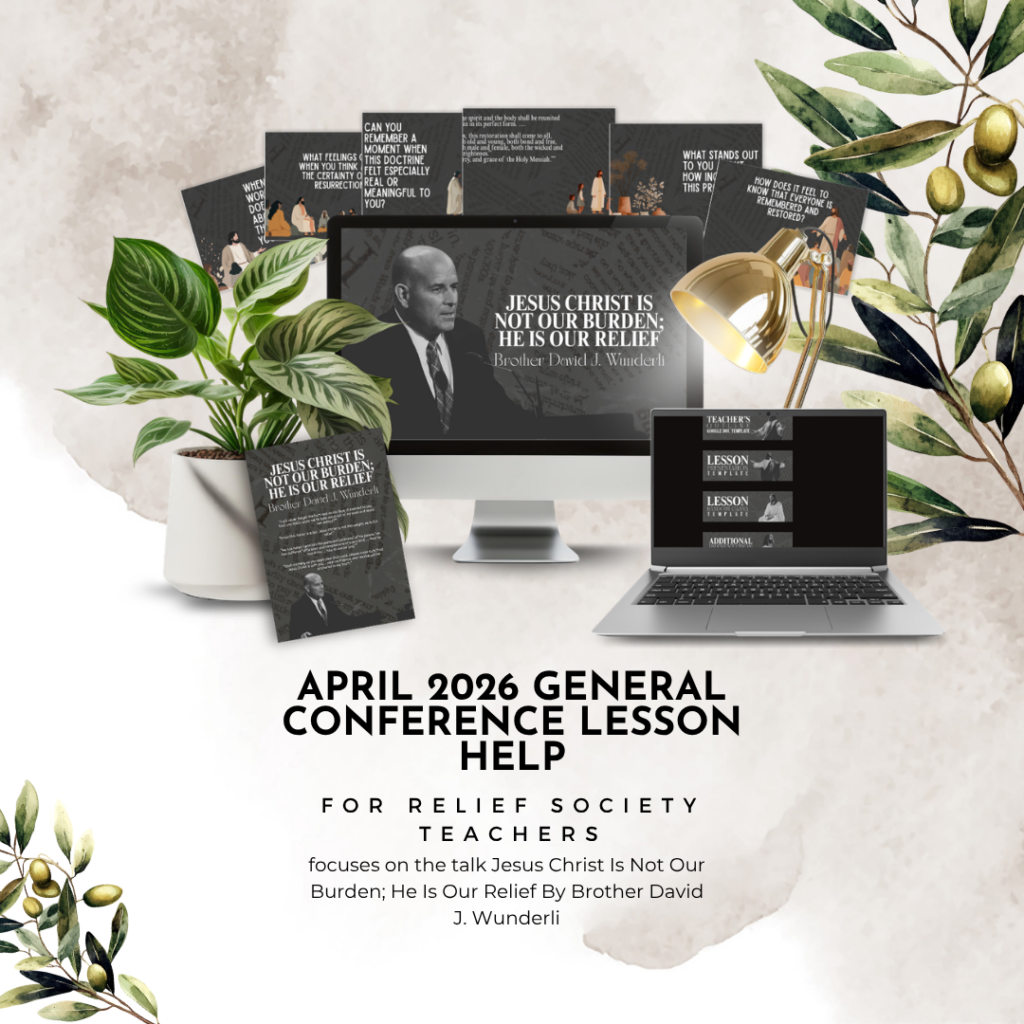
Interested in a done-for-you lesson plan with a teacher’s outline Google Doc, Canva Presentation Template, Lesson Handout Template, and themed presentation backgrounds? Click here: https://www.etsy.com/listing/4498224773/april-2026-general-conference-lesson?ref=listings_manager_grid
Section 1: The Backpack, the Rocks, and the Picture of Jesus
Teach
Brother Wunderli begins with a story that immediately teaches doctrine through everyday life. His young son treasures a picture of Jesus, carries it everywhere, and places it carefully in his backpack before a family hike. Then the boy starts collecting rocks, loading his pack with more than he can carry. The picture of Jesus is not what makes the backpack heavy, but that is exactly what the father jokingly suggests he remove. The story sets up the main truth of the talk: Jesus is not the burden.
Direct Quotes from the Talk
“Years ago our son came home from Primary with a small picture of Jesus Christ. His Primary teacher had given it to him, and he cherished that picture. He slept with it, protected it, and carried it with him to school.
“One Saturday morning we decided to take a family hike up a nearby canyon. Our six-year-old son carefully placed his picture of Jesus Christ into his backpack. That was it—he packed nothing else. When we stopped for lunch along the trail, he got busy finding small, unique rocks, and soon he had a large pile of them.”
“He asked me if he could take all these rocks home, and I said, ‘Sure, but you’ll have to carry them out yourself.’
“He agreed and began filling his pack. Then he carefully placed his picture of Jesus Christ back on top and zipped it up. I lifted the heavy pack, put it on his back, and watched as he took one step forward and five steps backward until he fell to the ground. Undaunted, he opened his pack and removed three small rocks. One more try, one more fail.”
Discussion Questions
- What stands out to you most in the opening story?
- Why do you think this image is such an effective way to teach the doctrine of Christ?
- What might the rocks represent in our lives?
- Why is it significant that the boy placed the picture of Jesus back on top each time?
- How do people sometimes misidentify the source of their burden?
- What burdens in mortality are self-chosen, and what burdens simply come because we live in a fallen world?
- Why is it easier to blame discipleship than to examine the actual “rocks” we are carrying?
- How does this story invite compassion for ourselves and others?
- In what ways do women often carry invisible backpacks full of rocks?
- What does this story already suggest about the Savior’s role in our struggles?
Object Lessons
- Bring a backpack filled with rocks and one small picture of Christ to visually recreate the opening story.
- Place several labeled stones in a bag: fear, shame, resentment, exhaustion, addiction, grief.
- Show how a backpack with one flat picture is light, but becomes heavy only when rocks are added.
- Invite sisters to hold a rock for a moment and think of a real burden they carry.
- Use two bags, one light and one overloaded, to discuss the difference between carrying Christ and carrying accumulated weights.
Personal Sharing Prompts
- Share a time when life felt heavier than you thought you could carry.
- Describe a “rock” you have recognized in your own backpack.
- Share how your relationship with Jesus Christ has stayed precious to you through a hard season.
- Talk about a time you mistook something for the problem, only to later realize the real burden was something else.
- Share about a burden that became more obvious over time.
- Describe a moment when you realized you were carrying too much.
- Share how the Savior has remained important to you even in exhausting circumstances.
- Talk about a childhood or simple gospel image that still teaches you today.
- Share what this opening story immediately made you think about in your own life.
- Describe what you would label as the heaviest rock in your backpack right now.
Section 2: The Mistake of Thinking Jesus Is the Weight
Teach
The emotional center of the story comes when the father suggests removing the picture of Jesus. The child’s hurt look becomes the talk’s turning point. The suggestion is absurd to the boy, and that is exactly the point. Sometimes adults do spiritually what the child knew better than to do: they begin to believe that leaving Jesus behind will make life easier.
Direct Quotes from the Talk
“Now, thinking there might be a lesson to be taught, I lightheartedly suggested that maybe he should remove his picture of Jesus. ‘That should lighten your load,’ I said.
“I will never forget the hurt look on his face. It seemed to say, ‘Dad, you really want me to take Jesus out of my pack and leave Him behind?’ And then his look changed to ‘Dad, you’re not as smart as I thought you were.’”
Discussion Questions
- Why is the child’s reaction so powerful?
- What does this moment reveal that children sometimes understand better than adults?
- In what ways do people today “remove Jesus from the pack”?
- Why can spiritual habits or commandments sometimes feel like the weight when they are not?
- How does this story expose a lie many people quietly believe?
- What are some subtle ways women are tempted to set Christ aside?
- Why do hardship and disappointment sometimes tempt people to distance themselves from God?
- What is lost when we leave the Savior behind?
- How can we help one another see more clearly what is actually making life heavy?
- Why do you think Brother Wunderli chose humor here before moving into deeper doctrine?
Object Lessons
- Take a picture of Christ out of the backpack and show that the bag is still heavy if the rocks remain.
- Use a name tag labeled “Jesus” and several heavier items labeled with sins, wounds, and fears.
- Remove a paper labeled “church” or “scripture study” from a pile of heavy rocks and show how little that changes the actual burden.
- Place a small picture of Christ on top of a table full of heavy stones to show how misplaced blame works.
- Invite someone to guess which item in a bag is making it heavy, then reveal it is the rocks, not the picture.
Personal Sharing Prompts
- Share a time you were tempted to pull away from the Savior during difficulty.
- Describe a season when spiritual things felt harder rather than easier.
- Share how the Lord helped you see that He was not the problem.
- Talk about a lie the adversary tried to sell you.
- Share about a time you stayed close to Christ even when you did not understand everything.
- Describe how keeping Jesus in your life actually changed a hard season.
- Share what helps you remember that the Savior is not the source of your burden.
- Talk about how the adversary distorts the role of commandments and repentance.
- Share a time when a childlike truth corrected your adult confusion.
- Describe why you do not want to leave Jesus behind.
Section 3: Jesus Christ Is Relief, Not Burden
Teach
From the opening story, Brother Wunderli moves into the thesis of the entire talk. He connects the child’s backpack to the lives of youth, and really to all disciples, teaching that rocks will collect in mortality. Some come by choice; some come simply by living in a fallen world. But the answer is never to remove Jesus Christ.
Direct Quotes from the Talk
“In a recent visit to West Africa, Diane and I sat in the home of two young brothers who had recently joined the Church and were being raised by a single mother in humble circumstances. When asked what the gospel of Jesus Christ has done for their family, 16-year-old Joshua simply said, ‘Relief.’”
“Dear amazing young men and young women: As you continue your journey from baptism forward, through your teenage years and on to adulthood, committed to becoming lifelong disciples of Jesus Christ, know that rocks found along the way will begin to collect in your backpack—some by choice and some by the very nature of your journey in this life. As the weight increases, please remember that taking Jesus Christ out of your life is not the answer. Removing Him will not lighten your load.”
“The enemy of happiness wants to separate you from Jesus Christ. He will tempt you to remove the Savior from your life, enticing you to think that the road would be easier without Him, that the weight of His commandments is too great, that the path back is too long, that repentance is too hard. Know this: Satan is a liar. Jesus Christ is not the weight; He is the relief.”
Discussion Questions
- What does the word “relief” mean to you in a spiritual sense?
- Why is that one-word answer from Joshua so powerful?
- What kinds of rocks come “by choice” and what kinds come simply through mortal life?
- Why is the enemy of happiness so intent on separating people from Jesus Christ?
- Which lie in this paragraph do you think people struggle with most: that commandments are too heavy, that repentance is too hard, or that the road back is too long?
- How have you seen Satan distort the image of Christ in people’s minds?
- Why is repentance actually relief rather than weight?
- How do covenants and discipleship become support instead of pressure?
- What does this section teach about the true nature of Jesus Christ?
- What changes in us when we stop seeing Christ as demand and start seeing Him as relief?
Object Lessons
- Label rocks with specific burdens and discuss whether they came by choice or by mortality.
- Use a fan or cool cloth labeled “relief” to contrast the feeling of help versus added pressure.
- Write Satan’s lies on strips of paper and compare them with truth statements from the talk.
- Bring two signs: “Weight” and “Relief,” then sort gospel concepts under the correct one.
- Show a road sign pointing to “Back” and discuss the lie that the path back is too long.
Personal Sharing Prompts
- Share a time the gospel felt like relief in your life.
- Describe a burden that felt lighter because of Jesus Christ.
- Share how repentance has brought peace instead of shame.
- Talk about a lie you once believed about discipleship.
- Share a time you came back to the Savior and found mercy.
- Describe how commandments have protected rather than burdened you.
- Share an experience when Christ felt like rest.
- Talk about a burden that was not removed immediately but was made bearable through Him.
- Share what this phrase means to you: “Jesus Christ is not the weight; He is the relief.”
- Describe how the Savior has changed the way you carry life.
Section 4: He Has Overcome the World and Knows How to Succor Us
Teach
Brother Wunderli deepens the doctrine by grounding relief in the Savior’s Atonement. Christ is not relief because He merely gives encouraging words. He is relief because He has overcome the world, taken upon Himself pain and sickness, and suffered every kind of affliction and temptation so He would know exactly how to help us.
Direct Quotes from the Talk
“To His disciples, the Lord affirmed, ‘In the world ye shall have tribulation: but be of good cheer; I have overcome the world.’”
“He has overcome the world. He has taken ‘upon him the pains and [sickness] of his people.’ He has suffered ‘afflictions and temptations of every kind; … that he may know … how to succor [us].’ His pleading, loving, powerful invitation is to abide with Him. It is to stay with Him.”
Discussion Questions
- What does it mean to you that Christ has overcome the world?
- Why is it important that the Lord promised tribulation before promising cheer?
- How does the Atonement make Christ uniquely qualified to relieve us?
- What does the word “succor” add that “help” might not fully express?
- How does knowing that Christ has experienced pains, sicknesses, afflictions, and temptations affect the way you pray?
- Why is “stay with Him” such a meaningful invitation?
- How can this doctrine help someone who feels misunderstood?
- What kinds of tribulation are common in Relief Society rooms but not always spoken aloud?
- How do we receive His succoring power in actual daily life?
- What does this section teach about the tenderness and strength of Jesus Christ?
Object Lessons
- Use a crutch, brace, or support item to discuss what real help looks like.
- Show a sturdy umbrella or shelter to illustrate relief in the middle of a storm, not the absence of the storm.
- Hold a written list of human struggles and place it under a cross image to symbolize Christ taking them upon Himself.
- Use the word “succor” on a board and ask sisters to define it before reading the quote.
- Show two chairs, one empty and one occupied, to discuss the difference between distant advice and present companionship.
Personal Sharing Prompts
- Share a time you felt the Savior understood something very personal.
- Describe a burden that felt relieved because Christ met you in it.
- Share an experience when scripture about the Atonement became real to you.
- Talk about a season when you learned what “succor” means.
- Share how Christ has helped you in weakness, pain, or temptation.
- Describe a moment when staying with Him mattered more than getting quick answers.
- Share how the Savior has been near in a hard circumstance.
- Talk about a time when the Lord gave you cheer in tribulation.
- Share what helps you remember He has overcome the world.
- Describe how your testimony of the Atonement has grown.
Section 5: Abide with Him; Walk with Him
Teach
This is where the talk turns practical. Brother Wunderli invites disciples to begin each morning making sure Jesus Christ is with them. As life presses against us, confidence and resolve are anchored in Him. This section teaches that daily companionship with Christ shapes not only endurance but character.
Direct Quotes from the Talk
“Each morning as you begin your daily walk, please make sure that Jesus Christ is with you. Then, as you face opposing forces aimed at separating you from Him, your confidence and resolve will be anchored to His truth, to His wisdom, to Him who is all-knowing. Your capacity to understand and forgive will be deeper. Your ability to love others, and even love yourself, will be an extension of His love—His infinite love—and you will have hope, real hope, because it will be in and ‘through the atonement of Christ and the power of his resurrection, to be raised unto life eternal.’”
Discussion Questions
- What does it look like to “make sure that Jesus Christ is with you” each morning?
- Why do you think Brother Wunderli frames discipleship as a daily walk?
- What opposing forces try to separate us from Christ?
- How does Christ anchor confidence and resolve?
- Why do understanding and forgiveness deepen when we stay close to Him?
- What does it mean to love yourself as an extension of His love?
- How is real hope different from wishful thinking?
- How does walking with Christ shape character over time?
- Which phrase in this paragraph speaks most to your current life?
- How can women help each other stay anchored in Christ?
Object Lessons
- Bring a pair of walking shoes to represent daily discipleship.
- Use an anchor and rope image to discuss resolve tied to Christ.
- Show a compass and map to symbolize wisdom and direction.
- Use a lantern for a morning walk image.
- Hold a strand of rope with several threads woven together to illustrate hope grounded in Christ.
Personal Sharing Prompts
- Share what helps you start the day with Christ.
- Describe a morning habit that has strengthened your discipleship.
- Share a time when His truth anchored you.
- Talk about how Christ has deepened your ability to forgive.
- Share what it means to you to love yourself through His love.
- Describe how daily worship has changed your days.
- Share a time hope in Christ felt especially real.
- Talk about the difference between walking alone and walking with the Savior.
- Share how Christ has shaped your character.
- Describe a daily reminder that helps you stay close to Him.
Section 6: Keeping Jesus Christ with You Requires Intentional Daily Worship
Teach
Brother Wunderli is beautifully straightforward here. Keeping Jesus Christ with us is not mysterious. It requires intentional, daily worship. He then names the ordinary practices that keep the Savior in our lives: prayer, scripture study, faith, repentance, covenant living, and weekly renewal. This section is ideal for practical Relief Society discussion.
Direct Quotes from the Talk
“Keeping Jesus Christ with you requires intentional, daily worship.
“You keep Him with you as you reverently, with real intent, kneel and pray to the Father in the name of Jesus Christ.
“You keep Him with you as you study the scriptures daily, especially the Book of Mormon, and reflect on the witness of Jesus Christ that it bears. As you do, He will guide you through your mists of darkness.
“You keep Jesus Christ with you as you exercise faith in Him, trust Him, and turn to Him in sincere, daily repentance.
“You keep Jesus Christ with you as you are willing to live your covenants every day and renew them every week.
“My young brothers and sisters, it is that simple.”
Discussion Questions
- Why do you think Brother Wunderli uses the word “intentional”?
- Which of these daily practices feels most life-giving to you right now?
- Which one feels hardest to do consistently?
- What does “real intent” in prayer look like?
- How has the Book of Mormon guided you through mists of darkness?
- Why is daily repentance part of staying close to Christ rather than evidence of failure?
- How does covenant living keep us anchored?
- What changes when weekly sacrament renewal becomes more intentional?
- Why do simple practices often have the deepest long-term impact?
- How can we make daily worship more relational and less mechanical?
Object Lessons
- Create a simple “daily worship toolkit” with scriptures, prayer card, temple recommend, and sacrament symbol.
- Use stepping stones labeled pray, study, repent, covenant, renew.
- Hold a compass and discuss how tiny daily adjustments prevent drifting.
- Show a lamp that needs daily power or charging.
- Use mist or fog imagery to show how scripture light helps us see.
Personal Sharing Prompts
- Share a daily worship habit that has changed your life.
- Describe how prayer with real intent has blessed you.
- Share how the Book of Mormon has guided you in confusion.
- Talk about the gift of daily repentance.
- Share how covenant living has protected you.
- Describe what sacrament renewal means to you.
- Share a simple practice that keeps Christ close.
- Talk about how daily worship has helped in a heavy season.
- Share how intentional worship differs from routine for you.
- Describe one small adjustment you feel prompted to make.
Section 7: Abiding with Him Eases Burdens and Shapes Who We Become
Teach
Brother Wunderli teaches that abiding with Christ does more than help us cope. It changes us. It eases burdens, shapes character, and brings lasting joy. In other words, Christ is not only relief from pain but also the way we become more like Him.
Direct Quotes from the Talk
“Abiding with Him eases your burdens. Walking with Him shapes your character and helps you become even as He is. It brings you real and lasting joy.”
Discussion Questions
- What is the difference between burdens being removed and burdens being eased?
- How has walking with Christ shaped your character?
- Why do you think real joy is connected to abiding, not just believing?
- Which Christlike attributes are developed through staying near Him in hardship?
- How can we recognize when He is forming us?
- What kind of joy lasts, according to this section?
- How does this teaching challenge the idea that discipleship is only about endurance?
- In what ways have your hardest seasons refined you spiritually?
- What does it mean to become “even as He is”?
- How can we support each other in both relief and transformation?
Object Lessons
- Use clay being shaped to symbolize character formation.
- Show a yoke image to discuss shared burden-bearing.
- Bring a smooth stone and rough stone to illustrate shaping over time.
- Use a refiner’s fire image or metal polishing example.
- Show a plant supported by a trellis to symbolize growth with guidance.
Personal Sharing Prompts
- Share a burden the Savior eased without necessarily removing immediately.
- Describe a Christlike trait He has been developing in you.
- Share how hardship has shaped your character.
- Talk about joy that came in an unexpected season.
- Share how walking with Christ has made you more patient, gentle, or faithful.
- Describe a season when you became more like Him through difficulty.
- Share a time abiding with Him changed how you responded to pain.
- Talk about what “lasting joy” means to you.
- Share how the Savior has formed you over time.
- Describe what you are becoming as you walk with Him.
Section 8: Jesus Christ Is the Way in Our Most Difficult Moments
Teach
The talk closes with prophetic emphasis: “Jesus Christ is the way.” Brother Wunderli applies that truth directly to moments of worthiness struggles, doubt, loneliness, backward movement, addiction, sorrow, and sin. He invites us not merely to admire the Savior’s power but to let Him act in our lives again and again.
Direct Quotes from the Talk
“In his first interview as the prophet of The Church of Jesus Christ of Latter-day Saints, President Dallin H. Oaks was asked, ‘If there was one phrase, or one scripture, or one image that you would want members of the Church to carry with them right now as you begin this prophetic ministry, what would it be?’
“To which our prophet responded, ‘Jesus Christ is the way.’”
“My dear young friends, may we together continue to walk with Jesus Christ, even in our most difficult moments—when we question our worth, doubt our capabilities, or question our faith. When we feel that we are alone, when the weight of life’s challenges sends us backward, may we hold strong to our resolve to keep Him with us.”
“Let us allow the Savior to ease our burdens—allow Him to help remove the rocks of addiction and the weight of our sorrows. Let Him contend with those who would contend with us. Let Him cleanse us from our sins again and again and, yes, even again. Let Him move the mountains before us and change the course of the powerful rivers in our lives that carry us away from Him.
“Jesus Christ is not the weight; He is our relief; He is our strength; He is the way. May we all walk with Him.”
Discussion Questions
- Why is “Jesus Christ is the way” such a powerful summary phrase?
- What difficult moments in life especially tempt people to stop walking with Him?
- How does the Savior help when we question our worth?
- What does it mean to let Him remove rocks rather than trying to manage them alone?
- Why is “again and again and, yes, even again” such an important line about cleansing?
- What mountains or rivers in your life feel too strong to overcome without Him?
- How do we actively “allow” the Savior to help us?
- Why is this talk so hopeful rather than discouraging, even though it names heavy burdens?
- What does this section teach about the patience of Jesus Christ?
- What do you feel personally invited to do after studying this talk?
Object Lessons
- Remove rocks one by one from a backpack while reading the final invitation lines.
- Use a mountain image and a river image to discuss obstacles and forces that pull us away.
- Show a dirty cloth being washed repeatedly to illustrate mercy “again and again.”
- Hold a sign that reads “The Way” and place it beside a path or doorway.
- Use a rope tug-of-war image to discuss contending forces and Christ’s power to defend and redirect.
Personal Sharing Prompts
- Share a time Jesus Christ helped you when you questioned your worth.
- Describe a season when life’s weight sent you backward.
- Share how the Savior has strengthened you when you doubted your capabilities.
- Talk about a time repentance became healing for you.
- Share an experience of being cleansed “again and again.”
- Describe a mountain the Lord helped you face.
- Share how He has changed the course of something in your life.
- Talk about what it means to let the Savior help rather than just trying harder alone.
- Share why “Jesus Christ is the way” feels true in your own life.
- Describe your testimony that He is relief, strength, and the way.
Conclusion
One of the greatest gifts of a strong Relief Society lesson help is that it gives the teacher room to focus on hearts instead of scrambling for structure. When the discussion sections are already identified, when the direct quotes are gathered, and when thoughtful questions and prompts are ready, you can prepare with more prayer, more confidence, and more sensitivity to the needs of the women in your class.
Brother Wunderli’s talk is especially valuable for Relief Society because it speaks so directly to what many women carry. It acknowledges that rocks collect. Some come from choice, some from grief, some from weakness, some from life itself. But his central message is deeply hopeful: the answer is never to take Jesus Christ out of the backpack. The answer is to keep Him with us, abide with Him, walk with Him, worship intentionally, repent sincerely, and allow Him to do what only He can do. He is not the weight. He is our relief.