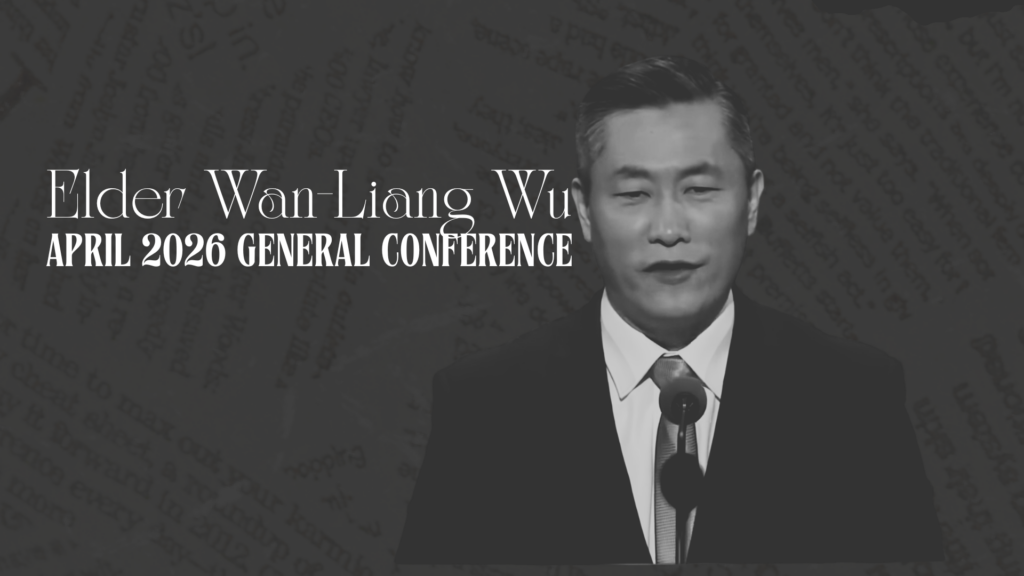
This Relief Society lesson help is designed to make your preparation deeper, easier, and more intentional. Elder Wan-Liang Wu’s talk is rich with doctrine about conversion, knowing God, choosing faith, repentance, and coming unto Christ. When a teacher has a clear structure, strong direct quotes, and thoughtful discussion ideas ready beforehand, it becomes much easier to lead a lesson that feels both Spirit-led and meaningful instead of rushed or surface-level.
Below, the talk is broken into chronological discussion points, following the progression Elder Wu uses in his message. Each section includes direct quotes from the talk, engaging discussion questions, object lesson ideas, and personal sharing prompts to help create a lesson where sisters can reflect, connect, and testify. The talk text used here comes from the uploaded file.

Grab our free bundle of 50+ Presentation Backgrounds by clicking here: https://otherthanamom.myflodesk.com/freebackgrounds
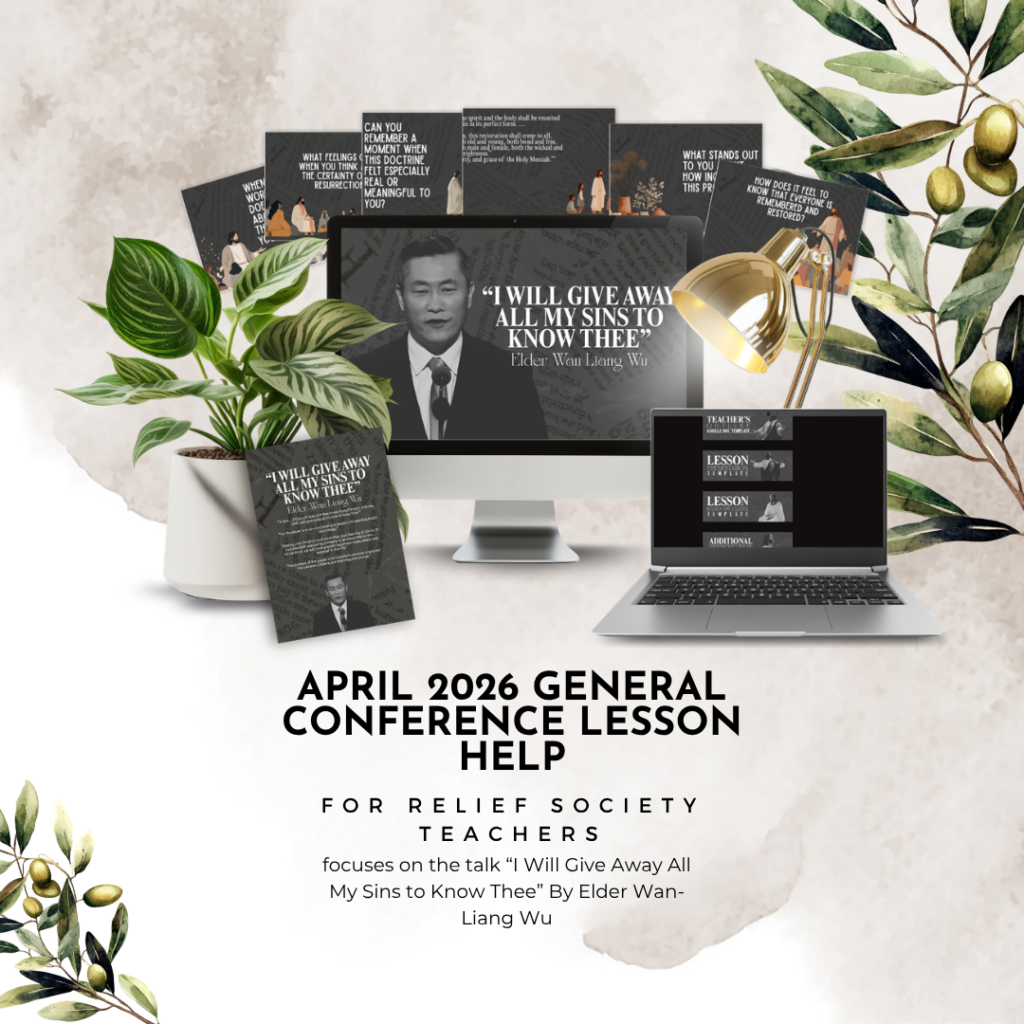
Interested in a done-for-you lesson plan with a teacher’s outline Google Doc, Canva Presentation Template, Lesson Handout Template, and themed presentation backgrounds? Click here: https://www.etsy.com/listing/4498234094/april-2026-general-conference-lesson?ref=listings_manager_grid
Section 1: Learning Who God Really Is Changes Everything
Teach
Elder Wu begins with his childhood background and contrasts religious ritual with the life-changing truth of a living Heavenly Father. This first section is powerful because it shows that knowing about religion is not the same as knowing the true God. It also shows how foundational truths about Heavenly Father and Jesus Christ can completely reorient a life.
Direct Quotes from the Talk
“I was born into a non-Christian family. As a boy, I would accompany my mother to Chinese temples to worship different gods. We would bring special cakes as an offering and burn incense to ask for the blessings we needed. If we needed work, we asked the god of riches; if we needed health, we asked the god of healing. I loved going with my mother because when the rituals were over, I got to eat all those delicious cakes.”
“Nevertheless, the great miracle came when I was 10 years old and we moved to Bolivia. I met the missionaries. They taught me about a God I had never heard of before.
“They taught me that He is a living God, with a glorified body of flesh and bones; that He is my Heavenly Father, that He loves me, and that I am literally His child; that He sent Jesus Christ to earth to help me return to His presence and attain eternal life.”
Discussion Questions
- What stands out to you most about Elder Wu’s description of learning who God really is?
- Why do you think the truth that God is our Heavenly Father is so life-changing?
- How does knowing we are literally His children affect the way we see ourselves?
- What difference is there between religious practice and true relationship with God?
- Why is it important that Elder Wu says God is living?
- How does the truth about Jesus Christ change the purpose of mortality?
- When have gospel truths felt new and deeply personal to you?
- How does understanding God’s nature change the way we pray?
- Why do you think simple doctrines can carry so much power?
- How can we help others feel the beauty of these truths without overwhelming them?
Object Lessons
- Show a family photo and discuss the difference between knowing facts about a family and actually belonging to one.
- Hold up a dead battery and a working light to illustrate the difference between ritual and living connection.
- Use a name tag that says “Child of God” to show identity.
- Show a map with no destination and then one labeled “Return to God” to illustrate eternal purpose.
- Compare an empty gift box with a filled one to illustrate outward religion versus revealed truth.
Personal Sharing Prompts
- Share a time when a basic gospel truth became deeply personal to you.
- Describe what it means to you that God is your Heavenly Father.
- Share how knowing you are His child has helped you in a hard season.
- Talk about a doctrine of the gospel that changed the way you saw your life.
- Share a moment when you felt God’s love in a personal way.
- Describe how your understanding of Jesus Christ has grown.
- Share how your relationship with God has changed over time.
- Talk about a truth you learned that gave you peace.
- Share what first helped you feel that the gospel was good and true.
- Describe how these truths influence your everyday choices.
Section 2: Peace Can Come Before Full Understanding
Teach
This section is especially meaningful because Elder Wu shows that spiritual witness can come even before full comprehension. He could not understand all the words, but he felt peace and knew what he was learning was good. That is a tender and helpful principle for anyone who is still learning, struggling, or growing.
Direct Quotes from the Talk
“I was so amazed when they told me the story of Joseph Smith, who saw God the Father and His Son, Jesus Christ. Even though I didn’t speak Spanish and couldn’t understand all the words, I felt peace in my heart, and somehow I knew that what I was learning was good.”
“Before they invited me to be baptized, I said to my two older sisters, who were already members of the Church, ‘I’ve already made up my mind. I’m getting baptized!’”
“The gospel of Jesus Christ changed my life for the better. It gave me an eternal purpose—to prepare to return to God’s presence with my family.”
Discussion Questions
- What does Elder Wu’s experience teach about how the Spirit works?
- Why do you think peace can be a powerful witness of truth?
- Have you ever known something was right before you could explain it fully?
- Why is it important to honor spiritual impressions even when understanding is incomplete?
- What role did courage play in Elder Wu’s decision?
- How does baptism connect to eternal purpose?
- Why do you think the gospel gave him such clear direction so quickly?
- How can we help people trust spiritual feelings that come quietly?
- What does this section teach about conversion?
- How can peace become an anchor in our discipleship?
Object Lessons
- Use a flashlight in a dark room to show that you do not need to see everything at once to take the next step.
- Play a few notes of a song before the whole melody to illustrate partial understanding with real recognition.
- Show a seed and discuss how life is present before full growth is visible.
- Use a small compass to show quiet guidance.
- Hold up a puzzle piece and discuss how one clear piece can still help you move forward.
Personal Sharing Prompts
- Share a time you felt peace before you had all the answers.
- Describe an experience when the Spirit confirmed something to your heart.
- Share what helped you trust a spiritual impression.
- Talk about a decision you made by faith.
- Share how the gospel has given your life direction.
- Describe a time when understanding came later, but peace came first.
- Share an experience related to baptism or covenant-making.
- Talk about a truth you felt before you could explain it.
- Share how the Savior has made your life feel more purposeful.
- Describe how peace has helped guide you.
Section 3: The Desire to Know God Is Sacred
Teach
Elder Wu then transitions to the story of the king in the Book of Mormon. This section highlights that coming to know God begins with desire. The king did not remain curious from a distance. He wanted to know. This is a powerful discussion point because desire matters in conversion.
Direct Quotes from the Talk
“In the Book of Mormon, we read the story of an old king who, like me, did not know God. He had met a missionary, and he was so surprised by what that missionary said that he insisted on being taught.”
“Then Aaron began ‘reading the scriptures unto the king—how God created man after his own image, and that God gave him commandments, and that because of transgression, man had fallen. …
“‘… And also the plan of redemption, which was prepared from the foundation of the world, through Christ, for all whosoever would believe on his name … through faith and repentance.’”
Discussion Questions
- What do you notice about the king’s desire to know?
- Why is sincere desire such an important beginning to conversion?
- What does it mean to truly want to know God?
- How does curiosity become discipleship?
- Why do you think Aaron taught creation, the Fall, and redemption together?
- How does the plan of redemption help us know God more fully?
- What role does scripture play in coming to know Him?
- How does faith and repentance connect to knowledge of God?
- What can we learn from the king’s insistence on being taught?
- How can we nurture holy desire in our own lives?
Object Lessons
- Use a magnet and small metal object to illustrate being drawn toward truth.
- Show a thirsty plant to symbolize spiritual longing.
- Hold a closed and open book to illustrate willingness to be taught.
- Use a treasure map to show how desire motivates searching.
- Show a candle being lit to represent spiritual awakening.
Personal Sharing Prompts
- Share a time your desire to know God grew stronger.
- Describe what has helped you want Him more deeply.
- Share an experience where scripture opened your understanding.
- Talk about a season when you were more spiritually hungry.
- Share how repentance has helped you know God better.
- Describe a time when being taught changed your life.
- Share how your questions have led you closer to God.
- Talk about what stirs spiritual desire in your life.
- Share a moment when the plan of redemption felt personal.
- Describe what it means to you to seek God sincerely.
Section 4: “I Will Give Away All My Sins to Know Thee”
Teach
This is the central moment of the talk and should likely be one of the most emphasized sections in a Relief Society lesson. The king’s cry is deeply moving because it reveals what real conversion looks like: not casual interest, but surrender. Knowing God costs something. It requires a willing heart.
Direct Quotes from the Talk
“‘… [Then] the king said: What shall I do that I may have this eternal life of which thou hast spoken? … Behold, … I will give up all that I possess, yea, I will forsake my kingdom, that I may receive this great joy.’”
“‘But Aaron said unto him: If thou desirest this thing, if thou wilt bow down before God, yea, if thou wilt repent of all thy sins, and will bow down before God, and call on his name in faith, believing that ye shall receive, then shalt thou receive the hope which thou desirest.’”
“‘O God, Aaron hath told me that there is a God; and if there is a God, and if thou art God, wilt thou make thyself known unto me, and I will give away all my sins to know thee.’”
Discussion Questions
- What makes this prayer so powerful?
- What does it mean to “give away all my sins” in practical, daily life?
- Why is repentance essential to truly knowing God?
- What do you notice about the king’s humility?
- How does this section deepen your understanding of conversion?
- Why is “great joy” connected with surrender?
- What are some things people hold onto that keep them from knowing God more fully?
- How can we recognize when the Lord is inviting us to let something go?
- What does calling on God in faith look like today?
- How can this prayer shape the way we seek God ourselves?
Object Lessons
- Put rocks in a backpack and remove them one by one to represent letting go of sin and spiritual weight.
- Use dirty water and then filtered water to illustrate repentance and cleansing.
- Hold something tightly in your fist and then open your hand to symbolize surrender.
- Show a mirror covered in dust and then wiped clean to represent clearer vision of God.
- Use chains or ribbon knots to symbolize entanglements that repentance loosens.
Personal Sharing Prompts
- Share a time when repentance brought you closer to God.
- Describe a change the Lord invited you to make.
- Share how letting go of something brought unexpected peace.
- Talk about a time you felt real humility before God.
- Share what this prayer teaches you personally.
- Describe how joy has followed obedience in your life.
- Share an experience when you called on God in faith.
- Talk about how the Lord has helped you change.
- Share what it means to surrender your heart to God.
- Describe a moment when knowing God mattered more than comfort.
Section 5: The Power Is in Us to Choose and Act
Teach
Elder Wu is careful to emphasize that God’s grace is central, but our agency matters. He teaches that the power is in us, specifically in choosing to believe and deciding to act accordingly. This is a strong section for discussing responsibility, hope, and spiritual movement.
Direct Quotes from the Talk
“The story concludes not only with the king’s conversion but with the conversion of his entire household and several cities in his kingdom.”
“If we have a sincere desire, being meek and lowly in heart, we can come to know the true God the Father and gain eternal life through His Son, Jesus Christ, for the power is in us—in choosing to believe and deciding to act accordingly.”
Discussion Questions
- What does Elder Wu mean when he says “the power is in us”?
- How does this truth bring hope?
- Why is choosing to believe an act of faith?
- What is the relationship between desire, humility, and action?
- How does agency work together with grace?
- What are some ways we delay action even when we know what is right?
- Why do you think action often deepens belief?
- How can this principle help someone who feels stuck spiritually?
- What do you think meekness has to do with knowing God?
- How can we become more decisive in discipleship?
Object Lessons
- Use a light switch to show that power may be available, but it must be engaged.
- Show a door with a handle to illustrate that someone must choose to open it.
- Hold a pair of shoes to symbolize walking, not just knowing where to go.
- Use dominoes to show how one decision starts larger change.
- Show a planted seed versus one still in the packet to illustrate belief plus action.
Personal Sharing Prompts
- Share a time when choosing to act strengthened your faith.
- Describe a moment when belief moved from thought into action.
- Share how agency has blessed your discipleship.
- Talk about a spiritual impression you followed.
- Share a time meekness opened the door to growth.
- Describe a small act of faith that changed something important.
- Share how the Lord has helped you move forward.
- Talk about what helps you act when you feel unsure.
- Share how your choices have shaped your testimony.
- Describe what this phrase means to you: “the power is in us.”
Section 6: Jesus Christ Is the Only Way to the Father
Teach
This section centers on the clearest doctrinal claim in the talk: eternal life is to know the only true God and Jesus Christ, and the only way to the Father is through Christ. Elder Wu makes this deeply plain and then explains that coming unto Christ is more than learning about Him.
Direct Quotes from the Talk
“The Savior declared, ‘And this is life eternal, that they might know thee the only true God, and Jesus Christ, whom thou hast sent.’”
“How can we come to know the only true God and obtain eternal life? The Savior responds, ‘I am the way, the truth, and the life: no man cometh unto the Father, but by me.’”
“The only way we can come to know our Heavenly Father and gain eternal life is by coming unto Christ and following Him. Coming unto Christ is much more than just learning of Christ. It includes faith and works; it means to be converted to Him and to His restored gospel. As we do so, we ‘will have greater happiness, hope, peace, and purpose’ in this life.”
Discussion Questions
- What does it mean to truly know God and Jesus Christ?
- Why is Christ not just one way, but the way?
- What is the difference between learning of Christ and coming unto Christ?
- How does conversion go deeper than information?
- Why do faith and works belong together?
- How have happiness, hope, peace, or purpose increased in your life as you followed Christ?
- What does it look like to follow Christ more fully right now?
- Why do you think Elder Wu emphasizes the restored gospel here?
- How can we know whether we are truly becoming converted?
- What does this section teach about eternal life starting now?
Object Lessons
- Show a bridge crossing a gap to represent Christ as the only way.
- Use a path on a map with one clear route to the destination.
- Show a recipe card versus finished bread to illustrate learning versus transformation.
- Hold a set of keys and discuss access through Christ.
- Use a compass pointing north to symbolize singular direction.
Personal Sharing Prompts
- Share how Christ has become more central in your life.
- Describe what “coming unto Christ” means to you now.
- Share how your discipleship became more than just knowledge.
- Talk about how the Savior has brought peace into your life.
- Share how following Christ has changed your priorities.
- Describe a time you felt more converted, not just informed.
- Share how the restored gospel has helped you know God.
- Talk about the role of faith and works in your life.
- Share a moment when Christ felt like the only answer.
- Describe how He has given you purpose.
Section 7: Knowing God Requires Real Change
Teach
Elder Wu returns to the king and asks a piercing question: what are we willing to give up or change to truly know God? He supports this with President Oaks’s teaching that repentance means giving up practices contrary to God’s commandments. This section is ideal for deep discussion because it is searching without needing to be shaming.
Direct Quotes from the Talk
“The king did not remain stuck in his state of astonishment; he chose to believe and to act. He was willing to forsake all his sins that he might know God. What are we willing to give up or change to truly know God and be saved at the last day?”
“President Dallin H. Oaks taught: ‘The gospel of Jesus Christ challenges us to change. “Repent” is its most frequent message, and repenting means giving up all of our practices—personal, family, ethnic, and national—that are contrary to the commandments of God. The purpose of the gospel is to transform common creatures into celestial citizens, and that requires change.’”
Discussion Questions
- Why do you think Elder Wu asks such a direct question here?
- What kinds of things might the Lord ask us to change?
- Why is astonishment not enough?
- How does repentance become a gift rather than just a demand?
- What does it mean that the gospel transforms common creatures into celestial citizens?
- How can cultural or family traditions sometimes interfere with discipleship?
- Why is change such a central part of the gospel?
- How do we let the Lord show us what needs to go?
- What is the difference between worldly self-improvement and gospel transformation?
- How can we approach repentance with hope?
Object Lessons
- Use a pruning branch to show that healthy growth often requires cutting back.
- Show a butterfly life cycle to illustrate transformation.
- Clean a smudged window to show clearer spiritual vision through change.
- Use an old and new garment to symbolize putting off and putting on.
- Hold a lump of clay being shaped to represent becoming.
Personal Sharing Prompts
- Share a time the Lord invited you to change something important.
- Describe how repentance has blessed your life.
- Share how the gospel has changed your heart over time.
- Talk about a practice or pattern you needed to leave behind.
- Share how change felt hard at first but holy later.
- Describe what helps you approach repentance with trust.
- Share a time God’s commandments brought freedom, not restriction.
- Talk about how you’ve seen Christ transform you.
- Share how your view of repentance has matured.
- Describe what it means to become more celestial.
Section 8: The Invitation Is for Everyone
Teach
Elder Wu closes with a broad and tender invitation. Whether child or king, regardless of background or status, all are invited to choose faith in Jesus Christ. This is a beautiful ending because it keeps the talk both doctrinally strong and warmly accessible.
Direct Quotes from the Talk
“We cannot know God without a sincere desire and real intent. We need to have faith in Jesus Christ, continuously repent, and strive to obey the commandments. The Savior loves us more than we can comprehend, and He pleads with us again and again, ‘Come, follow me.’ He gave His life for us, paid the price for our sins, and rose from the dead. Because of Him, we have ‘hope for a future existence with Heavenly Father.’”
“Whether you are a child or a king, and regardless of your background or your status, I invite you to choose to have faith in Jesus Christ and to decide to follow Him. For ‘there is none other name given under heaven save it be this Jesus Christ … whereby man can be saved.’”
“I testify that Jesus Christ is risen. He lives! This is what He wants us to do to prepare for eternal life.”
Discussion Questions
- What do you love about the phrase “whether you are a child or a king”?
- How does this invitation show the reach of the Savior’s love?
- Why is sincere desire still necessary if the invitation is universal?
- What does “real intent” look like in discipleship?
- How does hope for eternal life affect the way we live now?
- Why is it important that Elder Wu ends with the living Christ?
- What helps you choose faith again and again?
- How does the Savior’s plea, “Come, follow me,” feel personal in your life?
- What would you say to someone who feels too far away or too ordinary for this invitation?
- What is one way you feel invited to follow Him more fully now?
Object Lessons
- Hold an open invitation card to symbolize that all are invited.
- Use a staircase to show ongoing preparation for eternal life.
- Show a family table with an open seat to symbolize belonging.
- Use a shepherd image to represent Christ calling all.
- Hold a resurrected spring flower to symbolize living hope through the risen Christ.
Personal Sharing Prompts
- Share how the Savior’s invitation has felt personal to you.
- Describe a time you chose faith despite uncertainty.
- Share how Jesus Christ has become your hope.
- Talk about what real intent looks like in your life.
- Share how you’ve seen the Savior’s love reach people of many backgrounds.
- Describe how obedience has helped you feel closer to Him.
- Share a time you felt called to follow Him more fully.
- Talk about what eternal life means to you personally.
- Share your testimony that Jesus Christ lives.
- Describe the next small step you feel invited to take.
Conclusion
One of the greatest blessings of a strong Relief Society lesson help is that it gives teachers room to focus on people instead of scrambling for structure. When the talk has already been broken into its natural discussion points, when the quotes are ready, and when the questions and prompts are already thought through, a teacher can spend more energy listening to the Spirit and to the sisters in the room.
Elder Wan-Liang Wu’s talk is especially powerful for Relief Society because it is both doctrinal and deeply personal. It speaks to women at every stage of discipleship: lifelong members, recent converts, women rebuilding faith, and women who simply want to know God more deeply. It reminds us that knowing God is not passive, that Christ is the only way, and that real conversion includes real surrender. Most of all, it reminds us that the invitation to come unto Christ is open to everyone, and that through Him we can gain hope, peace, purpose, and eternal life.