If you’re teaching Young Men or Young Women this week, Doctrine and Covenants 133–134 is a great opportunity to explore topics like preparing for the Second Coming, standing as a witness of truth, and understanding our role in the world as disciples of Jesus Christ. These sections cover powerful truths about gathering Israel, keeping covenants, and honoring laws—both spiritual and civil. To help your youth connect with these teachings in a real and personal way, we’ve put together a mix of engaging questions, creative object lesson ideas, and meaningful sharing prompts. These tools are designed to spark thoughtful conversation, invite the Spirit, and help your class see how they can stand confidently for truth and righteousness in today’s world.
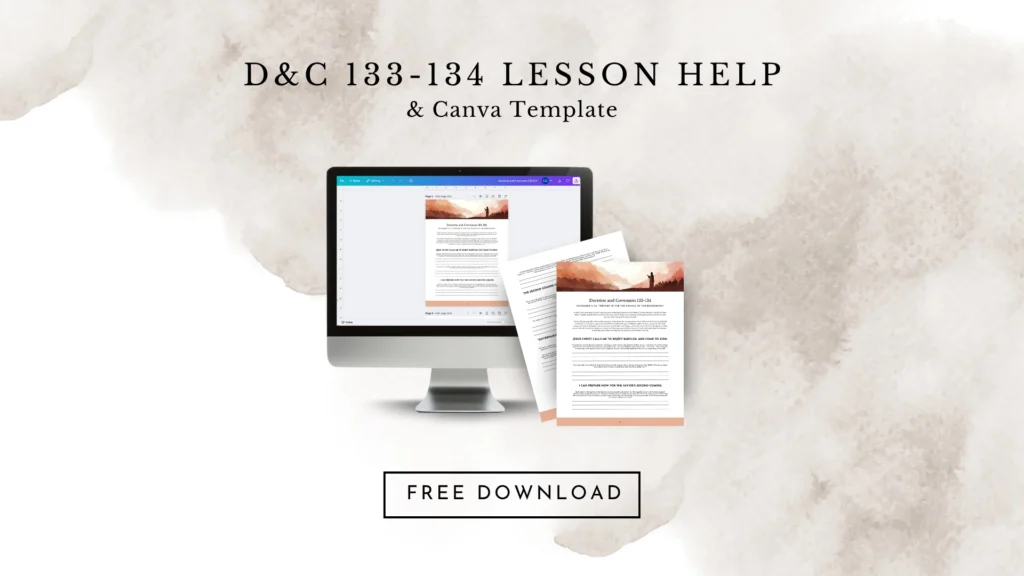
Grab our free lesson help by clicking this link: https://otherthanamom.myflodesk.com/dc133-134
Jesus Christ calls me to reject Babylon and come to Zion. (Doctrine and Covenants 133:4–14)
10 Engaging Questions
- What does “Babylon” symbolize in your life today?
- How do we know if we are still “clinging” to Babylon?
- Why is leaving Babylon always tied to building Zion?
- What are some differences between Babylon and Zion?
- How do you personally feel the Savior calling you out of Babylon?
- What sacrifices might be required to move closer to Zion?
- How do Elder Christofferson’s teachings help us see Zion as more than a place?
- How do you recognize “worldly” influences in daily life?
- What does it look like to actively walk toward Zion?
- How can we help others desire to leave Babylon?
5 Object Lessons
- Dirty vs. clean water – Babylon is polluted; Zion is pure.
- Compass – Points us toward Zion if we follow Christ.
- Two paths – One leading to light (Zion), one to darkness (Babylon).
- Backpack of rocks – The burdens of Babylon weigh us down.
- Garden weeds – Babylon’s influences choke growth unless uprooted.
10 Personal Sharing Prompts
- Share a time you chose God over worldly acceptance.
- Reflect on when you felt peace after “leaving Babylon.”
- Tell about a moment you sacrificed something worldly for Zion.
- Share a teaching that helped you see Zion as a daily choice.
- Reflect on how you balance living in the world but not of it.
- Tell about someone whose example of living Zion inspired you.
- Share a scripture that helped you resist Babylon’s pull.
- Reflect on what “Zion in your heart” means to you.
- Tell about an experience that strengthened your desire for Zion.
- Share how rejecting Babylon blessed your family.
I can prepare now for the Savior’s Second Coming. (Doctrine and Covenants 133:1–19, 37–39)
10 Engaging Questions
- Why do you think the Lord begins with “Hearken”?
- What is the difference between being aware of the Second Coming and preparing for it?
- What are practical ways to “hearken” to the Lord’s warnings?
- Which verses stand out as urgent counsel?
- How do you feel when you think about preparing the world for Christ’s return?
- What fears might people have about the Second Coming, and how does the gospel answer them?
- Why does the Lord ask us to both prepare ourselves and help prepare the world?
- How do President Nelson’s teachings about preparing strengthen you?
- How can youth and children play a role in preparing the world?
- What does living in daily preparation look like for you?
5 Object Lessons
- Oil lamp – Represents spiritual preparation like the wise virgins.
- Backpack checklist – Preparing for a trip vs. preparing for the Lord’s return.
- Fire alarm – Prepares us to act before danger.
- Wedding invitation – We must be ready when the Bridegroom comes.
- Daily planner – Preparation requires daily effort, not just once.
10 Personal Sharing Prompts
- Share what motivates you most about preparing for Christ’s return.
- Reflect on how preparing for the Second Coming influences your choices.
- Tell about a time you felt urgency to share the gospel.
- Share a habit you’ve adopted that helps you “add oil to your lamp.”
- Reflect on how prophetic counsel prepares you for the future.
- Tell about how preparation blessed you in both spiritual and temporal ways.
- Share how teaching your children or family about Christ’s coming influences your home.
- Reflect on a hymn or scripture that helps you feel hopeful about His return.
- Tell about a time you felt ready for spiritual challenges.
- Share how you find peace when the world feels uncertain.
The Second Coming of Jesus Christ will be joyful for the righteous. (Doctrine and Covenants 133:19–56)
10 Engaging Questions
- What descriptions of Christ’s return fill you with hope?
- How do you picture the joy of seeing the Savior again?
- Why is His coming both powerful and tender?
- Which verses describe His love most clearly?
- How can focusing on the joy of His return help us endure trials now?
- Why is joy an essential part of the Second Coming?
- What promises in these verses stand out to you personally?
- How do you imagine the world transformed by His reign?
- What keeps you looking forward to this event with faith instead of fear?
- How does remembering the joy of His return affect your testimony today?
5 Object Lessons
- Surprise reunion photo – The joy of seeing someone long-awaited.
- Sunrise – Darkness replaced with light and warmth.
- Gift opening – Anticipation fulfilled with joy.
- Rain after drought – Relief and renewal for the earth.
- Choir music – Symbol of unity and rejoicing when He comes.
10 Personal Sharing Prompts
- Share how you’ve felt the Savior’s love in a powerful way.
- Reflect on what you most look forward to at His coming.
- Tell about a moment of spiritual joy that foreshadowed His return.
- Share an experience of being “strengthened by His goodness.”
- Reflect on how temple worship helps you feel closer to His Second Coming.
- Tell about how the Spirit has reassured you of Christ’s promises.
- Share how hymns about His coming bring you peace.
- Reflect on how the promise of His return shapes your daily hope.
- Share a personal witness of His loving-kindness in your life.
- Tell about how looking forward to His coming helps you endure trials.
“Governments were instituted of God for the benefit of man.” (Doctrine and Covenants 134)
10 Engaging Questions
- What do these verses teach about the role of government?
- Why do you think the Lord cares about government principles?
- How is good government a blessing to God’s children?
- What responsibilities do citizens have under God’s law?
- How can we balance loyalty to country with loyalty to God?
- How does this section protect religious freedom?
- Why do you think the Saints needed clarification about government?
- What principles here are timeless, even in modern nations?
- How can Saints be a positive influence in civic life?
- How do Articles of Faith 11–12 connect to these teachings?
5 Object Lessons
- Umbrella – Government provides protection when used properly.
- Fence – Laws set boundaries to keep people safe.
- Two oars – Government and faith work together to move forward.
- Traffic laws – Order and fairness bless everyone.
- Scales – Justice balances individual rights and responsibilities.
10 Personal Sharing Prompts
- Share how you’ve seen good government bless your community.
- Reflect on a time you were grateful for religious freedom.
- Tell about how you balance civic duties with spiritual ones.
- Share what Articles of Faith 11–12 mean to you personally.
- Reflect on how the Saints’ history shaped your gratitude for freedom.
- Tell about how you’ve participated in your community with gospel values.
- Share how obeying laws has strengthened your faith.
- Reflect on how your family discusses civic duty in light of the gospel.
- Tell about a moment you felt God’s hand in civic or community life.
- Share how gospel principles guide your views of fairness and justice.