Introduction
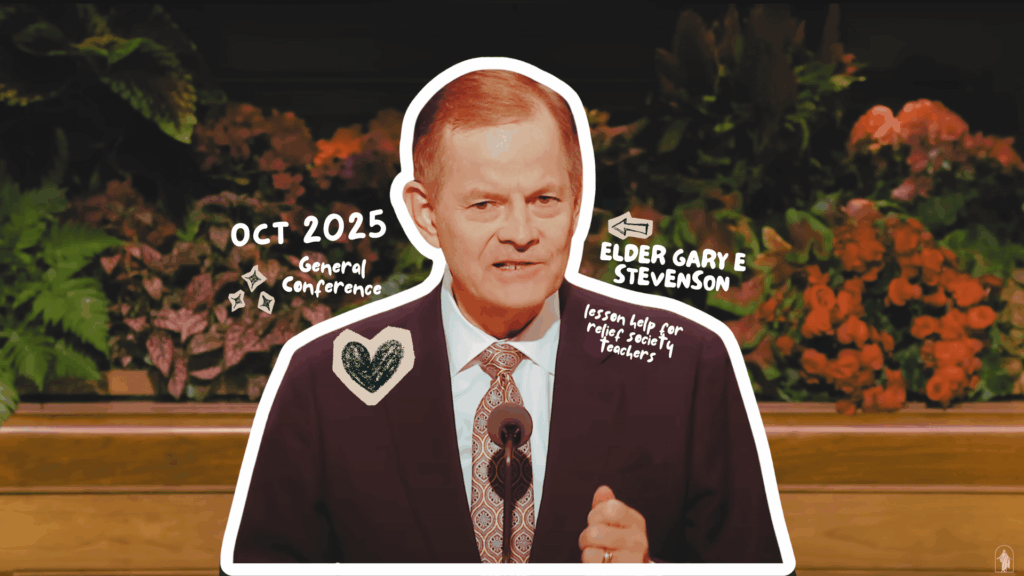
Elder Stevenson’s talk is a timely, tender invitation to practice Christlike peacemaking in a world of grief and commotion. He moves from the Savior’s Sermon on the Mount to Primary children’s wisdom, from family experiments in kindness to community bridge-building—then hands us a one-week peacemaker plan to begin right now.
This lesson help will help your sisters anchor in Jesus Christ, start peace in their hearts, expand it in their homes, and carry it into their communities.

Grab our free bundle of 50+ Presentation Backgrounds by clicking here: https://otherthanamom.myflodesk.com/freebackgrounds
Get the entire “done-for-you” lesson help with a teacher’s lesson plan Google Doc, Canva Presentation Template, Canva Lesson Handout Template, and 30 additional presentation backgrounds here: https://www.etsy.com/listing/4387706300/october-2025-general-conference-lesson?ref=listings_manager_grid
Section 1: Mourning & Hope—Peace in a World of Tragedy
“Our hearts are mourning loss… Even devout people gathered in sacred spaces… have lost their lives… I speak from my heart… Peace feels distant.”
Discussion Questions
- How do we hold grief and the hope of Christ at the same time?
- When peace feels distant, what practices keep you close to the Savior?
- What does “Prince of Peace” mean in today’s headlines?
- How can we mourn with those that mourn—locally and globally?
- What language helps when others’ pain is fresh?
- How has the sacrament refocused your fear into faith lately?
- What helps you avoid numbness or outrage fatigue?
- How can our ward be a refuge for those shaken by violence?
- Where did you feel unexpected peace in the last month?
- What promise from Christ steadies you right now?
Object Lesson Ideas
- Dark cloth + small candle: light is small but real.
- Tissue box with a cross/heart sticker: comfort anchored in Christ.
- Weighted blanket (or scarf): tangible “He carries us.”
- Olive branch (paper): pass and name one peaceful act.
- Jar of “prayer stones”: each stone = a name/event we’ll pray for.
Personal Sharing Prompts
- A time you felt peace before anything changed.
- Someone who was Christ’s comfort to you.
- A scripture line you cling to in chaos.
- Where you’re asking the Lord for peace now.
- A news moment that turned into a prayer.
- How you avoided despair this week.
- A sacrament moment that softened fear.
- A hymn that held you in grief.
- A mercy you noticed amid tragedy.
- Your sentence-long witness of the Prince of Peace.
Section 2: Sermon on the Mount—Peacemakers, Children of God
“Blessed are the peacemakers: for they shall be called the children of God. …‘Can I truly become a peacemaker when the world is in commotion?’ The answer: Yes.”
Discussion Questions
- Why do peacemakers get called “children of God”?
- What does peacemaking look like when you’re afraid?
- Which Sermon on the Mount invitation is hardest right now?
- Where have you seen “turning the other cheek” change a situation?
- What helps you love an “enemy” without abandoning truth?
- How can youth find their own Sermon-on-the-Mount moments?
- What does “let your light shine” look like online?
- How do you keep a soft heart with strong boundaries?
- When have you felt persecuted for righteousness—and responded in Christ’s way?
- What one Beatitude you’ll rehearse this week?
Object Lesson Ideas
- Small mirror: reflect His light, don’t generate your own.
- Salt shaker: be the preserving “salt” in decay.
- Two shoes: “walk the second mile.”
- Lantern: light shines farther than you think.
- Olive oil vial (image/prop): soothe, don’t scorch.
Personal Sharing Prompts
- A time you chose Christlike response over clapback.
- A boundary that helped you love better.
- Your “let it shine” plan for one setting.
- An “enemy” you learned to understand.
- A Beatitude that met you in real life.
- How you softened conflict at home/work/online.
- A second-mile story.
- How you taught this to your kids.
- A moment light replaced heat.
- Your one-line Beatitude mantra this week.
Section 3: It Starts in the Heart—Learning from Children
“Looking into the pure and innocent peacemaking heart of a child… Luke: ‘Always help others’… Grace: ‘Forgive… even when it doesn’t feel fair’… Trevor: ‘If there is one donut left… share.’”
Discussion Questions
- Which child’s answer pierced you and why?
- What makes children naturally good at peacemaking?
- Where do adults overcomplicate what kids do simply?
- What “please stop” (London) looks like in adult conflicts.
- How can we model forgiveness “when it doesn’t feel fair”?
- How does sharing (Trevor) heal contention?
- When have you seen a child disarm a tense room?
- What childlike trait you’ll practice this week?
- How do we help kids keep these instincts as teens?
- What would your inner child advise you to do today?
Object Lesson Ideas
- One donut / paper donut: choose to share.
- Two name cards: “Help others” → pair up and role-play a small help.
- “Please stop” cue card: practice kind firmness.
- Kindness chain (paper links): pass it on “on and on.”
- Sticker stars: give one to someone who “built peace” in class.
Personal Sharing Prompts
- A child who taught you peace.
- A moment you said “please stop” kindly.
- A time sharing erased friction.
- When forgiving felt unfair—but freed you.
- A small help that made a big difference.
- How you listened like a child.
- What your inner child misses about peace.
- A Primary song that nudges peacemaking.
- How your kids call you back to kindness.
- Your childlike goal for this week.
Section 4: Peacemaking at Home—The Lord’s Pattern
“Use the Lord’s pattern… persuasion, longsuffering, gentleness, kindness, meekness, love unfeigned… One family chose a deliberate outpouring of kindness… and smiles replaced scowls.”
Discussion Questions
- Which element of the Lord’s pattern is your growth edge?
- How do you practice persuasion without pressure?
- What does “love unfeigned” sound like at 9:30 pm on a hard day?
- How can a family “experiment” with kindness this week?
- What made the story’s change possible—time, consistency, unity?
- What does peacemaking look like with a chronically grumpy person?
- Where do we need a family council about contention?
- How do we repair after we blow it?
- What words inflame vs. soothe in your home?
- What “quiet work” could kindness do in your situation?
Object Lesson Ideas
- Two jars: “Fuel words” vs. “Fire words.” Choose your pour.
- Timer: 7-day kindness experiment commitment.
- Doorknob heart: pause before entering a room—choose gentleness.
- Soft blanket: wrap someone while naming one strength.
- Whiteboard reset: erase a harsh word; write a kind one.
Personal Sharing Prompts
- A time your home chose soft answers.
- A phrase that disarms tension at your house.
- A repair you made that rebuilt trust.
- Your family’s “experiment” idea for the week.
- A boundary that keeps tone gentle.
- A script you’ll retire; a new one you’ll use.
- How you apologised without excuses.
- A mercy someone extended to you at home.
- A small win in a hard relationship.
- Your home peacemaker goal.
Section 5: Communities & Interfaith Bridges
“A Muslim imam and a Christian pastor… former enemies… chose forgiveness… founded a Center for Interfaith Mediation… living witnesses that being peacemakers is possible and powerful.”
Discussion Questions
- What does their story teach about forgiveness and courage?
- How can we build bridges across differences in our town?
- What fears keep us from initiating peace?
- How do we hold doctrine while honoring dignity?
- What does “publish peace” look like in public spaces?
- Who is your unlikely partner in peace?
- How do you respond when goodwill isn’t returned?
- What local issue could use our RS peacemakers?
- How do we teach children to respect those who worship differently?
- Where can you start a micro-bridge this month?
Object Lesson Ideas
- Paper bridge from two stacks of books labeled “Us/Them.”
- Handshake silhouette: extended hands, not clenched fists.
- Two candles lit from one flame: different, yet lighted by God’s love.
- Map pin your community: “Where will we build peace?”
- Blank thank-you card to a community partner.
Personal Sharing Prompts
- A bridge you crossed with someone different from you.
- A respectful conversation that surprised you.
- A time you chose curiosity over criticism.
- A local peacemaker who inspires you.
- A small way you “published peace.”
- An apology you owe in the public square.
- A service project idea that builds bridges.
- A stereotype you’re dismantling.
- Someone you’ll meet with this month.
- Your one-sentence public witness of peace.
Section 6: Digital Discipleship—Publishing Peace Online
“Before posting… Will this build a bridge? If not, stop. Do not send. Instead, share goodness. Publish peace in the place of hate.”
Discussion Questions
- What cues help you pause before posting?
- How do you respond to provocation without piling on?
- What is a “bridge-building” comment you can model?
- How do you bless rather than broadcast?
- Where could you replace sarcasm with sincerity?
- What accounts fill you with the Spirit—and which drain it?
- How do you teach teens to curate their feeds?
- What’s your rule for DMs and disagreements?
- How can we flood local groups with helpful, hopeful info?
- What “publish peace” habit will you adopt this week?
Object Lesson Ideas
- Two cards: SEND vs. STOP—hold up your choice after a sample post.
- Emoji meter: peace, flame, bridge—vote on tone.
- Sticky-note filter: “Is it true? Kind? Necessary?”
- Phone basket: 2 minutes offline to think/pray first.
- Hashtag card: write one “publish peace” hashtag to use this week.
Personal Sharing Prompts
- A time you deleted a draft—and felt peace.
- A comment that built a bridge.
- An account you unfollowed for your soul.
- A post of goodness you’ll share.
- A teen tip that actually works.
- Your DM rule that keeps Christ in the chat.
- A digital apology you made.
- A time you “took it to prayer” instead of posting.
- A resource you’ll share to help, not heat.
- Your online peacemaker pledge.
Section 7: The One-Week, 3-Step Peacemaker Plan
“1) Contention-free home zone. 2) Digital bridge-building. 3) Repair and reunite. …Peacemaking demands action.”
Discussion Questions
- What will your “contention-free zone” look and sound like?
- Who will you invite to help keep the reset when tension rises?
- What digital bridge will you build this week (exact post/comment)?
- Who needs an apology, ministering visit, or reconnection?
- What obstacles could derail your plan—and how will you preempt them?
- How will you measure success (tiny, specific)?
- What scripture will be your peacemaker anthem for 7 days?
- How will you celebrate small wins with your family?
- Who in RS can be your accountability partner?
- What will you start tomorrow morning?
Object Lesson Ideas
- 3 cards labeled Steps 1–3; assign concrete actions as a class.
- Calendar page: write your 7-day plan in ink.
- Door hanger: “Peace Zone—in progress.”
- Bridge drawing: write names on the bridge planks.
- Olive-green ribbon to wear for 7 days as a reminder.
Personal Sharing Prompts
- Your specific Step 1 plan at home.
- The exact bridge post you’ll make.
- The person you’ll contact to repair.
- How you’ll respond to the first flare-up kindly.
- A phrase you’ll use instead of sarcasm.
- Your check-in buddy’s name.
- A scripture you’ll recite daily.
- A reward you’ll give your family after 7 days.
- A barrier you foresee—and your workaround.
- Your testimony sentence of acting for peace.
Section 8: Courageous Peace—Strong, Not Naive
“Peacemakers are sometimes labeled naive or weak… not weak, but strong… courage and compromise without sacrifice of principle… extended hands, not clenched fists.”
Discussion Questions
- Where do you need courageous peacemaking (not people-pleasing)?
- How do you discern compromise vs. compromised principles?
- What does an “extended hand” look like in your conflict?
- How do you stay open-hearted and clear-minded?
- What gentle firmness phrase works for you?
- How do you avoid weaponizing “peace” to silence truth?
- When did the Spirit ask you to speak—and you did?
- When did He ask you to be silent—and you were?
- What spiritual gifts help you peacemake (wisdom, empathy, patience)?
- Where is the Lord asking you to be brave this week?
Object Lesson Ideas
- Open hand vs. clenched fist (paper): choose your posture.
- Plumb line (string/weight): peace aligned with principle.
- Shield labeled “Charity”: strength that doesn’t strike.
- Balance scale: courage + kindness held together.
- Door wedge: keep the door open for dialogue.
Personal Sharing Prompts
- A time you stood in truth with charity.
- A boundary stated kindly that kept peace.
- A phrase that is both firm and fair.
- A moment you changed your mind to build peace.
- A moment you wouldn’t move—righteously.
- How the Spirit guided your tone.
- A gift (discernment, patience) you used for peace.
- A risk you’ll take for reconciliation.
- What “extended hand” you’ll offer.
- Your closing witness of strong, principled peace.
Conclusion
Elder Stevenson’s invitation is clear and actionable: begin peace where you are—in your heart, home, and community—and let it ripple outward. The Savior’s promise still holds: “Peace I leave with you… let not your heart be troubled, neither let it be afraid.”
Invite your sisters to choose one childlike practice, one home kindness experiment, and one community/digital bridge for the coming week. Then close with the Beatitude ringing in your circle: “Blessed are the peacemakers—for they shall be called the children of God.” 🌿