Introduction
Relief Society lessons are most powerful when they move beyond surface-level participation and into meaningful, Spirit-led discussion. Sister Kristin M. Yee’s message on ministering is deeply personal, doctrinally rich, and filled with opportunities for connection—but without intentional preparation, much of that depth can be missed.
This lesson help is designed to guide you through the talk in clear, chronological discussion sections, each built around powerful, direct quotes. Every section includes thoughtful questions, object lessons, and personal prompts to help you create a space where sisters feel safe to share, reflect, and grow.
Instead of wondering what to say or how to guide the discussion, you can focus on what matters most—helping sisters feel the Savior’s love and recognize their role in ministering as He would.

Grab our free bundle of 50+ Presentation Backgrounds by clicking here: https://otherthanamom.myflodesk.com/freebackgrounds
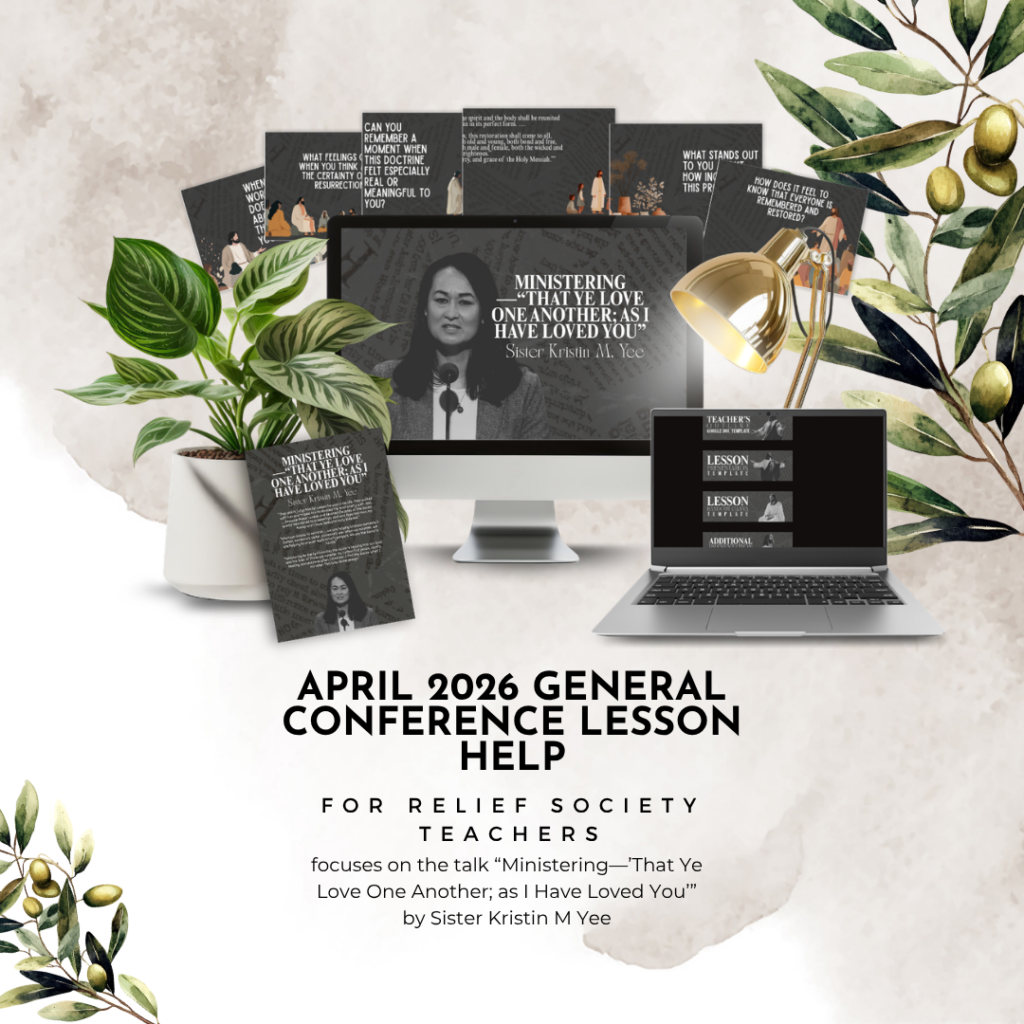
Interested in a done-for-you lesson plan with a teacher’s outline Google Doc, Canva Presentation Template, Lesson Handout Template, and themed presentation backgrounds? Click here: https://sister-kristin-m-yee.teachery.co/payment?preview=true
Section 1: Ministering Begins with Transformation Through Christ
Teach
Ministering is not something we do first—it flows from who we are becoming through the Savior.
Quote
“In my first general conference message, I briefly shared how the transformative power of the Savior’s Atonement changed my father.
Today I would like to tell you a little more about how that change began. My father hit a very low point in his life when two ministering brothers began to visit him… Each week they picked him up… This continued for three years. Then my dad decided to become a temple worker.
… He became aware and attentive to the needs of others. He took better care of his health. He began to care about his relationship with God and subsequently all the relationships in his life. The change was real. He now had the Spirit with him, and I felt it.”
Discussion Questions
- What stands out to you about the process of this transformation?
- Why do you think ministering played such a key role in his change?
- How does the Savior’s Atonement connect to ministering?
- What does this teach about long-term, consistent effort?
- How can we recognize transformation in ourselves or others?
- Why is it important that change took time?
- What role did relationships play in this story?
- How does ministering invite the Spirit?
- What does this teach about hope for those struggling?
- How can we be part of someone else’s transformation?
Object Lessons
- Show a plant growing over time to illustrate gradual transformation.
- Use before/after images to represent change.
- Demonstrate consistent drops of water shaping a rock.
- Show a dim light becoming brighter over time.
- Use a puzzle slowly coming together piece by piece.
Personal Sharing Prompts
- Share a time you saw real change in someone.
- Describe a personal transformation in your life.
- Share how someone’s influence helped you grow.
- Talk about a time you felt the Spirit change your heart.
- Share an experience with consistent effort leading to growth.
- Describe someone who ministered to you during a hard time.
- Share how your relationship with God has evolved.
- Talk about a moment when you felt hope for change.
- Share how ministering has impacted your life personally.
- Describe what transformation looks like to you.
Section 2: Ministering Is Walking With, Not Judging
Teach
True ministering is rooted in compassion, patience, and presence—not judgment.
Quote
“They didn’t judge him for where he was in his life. They walked with him and helped him to develop his relationship with God. They are still my father’s closest and dearest friends.
Because these humble and devoted disciples… quietly ministered to a seemingly lost and dejected man, my family and I have been eternally blessed.”
Discussion Questions
- What does it mean to “walk with” someone?
- Why is it sometimes easier to judge than to walk alongside?
- How can we show compassion without trying to fix everything?
- What does this teach about patience?
- How does judgment affect relationships?
- What does Christlike ministering look like in difficult situations?
- How can we become safer people for others?
- Why is presence often more powerful than solutions?
- What fears hold us back from ministering this way?
- How can we better reflect Christ in our interactions?
Object Lessons
- Walk side-by-side with someone vs. pointing ahead.
- Compare a checklist vs. a relationship.
- Use a bridge to represent connection.
- Show open vs. closed hands (acceptance vs. judgment).
- Demonstrate listening vs. interrupting.
Personal Sharing Prompts
- Share a time someone walked with you through something hard.
- Describe a moment when you felt truly seen.
- Share how you’ve learned to be less judgmental.
- Talk about a relationship that grew through patience.
- Share an experience of feeling accepted.
- Describe someone who embodies this principle.
- Share a time you struggled to show compassion.
- Talk about how you’ve grown in empathy.
- Share how this applies in your family.
- Describe how Christ has walked with you.
Section 3: Ministering Is Answering Prayers
Teach
When we minister, we are participating in God’s work in deeply personal ways.
Quote
“When we choose to minister… we are helping to bless someone’s father, someone’s sister, someone’s son. When we minister, we are helping to answer each other’s prayers. We are the Savior’s hands.”
Discussion Questions
- What does it mean to be the Savior’s hands?
- How have you seen ministering answer prayers?
- Why is this perspective powerful?
- How does this change how we view assignments?
- What does this teach about God’s work?
- How can we become more aware of needs?
- Why is ministering so personal?
- How does this build connection?
- What holds us back from acting?
- How can we be more intentional?
Object Lessons
- Use gloves to represent being the Savior’s hands.
- Show a chain of connection linking people.
- Demonstrate passing something from one person to another.
- Use a relay race metaphor.
- Show how small actions create big impact.
Personal Sharing Prompts
- Share a time you were an answer to prayer.
- Describe when someone answered your prayer.
- Share a prompting you followed.
- Talk about a missed opportunity and what you learned.
- Share how God has worked through others in your life.
- Describe a simple act that meant a lot.
- Share how you recognize promptings.
- Talk about a time you hesitated but acted anyway.
- Share how ministering has strengthened your faith.
- Describe what it feels like to serve.
Section 4: Ministering Invites the Savior Into Our Lives
Teach
Ministering blesses not only others—but transforms us as well.
Quote
“Ministering by the Spirit invites the Savior’s healing into our lives… I often find peace, clarity, healing, and purpose when I minister. I find the Savior when I minister. This is by divine design.”
Discussion Questions
- Why do you think ministering blesses us too?
- What does it mean to “find the Savior” while serving?
- How does ministering bring healing?
- What experiences have you had with this?
- Why is this “by divine design”?
- How can we invite the Spirit into our ministering?
- What prevents us from experiencing this more?
- How does service shift our perspective?
- What role does intention play?
- How can we be more aware of these blessings?
Object Lessons
- Pouring water from one cup to another—both are filled.
- A mirror reflecting light.
- A candle lighting another candle.
- A boomerang returning.
- A circle showing mutual blessing.
Personal Sharing Prompts
- Share a time ministering brought you peace.
- Describe how serving changed your perspective.
- Share a moment you felt the Savior while helping someone.
- Talk about healing you experienced through service.
- Share how ministering has helped you grow spiritually.
- Describe a time you didn’t expect to be blessed but were.
- Share how service helped you during a trial.
- Talk about finding purpose through ministering.
- Share how your testimony has grown through service.
- Describe how this has strengthened your faith.
Section 5: Ministering Is Who We Are Becoming
Teach
Ministering is not a task—it is part of our identity as covenant disciples.
Quote
“Ministering is truly loving and caring for others as the Savior would. It is a way of being… It is not a program or a checklist; ministering is the essence of who God is and who we can become.”
“We are not called to or released from ministering… We covenanted to take upon us the Savior’s name… When we minister as He would, we begin to think, feel, and love as He would.”
Discussion Questions
- How does this change your view of ministering?
- What does it mean that it’s “a way of being”?
- How is ministering tied to our covenants?
- What does it mean to take upon us Christ’s name?
- How do we become more like Him through service?
- Why is it not meant to be a checklist?
- What habits help us live this way?
- How does identity influence behavior?
- What does this teach about discipleship?
- How can we internalize this more?
Object Lessons
- A name tag representing identity.
- A uniform showing belonging.
- A mirror reflecting who we are becoming.
- Roots of a tree showing identity beneath actions.
- A daily routine vs. a checklist.
Personal Sharing Prompts
- Share how your view of ministering has changed.
- Describe a time you felt aligned with Christ in service.
- Share how your covenants influence your actions.
- Talk about becoming vs. doing.
- Share how your identity in Christ has grown.
- Describe a habit that helps you minister.
- Share how you’ve seen growth in yourself.
- Talk about what motivates you to serve.
- Share how this principle applies daily.
- Describe what it means to you to follow Christ.
Section 6: Loving Like Christ Requires Sacrifice
Teach
Christlike love is not always easy—it requires faith, vulnerability, and sacrifice.
Quote
“Choosing to minister isn’t always convenient or comfortable. It requires sacrifice, faith, vulnerability, and trusting things will work out as we let God prevail.”
“This is the kind of love He has for you and me… ‘That ye love one another; as I have loved you.’ … while we were yet imperfect.”
Discussion Questions
- Why is sacrifice part of Christlike love?
- What makes ministering uncomfortable at times?
- How does vulnerability play a role?
- What does it mean to love imperfect people?
- How can we rely on God more in this?
- What fears hold us back?
- How do we push through discomfort?
- What has helped you act in faith?
- Why is this kind of love transformational?
- What is one way you can stretch in this?
Object Lessons
- Carrying a weight to represent sacrifice.
- Stretching a rubber band (growth through discomfort).
- Stepping out of a comfort zone circle.
- A seed breaking open to grow.
- A heart expanding.
Personal Sharing Prompts
- Share a time ministering felt hard.
- Describe when you acted in faith.
- Share how God helped you in discomfort.
- Talk about loving someone difficult.
- Share how you’ve grown through sacrifice.
- Describe a moment of vulnerability.
- Share how Christ’s love has influenced you.
- Talk about trusting God more.
- Share a time you stretched beyond comfort.
- Describe what you learned from it.
Section 7: Ministering Brings Joy and Belonging
Teach
Ministering is not just service—it is a pathway to joy, belonging, and becoming like Christ.
Quote
“If you want to feel grounded, gain a sense of divine belonging, and make a real difference… I invite you to follow the Savior and minister in His name.”
“When we offer His love and belonging to others, we will find it ourselves.”
“I testify that ministering… is the way of heaven.”
Discussion Questions
- How does ministering create belonging?
- Why do we find joy when serving others?
- What does it mean that ministering is “the way of heaven”?
- How has ministering brought joy into your life?
- Why is belonging such a deep need?
- How can we help others feel included?
- What does this teach about God’s plan?
- How can we prioritize this more?
- What changes when we focus outward?
- How can we live this more fully?
Object Lessons
- A circle representing belonging.
- A puzzle showing everyone has a place.
- A light spreading through a room.
- A chain showing connection.
- A home representing safety and belonging.
Personal Sharing Prompts
- Share a time you felt belonging through service.
- Describe how ministering has brought joy.
- Share a moment you helped someone feel included.
- Talk about how Christ has helped you feel belonging.
- Share how serving has changed your perspective.
- Describe a meaningful connection you’ve built.
- Share how you’ve found joy in helping others.
- Talk about a time you felt needed.
- Share how this principle applies in your life.
- Describe what “the way of heaven” means to you.
Conclusion
Preparing a Relief Society lesson can often feel overwhelming—but it doesn’t have to be. With clear structure, meaningful questions, and strong doctrinal focus, your lesson can become a space where the Spirit teaches and hearts are changed.
This lesson help allows you to walk into your class prepared—not with pressure, but with purpose. Instead of trying to fill time, you can facilitate connection, invite testimony, and help sisters feel the Savior’s love in real and personal ways.
Sister Yee’s message reminds us that ministering is not just something we do—it is who we are becoming. And as you teach this with intention, you are helping create a Relief Society experience where sisters feel seen, strengthened, and deeply connected to Jesus Christ and to one another.