Introduction
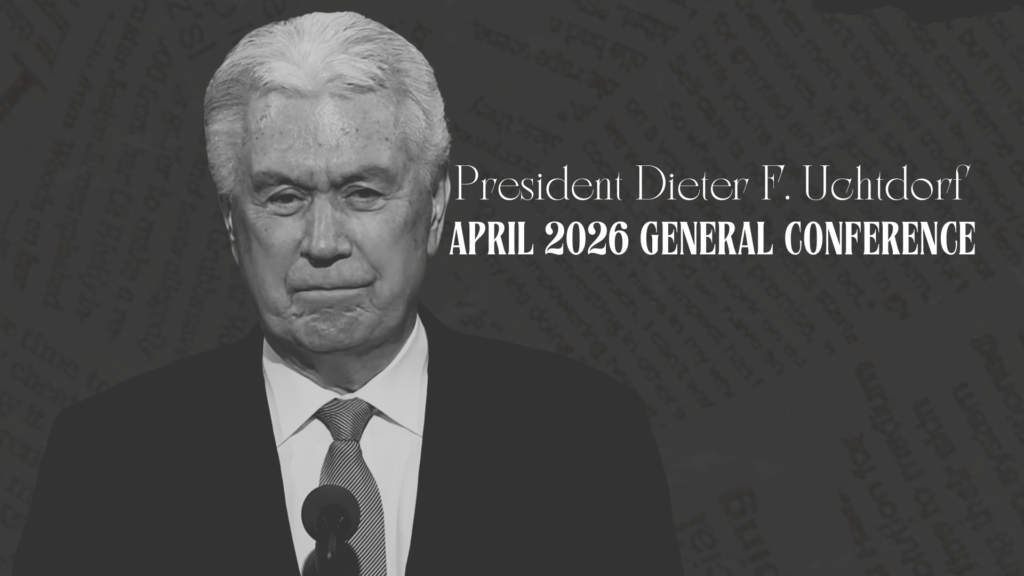
Some Relief Society lessons invite thoughtful discussion. Others invite something even deeper: worship, witness, and personal encounter with Jesus Christ. President Dieter F. Uchtdorf’s talk, “Encounter at the Empty Tomb,” is one of those messages.
This talk is rich with Easter doctrine, but it is also intensely personal. It moves from grief to witness, from darkness to light, from unanswered questions to living faith. It teaches not only that Christ rose, but that each of us must come to know the reality of the empty tomb for ourselves and then live and share that witness.
This lesson help is designed to make Relief Society lesson preparation easier and more meaningful. Instead of trying to pull ideas together at the last minute, you can teach from a clear structure that follows the talk in chronological order, with direct quotes, discussion questions, object lesson ideas, and personal sharing prompts already organized for you. That allows you to spend less time scrambling and more time seeking the Spirit, understanding the sisters in your class, and preparing to teach with confidence and depth.
All quotes below are taken directly from the uploaded talk text.

Grab our free bundle of 50+ Presentation Backgrounds by clicking here: https://otherthanamom.myflodesk.com/freebackgrounds
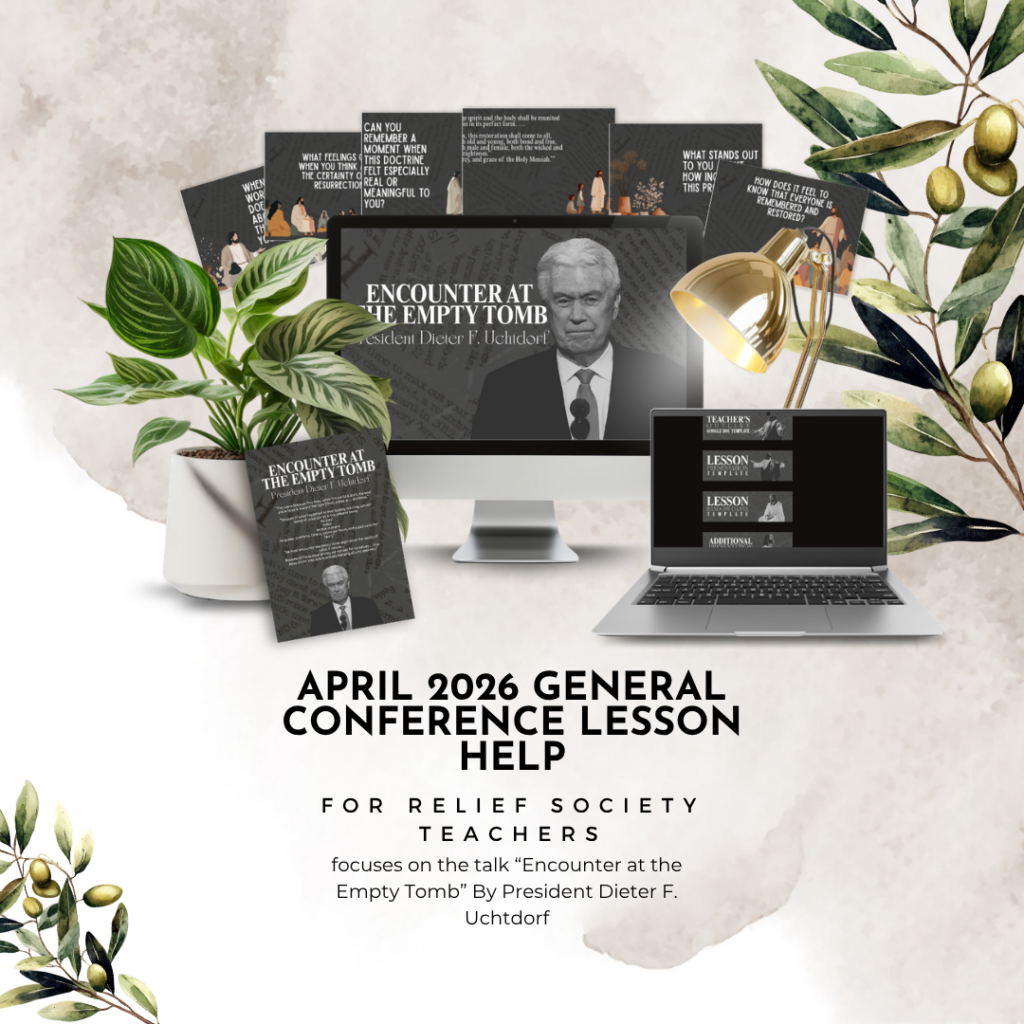
Interested in a done-for-you lesson plan with a teacher’s outline Google Doc, Canva Presentation Template, Lesson Handout Template, and themed presentation backgrounds? Click here: https://www.etsy.com/listing/4498236131/april-2026-general-conference-lesson?ref=listings_manager_grid
Section 1: They Came to the Tomb in Grief, Love, and Devotion
Teach
President Uchtdorf begins by slowing us down and inviting us into the sorrow of that first Easter morning. Before the joy of the Resurrection comes the ache of grief, confusion, and unanswered questions. The women did not come because they understood everything. They came because they loved Jesus Christ. That alone is a powerful lesson for discipleship: when life feels dark, love can still move us toward Him.
Direct Quotes from the Talk
“Nearly 2,000 years ago, a small group of women rose while it was still dark and made their way toward the tomb where the body of their beloved Lord, Jesus Christ, had been laid to rest.
“I have tried to imagine the depth of their grief.
“I can’t.
“I have tried to imagine their heartache, helplessness, and hopelessness.
“I can’t.
“Perhaps the question they all asked was ‘How could this happen?’”
“Despite the heaviness of their hearts and the unanswered questions in their minds, Mary and her companions made their way to the tomb.
“They didn’t come expecting a miracle.
“They didn’t come anticipating their questions would be answered.
“They certainly didn’t come because they had a complete understanding of what was happening.
“They came because of their immeasurable love and reverence for Jesus Christ. They came desiring to provide a loving act of service as a measure of their devotion and love for the man they honored and followed as the promised Messiah.”
Discussion Questions
- What stands out to you most about the way these women approached the tomb?
- Why do you think President Uchtdorf emphasizes that they did not come expecting a miracle?
- What does this teach us about discipleship when we do not understand what God is doing?
- How does love keep us moving toward the Savior even when answers are missing?
- Why is devotion especially meaningful in seasons of grief?
- Have you ever continued in faith even when you felt confused or heartbroken?
- What does this part of the talk teach about quiet faithfulness?
- How do sorrow and reverence sometimes exist together in spiritual life?
- What can we learn from their desire to serve Jesus even in grief?
- How can we come to the Savior with honesty when our hearts are heavy?
Object Lessons
- Bring a wrapped gift or bouquet to represent showing love even when you are hurting.
- Use a flashlight in a dim room to show moving forward when there is only enough light for the next step.
- Hold a heart-shaped object and a stone together to symbolize love in the middle of grief.
- Show a pair of walking shoes to illustrate that discipleship often means continuing to move toward Christ.
- Use an unopened envelope labeled “answers” to represent walking by love before understanding comes.
Personal Sharing Prompts
- Share a time you chose to keep turning toward the Lord even when you were confused.
- Describe an experience when love for the Savior carried you through sorrow.
- Share how you have continued showing devotion to God on a hard day.
- Talk about a time unanswered questions did not stop you from believing.
- Share an act of service that helped you stay close to Christ.
- Describe a season when grief and faith existed side by side.
- Share how the Lord met you in a dark moment.
- Talk about a time when you did not feel strong, but you still kept going.
- Share what helps you stay reverent when your heart feels unsettled.
- Describe what this section teaches you personally about faithful discipleship.
Section 2: When the World Is Dark, Go Toward the Light
Teach
This is one of the most beautiful lines in the talk. President Uchtdorf teaches that these women came because they knew that when the world is dark, the best place to go is toward the light. That principle reaches far beyond Easter morning. It speaks to personal pain, fear, discouragement, doubt, and spiritual weariness. It is a principle for real life.
Direct Quotes from the Talk
“They came because they knew when the world is dark, the best place to go is toward ‘the light [that] shines in … darkness.’”
Discussion Questions
- What does it mean to go toward the light when life feels dark?
- Why do people sometimes move away from God when they are hurting instead of toward Him?
- What does going toward Christ look like in practical, everyday life?
- How has the Savior been light to you in a dark season?
- What are some ways we try to find relief that are not actually light?
- Why is this principle so important in times of sorrow or confusion?
- How can we help others turn toward Christ instead of away from Him?
- What habits help us keep moving toward the light?
- How does this truth apply to someone with unresolved questions?
- What do you think President Uchtdorf wants us to feel in this sentence?
Object Lessons
- Darken the room and turn on one lamp or candle to show how light becomes especially meaningful in darkness.
- Use a compass and point it toward a source of light to illustrate intentional spiritual direction.
- Show two paths, one dim and one lit, to discuss where we turn in trouble.
- Use a sunrise image to represent hope after night.
- Hold a mirror that reflects light to symbolize helping others turn toward Christ.
Personal Sharing Prompts
- Share a time when the Lord became light to you.
- Describe how you have learned to turn toward Christ instead of withdrawing.
- Share what helps you seek light during discouragement.
- Talk about a specific practice that brings spiritual light into your life.
- Share how the Savior has guided you when you felt uncertain.
- Describe a time when choosing light required courage.
- Share how scripture, prayer, or temple worship has brought you light.
- Talk about how you have seen Christ lighten someone else’s darkness.
- Share what “going toward the light” means in your life right now.
- Describe a recent moment when you felt hope begin to return.
Section 3: The Empty Tomb Changed Everything
Teach
President Uchtdorf then moves to the world-changing moment itself. The stone was rolled away. The body was gone. Heaven declared the central message of Easter: He is not here. He is risen. This is not just a comforting symbol. It is the turning point of all human history.
Direct Quotes from the Talk
“What Mary and those with her discovered on that Sunday morning changed the world forever. ‘They found the stone rolled away from the tomb, but when they went in they did not find the body of the Lord Jesus. While they were perplexed about this, behold, two men stood by them in dazzling apparel … [and] said to them, “Why do you seek the living among the dead? He is not here, but has risen.”’
“This encounter at the empty tomb changed them forever.
“It changed the world.”
Discussion Questions
- Why is the Resurrection the event that changes everything?
- What do you love about the phrase “Why do you seek the living among the dead?”
- Why do you think heaven’s message at the tomb was so direct and simple?
- What changes in a person once they truly believe that Christ is risen?
- How does the Resurrection change the meaning of grief?
- How does the Resurrection change the meaning of mortality?
- What parts of your life feel different because Jesus Christ rose from the dead?
- Why is Easter more than a historical remembrance?
- How does this truth strengthen faith in hard times?
- What does it mean to live like the Resurrection is real?
Object Lessons
- Place a stone in front of a small open box or container and remove it to symbolize the rolled-away stone.
- Show an empty chair or empty box to illustrate absence that points to something greater.
- Use a wilted flower and a fresh flower to discuss death and resurrection.
- Display a closed tomb image and then an open one to talk about changed reality.
- Use a seed and blooming plant to symbolize life emerging from what looked finished.
Personal Sharing Prompts
- Share what the Resurrection means to you personally.
- Describe how belief in the empty tomb has changed your view of death.
- Share a moment when Easter doctrine became very real to you.
- Talk about how the Resurrection has brought you hope.
- Share how this truth affects the way you view trials.
- Describe how Christ’s victory over death has strengthened your testimony.
- Share how you teach the Resurrection in your family.
- Talk about a time you felt peace because Jesus lives.
- Share what changed in your life as your witness of Christ deepened.
- Describe why Easter matters to you.
Section 4: He Lives Now
Teach
President Uchtdorf beautifully insists that Jesus Christ is not merely a figure from the past. Because of the empty tomb, we speak of Him in the present tense. He lives today. He guides, comforts, listens, calms, and wipes away tears. This section invites a Relief Society discussion that moves from doctrine into living relationship.
Direct Quotes from the Talk
“But the bold message of the empty tomb is that Jesus Christ is not merely a historical figure.
“We do not seek Him among the dead. He is risen!
“We understand He is not confined to the pages of a book any more than He was confined to that grave of stone. The scriptures teach us not only who Jesus was but who He is.
“Because of what happened on that Sunday morning, we can speak of Jesus Christ in the present tense.
“He lives!
“Today.
“At this moment.
“He lives and is an active, ongoing influence in His Church and in the personal lives of those who follow Him. He guides, comforts, listens, calms our fears, and wipes away our tears.
“The message of the risen Christ is that, with His strength, all obstacles can be overcome. Because Jesus Christ conquered death, surely He can conquer any danger, confusion, or doubt we face.”
Discussion Questions
- What does it mean to you that Jesus Christ lives today, at this moment?
- Why is it important that President Uchtdorf emphasizes the present tense?
- Which words in this section feel most personal to you: guides, comforts, listens, calms, or wipes away tears?
- How have you experienced Christ as an active influence in your life?
- What does this section teach about a living relationship with the Savior?
- How does the Resurrection affect our fears and doubts?
- Why is it powerful to remember that Christ is not confined to history?
- How can we become more aware of His living influence?
- What obstacle in your life feels different when viewed through this truth?
- How does this section strengthen your confidence in Him?
Object Lessons
- Use the present tense written on a board: “He lives” and discuss why that wording matters.
- Show a current photo of someone alive versus an old memorial photo to contrast history and living reality.
- Use a phone with an active connection to illustrate ongoing communication rather than distant memory.
- Light a candle to symbolize the living, active presence of Christ.
- Hold a tissue or cloth and discuss Christ wiping away tears as a real, present ministry.
Personal Sharing Prompts
- Share a time when Jesus Christ felt very real and present to you.
- Describe how He has comforted or guided you.
- Share how the Savior has calmed your fears.
- Talk about a moment you felt heard by Him.
- Share how the truth “He lives” has changed your discipleship.
- Describe an obstacle that felt lighter because of faith in Christ.
- Share a time you sensed His care in a small way.
- Talk about how you have come to know the Savior personally.
- Share how Christ has wiped away tears in your life.
- Describe what it means to say, with conviction, “He lives.”
Section 5: Come and See, Then Go and Tell
Teach
This part of the talk is wonderfully action-oriented. The first witnesses received two invitations: come and see, then go and tell. President Uchtdorf shows that Easter witness is never meant to remain private forever. Personal encounter should lead to testimony, discipleship, and sharing.
Direct Quotes from the Talk
“Heavenly messengers at the empty tomb gave Mary and her companions two invitations.
“First, ‘Come, [and] see the place where the Lord lay.’
“Second, ‘Go quickly and tell His disciples that He is risen from the dead.’”
“In time, the Savior echoed a similar invitation to all: ‘Go into all the world and preach the gospel to every creature.’
“Those early believers did just that. And soon, the good news of the Resurrection of Jesus Christ spread throughout ‘all nations.’ That glorious work continues today as we proclaim His way in word and deed throughout more than 150 countries.”
Discussion Questions
- Why do you think “come and see” comes before “go and tell”?
- What does it mean to encounter truth for yourself before sharing it?
- How can personal witness make our testimony more powerful?
- What are some ways we “go and tell” in daily life?
- Why is both word and deed important in sharing Christ?
- What holds people back from speaking of the Savior?
- How can Easter deepen missionary-minded discipleship?
- What experiences have helped you share your witness more naturally?
- How do small acts of courage spread the good news?
- What is one way you feel invited to “go and tell” right now?
Object Lessons
- Use two signs: “Come and See” and “Go and Tell” to show the sequence of witness.
- Hold a lit candle and use it to light another candle, representing shared testimony.
- Show a map spreading outward from one point to illustrate witness moving through the world.
- Use a megaphone or simple note card to discuss different ways testimony is shared.
- Pass an object from one person to another to symbolize witness being carried forward.
Personal Sharing Prompts
- Share a time you felt invited to speak of Christ.
- Describe an experience that became a witness you wanted to share.
- Share how you have “gone and told” in a quiet or simple way.
- Talk about a conversation where you felt the Spirit help you testify.
- Share how service has become a way of sharing Christ for you.
- Describe someone whose witness strengthened your own.
- Share how your confidence in speaking of the Savior has grown.
- Talk about a small missionary moment that mattered to you.
- Share what makes testimony feel natural instead of forced.
- Describe how the Savior is inviting you to witness of Him now.
Section 6: We Must Encounter the Empty Tomb for Ourselves
Teach
President Uchtdorf then turns the talk directly toward us. Easter is not meant to remain someone else’s story. We must experience the reality of the empty tomb personally. This section is especially rich for Relief Society because it invites sisters to think about their own sacred experiences and witness.
Direct Quotes from the Talk
“We must all do the same.
“We must encounter the empty tomb, experience the reality of what it means, and, in turn, share that witness with others.
“Even though centuries separate us from that holy day, we are among those who Jesus referred to when He said, ‘Blessed are those who have not seen and yet have believed.’
“The Savior has entrusted each of us personally with sacred spiritual experiences and knowledge. Because of those experiences, we can see for ourselves the meaning of the empty tomb: that Jesus Christ lives and is actively blessing all who seek Him.”
Discussion Questions
- What does it mean to “encounter the empty tomb” in a personal way?
- Why is borrowed testimony not enough?
- How do sacred spiritual experiences help us see for ourselves?
- What does believing without seeing require?
- How can we prepare ourselves to recognize and treasure spiritual experiences?
- Why do you think President Uchtdorf says the Savior has entrusted us with these experiences?
- How does personal witness change the way we live?
- In what ways does Christ actively bless those who seek Him?
- How can we help others seek their own witness?
- What does this section invite you to do differently?
Object Lessons
- Use an empty box labeled “tomb” and invite discussion about what its emptiness means.
- Show a journal to represent recording sacred experiences.
- Use a pair of glasses to symbolize spiritual eyes.
- Hold a key to represent personal access to witness through Christ.
- Use a small stone and set it aside to symbolize making room for living faith.
Personal Sharing Prompts
- Share a sacred spiritual experience that strengthened your witness of Christ.
- Describe a moment when your testimony became more personal.
- Share how the Lord has helped you believe without physically seeing.
- Talk about an experience that helped you know Jesus Christ lives.
- Share what the Savior has entrusted to your heart.
- Describe how spiritual memories have sustained you.
- Share how you have come to “see for yourself.”
- Talk about how Christ is actively blessing your life.
- Share what helps you remember holy experiences.
- Describe how your witness has grown over time.
Section 7: Faith Moves Forward Even with Unresolved Questions
Teach
One of the most compassionate parts of the talk is President Uchtdorf’s acknowledgment that some people hesitate because of unresolved questions. He does not shame them. Instead, he points back to Mary and the women: they stepped forward in faith, with courage and humility, and walked toward the Savior’s light. This is deeply useful for real classroom discussion because many sisters will relate to this.
Direct Quotes from the Talk
“Some might hesitate to commit fully because of unresolved questions relating to life circumstances, the gospel, or the Church.
“But, like Mary and those with her that morning, even when things seem dark, we step forward in faith, with courage and humility, and walk toward the Savior’s light. As we do so, eventually the dawn of understanding will surely reward our faith.
“Like the warmth and light of the morning sun, we will feel the love and healing of the Son of God.
“Darkness will give way to eternal light.”
Discussion Questions
- Why do unresolved questions sometimes make people hesitate?
- What do you love about President Uchtdorf’s response to that hesitation?
- Why are courage and humility both necessary in discipleship?
- What does stepping forward in faith look like when answers are incomplete?
- How does this section offer hope without pretending questions are easy?
- Why is dawn such a beautiful image for understanding?
- Have you ever experienced clarity coming later than obedience?
- How can we create a church culture where questions can exist alongside faith?
- What helps you keep walking toward the Savior’s light?
- What does “darkness will give way to eternal light” mean to you personally?
Object Lessons
- Use a sunrise image or time-lapse to show gradual understanding.
- Start with a dim light and brighten it slowly to symbolize dawning faith.
- Use a fogged mirror and wipe it clear to illustrate increasing understanding.
- Show a path visible only one step at a time with a lantern.
- Use a seed underground as a symbol of hidden growth before visible light.
Personal Sharing Prompts
- Share a time you moved forward in faith before you had all the answers.
- Describe how the Lord rewarded your faith with understanding later.
- Share about a question that did not destroy your faith but refined it.
- Talk about how humility has helped you seek truth.
- Share an experience of choosing courage in spiritual life.
- Describe how Christ has brought light gradually into your life.
- Share what helps you stay steady when you do not see the whole picture.
- Talk about a time darkness began to give way to hope.
- Share how the Savior has healed something unresolved in you.
- Describe what faithful waiting looks like in your life.
Section 8: The Empty Tomb Changes a Disciple’s Entire Journey
Teach
President Uchtdorf closes by showing the lifelong effect of encountering the risen Christ. The empty tomb is not only an Easter truth. It is a daily discipleship reality. It changes our hearts, identity, choices, strength, and joy. It changes our journey.
Direct Quotes from the Talk
“My dear brothers and sisters, each morning let the daily rising sun remind us that Jesus Christ is the light that leads us through this life, through any valley of sorrow, over beautiful mountains of joy, and across any ocean of uncertainty or temptation, safely back to our loving and merciful Father in Heaven.”
“Brothers and sisters, as we desire to encounter Christ, we must eventually make our way to the empty tomb.
“We must come to know for ourselves the blessed words ‘Be not afraid, for Jesus, who was crucified, is not here. He is risen!’
“Those words will change us. They will inspire us to take upon ourselves the name of Christ. And from that moment on, the Light of Christ will begin to bloom within us. It will, in time, bring about a mighty change in our hearts and bless us with a disposition to do good continually. Jesus Christ and His restored gospel are our strength. Jesus Christ is our guide for making choices and will bring joy and happiness in this life and extend into the eternities.”
“No, we were not with Mary on that blessed Easter morning. We did not see what she and the other women saw. But we can ask ourselves: What have we seen, felt, or experienced?
“Shall we not, therefore, become witnesses of Jesus Christ? Shall we not share our love for Him with others?
“My dear friends, on this holy Easter morning, I offer my witness: He is risen.
“I have stood at the entrance to the empty tomb and seen with spiritual eyes the eternal truth that Jesus Christ is not found among the dead but among the living.
“He lives!
“That testimony has made all the difference in my life.
“That encounter at the tomb will do the same for all who earnestly seek Him. It will make a difference to you.”
Discussion Questions
- What does it mean to let the rising sun remind us daily of Jesus Christ?
- How does the empty tomb change a disciple’s identity?
- What do you notice about the progression President Uchtdorf describes: witness, change, light, and then doing good?
- How does the Light of Christ begin to bloom within a person?
- What has the Savior changed in your own heart?
- How does Christ guide your choices in practical ways?
- What have you seen, felt, or experienced that helps you be a witness of Him?
- Why does a witness of the risen Christ make such a difference in life?
- How can we become more joyful and constant disciples?
- What part of President Uchtdorf’s closing witness speaks to you most?
Object Lessons
- Use a sunrise image to talk about daily remembrance of Christ.
- Place a flower bulb or budding branch on display to illustrate light blooming within us.
- Use a name tag labeled “Disciple of Christ” to discuss identity.
- Hold a lamp to show Christ guiding our choices.
- Use a path with valleys, mountains, and water drawn on paper to show Christ leading through all seasons.
Personal Sharing Prompts
- Share how your witness of Jesus Christ has changed your life.
- Describe a way the Light of Christ has grown within you.
- Share a change of heart you know came from the Savior.
- Talk about how Christ guides your decisions.
- Share something you have seen, felt, or experienced that confirms He lives.
- Describe how your discipleship has become steadier over time.
- Share how the risen Christ has brought joy into your life.
- Talk about what helps you remember Him daily.
- Share your testimony that He lives.
- Describe what difference the Savior has made in your life.
Conclusion
Preparing a Relief Society lesson on President Uchtdorf’s “Encounter at the Empty Tomb” can become far more than organizing a few comments or finding a couple of questions. This talk is an invitation into witness. It is a chance to help sisters move from simply admiring the Easter story to personally encountering its reality in their own lives.
That is one of the greatest benefits of using a lesson help like this. It gives you a clear path through the talk, rich direct quotes already gathered, and discussion tools that invite both doctrine and experience. With that structure in place, you can focus more prayerfully on your class, on the Spirit, and on how to create an atmosphere where sisters feel safe to reflect, testify, and draw closer to Jesus Christ.
President Uchtdorf’s message reminds us that the women at the tomb came in grief, but left as witnesses. They came in darkness, but found light. They came with questions, but encountered the living Christ. And his invitation is that we do the same. We must encounter the empty tomb, experience the reality of what it means, and then share that witness with others. When that happens, Easter is no longer just something we study. It becomes something that changes us.