Introduction
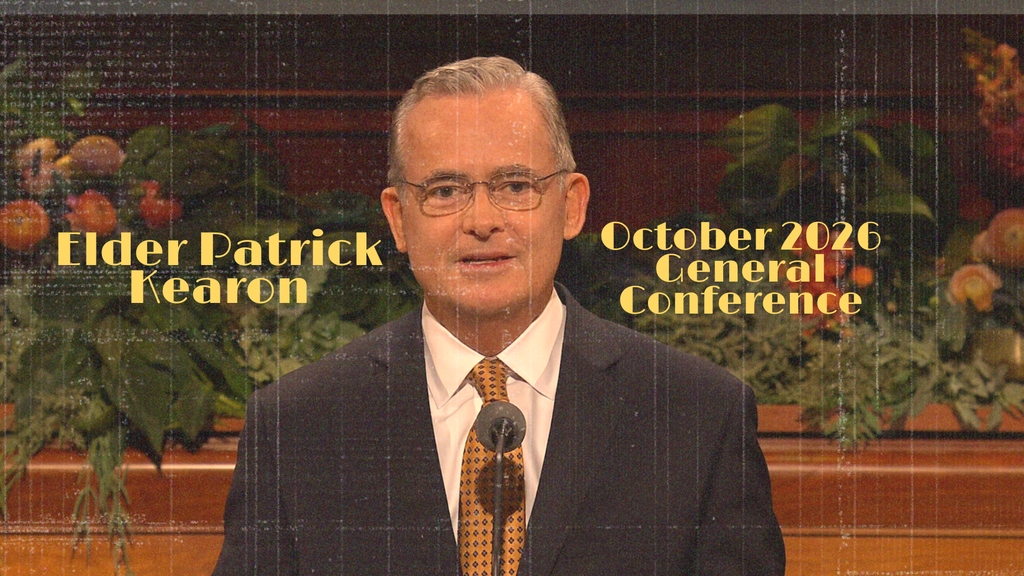
Elder Patrick Kearon’s message uses a beautifully simple image from his teenage years learning to fly gliders: in order to soar, a pilot must learn to recognize lift, avoid sink, and respond to both.
Those principles become a powerful metaphor for discipleship.
There are influences, choices, habits, relationships, environments, and spiritual practices that draw us upward toward Heavenly Father and Jesus Christ. There are also influences that gradually pull us downward. Sometimes that spiritual “sink” is obvious. At other times, it happens so slowly that we may not realize we have lost altitude at all.
But the central message of Elder Kearon’s talk is not a warning about sinking. It is a testimony about Jesus Christ and His desire to lift us.
As Elder Kearon repeatedly teaches, “Jesus Christ loves to lift.”
The Savior lifted Peter from the water. He lifted Jairus’s daughter from death. He lifted a suffering child. Throughout His ministry, He continually sought those who were sinking into darkness, grief, fear, sin, or despair and drew them upward.
And He does the same for us.
This message provides rich opportunities for Relief Society discussion about recognizing the influence of the Holy Ghost, noticing gradual spiritual decline, identifying what personally brings us closer to Christ, turning decisively away from spiritual “sink,” surrounding ourselves with people who are rising, helping others find spiritual lift, and relying on Jesus Christ when we cannot lift ourselves.
This lesson help follows Elder Kearon’s message chronologically and divides it into nine discussion sections based on the natural changes in his message. Each includes longer direct quotations from the talk, a doctrinal teaching focus, ten discussion questions, five object lesson ideas, and ten personal sharing prompts.
Teachers do not need to use every section. Instead, these resources can help you prayerfully choose the portions of Elder Kearon’s message that will best meet the needs of the sisters you teach.
Section 1: Learning to Recognize an Unseen Force That Lifts
The Principle
Elder Kearon begins with his childhood fascination with flight and his experience learning to fly a glider.
Because a glider has no engine, staying airborne requires something the pilot cannot see: rising currents of air.
The pilot learns to recognize visible clues, but eventually must also learn to feel the lift.
This becomes the foundation for the spiritual metaphor Elder Kearon develops throughout the rest of his message.
Direct Quotes from the Talk
“The crucial skill in gliding is finding rising air. You cannot see it, but you can see what it does.”
“I was taught to look for cumulus clouds because they often mark where warm air is rising, and I learned to fly toward them. But even more important than using visual cues to find rising air is to learn to feel it.”
He continues:
“While flying along, I would begin to feel that I was being lifted by an unseen force. The rising air is called lift.”
“One wing would tip upward and I would turn toward it into the lift.”
“I was taught how to stay in lift, circling upward, gaining altitude and often join other pilots who had found lift, climbing within the same invisible rising column of air.”
Elder Kearon describes the experience:
“To be flying is fantastic, but climbing in lift and soaring with no engine is almost beyond description.”
“For me, it was beautiful with only the whistle of the wind, the occasional creak from the glider, and the magnificent sensation of being drawn upward.”
Teach
One of the first spiritual principles embedded in Elder Kearon’s metaphor is that something does not need to be visible to be real.
A glider pilot cannot see rising air itself, but the pilot can recognize its effects.
The same becomes true spiritually.
We cannot physically see the Holy Ghost. We cannot see the Savior’s grace with mortal eyes. But we can learn to recognize what their influence produces within us.
Spiritual sensitivity is therefore something that can be developed.
Just as Elder Kearon learned to recognize and eventually feel lift, disciples can become increasingly familiar with what it feels like to be drawn toward Jesus Christ.
Relief Society Discussion Questions
- Why do you think Elder Kearon begins with something invisible that can nevertheless be felt?
- What spiritual realities are unseen but unmistakably real in your life?
- What are some of the “visual cues” that might indicate spiritual lift is nearby?
- What does the influence of the Holy Ghost feel like to you personally?
- Why might recognizing the Spirit require practice?
- How can we become more spiritually sensitive?
- What might cause us to miss subtle spiritual impressions?
- Elder Kearon learned to turn toward lift when he felt it. What does “turning toward” a spiritual impression look like?
- Why is noticing what the Spirit does sometimes easier than explaining what the Spirit feels like?
- What experiences have taught you that unseen spiritual forces can have very real effects?
Object Lesson Ideas
1. Invisible Air
Bring a fan.
We cannot see the moving air itself, but we can see hair, paper, or fabric move because of it.
Connect this to Elder Kearon’s words:
“You cannot see it, but you can see what it does.”
2. Balloon Rising
Use a helium balloon.
Discuss how unseen forces can produce visible movement. Ask what spiritual “movement” the influence of Christ produces in us.
3. Wind Chime
Bring or show a wind chime.
The wind itself remains invisible, but its effects can be heard.
Ask: What evidence helps us recognize the Holy Ghost even when we cannot physically see Him?
4. Compass
Bring a compass.
The magnetic force guiding the needle cannot be seen, but we trust its direction because we recognize its consistent effects.
5. Lightweight Feather
Blow gently beneath a feather or lightweight piece of tissue.
Use it to introduce the idea that spiritual impressions may sometimes be gentle rather than dramatic.
Personal Sharing Prompts
- Share one of the first times you remember recognizing the Holy Ghost.
- Describe what spiritual peace feels like to you.
- Share a time you followed a subtle impression.
- Talk about a spiritual experience that was difficult to put into words.
- Share something that helps you become more sensitive to the Spirit.
- Describe a place where you frequently experience spiritual lift.
- Share a scripture, hymn, or practice that consistently draws you toward Christ.
- Talk about how your ability to recognize the Spirit has changed over time.
- Share a time you saw the effects of the Spirit in someone else.
- Finish the sentence: “I often recognize spiritual lift when…”
Section 2: Spiritual Sink Is Real—and We Need to Turn Away Decisively
The Principle
After describing lift, Elder Kearon introduces its opposite.
Glider pilots call descending air “sink.”
Like lift, it cannot necessarily be seen. But it can be felt, and its effects can become dangerous.
Elder Kearon learned not to linger in sink, analyze it indefinitely, or see how long he could remain there.
He learned to turn away decisively.
That becomes his first explicit spiritual application.
Direct Quotes from the Talk
“Just as there is rising air, there is also sinking air, helpfully called sink.”
“It likewise cannot be seen, but it can be felt, and I quickly learned to avoid it.”
“Gliding into sink can feel like falling, sometimes quickly. It shortens the distance you can fly and may threaten a safe landing.”
Then comes an important phrase:
“When I encountered sink, I learned to turn away decisively.”
Elder Kearon then explains when the spiritual connection became clear:
“A decade after those gliding days and not far into my journey of faith, I recognized the principles of gliding I had learned in my teens have significant similarities with spiritual principles.”
His summary is remarkably simple:
“We must avoid sink and find lift.”
Teach
There are times when spiritual wisdom means turning away decisively.
Not every temptation needs to be investigated.
Not every harmful influence needs to be tested.
Not every spiritually draining environment deserves more time.
Not every thought deserves continued attention.
Once we recognize something consistently pulling us away from Christ, there can be wisdom in simply turning.
Elder Kearon does not teach us to become preoccupied with spiritual sink. His emphasis is ultimately positive:
Avoid sink. Find lift.
Relief Society Discussion Questions
- What might “spiritual sink” look like in everyday life?
- How can we recognize something that is slowly pulling us away from Christ?
- Why is it sometimes difficult to turn away decisively?
- What is the difference between casually resisting something and decisively turning away?
- Are there influences that may create spiritual sink for one person but not necessarily another?
- Why is personal spiritual discernment important?
- What can happen when we remain in spiritually unhealthy situations longer than necessary?
- How can we help children recognize spiritual sink without teaching them to fear the world?
- Why does Elder Kearon pair “avoid sink” with “find lift”?
- Is there anything you could turn away from more decisively in order to make room for greater spiritual lift?
Object Lesson Ideas
1. Sloped Surface
Place a ball on a slightly sloped surface.
Even without being pushed, it gradually moves downward.
Discuss influences that quietly move us away from where we intended to remain.
2. Exit Sign
Show an exit sign.
Sometimes the wise response to danger is not to remain and prove our strength—it is to leave.
3. Spoiled Food
Show an expired food package.
Once we recognize something as harmful, we do not need to taste it repeatedly to verify our conclusion.
4. Turning a Steering Wheel
Use a plate as a pretend steering wheel.
A pilot must respond to changing conditions. Likewise, discipleship requires course corrections.
5. Two Arrows
Put one arrow pointing downward and another upward.
Ask sisters to name choices that tend to move them in each direction.
Personal Sharing Prompts
- Share a time you recognized something was spiritually pulling you downward.
- Describe a choice to step away from an unhealthy influence.
- Share a time you felt immediate relief after turning away from something.
- Talk about a boundary that protects your spiritual well-being.
- Share how you recognize when media affects your spirit.
- Describe something you once tolerated that you later realized was spiritually costly.
- Share a time a friend or family member helped you recognize spiritual sink.
- Talk about how you teach children to trust uncomfortable spiritual impressions.
- Share a course correction that brought you closer to Christ.
- Finish the sentence: “I know something is creating spiritual sink for me when…”
Section 3: Jesus Christ Has Always Been in the Work of Lifting
The Principle
Elder Kearon now moves from the metaphor to the heart of his message:
We have a Heavenly Father who adores us and a Savior who loves to lift us.
He points to the Savior’s mortal ministry as evidence.
Jesus repeatedly encountered people who were physically, emotionally, spiritually, or figuratively sinking—and He lifted them.
Peter was sinking beneath the waves.
Jairus’s daughter had descended into death.
A suffering boy was “as one dead.”
Christ reached toward them.
The same Savior reaches toward us.
Direct Quotes from the Talk
“At the heart of our faith is the glorious truth that we have an adoring Father in Heaven whose Son, our Savior, loves to lift.”
Elder Kearon then asks us to consider the pattern throughout scripture:
“Just think of all the scriptural accounts that show our Redeemer lifting people from despair out of their figurative sink.”
“With His all-powerful hand He lifted His beloved Peter from sinking in the waves.”
“He lifted the daughter of Jairus from the depths of death.”
“And after healing the boy plagued with an unclean spirit who was as one dead, Jesus took him by the hand and lifted him up.”
He then broadens the pattern:
“Our Savior constantly sought out the most desperate souls sinking into darkness and dread and lifted them up.”
And then makes it personal:
“And He wants to lift you.”
Teach
Notice the direction of Christ’s ministry in these examples.
Upward.
From water.
From death.
From despair.
From darkness.
From dread.
Elder Kearon is not merely describing what Christ did anciently. He is using those accounts to reveal something about the Savior’s character.
Jesus Christ is a lifter.
When we feel spiritually low, ashamed, frightened, exhausted, discouraged, or overwhelmed, our instinct may be to assume Christ is disappointedly looking down at us.
Elder Kearon gives us another image:
Christ is reaching down to lift us up.
Relief Society Discussion Questions
- What do these scriptural stories teach us about the character of Jesus Christ?
- Why do you think Elder Kearon emphasizes Christ physically taking people and lifting them?
- What does the phrase “our Savior loves to lift” teach you about Him?
- Why might people who are sinking sometimes hesitate to reach toward Christ?
- What kinds of “darkness and dread” do people experience today?
- How does the story of Peter change when viewed as a story about Christ lifting rather than Peter sinking?
- Why does the Savior seek out “the most desperate souls”?
- What is the difference between believing Christ can lift you and believing He wants to?
- How might this doctrine help someone struggling with shame?
- What would change if we pictured Christ reaching toward us whenever we feel ourselves sinking?
Object Lesson Ideas
1. Reaching Hand
Ask one sister to sit on the floor and another to offer her hand.
Discuss the symbolism of the Savior reaching toward those who are down.
2. Peter on the Water
Use a bowl of water and a small object.
Read Elder Kearon’s reference to Peter and emphasize the Savior’s response to Peter’s sinking.
3. Lifeguard
Show a picture of a lifeguard.
A rescuer does not stand on shore criticizing the drowning person’s swimming technique.
Connect that image to Christ’s desire to save and lift.
4. Elevator
Use an elevator button or image.
Ask: When you think about your relationship with Jesus Christ, do you primarily picture Him evaluating your altitude—or helping you rise?
5. Helping Someone Stand
Invite sisters to notice how instinctive it feels to extend a hand when someone falls.
Then consider how much more perfectly the Savior desires to lift.
Personal Sharing Prompts
- Share a time the Savior lifted you emotionally or spiritually.
- Describe a scripture story where Christ’s compassion particularly touches you.
- Share a season when you felt you were spiritually sinking.
- Talk about a time Christ gave you hope when you felt discouraged.
- Share how your understanding of the Savior’s character has changed.
- Describe a time you felt Christ reach toward you rather than condemn you.
- Share what helps you turn to Christ when you feel low.
- Talk about someone who helped you understand that Jesus wanted to help you.
- Share a time grace helped you begin again.
- Finish the sentence: “I know Jesus Christ loves to lift because…”
Section 4: Through the Grace of Jesus Christ, We Can Feel Spiritual Lift
The Principle
Having established that Christ loves to lift, Elder Kearon explains how we begin to experience that lift personally.
Through the grace of Jesus Christ, we can avoid spiritual sink and find spiritual lift.
And just as he learned to feel rising air beneath the wing of a glider, we can learn to recognize the “sensitive impressions of the Holy Spirit.”
Direct Quotes from the Talk
“Through the amazing grace of Jesus Christ, we can avoid spiritual sink and find spiritual lift.”
“Spiritual lift cannot be seen.”
“But as we learn to discern and act upon the sensitive impressions of the Holy Spirit, we can feel it as surely as I felt the rising air lift a wing beneath me.”
Elder Kearon then invites us into personal reflection:
“Can you identify moments when you have felt undeniable spiritual lift?”
“Where were you? How did it feel?”
“Isn’t it magnificent to feel like you’re being drawn upward, rising higher and higher toward your Heavenly Father and your intended eternal potential?”
Teach
Elder Kearon does something especially useful for a Relief Society lesson here:
He does not simply tell us spiritual lift exists.
He asks us to remember it.
Where were you?
What were you doing?
What did it feel like?
Those questions can help sisters begin identifying personal spiritual patterns.
One sister may consistently experience lift while studying scripture.
Another while serving.
Another in the temple.
Another while listening to sacred music.
Another during sincere prayer.
Another while spending quiet time in nature.
The purpose is not to create one universal formula. It is to become better at recognizing the circumstances in which we personally become more receptive to Christ and the Holy Ghost.
Relief Society Discussion Questions
- What do you think Elder Kearon means by “spiritual lift”?
- When have you felt yourself being spiritually drawn upward?
- Why does he connect spiritual lift with Christ’s grace?
- What does it mean to both “discern and act upon” impressions?
- Why is acting on an impression important?
- Where do you most consistently experience spiritual lift?
- What practices make you more receptive to the Holy Ghost?
- How does spiritual lift differ from ordinary happiness or excitement?
- Why is it useful to intentionally remember spiritual experiences?
- What patterns do you notice when you think about your strongest spiritual experiences?
Object Lesson Ideas
1. Personal Lift Map
Draw a cloud in the center of a poster and have sisters name places, practices, or circumstances where they commonly feel closer to Christ.
2. Glider Wing
Use a paper airplane.
Blow gently beneath the wing and connect the upward movement with responding to spiritual impressions.
3. Spiritual Journal
Bring a journal.
Explain that recording spiritual experiences can help us identify patterns we may otherwise forget.
4. Tuning a Radio
Use a radio or picture of one.
The signal may already exist, but we must tune the receiver.
Connect this with becoming sensitive to the Holy Ghost.
5. Magnifying Glass
Use a magnifying glass.
Sometimes recognizing spiritual patterns requires looking more carefully at experiences we might otherwise overlook.
Personal Sharing Prompts
- Describe one of your clearest experiences of spiritual lift.
- Share where you were when you felt particularly close to Heavenly Father.
- Talk about a spiritual experience you intentionally recorded.
- Share something you do when you need to feel closer to Christ.
- Describe a time you acted on an impression and felt greater spiritual light afterward.
- Share a hymn that consistently brings spiritual lift.
- Talk about a temple experience that drew you upward.
- Share how service has affected your ability to feel the Spirit.
- Describe a spiritual practice that became more meaningful over time.
- Finish the sentence: “One place I frequently find spiritual lift is…”
Section 5: Spiritual Descent Can Be So Gradual We Do Not Notice It
The Principle
Elder Kearon now gives one of the most insightful warnings in the talk.
In a glider, if you are not actively climbing, you are descending.
But descent is not always dramatic.
It can happen so gradually that the pilot does not notice unless altitude is being monitored.
Elder Kearon sees the same pattern spiritually.
We rarely wake up intending to become spiritually distant.
More often, we slowly neglect the very practices that helped us climb.
Direct Quotes from the Talk
“Can you likewise identify moments when you have felt spiritual sink? You likely remember how this felt in contrast.”
“Just as with gliding, we turn away from it decisively.”
Then comes the central analogy:
“In gliding, if you’re not actively climbing in lift, you are descending.”
“This is an uncomfortable fact.”
“A descent can be so gradual that unless you watch your altitude, you may not notice you are sinking.”
Elder Kearon applies it directly:
“Isn’t it the same in our lives?”
“How easy it is to slowly slip from spiritual heights we’ve worked so hard to climb when we neglect the practices and behaviors that brought us there.”
“We rarely intend to sink.”
“We want lift. We want lift, its joy and blessings.”
“But we may not recognize the quiet cost of neglecting vital communion with our Father, Savior, and Holy Spirit.”
Teach
This is an excellent section for discussing the difference between rebellion and neglect.
Not all spiritual decline begins with a conscious decision to leave Christ.
Sometimes it begins with:
“I’m tired tonight.”
“I’ll pray tomorrow.”
“I haven’t read my scriptures lately.”
“We’ve just been busy.”
“I haven’t been to the temple in a while.”
“I know I should reach out.”
None of those moments necessarily seems dramatic.
That is precisely Elder Kearon’s point.
Spiritual descent can be quiet.
The answer is not obsessive fear about whether we are “high enough.” It is maintaining “vital communion” with Heavenly Father, Jesus Christ, and the Holy Ghost.
Relief Society Discussion Questions
- Why is gradual spiritual decline sometimes harder to recognize than obvious temptation?
- What does “watch your altitude” mean spiritually?
- What are some early signs that you may be losing spiritual altitude?
- Why does Elder Kearon say, “We rarely intend to sink”?
- How can good people drift spiritually without deliberately choosing to?
- Which spiritual practices tend to be neglected first when life becomes busy?
- What is the “quiet cost” of neglecting communion with God?
- How can we monitor our spiritual health without becoming perfectionistic?
- What helps you notice spiritual drift early?
- Is there a practice that once brought you significant lift that you would benefit from restoring?
Object Lesson Ideas
1. Slowly Deflating Balloon
Inflate a balloon and slowly release air.
The change is subtle moment by moment but significant over time.
2. Phone Battery
Show a slowly draining phone battery.
Nothing dramatic has to happen for power to diminish when it is not being replenished.
3. Plant Without Water
Bring a healthy plant and discuss what happens if it misses water repeatedly.
Neglect can produce consequences without any deliberate attempt to destroy the plant.
4. Altimeter
Show an image of an aircraft altimeter.
Ask sisters what spiritual “instruments” help them recognize their current altitude.
5. Slightly Sloped Table
Allow a ball to roll slowly down a barely noticeable incline.
The movement may be subtle, but direction still matters.
Personal Sharing Prompts
- Share a time you realized you had gradually drifted spiritually.
- Describe an early warning sign you have learned to recognize in yourself.
- Share a gospel habit you once neglected and later restored.
- Talk about how busyness has affected your spiritual life.
- Share something that helps you “watch your altitude.”
- Describe a time returning to prayer or scripture study brought noticeable lift.
- Share how you maintain spiritual practices during demanding seasons.
- Talk about a time you did not realize how much you missed something spiritually until you returned to it.
- Share a simple practice that keeps you connected to the Lord.
- Finish the sentence: “I know I need spiritual replenishment when…”
Section 6: The Savior Can Bring Us from Everlasting Darkness into Everlasting Light
The Principle
Elder Kearon next turns to Ammon in the Book of Mormon to illustrate the dramatic contrast between spiritual sink and spiritual lift.
Ammon remembers people who had been surrounded by darkness and destruction and then brought into the light and love of God.
The change is so profound that Ammon struggles to describe it.
Elder Kearon then teaches something beautiful:
Some experiences with God exceed our ability to put them into words.
Direct Quotes from the Talk
“When we first experience spiritual lift, it is wondrous.”
“We may feel a soul-expanding lightness of being unlike anything we’ve ever experienced.”
Elder Kearon points to Ammon:
“A compelling example of this in the Book of Mormon is when Ammon praises God for loosing his brethren from the chains of hell.”
“They had been encircled about with everlasting darkness and destruction and were then brought into everlasting light, encircled about with the matchless bounty of God’s love.”
Elder Kearon describes it as:
“Redemption from the ultimate sink to the ultimate lift.”
Then he quotes Ammon:
“Behold, who can glory too much in the Lord? Yea, who can say too much of His great power, and of His mercy, and of His long-suffering towards the children of men? I say unto you, I cannot say the smallest part which I feel.”
Elder Kearon explains:
“Ammon cannot begin to describe this profound transition from devastating sink to the most glorious lift.”
“And I haven’t met anyone who can.”
“The language of the Spirit of God is not a language of words.”
Teach
Some of the most sacred experiences in our lives may be difficult to describe.
Peace after repentance.
Hope after despair.
Light after prolonged spiritual darkness.
A sudden awareness of God’s love.
Forgiveness.
Healing.
Conversion.
Elder Kearon validates the difficulty we sometimes experience when trying to explain those moments.
The inability to perfectly describe a spiritual experience does not make it less real.
Ammon could not “say the smallest part” of what he felt.
Sometimes testimony sounds less like an eloquent explanation and more like:
“I cannot fully explain it, but I know what God did for me.”
Relief Society Discussion Questions
- What does the phrase “soul-expanding lightness of being” mean to you?
- Why is light such a powerful symbol of redemption?
- What does Ammon’s inability to describe his feelings teach us about spiritual experience?
- Why are some experiences with God difficult to communicate?
- Have you ever known something spiritually that you struggled to express verbally?
- What does “the matchless bounty of God’s love” teach about grace?
- Why might conversion feel like moving from darkness into light?
- How can we honor sacred experiences without feeling pressure to perfectly explain them?
- Why is remembering past deliverance valuable when we encounter future sink?
- What does Ammon’s gratitude teach us about recognizing the source of our spiritual lift?
Object Lesson Ideas
1. Dark Room to Light
Darken the room and then turn on a light.
Discuss the contrast Elder Kearon describes between darkness and everlasting light.
2. Words That Fall Short
Ask sisters to describe a beautiful sunset using only three words.
Then discuss how some realities exceed language.
3. Tangled Chain
Bring a tangled chain and then loosen it.
Connect it with Ammon’s imagery of being “loosed” from chains.
4. Wrapped in Darkness / Wrapped in Light
Wrap an object in dark fabric, then replace it with something light.
Use Ammon’s imagery of being “encircled about” first by darkness and then by God’s love.
5. Overflowing Cup
Fill a cup until water reaches the top.
Discuss spiritual feelings so abundant that words cannot contain them.
Personal Sharing Prompts
- Share a spiritual experience you have always struggled to describe.
- Describe a time repentance brought you noticeable lightness or peace.
- Share a moment when God’s love felt particularly real.
- Talk about a time you moved from discouragement into hope.
- Share a moment when gratitude for the Savior felt overwhelming.
- Describe an experience where words seemed inadequate.
- Share a Book of Mormon passage that helped bring you spiritual light.
- Talk about a time you felt surrounded by God’s love.
- Share an experience that strengthened your testimony of Christ’s power to redeem.
- Finish the sentence: “I cannot fully explain it, but I know…”
Section 7: Pay Attention to What Draws You Toward Christ—and What Dampens the Spirit
The Principle
Elder Kearon next becomes very practical.
Spiritual lift and sink are real, so we should pay attention.
Notice the peaceful feelings accompanying choices that draw you toward Christ.
Notice the dimming and dampening feelings accompanying things that lead away from Him.
This is not simply about creating a list of permitted and prohibited activities. It is about developing spiritual awareness.
Direct Quotes from the Talk
“But lift and sink in the spiritual realm are nevertheless real.”
“Pay close attention to the sweet, peaceful feelings that come when you choose spiritual lift.”
“The rising forces that bring you into the Savior’s loving upward pull.”
Then Elder Kearon gives the opposite instruction:
“Likewise, pay attention to the dim and dampening feelings that lead away from the Redeemer and His infinite love.”
Teach
“Pay close attention” may be one of the most practical invitations in Elder Kearon’s message.
We can begin noticing patterns:
After I do this, do I feel more open to God—or less?
Does this relationship strengthen my desire for goodness?
Does this media leave greater light in my mind?
Does this habit increase peace?
What happens spiritually when I consistently make this choice?
Rather than relying solely on external rules, mature discipleship includes learning to recognize whether something is drawing us toward the Savior’s “loving upward pull.”
Relief Society Discussion Questions
- What does “pay close attention” require from us?
- What choices consistently produce sweet and peaceful spiritual feelings?
- What does a “dampening” spiritual feeling feel like?
- Why might we ignore subtle spiritual discomfort?
- How can the Holy Ghost help us make decisions not specifically addressed by commandments?
- Why is it useful to evaluate the spiritual aftermath of our choices?
- How can we distinguish spiritual peace from simply getting what we want?
- What influences make you want to become more like Jesus Christ?
- What environments tend to dampen your spiritual sensitivity?
- What would change if you regularly asked, “Is this drawing me into the Savior’s upward pull?”
Object Lesson Ideas
1. Dimmer Switch
Use a light with a dimmer if available.
Not all loss of light happens instantaneously. Some choices gradually dampen spiritual sensitivity.
2. Two Playlists
Without playing anything, label two papers with different types of influences.
Discuss how we can evaluate media by what remains in our hearts afterward.
3. Clean and Cloudy Water
Show clear water beside cloudy water.
Ask what choices leave our spiritual perception clearer.
4. Magnet
Use a magnet pulling a small object.
Connect the gentle pull with Elder Kearon’s phrase “the Savior’s loving upward pull.”
5. Spiritual Inventory
Create two columns:
Draws Me Toward Christ
Dampens My Spiritual Sensitivity
Invite sisters to privately consider what belongs in each.
Personal Sharing Prompts
- Share something that consistently brings peace into your life.
- Describe a time you noticed a dampening feeling and changed direction.
- Share a media choice that affected you spiritually.
- Talk about a person whose presence draws you toward Christ.
- Share a place where you consistently feel peace.
- Describe a habit that increases your sensitivity to the Spirit.
- Share a decision you made because of a quiet spiritual feeling.
- Talk about something you gave up because you noticed its effect on your spirit.
- Share how you teach children to recognize spiritual feelings.
- Finish the sentence: “I feel the Savior’s upward pull when…”
Section 8: One of Our Greatest Opportunities Is Helping Others Find Lift
The Principle
Elder Kearon now expands the glider image from individual discipleship to covenant community.
Earlier, he described glider pilots finding the same column of rising air and circling upward together.
Now he returns to that imagery spiritually.
There is joy in rising toward Christ ourselves.
But there is also extraordinary joy in helping someone else find the same lift.
Direct Quotes from the Talk
“And oh, the joy that comes when others experience lift, circling upward with us in the love and light of Jesus Christ.”
“As children of the covenant, we are privileged with the responsibility of assisting the Lord in fulfilling His promises to all of His children.”
“Helping others turn from sink and into the lift of Jesus Christ is our glorious opportunity and brings joy beyond compare.”
Teach
The gospel is not meant to be a solitary climb.
When we discover something that brings us closer to Christ, we can show others where we found it.
This might happen through:
- ministering,
- parenting,
- friendship,
- missionary work,
- temple service,
- testimony,
- teaching,
- encouragement,
- or simply inviting someone to join us in something that brings light.
Importantly, we do not become the source of another person’s lift.
Jesus Christ is the source.
Our privilege is helping someone turn toward Him.
Relief Society Discussion Questions
- Why does Elder Kearon describe helping others find lift as a “glorious opportunity”?
- What does “circling upward with us” suggest about covenant community?
- How can Relief Society become a place of collective spiritual lift?
- What is the difference between lifting someone and trying to control or fix her?
- How do we point people toward Christ rather than toward ourselves?
- What experiences have helped you find spiritual lift that you could share with someone else?
- How does ministering fit Elder Kearon’s imagery?
- Why does helping another person rise bring “joy beyond compare”?
- How can families create environments where people rise together?
- Who in your life might currently need help finding spiritual lift?
Object Lesson Ideas
1. Paper Airplanes Rising Together
Use several paper airplanes or glider cutouts.
Place them around the same drawn column of rising air. Discuss Elder Kearon’s image of climbing together.
2. Helping Hand
Have one sister help another stand.
Then clarify: we help, but Christ ultimately provides the spiritual power to rise.
3. Directions to a Beautiful Place
Show a map.
If you discovered somewhere wonderful, sharing directions would not diminish your experience.
Likewise, we can show others where we have found Christ.
4. Candle Lighting Another Candle
Use battery candles.
One light can help another shine without losing its own light.
5. Group Holding a Parachute or Sheet
Have several people lift a sheet together.
Use the visual to discuss a covenant community that intentionally helps one another rise.
Personal Sharing Prompts
- Share a time someone helped you find spiritual lift.
- Describe someone who consistently points you toward Christ.
- Share an experience when helping someone else strengthened your own faith.
- Talk about a ministering experience that brought you joy.
- Share something you learned spiritually that you later passed to someone else.
- Describe a time your family rose together through a difficult experience.
- Share how a friend helped you return to a gospel practice.
- Talk about a teacher whose testimony lifted you.
- Share a simple way you have helped another person feel closer to Christ.
- Finish the sentence: “Someone helped me rise spiritually when…”
Section 9: Learn to Live in Spiritual Lift—and Remember That Your Savior Is Your Lift
The Principle
Elder Kearon concludes by answering the practical question:
What does living in spiritual lift actually look like?
His answer is wonderfully uncomplicated.
Find faithful guides.
Learn where lift is found.
Tune in to the Holy Ghost.
Identify what brings lift into your life.
Join people who are climbing.
Notice signs of sink.
Turn away decisively.
And once you find lift, help someone else find it.
But underneath every one of these practices is the central truth of his message:
Jesus Christ Himself is our lift.
Direct Quotes from the Talk
“We can learn to live in spiritual lift.”
And when we fail?
“And when we sink, our gentle Savior is there to lift us up as we turn to Him.”
Then Elder Kearon repeats the central truth:
“Jesus Christ loves to lift.”
He asks:
“What does living in lift actually look like?”
And gives this counsel:
“A few simple things. Find a faithful guide and learn from them where lift is found.”
“Actively tune in to the sweet feelings of the Holy Spirit and the things in your life that lead you there.”
“Join those who are climbing. Do what they do.”
“Watch closely for the subtle signs of sink in your own life and turn away decisively.”
“And when you find lift yourself, show someone else where and how to rise.”
Elder Kearon then gives the Savior’s promise:
“If you do these things, blessed are ye, for you shall be lifted up at the last day.”
And reassures us:
“None of this is complicated.”
“We simply need to keep turning toward the Savior, into the source of lift, and keep choosing to rise into the light rather than drift imperceptibly into the shadow.”
Finally, Elder Kearon brings everything back to the Atonement of Jesus Christ:
“Remember our Father sent His magnificent Son to be lifted up upon the cross that thereby He might draw all of us into His loving embrace.”
His final testimony beautifully summarizes the entire metaphor:
“Your Savior is your lift.”
“He is your ever-rising air.”
“There is no limit to how high you can climb with Him.”
“Jesus Christ lives to lift.”
Teach
This conclusion prevents us from turning Elder Kearon’s metaphor into merely a self-improvement strategy.
Spiritual lift is not ultimately generated by better routines, stronger willpower, or perfect discipline.
Those practices help us turn toward the source.
But the source is Jesus Christ.
That distinction becomes especially important when we sink.
Elder Kearon does not say, “If you ever lose altitude, you have failed.”
He says:
“When we sink, our gentle Savior is there to lift us up as we turn to Him.”
We are not required to climb back to Christ before Christ will help us.
We turn toward Him, and He lifts.
Relief Society Discussion Questions
- Which of Elder Kearon’s practical suggestions for living in lift stands out most to you?
- What qualities would you look for in a “faithful guide”?
- Why does surrounding ourselves with people who are climbing matter?
- Who are the people in your life who make you want to rise spiritually?
- What does it look like to “actively tune in” to the Holy Ghost?
- Why is the phrase “None of this is complicated” reassuring?
- What is the difference between climbing through our own strength and allowing Christ to lift us?
- Why does Elder Kearon call Jesus a “gentle Savior” when speaking about our sinking?
- What does “There is no limit to how high you can climb with Him” teach about our eternal potential?
- After studying this message, what would “living in spiritual lift” look like in your life this week?
Object Lesson Ideas
1. Five-Step Flight Plan
Write Elder Kearon’s practical counsel on cards:
Find a faithful guide.
Tune in to the Spirit.
Join those who are climbing.
Watch for sink and turn away.
Show someone else where to rise.
Use them as a simple spiritual flight plan.
2. Paper Glider
Bring a paper glider.
Hold it in your hand and ask:
Does the glider create the air that lifts it?
No.
Likewise, disciples do not manufacture Christ’s grace. We learn to turn toward and receive it.
3. Group of Climbers
Show a picture of hikers climbing together.
Discuss the phrase:
“Join those who are climbing.”
Ask sisters to consider who is influencing their spiritual direction.
4. Light and Shadow
Place an object between a light and a darker area.
Move it slowly toward the light.
Connect this with Elder Kearon’s invitation to “keep choosing to rise into the light rather than drift imperceptibly into the shadow.”
5. Cross and Glider
Place a small paper glider beneath a picture of Jesus Christ.
Explain that the metaphor ultimately points beyond habits and routines to the Savior Himself.
Then read:
“Your Savior is your lift.”
Personal Sharing Prompts
- Share about a faithful guide who taught you where spiritual lift could be found.
- Describe someone you intentionally try to “climb” spiritually alongside.
- Share a time the Savior lifted you after you had spiritually sunk.
- Talk about something simple that consistently turns you toward Christ.
- Share how the Savior has been gentle with you when you needed to begin again.
- Describe an experience when surrounding yourself with faithful people strengthened you.
- Share something you have learned to recognize as an early sign of spiritual sink.
- Talk about one way you would like to live in greater spiritual lift.
- Share what the statement “Your Savior is your lift” means personally to you.
- Finish the sentence: “Jesus Christ has lifted me by…”
Conclusion: “Jesus Christ Lives to Lift”
Elder Patrick Kearon’s glider metaphor gives us a beautifully accessible way to examine our discipleship.
Where am I finding lift?
Where am I experiencing sink?
Am I paying attention to my spiritual altitude?
What practices originally helped me climb that I may have gradually neglected?
Who am I climbing alongside?
When I find lift, am I showing anyone else where I found it?
Those questions alone could produce a meaningful Relief Society discussion.
But the deepest message of Elder Kearon’s talk is not simply that we need to become better at recognizing good and bad influences.
It is about who Jesus Christ is.
Elder Kearon reminds us:
“At the heart of our faith is the glorious truth that we have an adoring Father in Heaven whose Son, our Savior, loves to lift.”
Throughout His mortal ministry, Jesus demonstrated that truth again and again.
When Peter sank, Christ lifted him.
When Jairus’s daughter lay in death, Christ lifted her.
When a suffering boy appeared “as one dead,” Jesus took him by the hand and lifted him.
And Elder Kearon teaches:
“Our Savior constantly sought out the most desperate souls sinking into darkness and dread and lifted them up.”
Then comes the part we should not miss:
“And He wants to lift you.”
That truth matters because every disciple eventually encounters sink.
Sometimes we recognize it immediately.
At other times, as Elder Kearon teaches, our descent is so gradual that we barely recognize we are losing altitude. Prayer becomes less consistent. Scripture study slips. Temple worship becomes less frequent. Spiritual impressions are easier to dismiss. Things that once bothered us begin to feel ordinary.
We rarely intend to sink.
But when we recognize it, Elder Kearon does not invite us to panic, hide, or condemn ourselves.
He invites us to turn.
Turn away from sink.
Turn toward lift.
Turn toward Jesus Christ.
And when we do, we discover that Christ has already turned toward us.
That makes Elder Kearon’s metaphor especially valuable for Relief Society teachers because it allows for a discussion that is both introspective and filled with hope. Sisters can honestly evaluate their spiritual lives without turning the lesson into a checklist of failures.
A teacher might even place two questions on the board:
What brings spiritual lift into my life?
What quietly creates spiritual sink?
From there, sisters can consider their own patterns without assuming everyone’s answers will be identical.
One woman may recognize spiritual lift through temple worship.
Another through scripture study.
Another through serving.
Another through sacred music.
Another through meaningful prayer.
Another through spending time with faithful friends.
Another through repentance.
Another through simply becoming quiet enough to hear the Holy Ghost again.
Then Elder Kearon adds an important communal dimension.
Once we discover lift, we do not simply soar alone.
“And oh, the joy that comes when others experience lift, circling upward with us in the love and light of Jesus Christ.”
That image is particularly fitting for Relief Society.
Imagine a Relief Society where sisters are not comparing altitude.
They are not looking sideways to determine who appears spiritually higher.
They are not judging someone who is currently sinking.
Instead, they are circling upward together.
One sister recognizes where lift can be found and points another toward it.
Someone who has experienced Christ’s grace reassures someone who believes she has fallen too far.
A woman who has found strength in the temple invites another to come with her.
A sister who has recently returned to scripture study shares the peace she has rediscovered.
Someone who has walked through darkness testifies that darkness does not have to be permanent.
And when one begins to sink, others help her turn toward the Savior.
That is covenant belonging.
That is ministering.
That is discipleship.
And yet even then, we should remember that we are not ultimately one another’s source of lift.
Jesus Christ is.
Elder Kearon’s final words make that unmistakable:
“Your Savior is your lift.”
“He is your ever-rising air.”
“There is no limit to how high you can climb with Him.”
“Jesus Christ lives to lift.”
That may be the most powerful truth with which to end a Relief Society lesson centered on this message.
We will sometimes lose altitude.
We will sometimes recognize that we have drifted.
We will sometimes encounter spiritual sink unexpectedly.
We may even have seasons when we feel incapable of climbing at all.
But our hope has never rested solely in our ability to keep ourselves airborne.
Our hope is Jesus Christ.
So when we recognize sink, we turn.
When we find lift, we stay in it.
When we see others climbing, we join them.
When we discover where spiritual lift is found, we show someone else.
And when we cannot lift ourselves, we remember:
Our Savior can.
Our Savior wants to.
Jesus Christ loves to lift.


Leave a Reply