Introduction
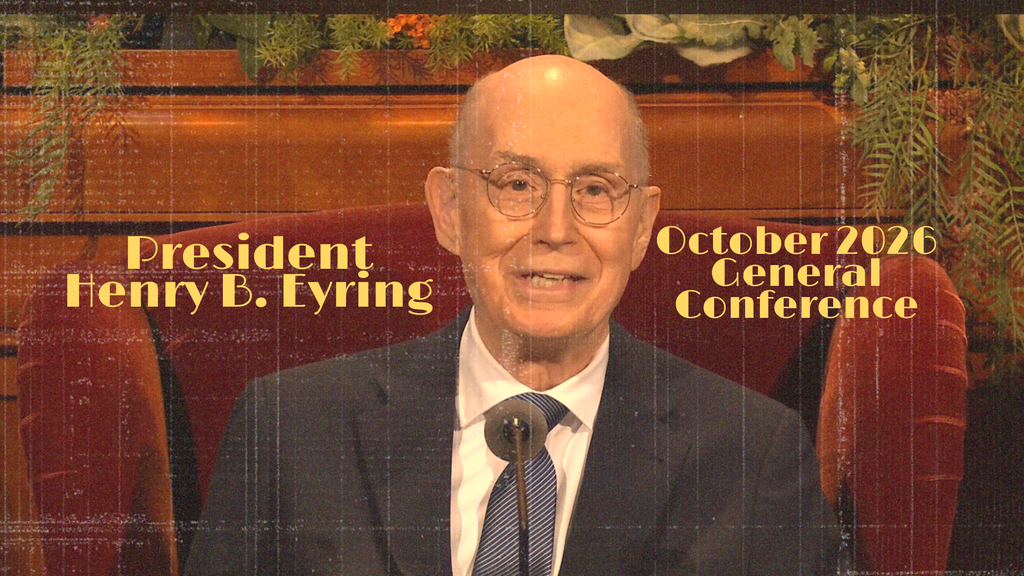
President Henry B. Eyring’s message offers a deeply comforting but important clarification about one of the Lord’s most cherished promises: when God promises to be with us, He is not necessarily promising to remove our trials. He is promising to strengthen, help, comfort, and sustain us through them.
President Eyring builds his message around the words from Isaiah found in the hymn “How Firm a Foundation”: “Fear not, I am with thee.” He teaches that mortal life is intentionally a test, that our individual trials will differ, that Jesus Christ perfectly understands our grief and sorrow, and that the fundamental test remains the same: Will we trust God and do what He commands?
But President Eyring then adds another beautiful dimension to the Lord’s promise. Often, God fulfills His promise to comfort His children through other people. A loving spouse, nurse, friend, ministering sister, missionary, Church leader, or seemingly ordinary person who follows a prompting may become part of God’s answer to another person’s prayer.
That makes this an especially powerful message for Relief Society. Sisters can discuss not only how to recognize the Lord’s sustaining hand during their own trials, but also how to become His hands in the lives of others.
This lesson help follows President Eyring’s message chronologically and divides it into eight major discussion sections, including longer direct quotations wherever possible. Each section contains a teaching focus, ten Relief Society discussion questions, five object lesson ideas, and ten personal sharing prompts.
Teachers should not feel obligated to cover every section. Instead, prayerfully choose the portions that most closely match the needs of the sisters you teach.
Section 1: “Fear Not, I Am with Thee” — God Promises Help in Every Condition
The Principle
President Eyring begins with promises from Isaiah that have become a personal source of comfort to him.
The language is significant because it encompasses almost every possible circumstance: sickness and health, poverty and wealth, home and abroad. The promise is not limited to ideal circumstances.
Whatever our “days may demand,” God promises that His help will be sufficient.
President Eyring immediately clarifies, however, that this promise should not be misunderstood. God does not promise a life without challenges. He promises His presence and sustaining help within those challenges.
Direct Quotes from the Talk
“The hymn we just heard sung by the choir speaks of promises which will become more important and more precious in the time ahead for all of us and for those we love.”
“My message today is that the promises in that hymn are true.”
“The lyrics taken from the 41st chapter of Isaiah have become a comforting guide for me and they can be for you and for those you love in the trials which we individually face.”
President Eyring then repeats the promises:
“In every condition, in sickness, in health, in poverty’s veil or abounding in wealth, at home or abroad, on the land or the sea, as thy days may demand, so thy sucker shall be.”
“Fear not, I am with thee. Oh, be not dismayed, for I am thy God, and will still give thee aid. I’ll strengthen thee, help thee, and cause thee to stand, upheld by my righteous, omnipotent hand.”
And then comes an essential clarification:
“Those promises become more precious as we move through the challenges in our lives and the lives of those we love.”
“It is important to realize that the promise is not for the removal of challenges.”
Teach
One of the most important distinctions in this talk is the difference between deliverance from difficulty and divine help within difficulty.
Sometimes our prayers are answered by a burden being removed. Other times, the answer is strength sufficient to carry it.
The Lord’s promise “I am with thee” means that difficult circumstances are not evidence that God has abandoned us.
That distinction can completely change the way we interpret adversity.
Relief Society Discussion Questions
- What stands out to you most in the promise “Fear not, I am with thee”?
- Why might that promise become more precious as we grow older and experience more of life?
- What is the difference between asking God to remove a trial and asking Him to sustain us through it?
- Why is President Eyring’s clarification that “the promise is not for the removal of challenges” so important?
- Have you ever mistaken the continuation of a trial for evidence that a prayer was not being answered?
- What might God’s “aid” look like when circumstances themselves do not change?
- Why do you think the hymn specifically lists opposite circumstances such as sickness and health or poverty and wealth?
- Can prosperity create spiritual tests just as adversity can?
- How can we recognize God’s presence when His help looks different from what we requested?
- How would your approach to a current difficulty change if your first question became “How is the Lord with me in this?” rather than “When will this end?”
Object Lesson Ideas
1. Umbrella in the Rain
Bring an umbrella.
Explain that an umbrella does not stop rain from falling. Instead, it provides protection while we walk through it.
Connect this with President Eyring’s teaching that God’s promise is not necessarily the removal of challenges.
2. A Walking Stick
Bring a walking stick or cane.
The stick does not remove the mountain or shorten the trail. It provides additional strength for the journey.
Ask: Could some answers to prayer look more like a walking stick than a shortcut?
3. Backpack with Support
Place several heavy objects into a backpack.
Have someone hold it, then have another person help support the weight without removing the backpack.
Discuss the difference between removing a burden and helping someone bear it.
4. Flashlight in Darkness
Turn off the lights and use a flashlight.
The flashlight does not eliminate nighttime. It provides enough light to continue moving through it.
5. A Foundation During a Storm
Show a picture of a house in severe weather.
The foundation does not stop the storm. It allows the house to remain standing.
Connect this to the words:
“I’ll strengthen thee, help thee, and cause thee to stand.”
Personal Sharing Prompts
- Share a time the Lord strengthened you without removing your trial.
- Describe a scripture or hymn that became more meaningful during a difficult season.
- Share an experience when you realized an unanswered prayer was actually being answered differently.
- Talk about a time you felt the Lord was with you even though circumstances remained difficult.
- Share what “Fear not, I am with thee” personally means to you.
- Describe a difficult experience that changed your understanding of God’s promises.
- Share a time you received exactly enough strength for what that particular day demanded.
- Talk about a promise from God you have learned to rely upon.
- Share how your prayers have changed as you have experienced more trials.
- Finish the sentence: “I knew the Lord was with me when…”
Section 2: Life Is Supposed to Be a Test
The Principle
President Eyring next shares a formative childhood conversation with his mother.
As a boy, he asked a question many disciples eventually ask:
Why is life so hard?
Her answer was simple:
“Of course it’s hard. It’s supposed to be. Life is a test.”
Years later, President Eyring understood that those words carried additional weight because his mother was enduring serious lifelong health challenges herself.
Her confidence in God’s promises had been tested through experience.
Direct Quotes from the Talk
“My wise mother taught me that when I was a little boy.”
“I had asked her, ‘Mother, why is life so hard?’ She smiled and said firmly, ‘Of course it’s hard. It’s supposed to be. Life is a test.’”
President Eyring then reflects:
“Years later, I realized that as she spoke those words to me, she was passing through tests of her own and rising up through a lifetime of terrible medical trials.”
“As a girl, she had been diagnosed with diseases that would cause lifelong health challenges.”
“But because she knew the words, ‘Fear not, I am with thee,’ were true, the Lord’s promise was fulfilled for her.”
Teach
Knowing that mortality includes testing does not make suffering painless.
But it can give suffering context.
President Eyring’s mother did not apparently interpret difficulty as evidence that something had gone terribly wrong with God’s plan. She understood that mortality itself included difficulty.
There is also a difference between saying “life is a test” dismissively to someone who is hurting and discovering this doctrine personally as a source of perspective and strength.
Relief Society teachers can emphasize that this principle should increase compassion—not decrease it.
Relief Society Discussion Questions
- How do you react to the statement “Life is a test”?
- How can understanding the purpose of mortality change the way we interpret hardship?
- Why do we sometimes assume that if we are righteous, life should become easier?
- What can President Eyring’s mother teach us about enduring long-term trials?
- How can we teach this doctrine without minimizing someone’s pain?
- What is the difference between knowing intellectually that mortality is difficult and learning it through experience?
- Why might some trials last much longer than we expect?
- How can we maintain faith when a difficulty becomes chronic rather than temporary?
- What does it mean to “rise up” through a trial rather than simply survive it?
- How has your understanding of adversity changed throughout your life?
Object Lesson Ideas
1. School Test
Bring a simple test paper.
Point out that students do not usually assume something has gone wrong because a test contains difficult questions.
Ask what mortality being a “test” teaches us about challenges.
2. Weight Training
Bring a small hand weight.
Muscles become stronger through resistance. The resistance is not evidence that the exercise has failed; it is part of what produces growth.
3. Refining Metal
Show a picture of metal being refined through heat.
Discuss how intense conditions can produce changes that comfort alone cannot.
4. A Difficult Puzzle
Bring a puzzle.
If every piece immediately fell into place, little patience or problem-solving would be required.
Discuss why some qualities may only develop through difficulty.
5. A Mountain Trail
Show a steep hiking trail.
Ask: Is the incline evidence that the trail is wrong—or simply part of reaching the destination?
Personal Sharing Prompts
- Share something your mother or another faithful woman taught you about trials.
- Describe a difficult experience that eventually produced spiritual growth.
- Share a long-term challenge that has taught you something short-term adversity could not.
- Talk about a time you asked, “Why is life so hard?”
- Share something you understand about mortality now that you did not understand when you were younger.
- Describe someone whose faithful endurance has inspired you.
- Share a trial that strengthened your testimony of a specific gospel truth.
- Talk about something you learned only after looking back on an experience years later.
- Share a time you discovered you were stronger spiritually than you thought.
- Finish the sentence: “One thing adversity has taught me about God is…”
Section 3: Trials Help Prepare Us to Live in God’s Presence
The Principle
President Eyring next answers the deeper theological question behind suffering:
Why would a loving and all-powerful God permit mortal life to be difficult?
His answer is connected to our eternal destiny.
He teaches that Heavenly Father knows we need to grow in “spiritual cleanliness and stature” in order to live in His presence.
But He has not left us alone to accomplish that growth. Heavenly Father gave us a Savior and agency—the ability to choose faith, commandments, repentance, and ultimately to come unto Christ.
Direct Quotes from the Talk
“You might reasonably wonder why a loving and all powerful God allows our mortal test to be so hard.”
President Eyring answers:
“It is because He knows that we must grow in spiritual cleanliness and stature to be able to live in His presence.”
“To make that possible, Heavenly Father gave us a Savior and the power to choose for ourselves by faith to keep His commandments and to repent and to come unto Him.”
Teach
Trials are not valuable merely because suffering itself is good.
Rather, mortality provides circumstances in which we can choose.
We can choose faith.
We can choose repentance.
We can choose obedience.
We can choose to turn toward Jesus Christ.
The ultimate objective is not merely to survive mortality. It is to become prepared to live in Heavenly Father’s presence.
That means the question surrounding a trial can gradually shift from:
“How quickly can I get out of this?”
to:
“Who can I become as I turn to Christ within this?”
Relief Society Discussion Questions
- Why does President Eyring connect mortal testing with becoming able to live in God’s presence?
- What do you think “spiritual cleanliness and stature” means?
- How can adversity create opportunities for spiritual growth?
- Why is agency essential to the purpose of mortality?
- What choices become especially meaningful during hardship?
- Why is repentance part of President Eyring’s answer to the purpose of life?
- What is the difference between simply enduring something and allowing Christ to transform us through it?
- Are there Christlike qualities that are especially difficult to develop without opposition?
- How does understanding our eternal destination change our perspective on temporary difficulties?
- Instead of asking only “Why is this happening?”, what other questions could we ask during trials?
Object Lesson Ideas
1. Unfinished Sculpture
Bring clay.
Explain that mortality is not simply about preserving who we already are. Through Christ, we are becoming something more.
2. Refining Process
Show something raw beside its finished version—such as rough wood and polished wood.
Discuss the processes required for transformation.
3. Passport and Destination
Bring a passport or travel bag.
Ask what preparation is required before entering another country. Connect this carefully to President Eyring’s phrase about becoming prepared “to live in His presence.”
4. Before-and-After Plant
Show a seed and mature plant.
The purpose of planting the seed is not merely keeping it safe—it is growth.
5. Choices on Cards
Place cards labeled Faith, Repentance, Obedience, Bitterness, Trust, Giving Up, and Coming to Christ.
Discuss how trials create meaningful opportunities to exercise agency.
Personal Sharing Prompts
- Share a trial that helped develop a Christlike quality in you.
- Describe an experience that taught you to repent more quickly.
- Share how adversity strengthened your reliance on Christ.
- Talk about a time you had to consciously choose faith.
- Share something difficult that increased your spiritual maturity.
- Describe a time a trial changed what mattered most to you.
- Share a Christlike attribute you are currently trying to develop.
- Talk about how your understanding of agency has grown.
- Share a time you asked God what He wanted you to learn rather than simply asking for a difficulty to disappear.
- Describe how the hope of returning to Heavenly Father affects the way you view mortality.
Section 4: Jesus Christ Knows Your Grief, Your Sorrows, and Your Heart
The Principle
After explaining why mortality includes testing, President Eyring immediately turns to Jesus Christ.
This is an important transition.
God does not stand outside our suffering and simply tell us that difficulty is good for us. The Savior entered mortality Himself. He experienced grief and bore our griefs and sorrows.
President Eyring makes the doctrine intensely personal:
“He knows you perfectly. He knows your heart.”
Direct Quotes from the Talk
“The Savior not only understands and has felt grief, but He has borne your griefs and carried your sorrows.”
“He knows you perfectly.”
“He knows your heart.”
Teach
There is a profound difference between someone who knows about our suffering and someone who knows it perfectly.
Jesus Christ’s ability to succor us is not based on detached observation.
President Eyring teaches that Christ has borne our griefs and carried our sorrows.
That means we never need to persuade the Savior that something hurts.
We do not need to perfectly articulate our emotions before He understands them.
We do not need to compare our pain to someone else’s pain before we are worthy of His compassion.
He knows us perfectly.
Relief Society Discussion Questions
- What is the difference between believing Christ knows about you and believing He knows you perfectly?
- Why is the phrase “He knows your heart” particularly comforting?
- How does knowing Christ has borne grief affect the way you approach Him?
- Why do we sometimes hesitate to bring emotional pain to the Savior?
- What does this teach about Christ’s ability to understand pain other people cannot understand?
- How can this doctrine help when we struggle to explain what we are feeling?
- Why is comparison especially unhelpful when dealing with grief?
- How can Christ understand two people experiencing very different trials?
- What does the Savior’s perfect knowledge teach us about prayer?
- How might your prayers change if you began with the confidence that Christ already perfectly understands your heart?
Object Lesson Ideas
1. An Unreadable Note
Write something difficult to read and ask someone to interpret it.
Then explain that even when we cannot perfectly express ourselves, Christ understands our hearts.
2. Heavy Stone
Have someone hold a heavy stone.
Another person may see the weight, but Christ understands exactly what carrying it feels like.
3. Heart-Shaped Container
Use a heart-shaped object or draw a heart.
Write inside it worries that are often invisible to others.
Connect this to:
“He knows your heart.”
4. Iceberg
Show an iceberg image.
Much of an iceberg lies beneath the surface. Likewise, much of a person’s pain is invisible—but never invisible to Christ.
5. Footprints
Place two sets of footprints side by side.
Discuss what it means to believe the Savior accompanies us through experiences no one else fully understands.
Personal Sharing Prompts
- Share a time you felt completely understood by the Savior.
- Describe a prayer when words were difficult but you still felt heard.
- Share a scripture about Christ’s Atonement that has comforted you.
- Talk about a time you realized Christ understood something others could not.
- Share how your relationship with the Savior has changed through grief.
- Describe an experience when you felt peace before circumstances changed.
- Share a time you needed to remember that Christ knew your heart.
- Talk about a season when you felt lonely but spiritually accompanied.
- Share what you would tell someone who wonders whether Jesus really understands her pain.
- Finish the sentence: “Because Jesus Christ knows me perfectly, I can…”
Section 5: Our Trials Differ, but the Ultimate Test Is the Same
The Principle
President Eyring next acknowledges something we frequently encounter when looking around a Relief Society room:
No two lives are exactly alike.
Trials differ in type, intensity, duration, and visibility.
One sister may experience chronic illness. Another may struggle financially. Another may carry grief, loneliness, family difficulties, uncertainty, caregiving responsibilities, or something no one around her knows about.
Comparison therefore makes little sense.
Yet President Eyring says that beneath those differences lies the same fundamental mortal test:
“Will we do whatsoever the Lord our God will command us?”
Direct Quotes from the Talk
“The combination of trials and their duration are as varied as are the children of our Heavenly Father.”
“No two are exactly alike.”
“But what is being tested is the same at all times in all lives and for every person.”
Then President Eyring gives the central question:
“Will we do whatsoever the Lord our God will command us?”
Teach
We often compare the circumstances of discipleship when God is concerned with our response to discipleship.
Someone else’s trial may appear easier because we see only part of it.
Another person may appear to receive an answer more quickly.
One woman’s path may include experiences another woman never faces.
President Eyring redirects us from comparison to covenant faithfulness.
The central question is not:
“Why is her life different from mine?”
It is:
“What will I do with the life and circumstances God has given me?”
Relief Society Discussion Questions
- Why is comparing trials usually unhelpful?
- What do you think President Eyring means when he says the “combination” and “duration” of trials differ?
- Why can a short, intense trial require different faith than a long, quiet one?
- What hidden trials might exist in a typical Relief Society room?
- How can remembering that “no two are exactly alike” make us more compassionate?
- What does the question “Will we do whatsoever the Lord our God will command us?” mean in everyday discipleship?
- Why might obedience become especially meaningful during difficulty?
- How do we remain faithful when someone else seems to receive blessings we are still waiting for?
- What happens spiritually when we stop comparing our journey with someone else’s?
- What is the Lord asking of you in your current circumstances?
Object Lesson Ideas
1. Different Backpacks
Prepare several backpacks with different objects and weights.
They may look similar from the outside while carrying very different burdens.
2. Different Shoes
Display several kinds of shoes: running shoes, boots, sandals, dress shoes.
Each journey requires different experiences. Comparing paths without understanding them can be misleading.
3. Icebergs
Show several iceberg images with different amounts visible above water.
What we see of another person’s struggle may be only a small portion of it.
4. Different Tests, Same Principle
Show several school tests in different subjects.
The questions differ, but each tests the student’s willingness to apply what has been learned.
5. Measuring Sticks
Bring a ruler.
Ask whether there is any useful measurement that allows us to rank whose grief “counts” more.
Then put the ruler away.
Personal Sharing Prompts
- Share a time you learned not to compare your trial with someone else’s.
- Describe a hidden difficulty that taught you greater compassion.
- Share how a long-term trial tested you differently than a short-term one.
- Talk about a time you misunderstood someone’s circumstances.
- Share something another sister did that helped you feel less alone.
- Describe a time obedience became especially important during adversity.
- Share how comparison has affected your spiritual peace.
- Talk about something you learned from someone whose life looked very different from yours.
- Share a time you felt the Lord asking you simply to take the next faithful step.
- Finish the sentence: “In my current season, faithfulness looks like…”
Section 6: The Lord Often Keeps His Promise Through Other People
The Principle
President Eyring then tells a tender story about his parents during his mother’s final days.
Her picture of the Savior remained where she could see it from her bed.
His father slept nearby so he could immediately help her during the night.
After she died, he walked through the hospital ward thanking every nurse who had cared for her.
President Eyring uses this experience to introduce one of the central doctrines of the entire talk:
God often answers His children’s needs through other people.
Direct Quotes from the Talk
“As my mother went through her last days of life, she became bedridden.”
“The only picture she placed on her bedroom wall was of the Savior. It hung where she could see it as she lay in her bed.”
“My father had a cot placed next to her in the hospital so that he could help her immediately during the nights.”
“After she died, my father walked through the floor of the hospital ward to thank and to shake the hand of every nurse who had helped her.”
President Eyring then explains why he shares the story:
“Now, I tell that story to offer evidence that the Lord sends faithful disciples to help Him keep His promise to sucker others in their distress.”
He quotes President Spencer W. Kimball:
“God does notice us and He watches over us, but it is usually through another person that He meets our needs.”
Teach
This principle changes how we understand both receiving and giving service.
When someone helps us, we may be experiencing more than human kindness. Their service may be one of the ways Heavenly Father is keeping His promise to us.
Likewise, when we feel prompted to call, visit, text, listen, bring a meal, care for a child, encourage a missionary, thank a leader, or simply sit beside someone who hurts, we may be participating in God’s fulfillment of His promises.
Ordinary disciples can become evidence to someone else that God has not forgotten her.
Relief Society Discussion Questions
- What does President Eyring’s story about his parents teach you about love?
- Why do you think his mother kept only a picture of the Savior where she could see it?
- What do you learn from his father sleeping beside her hospital bed?
- Why did President Eyring include the detail about his father thanking every nurse?
- What does President Kimball’s statement teach us about how God works?
- Why might God choose to meet another person’s needs through us?
- Have you ever prayed for divine help and later realized the answer was another person?
- Why can receiving help sometimes be harder than giving it?
- How might our understanding of service change if we saw ourselves as helping the Lord keep His promises?
- Who might God currently be trying to bless through you?
Object Lesson Ideas
1. Pair of Hands
Trace a pair of hands on paper.
Write inside them different ways God may use human hands to answer prayers.
2. Delivery Package
Bring a package addressed to someone.
The delivery person is not the source of the gift, but she is the means by which it arrives.
Compare this carefully to disciples delivering God’s love.
3. Watering Can
Use a watering can on a plant.
God provides the life and growth, but sometimes He allows us to carry the water.
4. Chain
Create a paper chain.
One person’s prompting leads to an action, which becomes an answer to another person’s prayer.
5. Picture of Christ
Following President Eyring’s story, display a picture of the Savior.
Ask: What if one way Christ becomes visible in someone’s suffering is through the Christlike actions of another disciple?
Personal Sharing Prompts
- Share a time another person became an answer to your prayer.
- Describe someone who cared for you during a difficult period.
- Share a time you felt prompted to help someone unexpectedly.
- Talk about an experience when a small act of service meant far more than the giver probably realized.
- Share how someone cared for a member of your family.
- Describe a time accepting help required humility.
- Share an experience with a nurse, teacher, ministering sister, neighbor, or friend who became an instrument in God’s hands.
- Talk about a prompting you are grateful you followed.
- Share a time you later discovered why you had felt prompted to contact someone.
- Finish the sentence: “One person who helped me know God had not forgotten me was…”
Section 7: Small Acts of Attention Can Become Evidence That God Knows Someone
The Principle
President Eyring now moves from doctrine into practical discipleship.
He thanks those who respond to promptings to serve others and gives several examples: praying to know whom to help, having a face or name enter our minds, reaching out, encouraging missionaries, and supporting Church leaders.
One of the most beautiful principles in this section is that the act does not need to be dramatic to become spiritually significant.
Sometimes “simple attention” is enough to communicate:
The Lord knows you. The Lord loves you. You have not been forgotten.
Direct Quotes from the Talk
“The remainder of my message today is to thank those who have responded to the call to be the Lord’s servants to fulfill His promises to be with His children in their troubles.”
“I wish to thank those who have helped Him and encourage others to join Him in keeping His promise today and in the hard days ahead.”
President Eyring then describes what this service often looks like:
“Many of you offer such consecrated service in a variety of ways.”
“You have prayed in faith consistently for your family members or friends to know who the Lord would have you help for Him as a face or a name has come into your mind.”
“You have reached out to them.”
And then this especially powerful observation:
“Even your simple attention was a comfort.”
“That you felt prompted to reach out to them was evidence to them that the Lord knew and loved them.”
Teach
We sometimes assume that meaningful service needs to be large, organized, or time-consuming.
President Eyring teaches otherwise.
A name comes to mind.
A text is sent.
Someone is remembered.
A discouraged person receives a smile.
A leader receives encouragement.
The action may feel small to us while carrying enormous meaning to the recipient.
The miracle may not be the size of the service.
The miracle may be the timing.
Relief Society Discussion Questions
- Why can “simple attention” be so powerful?
- What does it feel like when someone remembers you at exactly the right moment?
- How can a small action become evidence of God’s love?
- Why might we dismiss promptings that seem too ordinary?
- What usually happens when a particular person repeatedly comes to mind?
- How can prayer make our ministering more personal?
- What prevents us from acting immediately on small promptings?
- Why does timing sometimes matter more than the size of the act?
- How can we become more sensitive to names and faces that come into our minds?
- What would happen if every sister acted on one small prompting to reach out this week?
Object Lesson Ideas
1. Small Text Message
Hold up a phone with a simple message such as, “Thinking about you today.”
Discuss how a ten-second action can arrive during someone’s ten-hour struggle.
2. Tiny Key
Bring a small key.
Its size is insignificant compared with what it can open. Likewise, a tiny act can unlock hope.
3. Single Match or Light
Light one battery candle in a darkened room.
Small sources of light become especially noticeable in darkness.
4. Name Card
Place several names in a bowl and draw one.
Discuss what it means when a specific person—not merely “someone”—comes into our minds during prayer.
5. One Drop of Water
Place a drop of water on dry soil.
Small things can matter greatly when they arrive where they are needed.
Personal Sharing Prompts
- Share a time someone contacted you at exactly the right moment.
- Describe a seemingly small act that meant a great deal to you.
- Share a time someone’s name unexpectedly came into your mind.
- Talk about a prompting you almost ignored but decided to follow.
- Share an experience when a text or phone call changed your day.
- Describe someone who is particularly good at noticing people.
- Share a time you felt seen because someone remembered a small detail about you.
- Talk about how you have learned to recognize ministering promptings.
- Share an act of kindness you still remember years later.
- Finish the sentence: “I felt remembered by the Lord when…”
Section 8: Strengthen Missionaries and Church Leaders Who Are Carrying Heavy Responsibilities
The Principle
President Eyring gives two specific examples of people who may need our encouragement: missionaries and those serving in Church callings.
His descriptions remind us of something easy to forget:
People who serve are not automatically strong all the time simply because they have been called.
Missionaries are being stretched.
Church leaders pray for strength.
Those who spend their time strengthening others also need to be strengthened.
And President Eyring teaches that our encouragement can become part of the Lord’s answer to their prayers.
Direct Quotes from the Talk
President Eyring says of missionaries:
“Many of you have recognized a discouraged missionary as an invitation to lift a servant of Jesus Christ.”
“Wherever they serve, missionaries are being stretched and they are praying for strength.”
“Whatever they are assigned to do, they are in need of encouragement.”
“Your kindness to them, even for a few seconds or simply a warm smile, can be a strengthening of their faith that the Lord is watching over them.”
“When you speak to them, you will find words to build their faith that the Lord knows them and is aware of their circumstances.”
He then turns to Church leaders:
“Many of you have prayed regularly for the Lord’s servants at His Church in whatever calling they might hold.”
“Every one of them is praying every day and every night to know what to do to better serve others and for strength to carry on.”
“You are an important part of the Lord’s answers to their prayers for assurance.”
“As you show your appreciation and confidence in them that they have been inspired, they will feel evidence that God called them, knows them, and has guided and blessed them.”
“They will be strengthened in their feeling of the Lord’s approval.”
Teach
We often think of missionaries and Church leaders primarily in terms of what they can do for us.
President Eyring reverses that perspective.
Who is strengthening the people who spend their time strengthening others?
A missionary may need encouragement.
A Relief Society president may need reassurance.
A bishop may need someone to simply express gratitude rather than another request.
A teacher may need to know that something she taught mattered.
Our encouragement does not replace revelation or divine strength. But according to President Eyring, it can become part of the Lord’s answer to their prayers.
Relief Society Discussion Questions
- Why do we sometimes assume missionaries or Church leaders do not need encouragement?
- What do you think President Eyring means when he says missionaries are “being stretched”?
- Why can a warm smile genuinely strengthen someone?
- How can we encourage missionaries without adding pressure to their service?
- Why is praying for Church leaders important?
- What might leaders be praying for that members rarely consider?
- Why does sincere appreciation matter to someone serving in a calling?
- What is the difference between supporting a leader and expecting perfection from a leader?
- How can Relief Society sisters better strengthen those who quietly carry heavy Church responsibilities?
- Who is currently serving you that you could intentionally encourage?
Object Lesson Ideas
1. Battery Running Low
Show a phone with a low-battery symbol.
People who spend significant energy serving others still need opportunities to be strengthened.
2. Water Pitcher
Pour water repeatedly from a pitcher until it empties.
Discuss the importance of strengthening people who are constantly pouring themselves into others.
3. Thank-You Note
Bring a blank thank-you card.
Ask sisters how long writing one would take and how long the encouragement might remain with the recipient.
4. Backpack of Responsibilities
Fill a backpack with objects labeled calling, family, work, worry, decisions, ministering.
Remind the class that leaders carry lives outside their calling too.
5. Supporting Beam
Show a picture of a structural support beam.
Even something carrying significant weight may itself need support.
Personal Sharing Prompts
- Share about a missionary who influenced your life.
- Describe a Church leader whose service blessed you.
- Share a time someone encouraged you in a calling.
- Talk about a calling in which you discovered how much leaders quietly carry.
- Share an expression of gratitude you received that you still remember.
- Describe how praying for a leader changed your feelings toward that person.
- Share a time you realized someone serving you was struggling too.
- Talk about a missionary who needed encouragement.
- Share how your perspective on Church leadership changed after serving in a leadership calling yourself.
- Name one type of Church servant you would like to become more intentional about encouraging.
Section 9: Bear One Another’s Burdens, Mourn Together, and Comfort One Another
The Principle
President Eyring concludes by connecting the Lord’s promise of comfort directly to our baptismal covenant.
Quoting Alma, he reminds us that belonging to the people of God includes a willingness to:
- bear one another’s burdens,
- mourn with those who mourn,
- and comfort those who stand in need of comfort.
The Lord promises to comfort His children—and then gives His covenant people the extraordinary privilege of helping Him do it.
This means ministering is more than simply being nice.
It is covenant discipleship.
Direct Quotes from the Talk
“Another great opportunity can come when you invite the Holy Ghost to help you find ways to help the Lord comfort those who are pleading for it.”
President Eyring then quotes Alma:
“If you are desirous to come into the fold of God, and to be called His people, and are willing to bear one another’s burdens, that they may be light, willing to mourn with those that mourn, yea, and comfort those that stand in need of comfort.”
He then explains the privilege offered to disciples:
“We know that the Lord will comfort all those who try to follow Him.”
“And He offers us the great blessing and trust to help Him keep His promise to sucker Father’s children in their tests along their mortal journey home.”
“That is the reason we shed tears of joy and take courage whenever we hear the words, ‘Fear not. I am with thee.’”
“And we are touched that He offers us the trust of helping and loving others.”
President Eyring concludes:
“I testify that this is His Church, that He keeps His promises both through the Holy Spirit and through His loving, true, faithful disciples.”
Teach
President Eyring’s conclusion brings the entire message full circle.
At the beginning, we hear God say:
“Fear not, I am with thee.”
By the end, President Eyring has shown us some of the ways God fulfills that promise.
Sometimes He comforts us through the Holy Ghost.
Sometimes He strengthens us inwardly.
And sometimes He sends a disciple.
That means a sister who keeps a prompting to call a friend may become part of the fulfillment of Isaiah’s promise.
A ministering sister who sits beside someone who is grieving may become part of the Lord’s promise.
A person who listens instead of trying to fix may help bear a burden.
A woman who quietly says, “I’m here,” may help another person hear something greater:
“Fear not. I am with thee.”
Relief Society Discussion Questions
- What is the difference between bearing someone’s burden and trying to fix her problem?
- Why does Alma separately mention mourning and comforting?
- What does it actually look like to “mourn with those that mourn”?
- Why might someone need companionship more than advice?
- How does ministering connect with our baptismal covenant?
- Why does President Eyring describe helping the Lord as both a “blessing” and a “trust”?
- How can the Holy Ghost help us know what kind of comfort someone needs?
- Why might God allow us to participate in keeping His promises to His children?
- How has receiving Christlike service changed your understanding of God?
- What would Relief Society look like if every sister truly saw herself as someone the Lord could send to fulfill His promise, “I am with thee”?
Object Lesson Ideas
1. Sharing the Weight
Place something heavy in a bag.
Ask one sister to carry it alone, then invite several others to take hold of the handles.
The burden still exists—but it becomes lighter because it is shared.
Connect this directly with:
“Bear one another’s burdens, that they may be light.”
2. Tissues Instead of Tools
Place a tissue box beside a toolbox.
Ask: When someone is mourning, does she always need us to fix something?
Sometimes discipleship looks like sitting beside someone with tissues rather than arriving with tools.
3. Linked Arms
Ask several sisters to link arms.
One person may stumble while the others help keep her standing.
Discuss what covenant community is supposed to feel like.
4. Relay Delivery
Pass an object from one person to another until it reaches the intended recipient.
God is the source of the blessing, but disciples may participate in carrying it where it needs to go.
5. A Picture of Christ Surrounded by Names
Place a picture of Christ in the center and surround it with names representing people who have comforted you.
Discuss how Christ’s love can reach us through “His loving, true, faithful disciples.”
Personal Sharing Prompts
- Share a time someone truly mourned with you rather than trying to fix your pain.
- Describe an experience when another person helped make your burden lighter.
- Share a time ministering became more than an assignment to you.
- Talk about someone who taught you how to comfort people well.
- Share an experience when the Holy Ghost helped you know how to help someone.
- Describe a time you learned that listening was more helpful than giving advice.
- Share how serving another person strengthened your own testimony.
- Talk about a time you saw Relief Society sisters rally around someone in need.
- Share an experience when another disciple helped you recognize the Lord’s love.
- Finish the sentence: “I can help someone hear ‘Fear not, I am with thee’ by…”
Conclusion: Sometimes We Experience “I Am with Thee” Through Each Other
President Henry B. Eyring begins this message with a promise that many disciples have repeated during their hardest moments:
“Fear not, I am with thee.”
But his message gives that promise greater depth.
It does not mean that faithful disciples will be spared from difficult lives.
President Eyring specifically tells us:
“It is important to realize that the promise is not for the removal of challenges.”
Life is a test.
Our individual tests will differ. Their combinations and durations will be different. Some will be visible and others will remain almost entirely hidden.
But President Eyring teaches that beneath all of those different circumstances lies the same fundamental question:
“Will we do whatsoever the Lord our God will command us?”
And we do not answer that question alone.
Heavenly Father has given us Jesus Christ.
The Savior has borne our griefs and carried our sorrows.
He knows us perfectly.
He knows our hearts.
And the Lord has also placed us in a covenant community where His disciples can help care for one another.
That may be one of the most important truths for a Relief Society teacher to emphasize from this message:
The Lord’s promise to be with His children and His commandment for us to minister to His children are deeply connected.
President Eyring quotes President Spencer W. Kimball:
“God does notice us and He watches over us, but it is usually through another person that He meets our needs.”
That statement can transform the way we see everyday acts of discipleship.
A text message can become more than a text message.
A meal can become more than dinner.
A smile toward a discouraged missionary can become more than courtesy.
A sincere thank-you to an exhausted leader can become more than good manners.
Sitting quietly beside someone who is grieving can become more than companionship.
When those actions are prompted by the Spirit, they can become evidence to another person that God knows her, remembers her, and loves her.
For Relief Society teachers, this talk therefore offers two powerful directions for discussion.
The first is deeply personal:
How has the Lord fulfilled His promise, “Fear not, I am with thee,” in my own trials?
The second turns us outward:
Whom might the Lord be asking me to help feel that promise right now?
A sister may enter Relief Society carrying a burden no one else can see. She may have prayed that morning simply to make it through the day. She may be wondering whether Heavenly Father remembers her.
Perhaps another sister has already been prompted to sit beside her.
Perhaps someone has felt her name come into her mind.
Perhaps a ministering sister has been thinking about sending a message but has not yet done it.
Perhaps the Lord is already preparing His answer.
President Eyring’s concluding testimony beautifully summarizes the entire lesson:
“I testify that this is His Church, that He keeps His promises both through the Holy Spirit and through His loving, true, faithful disciples.”
That may be the invitation worth leaving with your Relief Society:
Trust the Lord when you need His help.
And when the Holy Ghost places someone’s name, face, or need upon your heart, go help Him keep His promise.




Leave a Reply