Introduction
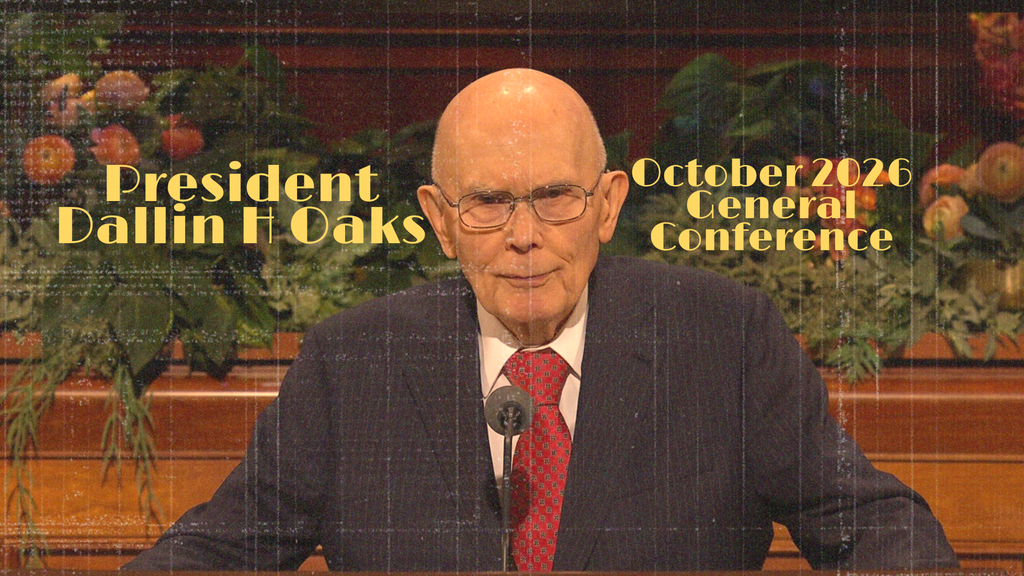
President Dallin H. Oaks’s message centers on a foundational truth: this is the Church of Jesus Christ, and everything within the restored gospel is intended to bring us closer to Him.
From that foundation, President Oaks addresses questions and doubts, developing faith, patience with ourselves and others, the relationship between secular and spiritual knowledge, humility, covenant keeping, the witness of the Book of Mormon, and finally the universal reach of Jesus Christ’s grace.
This makes the talk particularly useful for Relief Society because it addresses experiences almost every sister will encounter at some point. What do we do when we have questions we cannot immediately answer? How do we strengthen faith when desire alone does not seem sufficient? How should we respond to loved ones at different places on the covenant path? How do we reconcile intellectual questions with spiritual conviction? And how can the Book of Mormon deepen our confidence that Jesus Christ truly reaches after every one of Heavenly Father’s children?
This lesson help follows President Oaks’s message chronologically and divides it into nine major discussion sections. Each section includes longer direct quotes from the talk, a short doctrinal teaching focus, ten Relief Society discussion questions, five object lesson ideas, and ten personal sharing prompts.
Teachers do not need to use every section or question. Instead, prayerfully select the portions most likely to help the sisters in your Relief Society draw closer to Jesus Christ.
Section 1: This Is the Church of Jesus Christ
The Principle
President Oaks begins by establishing whose Church this is.
The restored Church bears the Savior’s name because it is His Church, containing the restored fulness of His doctrine and authority. President Oaks immediately anchors the message in the first article of faith: God the Father, Jesus Christ, and the Holy Ghost.
He then centers salvation itself in Jesus Christ. Before addressing questions, doubt, commandments, covenants, or scripture study, he establishes the most important truth of the entire message: salvation comes through Christ.
Direct Quotes from the Talk
“This is the Church of Jesus Christ. So named because it is His Church with the restored fulness of His doctrine and authority in these latter days.”
“It is His Church for many reasons. As we state in our first article of faith, ‘We believe in God, the Eternal Father, and in His Son, Jesus Christ, and in the Holy Ghost.’”
“God the Father, the great Elohim, is the Father of our spirits, the framer of heaven and earth, and the author of the plan of our salvation.”
“Jesus Christ is His Only Begotten Son, Jehovah, and the Messiah, the God of the whole earth.”
“As the Book of Mormon declares, salvation was and is and is to come in and through the atoning blood of Christ, the Lord Omnipotent.”
Discussion Questions
- Why do you think President Oaks begins by emphasizing that this is Jesus Christ’s Church?
- How does remembering whose Church this is change the way we approach Church participation?
- What does it mean to you that Heavenly Father is “the author of the plan of our salvation”?
- Why is it significant that salvation “was and is and is to come” through Christ?
- How can we keep Jesus Christ at the center when Church participation becomes busy or routine?
- What is the difference between having faith in the Church as an institution and having faith in Jesus Christ?
- How should knowing that this is Christ’s Church affect the way we respond to imperfect people within it?
- Which truth from the first article of faith has become more meaningful to you over time?
- What aspects of the restored gospel have helped you know Jesus Christ more personally?
- If someone asked why Jesus Christ matters so much to your faith, what would you tell them?
Object Lesson Ideas
1. Christ at the Center
Place a picture of Jesus Christ in the center of a table. Surround it with cards labeled temple, Relief Society, scriptures, callings, family history, ministering, and sacrament. Discuss how each element should ultimately lead toward Him.
2. A Wheel and Hub
Draw a wheel. Christ is the hub, while Church programs and practices are the spokes. Without the center, the rest loses its purpose.
3. A Name Tag
Display a name tag reading “The Church of Jesus Christ.” Ask why names communicate identity and ownership.
4. A Foundation Stone
Bring a heavy stone or brick. Discuss what happens when we attempt to build discipleship on something other than Jesus Christ.
5. A Compass
Use a compass to represent Christ as the fixed point toward which the restored gospel continually redirects us.
Personal Sharing Prompts
- Share when Jesus Christ became personally important to you rather than simply someone you learned about.
- Describe an experience that strengthened your testimony of Heavenly Father.
- Share how the restored gospel has helped you understand Christ differently.
- Talk about a time a Church experience redirected your attention toward the Savior.
- Share a favorite truth about Jesus Christ from the Book of Mormon.
- Describe how your relationship with Christ has changed throughout your life.
- Share an experience when you felt Heavenly Father knew you personally.
- Talk about a time focusing on Christ helped you see an imperfect Church experience differently.
- Share what being a member of Christ’s Church means personally to you.
- Finish the sentence: “I know Jesus Christ is…”
Section 2: Come unto Christ and Continue on the Covenant Path
The Principle
President Oaks moves from establishing Christ’s identity to extending an invitation: come unto Christ.
This is not merely an invitation for those outside the Church. It is the continuing invitation of discipleship. President Oaks expresses his desire for members to actively move forward on the covenant path.
He also offers a tender personal acknowledgment: we need one another’s prayers.
Direct Quotes from the Talk
“Latter-day Saints invite each other and all men and women everywhere to come unto Christ.”
“As a prophet has told us in the Book of Mormon, ‘I would that ye should come unto Christ, who is the Holy One of Israel, and partake of His salvation and the power of His redemption.’”
“As your President, I pray for what our Heavenly Father wants for each of us: to be active members of The Church of Jesus Christ, proceeding forward on the covenant path into the eternities.”
“We need one another’s prayers. I feel the positive effect of your prayers. I am thankful and I love you.”
Discussion Questions
- Why is “come unto Christ” an invitation we need repeatedly, even after joining the Church?
- What does it mean to “partake” of Christ’s salvation and redemption?
- How would you describe the covenant path without making it sound like a checklist?
- What does moving forward on the covenant path look like during an ordinary week?
- Can someone remain on the covenant path while struggling? Why?
- Why might President Oaks mention prayer for one another in connection with covenant discipleship?
- How can Relief Society sisters help one another move toward Christ without becoming judgmental?
- What is the difference between inviting someone toward Christ and pressuring someone spiritually?
- How have other people’s prayers strengthened you?
- Who might need your prayers as they navigate their own covenant journey?
Object Lesson Ideas
1. A Path
Create a simple path across the room. Explain that discipleship involves continued movement rather than instant perfection.
2. Hiking Shoes
Bring hiking shoes. A path is meant to be traveled, not simply admired or understood.
3. A Helping Hand
Have one sister walk while another offers a hand. Discuss how covenant discipleship is personal but not solitary.
4. Stepping Stones
Place paper “stones” labeled baptism, sacrament, temple, repentance, prayer, and revelation. Emphasize that Jesus Christ—not the stones themselves—is the destination and source of power.
5. Interlocking Hands
Have several sisters link arms. Discuss President Oaks’s simple statement: “We need one another’s prayers.”
Personal Sharing Prompts
- Share a time someone’s prayers strengthened you.
- Describe a season when your covenant path looked different than you expected.
- Share what “come unto Christ” means to you now.
- Talk about someone who helped you move closer to the Savior.
- Share an experience when you felt Christ’s redeeming power.
- Describe a covenant that has become increasingly meaningful.
- Share how Relief Society has helped you on your covenant journey.
- Talk about a time you felt carried by the faith of others.
- Share a simple practice that helps you continue moving forward.
- Describe something you have learned about enduring rather than being perfect.
Section 3: When Questions and Doubts Come, Draw Closer to Jesus Christ
The Principle
President Oaks acknowledges something important: every disciple will experience struggles.
Some struggles include questions and doubts. His counsel is not to pretend questions do not exist. Instead, he teaches where we should turn while working through them.
The answer is greater closeness to Jesus Christ.
Direct Quotes from the Talk
“We all have present or future concerns or struggles we are trying to overcome. These may include questions or doubts.”
“Whatever they are, the way to overcome them is to get closer to our Savior Jesus Christ.”
“Again and again, He has taught us that He is the way.”
“Focus on developing your faith in God and the mission of His Son Jesus Christ.”
Discussion Questions
- Why is it meaningful that President Oaks openly acknowledges questions and doubts?
- What is the difference between having a question and abandoning faith because of a question?
- Why might drawing closer to Christ help even before an intellectual question is resolved?
- What practices actually help someone draw closer to Christ during uncertainty?
- How can Relief Society become a safe place for sincere questions?
- What responses to someone’s doubts are usually unhelpful?
- Why is faith in Jesus Christ different from having an answer to every question?
- How can questions sometimes deepen rather than destroy faith?
- What does it mean practically to believe that Christ “is the way”?
- If someone you loved told you she was struggling with her faith, how could you help her move toward Christ without dismissing her concerns?
Object Lesson Ideas
1. Anchor in Fog
Show a picture of a ship in fog. The crew may not see the entire route, but an anchor still holds. Compare unanswered questions with spiritual anchors.
2. Flashlight
Turn down the lights and use a flashlight. It may illuminate only a few feet ahead, but that can be enough to take the next step.
3. Puzzle with Missing Pieces
Bring a partially completed puzzle. Missing pieces do not make the pieces already assembled untrue.
4. Handrail
Discuss how a handrail helps us move through a difficult staircase even though it does not remove the stairs. Christ can steady us while questions remain.
5. Roots
Show a plant with strong roots. Storms move branches, but deep roots provide stability.
Personal Sharing Prompts
- Share a question that ultimately strengthened your faith.
- Describe a time you followed Christ before receiving an answer.
- Share something that has anchored you during uncertainty.
- Talk about someone who gave you space to work through a spiritual question.
- Share how scripture study has helped during doubt.
- Describe a time you received peace without receiving an explanation.
- Share a truth you have held onto during uncertainty.
- Talk about how your understanding of faith has changed.
- Share a time Christ met you in a period of questioning.
- Describe what you would want a struggling sister to know about Jesus Christ.
Section 4: Strong Faith Is Built One Step at a Time
The Principle
President Oaks next explains that wanting strong faith is not the same as developing strong faith.
Faith grows through repeated, ordinary actions—prayer, scripture learning, patience, humility, and continued discipleship.
His statement that “we are all a work in progress” creates an important tone for Relief Society discussion. Sisters are not all at identical places spiritually, and discipleship requires patience with others and ourselves.
Direct Quotes from the Talk
“Strong faith requires more than strong desire.”
“It means daily trying one step at a time with prayer and scriptural learning.”
“We are all a work in progress.”
“We are all at different places on what President Nelson called the covenant path.”
“We need to be patient with one another and occasionally even with ourselves.”
“Overcoming uncertainty and doubt … can be a lengthy process. It involves building faith and strengthening humility.”
“Hold on to the first article of faith even if something else is uncertain.”
“And while you wait, wait upon the Lord, which includes trusting in His timing as well as in His promises.”
Discussion Questions
- Why is strong desire alone insufficient to build strong faith?
- What do you think “daily trying one step at a time” looks like?
- Why is “we are all a work in progress” an important truth to remember at church?
- How can comparison become damaging on the covenant path?
- Why might President Oaks say we need patience “even with ourselves”?
- What is the difference between waiting passively and “waiting upon the Lord”?
- What truths can we hold onto when other things remain uncertain?
- Why does uncertainty require humility?
- How can we better support people who are moving at a different spiritual pace?
- What is one small daily action that has had an unexpectedly large effect on your faith?
Object Lesson Ideas
1. One Brick at a Time
Build a small wall one brick or block at a time. Strong faith is usually constructed through repeated small acts.
2. Staircase
Show a staircase. We cannot stand on step one and simply desire to be on step ten. Progress happens step by step.
3. Seedling
Bring a small plant. No amount of wishing makes it mature overnight. Consistent nourishment produces growth.
4. Different Places on a Path
Place several figures at different points along the same path. None needs to be mocked for not standing where another stands.
5. Waiting Room Number
Use a numbered waiting ticket. Discuss how waiting on the Lord requires trusting both His promises and His timing.
Personal Sharing Prompts
- Share a small habit that gradually strengthened your testimony.
- Describe a time you had to be patient with your own spiritual progress.
- Share a time someone was patient with you.
- Talk about something you are still learning as a disciple.
- Share a promise from God you have had to wait upon.
- Describe a period when progress felt slow but was still occurring.
- Share a truth you held onto while other things were uncertain.
- Talk about how your prayers have changed as your faith matured.
- Share something you once struggled with that now feels clearer.
- Describe what being “a work in progress” means to you.
Section 5: The Lord Is Relentless in His Loving Pursuit of Us
The Principle
President Oaks then speaks specifically to those whose faith is diminishing.
His language is significant. He does not portray the Lord as standing at a distance waiting for struggling disciples to fix themselves. Instead, God is relentless in His loving pursuit of them.
President Oaks connects that love with an invitation to keep commandments and remain true to covenants.
Direct Quotes from the Talk
“A major concern to your prophet leaders are those members of diminishing faith in Jesus Christ.”
“We love you, young men and women, young and old. So does the Lord God.”
“He is relentless in His loving pursuit of each of you.”
“Because of this concern and according to His words, I urge you to keep the commandments and be true to the covenants so many of you have made to guide you along the covenant path.”
Discussion Questions
- What comes to mind when you hear the phrase “relentless in His loving pursuit”?
- How is that description of God different from seeing Him primarily as disappointed or distant?
- What does this teach us about how we should respond to someone whose faith is diminishing?
- Why are commandments and covenants especially important during periods of uncertainty?
- Can someone feel spiritually lost while God is still actively pursuing her?
- What are some ways the Lord pursues His children?
- How can we mirror God’s persistent love without becoming controlling?
- What might keeping a covenant look like when someone does not currently feel spiritually strong?
- How can ministering reflect this kind of persistent, patient love?
- How might your life change if you truly believed God was unwilling to give up on you?
Object Lesson Ideas
1. Lost Item
Hide an item and actively search until you find it. Discuss the difference between waiting for something lost to return and going after it.
2. Shepherd and Sheep
Use the familiar image of the shepherd seeking the lost sheep to illustrate persistent divine love.
3. Lifeline
Use a rope as a lifeline. Covenants can provide connection and direction during spiritually turbulent periods.
4. Lighthouse
A lighthouse keeps shining whether or not a ship is currently moving toward it.
5. Unanswered Message
Show repeated loving messages from someone who refuses to stop reaching out. Compare that persistence carefully to the Lord’s continued invitations.
Personal Sharing Prompts
- Share a time you felt the Lord pursue you spiritually.
- Describe a time He reached you through another person.
- Share how a covenant steadied you during weakness.
- Talk about a loved one you continue to pray for.
- Share a time someone refused to give up on you.
- Describe how your understanding of God’s love has changed.
- Share an experience when a prompting led you to someone who needed love.
- Talk about a time you felt distant from God but later realized He was still near.
- Share what helps you remain covenant-connected during difficult periods.
- Describe what “relentless love” teaches you about Jesus Christ.
Section 6: Never Let Secular Learning Limit Your Spiritual Horizons
The Principle
President Oaks next addresses knowledge.
Rather than framing science and religion as enemies, he describes two methods of gaining needed knowledge. Human beings learn through scientific inquiry and other intellectual methods, and we also learn spiritual truths through faith, scripture, inspired teaching, and personal revelation.
Because God knows all truth, President Oaks teaches that there is no ultimate conflict between truth discovered through these methods.
His invitation is not to reject secular learning but to refuse to let it artificially limit what we are willing to learn spiritually.
Direct Quotes from the Talk
“Never let your secular learning limit your spiritual horizons.”
“We are grateful to know that there are two methods of gaining needed knowledge.”
“One, the evolving disclosures of man through the scientific method and digital information which may be inaccurate; and two, the truths discovered through the spiritual method which begins with faith in God and relies on scriptures, inspired teaching, and personal revelation.”
“There is no ultimate conflict between knowledge obtained by these different methods because God, our omnipotent Father, knows all truth and expects us to learn by both methods.”
“Along the way, we should work to draw closer to Jesus Christ and increase our humility.”
Discussion Questions
- What do you think President Oaks means by “spiritual horizons”?
- Why is it significant that he says God expects us to learn by both methods?
- What kinds of questions are especially suited to scientific inquiry?
- What kinds of truth require spiritual methods?
- Why can digital information be especially difficult to evaluate?
- What is the difference between acknowledging an apparent conflict and assuming an ultimate conflict?
- How can education strengthen faith rather than threaten it?
- Why does President Oaks connect learning with humility?
- How do we remain intellectually curious while spiritually grounded?
- How can we teach children and youth that they do not have to choose between genuine learning and genuine faith?
Object Lesson Ideas
1. Two Lenses
Bring two different lenses or magnifying glasses. Different tools reveal different aspects of reality.
2. Microscope and Scriptures
Display a picture of a microscope beside scriptures. Ask what kinds of questions each can help us explore.
3. Two Windows
Imagine looking at a landscape through two windows from different angles. Neither window necessarily reveals everything.
4. Measuring Cup vs. Thermometer
A measuring cup and thermometer both provide information, but they answer different questions. Using the wrong tool leads to frustration.
5. Horizon Photograph
Show a horizon and discuss how refusing spiritual knowledge can artificially narrow what we are willing to consider.
Personal Sharing Prompts
- Share something you learned academically that increased your awe for God.
- Describe a spiritual truth you could not have discovered through intellectual study alone.
- Share a time personal revelation gave you knowledge you needed.
- Talk about an intellectual question you have learned to hold with faith.
- Share how education has strengthened your discipleship.
- Describe how you evaluate information you encounter online.
- Share a time humility allowed you to learn something new.
- Talk about how your understanding of truth has matured.
- Share an experience when faith and learning complemented each other.
- Describe how you teach your family to seek truth.
Section 7: Humility Means Remaining Teachable
The Principle
President Oaks then narrows the discussion from knowledge to humility.
Quoting President Spencer W. Kimball, he defines humility as teachableness. Humility includes recognizing that wisdom and virtue are not concentrated entirely within ourselves. It also affects the way we treat the weaknesses of other people.
Direct Quotes from the Talk
“President Spencer W. Kimball defined humility as teachableness.”
“He explained, ‘Teachableness is an ability to realize that all virtues and abilities are not concentrated in oneself.’”
“Humility is forgiving others in the realization that there may be errors of the same kind or worse that we ourselves commit.”
Discussion Questions
- How is defining humility as “teachableness” different from how we commonly define humility?
- What makes someone teachable?
- Why can intelligence sometimes make teachableness more difficult?
- How do we know when confidence has become pride?
- Why does President Kimball connect humility with forgiveness?
- How does remembering our own weakness change the way we see someone else’s mistakes?
- Can someone be deeply knowledgeable and still deeply teachable?
- How does the Holy Ghost require us to remain teachable?
- What makes it difficult to admit that we may be wrong?
- Where in your life is the Lord currently asking you to become more teachable?
Object Lesson Ideas
1. Full Cup
Try pouring water into an already-full cup. A heart convinced it already knows everything has little room to receive.
2. Pencil with an Eraser
A pencil can write confidently while retaining the ability to correct mistakes.
3. Closed vs. Open Book
A closed book cannot receive new writing. Compare it with an open notebook ready to learn.
4. Mirror
Use a mirror when discussing forgiveness. Before focusing exclusively on another person’s flaws, humility invites self-examination.
5. Soft Clay
Bring modeling clay. Soft clay can still be shaped; hardened clay resists change.
Personal Sharing Prompts
- Share a time you discovered you were wrong about something.
- Describe someone whose teachability you admire.
- Share a lesson you learned from someone very different from you.
- Talk about a time humility helped repair a relationship.
- Share something a child or younger person taught you.
- Describe a time the Spirit corrected you.
- Share how recognizing your own weakness helped you forgive.
- Talk about a belief or assumption that changed as you learned more.
- Share something that helps you remain teachable.
- Describe an experience when saying “I don’t know” actually strengthened your faith.
Section 8: Protect Faith Through the Sacrament, Covenants, and the Temple
The Principle
After discussing potentially complex questions of faith, science, knowledge, and humility, President Oaks returns to remarkably simple practices.
His counsel is to renew covenants through the sacrament, consistently live those covenants, and—when endowed—attend the temple regularly.
He describes these not merely as duties but as sources of protection and strength.
Direct Quotes from the Talk
“Protect yourself with the weekly renewal of your covenants, by partaking of the sacrament, and with consistent efforts to live according to those sacred covenants.”
“Those who have been endowed should include regular attendance at the temple.”
“These simple practices will protect and strengthen you.”
Discussion Questions
- Why might simple spiritual practices provide powerful protection?
- What does it mean to “protect yourself” through covenant renewal?
- How can we make the sacrament more than a weekly routine?
- Why does President Oaks emphasize both renewing covenants and living them?
- How have covenants protected you from choices you might otherwise have made?
- What does “regular” temple attendance look like in different seasons of life?
- Why do we sometimes overlook simple practices while searching for complicated spiritual solutions?
- How does consistency strengthen faith?
- What could make your next sacrament experience more intentional?
- Which simple practice currently strengthens you most?
Object Lesson Ideas
1. Protective Helmet
Bring a helmet. It does not guarantee there will never be danger, but it provides protection when faithfully used.
2. Phone Charger
A phone must repeatedly reconnect to power. Compare this carefully to the weekly opportunity of the sacrament.
3. Seat Belt
A seat belt is simple and repetitive, but its simplicity does not diminish its protective value.
4. Fortress Built Brick by Brick
Use blocks labeled sacrament, prayer, covenants, temple, and scripture. Simple repeated practices build spiritual strength.
5. Weekly Calendar
Circle every Sunday on a calendar and discuss the gift of having a recurring covenant-renewal opportunity.
Personal Sharing Prompts
- Share a time the sacrament felt particularly meaningful.
- Describe how temple attendance strengthens you.
- Share how a covenant protected you during a difficult choice.
- Talk about a simple spiritual practice that has sustained you.
- Share how your understanding of the sacrament has changed.
- Describe a season when temple attendance required creativity.
- Share something you do to prepare for Sunday.
- Talk about a time consistency mattered more than intensity.
- Share how covenants give you stability.
- Describe what spiritual protection feels like in your life.
Section 9: Christ Saves Those Who Choose to Hearken unto Him
The Principle
President Oaks then turns specifically to the Book of Mormon’s witness of Jesus Christ.
Christ died for all. Yet President Oaks explains that receiving forgiveness through His Atonement involves the conditions Christ has established, including faith, repentance, and baptism.
Our desires, choices, and actions therefore matter.
Direct Quotes from the Talk
“The Book of Mormon teaches that the great Creator died ‘for all men, that all men might become subject unto Him.’”
“This means that if our sins are to be forgiven through His Atonement, we must comply with the conditions He has prescribed, including faith, repentance, and baptism.”
“The fulfillment of these conditions depends on our desires, our choices, and our actions.”
“‘He cometh into the world that He may save all men if they will hearken unto His voice.’”
Discussion Questions
- What do we learn from the truth that Christ died “for all men”?
- Why does agency remain essential even though Christ’s Atonement is infinite?
- What does it mean to “hearken” to the Savior?
- Why do desires matter alongside outward actions?
- How do faith, repentance, and baptism connect us to Christ’s redeeming power?
- How can we avoid viewing these conditions as merely a checklist?
- What is the relationship between grace and our choices in this teaching?
- How can our desires gradually become more aligned with Christ?
- What does this doctrine teach about Christ’s willingness to save?
- What is one way you are trying to better hearken to His voice?
Object Lesson Ideas
1. Life Preserver
A life preserver can save someone, but it must be received and held onto. Discuss Christ’s saving power without suggesting we save ourselves.
2. Invitation
Bring an invitation that requires an RSVP. The invitation is freely offered, but a response is still required.
3. Radio Signal
A signal may be broadcasting, but the receiver must be tuned to hear it. Compare this with hearkening to Christ.
4. Open Hands
Offer a gift to someone whose hands are closed. Christ offers grace; discipleship includes choosing to receive Him.
5. Seeds and Soil
The seed is freely offered, but its reception affects what grows.
Personal Sharing Prompts
- Share how repentance has helped you experience Christ’s grace.
- Describe a time you consciously chose to follow a prompting.
- Share how your desires have changed through discipleship.
- Talk about what baptism means to you now.
- Share an experience when you heard and acted upon the Savior’s voice.
- Describe how Christ has helped you change.
- Share a time you felt the reach of His Atonement personally.
- Talk about how the Book of Mormon has strengthened your understanding of grace.
- Share something you now desire spiritually that you once did not.
- Describe what “hearken unto His voice” means in your daily life.
Section 10: Jesus Christ Reaches His Children Everywhere
The Principle
President Oaks expands the scope of Christ’s ministry.
The Book of Mormon testifies that the Savior ministered beyond Jerusalem. He appeared to the Nephites and taught that He would also visit others who had not yet heard His voice.
President Oaks uses these teachings to emphasize the astonishing reach of God’s love: the Lord remembers His children everywhere.
Direct Quotes from the Talk
“The Book of Mormon adds to our knowledge of how our Savior’s earthly ministry reached out to all of His scattered flock.”
“It records His appearance and teachings to the Nephites on the American continent.”
“There He repeated that the Father had commanded Him to visit the other sheep which were not of the land of Jerusalem.”
“The Savior also taught that He would visit others who had not as yet heard His voice, such as the lost tribes of Israel.”
“The Book of Mormon is a great witness that the Lord loves all people and reaches out to all everywhere.”
“‘Know ye not that I, the Lord God, have created all men, and that I remember those who are upon the isles of the sea … and I bring forth my word unto the children of men, yea, even upon all the nations of the earth.’”
Discussion Questions
- What does the Book of Mormon add to our understanding of the scope of Christ’s ministry?
- Why is the phrase “I remember” so powerful?
- What does Christ’s ministry to scattered peoples teach about His character?
- How might this doctrine comfort someone who feels forgotten?
- What does it teach us about cultures and nations different from our own?
- Why would Heavenly Father reveal truth to His children throughout the world?
- How should believing that Christ “reaches out to all everywhere” affect missionary work?
- How should it affect the way we view people of different faiths?
- When have you felt personally remembered by the Lord?
- Who in your life may need reassurance that God has not forgotten them?
Object Lesson Ideas
1. World Map
Place a picture of Christ at the center of a world map. Discuss the universality of His ministry.
2. Islands
Place small paper “islands” around a room and repeat the phrase “I remember those who are upon the isles of the sea.”
3. Family Roll Call
Read several names and discuss how a loving parent notices when even one child is missing.
4. Expanding Circles
Draw increasingly large circles around the word “Christ”: Jerusalem, Nephites, lost tribes, all nations.
5. Individual Name Cards
Give sisters cards with individual names. God’s universal love never becomes impersonal; He knows individuals within the multitude.
Personal Sharing Prompts
- Share a time you knew God remembered you.
- Describe an experience when you felt seen in an overlooked season.
- Share something another culture or people has taught you about faith.
- Talk about an experience sharing the gospel across cultural differences.
- Share how the Book of Mormon expanded your view of Jesus Christ.
- Describe a time God reached you when you felt spiritually distant.
- Share how you have seen the gospel bless people from different backgrounds.
- Talk about someone whose life reminds you that Christ reaches individuals.
- Share what “I remember” means personally to you.
- Describe how believing God remembers everyone changes how you treat others.
Section 11: His Grace Is for All
The Principle
President Oaks reaches the culminating doctrine of his message: Jesus Christ excludes no race, social status, sex, nation, or people from His invitation.
The Book of Mormon contradicts the idea that divine grace is reserved for a chosen few. Everyone is invited to come unto Christ, and everyone who believes can receive manifestations through the Holy Ghost.
Direct Quotes from the Talk
“Other Book of Mormon teachings contradict the erroneous assertion that the grace of God saves only a chosen few.”
“The Book of Mormon teaches that our Savior ‘inviteth all to come unto Him, and He denieth none that come unto Him, black and white, bond and free, male and female; and He remembereth the heathen; and all are alike unto God, both Jew and Gentile.’”
“His grace is for all.”
“Similarly, the Book of Mormon tells us that the children of God in every nation have His promise that ‘He manifesteth Himself unto all those who believe in Him, by the power of the Holy Ghost.’”
“These promises from the Book of Mormon are true. Millions believe them and have had experiences to affirm their truth.”
“I invite all to believe them.”
Discussion Questions
- What does the statement “His grace is for all” mean to you?
- Why is it important that the Book of Mormon explicitly names different groups of people?
- What does “all are alike unto God” require from disciples of Christ?
- How is equality before God different from everyone having identical mortal circumstances?
- Are there subtle ways people can begin acting as though grace belongs more fully to some than others?
- What does this doctrine teach about belonging in Relief Society?
- How should this principle affect ministering?
- What does it mean that Christ can manifest Himself through the Holy Ghost to believers in every nation?
- How have you personally experienced grace?
- How could truly believing “His grace is for all” change the culture of a ward or family?
Object Lesson Ideas
1. One Table with Many Chairs
Arrange different chairs around one table. Christ’s invitation has room for everyone.
2. Equal Light
Turn on one lamp illuminating multiple objects. The light is not diminished because many receive it.
3. Open Door
Prop open a door with a sign reading “All.” Discuss Christ’s invitation.
4. Different Containers, Same Water
Pour water into containers of different shapes and sizes. Differences among people do not change the source of living water.
5. A Large Blanket
Spread a blanket wide enough to cover many people. Use it carefully as a visual for the expansive reach of grace.
Personal Sharing Prompts
- Share a time you felt included by the Savior.
- Describe a moment when grace became real to you.
- Share how someone helped you feel that you belonged at church.
- Talk about a time you learned from someone very different from you.
- Share an experience with the Holy Ghost that affirmed God’s love.
- Describe how understanding grace changed your relationship with Christ.
- Share a time you felt prompted to include someone.
- Talk about how Relief Society can better communicate that everyone belongs.
- Share what “all are alike unto God” means to you.
- Finish this sentence: “Because Christ’s grace is for all, I want to…”
Section 12: The Book of Mormon Gathers the World to Jesus Christ
The Principle
President Oaks concludes by looking forward.
God has revealed truth to His children across nations, and President Oaks expresses faith that additional inspired teachings will ultimately come forth for the blessing of all people.
We live in a prophesied period of gathering. President Oaks observes that people throughout the world are hungry for Jesus Christ and His teachings. The Book of Mormon has come forth specifically to testify of covenants and convince the world that Jesus is the Christ, the Eternal God, manifesting Himself unto all nations.
The final invitation is not merely to believe these truths. It is to act on them and share them.
Direct Quotes from the Talk
“We believe that the Lord will eventually cause the inspired teachings He has given to His children in various nations to be brought forth for the benefit of all people.”
“This will include accounts of the visit of the resurrected Lord to what we call the lost tribes of Israel and His revelations to all the seed of Abraham.”
“We live in the day foretold when righteousness is sent forth out of heaven and truth out of the earth to sweep the earth as with a flood and to gather out the elect from the four quarters of the earth.”
“All around us, we see evidence that many in the world are hungry for our Savior Jesus Christ and His teachings.”
“As declared in its title page, the Book of Mormon has come forth that we ‘may know of the covenants of the Lord’ and also for the convincing of all ‘that Jesus is the Christ, the Eternal God, manifesting Himself unto all nations.’”
“I call upon all to act on these truths and to share them with others that we may all draw closer to Jesus Christ our Savior.”
“I make this invitation and add my testimony of Him and His mission in the name of Jesus Christ.”
Discussion Questions
- What does it mean to live during a time when truth is sweeping the earth “as with a flood”?
- Where do you see evidence that people are hungry for Jesus Christ?
- Why is the Book of Mormon so important to the latter-day gathering?
- What does the Book of Mormon teach about covenants that the world needs?
- Why is convincing people that “Jesus is the Christ” central to the Book of Mormon’s purpose?
- What does it mean that Christ manifests Himself “unto all nations”?
- Why does President Oaks move from believing these truths to acting on them?
- What might sharing these truths look like without becoming pushy or unnatural?
- Who in your life might be spiritually hungry even if they do not describe it that way?
- After studying this entire talk, what do you feel invited to do differently?
Object Lesson Ideas
1. Flood of Water
Pour water from a pitcher into a large clear container. Discuss the image of truth spreading throughout the earth.
2. A Meal for Someone Hungry
Show a plate or loaf of bread. If someone is hungry, possessing food is not enough—we naturally want to offer it.
3. Book of Mormon at the Center of a World Map
Place a Book of Mormon on a world map and discuss its mission to testify of Christ to all nations.
4. Ripple Effect
Drop a pebble into water. One testimony or invitation can influence people far beyond what we see.
5. Passing a Light
Use battery candles and have one person’s light spread to others. Sharing testimony does not diminish our own light.
Personal Sharing Prompts
- Share how the Book of Mormon convinced you more deeply that Jesus is the Christ.
- Describe a time you shared the Book of Mormon with someone.
- Share a verse that has brought you closer to Christ.
- Talk about a time you recognized spiritual hunger in someone else.
- Share how someone else’s testimony influenced your faith.
- Describe a missionary experience that was meaningful to you.
- Share something about Jesus Christ you wish everyone understood.
- Talk about how the Book of Mormon has helped you understand covenants.
- Share how you have seen the gathering of Israel occurring around you.
- Finish this sentence: “Because I know Jesus Christ lives, I want to…”
Conclusion
President Dallin H. Oaks begins and ends this message in essentially the same place: Jesus Christ.
This is His Church. Salvation comes through His Atonement. His invitation is to come unto Him. When questions and doubts arise, we move closer to Him. When faith feels weak, we strengthen it one step at a time. When knowledge seems incomplete, we remain humble and teachable. When we need spiritual protection, we renew and honor our covenants. When we want to understand the reach of God’s love, we turn to the Book of Mormon and discover a Savior whose grace extends to all people, everywhere.
For Relief Society teachers, that provides an important framework for using this lesson help. You do not need to cover all twelve sections. Instead, consider what the sisters you teach most need.
Some may need permission to acknowledge questions without believing their faith has failed. Some may need President Oaks’s reminder that they are a work in progress and can be patient with themselves. Some may be worried about a child, spouse, friend, or family member whose faith is diminishing and need to hear that the Lord is “relentless in His loving pursuit” of them. Others may need reassurance that intellectual learning and spiritual knowledge do not ultimately need to compete. And some may simply need to hear again that Christ’s grace is for all—including them.
The talk also gives teachers an opportunity to create a Relief Society discussion characterized by greater patience. As President Oaks teaches:
“We are all a work in progress.”
We are not all standing in the same place on the covenant path. We do not have identical questions, experiences, testimonies, or struggles. But we can pray for one another, patiently walk beside one another, and continually point one another toward Jesus Christ.
Perhaps the simplest way to summarize President Oaks’s entire message is through his concluding invitation:
“I call upon all to act on these truths and to share them with others that we may all draw closer to Jesus Christ our Savior.”
That can also become the purpose of this Relief Society lesson: not merely to answer every question, but to help every sister leave a little closer to Jesus Christ than she was when she arrived.



Leave a Reply