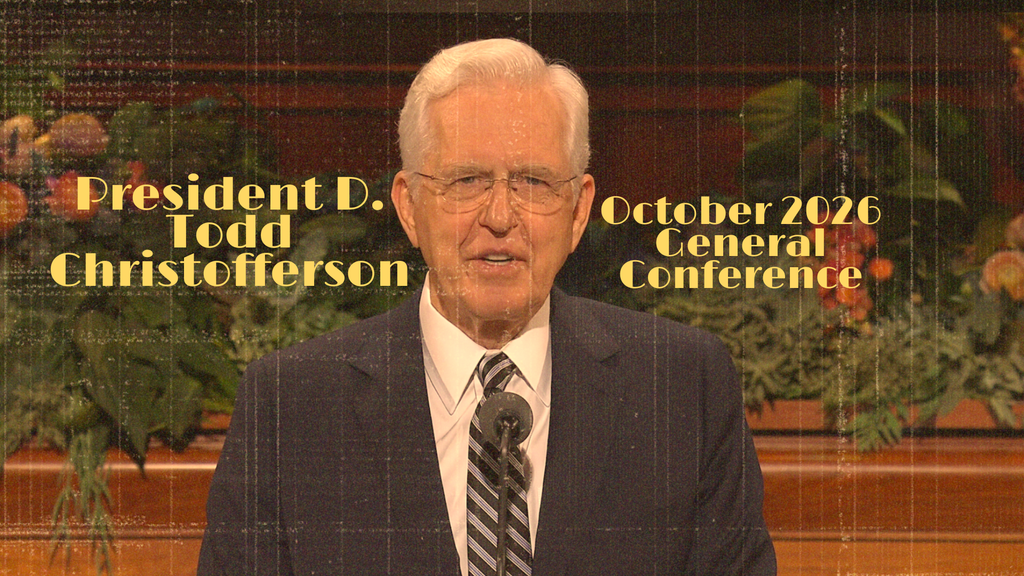
Relief Society Lesson Help for President D. Todd Christofferson’s General Conference Talk
Introduction
President D. Todd Christofferson’s message about gambling is unusually direct, but beneath the specific warning is a much broader lesson about discipleship, stewardship, influence, agency, work, righteousness, and what it means to live “on a higher plane.”
He begins by acknowledging that this is not necessarily a pleasant subject. Like Jacob in the Book of Mormon, he feels a responsibility to speak boldly about something spiritually dangerous. From there, President Christofferson explains why gambling has become particularly concerning in a world where smartphones have placed casinos, sports betting, and prediction markets directly into people’s pockets.
But his message ultimately goes much deeper than whether someone wins or loses money.
President Christofferson asks disciples to consider questions such as: Where will this choice lead? What opportunities am I giving up by choosing this? How could my example affect someone whose faith is more vulnerable? Am I using the resources God has entrusted to me to create something good? Am I walking Christ’s giving path—or the adversary’s taking path?
Those questions can lead to a powerful Relief Society discussion even among sisters who have never personally gambled.
This lesson help follows President Christofferson’s message chronologically and divides it into nine discussion sections. Each section includes longer direct quotations from the talk, doctrinal teaching ideas, ten discussion questions, five object lesson ideas, and ten personal sharing prompts. Teachers can choose the sections that best fit the needs of their Relief Society rather than attempting to cover everything in one lesson.
Section 1: Some Truths Require Boldness of Speech
The Principle
President Christofferson begins by comparing his responsibility to the prophet Jacob’s experience in the Book of Mormon.
Sometimes prophets would prefer to speak only about comforting and uplifting subjects. But prophetic responsibility also includes warning. Love sometimes requires addressing uncomfortable truths plainly.
President Christofferson makes his position on gambling unmistakably clear.
Direct Quotes from the Talk
“Today I feel a bit like the Book of Mormon prophet Jacob when he felt compelled by the Spirit to address subjects that were not particularly edifying, having to use ‘boldness of speech,’ as he put it, instead of feasting on the pleasing word of God.”
“So with a sense of duty I turned to the subject of gambling.”
He then recounts President Gordon B. Hinckley’s story about President Calvin Coolidge returning home from church:
“His wife asked him what the preacher spoke about. He replied, ‘Sin.’ ‘Well, what did he say?’ she asked. ‘He was against it,’ replied Coolidge.”
President Hinckley then said:
“I think I could answer the question concerning gambling just that briefly. We’re against it.”
Pasted text
Discussion Questions
- Why do prophets sometimes need to address subjects that are uncomfortable?
- What is the difference between “boldness of speech” and being harsh or judgmental?
- Why can direct warnings actually be expressions of love?
- Why might we prefer gospel messages that comfort us over messages that correct us?
- What should our response be when prophetic counsel makes us uncomfortable?
- How can we determine whether our discomfort is inviting us to change?
- Why does President Christofferson establish the Church’s position so plainly?
- How can parents teach difficult moral principles clearly without creating shame?
- When has a straightforward gospel teaching ultimately blessed your life?
- How can we become more willing to hear both the “pleasing word of God” and divine correction?
Object Lesson Ideas
1. Warning Sign
Bring a warning sign such as “Bridge Out” or “Danger Ahead.” Ask whether a warning is unkind simply because its message is unpleasant. Discuss how warning can actually be evidence of concern.
2. Smoke Detector
Bring a smoke detector. Its sound is irritating precisely because the message is important. Compare this to prophetic warnings.
3. Doctor’s Diagnosis
Use a pretend medical chart. A compassionate doctor does not withhold difficult information simply because a patient would rather hear something pleasant.
4. Guardrail
Show a picture of a mountain road with a guardrail. The guardrail restricts where a driver can go, but its purpose is protection.
5. Flashlight on a Problem
Turn off the lights and shine a flashlight on an object. Revelation sometimes illuminates something we would rather not see so that we can address it.
Personal Sharing Prompts
- Share a time prophetic counsel initially challenged you but later blessed you.
- Describe something a parent or leader taught you directly that you are now grateful for.
- Share a time correction helped protect you.
- Talk about a gospel principle you once resisted but later understood.
- Share how you distinguish loving correction from criticism.
- Describe a time you felt prompted to have a difficult but necessary conversation.
- Share what helps you remain teachable when you feel defensive.
- Talk about a warning you are grateful you listened to.
- Share how your understanding of prophetic counsel has changed.
- Describe what “boldness of speech” combined with Christlike love looks like to you.
Section 2: Gambling Has Become Constant, Private, and Easily Accessible
The Principle
President Christofferson next explains why gambling deserves particular attention today.
Gambling itself is not new. What has changed is accessibility.
Technology has transformed an activity that once required intentionally going somewhere into something that can happen privately, continually, and almost anywhere. This raises a broader principle worth discussing: technology can remove natural barriers that once protected us from harmful behaviors.
Direct Quotes from the Talk
“Putting money or something of value at risk to bet on a particular outcome or event is an activity that has plagued mankind almost, I suppose, from the beginning of time.”
“And time has not made it any more worthwhile or any less harmful.”
“Unfortunately, in recent years, gambling has become incredibly pervasive.”
“The smartphone has transformed gambling from an occasional activity requiring a trip to a casino, racetrack, or lottery kiosk into an activity available continuously, privately, and almost anywhere.”
“This has led to an explosion in gambling.”
President Christofferson then points out an important economic reality:
“Of course, the industry’s revenue is the gambler’s loss.”
“Simply put, the industry’s entire business model is built on its customers losing money.”
Pasted text
Discussion Questions
- Why does easy access make temptation more dangerous?
- What changes when potentially harmful activities become private?
- How has the smartphone changed the way we encounter temptation?
- What other behaviors have technology made almost continuously accessible?
- Why is creating healthy boundaries important even when something is technically available to us?
- What do we learn from the statement that the gambling industry’s revenue is ultimately the gambler’s loss?
- Why is it helpful to understand the business model behind something being marketed to us?
- How can companies benefit financially from encouraging unhealthy habits?
- What boundaries can families establish around digital temptation?
- How can we teach children to recognize when technology is being designed to capture their attention, money, or behavior?
Object Lesson Ideas
1. Casino in Your Pocket
Hold up a smartphone and contrast it with a picture of a casino. Discuss how physical barriers once required deliberate decisions that technology can now remove.
2. Door Without a Lock
Show a door or box that can be easily opened. Natural barriers can provide moments to reconsider choices. What happens when those barriers disappear?
3. Constant Notifications
Set several alarms on a phone. Discuss how repeated exposure can wear down resistance.
4. Leaking Wallet
Put play money into a container with a hole. Connect it to President Christofferson’s reminder that gambling-industry revenue comes from gamblers’ losses.
5. Fence Around a Garden
Show a picture of a fenced garden. Boundaries are not evidence that the garden is weak; they protect something valuable.
Personal Sharing Prompts
- Share a digital boundary that has blessed your life.
- Describe something technology has made easier for you—and something it has made harder.
- Share how you teach children or grandchildren healthy technology habits.
- Talk about a time convenience made a temptation more difficult to resist.
- Share a boundary you established before you actually needed it.
- Describe how you recognize when something is taking too much of your attention.
- Share how you have simplified your digital environment.
- Talk about a time removing access helped you change a habit.
- Share something you wish younger generations understood about online influences.
- Describe how you try to make technology serve your values rather than shape them.
Section 3: Gambling Can Crowd Out Things of Greater Value
The Principle
President Christofferson then focuses particularly on youth and young adults.
He identifies early exposure, easy online access, intense marketing, peer influence, and social acceptance as factors that make gambling particularly enticing.
But one phrase broadens this discussion beyond gambling:
“It crowds out things of value.”
A behavior does not have to completely destroy our lives to become spiritually costly. It may simply begin occupying space that once belonged to better things.
Direct Quotes from the Talk
“Youth and young adults are disproportionately affected.”
“For this demographic, impulsivity and peer influence are compounded by early exposure, easy online access, and intense marketing.”
“Widespread social acceptance only adds to the enticement.”
“Sports betting is especially rampant among teenagers and young adults. It easily becomes consuming, often compulsive.”
“It robs time from studies, relationships, and career development.”
“It crowds out things of value and in their place fosters greed.”
Pasted text
Discussion Questions
- What does it mean for something to “crowd out things of value”?
- Why are young people especially vulnerable to behaviors designed around impulsivity?
- How does widespread social acceptance make something feel less dangerous?
- What valuable things can unhealthy habits gradually displace?
- Can something be spiritually damaging even if it never becomes a full addiction?
- Why should we consider what a habit is replacing rather than simply whether the habit seems harmless?
- How does marketing influence what society begins to consider normal?
- How can parents prepare children for behaviors that their peers may consider completely ordinary?
- What is the difference between recreation that renews us and recreation that consumes us?
- What is currently receiving your time that might be crowding out something you value more?
Object Lesson Ideas
1. Jar of Priorities
Fill a jar first with sand and then try adding large rocks. Repeat by putting the rocks in first. Discuss what happens when lesser priorities crowd out things that matter most.
2. Overgrown Garden
Show a garden overrun with weeds. Weeds do not need to be inherently dramatic to eventually crowd out healthy plants.
3. Calendar Squares
Use a weekly calendar and physically fill blocks with an activity until little space remains for family, worship, study, rest, and relationships.
4. Full Hands
Ask someone to hold many insignificant objects and then offer her something valuable. She cannot receive it without putting something down.
5. Crowded Chair
Pile objects onto a chair until no one can sit there. Ask what important things no longer have room when our lives become crowded.
Personal Sharing Prompts
- Share a time you realized something was taking more of your time than you wanted.
- Describe something you removed from your life to make room for something better.
- Share a habit that helps protect your most important priorities.
- Talk about how your priorities have changed with age.
- Share how you recognize when entertainment is becoming consuming.
- Describe something valuable you intentionally make time for.
- Share a time social acceptance made it harder to stand by your values.
- Talk about how you teach children to choose what matters most.
- Share a season when simplifying your life brought peace.
- Describe one thing you would like to make more room for.
Section 4: The Greatest Danger Is Not Simply Losing Money
The Principle
President Christofferson next clarifies that the central danger of gambling is larger than an individual financial loss.
Repeated access can transform occasional behavior into compulsion. The consequences then spread outward—affecting savings, debt, relationships, families, and communities.
Sin and destructive habits rarely remain neatly contained within one person’s life.
Direct Quotes from the Talk
“Surveys reveal that people know that in gambling the odds are stacked against them and the house always wins. They just don’t think it will win against them personally.”
“But the central risk of gambling is not merely that customers lose money on individual wagers.”
“The larger concern is that continuous mobile access can transform occasional entertainment into repeated behavior that displaces saving, increases debt, and creates far-reaching family and social costs.”
President Christofferson quotes George Washington:
“It is the child of avarice, the brother of inequity, and the father of mischief.”
He then observes:
“Although calling it mischief may be too mild.”
Pasted text
Discussion Questions
- Why do people often believe negative consequences will happen to others but not themselves?
- What does the phrase “the house always wins” reveal about gambling?
- Why does repeated behavior matter more than one isolated choice?
- How can an individual habit create “far-reaching family and social costs”?
- What happens when entertainment begins affecting savings or creating debt?
- Why are addictive behaviors rarely just individual problems?
- What warning signs indicate that recreation may be becoming compulsion?
- How can families discuss addictive behaviors without shame?
- Why is prevention often easier than trying to escape an established pattern?
- What can we learn from looking beyond the immediate consequences of a decision?
Object Lesson Ideas
1. Falling Dominoes
Line up dominoes labeled money, trust, marriage, time, children, and peace. One choice can produce consequences far beyond itself.
2. Ripples in Water
Drop something into a bowl of water. The impact moves outward. Compare this to family and social consequences.
3. Small Crack
Show a picture of a small crack in a windshield that eventually spreads. Repeated behavior can turn something seemingly small into something much larger.
4. Debt Chain
Link paper strips labeled wager, loss, another wager, debt, secrecy, relationship strain. Discuss how repeated decisions can become a chain.
5. “It Won’t Happen to Me”
Write this sentence on the board and ask sisters to identify areas where humans tend to underestimate personal vulnerability.
Personal Sharing Prompts
- Share a time you underestimated the consequences of a seemingly small choice.
- Describe a habit you stopped before it became more difficult.
- Share something you have learned about financial stewardship.
- Talk about how another person’s choices affected your family.
- Share how you teach children to recognize long-term consequences.
- Describe a time you learned you were not as immune to temptation as you thought.
- Share something that helps you recognize unhealthy patterns early.
- Talk about how family support can help someone trying to change.
- Share an experience when prevention proved easier than repair.
- Describe how thinking about others changes the decisions you make.
Section 5: Ask “Where Will This Lead?”
The Principle
President Christofferson then introduces one of the most broadly applicable principles in the talk.
Quoting President Dallin H. Oaks, he invites us to look beyond the immediate moment and ask:
Where will this lead?
He also introduces the principle of opportunity cost. Every yes is also a no to something else because our time, money, attention, and energy are limited.
Direct Quotes from the Talk
“At different times, President Dallin H. Oaks has reminded us that as we make current decisions, we should be asking, ‘Where will this lead?’”
“What is the effect on our future of the decisions we make in the present?”
“President Oaks points out that each choice has an opportunity cost.”
“That is, if we spend time doing one thing, we lose the opportunity to do another.”
“What is the opportunity cost of gambling? What do you forgo in terms of money or time, relationships, worthwhile pursuits? Where does it lead?”
Pasted text
Discussion Questions
- How might asking “Where will this lead?” change everyday decisions?
- Why are immediate consequences easier to see than long-term ones?
- What does “opportunity cost” mean spiritually?
- What good things do we sometimes lose because our resources are going somewhere less valuable?
- How can we teach children to think beyond immediate gratification?
- Is there something in your life that is not necessarily sinful but has a high opportunity cost?
- How can this question help with spending decisions?
- How can it help with entertainment and technology?
- How can it help with relationships?
- What would change if “Where will this lead?” became one of your regular decision-making questions?
Object Lesson Ideas
1. Twenty-Dollar Bill
Give someone a pretend $20 bill and several mutually exclusive options. Once the money is spent in one place, it cannot simultaneously be spent elsewhere.
2. Hourglass
Turn over an hourglass. Time spent cannot be recovered. Every use of time carries opportunity cost.
3. Forked Road
Draw two paths leading to different destinations. Choices become clearer when we look farther down each road.
4. Shopping Cart
Fill a small basket with objects until it reaches capacity. Choosing one thing can require leaving another behind.
5. Seeds
Give someone a limited number of seeds and several pots. Where the seeds are planted determines where growth can occur.
Personal Sharing Prompts
- Share a decision where asking “Where will this lead?” helped you.
- Describe something worthwhile you gave up something else to pursue.
- Share an opportunity cost you understand better now than when you were younger.
- Talk about a financial decision that taught you something.
- Share how motherhood, work, or another responsibility changed your priorities.
- Describe something you stopped doing because the cost was greater than you initially realized.
- Share a time choosing one good thing required saying no to another.
- Talk about a long-term consequence you are grateful you considered.
- Share a choice your younger self made that blessed your future self.
- Describe one decision you are currently trying to view through a longer lens.
Section 6: Our Example Can Become Someone Else’s Permission
The Principle
President Christofferson next shifts from asking what gambling does to us to asking what our example may communicate to someone else.
Even if a person believes she can participate casually without significant personal consequences, others may interpret her behavior as permission.
President Christofferson draws on Paul’s teachings about disciples voluntarily limiting their own liberty rather than becoming a stumbling block to someone whose faith is weaker.
Direct Quotes from the Talk
“Perhaps you think your character and your commitment to divine covenants are sufficiently strong that for you wagers would never be more than occasional casual fun, maybe.”
“But whether you’re right about that or not, have you considered how your example might affect others?”
“If your moral standing is secure, then undoubtedly there are others who look to you as a guide for upright living.”
“That would certainly be true for your children, but also others that you may or may not know who are watching and learning from what they see in you. They may be newer or weaker in the faith.”
“A little gambling that seemingly has only a minor impact in your life may be more costly to them if they take license from your example.”
President Christofferson then applies Paul’s teaching:
“Since your recreational gambling may lead a weaker brother or sister into temptation, just don’t do it. Every soul is precious. And Christ died for him, for her. He did as He did for you.”
Pasted text
Discussion Questions
- Why should another person’s spiritual welfare influence our choices?
- What is the difference between having freedom to do something and deciding that doing it is wise?
- How can our example unintentionally give someone else permission?
- Who is most likely to be watching our example?
- Why does spiritual maturity sometimes involve voluntarily giving something up?
- How do we balance personal agency with responsibility for our influence?
- What does Paul’s “stumbling block” teaching look like today?
- Why does President Christofferson connect this principle to Christ dying for every soul?
- What choices might we evaluate differently if we considered who was watching?
- How can we influence others positively without becoming self-righteous?
Object Lesson Ideas
1. Footprints
Place paper footprints on the floor and have someone follow them. Ask where our footprints are leading those who follow us.
2. Permission Slip
Hold up a school permission slip. Discuss how our behavior can function like an unspoken permission slip to children or others.
3. Leader on a Trail
Have one person lead others around obstacles. The path the leader chooses affects everyone behind her.
4. Stumbling Block
Place a block in a walking path. Connect it directly to Paul’s metaphor.
5. Mirror and Window
A mirror represents examining our own choices; a window represents considering how those choices look to someone observing us.
Personal Sharing Prompts
- Share about someone whose example strongly influenced you.
- Describe a choice you made differently because children were watching.
- Share a time someone’s quiet discipleship strengthened you.
- Talk about something you gave up because of its possible influence on another person.
- Share how becoming a parent, leader, or mentor changed your choices.
- Describe someone you looked to as a “guide for upright living.”
- Share a time you realized someone was watching your example without your knowing it.
- Talk about how you try to model discipleship without expecting perfection from yourself.
- Share a family example that continues to influence generations.
- Describe the kind of spiritual example you hope to leave behind.
Section 7: Gambling Conflicts with the Commandment to Love Our Neighbor
The Principle
President Christofferson then moves to what he identifies as the overarching concern for Latter-day Saints.
Gambling is not simply financially risky. He teaches that it is morally wrong because its structure is built on trying to receive something at another person’s expense without providing corresponding value.
That conflicts with Christ’s commandment to love our neighbors.
President Christofferson also introduces another important doctrine: our resources are stewardships.
Direct Quotes from the Talk
“For us as Latter-day Saints, overarching all other concerns is the fact that gambling is morally wrong.”
“Gambling is built on the desire to obtain something for nothing. Its structure requires that any gain comes at others’ expense.”
“It’s hard to reconcile that with the commandment to love our neighbor as ourselves.”
“In addition, our resources are stewardships.”
“And the question is not merely whether a purchase is legal, but whether it builds anything in us, in our families, or in those around us.”
“In the end, gambling produces nothing of value and enriches only its purveyors.”
Pasted text
Discussion Questions
- Why does President Christofferson distinguish between what is legal and what is morally right?
- What does it mean to view our resources as stewardships?
- How does stewardship change the question “Can I afford this?”
- Why is obtaining something at another person’s expense incompatible with loving our neighbor?
- What does the phrase “something for nothing” reveal about the spiritual concern?
- How can we evaluate whether our spending “builds anything”?
- What does productive use of money look like?
- How should disciples think about entertainment spending?
- Besides money, what other resources has God entrusted to us?
- What would change if we viewed every resource—time, talents, money, influence, and opportunities—as a stewardship?
Object Lesson Ideas
1. Steward’s Envelope
Give someone an envelope labeled “Entrusted to You.” Discuss the difference between owning something absolutely and managing something entrusted by God.
2. Building Blocks
Spend pretend money on blocks that can construct something versus something that disappears without creating value. Ask President Christofferson’s question: “Does it build anything?”
3. Scale
Put “legal” on one side and “Christlike” on the other. Something can be legal without meeting the higher standard of discipleship.
4. Talents, Time, Money
Place three objects on a table representing these resources. Ask how each can be used as a stewardship.
5. Empty Hands vs. Giving Hands
Contrast hands reaching to take with hands extending something to another person. Prepare for President Oaks’s “giving path” imagery in the next section.
Personal Sharing Prompts
- Share how viewing money as a stewardship has influenced a decision.
- Describe something worthwhile you have chosen to invest in.
- Share a lesson you learned about finances growing up.
- Talk about a time generosity brought more joy than spending on yourself.
- Share how you teach stewardship in your family.
- Describe a time you chose a higher standard even though another option was legal.
- Share something God has entrusted to you besides money.
- Talk about how your understanding of ownership has changed through the gospel.
- Share a financial principle that has blessed your family.
- Describe something you want your resources to help build.
Section 8: Christ Offers a Giving Path; the Adversary Offers a Taking Path
The Principle
President Christofferson then quotes President Oaks to identify the spiritual nature of gambling.
This is one of the strongest passages in the talk because it contrasts two fundamentally different approaches to life.
Jesus Christ teaches us to give, contribute, serve, work, build, and bless.
The adversary teaches us to take.
This principle extends far beyond gambling and provides rich material for Relief Society discussion about the kind of people discipleship is helping us become.
Direct Quotes from the Talk
President Christofferson quotes President Oaks:
“What does gambling do to its participants?”
“The attitude of taking something from someone else in order to enhance our own position, which is the essence of gambling, leads us away from the giving path of Christ toward the taking path of the adversary.”
“The act of taking or trying to take something from someone else without giving value in return is destructive of spiritual sensitivities.”
Pasted text
Discussion Questions
- What is “the giving path of Christ”?
- What characteristics develop in someone who continually follows a giving path?
- What characteristics develop through a taking mentality?
- Why can our economic choices affect our spiritual sensitivities?
- How does Christ’s life exemplify giving rather than taking?
- What does it mean to provide value in return for what we receive?
- Where else in life might a “something for nothing” mentality appear?
- How can work develop Christlike characteristics?
- How can we teach children the joy of contributing rather than simply consuming?
- If you evaluated your week by how much you contributed rather than how much you acquired, what would you notice?
Object Lesson Ideas
1. Two Paths
Create two paper paths labeled Giving Path of Christ and Taking Path of the Adversary. Ask sisters to identify attitudes and behaviors associated with each.
2. Open vs. Grasping Hands
Hold one hand open as though giving and the other clenched around an object. Discuss what each posture symbolizes spiritually.
3. Full Bucket
Have everyone add something to a bucket rather than removing from it. Discuss what communities become when people consistently contribute.
4. Potluck
Ask why a potluck works best when everyone contributes rather than one person taking without giving.
5. Service Exchange
Show several examples of honest work creating value for another person. Contrast productive exchange with gain that requires someone else’s loss.
Personal Sharing Prompts
- Share about someone whose life exemplifies Christ’s giving path.
- Describe a time service changed you.
- Share something you worked hard to earn and why that mattered.
- Talk about a time contributing felt better than receiving.
- Share how work has developed your character.
- Describe something you regularly give that does not involve money.
- Share a time another person’s generosity affected you deeply.
- Talk about how you teach children to contribute.
- Share a talent you have learned to use for others.
- Finish this sentence: “I follow Christ’s giving path when I…”
Section 9: Live Life on a Higher Plane
The Principle
President Christofferson concludes by moving beyond the prohibition itself.
His ultimate plea is not merely “don’t gamble.”
It is:
Live a better life. Build something. Contribute. Work. Bless other people. Use your time and resources to do good. Hunger and thirst after righteousness.
Discipleship is not simply removing vice. It is replacing lesser things with better things.
Direct Quotes from the Talk
“Today I am pleading with all of us to live life on a higher plane.”
“God has granted life and agency to each of us, and each of us is accountable to Him for how we live that life.”
“A key part of a life well-lived is contributing to the well-being of others.”
“It’s being productive in worthy endeavors.”
“It’s being and doing better without others doing worse.”
“It comes by supporting and rewarding work rather than idle pursuits. Work leads to prosperous, just, and equitable societies.”
“Gambling, even for fun, leads in the opposite direction.”
President Christofferson then expands his invitation:
“My plea again is not only to refrain from gambling, but to use the time and resources saved thereby for doing good.”
“The Lord counsels us to be ‘anxiously engaged in a good cause’ and ‘bring to pass much righteousness.’”
“Indeed, ‘blessed are all they who do hunger and thirst after righteousness, for they shall be filled with the Holy Ghost.’”
“If we hunger and thirst after righteousness, there are many good things we will pursue and other things that, because they’re incompatible with righteousness, we will put out of our lives entirely.”
“I pray that you’ll not treat gambling lightly.”
He concludes with Jacob’s words:
“O be wise; what can I say more?”
Pasted text
Discussion Questions
- What does it mean to you to “live life on a higher plane”?
- Why is avoiding sin only part of discipleship?
- What does a “life well-lived” look like according to President Christofferson?
- What is the difference between simply not gambling and deliberately using those resources to do good?
- What does it mean to be “productive in worthy endeavors”?
- Why is “being and doing better without others doing worse” such a powerful definition of healthy progress?
- How does meaningful work bless both individuals and communities?
- What changes when we hunger after righteousness rather than merely try to avoid wrongdoing?
- What might you need to put out of your life because it is incompatible with the person you want to become?
- What good cause could you become more “anxiously engaged” in right now?
Object Lesson Ideas
1. Empty Garden vs. Planted Garden
Removing weeds is important, but a garden left empty still does not fulfill its purpose. After removing weeds, we plant something good. Likewise, discipleship replaces vice with righteousness.
2. Higher Ground
Place one object on the floor and another on a raised surface. Discuss President Christofferson’s invitation to live on a “higher plane.”
3. Two Budget Jars
Label one jar Avoided and another Used for Good. Simply not wasting resources is different from intentionally consecrating them to something worthwhile.
4. Hunger
Bring a plate or bowl. Physical hunger motivates us to seek food. Ask what it would look like to genuinely “hunger and thirst after righteousness.”
5. Blank Weekly Calendar
Give sisters a blank calendar. Ask: If time is one of the resources God has entrusted to us, what would we intentionally place into it if our goal were to “bring to pass much righteousness”?
Personal Sharing Prompts
- Share about someone you believe lives life “on a higher plane.”
- Describe a worthy endeavor that gives your life meaning.
- Share a time meaningful work brought you satisfaction.
- Talk about a good cause you have felt prompted to support.
- Share something you removed from your life and what you put in its place.
- Describe how service has helped you become more like Christ.
- Share a time you used resources you had saved to bless someone else.
- Talk about something you genuinely “hunger and thirst” for spiritually.
- Share one way you hope your life contributes to the well-being of others.
- Finish this sentence: “For me, living life on a higher plane would look like…”
Conclusion
President D. Todd Christofferson’s message is certainly a warning about gambling, but reducing it to “the Church says not to gamble” would miss much of the spiritual depth of his teaching.
His message asks us to examine the kind of disciples we are becoming.
Are we allowing technology and social acceptance to normalize things that deserve greater caution?
Are lesser pursuits crowding valuable things out of our lives?
When making decisions, are we asking only, “Is this allowed?” or are we asking, “Where will this lead?”
Do we recognize the opportunity cost attached to our time, money, and attention?
Do we consider how our example might influence someone whose faith is more vulnerable?
Do we view our resources as possessions that belong entirely to us—or as stewardships entrusted to us by God?
And perhaps most importantly, are we walking the giving path of Jesus Christ?
That question transforms this talk into something relevant for every sister, regardless of whether gambling has ever personally been part of her life.
For Relief Society teachers, this provides an opportunity to move the discussion beyond a list of prohibited behaviors. President Christofferson is teaching a positive vision of discipleship: work instead of idleness, contribution instead of consumption, stewardship instead of waste, giving instead of taking, righteousness instead of spiritual complacency.
His concluding invitation is not simply to remove gambling from our lives:
“My plea again is not only to refrain from gambling, but to use the time and resources saved thereby for doing good.”
That principle can become the heart of the lesson.
The gospel of Jesus Christ does not merely ask, “What should I stop doing?”
It also invites us to ask:
What could I build instead?
Who could I bless?
What could I contribute?
What worthwhile pursuit deserves more of my time?
How can the resources God has entrusted to me bring greater good into the world?
As President Christofferson teaches, God has given each of us life and agency, and we are accountable for how we use both. A life well-lived is one that contributes to the well-being of others, pursues worthy endeavors, and becomes anxiously engaged in bringing to pass righteousness.
That is the higher plane to which President Christofferson invites us.
And his final counsel, borrowed from Jacob, provides a simple question with which a Relief Society teacher could conclude the entire discussion:
“O be wise; what can I say more?”

Leave a Reply