Introduction
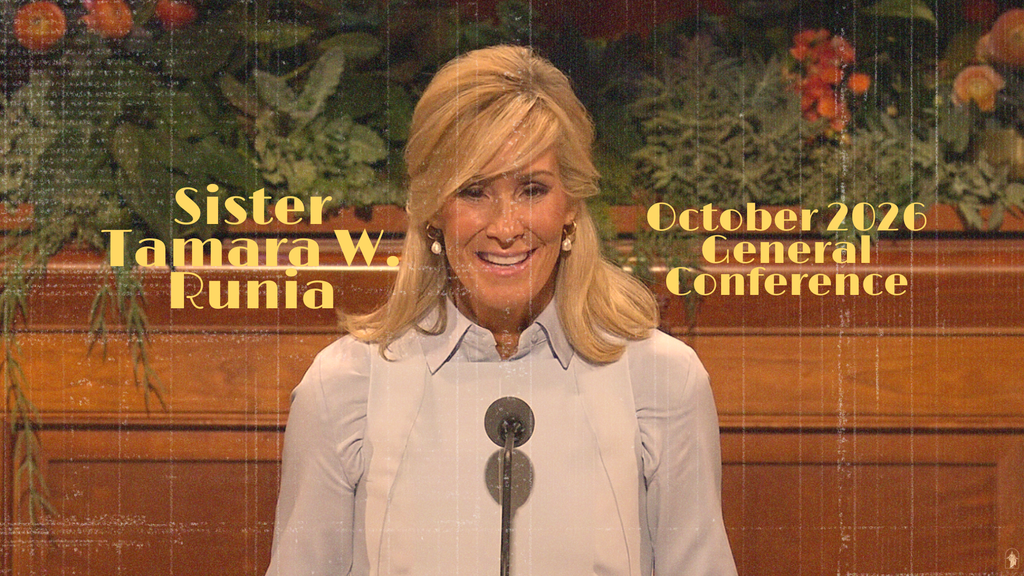
Sister Tamara W. Runia’s message, “The Sculpting of Our Souls,” offers a deeply personal way to discuss one of the hardest questions of mortality: What do we do when faithful living does not prevent painful things from happening?
Beginning with the unexpected death of her oldest son, Ryan, Sister Runia teaches that some experiences simply cannot be “fixed.” Instead, they must be lived through with faith in Jesus Christ.
Her message challenges the idea that the gospel functions like an umbrella that keeps hardship from reaching faithful disciples. Instead, she teaches that the gospel is the rock beneath us when the storm comes. Mortality is not designed to spare us every difficult experience; it is designed to help us become like our Heavenly Parents and Jesus Christ.
Throughout the talk, Sister Runia returns to a powerful truth:
“God is shaping us into something only He knows we can become.”
This creates meaningful opportunities for Relief Society discussions about grief, unanswered prayers, unmet righteous desires, trusting God without understanding Him, surrendering the story we thought our lives would tell, choosing Christ in pain, recognizing divine purpose in suffering, and allowing the Master’s hand to shape our souls.
This lesson help follows Sister Runia’s talk chronologically, separating it into nine natural discussion points. Each section includes longer direct quotations from the talk, a teaching focus, 10 Relief Society discussion questions, five object lesson ideas, and 10 personal sharing prompts.
Teachers certainly do not need to use everything included here. Instead, consider this a collection of resources from which you can prayerfully choose the quotes, questions, and activities that best meet the needs of the sisters you teach.
Section 1: Some Things in Mortality Cannot Be Fixed
The Principle
Sister Runia begins with something relatable: she loves fixing things.
Knots can be untangled. Stains can be removed. Problems often have solutions.
But mortality eventually brings each of us experiences we cannot fix.
For Sister Runia, that realization came with the sudden death of her son Ryan.
Her opening story establishes an important foundation for the rest of her message: faith in Christ does not mean we will always be able to make painful circumstances go away.
Sometimes discipleship means learning what Christ can do within us when the circumstance itself cannot be changed.
Direct Quotes from the Talk
Sister Runia begins:
“I love fixing things. If there’s a knot in a shoelace or a necklace, it’s my job to untangle it. I’m also good at stain removal. I see it as a challenge; in fact, some have referred to me as ‘the stain whisperer.’”
She then makes the transition:
“It’s human nature to want to fix things—and to become frustrated when something comes along that we cannot fix.”
Then she shares the experience that changed her life:
“Thirteen years ago our oldest son, Ryan, woke up on a Monday morning, kissed his wife and four young children goodbye, and left for work. A few hours later, he collapsed and died from undetected hypertrophic cardiomyopathy. His heart simply stopped.”
“The next day was his two-year-old daughter Piper’s birthday. As we lit candles on her cake and began to sing, she was looking for her dad, and I realized this was something I would not be able to fix.”
Teach
Many of us approach problems by asking:
How do I fix this?
That can be useful—until we encounter something that cannot be fixed by effort, planning, intelligence, or determination.
A death cannot be undone.
Another person’s agency cannot be controlled.
Some illnesses remain.
Some relationships change permanently.
Some righteous desires remain unrealized.
Some questions remain unanswered.
Sister Runia’s message begins in that uncomfortable place.
The gospel does not always give us power to change our circumstances. Sometimes it gives us the power to be changed within our circumstances.
That distinction opens the door to the rest of her message.
Relief Society Discussion Questions
- Why do you think our instinct is often to immediately try to “fix” difficult circumstances?
- What kinds of experiences require something different from problem-solving?
- How can our desire to fix another person’s pain sometimes make it harder to simply mourn with them?
- What can faith look like when the outcome we want is no longer possible?
- How can we distinguish between something God wants us to work to change and something we need His help to endure?
- Why can accepting that we cannot fix something feel frightening?
- What can Jesus Christ offer when He does not immediately change the circumstance?
- How can Relief Society sisters better support someone experiencing a problem that has no simple solution?
- Why might phrases intended to “fix” another person’s grief sometimes be unhelpful?
- What changes when our prayer moves from “Please make this go away” to “Please help me know how to walk through this with Thee”?
Object Lesson Ideas
1. Tangled Necklace and Broken Object
Bring a tangled necklace and an object that has been permanently broken.
The necklace represents problems we can solve. The broken object represents experiences we cannot simply restore ourselves.
Ask: What does discipleship look like when something cannot be fixed?
2. Stain Remover
Bring a bottle of stain remover.
Connect it to Sister Runia’s opening humor about being the “stain whisperer.”
Then explain that mortality eventually presents circumstances for which we cannot reach for an easy solution.
3. Toolbox
Bring a small toolbox.
Ask sisters what tools they would use for different repairs.
Then ask: What happens when the problem is not something any mortal tool can repair?
Connect this to turning toward Christ.
4. Puzzle with a Missing Piece
Bring a puzzle with one piece deliberately removed.
We may spend tremendous energy trying to make something fit when a piece simply is not available to us.
Discuss learning to live faithfully with what remains unresolved.
5. Unfixable Paper
Tear a piece of paper and try to restore it exactly as it was.
Even when something cannot return to its original state, it can still become part of something meaningful.
Personal Sharing Prompts
- Share a time you encountered something you could not fix.
- Describe a time when you had to stop problem-solving and simply trust God.
- Share an experience when someone supported you without trying to fix your situation.
- Talk about something difficult that taught you the difference between fixing and healing.
- Share a time when prayer did not change your circumstance but changed you.
- Describe something you learned while walking through an unresolved situation.
- Share a time when you felt Christ accompany you through something rather than immediately remove it.
- Talk about a season when accepting your limitations brought peace.
- Share something that has helped you become more comfortable with unanswered questions.
- Finish the sentence: “When I couldn’t fix it, I learned…”
Section 2: Experience Is Valuable—and the Only Way to Get It Is to Go Through It
The Principle
Sister Runia next turns to Joseph Smith’s experience in Liberty Jail.
Joseph pleaded with God for relief.
Rather than immediately removing the circumstance, the Lord taught:
“All these things shall give thee experience, and shall be for thy good.”
Sister Runia focuses particularly on the word experience.
Some lessons cannot merely be explained to us.
They must be lived.
Direct Quotes from the Talk
“Let’s focus on a scripture that has changed the lens through which I view my life. The setting is a jail cell, where Joseph Smith is pleading with God for a reprieve—for a break from his circumstance. Instead, he was told, ‘All these things shall give thee experience, and shall be for thy good.’”
Sister Runia then makes the scripture personal:
“I’ve often wondered if the Prophet had any idea when he received this revelation what these words would mean to so many of us now who are also turning to God, pleading for a break.”
Then comes one of the central observations of her talk:
“God’s answer implies that experience is valuable, and I’m learning the only way to get it is to go through it.”
“Can’t we skip over it? Is there some other way? No, there isn’t another way.”
She compares mortality to putting previously learned truth into practice:
“It’s like we heard these lessons in a premortal classroom. We studied it there, and we’re living it here, in this laboratory of life. This is where we ‘put on Christ.’”
Teach
There is a difference between knowing about something and knowing something through experience.
We can study patience without having to wait.
We can discuss forgiveness without being deeply hurt.
We can learn about faith without facing uncertainty.
We can read about relying on Christ without ever reaching the limits of our own strength.
But mortality provides the laboratory.
It turns doctrine into lived discipleship.
Sister Runia does not teach that every painful circumstance is individually sent by God. Her emphasis is that God can use mortal experience for our growth.
What happens to us can become part of what shapes us.
Relief Society Discussion Questions
- What do you think it means that experience itself is valuable?
- What have you learned through experience that you could not have learned from a lesson alone?
- Why are some gospel principles impossible to fully understand without living them?
- How does the phrase “laboratory of life” change the way you think about mortality?
- What does it mean to “put on Christ” through experience?
- Why do we so naturally want to skip difficult parts of our story?
- How might believing that experience has value change the way we pray during trials?
- What is the difference between saying something painful is “good” and believing God can consecrate it for our good?
- How can we recognize growth while we are still in the middle of an experience?
- What qualities of Christ seem to be learned most deeply through mortal experience?
Object Lesson Ideas
1. Recipe Versus Finished Food
Bring a recipe.
Reading instructions teaches us something, but actually preparing the food gives us experience.
Connect this to mortality as a “laboratory of life.”
2. Driving Manual and Car Keys
A person could memorize a driving manual without knowing how to drive.
Some knowledge requires lived experience.
3. Seed and Soil
Show a seed.
A seed cannot become what it is capable of becoming by remaining protected inside its packet. Growth requires entering an environment where change occurs.
4. School Textbook
Bring a textbook.
Ask: What would happen if school consisted entirely of reading with no assignments, practice, laboratories, or tests?
Connect this to our premortal learning and mortal experience.
5. Unused Shoes
Show a clean pair of shoes.
Shoes that have traveled somewhere show wear.
Sometimes the marks of experience testify that we have actually walked the road.
Personal Sharing Prompts
- Share something experience taught you that words never could.
- Describe a difficult season that changed your relationship with Christ.
- Share a gospel principle you understand differently now than you did ten years ago.
- Talk about something you once prayed to escape but later learned from.
- Share a time life felt like a spiritual laboratory.
- Describe an experience that developed greater compassion in you.
- Share a trial that changed the way you pray.
- Talk about something difficult that taught you greater dependence on Christ.
- Share an experience that developed a Christlike attribute in you.
- Finish the sentence: “I could not have learned ______ the same way without experiencing ______.”
Section 3: The Gospel Is Not an Umbrella That Keeps the Rain Away
The Principle
Sister Runia next addresses a misunderstanding that can quietly develop around promised blessings.
We hear that obedience brings blessings—and it does.
But we can accidentally interpret that truth to mean:
If I am faithful enough, deeply painful things should not happen to me.
Sister Runia once imagined the gospel almost like an umbrella protecting her from the storms of mortality.
Experience taught her a different image.
The gospel is not the umbrella. It is the rock.
Direct Quotes from the Talk
Sister Runia quotes C. S. Lewis:
“God intends to give us what we need, not what we now think we want.”
Then she acknowledges the difficulty of that truth:
“But sometimes we’re puzzled when we get what we need, aren’t we? How can our loving Father in Heaven watch as we go through heartbreaking experiences? I’ve wrestled with this, and maybe you have too.”
She continues:
“And while I know earth life is about experience, why am I so surprised every time I experience it?”
She reflects on promises she heard growing up:
“Maybe it’s because I grew up hearing things like ‘If you keep the commandments, you’ll be blessed. Pay your tithing, and the windows of heaven will open. Follow the Word of Wisdom, and you’ll have health and protection.’ True promises, right?”
Then comes her memorable metaphor:
“So the gospel felt like a big umbrella I could hold over my head to keep the rain from falling on me.”
“But I’ve learned from experience that we’re all going to get rained on. And sometimes we’re going to get pelted!”
Her corrected understanding is powerful:
“The gospel isn’t the umbrella; it’s the solid rock we’re standing on during the storm—that ‘sure foundation … whereon if men build they cannot fall.’”
Teach
The gospel does not promise a storm-free mortality.
It promises a sure foundation.
That distinction matters enormously.
If we believe obedience should prevent hardship, adversity may cause us to question:
What did I do wrong?
Why didn’t God protect me?
Why did this happen when I was doing everything I was supposed to do?
But if Christ is our foundation rather than our umbrella, trials do not necessarily mean the gospel has failed.
The storm may still come.
The rain may still fall.
But our foundation can hold.
Relief Society Discussion Questions
- Why is the umbrella metaphor such an easy misunderstanding of the gospel to develop?
- Have we sometimes unintentionally taught promised blessings as guarantees against hardship?
- What is the difference between being blessed and being protected from every painful experience?
- How does the image of a rock change your understanding of what the gospel offers?
- Why can faithful people feel betrayed when hardship comes?
- What blessings become especially visible during storms rather than before them?
- What does it mean to build on Christ before the storm arrives?
- How can we teach children about promised blessings without implying that obedience guarantees an easy life?
- What does a “sure foundation” look like during a real crisis?
- How has the gospel held you steady even when it did not stop the storm?
Object Lesson Ideas
1. Umbrella and Rock
Bring an umbrella and a rock.
Ask which one Sister Runia initially imagined the gospel to be—and which one she discovered it actually is.
2. Building Blocks on Different Foundations
Build two small towers, one on something unstable and one on a firm surface.
Shake the surfaces gently.
Discuss why foundations matter when storms cannot be prevented.
3. Raincoat
Show a raincoat.
A raincoat does not stop rain from falling. It equips us to move through it.
Discuss gospel resources that help us walk through adversity.
4. Anchor
Bring or show an anchor.
The anchor does not calm every storm. It helps prevent the vessel from being carried away by it.
5. Wet Sponge on a Rock
Pour a small amount of water over a rock.
The water touches the rock, but the foundation remains.
Connect this to trials reaching us without destroying what we have built on Christ.
Personal Sharing Prompts
- Share a time you expected faithful living to produce a different outcome.
- Describe a storm in which the gospel became your foundation.
- Share a promise from God that sustained you rather than removed your trial.
- Talk about a time hardship challenged your expectations about blessings.
- Share how your understanding of “being blessed” has changed.
- Describe a scripture that became a rock during a difficult season.
- Share a time the temple strengthened you during a storm.
- Talk about how covenants have steadied you.
- Share something you once thought faith would prevent but later learned faith could help you endure.
- Finish the sentence: “The gospel did not stop ______, but it gave me ______.”
Section 4: Move from “Why?” to “I Know God Loves Me—So What Is Happening Here?”
The Principle
Sister Runia next turns to Nephi.
When Nephi was asked a question he could not answer, he acknowledged what he did not know while holding tightly to what he did know:
God loves His children.
That becomes Sister Runia’s model for approaching unanswered questions.
Rather than requiring complete understanding before trusting God, she begins with His love.
Direct Quotes from the Talk
“When an angel asked Nephi, ‘Knowest thou the condescension of God?’ he humbly answered, ‘I know that he loveth his children; nevertheless, I do not know the meaning of all things.’”
Sister Runia then explains how that truth changed her questions:
“God’s love has moved me from questions that begin with ‘why’ to reflections that begin, ‘I know that God loves me, so what is supposed to be happening here?’”
She continues:
“It is precisely because He loves us that we’re having these tempering, refining experiences.”
“God knows, and we are here to learn, that we must become like Him so we can live with Him!”
Then comes one of the strongest lines in the message:
“And a godlike life is carved from the very things that make it hard—the gut-wrenching things that happen and the righteous desires that haven’t.”
Teach
Sister Runia does not condemn the question “Why?”
She herself says she has wrestled with these questions.
Instead, she offers another question that can sometimes take us somewhere “why” cannot:
“I know that God loves me, so what is supposed to be happening here?”
That question begins with a known truth rather than an unknown explanation.
It does not mean every tragedy was specifically orchestrated by God.
It asks instead:
What can God do with this?
Who can I become through Christ here?
What might He teach, refine, strengthen, or sanctify within me?
And Sister Runia includes not only painful things that happen, but also “the righteous desires that haven’t.”
That makes this principle relevant not only to tragedy, but also to waiting, disappointment, infertility, singleness, strained relationships, unrealized goals, unanswered prayers, and countless other deeply personal experiences.
Relief Society Discussion Questions
- What do you learn from Nephi’s willingness to say both “I know” and “I do not know”?
- Why can uncertainty and faith coexist?
- How does beginning with “I know God loves me” change the questions that follow?
- What is the difference between asking “Why?” and asking “What is supposed to be happening here?”
- Can asking “what” instead of “why” help without minimizing grief?
- Why do righteous desires that remain unfulfilled sometimes test us so deeply?
- What do you think Sister Runia means when she says a godlike life is “carved” from hard things?
- How can adversity refine us without defining us?
- What truths about God can we hold onto when explanations do not come?
- How can we make room in Relief Society for both testimony and unresolved questions?
Object Lesson Ideas
1. Two Columns: “I Know” and “I Don’t Know”
Write both headings on the board.
Invite sisters to consider what truths can remain secure even when many questions remain unanswered.
2. Wood Carving
Bring a piece of unfinished wood or show a carving.
The final shape emerges through material being removed.
Connect this carefully to Sister Runia’s image of a godlike life being “carved.”
3. Tempering Metal
Show an image of metal being heated and forged.
Explain that Sister Runia calls some mortal experiences “tempering” and “refining.”
4. Question Mark and Heart
Place a question mark beside a heart.
We can have questions and still know God loves us.
The two do not cancel each other out.
5. Unfinished Sculpture
Show an unfinished sculpture.
A stage that looks rough may still be part of meaningful work.
Personal Sharing Prompts
- Share something you do not understand but still trust God with.
- Describe a time knowing God loved you mattered more than knowing why something happened.
- Share a question that changed as your faith matured.
- Talk about a righteous desire you have had to surrender or wait for.
- Share something difficult that developed greater Christlike character in you.
- Describe a time you learned something about God while living with uncertainty.
- Share a truth you hold onto when you do not have answers.
- Talk about an experience that refined your faith.
- Share how you have learned to make room for both grief and belief.
- Finish the sentence: “I may not know ______, but I know ______.”
Section 5: Growth May Look Like Your Life Is Falling Apart
The Principle
Sister Runia next challenges another assumption: that divine progress will always look successful from the outside.
Sometimes God may be doing profound work in a life that appears to be unraveling.
Growth is not always pretty.
Refinement is not always visible.
And other people are not qualified to determine whether God is accomplishing something sacred in someone else’s difficult story.
Direct Quotes from the Talk
“I testify that during those sanctifying experiences, when growth is taking place and God is at work, our stories may not look like success to others.”
She continues:
“In fact, on the outside it may look like things are sort of unraveling or falling apart, and it will certainly feel that way.”
Then comes the central statement of the entire talk:
“God is shaping us into something only He knows we can become.”
And yet Sister Runia immediately preserves humility:
“Still, like Nephi, I do not know the meaning of all things.”
Teach
We often use visible outcomes to judge success.
Did the marriage work out?
Did the illness resolve?
Did the child return?
Did the prayer receive the answer we hoped for?
Did the opportunity come?
Did the family look the way we expected?
Sister Runia reminds us that God may measure growth differently.
A story can appear unsuccessful externally while tremendous sanctification is happening internally.
Someone may be learning to forgive.
Trust.
Endure.
Surrender.
Hope.
Love.
Rely on Christ.
None of those transformations necessarily makes the external situation look more impressive.
But they may represent the very sculpting God is accomplishing within the soul.
Relief Society Discussion Questions
- Why are we tempted to judge spiritual success by visible outcomes?
- What might spiritual growth look like when circumstances remain difficult?
- How can something simultaneously feel like it is falling apart while God is shaping us?
- Why should this principle make us cautious about judging another person’s life?
- What kinds of growth happen almost entirely inside a person?
- How can social comparison distort our understanding of God’s work?
- What does “sanctifying experience” mean to you?
- Why might God’s definition of progress differ from ours?
- How can we recognize growth before our circumstances improve?
- What might God currently be shaping within you that others cannot see?
Object Lesson Ideas
1. Construction Zone
Show a picture of a building under renovation.
During renovation, things may temporarily look worse.
That does not mean no progress is occurring.
2. Unfinished Sculpture
Display an unfinished clay figure.
Ask whether it would be fair to judge the sculptor’s final work halfway through the process.
3. Caterpillar/Cocoon
Use an image of a cocoon.
Transformation can happen while outwardly very little seems impressive.
4. Before-and-During Photos
Show a home renovation “during” photo without the finished result.
Ask sisters what assumptions they might make without knowing the plan.
5. Roots Beneath Soil
Show a plant or illustration of roots.
Some of the most important growth occurs where others cannot see it.
Personal Sharing Prompts
- Share a season that looked unsuccessful but produced spiritual growth.
- Describe a way you have grown that other people probably could not see.
- Share a time you learned not to judge another person’s story.
- Talk about a difficult experience that strengthened an unseen part of you.
- Share a time your life felt like it was unraveling but God remained present.
- Describe something you now recognize as growth that did not feel like growth at the time.
- Share a time you had to redefine what success meant.
- Talk about a trial that changed your priorities.
- Share a Christlike attribute that was developed through adversity.
- Finish the sentence: “It did not look like progress, but God was teaching me…”
Section 6: “Not Understanding Is Not the Same as Not Believing”
The Principle
Sister Runia now returns to Ryan’s death and shares what she said at his funeral.
It is one of the most powerful distinctions in the entire talk:
“Not understanding is not the same as not believing.”
Faith does not require us to pretend we understand things we do not.
We can acknowledge confusion, grief, and uncertainty while simultaneously bearing testimony of what we know about God.
Direct Quotes from the Talk
“When I spoke at Ryan’s funeral, I looked at his wife, Cari, and their four children with such a heavy heart and said, ‘I don’t understand why this happened. I don’t.’”
Then:
“But let me be clear: Not understanding is not the same as not believing.”
Sister Runia follows that statement with what she does believe:
“I may not understand everything, but I absolutely believe God sees you, loves you, and knows your story—a story that is both personal and purposeful!”
She explains both ideas:
“Your story is personal. So you don’t need to look sideways and ask, ‘How come my life doesn’t look like theirs?’”
“And it’s purposeful in that it has meaning. Our suffering means something. It’s not a detour from the path; it gives purpose to our path.”
Then:
“God is intimately aware of your experience and has a plan for all of it—for each one of us, even if we can’t see it right now.”
Teach
This section could form an entire Relief Society lesson by itself.
Faith is sometimes mistakenly presented as certainty about everything.
Sister Runia presents something more mature:
I do not understand.
And I still believe.
Those statements can coexist.
We can have unanswered questions and a testimony.
We can grieve and believe.
We can be confused and faithful.
We can wish circumstances were different and still trust God.
And because our stories are personal, comparison becomes especially unhelpful.
God is not writing identical mortal stories.
The fact that someone else received a blessing we hoped for does not mean our life has gone off script.
Relief Society Discussion Questions
- What does “Not understanding is not the same as not believing” mean to you?
- Why might we mistakenly believe strong faith means having no unanswered questions?
- How can acknowledging uncertainty actually strengthen authentic testimony?
- What truths can you believe firmly while admitting you do not understand your circumstances?
- Why is comparing our story to someone else’s spiritually dangerous?
- What does it mean that your story is both personal and purposeful?
- How can suffering have meaning without calling suffering itself desirable?
- What might change if we stopped viewing painful experiences as detours from our path?
- How can this teaching help someone whose life looks very different from what she expected?
- How can Relief Society become a safer place for women who believe deeply but still have questions?
Object Lesson Ideas
1. Puzzle Without the Box
Give sisters several puzzle pieces without showing the completed picture.
We can faithfully work with the pieces we have without seeing how everything fits.
2. Foggy Window
Use a fogged or obscured piece of glass.
Not seeing clearly does not mean nothing exists beyond our view.
3. Flashlight in Darkness
A flashlight does not illuminate the entire journey. It gives enough light for the next portion.
4. Two Signs
Hold up:
I DON’T UNDERSTAND
and
I STILL BELIEVE
Then hold them together.
5. Different Books
Bring several books with different covers.
No two stories need to contain the same chapters to have meaning.
Personal Sharing Prompts
- Share something you do not understand but still believe God can redeem.
- Describe a time faith and uncertainty existed together.
- Share a moment when you had to stop comparing your story to another person’s.
- Talk about a time your life went differently than you expected.
- Share a truth about God that remained steady during confusion.
- Describe a time someone gave you permission not to have all the answers.
- Share how an unexpected chapter became meaningful.
- Talk about something you once viewed as a detour that shaped your path.
- Share what helps you trust God’s awareness of your personal story.
- Finish the sentence: “I don’t understand ______, but I believe ______.”
Section 7: Trust the One Who Designed the Plan
The Principle
Sister Runia next shares a remarkable story from Ryan’s seven-year-old son, Jaac.
Just two weeks before Ryan died, father and son had prepared a Primary talk comparing Heavenly Father’s plan to building with Lego bricks.
After Ryan’s death, the metaphor suddenly carried much greater meaning.
Sometimes we have the pieces and instructions—but we cannot see the picture on the box.
Faith means continuing to build because we trust the Designer.
Direct Quotes from the Talk
Sister Runia explains:
“At Ryan’s funeral, his oldest son, seven-year-old Jaac, shared a Primary talk he and his dad had worked on just two weeks earlier.”
Jaac said:
“I love Lego bricks, and when I get a new box, I open it up and lay out all the pieces and follow the instructions. Just like our Heavenly Father has a plan, and if we follow, it will guide us, and we can build hard things.”
Then Cari asked him:
“What would you do if you didn’t have the picture on the box, only the instructions? Would you still stick to the plan?”
Jaac answered:
“Yes, because you can trust the one who designed it, and it always turns out.”
Sister Runia then applies the lesson:
“But what if you had a beautiful story you thought your life was going to tell, and instead you’ve had to surrender that story? That sting is real, and that wound is wide.”
“It will take your finest faith in Christ to keep putting together the pieces—the ones that make sense but also the ones that don’t.”
And then this powerful reassurance:
“Consider this: Christ’s work in your life and His love for you are bigger than your present story.”
“And He can fix what feels badly broken.”
Teach
Sometimes our greatest test is not choosing between good and evil.
Sometimes it is choosing whether to keep trusting God when the picture we expected has disappeared.
We thought marriage would look one way.
Motherhood another.
Our health another.
Our children’s lives another.
Our finances another.
Our future another.
Sister Runia does not minimize that loss:
“That sting is real, and that wound is wide.”
Faith is not pretending the loss does not hurt.
It is continuing to place pieces with Christ even when we cannot see the final picture.
Relief Society Discussion Questions
- What does Jaac’s Lego analogy teach you about faith?
- Why is it easier to follow instructions when we can see the final picture?
- What does it mean to trust “the One who designed it”?
- Have you ever had to surrender a story you thought your life would tell?
- Why does Sister Runia acknowledge that “the sting is real” before inviting us to trust?
- What are some “pieces” of mortality that seem difficult to understand?
- What does “your finest faith in Christ” look like when the pieces do not make sense?
- How can Christ’s work be bigger than our “present story”?
- Why is the word present important in that phrase?
- What helps you continue building when you cannot see what God is building?
Object Lesson Ideas
1. Lego Set Without the Box
Bring Lego bricks and instructions but hide the finished picture.
Ask how the experience changes when the outcome cannot be seen.
2. Random-Looking Puzzle Pieces
Show several puzzle pieces individually.
A single piece may make little sense until viewed as part of something larger.
3. Blueprint
Show a blueprint.
The builder may understand only a small portion while the architect understands the whole design.
4. Half-Finished Lego Structure
Bring something halfway assembled.
Ask whether its unfinished appearance tells us what the completed structure will be.
5. Sealed Final Picture
Put an image of a completed object in an envelope.
Build without opening it.
Connect this to trusting God’s vision when ours is limited.
Personal Sharing Prompts
- Share a story you once expected your life to tell.
- Describe a time you had to surrender an expected outcome.
- Share a “piece” of your life that did not make sense when it first appeared.
- Talk about something that helped you continue trusting God.
- Share how Christ met you in disappointment.
- Describe a time your faith had to become deeper because you could not see the final picture.
- Share something unexpected that later became meaningful.
- Talk about a time you learned to trust God’s character rather than your preferred outcome.
- Share a gospel “instruction” you continue following even when you cannot see where it leads.
- Finish the sentence: “I cannot see the whole picture, but I trust God because…”
Section 8: We Have a Choice—Blame God or Turn to Him and Let Him Heal Us
The Principle
Sister Runia then shares something Ryan himself taught just one day before his death.
He had visited a neighbor experiencing devastating family circumstances.
Ryan told him that he faced a choice:
Turn against God in pain—or turn toward God for healing.
Sister Runia then extends Ryan’s invitation to all of us.
Direct Quotes from the Talk
“The day before Ryan died, he was set apart as the elders quorum president.”
“That afternoon he visited a neighbor whose wife and children had just left him. When Ryan returned, he asked Cari to write down what he had told this man.”
Ryan said:
“Brother, you have a choice right now, and it’s a big one. You can curse God and blame Him, or you can turn to Him and let Him heal you.”
Sister Runia then teaches:
“We all have a choice right now.”
“Let’s choose Christ, who can heal the wounds of this world while carving out room for joy!”
Then she describes mortality as a dialogue between God and us:
“God is saying, ‘Trust me,’ and we are learning how to say yes.”
Her testimony follows:
“With an earned conviction, I witness that this—all of this—is the true and only way we can grow and progress and become like our heavenly parents and Savior.”
And then she introduces the idea of divine mending:
“I don’t pretend to know how it works, but it feels like a sort of divine mending that changes what’s happening to you into something happening for you!”
Teach
Pain can influence our relationship with God in different directions.
It can create distance.
Or it can become the place where we reach for Him more deeply than ever before.
Sister Runia does not say that choosing Christ instantly removes wounds.
She says Christ can heal the wounds while carving out room for joy.
Healing and grief can therefore coexist.
Pain and joy can coexist.
Questions and faith can coexist.
And perhaps one of the simplest descriptions of discipleship in the whole message is:
God says, “Trust me.”
We learn to say yes.
Relief Society Discussion Questions
- Why can suffering sometimes tempt people to blame God?
- What does it practically look like to “turn to Him and let Him heal you”?
- Why might receiving healing require vulnerability?
- What is the difference between healing and having the circumstance restored?
- How can Christ “carve out room for joy” while pain still exists?
- What do you think Sister Runia means by “earned conviction”?
- How does experience change the way testimony sounds?
- What does saying “yes” to God’s invitation to trust Him look like?
- What might “divine mending” mean?
- How have you seen God transform something happening to someone into something that eventually worked for their growth?
Object Lesson Ideas
1. Turn Two Directions
Place a picture of Christ at one side of the room.
Physically turn away, then turn toward it.
Discuss the spiritual choice Ryan described.
2. Mended Fabric
Bring fabric that has been torn and stitched.
Healing does not always mean pretending there was never a wound.
3. Kintsugi Image
Show an image of repaired pottery where the cracks remain visible.
Use it carefully to discuss how healing can create something meaningful without denying that breaking occurred.
4. Bandage
Bring a bandage.
A wound must often be acknowledged and tended before healing occurs.
5. Open Hands
Ask sisters to make fists and then open their hands.
Use this simple movement to discuss what surrender and receiving Christ’s help might feel like.
Personal Sharing Prompts
- Share a time you deliberately chose to turn toward God during pain.
- Describe what healing through Christ has looked like for you.
- Share a time joy returned before all your problems disappeared.
- Talk about something God has mended within you.
- Share a trial that gave you an “earned conviction.”
- Describe a time you felt God asking you simply to trust Him.
- Share what helped you say yes.
- Talk about a wound that developed greater compassion in you.
- Share how Christ changed your relationship with a difficult experience.
- Finish the sentence: “Something that once felt like it was only happening to me eventually…”
Section 9: Invite the Master Sculptor to Shape What You Cannot
The Principle
Sister Runia concludes with the metaphor that gives the talk its title.
Her brother Kent took a sculpting class and wanted to complete his final project himself.
He struggled especially with the eyes.
His instructor could help—but Kent initially resisted because he wanted the sculpture to remain his work.
Eventually, he humbled himself and invited the master to intervene.
The instructor’s work initially seemed surprisingly aggressive.
But what Kent could not accomplish, the master’s hand could.
Sister Runia uses that experience to describe the Savior’s work within our souls.
Direct Quotes from the Talk
Sister Runia introduces her brother’s story:
“Our final assignment was to sculpt a bust of ourselves out of clay. I thought to myself, ‘This is going to be easy enough.’”
But Kent quickly discovered otherwise:
“We began, and I realized it wasn’t easy at all! When I looked at the piece, the eyes were terrible. No matter how hard I tried, I couldn’t get the eyes to look lifelike.”
He noticed the instructor helping other students:
“I observed my classmates and noticed our instructor was helping them. He was very good.”
But:
“I, however, didn’t want help. I wanted this to be my piece. I struggled alone for quite a while, until I finally humbled myself and asked for help.”
Then the master went to work:
“The instructor came over and deftly started carving; he did it so aggressively and abruptly that it startled me.”
“He dug into the clay much further than I had, and within a few minutes the eyes came to life. It looked so good! There was no way I could have done it.”
Then Kent stepped back:
“As I stepped back and looked at the piece, I could see that it was uniquely me.”
“And yet, without a doubt, a master’s hand had shaped what mine could not.”
Sister Runia applies the metaphor directly:
“My friends, there is sculpting taking place within each of our souls.”
“To invite the Savior to become involved is hard. Our pride gets in the way.”
She explains:
“He’ll lovingly chasten us to get our attention, but He waits for an invitation before He can really go to work.”
“Then He will start carving, sometimes surprising us with how abrupt and aggressive the work feels.”
But eventually:
“As time goes on, we will begin to see the work of His hand.”
And again she repeats the central truth:
“God is shaping us into something only He knows we can become.”
Finally, Sister Runia turns our attention toward eternity:
“And one day, when all the suffering and loneliness have ended and our pain is gone, we will be able to step back and look into the mirror of our own soul.”
“Then we will ‘stand all amazed’ and feel to fall at the Savior’s feet and thank Him.”
“We will thank Him for all of it—the molding, the shaping, the pain, and the adversity that have helped us become more like Him.”
Her final testimony points toward our ultimate transformation:
“‘For we shall see him as he is,’ and ‘we shall be like him.’”
Teach
The final image changes how we see everything that came before it.
Mortality is not merely something to survive.
Something is being sculpted.
The Savior is not simply helping us endure a story.
He is helping us become.
And sometimes His work reaches deeper than we expected.
Like Kent watching his instructor dig deeply into the clay, we may wonder why transformation needs to hurt so much.
Why this?
Why here?
Why so deep?
Why now?
Sister Runia does not pretend to know all those answers.
She has already established:
“I do not know the meaning of all things.”
But she knows the character of the Sculptor.
And she trusts what His hands can make.
The final sculpture was still uniquely Kent’s.
The Master’s intervention did not erase his identity.
Likewise, becoming like Christ does not mean becoming an interchangeable copy of everyone else.
God is shaping us—our individual souls, experiences, gifts, personalities, relationships, sacrifices, and stories—into something He can already see even when we cannot.
Relief Society Discussion Questions
- Why do you think Sister Runia saves the sculpting metaphor until the end?
- What does Kent’s reluctance to ask for help teach about pride?
- Why might we want our life to remain “my piece” rather than inviting the Savior fully into it?
- What does it mean to invite the Savior to work on our souls?
- Why can God’s refining work sometimes feel “abrupt and aggressive”?
- How can we distinguish divine correction from the false belief that every painful event was deliberately inflicted by God?
- What does it mean to begin seeing “the work of His hand” over time?
- Why is it significant that the finished sculpture was still “uniquely me”?
- What might God see in you that you cannot yet see in yourself?
- How does the promise “we shall be like Him” change the way you view the sculpting taking place now?
Object Lesson Ideas
1. Clay and Sculpting Tool
Bring a piece of clay and a sculpting tool.
Show how creating definition requires pressure, shaping, removing, and smoothing.
Ask:
What changes when we trust the hands holding the tool?
2. Unfinished and Finished Sculpture
Show pictures of a sculpture midway through the process and after completion.
Ask whether someone viewing only the unfinished stage could accurately judge the artist’s work.
3. Mirror
Bring a mirror and place it beside a picture of Jesus Christ.
Read Sister Runia’s final image about one day looking “into the mirror of our own soul” and then the promise:
“We shall be like him.”
4. Clay That Resists
Use modeling clay that has become somewhat firm.
Compare it with softer, workable clay.
Discuss humility, teachability, and willingness to let Christ work within us.
Be careful not to imply that suffering means someone was spiritually “hard.”
5. Artist’s Signature
Show a finished piece of artwork with an artist’s signature.
Ask:
What evidence of the Master’s hand do you hope will eventually be visible in your character?
Perhaps greater patience.
Mercy.
Courage.
Humility.
Compassion.
Forgiveness.
Faith.
Love.
Personal Sharing Prompts
- Share a way you believe God has shaped you over time.
- Describe an experience you resisted at first but later recognized as spiritually formative.
- Share a time humility allowed the Savior to help you.
- Talk about something you could not change in yourself without Christ.
- Share a time God’s work felt uncomfortable before you recognized growth.
- Describe a Christlike quality you believe life is currently developing in you.
- Share something about yourself that God has helped refine without erasing who you are.
- Talk about an experience where you later recognized the Master’s hand.
- Share what helps you trust Christ when you cannot yet see what He is creating.
- Finish the sentence: “When I look back, I can see the Savior’s hand shaping me through…”
Conclusion: God Is Shaping Us into Something Only He Knows We Can Become
Sister Tamara W. Runia’s message begins with something she cannot fix.
It ends with Someone who can shape what she cannot.
That progression is significant.
At the beginning of mortality’s hardest experiences, our instinct may be:
How can I fix this?
When we discover that we cannot, our questions may become:
Why did this happen?
Why didn’t God stop it?
Why doesn’t my life look like I thought it would?
Why hasn’t this righteous desire been fulfilled?
Why am I still going through this?
Sister Runia does not give simplistic answers to those questions.
Instead, she gives us a different lens.
Joseph Smith teaches us:
“All these things shall give thee experience, and shall be for thy good.”
Nephi teaches us:
“I know that he loveth his children; nevertheless, I do not know the meaning of all things.”
Sister Runia teaches us:
“Not understanding is not the same as not believing.”
Seven-year-old Jaac teaches us:
“You can trust the one who designed it.”
Ryan teaches us:
“You can curse God and blame Him, or you can turn to Him and let Him heal you.”
And finally, the sculptor teaches us that sometimes the Master’s hand must reach places we cannot shape ourselves.
Taken together, those teachings create a profound picture of mortal discipleship.
We will not understand everything.
We will experience things we cannot fix.
We will sometimes lose the story we thought our lives would tell.
There may be pieces that make no sense.
There may be righteous desires that remain unfulfilled.
There may be seasons when our lives look less like a beautiful finished sculpture and more like a lump of clay that someone has been aggressively carving.
But an unfinished story is not necessarily a failed story.
An unanswered question is not unbelief.
A painful chapter does not mean God has abandoned the book.
And a life that looks like it is falling apart may simultaneously be a soul that is being sanctified.
That makes Sister Runia’s message particularly valuable for Relief Society.
Within almost any Relief Society room will be women carrying stories that did not turn out the way they expected.
Some may be grieving people they love.
Some may be watching children make choices they cannot control.
Some may be facing illness.
Some may be carrying financial burdens.
Some may be longing for marriage.
Some may desperately desire children.
Some may be caring for aging parents.
Some may be rebuilding after divorce.
Some may have prayers they have repeated for years without receiving the answer they hoped would come.
Some may simply look at another woman’s life and quietly wonder:
“How come my life doesn’t look like theirs?”
Sister Runia answers:
“Your story is personal.”
And:
“It’s purposeful in that it has meaning.”
This can transform the tone of a Relief Society discussion.
Instead of asking sisters to explain why every difficult thing happened, teachers can invite them to testify of what they know even when they don’t know why.
Instead of asking only how God removed their storms, ask how Christ became their rock within them.
Instead of focusing exclusively on happy endings, make room for testimonies that are still being written.
Instead of asking how someone fixed a problem, ask how God shaped her while she lived through something she could not fix.
And instead of measuring blessings by whether life looks the way we expected, we can begin looking for evidence of the Master’s hand.
Perhaps that is one of the most hopeful invitations in this entire message:
Look for what God is shaping.
Maybe you are more compassionate because you have hurt.
Maybe you judge others less because your own story became complicated.
Maybe you know Jesus Christ differently because you desperately needed Him.
Maybe you pray differently.
Maybe you love more deeply.
Maybe you have learned to sit beside someone who is hurting without trying to fix her.
Maybe your testimony contains fewer easy answers but deeper conviction.
Maybe you can now say, with Sister Runia:
“I may not understand everything, but I absolutely believe God sees you, loves you, and knows your story—a story that is both personal and purposeful!”
That is not shallow optimism.
Sister Runia calls it an “earned conviction.”
It is faith forged through experience.
And eventually, she teaches, we will see what the Sculptor was creating.
One day the unfinished pieces will no longer be unfinished.
One day the questions will not feel as unanswered.
One day the loneliness and suffering will end.
And perhaps we will look at what Christ has made of us and recognize that, despite everything we could not understand while it was happening, the Master’s hand was there.
Until then, we can hold to Sister Runia’s central testimony:
“God is shaping us into something only He knows we can become.”
And when the sculpting hurts, when the pieces do not fit, when the storm continues, and when the story looks nothing like the one we planned, we can still choose Christ.
We can still trust the Designer.
We can still invite the Master into the work.
And we can still say:
I don’t understand.
But I believe.

Leave a Reply