Introduction: Understanding the Eternal Power of Our Covenants
Have you ever wondered whether the covenants you make and keep today could influence someone you may never meet?
Perhaps you have prayed for a child who has wandered from the gospel, worried about the spiritual future of your family, or wondered whether your efforts to teach your children about Jesus Christ are making a difference.
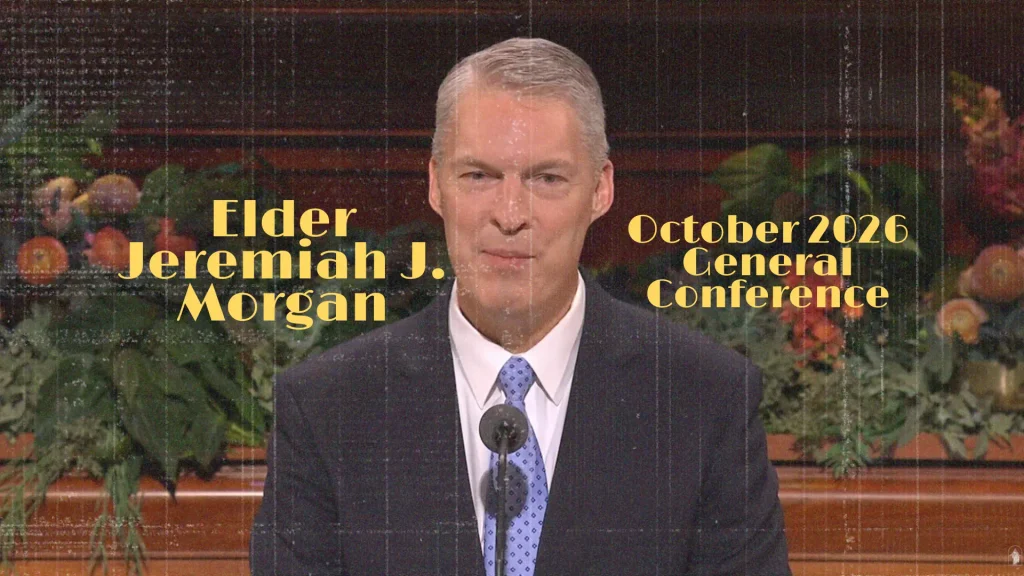
In his General Conference talk, “The Infinite Power of God in Our Covenants,” Elder Jeremiah J. Morgan shares a personal story that beautifully illustrates the eternal reach of covenant relationships.
Although Elder Morgan was not raised in The Church of Jesus Christ of Latter-day Saints, his mother faithfully taught him from the Book of Mormon. Years later, as he reflected on his spiritual journey, he came to recognize that the covenants made by his ancestors had also played an important role in his life.
His message offers hope to parents, grandparents, converts, and anyone who has ever worried about the spiritual well-being of someone they love.
Through personal experiences, scripture, and prophetic teachings, Elder Morgan explains that God’s covenants are not limited by time, distance, or even generations.
One of the most comforting principles in this message is that our loved ones are never beyond the reach of God’s love.
While covenant faithfulness does not remove another person’s agency, the Lord can continue working in their lives in ways we may not recognize or understand.
For Relief Society teachers, this talk provides meaningful opportunities to discuss the Book of Mormon, parental influence, personal conversion, temple covenants, family history, agency, the Atonement of Jesus Christ, and the importance of never giving up on those we love.
This lesson help follows Elder Morgan’s message chronologically and separates it into 10 discussion sections based on the important principles he teaches.
Each section includes:
- Direct quotes from the talk
- A doctrinal explanation
- 10 Relief Society discussion questions
- 5 object lesson ideas
- 10 personal sharing prompts
Teachers can select the questions and activities that best meet the needs of their class. The goal is not to cover every idea but to encourage meaningful discussion, strengthen testimonies, and help sisters recognize the Savior’s influence in their own covenant relationships.

Teaching Relief Society or Elders Quorum soon? Spend less time building slides and more time preparing for meaningful discussion. Gather & Teach helps you create lesson helps and beautiful presentations in minutes.
Section 1: The Lasting Influence of a Parent’s Faith
The Principle
Elder Morgan begins by sharing memories of his mother reading the Book of Mormon to him every morning.
Although he remembers very little of the actual words she read, he remembers something far more significant: he knew the Book of Mormon mattered to her.
His mother’s consistency taught him the importance of the scriptures before he fully understood their message.
This illustrates a powerful principle of gospel teaching: our actions often communicate our testimonies more effectively than our words.
Children may not remember every family scripture study, lesson, or testimony. However, they can remember what their parents consistently prioritized.
Elder Morgan’s experience also reminds us that spiritual influence is not limited to traditional family circumstances. His mother was raising him as a single parent, yet her faithful efforts became an important part of his spiritual foundation.
Direct Quotes from the Talk
“When I was a young teenager getting ready for school, my mother read to me from the Book of Mormon every day, out loud, whether I was listening or not.”
“I am deeply grateful for that heritage, a heritage that began with my third-great-grandparents Francis and Mary Ann Case, who were baptized by Oliver Cowdery in 1831 and helped establish Nauvoo and build the house of the Lord.”
“They did not travel west with the Saints; nevertheless, I was raised with a knowledge and testimony of the Prophet Joseph Smith. My mother actually gave me my middle name, Joseph, after the Prophet of the Restoration. And she gave me much more than that. She taught me about the restored gospel and the Book of Mormon.”
“There are only two things I remember from that reading of the Book of Mormon by my mother: ‘and it came to pass’ and ‘wars and rumors of wars.’ That’s it.”
“But more than any words that I heard or did not hear, I knew the Book of Mormon was important to my mother. And I knew she knew it was true. Even as a single mother, she made the extraordinary effort to read the Book of Mormon to me every day until it was finished. As she did, she was fulfilling the admonition of the Lord, who said, ‘Remember the new covenant, even the Book of Mormon.’”
10 Relief Society Discussion Questions
- What stands out to you about Elder Morgan’s mother’s efforts to teach him the Book of Mormon?
- Why do you think he remembered his mother’s testimony more than the actual words she read?
- What does this experience teach us about the influence of consistent gospel habits?
- How can our daily actions communicate our testimonies to our families?
- Why might small, repeated efforts have a greater spiritual influence than occasional extraordinary experiences?
- How can parents continue teaching the gospel when their children appear uninterested?
- What can we learn from the sacrifices Elder Morgan’s mother made as a single parent?
- How can we create homes where children recognize that the scriptures are important?
- Why is it valuable to teach gospel principles even when we cannot immediately see their influence?
- How does this story change the way you think about your own efforts to influence others spiritually?
5 Object Lesson Ideas
1. The Watering Can
Display a small plant and a watering can.
Explain that a plant does not grow dramatically after a single watering. Instead, consistent nourishment helps it develop over time.
Compare this to Elder Morgan’s mother’s daily scripture reading.
Ask sisters how small, consistent gospel practices can strengthen future generations.
2. The Repeated Message
Write a short phrase on the board, such as “Jesus Christ loves you.”
Explain that hearing an important truth repeatedly can help it become familiar and meaningful.
Discuss how repeated gospel teachings can influence someone even when they do not appear to be listening.
3. The Foundation Blocks
Build a small foundation using blocks.
Label the blocks Prayer, Scripture Study, Testimony, Example, and Love.
Discuss how parents and other faithful adults help establish spiritual foundations.
4. The Family Photograph
Display a family photograph or a picture representing multiple generations.
Invite sisters to consider the people who helped establish their spiritual foundations.
Discuss how faith can be passed from one generation to another.
5. The Scripture Bookmark
Give sisters a bookmark or display one.
Invite them to consider a simple way they can make the scriptures more visible in their daily lives.
10 Personal Sharing Prompts
- Share a memory of someone who consistently taught you about Jesus Christ.
- Describe a gospel habit from your childhood that has influenced your life.
- Tell about a parent, grandparent, or leader whose example strengthened your testimony.
- Share a time when you realized someone had been listening to your testimony more than you thought.
- Describe how scripture study has influenced your family.
- Tell about a small spiritual practice that has become meaningful over time.
- Share an experience when someone else’s faith helped strengthen your own.
- Describe a time when you continued teaching or serving without seeing immediate results.
- Tell about someone who demonstrated faith through consistent actions.
- Share a gospel principle you hope future generations will remember because of your example.
Section 2: No Effort to Teach the Book of Mormon Is Wasted
The Principle
After sharing his mother’s example, Elder Morgan teaches that no effort spent reading the Book of Mormon is wasted.
This is a particularly encouraging message for parents and teachers who sometimes wonder whether their efforts are accomplishing anything.
Spiritual growth is not always immediately visible.
Someone may hear a scripture many times before its meaning becomes personal. A child may resist family scripture study yet later remember the importance their parents placed on God’s word.
Elder Morgan’s experience demonstrates that the influence of the Book of Mormon can extend beyond what we recognize in the moment.
Direct Quotes from the Talk
“The lesson I learned is this: No time or effort is ever wasted in reading the Book of Mormon. Not for you, not for your children, not for your family, not for anyone.”
“Because of my mother’s extraordinary efforts, I knew the Book of Mormon was true and that Joseph Smith was a prophet of God.”
10 Relief Society Discussion Questions
- What does Elder Morgan mean when he says no effort reading the Book of Mormon is wasted?
- Why might scripture study be spiritually valuable even when we do not remember everything we read?
- How can this teaching encourage parents whose children resist scripture study?
- What makes the Book of Mormon different from simply reading an inspirational book?
- How can scripture study influence our thoughts and decisions over time?
- Why should we avoid measuring the success of scripture study only by how much we understand?
- What can we do when scripture study begins to feel repetitive?
- How does the Book of Mormon strengthen our testimonies of Jesus Christ?
- What are some ways to make scripture study meaningful during busy seasons of life?
- How can we help others develop their own relationship with the Book of Mormon?
5 Object Lesson Ideas
1. The Empty Cup
Display an empty cup and a pitcher of water.
Pour a small amount of water into the cup several times.
Explain that consistent scripture study can gradually fill our minds and hearts with truth.
2. The Seed
Display a seed and a mature plant.
Discuss how the influence of scripture study may begin small but grow over time.
Connect this illustration to Alma 32.
3. The Building Bricks
Place one block at a time on a table.
Explain that each scripture study experience contributes to our spiritual foundation.
Discuss why no sincere effort is wasted.
4. The Light
Turn on a small flashlight.
Explain that scripture study can bring spiritual light even when we do not immediately recognize every blessing.
5. The Scripture Journal
Display a journal.
Invite sisters to consider recording a scripture or impression each day.
Discuss how reviewing those impressions can reveal spiritual growth over time.
10 Personal Sharing Prompts
- Share a time when a familiar scripture became especially meaningful.
- Describe an experience when the Book of Mormon strengthened your testimony.
- Tell about a time when scripture study helped you make a decision.
- Share how your relationship with the Book of Mormon has changed throughout your life.
- Describe a scripture that has brought you comfort.
- Tell about a time when you returned to a scripture you had learned years earlier.
- Share an experience when someone encouraged you to study the Book of Mormon.
- Describe how scripture study has helped you recognize the Savior’s love.
- Tell about a season when maintaining scripture study required extra effort.
- Share a blessing you have received from consistently studying the Book of Mormon.
Section 3: Seeking Truth and Developing a Personal Testimony
The Principle
Elder Morgan next describes the spiritual questions he experienced as a teenager.
Although he had a testimony of the Book of Mormon and Joseph Smith, he was uncertain about where to find the Lord’s restored Church.
Rather than ignoring those questions, he began sincerely seeking truth.
His experience illustrates that personal conversion often requires intentional effort.
The testimonies of parents, teachers, and ancestors can provide a foundation, but each individual must eventually develop a personal relationship with Heavenly Father and Jesus Christ.
Elder Morgan also reminds us that sincere truth-seeking may involve uncertainty, difficult decisions, and opposition from others.
Direct Quotes from the Talk
“Even so, I was confused and uncertain as to where the true Church of Jesus Christ was. When I was 14, I began to question the church of my childhood. I knew members of The Church of Jesus Christ of Latter-day Saints; they were my friends.”
“All of this led me to sincerely seek the truth. So, for two months I attended both my family’s congregation, and secretly—hiding between the accordion doors of the overflow—I attended a congregation of The Church of Jesus Christ of Latter-day Saints.”
“I can’t fully express the gratitude I have for my upbringing and the knowledge I had received; even so, I came to know that this is the Lord’s Church.”
“It would be some time before I could join the Church, and though I would face questions and disappointment from my family, I had been given a gift—a testimony. And in the words of the Prophet Joseph Smith, ‘I knew it, and I knew that God knew it, and I could not deny it.’”
10 Relief Society Discussion Questions
- What do you admire about Elder Morgan’s desire to seek truth?
- Why is it important for each person to develop a personal testimony?
- How can questions become opportunities for spiritual growth?
- What does Elder Morgan’s experience teach about the process of conversion?
- Why might developing a testimony require courage?
- How can we support loved ones who are sincerely searching for answers?
- What is the difference between relying on someone else’s testimony and developing our own?
- How can the Holy Ghost help us recognize truth?
- What does Joseph Smith’s statement teach about spiritual conviction?
- How can we remain respectful of others while following our own spiritual convictions?
5 Object Lesson Ideas
1. The Compass
Display a compass.
Explain that a compass provides direction even when the destination is not visible.
Discuss how the Holy Ghost can guide sincere seekers of truth.
2. The Flashlight
Darken the room slightly and turn on a flashlight.
Explain that revelation may provide enough light for the next step rather than the entire journey.
3. The Personal Testimony Card
Provide a card with the sentence:
“I believe…”
Invite sisters to privately write a truth they know or believe about Jesus Christ.
4. The Two Paths
Draw two paths on the board.
Discuss how seeking truth sometimes requires making difficult choices.
5. The Growing Tree
Display a picture of a tree.
Explain that roots represent foundational teachings while branches represent personal experiences and testimony.
Discuss how both contribute to spiritual strength.
10 Personal Sharing Prompts
- Share an experience when you sincerely sought an answer to a gospel question.
- Describe how you came to know a particular gospel principle was true.
- Tell about a time when following your testimony required courage.
- Share an experience when the Holy Ghost helped you recognize truth.
- Describe a moment when your testimony became more personal.
- Tell about someone who supported you during a period of spiritual searching.
- Share how your questions have helped deepen your faith.
- Describe a time when you had to make a decision based on spiritual conviction.
- Tell about a moment when you felt certain that Heavenly Father knew you.
- Share a truth about Jesus Christ that has become especially meaningful to you.
Section 4: The Covenants of Our Ancestors Can Influence Future Generations
The Principle
After sharing his conversion experience, Elder Morgan explains how his wife helped him recognize an additional influence in his spiritual journey.
His ancestors had made sacred covenants in the Nauvoo Temple.
Although generations had passed, Elder Morgan came to recognize that those covenants had influenced his life.
This introduces one of the central teachings of his message: the blessings of covenant faithfulness can extend beyond the individuals who make those covenants.
Elder Morgan does not teach that faithful ancestors can determine the choices of their descendants. Rather, he emphasizes that covenant relationships invite divine influence that may extend across generations.
Direct Quotes from the Talk
“I was retelling this experience and pondering how a young boy such as me would have an interest in religion. There were many good influences in my life, to be sure, but that did not seem to explain it all. While I was musing out loud about this topic, my wife, Rebecca, said, ‘I know what it was! It was covenants.’”
“You see, while my ancestors were united with the Saints in Nauvoo, they had made covenants in the temple.”
“Rebecca then read some of the beautiful and comforting prophetic teachings on this topic, which provide that because of ‘the eternal sealings of faithful parents and the divine promises made to them[,] … though some of the sheep may wander, the eye of the Shepherd is upon them, and sooner or later they will feel the tentacles of Divine Providence reaching out after them and drawing them back to the fold.’”
“It was covenants; I felt it in that moment. And in these words, we begin to feel a sense of the awesome power of God in our covenants.”
10 Relief Society Discussion Questions
- What stands out to you about Rebecca’s observation that covenants influenced Elder Morgan’s life?
- How does this story expand your understanding of temple covenants?
- Why is it comforting to know that the Lord remembers the covenants made by faithful ancestors?
- What does the imagery of the Shepherd watching over wandering sheep teach us about Jesus Christ?
- How can covenant faithfulness influence future generations?
- Why might we underestimate the long-term influence of our choices?
- How does this teaching strengthen our understanding of family history?
- What can we learn about God’s faithfulness from His willingness to remember covenants across generations?
- How can this principle bring hope to parents and grandparents?
- What does this story teach about the relationship between temple covenants and God’s love for families?
5 Object Lesson Ideas
1. The Family Chain
Create a paper chain with several links.
Explain that each link represents a generation.
Discuss how covenant faithfulness can influence family members across time.
2. The Family Tree
Display a family tree.
Invite sisters to consider how the faith of previous generations may have influenced their lives.
3. The Temple Picture
Display a picture of the Nauvoo Temple.
Discuss the covenants made by Elder Morgan’s ancestors and their influence on his life.
4. The Ripple Effect
Drop a small pebble into a bowl of water.
Observe the ripples spreading outward.
Discuss how faithful choices can influence people beyond our immediate surroundings.
5. The Written Promise
Display a card labeled “God Remembers His Covenants.”
Discuss how the Lord’s faithfulness differs from our limited understanding of time.
10 Personal Sharing Prompts
- Share an experience when you recognized the influence of a faithful ancestor.
- Describe something meaningful you have learned through family history.
- Tell about a family member whose testimony has blessed your life.
- Share how temple covenants have influenced your understanding of family relationships.
- Describe an experience when you felt connected to previous generations.
- Tell about someone who established a legacy of faith in your family.
- Share how learning about your ancestors has strengthened your testimony.
- Describe a time when you recognized that your choices could influence future generations.
- Tell about a temple experience that deepened your understanding of eternal families.
- Share a spiritual legacy you hope to leave for those who come after you.
Section 5: God’s Covenants Do Not Take a Day Off
The Principle
Elder Morgan next quotes President Dallin H. Oaks, who teaches that covenants do not take a day off.
This statement emphasizes the enduring nature of God’s promises.
Unlike many worldly agreements, God’s covenants are not temporary arrangements that lose their significance when circumstances change.
The Lord remains faithful to His promises.
Elder Morgan also makes an important distinction: the faithfulness of parents and grandparents does not remove the agency of their descendants.
This principle allows us to recognize both the power of covenants and the importance of individual choice.
Direct Quotes from the Talk
“President Dallin H. Oaks has said that covenants ‘do not “take a day off.”’”
“Though the covenant faithfulness of parents and grandparents does not alter the agency of children or grandchildren, there is a discernible impact of those covenants on all our posterity.”
“It was covenants that had impacted me, not my covenants but the covenants of those who came before me. The power of God in those covenants reached out after me.”
“As Elder Patrick Kearon has taught, ‘He employs every possible measure to bring [us] back.’”
10 Relief Society Discussion Questions
- What does it mean that covenants do not take a day off?
- How does this teaching strengthen your trust in Heavenly Father?
- Why is it important to remember that God’s faithfulness is constant?
- How can covenants influence others without removing their agency?
- What does this principle teach about the importance of individual choice?
- How can we remain hopeful when loved ones make choices different from our own?
- What does Elder Kearon’s statement teach about the Savior’s efforts to reach His children?
- How can covenant faithfulness strengthen us during periods of uncertainty?
- Why should we avoid believing that another person’s choices mean our covenants have failed?
- How does understanding the enduring nature of covenants change the way you approach discipleship?
5 Object Lesson Ideas
1. The Clock
Display a clock.
Discuss how time passes continuously.
Compare this to the enduring nature of God’s covenant promises.
2. The Unbroken Chain
Display a chain.
Discuss how covenants connect us to God through lasting promises.
Clarify that each individual still has agency.
3. The Lighthouse
Display a picture of a lighthouse.
Explain that the light remains available even when a ship chooses a different direction.
Discuss how the Lord continues inviting His children to return.
4. The Open Door
Display a picture of an open door.
Discuss how Heavenly Father invites His children to come unto Him while respecting their choices.
5. The Two Hands
Invite sisters to consider the symbolism of one hand extended in invitation and another choosing whether to accept it.
Discuss the relationship between divine love and personal agency.
10 Personal Sharing Prompts
- Share a time when remembering God’s promises strengthened your faith.
- Describe an experience when you felt the Lord continuing to reach out to you.
- Tell about a time when you learned to respect another person’s agency.
- Share how your understanding of covenants has changed over time.
- Describe an experience when you found comfort in God’s faithfulness.
- Tell about someone whose patient love reminded you of the Savior.
- Share a time when you had to trust Heavenly Father with a loved one’s choices.
- Describe how temple covenants have helped you remain spiritually grounded.
- Tell about an experience when you recognized the Lord’s influence in your family.
- Share what the phrase “covenants do not take a day off” means to you personally.
Section 6: The Lord Plants Promises in the Hearts of His Children
The Principle
Elder Morgan connects his personal experience to the Lord’s promise that the hearts of children would turn to their fathers.
This teaching emphasizes the spiritual connection between generations.
Family history and temple work are not simply about discovering names or preserving records.
They are part of the Lord’s work of connecting families through sacred ordinances and covenant relationships.
Elder Morgan’s experience demonstrates that the influence of previous generations can be felt even when descendants do not initially recognize its source.
Direct Quotes from the Talk
“It is exactly how the Lord revealed it to the Prophet Joseph Smith: ‘And he shall plant in the hearts of the children the promises made to the fathers, and the hearts of the children shall turn to their fathers.’”
“We can see this promise being fulfilled in our day.”
10 Relief Society Discussion Questions
- What does it mean for the Lord to plant promises in the hearts of children?
- Why do you think family relationships are so central to God’s plan?
- How can learning about our ancestors influence our spiritual identity?
- What role does the temple play in connecting generations?
- How can family history strengthen our testimonies of the Restoration?
- Why might the Lord inspire us to learn about people who lived long before us?
- How does this scripture deepen your understanding of Elijah’s mission?
- What are some ways to help younger generations become interested in family history?
- How can family history work help us recognize God’s love?
- What does this promise teach us about the eternal nature of family relationships?
5 Object Lesson Ideas
1. The Family Tree
Display a tree with branches and roots.
Explain that the roots represent previous generations.
Discuss how understanding our spiritual heritage can strengthen our identity.
2. The Connecting Ribbon
Use a ribbon to connect several photographs representing different generations.
Discuss the spiritual significance of family connections.
3. The Heart
Display a paper heart.
Write “Promises” inside it.
Discuss what it means for the Lord to place promises in our hearts.
4. The Family Record
Display a family history record or journal.
Discuss how learning about ancestors can deepen our appreciation for their sacrifices.
5. The Temple Connection
Display a temple picture beside a family tree.
Discuss how temple ordinances relate to God’s plan for eternal families.
10 Personal Sharing Prompts
- Share a time when you felt drawn to learn about an ancestor.
- Describe an experience when family history strengthened your testimony.
- Tell about a meaningful story from your family’s history.
- Share an experience when you felt connected to someone from a previous generation.
- Describe how temple work has influenced your understanding of eternal families.
- Tell about a time when you learned something unexpected about your ancestors.
- Share a family tradition that helps preserve spiritual memories.
- Describe an experience when you felt prompted to participate in family history work.
- Tell about someone who helped you understand the importance of temple ordinances.
- Share how learning about your family has helped you recognize God’s hand in your life.
Section 7: God’s Covenants Extend Beyond Time and Space
The Principle
Elder Morgan next uses the example of Enos to demonstrate the extraordinary reach of God’s covenant promises.
The Lord made a promise that would take more than two thousand years to be fulfilled.
This example illustrates that God’s promises are not restricted by mortal timelines.
Elder Morgan compares the reach of covenants to gravity, which stretches across the universe.
His analogy helps us imagine something much greater than our limited mortal perspective.
God’s covenants can bless individuals and generations across extraordinary distances and periods of time.
Direct Quotes from the Talk
“In the Book of Mormon, the Lord made a covenant with Enos that the remnant of the people living at that time would someday receive his words and the fulness of the gospel of Jesus Christ.”
“Was there a time limit to that covenant? That covenant would take more than 2,000 years to be fulfilled. So, no, there is no limit to the power of God in our covenants.”
“Covenants with God are filled with incalculable power. They do not bless just the maker of the covenant but are generational in their impact.”
“We are all the intended beneficiaries of countless covenants! Like the great binding power of gravity that stretches across the universe, covenants with God stretch over all time and all space.”
10 Relief Society Discussion Questions
- What does the covenant made with Enos teach about God’s faithfulness?
- Why is it significant that some divine promises take generations to be fulfilled?
- How does God’s perspective on time differ from ours?
- What do you appreciate about Elder Morgan’s comparison between covenants and gravity?
- How can this teaching help us remain patient with God’s timing?
- Why might we struggle to trust promises that extend beyond our mortal lives?
- How does an eternal perspective influence our understanding of covenant blessings?
- What does it mean that we are beneficiaries of countless covenants?
- How can we recognize the influence of covenants made before we were born?
- How does this teaching strengthen your confidence in God’s eternal plan?
5 Object Lesson Ideas
1. The Gravity Demonstration
Drop a small object onto a table.
Explain that gravity operates whether or not we can see it.
Discuss Elder Morgan’s comparison between gravity and the far-reaching influence of covenants.
2. The Long Timeline
Draw a timeline representing several thousand years.
Mark the time of Enos and the latter days.
Discuss how God’s promises can extend across generations.
3. The Stretching String
Stretch a long piece of string across the room.
Explain that the string represents the reach of covenant promises through time.
4. The Ripple Effect
Drop a pebble into water.
Discuss how the effects of a single event can extend far beyond its starting point.
5. The Generational Chain
Connect several paper links representing different generations.
Discuss how God’s covenant promises can bless people separated by time and distance.
10 Personal Sharing Prompts
- Share a time when a blessing came much later than you expected.
- Describe an experience when God’s timing strengthened your faith.
- Tell about a promise from the scriptures that gives you hope.
- Share how an eternal perspective has helped you through uncertainty.
- Describe a time when you recognized the influence of a previous generation.
- Tell about an experience when patience helped you better understand God’s purposes.
- Share a moment when you realized your choices could influence people you may never meet.
- Describe how your understanding of eternal families has grown.
- Tell about a time when you felt reassured that God remembers His promises.
- Share what the phrase “covenants with God stretch over all time and all space” means to you.
Section 8: No One Is Beyond the Reach of God’s Love
The Principle
Elder Morgan next addresses those who worry that they or someone they love has wandered too far from the gospel.
His message is direct and hopeful: no one is beyond the reach of God’s love.
He reinforces this principle with President Jeffrey R. Holland’s testimony of the infinite reach of Christ’s Atonement.
This teaching can bring particular comfort to parents and family members who are concerned about loved ones who no longer participate in the Church.
It reminds us that the Savior’s love is greater than our mistakes, weaknesses, and distance from Him.
At the same time, this hope respects individual agency. The Savior continues to invite His children to return, but He does not force them to accept His invitation.
Direct Quotes from the Talk
“If you are wondering whether you or a loved one has wandered so far away that the love of God and His covenantal power cannot reach you—I say to you, you have not.”
“As President Jeffrey R. Holland so beautifully said: ‘You have not traveled beyond the reach of divine love. It is not possible for you to sink lower than the infinite light of Christ’s Atonement shines.’”
10 Relief Society Discussion Questions
- What feelings come to mind when you hear that no one is beyond the reach of God’s love?
- Why might someone believe they have wandered too far to return?
- How does President Holland’s statement strengthen your understanding of the Atonement?
- What can we learn about the Savior from His willingness to continue reaching out to His children?
- How can this teaching bring hope to families with loved ones who have stepped away from the Church?
- What is the difference between loving someone unconditionally and trying to control their choices?
- How can we demonstrate Christlike love to those whose beliefs or choices differ from ours?
- Why is it important to remember that repentance and change remain possible?
- How can we help others feel welcomed rather than judged?
- What does this principle teach about the infinite worth of every soul?
5 Object Lesson Ideas
1. The Flashlight
Turn off the lights and shine a flashlight into a dark corner.
Discuss how Christ’s light reaches into places that may appear dark or hopeless.
2. The Open Arms
Display a picture of Jesus Christ with His arms extended.
Discuss the Savior’s invitation to come unto Him.
3. The Lost Coin
Display a coin.
Read Luke 15:8–10.
Discuss the value of every soul and the Savior’s concern for those who are lost.
4. The Long Ribbon
Stretch a ribbon across the room.
Discuss how God’s love is not limited by physical distance or the passage of time.
5. The Shepherd Picture
Display a picture of the Good Shepherd.
Discuss the Savior’s love for each sheep and His willingness to seek those who wander.
10 Personal Sharing Prompts
- Share a time when you felt the Savior’s love during a difficult season.
- Describe an experience when you recognized that Heavenly Father had not forgotten you.
- Tell about someone who helped you feel welcomed and loved.
- Share a time when you witnessed the power of repentance.
- Describe how the Atonement of Jesus Christ has brought hope into your life.
- Tell about a time when you learned to love someone without trying to control their choices.
- Share an experience when someone extended Christlike compassion to you.
- Describe a moment when you felt encouraged to return to the Savior.
- Tell about a scripture that reminds you of God’s infinite love.
- Share how your understanding of the Savior’s mercy has deepened over time.
Section 9: The Atonement of Jesus Christ Is the Greatest Fulfillment of God’s Promises
The Principle
After discussing the infinite reach of covenant blessings, Elder Morgan identifies the greatest promise God has fulfilled.
He teaches that the Atonement of Jesus Christ fulfills God’s promise to provide a Savior and Redeemer.
This is the doctrinal foundation of the entire message.
The power of covenants does not exist independently of Jesus Christ.
Rather, covenant relationships are meaningful because of the Savior, His Atonement, and His ability to redeem God’s children.
His redeeming power is infinite and eternal.
Direct Quotes from the Talk
“The Atonement of Jesus Christ is the fulfillment of the greatest promise God made—that Jesus Christ would be our Savior and Redeemer.”
“The power and reach of that covenant is infinite and eternal.”
10 Relief Society Discussion Questions
- Why does Elder Morgan describe the Atonement as the fulfillment of God’s greatest promise?
- How does the Atonement give meaning to our covenants?
- What does it mean that Christ’s redeeming power is infinite and eternal?
- How do covenants help us draw closer to Jesus Christ?
- Why is the Savior central to the blessings of eternal families?
- How does the Atonement provide hope for people who have made mistakes?
- What does the Savior’s willingness to redeem us teach about Heavenly Father’s love?
- How can remembering the Atonement strengthen our commitment to our covenants?
- Why is it important to keep Jesus Christ at the center of our discussions about temples and eternal families?
- How has your understanding of the Atonement influenced your relationship with the Savior?
5 Object Lesson Ideas
1. The Centerpiece
Place a picture of Jesus Christ in the center of a table.
Arrange cards labeled Covenants, Temple, Family, Repentance, and Eternal Life around it.
Discuss how each principle depends on the Savior.
2. The Bridge
Display a picture of a bridge.
Discuss how Jesus Christ makes our return to Heavenly Father possible.
3. The Promise Card
Write “Savior and Redeemer” on a card.
Discuss why this promise is central to Heavenly Father’s plan.
4. The Temple and Christ
Display a temple picture beside an image of Jesus Christ.
Discuss how temple covenants point us toward the Savior.
5. The Gift
Display a wrapped gift.
Discuss how the Atonement is a divine gift that makes repentance, redemption, and eternal life possible.
10 Personal Sharing Prompts
- Share a time when the Atonement of Jesus Christ brought you hope.
- Describe how your understanding of the Savior has changed throughout your life.
- Tell about a moment when you felt the power of forgiveness.
- Share a scripture about the Atonement that has strengthened you.
- Describe how temple worship has helped you feel closer to Jesus Christ.
- Tell about an experience when remembering the Savior helped you endure a challenge.
- Share how your covenants have influenced your relationship with Jesus Christ.
- Describe a time when you recognized the Savior’s mercy.
- Tell about someone whose testimony of the Atonement has influenced you.
- Share what it means to you that Jesus Christ is your Savior and Redeemer.
Section 10: Never Give Up—God Is Still Writing Your Family’s Story
The Principle
Elder Morgan concludes by addressing those who are praying for struggling loved ones.
He acknowledges the pain and uncertainty that can accompany those prayers.
His invitation is to continue keeping covenants, remain faithful, do what lies within our power, and trust the Lord.
He also reminds us that our stories are not finished.
This is one of the most hopeful teachings in the talk.
We may not understand what the future holds for ourselves or our families, but God continues to work in our lives.
His promises extend beyond the limitations of our present circumstances.
Direct Quotes from the Talk
“Some may be crying out right now, with words like ‘O, God, where art Thou? My child is struggling.’”
“Take comfort; God hears you and will answer your prayers in His own time and in His own way.”
“Keep your covenants, strive to be faithful, and ‘cheerfully do all things that lie in [your] power; and then may [you] stand still, with the utmost assurance, to see the salvation of God, and for his arm to be revealed.’”
“I testify that the infinite power of God is in our covenants. Don’t ever give up.”
“Your story, your family’s story, is not all written. God is the author and the finisher of it.”
“I am a standing, breathing, believing demonstration of God’s love and the power of God in covenants.”
10 Relief Society Discussion Questions
- What does Elder Morgan’s invitation to never give up mean to you?
- How can we remain hopeful when loved ones are struggling spiritually?
- What does it mean to do everything within our power and then trust the Lord?
- Why is it sometimes difficult to allow Heavenly Father to work according to His timing?
- How can covenant faithfulness bring peace during family challenges?
- What does the statement “Your family’s story is not all written” teach about hope?
- How can we distinguish between faithful perseverance and trying to control another person’s choices?
- Why is it important to remember that God continues working even when we cannot see progress?
- How can we strengthen one another during seasons of uncertainty?
- What is one principle from Elder Morgan’s message that you want to remember when facing future challenges?
5 Object Lesson Ideas
1. The Unfinished Book
Display a book with several blank pages.
Explain that our lives are still unfolding.
Discuss Elder Morgan’s reminder that our stories are not finished.
2. The Puzzle
Display a partially completed puzzle.
Discuss how we may not understand how every experience fits into God’s plan.
3. The Seed Beneath the Soil
Place a seed in a small container of soil.
Explain that growth may be occurring before it becomes visible.
Discuss how God can work in ways we cannot immediately recognize.
4. The Anchor
Display a small anchor or picture of one.
Discuss how covenant faithfulness can provide stability during uncertainty.
5. The Open Hands
Invite sisters to consider the symbolism of holding something tightly versus opening their hands.
Discuss how trusting Heavenly Father sometimes requires surrendering our expectations while continuing to act faithfully.
10 Personal Sharing Prompts
- Share a time when you found hope during a difficult family situation.
- Describe an experience when you learned to trust the Lord’s timing.
- Tell about a prayer that helped you feel peace even when circumstances did not change.
- Share a time when you recognized that God was still working in your life.
- Describe an experience when covenant faithfulness helped you remain strong.
- Tell about someone who encouraged you not to give up.
- Share a time when an unexpected development reminded you that your story was still unfolding.
- Describe how you have learned to respect the agency of loved ones while continuing to love them.
- Tell about a scripture or prophetic teaching that has helped you remain hopeful.
- Share what it means to you that God is the author and finisher of your story.
Conclusion: Trusting the Infinite Power of God’s Covenants
Elder Jeremiah J. Morgan’s message, “The Infinite Power of God in Our Covenants,” provides a powerful reminder that our covenant relationships with Heavenly Father and Jesus Christ have eternal significance.
His personal story illustrates how faithful choices can influence generations in ways we may never fully understand.
His mother’s daily efforts to read the Book of Mormon helped establish his spiritual foundation.
His ancestors’ temple covenants became another important part of his understanding of God’s influence in his life.
And his own journey of conversion demonstrates the Savior’s willingness to reach out to His children.
Perhaps one of the most comforting truths in this message is that God’s covenant promises are not limited by mortal time.
The Lord remembers His promises.
He knows our families.
He understands the concerns we carry for those we love.
And He continues inviting His children to come unto Him.
This does not mean that faithful parents can guarantee the choices of their children. Agency remains an essential part of Heavenly Father’s plan.
However, it does mean that we can continue trusting the Savior, keeping our covenants, and exercising faith in His infinite power.
Using This Lesson Help in Relief Society
This talk offers several meaningful directions for Relief Society discussion.
Teachers may choose to focus on the influence of parents and ancestors, the importance of personal testimony, the eternal significance of temple covenants, or the hope available through Jesus Christ’s Atonement.
The discussion questions can help sisters explore the doctrine of covenants and connect those teachings to their own experiences.
The object lessons provide simple visual ways to illustrate principles such as generational influence, divine promises, and the Savior’s enduring love.
The personal sharing prompts can invite sisters to strengthen one another by sharing experiences with family history, conversion, temple worship, and trusting Heavenly Father during difficult circumstances.
Because family relationships and spiritual struggles can be deeply personal, teachers should create an atmosphere of compassion and respect.
Some sisters may be praying for children who have left the Church. Others may be the only members of the Church in their families. Some may be grieving relationships or circumstances that have not developed as they hoped.
Elder Morgan’s message offers hope without requiring anyone to disclose private family challenges.
A Final Invitation for Your Relief Society Lesson
Consider concluding the lesson by inviting sisters to reflect on these questions:
1. What spiritual legacy am I creating through the covenants I make and keep today?
2. How can I demonstrate greater trust in the Lord’s timing when I am concerned about someone I love?
3. What does it mean to me that God’s covenant promises extend beyond time and space?
Allow a few moments for quiet reflection.
You might invite sisters to write down the name of someone they love, a covenant they want to honor more intentionally, or a promise from the scriptures they want to remember.
Then conclude with Elder Morgan’s reassuring words:
“Don’t ever give up. Your story, your family’s story, is not all written. God is the author and the finisher of it.”
These words remind us that our current circumstances do not define the end of our story.
Through Jesus Christ, there is always reason for hope.
Our covenant faithfulness matters, even when its influence is not immediately visible.
The prayers we offer, the sacrifices we make, the scriptures we study, and the covenants we honor can bless our lives and influence future generations.
God’s promises are eternal, His love is infinite, and through Jesus Christ, no story is beyond the reach of His redeeming power.

Leave a Reply