Introduction: You Don’t Have to Be Perfect to Come unto Christ
Have you ever felt that you needed to change something about yourself before you could fully turn to Jesus Christ?
Perhaps you have struggled with a habit you cannot seem to overcome, felt discouraged by repeated mistakes, or questioned whether your faith is strong enough.
Sometimes, even when we know that Jesus Christ loves us, we unintentionally place conditions on our willingness to approach Him.
We might think we need to become more righteous, overcome our weaknesses, or strengthen our testimony before we can experience His love and grace.
But what if we have misunderstood the order?
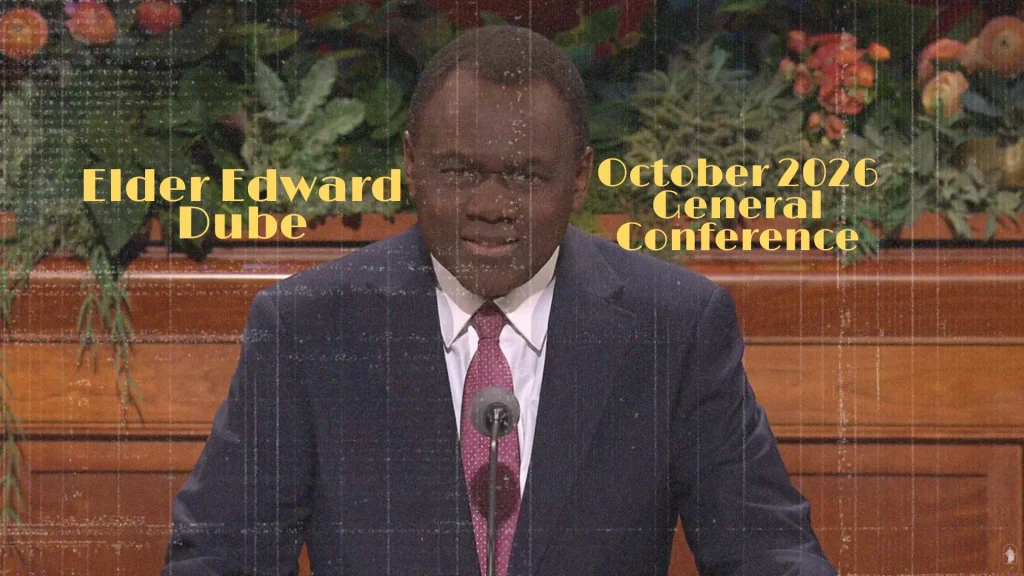
In his General Conference talk, “Come unto Christ,” Elder Edward Dube teaches a simple but profound truth:
“We do not need to perfect ourselves to come to Christ. We come to Christ to be perfected.”
This principle changes how we understand repentance, spiritual growth, and our relationship with the Savior.
Elder Dube begins by sharing an experience from his mission involving President Dallin H. Oaks and a sign that unintentionally communicated exclusion.
He then explains Moroni’s invitation to come unto Christ, deny ourselves of ungodliness, and be perfected in Him.
Through the story of Randall and Laurin Child, Elder Dube illustrates how the Savior’s grace helps us move forward even when we are still struggling.
He also reminds us that the adversary wants us to believe our weaknesses disqualify us from approaching Jesus Christ.
But the Savior’s invitation remains open.
We come with our imperfections, doubts, questions, and burdens, trusting that through His grace, we can change.
Elder Dube concludes by encouraging us to invite others to experience that same hope.
This message provides a meaningful opportunity for Relief Society sisters to discuss the Savior’s grace, the process of becoming perfected in Christ, overcoming feelings of inadequacy, and extending His invitation to others.

Teaching Relief Society or Elders Quorum soon? Spend less time building slides and more time preparing for meaningful discussion. Gather & Teach helps you create lesson helps and beautiful presentations in minutes.
How to Use This Relief Society Lesson Help
This lesson help follows Elder Dube’s talk in chronological order, separating it into 9 discussion sections based on changes in his message.
Each section includes:
- Direct quotes from the talk, emphasizing longer passages when available
- An explanation of the doctrine or principle being taught
- 10 Relief Society discussion questions
- 5 object lesson ideas with teaching applications
- 10 personal sharing prompts to encourage meaningful experiences and testimony sharing
Altogether, this resource contains 90 discussion questions, 45 object lessons, and 90 personal sharing prompts.
You do not need to use every section or question. Instead, prayerfully choose the material that best meets the needs of the sisters in your Relief Society.
Because this talk addresses personal weaknesses, addiction, doubt, and feelings of inadequacy, consider inviting sisters to share only what they feel comfortable sharing. Meaningful gospel discussion does not require anyone to disclose private struggles.
Section 1: The Savior’s Invitation Is for Everyone
Understanding the Principle
Elder Dube begins his talk by recounting an experience from 1987, when he was a young missionary and had been a member of the Church for only two years.
At the mission office, a sign on the gate warned that trespassers would be prosecuted.
President Dallin H. Oaks requested that the sign be removed because he did not want the mission office to communicate an impression of exclusion.
This simple experience taught Elder Dube something important about the character of Jesus Christ.
The Savior invites people to come unto Him.
He does not want people to feel that they are unwelcome or beyond the reach of His love.
This principle can influence how we approach others, particularly those who may feel uncomfortable attending church or participating in gospel discussions.
It also encourages us to consider whether our words, actions, and attitudes reflect the welcoming nature of Jesus Christ.
Direct Quotes from the Talk
“Thirty-nine years ago, President Dallin H. Oaks taught me about the character of Jesus Christ in a way I will never forget.”
“In 1987, I was a young missionary with only two years in the Church. At the mission office, a sign on the gate read, ‘Trespassers will be prosecuted.’”
“President Oaks asked that it be removed to avoid any impression of exclusion. Rather, we invite all to come unto Christ through faith in Him and His Atonement. In that moment, I gained the desire to love others as the Savior does.”
Teaching Focus
The Savior’s invitation to come unto Him is universal.
Our responsibility as disciples is to reflect His love and help others feel welcome to draw closer to Him.
10 Relief Society Discussion Questions
- What stands out to you about President Oaks asking for the sign to be removed?
- Why might a seemingly insignificant sign communicate a powerful message?
- What does this experience teach us about the character of Jesus Christ?
- How can we unintentionally make others feel excluded from gospel participation?
- What does it mean to invite all people to come unto Christ?
- How can we help someone feel welcome even when their circumstances or beliefs differ from ours?
- Why is it important to distinguish between inviting people to Christ and expecting them to change before they feel welcome?
- How can our Relief Society better reflect the Savior’s invitation?
- What can we learn from Elder Dube’s desire to love others as the Savior does?
- If someone unfamiliar with the Church attended our Relief Society, what would we want them to experience?
5 Object Lesson Ideas
1. The Welcome Sign
Materials: Two signs: “Keep Out” and “All Are Welcome.”
Display the signs side by side.
Ask sisters how each message might make someone feel.
Discuss President Oaks’s decision to remove the sign.
Teaching application: Our words and actions can either create barriers or help people feel invited to come unto Christ.
2. The Open Door
Materials: Picture of an open door.
Discuss what an open door symbolizes.
Invite sisters to identify ways they can create a welcoming environment for others.
Teaching application: The Savior’s invitation is open to everyone who desires to approach Him.
3. The Empty Chair
Materials: Empty chair.
Place an empty chair near the front of the room.
Ask sisters to think about someone who might feel hesitant to attend church.
Discuss ways to help that person feel valued and included.
Teaching application: Christlike discipleship includes noticing and welcoming those who feel overlooked.
4. The Invitation Card
Materials: Blank invitation card.
Discuss how an invitation communicates that someone’s presence is desired.
Invite sisters to consider how the Savior’s invitation differs from a demand to become perfect first.
Teaching application: Jesus Christ invites us to approach Him through faith, even while we are still growing.
5. The Gate
Materials: Picture of a gate.
Discuss the difference between a gate that communicates exclusion and one that welcomes visitors.
Teaching application: Our attitudes toward others should reflect the Savior’s desire to bring people closer to Him.
10 Personal Sharing Prompts
- Share a time when someone helped you feel welcome at church.
- Describe an experience when another person’s kindness helped you feel closer to Jesus Christ.
- Tell about a time when you felt hesitant to participate in a gospel setting.
- Share how someone has demonstrated Christlike acceptance toward you.
- Describe an experience when you helped another person feel included.
- Tell about someone whose example taught you to be more welcoming.
- Share what the Savior’s invitation to come unto Him means to you.
- Describe a moment when you recognized that someone needed friendship rather than judgment.
- Tell about an experience when a small act of kindness made a meaningful difference.
- Share one way you hope to help others feel more welcome in Relief Society.
Section 2: Jesus Christ’s Atonement Is Evidence of His Perfect Love
Understanding the Principle
After sharing the experience with President Oaks, Elder Dube turns our attention to Jesus Christ and His Atonement.
He bears testimony of the Savior’s suffering in Gethsemane and on the cross.
He then quotes President Oaks, who taught that Jesus Christ willingly suffered because He loves all of God’s children.
This is an important foundation for the rest of Elder Dube’s message.
The Savior’s invitation to come unto Him is not simply an expression of kindness.
It is supported by His infinite Atonement.
Jesus Christ suffered for our sins and made it possible for us to repent, receive forgiveness, and become sanctified through His grace.
His love is not dependent upon our already having overcome every weakness.
Rather, His Atonement makes spiritual transformation possible.
Direct Quotes from the Talk
“I love Him. I know He lives. He suffered for me in Gethsemane; ‘his sweat was as it were great drops of blood.’ He suffered for me on the cross at Golgotha. I cannot comprehend that suffering, but I testify of His divinity.”
“President Oaks taught, ‘Jesus Christ did all of this because He loves all of the children of God.’”
“His suffering and atoning sacrifice show us how completely devoted He is to all of us. He invites us to come unto Him.”
Teaching Focus
The Atonement of Jesus Christ demonstrates His love and makes it possible for us to repent, change, and return to Heavenly Father.
10 Relief Society Discussion Questions
- What does the Savior’s willingness to suffer for us teach about His love?
- Why is it significant that Jesus Christ’s Atonement was motivated by love?
- How does understanding the Savior’s love change the way we approach repentance?
- Why might it be difficult to fully comprehend the depth of His sacrifice?
- What does Elder Dube’s personal testimony teach us about developing a relationship with Christ?
- How can remembering Gethsemane and Golgotha strengthen our faith during difficult times?
- Why is it important to understand that the Savior’s Atonement makes change possible?
- How can we help others recognize that Jesus Christ loves them personally?
- What is the relationship between the Savior’s love and His invitation to come unto Him?
- How might our discipleship change if we more consistently remembered how devoted Jesus Christ is to us?
5 Object Lesson Ideas
1. The Gift
Materials: Wrapped gift.
Discuss what motivates someone to give a meaningful gift.
Connect the illustration to the Savior’s willing sacrifice.
Teaching application: The Atonement is an expression of Jesus Christ’s divine love.
2. The Picture of Gethsemane
Materials: Picture of Jesus Christ in Gethsemane.
Display the picture and invite sisters to reflect silently on the Savior’s suffering.
Teaching application: Remembering the Atonement can deepen our gratitude and trust in Him.
3. The Heart
Materials: Paper heart.
Write “Jesus Christ” in the center.
Discuss what the Savior’s sacrifice reveals about His love.
Teaching application: Love is central to the Savior’s redeeming mission.
4. The Bridge
Materials: Picture of a bridge.
Discuss how a bridge allows people to cross an obstacle they could not otherwise overcome.
Connect the illustration to our dependence on Jesus Christ for salvation.
Teaching application: The Savior makes possible what we cannot accomplish on our own.
5. The Personal Testimony Card
Materials: Blank cards.
Invite sisters to privately complete the sentence, “I know Jesus Christ loves me because…”
Teaching application: The doctrine of the Atonement can become a deeply personal source of faith.
10 Personal Sharing Prompts
- Share how your testimony of the Atonement has grown.
- Describe a time when you felt the Savior’s love personally.
- Tell about a scripture that has deepened your understanding of His sacrifice.
- Share what Gethsemane means to you.
- Describe an experience when remembering Jesus Christ strengthened you.
- Tell about someone whose testimony of the Savior influenced your faith.
- Share how the Atonement has brought hope into your life.
- Describe a time when you felt grateful for the opportunity to repent.
- Tell about a moment when you recognized your dependence upon the Savior.
- Share what Elder Dube’s testimony teaches you about Jesus Christ.
Section 3: Come, Deny Yourselves, and Be Perfected in Christ
Understanding the Principle
Elder Dube next turns to Moroni’s invitation to come unto Christ and be perfected in Him.
He identifies three important elements of that invitation.
First, we must come.
Coming unto Christ requires action. We must willingly turn toward Him and choose to follow His teachings.
Second, we must deny ourselves of ungodliness.
This means surrendering the things that prevent us from drawing closer to the Savior.
Third, we must be perfected in Him.
This is perhaps the most reassuring part of the invitation.
We are not expected to achieve perfection through our own strength before approaching Jesus Christ.
Instead, we come with willing hearts and allow His grace to help us change.
Elder Dube emphasizes that perfection is a process made possible through the Savior.
Direct Quotes from the Talk
“Consider Moroni’s invitation: ‘Yea, come unto Christ, and be perfected in him, … deny yourselves of all ungodliness.’”
“Three key truths to note:
- Come: It’s an action. We choose to move from our current place to a better place.
- Deny yourselves: Surrender. Let go of the things that are holding us back.
- Be perfected in Him: Come as we are with a willing heart. He will give us a new heart.”
“We do not need to perfect ourselves to come to Christ. We come to Christ to be perfected.”
“President Russell M. Nelson taught: ‘Perfection is pending. It can come in full only after the Resurrection and only through the Lord. It awaits all who love Him and keep His commandments.’”
Doctrinal Connection: Moroni 10:32
Moroni’s invitation teaches that perfection comes through Jesus Christ.
Our responsibility is to exercise faith, repent, and willingly turn toward Him.
The Savior provides the grace and power necessary for spiritual transformation.
This distinction can help relieve the discouragement that sometimes accompanies unrealistic expectations of immediate perfection.
10 Relief Society Discussion Questions
- Why is the word “come” important in Moroni’s invitation?
- What does it mean to actively move toward Jesus Christ?
- How would you explain the difference between surrendering ungodliness and trying to perfect ourselves?
- Why is a willing heart essential to spiritual growth?
- What does Elder Dube’s statement about coming to Christ to be perfected teach us about grace?
- Why might people mistakenly believe they must become better before approaching the Savior?
- How does President Nelson’s teaching about perfection being pending influence our expectations?
- What is the relationship between our personal effort and the Savior’s enabling grace?
- How can we pursue righteousness without becoming discouraged by our imperfections?
- What might change if we focused more on coming unto Christ than on measuring how close we are to perfection?
5 Object Lesson Ideas
1. The First Step
Materials: Paper footprints.
Arrange several footprints leading toward a picture of Jesus Christ.
Discuss how every journey begins with movement.
Teaching application: Coming unto Christ requires willing action, even when we have not yet reached our destination.
2. The Heavy Backpack
Materials: Backpack with books.
Invite a volunteer to hold the backpack.
Discuss what it might represent.
Remove a few books to illustrate surrendering burdens and seeking help.
Teaching application: The Savior invites us to turn to Him with the things that weigh us down.
3. The Unfinished Drawing
Materials: Partially completed drawing.
Display the drawing and discuss how unfinished work can still have value and purpose.
Teaching application: We are works in progress, and perfection comes through Jesus Christ.
4. The Seed
Materials: Seed and mature plant.
Discuss how growth takes time.
Teaching application: Spiritual development is a process, not an immediate achievement.
5. The Heart Exchange
Materials: Two paper hearts.
Write “Willing Heart” on one and “Changed Heart” on the other.
Discuss Elder Dube’s teaching that the Savior can give us a new heart.
Teaching application: We approach Christ willingly and rely upon His grace for transformation.
10 Personal Sharing Prompts
- Share what it means to you to come unto Christ.
- Describe a time when taking a small spiritual step made a difference.
- Tell about an experience when you recognized that you needed the Savior’s help to change.
- Share how your understanding of grace has developed.
- Describe a moment when you felt encouraged by the doctrine of gradual spiritual growth.
- Tell about a time when you had to surrender something to draw closer to Christ.
- Share how President Nelson’s teaching about perfection influences your perspective.
- Describe an experience when you felt the Savior helping you become better.
- Tell about a scripture that reminds you to trust in Christ’s grace.
- Share what Elder Dube’s statement about perfection means to you personally.
Section 4: Inspired Ministering Helps Others Take Their Next Step toward Christ
Understanding the Principle
Elder Dube then shares an experience involving a ministering visit in North Carolina.
While traveling to the airport, he was invited to visit a man named Randall Child, who was struggling to stop smoking.
Elder Dube initially felt uncertain about what he should say.
He had never smoked and did not feel qualified to address Randall’s challenge from personal experience.
Instead of relying solely on his own knowledge, he prayed for Heavenly Father’s guidance.
During the visit, Elder Dube asked Randall about his love for his wife.
He then invited Randall and Laurin to choose a date to be sealed in the temple.
This experience illustrates the importance of seeking spiritual guidance when ministering to others.
Elder Dube did not begin by criticizing Randall’s struggle.
Instead, he focused on something deeply meaningful to him: his love for his wife and their eternal relationship.
The invitation gave Randall and Laurin a hopeful goal toward which they could move.
Direct Quotes from the Talk
“Last June on the way to the airport, President Brian Pace from the Wilmington North Carolina Stake asked, ‘Can we make one more ministering visit?’”
“‘I have a flight to catch,’ I thought. But he was already talking. ‘Brother Randall Child is a good man. He is trying very hard to stop smoking.’”
“There I am praying and panicking at the same time—I have never smoked a day in my life. What do I say? ‘Heavenly Father,’ I pleaded, ‘please put words in my mouth.’”
“At the Childs’ home, following greetings and introductions, I empathized with his efforts to quit smoking. Then I asked, ‘Brother Child, how much do you love your wife, Laurin?’”
“His expression changed. ‘With all my heart.’”
“‘Would you give up anything for her?’ I asked.”
“My heart pounding, I extended the invitation: ‘Will you and Laurin go find a quiet room and choose a date to be sealed in the house of the Lord?’”
“A few minutes later they came back with an answer: ‘August 5.’”
“We left after kneeling in prayer. And just two months later they were sealed in the temple.”
10 Relief Society Discussion Questions
- What stands out to you about Elder Dube’s ministering visit?
- Why was Elder Dube’s prayer for guidance important?
- What can we learn from his willingness to minister despite feeling unprepared?
- Why might focusing on someone’s hopes be more effective than focusing only on their struggles?
- How did Elder Dube’s questions help Randall consider what mattered most to him?
- What does this experience teach about extending inspired invitations?
- How can we minister compassionately to someone whose challenges we have never personally experienced?
- Why is it important to seek the Holy Ghost rather than assume we know what another person needs?
- How can we encourage someone without placing unrealistic pressure on them?
- What can this experience teach us about helping others take their next step toward Christ?
5 Object Lesson Ideas
1. The Compass
Materials: Compass.
Discuss how a compass provides direction even when the traveler is unfamiliar with the terrain.
Teaching application: The Holy Ghost can guide us as we minister to others.
2. The Temple Picture
Materials: Picture of a temple.
Discuss how eternal goals can provide motivation during difficult spiritual challenges.
Teaching application: Helping others remember their eternal hopes can strengthen their desire to follow Christ.
3. The Question Card
Materials: Card with the question “What matters most to you?”
Discuss how thoughtful questions can help us understand another person’s heart.
Teaching application: Christlike ministering involves listening and understanding.
4. The Prayer Card
Materials: Card reading “Please put words in my mouth.”
Display Elder Dube’s prayer.
Discuss how prayer can help us serve when we feel inadequate.
Teaching application: We can seek divine guidance when we do not know what to say.
5. The Stepping Stones
Materials: Paper circles.
Arrange the circles like stepping stones.
Discuss how meaningful progress often happens through one decision at a time.
Teaching application: Inspired invitations can help others identify their next step toward Jesus Christ.
10 Personal Sharing Prompts
- Share a time when you felt prompted to minister to someone.
- Describe an experience when you prayed for guidance before a difficult conversation.
- Tell about a moment when someone helped you remember what mattered most.
- Share how an inspired invitation influenced your life.
- Describe a time when you served despite feeling unprepared.
- Tell about someone who encouraged you without judging you.
- Share how the Holy Ghost has guided your efforts to help another person.
- Describe an experience when listening was more helpful than offering advice.
- Tell about a time when an eternal goal helped you overcome discouragement.
- Share what Elder Dube’s ministering experience teaches you about Christlike love.
Section 5: The Lord Asks Us to Do Our Best, Not to Perfect Ourselves
Understanding the Principle
After sharing Randall and Laurin’s temple sealing, Elder Dube recounts something Laurin later told him.
Laurin had spent an entire night praying because she was deeply concerned about her husband’s suffering and his desire to become perfect.
During those prayers, she received a clear spiritual impression.
Randall did not need to be perfect.
He needed to do the very best he could.
This experience teaches an important distinction between sincere effort and unrealistic expectations.
Heavenly Father asks us to exercise faith, repent, keep His commandments, and continue striving.
But He does not require us to independently achieve perfection before we can approach Jesus Christ.
The Savior’s grace makes our progress possible.
Randall also shared that hearing Laurin pray for him strengthened his faith.
Her love and prayers became an answer to his own prayers.
This illustrates how Heavenly Father can use the compassion of others to encourage us during difficult periods of spiritual growth.
Direct Quotes from the Talk
“Sister Child shared this with me later: ‘I stayed awake all night because I couldn’t bear watching Randall suffer—wanting to be perfect in every way possible. So all night I cried and pleaded with the Lord to help him. In the early hours of the morning, the answer came very clear: “Randall doesn’t need to be perfect. He needs to do the very best he can.”’”
“Randall added: ‘I had trust in the Lord. But when I heard Laurin praying for me—saying all I needed to do was the best I could—I knew then that she was an answer to my prayers.’”
10 Relief Society Discussion Questions
- What stands out to you about Laurin’s experience with prayer?
- Why might we sometimes expect perfection from ourselves?
- What is the difference between doing our best and trying to be perfect?
- How can unrealistic expectations affect our relationship with Jesus Christ?
- Why is it important to recognize the Savior’s role in our spiritual progress?
- What does Randall’s response teach about the power of praying for loved ones?
- How can we encourage others who are struggling without making them feel inadequate?
- Why might hearing someone pray for us bring comfort?
- How can we distinguish sincere striving from perfectionism?
- What would change in your life if you more consistently remembered that the Lord invites you to do your best and rely upon His grace?
5 Object Lesson Ideas
1. The Unfinished Puzzle
Materials: Partially completed puzzle.
Display the puzzle.
Discuss how a puzzle can be progressing toward completion even when pieces remain missing.
Teaching application: Spiritual growth can be meaningful even when we are not yet perfected.
2. The Measuring Tape
Materials: Measuring tape.
Discuss how people sometimes compare their progress with others.
Teaching application: Our spiritual growth should not be reduced to comparison or unrealistic measurements.
3. The Encouragement Note
Materials: Blank note card.
Invite sisters to write a compassionate message they would offer someone who feels inadequate.
Teaching application: Encouragement can help others recognize the Savior’s love.
4. The Plant
Materials: Growing plant.
Discuss how a plant does not reach maturity immediately.
Teaching application: Consistent nourishment and patience are important parts of growth.
5. The Two Statements
Materials: Cards reading “I must be perfect first” and “I can come unto Christ now.”
Display both statements.
Discuss which reflects Elder Dube’s message.
Teaching application: We approach the Savior while we are still learning and growing.
10 Personal Sharing Prompts
- Share how your understanding of perfection has changed.
- Describe a time when someone reminded you to be patient with yourself.
- Tell about an experience when prayer brought reassurance during a struggle.
- Share how the Savior has helped you continue trying after disappointment.
- Describe a moment when someone else’s prayers strengthened you.
- Tell about a time when you recognized the difference between sincere effort and perfectionism.
- Share what doing your best means to you.
- Describe an experience when you felt the Lord’s compassion despite your imperfections.
- Tell about someone who has supported you during a difficult period of growth.
- Share how Laurin’s experience influences your understanding of grace.
Section 6: We Come to Christ with a Willing Heart, and His Grace Helps Us Change
Understanding the Principle
Elder Dube next explains the spiritual significance of Randall’s experience.
Randall did not overcome every weakness before approaching Jesus Christ.
He came with prayer, trust, and a willing heart.
Through the Savior’s grace, he received help in letting go of what was holding him back.
This is one of the central doctrines of Elder Dube’s talk.
Repentance and spiritual growth are not independent achievements.
We must choose to turn toward the Savior and sincerely strive to follow Him, but we depend upon His grace for the power to change.
This principle can be especially meaningful for sisters who feel discouraged by repeated struggles.
Coming unto Christ is not a reward reserved for those who have already overcome their weaknesses.
It is the path through which we receive His help.
Direct Quotes from the Talk
“Brothers and sisters, let us consider Laurin’s answer to her prayer. The Lord said, ‘He needs to do the very best he can.’”
“Randall didn’t perfect himself to come to Christ. He came to Christ—with prayer, with trust, and with a willing heart.”
“The Savior, through His grace, helped him to let go of what was holding him back.”
Teaching Focus
The Savior’s grace enables spiritual growth.
We come unto Him with faith and willingness, trusting that He can help us overcome weaknesses we cannot conquer alone.
10 Relief Society Discussion Questions
- What does Randall’s experience teach about the order of coming unto Christ and becoming perfected?
- Why is a willing heart so important to spiritual growth?
- How does prayer help us approach the Savior during personal struggles?
- What does it mean to trust Jesus Christ with our weaknesses?
- Why is the Savior’s grace essential to lasting change?
- How can we recognize when we are trying to overcome something entirely through our own strength?
- What is the relationship between repentance and grace?
- How can we remain hopeful when spiritual progress takes longer than expected?
- Why is it important to remember that asking for help is an act of faith?
- How might this doctrine influence the way we support others who are struggling?
5 Object Lesson Ideas
1. The Heavy Box
Materials: Moderately weighted box.
Ask a volunteer to hold the box.
Discuss how some burdens become difficult to carry alone.
Teaching application: We can turn to the Savior for strength rather than relying entirely upon ourselves.
2. The Open Hands
Materials: Small object.
Hold the object tightly in a closed fist.
Then open your hand.
Discuss what surrendering something to the Lord might mean.
Teaching application: Spiritual growth involves willingness to release what holds us back.
3. The Ladder
Materials: Picture of a ladder.
Discuss how climbing requires effort but also depends upon a secure support.
Teaching application: Our efforts matter, but we depend upon Jesus Christ for salvation and spiritual transformation.
4. The Growing Plant
Materials: Plant and watering can.
Discuss the relationship between a plant’s growth and the nourishment it receives.
Teaching application: We can create conditions for spiritual growth while relying upon the Savior’s enabling power.
5. The Willing Heart
Materials: Paper heart.
Write “Prayer,” “Trust,” and “Willingness” on the heart.
Discuss Randall’s example.
Teaching application: We can come unto Christ sincerely even while we are still struggling.
10 Personal Sharing Prompts
- Share a time when you felt the Savior helping you change.
- Describe an experience when prayer strengthened your willingness to move forward.
- Tell about a moment when you recognized your need for grace.
- Share how trusting Jesus Christ has influenced your spiritual growth.
- Describe a time when you felt encouraged to keep trying.
- Tell about someone whose example helped you understand grace.
- Share what it means to you to approach the Savior with a willing heart.
- Describe an experience when you felt spiritual progress happening gradually.
- Tell about a scripture that has strengthened your trust in Christ.
- Share how Randall’s experience influences your understanding of repentance.
Section 7: The Adversary Wants Us to Believe We Are Unworthy to Come unto Christ
Understanding the Principle
Elder Dube returns to the sign from the beginning of his talk.
He explains that the adversary wants to place a similar message on the gates of our hearts.
The adversary uses our weaknesses, doubts, guilt, and personal challenges to convince us that we are unworthy to approach Jesus Christ.
This deception can be especially damaging because it may discourage us from seeking the very help we need.
Elder Dube identifies several experiences that can become obstacles in our minds, including addiction, doubt, pride, pain, grief, guilt, and materialism.
These challenges are not all the same. Some involve choices requiring repentance; others involve suffering that is not the result of personal wrongdoing.
But none of them means that we must stay away from the Savior.
The invitation to come unto Christ remains open.
Direct Quotes from the Talk
“And that is why President Oaks had the sign on the gate taken down: ‘Trespassers will be prosecuted.’”
“The adversary wants to hang that sign on the gate of our heart.”
“Addiction, doubt, pride, pain, grief, guilt, materialism—or whatever is holding us back—he tells us this makes us unworthy to come unto Christ.”
“But Moroni taught it. Laurin heard it. Randall lived it. You too can live it.”
“If you will ‘deny not his power, then are ye sanctified in Christ by the grace of God, through the shedding of the blood of Christ.’”
Doctrinal Connection: Moroni 10:33
Moroni teaches that sanctification comes through the grace of God and the blood of Jesus Christ.
We do not become holy through personal effort alone.
We need the Savior’s redeeming and sanctifying power.
This means that feelings of inadequacy should not prevent us from turning toward Him.
The Savior invites us to repent, trust Him, and receive His help.
10 Relief Society Discussion Questions
- Why do you think Elder Dube returns to the image of the sign?
- What does it mean for the adversary to place a “Trespassers will be prosecuted” sign on our hearts?
- Why might feelings of shame discourage someone from approaching Jesus Christ?
- How can we distinguish the Spirit’s invitation to repent from discouragement that pushes us away from the Savior?
- Why is it important to remember that personal struggles do not make us beyond Christ’s reach?
- How can guilt sometimes motivate repentance, while shame can lead to hopelessness?
- What does Moroni 10:33 teach about the Savior’s power to sanctify us?
- How can we help someone who believes they are not worthy of the Savior’s love?
- Why is it dangerous to believe that we must overcome every weakness before seeking divine help?
- How can we replace discouraging thoughts with truths about Jesus Christ and His grace?
5 Object Lesson Ideas
1. The Gate Sign Revisited
Materials: Sign reading “Trespassers will be prosecuted.”
Display the sign.
Discuss how the adversary wants us to believe we should stay away from Christ.
Replace it with a sign reading “Come unto Christ.”
Teaching application: The Savior invites us to approach Him for help and healing.
2. The Closed Door
Materials: Picture of a closed door.
Discuss how feelings of inadequacy can make us hesitate to seek spiritual help.
Teaching application: We should not allow discouragement to keep us from turning toward Jesus Christ.
3. The Burden Cards
Materials: Cards labeled “Doubt,” “Grief,” “Guilt,” “Pride,” and “Fear.”
Discuss how different challenges can affect our willingness to approach the Savior.
Teaching application: No struggle places us beyond the reach of Christ’s invitation.
4. The Eraser
Materials: Pencil and eraser.
Write a discouraging statement such as “I cannot change.”
Erase it and replace it with “Through Christ, change is possible.”
Teaching application: Gospel truth can help challenge false beliefs about our spiritual potential.
5. The Scripture Card
Materials: Moroni 10:33.
Display the scripture and identify the source of sanctification.
Teaching application: We are sanctified through Jesus Christ and His grace.
10 Personal Sharing Prompts
- Share a gospel truth that helps you overcome discouragement.
- Describe a time when remembering the Savior’s love strengthened you.
- Tell about an experience when you learned to trust Christ despite feeling inadequate.
- Share a scripture that reminds you that spiritual change is possible.
- Describe a moment when someone helped you replace discouragement with hope.
- Tell about a time when repentance brought you peace, without needing to share private details.
- Share how your understanding of the Savior’s grace has grown.
- Describe an experience when you felt encouraged to approach Christ rather than withdraw.
- Tell about someone whose compassion helped you feel the Savior’s love.
- Share what the image of removing the sign from your heart means to you.
Section 8: Come unto Christ Even When Your Faith Feels Uncertain
Understanding the Principle
Near the end of his talk, Elder Dube shares a message he received from a former missionary.
The missionary admitted that his testimony was no longer as certain as it had once been.
Elder Dube responds with a compassionate invitation.
He encourages those who feel similar uncertainty to come unto Christ and embrace His promise of joy.
This moment expands the application of the talk beyond visible struggles or habits.
Sometimes what holds us back is spiritual uncertainty.
We may experience questions, disappointment, confusion, or changes in how we understand our faith.
Elder Dube does not suggest that someone must resolve every question before approaching Jesus Christ.
Instead, he invites them to come to Him.
Faith can begin with a willingness to turn toward the Savior, even when we do not have every answer.
Direct Quotes from the Talk
“One of our former missionaries wrote me recently and said, ‘As for my faith, my testimony is not as certain as it once was.’”
“To him, and to all who feel that same ache, I invite you, please come unto Christ and embrace His promise, ‘that [His] joy might remain in you, and that your joy might be full.’”
Teaching Focus
Spiritual uncertainty does not disqualify us from seeking Jesus Christ.
His invitation remains open to those who are questioning, struggling, or rebuilding their faith.
10 Relief Society Discussion Questions
- What stands out to you about Elder Dube’s response to the former missionary?
- Why is it important to respond compassionately when someone expresses uncertainty about their faith?
- How can someone come unto Christ while still having unanswered questions?
- What does the Savior’s promise of joy teach us about His desires for us?
- Why might people hesitate to admit that their testimonies feel uncertain?
- How can Relief Society become a place where sincere questions are treated with respect?
- What is the difference between having questions and abandoning faith?
- How can we strengthen our relationship with Jesus Christ during seasons of spiritual uncertainty?
- What can we learn from Elder Dube’s choice to offer an invitation rather than a rebuke?
- How can we support loved ones who are experiencing changes in their faith?
5 Object Lesson Ideas
1. The Dim Light
Materials: Battery-operated candle or flashlight.
Dim the light if possible.
Discuss how even a small amount of light can help someone find direction.
Teaching application: Faith does not have to feel overwhelming or complete for us to turn toward Jesus Christ.
2. The Unfinished Question
Materials: Card with a question mark.
Discuss how some questions take time to understand.
Teaching application: Unanswered questions do not prevent us from continuing to seek the Savior.
3. The Seed of Faith
Materials: Seed.
Discuss how faith can begin small and grow through nourishment.
Teaching application: Spiritual growth often begins with willingness.
4. The Invitation Card
Materials: Card reading “Come unto Christ.”
Discuss how Elder Dube’s invitation applies to people with strong testimonies and those experiencing uncertainty.
Teaching application: The Savior’s invitation is not limited to people who feel spiritually confident.
5. The Open Book
Materials: Scriptures.
Open the scriptures to a passage about Jesus Christ.
Discuss how studying His life and teachings can help us continue seeking Him.
Teaching application: We can nourish faith by intentionally turning toward the Savior.
10 Personal Sharing Prompts
- Share a scripture that has strengthened your faith during uncertainty.
- Describe a time when you felt the Savior’s love despite unanswered questions.
- Tell about someone who helped you feel safe asking sincere questions.
- Share how your testimony has developed over time.
- Describe an experience when choosing to continue seeking Christ brought peace.
- Tell about a time when a small spiritual experience strengthened your faith.
- Share how you have learned to be patient with spiritual growth.
- Describe an experience when someone’s compassion helped you feel supported.
- Tell about a gospel truth that has remained meaningful during difficult times.
- Share what the Savior’s promise of joy means to you.
Section 9: Invite Others to Come unto Christ and Discover Joy in His Service
Understanding the Principle
Elder Dube concludes by extending a personal invitation.
He asks members to find one person and invite that individual to come unto Christ.
This invitation may involve encouraging someone to exercise faith in Jesus Christ, follow His teachings, or meet with the missionaries.
Elder Dube then connects helping others come unto Christ with the Savior’s teaching about losing our lives in His service.
This principle reminds us that discipleship is not only about our own spiritual growth.
As we experience the Savior’s love and grace, we can help others discover those same blessings.
Our willingness to invite others should be motivated by genuine love, respect, and concern for their agency.
We do not need to pressure people or force spiritual conversations.
Instead, we can seek the Holy Ghost’s guidance and extend sincere invitations when appropriate.
Direct Quotes from the Talk
“My humble invitation to us all: Will you find one person and invite him or her to come unto Christ by exercising faith to follow His teachings, or invite a friend to meet with the missionaries?”
“As you lose yourself in helping him or her come unto Christ, you will find solutions to your current problems.”
“Our Savior has promised, ‘For whosoever will save his life shall lose it: and whosoever will lose his life for my sake shall find it.’”
“I testify of His divinity in the name of Jesus Christ, amen.”
Doctrinal Connection: Matthew 16:25
The Savior taught that those who lose their lives for His sake will find them.
This principle encourages us to turn outward in love and service.
As we seek to help others come unto Christ, we can experience greater purpose, spiritual perspective, and blessings.
This does not mean every personal problem will immediately disappear.
Rather, serving the Savior can help us find strength, direction, and greater understanding as we face life’s challenges.
10 Relief Society Discussion Questions
- Why does Elder Dube conclude with an invitation to help someone else come unto Christ?
- How does inviting others relate to the central message of his talk?
- What does it mean to lose ourselves in the service of Jesus Christ?
- How can helping others strengthen our own relationship with the Savior?
- Why is genuine love essential when extending gospel invitations?
- What are some simple ways to invite someone to draw closer to Jesus Christ?
- How can we respect another person’s agency while sharing our faith?
- What role does the Holy Ghost play in helping us know whom to invite?
- How can service bring greater perspective during our own challenges?
- Who might benefit from a simple invitation or expression of Christlike friendship?
5 Object Lesson Ideas
1. The Invitation Card
Materials: Blank card.
Invite sisters to consider someone they could encourage or invite.
They may privately write the person’s name.
Teaching application: Sharing the gospel can begin with a sincere, personal invitation.
2. The Candle
Materials: Battery-operated candle.
Discuss how light can be shared without diminishing its source.
Teaching application: Sharing faith can bless others while strengthening our own testimony.
3. The Helping Hands
Materials: Paper hand cutouts.
Invite sisters to write ways they can help someone draw closer to Jesus Christ.
Teaching application: Gospel invitations can take many forms.
4. The Two Paths
Materials: Two paper paths.
Label one “Focused Only on Myself” and the other “Turning Outward in Love.”
Discuss how serving others can influence our spiritual perspective.
Teaching application: Christlike service can help us find greater purpose.
5. The One Person Card
Materials: Small card with the words “One Person.”
Invite sisters to consider Elder Dube’s concluding invitation.
Teaching application: Meaningful missionary efforts often begin with one person and one sincere act of love.
10 Personal Sharing Prompts
- Share a time when someone invited you to participate in something that strengthened your faith.
- Describe an experience when helping another person brought you closer to Jesus Christ.
- Tell about someone whose gospel invitation influenced your life.
- Share how your understanding of missionary work has developed.
- Describe a time when you felt prompted to reach out to someone.
- Tell about an experience when serving others gave you greater perspective.
- Share what it means to you to lose your life in the Savior’s service.
- Describe a moment when sharing your testimony strengthened it.
- Tell about someone whose friendship helped you feel closer to Christ.
- Share one simple way you hope to invite someone to experience the Savior’s love.
Conclusion: Come unto Christ as You Are, and Let Him Help You Become
Elder Edward Dube’s General Conference message, “Come unto Christ,” offers a reassuring reminder about the Savior’s invitation.
We do not have to achieve perfection before turning toward Jesus Christ.
We come to Him because we need His help.
Through the story of President Oaks removing a sign from the mission office gate, Elder Dube teaches that the Savior does not desire to exclude those who are struggling.
He invites everyone to approach Him through faith and His Atonement.
Through Moroni’s teachings, we learn that coming unto Christ requires action, surrender, and willingness to be changed.
And through Randall and Laurin Child’s experience, we see how prayer, faith, and the Savior’s grace can help us move forward even when we feel inadequate.
One of the most meaningful lessons from this talk is that spiritual growth does not require us to pretend we have no weaknesses.
Instead, we acknowledge our need for Jesus Christ and willingly turn toward Him.
Elder Dube’s central message is worth remembering:
“We do not need to perfect ourselves to come to Christ. We come to Christ to be perfected.”
What This Means for Relief Society Sisters
This message can offer hope to sisters in many different circumstances.
Some may feel discouraged because they struggle with the same weakness repeatedly.
Others may be carrying guilt, grief, or feelings of inadequacy.
Some may be navigating questions about their faith or supporting loved ones who are struggling spiritually.
Others may simply feel exhausted by the pressure to meet every expectation placed upon them.
Elder Dube reminds us that the Savior’s invitation is not reserved for those who feel spiritually successful.
Jesus Christ invites us to approach Him with willing hearts.
His grace makes repentance, healing, and transformation possible.
We do not need to hide our struggles from Him.
We can bring them to Him.
Using This Lesson Help in Relief Society
This lesson provides opportunities for sisters to discuss grace, repentance, perfectionism, ministering, faith, and missionary work.
Teachers might begin with the story of the sign and ask sisters what messages they sometimes place between themselves and the Savior.
They could then focus on Moroni’s invitation and Elder Dube’s explanation of coming, denying ourselves of ungodliness, and being perfected in Christ.
Randall and Laurin’s story offers a meaningful opportunity to discuss the difference between sincere effort and unrealistic expectations of perfection.
The final sections encourage sisters to consider how they can extend the Savior’s invitation to others.
Throughout the lesson, emphasize that spiritual growth is possible through Jesus Christ and that His love is not something we must earn by becoming perfect first.
A Final Invitation for Your Relief Society Lesson
Consider concluding the lesson by inviting sisters to reflect privately on these three questions:
1. What is something that has made me hesitate to come unto Jesus Christ?
2. How can I more fully trust His grace rather than relying entirely upon my own strength?
3. Who is one person I can help feel the Savior’s invitation to come unto Him?
Allow a few moments for quiet reflection.
You might invite sisters to write down a personal impression or a small action they feel prompted to take.
Then conclude by returning to Elder Dube’s central teaching:
“We do not need to perfect ourselves to come to Christ. We come to Christ to be perfected.”
This is the hope of the gospel of Jesus Christ.
We are not expected to save or perfect ourselves.
We are invited to exercise faith, repent, make and keep sacred covenants, and rely upon the redeeming and sanctifying power of Jesus Christ.
As we come unto Him with willing hearts, His grace can help us change.
And as we experience His love, we can extend that same invitation to others.
We do not come unto Christ because we have already become everything we should be. We come unto Christ because, through Him, we can become everything Heavenly Father intends us to become.


Leave a Reply