Introduction: Finding True Happiness Through Integrity and Virtue
What does it really mean to live a happy life?
We live in a world where happiness is often associated with success, recognition, comfort, financial stability, or the freedom to do whatever we want. Yet even when we achieve things we have worked toward, we may discover that the happiness they provide is temporary.
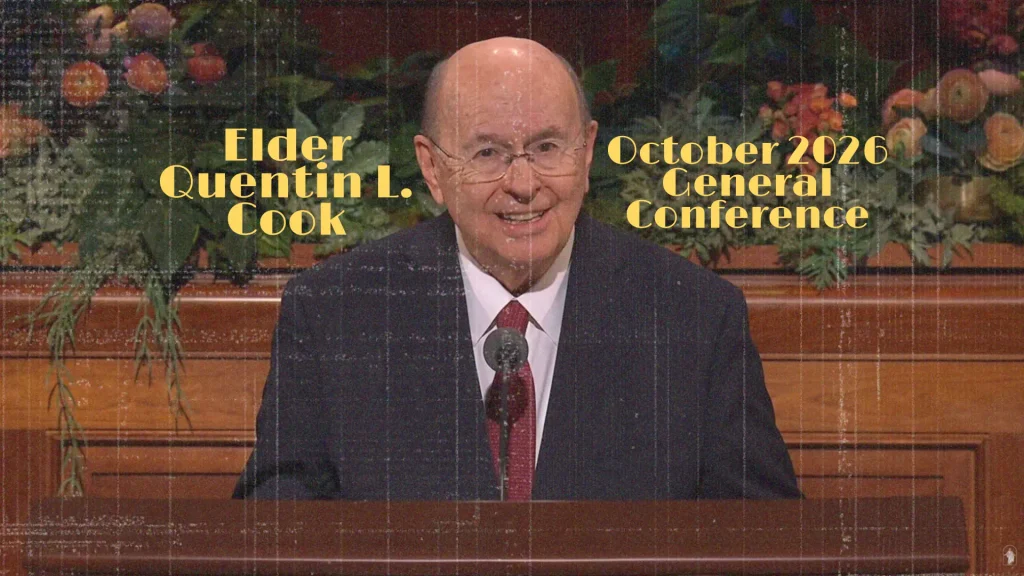
In his General Conference talk, “Integrity and Virtue Lead to Happiness,” Elder Quentin L. Cook teaches that Heavenly Father’s plan offers something deeper than temporary satisfaction.
He explains that integrity, virtue, and happiness are inseparably connected.
Rather than viewing commandments as restrictions, Elder Cook encourages us to recognize how righteous living helps us experience the joy Heavenly Father desires for His children.
He begins by reminding us of the importance of remaining faithful throughout our lives and following the covenant path.
He then shares a meaningful experience from President David O. McKay’s mission in Scotland, where a simple inscription inspired him to faithfully fulfill every responsibility.
From there, Elder Cook explores the meaning of integrity, the relationship between virtue and happiness, the importance of righteous thoughts, and the influence of our words and behavior.
He also teaches about becoming peacemakers, making time for spiritual renewal, and recognizing the companionship of the Holy Ghost as one of the greatest blessings of righteous living.
Finally, Elder Cook reminds us that integrity does not require pretending we are perfect. Instead, it includes acknowledging our weaknesses and continually repenting through Jesus Christ.
This message provides a meaningful opportunity for Relief Society sisters to reflect on the connection between their everyday choices and their spiritual happiness.

Teaching Relief Society or Elders Quorum soon? Spend less time building slides and more time preparing for meaningful discussion. Gather & Teach helps you create lesson helps and beautiful presentations in minutes.
How to Use This Relief Society Lesson Help
This lesson help follows Elder Cook’s talk in chronological order, separating it into 11 discussion sections based on the principles and changes in subject throughout his message.
Each section includes longer direct quotations wherever the talk provides them, a doctrinal explanation, 10 Relief Society discussion questions, 5 object lessons, and 10 personal sharing prompts.
Altogether, this resource provides 110 discussion questions, 55 object lessons, and 110 personal sharing prompts.
Teachers do not need to use every question or activity. Instead, prayerfully select the sections that will best meet the needs of the sisters in your Relief Society.
The purpose of these resources is not simply to fill lesson time, but to encourage meaningful conversations, personal reflection, testimony sharing, and greater faith in Jesus Christ.
Section 1: Lifelong Discipleship Requires Integrity and Virtue
Understanding the Principle
Elder Cook begins by establishing the central message of his talk: disciples of Jesus Christ are meant to experience joy as they live with integrity and virtue.
He describes the covenant path as clearly marked, emphasizing that Heavenly Father has provided the principles and covenants necessary for us to return to Him.
This is an important reminder that discipleship is not intended to be a confusing journey without direction.
Through the teachings of Jesus Christ, living prophets, scriptures, and sacred covenants, we have been given guidance to help us make righteous decisions.
However, Elder Cook also acknowledges that living a virtuous, Christlike life has become increasingly challenging.
His message encourages us to recognize that integrity and virtue are not simply qualities we develop once. They require consistent effort throughout our lives.
Direct Quotes from the Talk
“Lifelong disciples of Jesus Christ best reflect the Savior’s teaching and direction when they joyfully live lives of integrity and virtue. The covenant path that will return us to our beloved Father in Heaven and His Son, Jesus Christ, is not obscure; it is well marked. We have been repeatedly taught the principles and covenants essential for this sacred path.
The virtuous, Christlike life necessary to sustain us and propel us along the covenant path has never been more important or challenging. If we are to be spiritually prepared to have the integrity and virtue required of disciples of Jesus Christ, we can stay on the path and continue to follow wise, righteous principles that lead to happiness.”
Teaching Focus
Integrity and virtue are essential characteristics of lifelong discipleship. Heavenly Father has provided a clearly marked covenant path to guide us toward eternal happiness.
10 Relief Society Discussion Questions
- What does Elder Cook mean when he describes lifelong disciples as those who joyfully live with integrity and virtue?
- Why do you think he emphasizes joy rather than simply obedience?
- What does it mean that the covenant path is “not obscure” but “well marked”?
- What are some ways Heavenly Father has clearly marked the covenant path for us?
- Why might living with integrity and virtue feel increasingly challenging today?
- How does understanding the purpose of the covenant path influence our daily decisions?
- What is the difference between occasionally making righteous choices and becoming a lifelong disciple?
- How can sacred covenants provide direction when we face difficult decisions?
- What helps you remain faithful when following Jesus Christ requires sacrifice?
- How can we help one another find greater joy in living the gospel?
5 Object Lesson Ideas
1. The Clearly Marked Path
Materials: Picture of a hiking trail with trail markers.
Show the picture and discuss how markers help hikers stay on the correct path.
Ask sisters to identify spiritual markers that guide disciples of Jesus Christ.
Teaching application: Heavenly Father provides commandments, covenants, scriptures, and prophetic counsel to help us remain on the covenant path.
2. The Compass
Materials: Compass.
Explain how a compass provides direction even when the surrounding environment changes.
Discuss how gospel principles provide spiritual direction in a changing world.
Teaching application: Integrity and virtue help us remain oriented toward Jesus Christ.
3. The Road Signs
Materials: Printed road signs.
Display signs such as “Stop,” “Yield,” and “One Way.”
Ask sisters how road signs protect travelers.
Teaching application: God’s commandments provide direction and protection as we progress toward eternal life.
4. The Walking Shoes
Materials: Pair of walking shoes.
Discuss how shoes are useful only when someone actually walks in them.
Teaching application: Knowing gospel principles is important, but lifelong discipleship requires acting upon them.
5. The Rope Along the Trail
Materials: Rope.
Lay the rope across the floor to represent a marked pathway.
Discuss what might happen if someone ignores the path.
Teaching application: Covenants help us remain connected to Heavenly Father and Jesus Christ.
10 Personal Sharing Prompts
- Share a time when following the covenant path brought you peace.
- Describe an experience when a commandment helped guide an important decision.
- Tell about someone whose lifelong discipleship has influenced you.
- Share how your understanding of the covenant path has developed.
- Describe a time when remaining faithful required courage.
- Tell about an experience when keeping a covenant strengthened your relationship with Heavenly Father.
- Share how you have found joy in living the gospel.
- Describe a moment when prophetic counsel helped you recognize the right direction.
- Tell about a spiritual habit that helps you remain on the covenant path.
- Share what lifelong discipleship means to you personally.
Section 2: “Whate’er Thou Art, Act Well Thy Part”
Understanding the Principle
Elder Cook next shares a meaningful experience from President David O. McKay’s mission in Scotland.
As a young missionary, President McKay encountered an inscription carved into the stone above a doorway.
The message was simple:
“Whate’er thou art, act well thy part.”
These words influenced President McKay throughout his life.
He determined that whatever responsibility he received, he would do his very best.
This principle teaches that integrity is not reserved for important or highly visible responsibilities.
It can be demonstrated in everyday choices and commitments.
Whether we are fulfilling family responsibilities, serving in Church callings, working, studying, or helping others, we can choose to act faithfully.
Elder Cook also explains that some activities may not be inherently wrong but can still distract us from spiritual priorities.
This invites us to consider whether our choices are helping us fulfill the responsibilities that matter most.
Direct Quotes from the Talk
“Mary and I recently had the privilege of meeting with the missionaries in the Scotland/Ireland Mission. On the grounds of one building there is a replica of a message that significantly influenced President David O. McKay when he was a young missionary in Scotland.
As a new missionary, Elder McKay passed a building where the stone above the doorway bore this carved inscription: ‘WHAT-E’ER THOU ART ACT WELL THY PART.’
This message, ‘Whate’er thou art, act well thy part,’ was so important and had such an impact on Elder McKay that he used it for inspiration as a missionary and for the rest of his life. He determined that whatever responsibility he had, he would do his very best.”
“When I was young, President McKay was the prophet, and his teachings had a lasting influence on me. I especially loved this message and have often referred to it.
It was clear that one of President McKay’s purposes in mentioning this incident was to teach that some conduct which is not inherently evil can keep us from engaging in spiritual matters that will bless us now and throughout eternity.”
Teaching Focus
Faithful discipleship involves doing our best in the responsibilities Heavenly Father has entrusted to us while keeping eternal priorities in perspective.
10 Relief Society Discussion Questions
- What does “Whate’er thou art, act well thy part” mean to you?
- Why do you think this inscription had such a lasting influence on President McKay?
- How can this principle apply to responsibilities that receive little recognition?
- What is the difference between doing our best and expecting perfection from ourselves?
- Why is it important to recognize the spiritual value of ordinary responsibilities?
- How can we identify activities that are not wrong but may be distracting us from better things?
- What does this principle teach about personal accountability?
- How can we faithfully fulfill our responsibilities without comparing ourselves to others?
- How might this teaching influence the way we approach Church callings?
- What responsibility in your life could benefit from renewed spiritual focus?
5 Object Lesson Ideas
1. The Missing Puzzle Piece
Materials: Puzzle with one piece missing.
Discuss how each piece contributes to the completed picture.
Teaching application: Every responsibility can have value in Heavenly Father’s plan.
2. The Job Description
Materials: Several cards listing different responsibilities.
Include examples such as ministering sister, employee, caregiver, student, and friend.
Discuss how integrity can be demonstrated in each role.
Teaching application: Christlike character should influence every area of our lives.
3. The Calendar
Materials: Calendar.
Discuss how schedules reveal our priorities.
Teaching application: We can prayerfully evaluate whether our time reflects our most important commitments.
4. The Stone Inscription
Materials: Printed image of the inscription.
Display the phrase and invite sisters to consider its application.
Teaching application: Simple gospel principles can influence a lifetime of choices.
5. The Foundation Block
Materials: Building blocks.
Construct a small structure and discuss how every block contributes to its stability.
Teaching application: Consistent faithfulness strengthens our spiritual foundation.
10 Personal Sharing Prompts
- Share a responsibility that has helped you grow spiritually.
- Describe a time when you learned the value of doing your best.
- Tell about someone who faithfully fulfills responsibilities without seeking recognition.
- Share how your current responsibilities have shaped your discipleship.
- Describe a moment when a small act of faithfulness made a difference.
- Tell about a time when you needed to reevaluate your priorities.
- Share how Heavenly Father has helped you fulfill a difficult responsibility.
- Describe an experience when you found joy in serving faithfully.
- Tell about someone whose example of dedication has inspired you.
- Share how President McKay’s inscription could influence your life.
Section 3: Integrity Means Living According to Our Beliefs and Commitments
Understanding the Principle
After discussing President McKay’s example, Elder Cook defines integrity more directly.
He teaches that disciples of Jesus Christ must live according to the Savior’s example.
Integrity includes honesty, trustworthiness, and consistency between our beliefs and our behavior.
Elder Cook quotes the Lord’s description of a servant who could be trusted because of the integrity of his heart.
He also shares teachings from Preach My Gospel and President Spencer W. Kimball.
Together, these teachings emphasize that integrity is not simply about avoiding dishonesty.
It is about developing a trustworthy, Christlike character.
Direct Quotes from the Talk
“In our day, the application of this principle is essential if we are to be true lifelong disciples of Christ. We need to live our lives with integrity and follow His example. The Lord, speaking of one servant in Nauvoo, declared, ‘He may be trusted because of the integrity of his heart.’ Preach My Gospel teaches, ‘Integrity includes being honest with God, yourself, your leaders, and others.’
President Spencer W. Kimball taught that ‘integrity (the willingness and ability to live by our beliefs and commitments) is one of the foundation stones of good character, and without good character one cannot hope to enjoy the presence of God here or in the eternities.’”
Teaching Focus
Integrity involves consistently striving to align our actions with our beliefs, commitments, and covenants.
10 Relief Society Discussion Questions
- How would you define integrity?
- What does it mean to have integrity of heart?
- Why is honesty with ourselves an important part of integrity?
- How does integrity strengthen our relationship with Heavenly Father?
- What is the relationship between integrity and covenant keeping?
- Why is it important that our private actions reflect our public beliefs?
- How can we develop greater consistency between our values and behavior?
- Why does President Kimball describe integrity as a foundation stone of good character?
- How does personal integrity influence the trust others place in us?
- What is one way we can strengthen our integrity this week?
5 Object Lesson Ideas
1. The Strong Foundation
Materials: Building blocks.
Build a tower on a stable surface.
Discuss the importance of a strong foundation.
Teaching application: Integrity provides stability to our character and decisions.
2. The Mirror
Materials: Mirror.
Discuss the importance of being honest with ourselves.
Teaching application: Integrity requires sincere self-examination.
3. The Promise Card
Materials: Card labeled “Beliefs” and “Actions.”
Discuss what happens when our actions contradict our stated beliefs.
Teaching application: Integrity means striving to align our behavior with our commitments.
4. The Trust Bridge
Materials: Picture of a bridge.
Discuss how trust connects people.
Teaching application: Integrity strengthens relationships.
5. The Rope
Materials: Rope.
Discuss how individual strands create strength.
Teaching application: Honesty, faithfulness, responsibility, and trustworthiness work together to strengthen character.
10 Personal Sharing Prompts
- Share a time when someone demonstrated exceptional integrity.
- Describe an experience when honesty strengthened a relationship.
- Tell about a difficult decision that required you to act according to your beliefs.
- Share how keeping covenants has influenced your character.
- Describe a moment when you recognized the importance of honesty with yourself.
- Tell about someone whose trustworthiness has influenced your life.
- Share how integrity has brought peace into your decisions.
- Describe a time when you chose what was right despite inconvenience.
- Tell about an experience when your understanding of integrity deepened.
- Share what integrity of heart means to you.
Section 4: Integrity, Virtue, and Happiness Are Intrinsically Linked
Understanding the Principle
Elder Cook next explains the relationship between integrity, virtue, and happiness.
He teaches that these qualities are inseparably connected in Heavenly Father’s plan.
Living with integrity and virtue aligns our lives with God’s will.
Elder Cook also expands our understanding of virtue.
Virtue is more than avoiding immoral behavior.
It includes goodness, holiness, modesty, reverence, and a strong moral compass.
This broader definition helps us recognize that virtue influences our thoughts, intentions, attitudes, and actions.
Elder Cook also expresses concern that modern society often misunderstands the relationship between virtue and happiness.
Many people pursue happiness through choices that may provide temporary satisfaction but do not produce lasting joy.
Direct Quotes from the Talk
“In the Father’s plan, integrity, virtue, and happiness are intrinsically linked. Living a virtuous life with integrity aligns us with God’s will. True happiness, often translated as blessedness, is the actual outcome of integrity and being virtuous. Virtue includes not only a strong personal moral compass but also cleanliness, modesty, goodness, holiness, and reverence for the sacred.
The idea of happiness is a predominant goal of most people. The means of achieving the goal have been impacted in recent years by conduct and choices that do not result in happiness. A major concern is the lack of interest in the concept and pursuit of virtue. The relationship between virtue and happiness is not as well understood today as it was in the past.”
Teaching Focus
True happiness is connected to righteous living and our relationship with Heavenly Father.
Virtue is a positive expression of Christlike character.
10 Relief Society Discussion Questions
- Why does Elder Cook describe integrity, virtue, and happiness as intrinsically linked?
- How is lasting happiness different from temporary pleasure?
- What does virtue mean beyond simply avoiding wrongdoing?
- Why is it important to develop a strong moral compass?
- How does living according to God’s commandments influence our happiness?
- Why might society misunderstand the relationship between virtue and happiness?
- How can we help younger generations recognize the blessings of virtuous living?
- What role does reverence for sacred things play in developing virtue?
- How can we pursue happiness without allowing worldly expectations to define it?
- What aspects of a virtuous life have brought you the greatest peace?
5 Object Lesson Ideas
1. The Two Paths
Materials: Two paper pathways.
Label one “Temporary Pleasure” and the other “Lasting Happiness.”
Discuss how different choices can lead to different outcomes.
Teaching application: Heavenly Father’s plan offers lasting happiness through righteousness.
2. The Compass
Materials: Compass.
Discuss how a compass provides direction.
Teaching application: Virtue helps guide our choices.
3. The Fruit Tree
Materials: Picture of a fruit tree.
Discuss how healthy roots contribute to healthy fruit.
Teaching application: Christlike choices can produce lasting spiritual blessings.
4. The Heart
Materials: Paper heart.
Write “Goodness,” “Holiness,” “Modesty,” “Reverence,” and “Integrity.”
Teaching application: Virtue includes the development of Christlike attributes.
5. The Gift Box
Materials: Wrapped gift.
Discuss Heavenly Father’s desire to bless His children.
Teaching application: God’s commandments are part of His plan for our happiness.
10 Personal Sharing Prompts
- Share how your understanding of happiness has changed over time.
- Describe an experience when choosing what was right brought peace.
- Tell about someone whose virtuous life has influenced you.
- Share how following a commandment has blessed your life.
- Describe a time when temporary pleasure did not provide lasting satisfaction.
- Tell about an experience when obedience brought joy.
- Share what virtue means to you personally.
- Describe a moment when reverence for sacred things strengthened your faith.
- Tell about a gospel principle that has brought lasting happiness into your life.
- Share how Heavenly Father’s plan gives you hope.
Section 5: “Let Virtue Garnish Thy Thoughts Unceasingly”
Understanding the Principle
Elder Cook continues discussing happiness by referencing the Declaration of Independence and the historical understanding of pursuing happiness.
He explains that some scholars have connected the founders’ understanding of happiness with virtuous living.
He then turns to the Lord’s counsel to Joseph Smith in Liberty Jail.
The Lord instructed Joseph to let virtue garnish his thoughts unceasingly.
This teaches us that virtue begins within.
Our thoughts influence our desires, attitudes, and decisions.
Elder Cook then quotes President David O. McKay, who taught that happiness is part of the purpose of our existence and that faithfulness, holiness, and keeping God’s commandments lead to a happy life.
Direct Quotes from the Talk
“In the United States we have been celebrating the 250th anniversary of the Declaration of Independence, which highlights the premise that all are created equal and are endowed by their Creator with unalienable rights and includes the inspiring emphasis on ‘Life, Liberty and the pursuit of Happiness.’ Some scholars have noted that the reference to ‘happiness’ was understood by the founders to be based on living a virtuous life. Among the touching guidance that Joseph Smith received in Liberty Jail is the declaration, ‘Let virtue garnish thy thoughts unceasingly.’
Significantly President McKay taught: ‘Happiness is the purpose and design of existence. “Men are that they might have joy” [see 2 Nephi 2:25]. Virtue, uprightness, faithfulness, holiness, and keeping the commandments of God lead to a happy life.’”
Doctrinal Connection: Doctrine and Covenants 121:45
The Lord’s instruction to let virtue garnish our thoughts teaches the importance of cultivating righteous desires.
Virtue is not limited to outward conduct.
It also involves what we intentionally nurture within our minds.
This does not mean that every unwanted or intrusive thought represents wrongdoing. Rather, discipleship includes choosing to focus our hearts and minds on things that are good.
10 Relief Society Discussion Questions
- What does it mean to let virtue garnish our thoughts?
- Why is the word “garnish” meaningful in this scripture?
- How do our thoughts influence our attitudes and decisions?
- What can we learn from the Lord’s counsel to Joseph Smith in Liberty Jail?
- Why is it important to cultivate virtue during difficult circumstances?
- How can we intentionally fill our minds with uplifting influences?
- What is the relationship between our thoughts and spiritual happiness?
- How can we respond when discouraging or unhelpful thoughts arise?
- Why does President McKay connect faithfulness and holiness with happiness?
- What practices help you maintain a more Christ-centered perspective?
5 Object Lesson Ideas
1. The Garnished Plate
Materials: Picture of a beautifully garnished meal.
Discuss how garnishing changes the presentation of something.
Teaching application: We can intentionally cultivate goodness in our thoughts.
2. The Garden
Materials: Picture of a garden.
Discuss how gardens require regular care.
Teaching application: Our thoughts and desires benefit from consistent spiritual nourishment.
3. The Filter
Materials: Paper filter.
Discuss how filters separate materials.
Teaching application: We can develop discernment about the influences we choose to entertain.
4. The Scripture Card
Materials: Doctrine and Covenants 121:45.
Display the scripture and invite sisters to identify the Lord’s counsel.
Teaching application: Virtue involves our thoughts as well as our actions.
5. The Window
Materials: Clear window or transparent sheet.
Discuss how what we look through influences what we see.
Teaching application: Christ-centered thoughts can influence our perspective.
10 Personal Sharing Prompts
- Share a scripture that helps you focus your thoughts on Jesus Christ.
- Describe a time when changing your perspective brought peace.
- Tell about a spiritual habit that helps you cultivate uplifting thoughts.
- Share how your understanding of virtue has grown.
- Describe an experience when focusing on eternal truths strengthened you.
- Tell about someone whose positive influence has blessed your thinking.
- Share how prayer has helped you during discouraging moments.
- Describe a time when you intentionally chose uplifting influences.
- Tell about a gospel teaching that has helped you develop greater spiritual confidence.
- Share what the Lord’s counsel to Joseph Smith means to you.
Section 6: The Lord Wants Us to Experience the Joy of a Virtuous Life
Understanding the Principle
After discussing the relationship between virtue and happiness, Elder Cook reminds us that Heavenly Father wants His children to experience joy.
God provides both physical and spiritual blessings.
He also promises blessings to those who make sacrifices in His name.
This teaching is important because commandments are sometimes viewed primarily as restrictions.
But Elder Cook reminds us that Heavenly Father’s commandments are connected to His desire for our happiness.
Virtuous living is not simply about avoiding consequences.
It is about aligning our lives with the purposes of a loving Heavenly Father.
At the same time, living righteously does not mean we will never experience sadness, grief, illness, or hardship.
The joy of the gospel can coexist with difficult circumstances.
Direct Quote from the Talk
“The Lord wants us to experience the joy of a virtuous life. He provides us with many beautiful gifts both physical and spiritual. Those who make sacrifices in His name will be richly rewarded.”
Teaching Focus
Heavenly Father desires our happiness, and His commandments help guide us toward lasting spiritual blessings.
10 Relief Society Discussion Questions
- What does it mean to you that the Lord wants us to experience joy?
- Why is it important to view commandments as part of Heavenly Father’s plan for happiness?
- How can living virtuously bring blessings into our daily lives?
- What are some spiritual gifts you have received from Heavenly Father?
- Why might sacrifices made in the Lord’s name bring lasting blessings?
- How can we experience gospel joy even during difficult circumstances?
- What is the difference between spiritual joy and the absence of problems?
- How does gratitude influence our ability to recognize God’s blessings?
- Why is it important to trust the Lord when the blessings of obedience are not immediately visible?
- How can we help others recognize that Heavenly Father’s commandments are motivated by love?
5 Object Lesson Ideas
1. The Gift Box
Materials: Wrapped gift.
Discuss the physical and spiritual gifts Heavenly Father provides.
Teaching application: God desires to bless His children.
2. The Seed and Harvest
Materials: Seeds and picture of a mature plant.
Discuss how growth requires time.
Teaching application: Some blessings develop gradually through faithful living.
3. The Gratitude Jar
Materials: Jar and slips of paper.
Invite sisters to write blessings they have recognized.
Teaching application: Gratitude helps us recognize the Lord’s goodness.
4. The Treasure Chest
Materials: Small box.
Place cards labeled “Peace,” “Faith,” “Hope,” “Charity,” and “Joy” inside.
Teaching application: Spiritual blessings are among Heavenly Father’s greatest gifts.
5. The Path
Materials: Paper pathway.
Discuss how commandments provide direction.
Teaching application: God’s commandments help guide us toward lasting happiness.
10 Personal Sharing Prompts
- Share a blessing you have received through obedience.
- Describe a time when you experienced joy during a difficult season.
- Tell about a sacrifice that brought unexpected spiritual blessings.
- Share how gratitude has influenced your happiness.
- Describe an experience when you recognized Heavenly Father’s love.
- Tell about a time when following a commandment brought peace.
- Share a spiritual gift that has strengthened your life.
- Describe how your understanding of gospel joy has developed.
- Tell about someone whose faithfulness has inspired you.
- Share what it means to you that Heavenly Father wants you to experience joy.
Section 7: Virtue Should Influence Our Words, Online Behavior, and Relationships
Understanding the Principle
Elder Cook next turns to the challenges of modern society, particularly communication and social media.
He expresses concern about coarse language, destructive communication, bullying, and efforts to damage another person’s reputation.
He teaches that these behaviors are inconsistent with the Savior’s example.
This section encourages us to examine how we communicate, both in person and online.
Our words can influence relationships, strengthen or weaken trust, and affect how others understand the gospel.
Elder Cook also acknowledges that modern technology offers remarkable opportunities when used wisely.
The issue is not technology itself.
Rather, the concern is how we choose to use it.
As disciples of Jesus Christ, we can strive to communicate with kindness, honesty, respect, and virtue.
Direct Quotes from the Talk
“In contrast, what we are seeing in society and social media today is conduct and language that are often coarse and crude and lack virtue. They are destructive of civil discourse. They also violate the basic principles the Savior taught. Any use of the internet to bully, destroy a reputation, or place a person in a bad light is reprehensible.
It is clear that evil communications are not just a matter of bad manners. If practiced by Latter-day Saints, they can adversely affect others who do not have a knowledge of God or a testimony of our Savior. The Lord has inspired marvelous technology that provides us with unparalleled experiences and opportunities when used wisely.”
Teaching Focus
Christlike virtue should influence the way we speak, communicate online, and treat others.
10 Relief Society Discussion Questions
- Why does Elder Cook emphasize the importance of virtuous communication?
- How can our words influence the spiritual environment around us?
- What does Christlike communication look like during disagreement?
- Why is damaging someone’s reputation particularly harmful?
- How can social media influence the way we think and speak about others?
- What responsibilities do disciples of Jesus Christ have when communicating online?
- How can we disagree with someone without being disrespectful?
- Why is it important to remember that our conduct may influence how others perceive the gospel?
- How can technology be used to strengthen faith and relationships?
- What is one change we could make to communicate with greater virtue?
5 Object Lesson Ideas
1. The Toothpaste
Materials: Tube of toothpaste and paper plate.
Squeeze toothpaste onto the plate.
Discuss how difficult it would be to return it completely to the tube.
Teaching application: Words can have lasting consequences, even after we apologize.
2. The Social Media Post
Materials: Two fictional example posts.
Create one post that is unnecessarily harsh and another that communicates disagreement respectfully.
Discuss their likely effects.
Teaching application: We can communicate truth without abandoning kindness.
3. The Ripple Effect
Materials: Bowl of water and small pebble.
Drop the pebble into the water.
Observe the ripples.
Teaching application: Our words and online actions can affect people beyond the original conversation.
4. The Filter
Materials: Paper filter.
Discuss questions we can ask before speaking or posting: Is it true? Is it necessary? Is it kind?
Teaching application: Thoughtful communication reflects Christlike self-discipline.
5. The Phone
Materials: Smartphone.
Discuss ways technology can bless or harm relationships.
Teaching application: Technology becomes a powerful tool for good when used wisely.
10 Personal Sharing Prompts
- Share a time when someone’s words strengthened you.
- Describe an experience when kindness changed a difficult conversation.
- Tell about someone who communicates with exceptional Christlike respect.
- Share how your approach to social media has changed over time.
- Describe a moment when you chose not to respond negatively.
- Tell about a time when an encouraging message made a meaningful difference.
- Share how you have used technology to strengthen a relationship.
- Describe an experience when you learned the importance of choosing words carefully.
- Tell about someone whose example taught you to communicate more kindly.
- Share one principle that guides your online communication.
Section 8: Becoming Righteous Peacemakers in a Contentious World
Understanding the Principle
Elder Cook continues discussing communication by emphasizing the importance of becoming peacemakers.
He acknowledges that the Church has experienced verbal and physical opposition throughout its history.
However, he reminds us that we cannot control the behavior of others.
We can control how we choose to respond.
Elder Cook points to the teachings of President Russell M. Nelson and President Dallin H. Oaks about righteous peacemaking.
This principle is particularly relevant in a world where disagreements can quickly become contentious.
Being a peacemaker does not require abandoning truth or refusing to address difficult issues.
Instead, it involves striving to respond with Christlike character.
We can remain faithful to our beliefs while treating others with dignity and respect.
Direct Quotes from the Talk
“The Church has experienced physical and verbal attacks over the years. We cannot control the conduct of others, but we can strive to be a peaceable people who live in accordance with the Christlike conduct and virtues taught by our Savior, Jesus Christ. Both President Russell M. Nelson and President Dallin H. Oaks have been inspired to consistently talk about being righteous peacemakers.”
Teaching Focus
Disciples of Jesus Christ can choose to respond to opposition with peace, kindness, and Christlike character.
10 Relief Society Discussion Questions
- What does it mean to be a righteous peacemaker?
- Why is it important to recognize that we cannot control the behavior of others?
- How can we remain peaceful when someone treats us unfairly?
- What is the difference between peacemaking and avoiding difficult conversations?
- How did Jesus Christ demonstrate peace during opposition?
- Why does peacemaking require humility and self-control?
- How can we promote peace within our families?
- What can we do when a conversation becomes contentious?
- How can we remain firm in our beliefs while showing respect for others?
- What is one relationship or situation where you feel inspired to become a greater peacemaker?
5 Object Lesson Ideas
1. The Calm Water
Materials: Clear bowl of water.
Disturb the water and watch it settle.
Discuss how calmness can influence a difficult situation.
Teaching application: Christlike responses can help reduce contention.
2. The Two Voices
Materials: Two fictional statements expressing the same disagreement.
Write one harshly and the other respectfully.
Discuss their different effects.
Teaching application: Truth can be communicated with kindness.
3. The Olive Branch
Materials: Picture of an olive branch.
Discuss its traditional symbolism of peace.
Teaching application: Disciples of Jesus Christ can intentionally seek reconciliation.
4. The Pause Card
Materials: Card reading “Pause, Pray, Respond.”
Discuss how taking a moment before reacting can help us respond wisely.
Teaching application: Peacemaking often requires intentional self-control.
5. The Bridge
Materials: Picture of a bridge.
Discuss how bridges connect separated places.
Teaching application: Peacemakers seek understanding and connection.
10 Personal Sharing Prompts
- Share a time when someone helped bring peace into a difficult situation.
- Describe an experience when you chose a peaceful response.
- Tell about someone whose example of peacemaking inspires you.
- Share how prayer has helped you respond to conflict.
- Describe a moment when kindness softened a disagreement.
- Tell about a time when you learned that you could not control another person’s choices.
- Share how the Savior’s example influences your approach to conflict.
- Describe an experience when forgiveness brought peace.
- Tell about a relationship strengthened through patience and understanding.
- Share what becoming a peacemaker means to you.
Section 9: Daily Spiritual Renewal Strengthens Our Discipleship
Understanding the Principle
Elder Cook next encourages members to dedicate time each day to scripture study and spiritual renewal.
He explains that these practices bring significant blessings.
He also shares that young people attending Church conferences frequently identify testimony meetings as especially meaningful experiences.
This observation highlights the power of spiritual nourishment.
Our faith needs consistent attention.
Scripture study, prayer, testimony sharing, and worship help us remember the Savior and strengthen our commitment to His teachings.
Elder Cook then reminds us of the Father’s love in sending His Only Begotten Son.
The Savior came not to condemn the world but to save it.
This truth provides the foundation for our efforts to live with integrity and virtue.
We seek righteousness because we love Jesus Christ and desire to follow Him.
Direct Quotes from the Talk
“If we dedicate some time every day to the scriptures and spiritual renewal, we will be deeply blessed. Young people who attend For the Strength of Youth and young single adult conferences often tell me the testimony meeting, a small portion of the event, is the most appreciated.
One of the special messages of the gospel of Jesus Christ teaches, ‘For God so loved the world, that he gave his only begotten Son, that whosoever believeth in him should not perish, but have everlasting life.’ The Savior explained that He had not come to condemn the world but to save the world.”
Teaching Focus
Daily spiritual renewal strengthens our relationship with Jesus Christ and reminds us of Heavenly Father’s love and the Savior’s redeeming mission.
10 Relief Society Discussion Questions
- Why is daily spiritual renewal important?
- How can scripture study strengthen our integrity?
- What does Elder Cook’s observation about testimony meetings teach us?
- Why can sharing testimonies have such a powerful spiritual influence?
- How does remembering Heavenly Father’s love strengthen our desire to follow His commandments?
- What does it mean that Jesus Christ came to save the world rather than condemn it?
- How can we make spiritual renewal a realistic priority during busy seasons?
- Why is consistency often more important than the length of a spiritual practice?
- How can Relief Society provide opportunities for meaningful spiritual renewal?
- What spiritual habit has most strengthened your relationship with Jesus Christ?
5 Object Lesson Ideas
1. The Phone Battery
Materials: Smartphone.
Discuss how a phone requires regular charging.
Connect the illustration to spiritual renewal.
Teaching application: Our spiritual strength benefits from consistent nourishment.
2. The Watering Can
Materials: Plant and watering can.
Discuss how plants require regular care.
Teaching application: Faith grows through consistent spiritual practices.
3. The Scripture Bookmark
Materials: Bookmark.
Invite sisters to choose a scripture they would like to study during the coming week.
Teaching application: Small, intentional habits can support spiritual renewal.
4. The Candle
Materials: Battery-operated candle.
Discuss how testimony can bring spiritual light.
Teaching application: Sharing faith can strengthen others.
5. The Picture of Christ
Materials: Picture of Jesus Christ.
Display the picture while reading John 3:16.
Teaching application: Spiritual renewal should help us remember the Savior’s love.
10 Personal Sharing Prompts
- Share a scripture that has strengthened you recently.
- Describe an experience when scripture study brought needed guidance.
- Tell about a testimony meeting that influenced your faith.
- Share how your spiritual habits have changed during different seasons of life.
- Describe a moment when you felt spiritually renewed.
- Tell about someone whose testimony strengthened yours.
- Share how remembering the Savior’s love has helped you.
- Describe a spiritual practice that brings you peace.
- Tell about a time when a small act of worship made a meaningful difference.
- Share what daily spiritual renewal means to you.
Section 10: The Ultimate Reward of Integrity and Virtue Is the Companionship of the Holy Ghost
Understanding the Principle
Elder Cook next emphasizes that the Lord expects us to live according to His commandments.
He quotes the Savior’s teachings about the importance of doing Heavenly Father’s will rather than merely professing belief.
He also quotes the Apostle Paul’s counsel to focus on things that are virtuous, lovely, and worthy of praise.
These teachings establish that integrity must influence both our thoughts and our actions.
Elder Cook then identifies a profound blessing of living with integrity and virtue.
The constant companionship of the Holy Ghost.
The Holy Ghost can guide, comfort, warn, and strengthen us.
Elder Cook teaches that our choices influence our ability to enjoy His companionship.
This makes integrity and virtue especially important because they help us remain receptive to divine guidance.
Direct Quotes from the Talk
“The Lord expects us to live lives of virtue and integrity and to follow His commandments. He taught, ‘And why call ye me, Lord, Lord, and do not the things which I say?’ On another occasion, He said, ‘Not every one that saith unto me, Lord, Lord, shall enter into the kingdom of heaven; but he that doeth the will of my Father which is in heaven.’
The Apostle Paul beautifully taught, ‘Whatsoever things are lovely, whatsoever things are of good report; if there be any virtue, and if there be any praise, think on these things.’
We show our integrity by living virtuous lives and caring for and serving others. The ultimate reward of integrity and virtue is the constant companionship of the Holy Ghost. The Holy Ghost does not attend us when we do evil. But when we do what is right, He can dwell with us and guide us in all that we do.”
Teaching Focus
Integrity and virtue help us live in harmony with the Holy Ghost.
The Spirit’s companionship is among the greatest blessings available to covenant disciples of Jesus Christ.
10 Relief Society Discussion Questions
- Why does Elder Cook describe the companionship of the Holy Ghost as the ultimate reward of integrity and virtue?
- What do the Savior’s teachings reveal about the importance of acting upon our beliefs?
- How can our choices influence our ability to recognize the Holy Ghost?
- What does Paul’s counsel teach about choosing uplifting influences?
- How is serving others connected to living with integrity?
- Why is the Holy Ghost’s guidance so important in our daily lives?
- How can we become more sensitive to spiritual promptings?
- What habits help us create an environment where we can recognize the Spirit?
- How does the companionship of the Holy Ghost contribute to lasting happiness?
- What is one way you feel inspired to invite greater spiritual influence into your life?
5 Object Lesson Ideas
1. The Compass
Materials: Compass.
Discuss how a compass provides direction.
Teaching application: The Holy Ghost can guide us as we make choices.
2. The Radio Signal
Materials: Radio or picture of one.
Discuss how interference can make a signal difficult to hear.
Teaching application: Our choices and distractions can influence our sensitivity to spiritual guidance.
3. The Clean Window
Materials: Clear glass or window.
Discuss how a clear surface allows light to pass through.
Teaching application: Virtuous living can help us remain receptive to the Spirit.
4. The Scripture Card
Materials: Philippians 4:8.
Display Paul’s counsel.
Invite sisters to identify the qualities he encourages us to seek.
Teaching application: Choosing uplifting influences can strengthen spiritual sensitivity.
5. The Light
Materials: Battery-operated candle.
Discuss how light helps us see.
Teaching application: The Holy Ghost can provide spiritual understanding and direction.
10 Personal Sharing Prompts
- Share a time when you felt guided by the Holy Ghost.
- Describe an experience when choosing what was right brought spiritual peace.
- Tell about a moment when the Spirit helped you make a decision.
- Share how your understanding of the Holy Ghost has developed.
- Describe a time when spiritual promptings helped you serve someone.
- Tell about a habit that helps you recognize the Spirit.
- Share an experience when the Holy Ghost brought comfort.
- Describe a moment when obedience helped you feel closer to Heavenly Father.
- Tell about someone whose spiritual sensitivity has influenced you.
- Share what the companionship of the Holy Ghost means to you.
Section 11: True Integrity Includes Daily Repentance and the Joy of Returning to Christ
Understanding the Principle
Elder Cook concludes his talk by emphasizing the importance of repentance.
He teaches that integrity includes acknowledging our faults before the Lord.
This is an essential distinction.
Integrity does not mean pretending to be perfect.
It means being honest about our weaknesses and sincerely striving to change.
Elder Cook encourages us to make repentance a daily part of our lives.
He then shares a meaningful experience from his mission in Britain.
He and his companion taught a man who had served on a battleship during World War II.
When the man learned about repentance and forgiveness, he became deeply emotional.
He compared the feelings he experienced to returning home after military service and finally standing on the soil of his homeland.
The joy and relief he felt through the gospel were so profound that he wanted his family and others to experience them as well.
This story illustrates the spiritual blessings of repentance.
Through Jesus Christ, forgiveness and healing are possible.
Repentance is not simply an acknowledgment of failure.
It is an opportunity to return to Heavenly Father and experience the joy of His redeeming love.
Direct Quotes from the Talk
“Part of having integrity is acknowledging our faults to the Lord and repenting of transgressions. When we make repentance a constant, day-to-day part of our lives, we can approach the Lord with integrity and receive His saving blessings.”
“When I was a young missionary in the British Mission, one of my most memorable experiences was teaching a wonderful man who had served on a battleship in the European theater during World War II, 16 years before we met him. When we taught him the principles of repentance, he was overcome with emotion. He then shared with us the feelings he was experiencing while being taught, especially about repentance. He compared repentance to the feelings he had when he arrived back in England, departed from the battleship, and felt the earth of his island home under his feet. It had overwhelmed him, and he fell to his knees in appreciation.
When he learned that through repentance, baptism, and confirmation he could receive forgiveness for inappropriate conduct and sins he had engaged in, he was deeply touched. He said that his tender feelings about the Savior were spiritually profound. Just before his baptism, he prayed to the Lord to help him that he might be able to give other people the same joy that he was experiencing and then added, ‘Especially my family.’”
“Integrity, virtue, and ongoing repentance are the answer in a world where coarse language and serious challenges are so prevalent. I am eternally grateful for the Father’s plan of happiness. I testify that Jesus Christ accomplished the eternity-shaping sacrifice necessary for our salvation and exaltation, in the name of Jesus Christ, amen.”
Doctrinal Connection: Daily Repentance and the Atonement of Jesus Christ
Repentance is possible because of Jesus Christ’s Atonement.
Through sincere repentance, we can receive forgiveness and become more like the Savior.
Daily repentance helps us remain honest with Heavenly Father and ourselves.
Rather than viewing repentance as evidence that we have failed, we can recognize it as an essential part of lifelong discipleship.
10 Relief Society Discussion Questions
- Why does Elder Cook connect repentance with integrity?
- How is acknowledging our faults an expression of honesty?
- Why is daily repentance important even when we are sincerely striving to live righteously?
- What stands out to you about the World War II veteran’s experience?
- Why might repentance bring feelings similar to returning home?
- How does understanding the Savior’s Atonement influence our willingness to repent?
- Why is repentance a source of hope rather than something to fear?
- What does the veteran’s desire to share his joy with his family teach us?
- How can we help others understand repentance as a blessing?
- How can making repentance a daily practice strengthen our integrity and happiness?
5 Object Lesson Ideas
1. The Homecoming Picture
Materials: Picture of someone returning home.
Discuss the veteran’s comparison between repentance and returning to his homeland.
Teaching application: Repentance allows us to draw closer to Heavenly Father and experience the joy of returning to Him.
2. The Eraser
Materials: Pencil and eraser.
Write a word on paper and erase it.
Discuss how repentance involves more than simply removing a mistake; it includes turning toward Christ and changing.
Teaching application: Through Jesus Christ, forgiveness and spiritual growth are possible.
3. The Open Door
Materials: Picture of an open door.
Discuss how repentance allows us to turn toward Heavenly Father.
Teaching application: The Savior invites us to return to Him.
4. The Daily Calendar
Materials: Calendar.
Discuss Elder Cook’s invitation to make repentance a daily practice.
Teaching application: Repentance is an ongoing part of discipleship.
5. The Clean Cloth
Materials: Cloth and washable mark.
Demonstrate cleaning the cloth.
Explain that the illustration is imperfect because forgiveness comes through Jesus Christ rather than a simple physical process.
Teaching application: The Savior’s Atonement makes forgiveness and sanctification possible.
10 Personal Sharing Prompts
- Share how your understanding of repentance has changed over time.
- Describe a time when repentance brought you peace, without needing to share private details.
- Tell about a scripture that helps you understand the Savior’s forgiveness.
- Share what the veteran’s homecoming comparison means to you.
- Describe an experience when acknowledging a mistake helped strengthen a relationship.
- Tell about a time when you felt grateful for the opportunity to begin again.
- Share how daily repentance has influenced your spiritual growth.
- Describe a moment when the Savior’s mercy brought you hope.
- Tell about someone whose testimony of repentance has strengthened yours.
- Share what it means to you that Jesus Christ makes forgiveness possible.
Conclusion: Integrity, Virtue, and Repentance Lead Us toward Lasting Happiness
Elder Quentin L. Cook’s General Conference message, “Integrity and Virtue Lead to Happiness,” teaches that lasting happiness is not simply the result of favorable circumstances or temporary pleasures.
It is deeply connected to our relationship with Heavenly Father and Jesus Christ.
Through President David O. McKay’s experience in Scotland, Elder Cook reminds us to faithfully fulfill our responsibilities and strive to do our best.
He teaches that integrity means living according to our beliefs and commitments.
Virtue involves developing Christlike character, maintaining righteous desires, and showing reverence for sacred things.
Together, these qualities help align our lives with Heavenly Father’s plan.
Elder Cook also reminds us that our words and actions matter.
In a world where communication can become harsh and contentious, disciples of Jesus Christ are invited to become peacemakers.
We can use technology wisely, communicate with kindness, and strive to treat others with dignity.
Daily spiritual renewal helps us remain connected to the Savior.
Through scripture study, prayer, and meaningful worship, we can strengthen our testimonies and become more sensitive to the influence of the Holy Ghost.
And Elder Cook identifies one of the greatest blessings of virtuous living:
“The ultimate reward of integrity and virtue is the constant companionship of the Holy Ghost.”
This blessing is especially meaningful because the Holy Ghost can guide us through the uncertainties and challenges of mortality.
Finally, Elder Cook teaches that integrity includes acknowledging our weaknesses and repenting.
We do not demonstrate integrity by pretending we never make mistakes.
We demonstrate integrity by honestly turning toward Heavenly Father and seeking forgiveness through Jesus Christ.
The story of the World War II veteran beautifully illustrates the joy that repentance can bring.
Just as the veteran felt overwhelming gratitude upon returning home, repentance can help us experience the peace and joy of drawing closer to Heavenly Father.
What This Means for Relief Society Sisters
This message offers meaningful encouragement for sisters in every season of life.
Some may be balancing demanding responsibilities at home, work, or church.
Others may be navigating difficult relationships, discouragement, or uncertainty.
Some may feel pressure to meet expectations or compare themselves with others.
Elder Cook’s message reminds us that discipleship is not measured by public recognition or outward accomplishments.
It is reflected in our willingness to live according to our beliefs, make righteous choices, serve others, and continually repent.
Integrity can be demonstrated through small, consistent decisions.
Virtue can be cultivated through the influences we choose and the thoughts we nurture.
Happiness can be found through our relationship with Heavenly Father and Jesus Christ, even when life is difficult.
And through the Savior’s Atonement, we can continue growing throughout our lives.
Using This Lesson Help in Relief Society
This lesson offers opportunities for discussion about integrity, virtue, happiness, communication, peacemaking, spiritual renewal, the Holy Ghost, and repentance.
Teachers might begin with President McKay’s inscription and invite sisters to consider what it means to faithfully fulfill their responsibilities.
They could then discuss Elder Cook’s teaching that integrity, virtue, and happiness are connected.
The sections about communication and peacemaking provide practical opportunities to examine how gospel principles influence everyday relationships.
The teaching about the companionship of the Holy Ghost can help sisters recognize the spiritual blessings of virtuous living.
And the concluding story about repentance offers an opportunity to bear testimony of Jesus Christ’s redeeming power.
Throughout the lesson, encourage sisters to share experiences that strengthen faith and invite the Spirit.
A Final Invitation for Your Relief Society Lesson
Consider concluding the lesson by inviting sisters to reflect on three questions:
1. How can I demonstrate greater integrity in my current responsibilities and relationships?
2. What influences or habits could I change to cultivate greater virtue and invite the Holy Ghost more fully into my life?
3. How can I make repentance a more meaningful part of my daily discipleship?
Allow a few moments for quiet reflection.
You might invite sisters to write down a personal impression or a small action they feel inspired to take.
Then conclude with Elder Cook’s testimony:
“Integrity, virtue, and ongoing repentance are the answer in a world where coarse language and serious challenges are so prevalent. I am eternally grateful for the Father’s plan of happiness. I testify that Jesus Christ accomplished the eternity-shaping sacrifice necessary for our salvation and exaltation, in the name of Jesus Christ, amen.”
The message of this talk is ultimately one of hope.
Heavenly Father desires our happiness.
He has provided commandments, covenants, and the companionship of the Holy Ghost to help guide us.
And through Jesus Christ’s Atonement, we can repent, receive forgiveness, and continue becoming more like Him.
As we choose integrity, cultivate virtue, and turn to the Savior through daily repentance, we place ourselves on the path toward the lasting happiness Heavenly Father desires for each of His children.



Leave a Reply