Introduction: The Power of Our Words to Create Peace
Have you ever had someone’s words stay with you long after a conversation ended?
Perhaps someone offered encouragement during a difficult season, expressed appreciation when you felt unnoticed, or said something that helped you feel loved and understood.
Or perhaps you remember a conversation in which someone’s words left you feeling discouraged, embarrassed, or hurt.
Words have remarkable power.
They can strengthen relationships, build confidence, encourage forgiveness, and create belonging. But they can also cause division, damage trust, and leave emotional wounds.
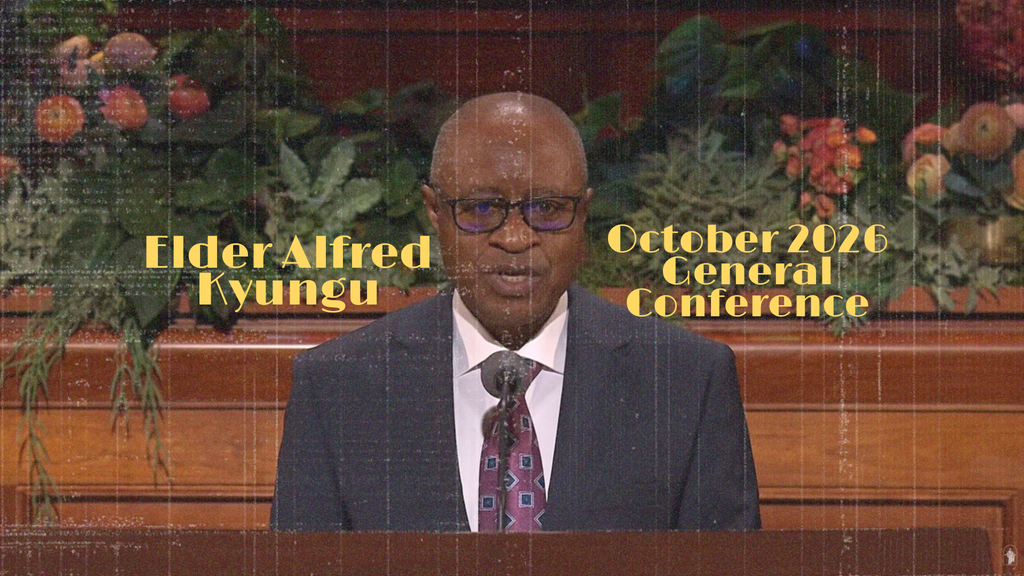
In his General Conference talk, “Using the Language of Peacemakers,” Elder Alfred Kyungu teaches that the words we choose are an important part of our discipleship of Jesus Christ.
He invites us to consider not only what we say but also how our language influences the people around us.
Drawing from President Dallin H. Oaks’s invitation to become peacemakers, Elder Kyungu explains that avoiding contention is more than a social courtesy. It is part of following the Savior.
Throughout his message, he identifies language that damages relationships, provides examples of words that encourage peace, and teaches that meaningful changes in our communication begin with changes in our hearts.
His message is particularly relevant to Relief Society sisters because communication influences nearly every relationship in our lives.
Whether we are speaking with spouses, children, parents, friends, coworkers, ministering sisters, or fellow ward members, our words can help create environments where others feel respected, understood, and loved.
Perhaps one of the most meaningful principles in Elder Kyungu’s talk is that becoming a peacemaker does not mean we will never experience disagreement.
Instead, it means choosing to respond to disagreement in ways that reflect the character of Jesus Christ.

Teaching Relief Society or Elders Quorum soon? Spend less time building slides and more time preparing for meaningful discussion. Gather & Teach helps you create lesson helps and beautiful presentations in minutes.
How to Use This Relief Society Lesson Help
This lesson help follows Elder Kyungu’s talk chronologically and separates it into 10 discussion sections, highlighting the important principles and changes in emphasis throughout his message.
Each section includes:
- Direct quotations from the talk, preserving longer passages where possible
- An explanation of the doctrine or principle being taught
- 10 Relief Society discussion questions
- 5 object lessons with materials, instructions, and teaching applications
- 10 personal sharing prompts designed to encourage meaningful experiences and testimony sharing
Together, these sections provide 100 discussion questions, 50 object lessons, and 100 personal sharing prompts.
Teachers can select the topics, questions, and activities that best meet the needs of their Relief Society sisters.
Because communication can involve sensitive family experiences, it may be helpful to remind sisters that they are welcome to share personal insights without disclosing private conflicts or painful experiences.
The goal of this lesson is not to identify who communicates imperfectly. It is to help each of us become more like Jesus Christ in the way we speak, listen, and respond.
Section 1: Becoming a Peacemaker Is a Call to Discipleship
Understanding the Principle
Elder Kyungu begins his message by referencing President Dallin H. Oaks’s invitation to avoid contention and use the language of peacemakers.
He then reminds us that prophetic invitations are meant to inspire action.
President Oaks did not simply encourage members to listen to General Conference messages. He invited them to study, ponder, and act upon the principles taught.
Elder Kyungu explains that choosing peaceful language is not merely a suggestion for improving relationships.
It is part of our commitment to follow Jesus Christ.
This distinction is important.
We may sometimes view kindness, patience, and respectful communication as desirable personality traits.
However, Elder Kyungu teaches that these qualities are also expressions of discipleship.
Our commitment to Jesus Christ should influence how we speak to others, especially during moments of disagreement, disappointment, or frustration.
Direct Quotes from the Talk
“As the last speaker of the Sunday morning session of the April 2026 general conference, President Dallin H. Oaks said: ‘My brothers and sisters, as followers of Christ, let us follow Him by forgoing contention and by using the language and methods of peacemakers. In our families and other personal relationships, let us avoid what is harsh and hateful.’
As he concluded the conference on Sunday afternoon, President Oaks extended an invitation to all of us. He said, ‘As the messages from this conference are published, we invite all to study and ponder them prayerfully and to act in faith on the principles they explain.’
This invitation to forgo contention by using the language of peacemakers comes from the living prophet. It is not a simple suggestion; it is a call to discipleship as we follow Jesus Christ.”
Teaching Focus
Using the language of peacemakers is an expression of our commitment to follow Jesus Christ.
Prophetic counsel invites us not only to learn gospel principles but also to act upon them.
10 Relief Society Discussion Questions
- Why do you think President Oaks specifically emphasized using the language and methods of peacemakers?
- What is the difference between avoiding contention and actively creating peace?
- Why does Elder Kyungu describe peaceful communication as a call to discipleship rather than simply good advice?
- How should our commitment to Jesus Christ influence the way we speak to others?
- Why might it be easier to recognize contentious language in others than in ourselves?
- What does it mean to act in faith on prophetic counsel?
- How can we become more intentional about applying General Conference teachings in our daily lives?
- Why might our closest relationships sometimes require our greatest efforts to communicate peacefully?
- How can we demonstrate Christlike love when we disagree with someone?
- What would change in our homes, wards, and communities if we consistently viewed peacemaking as part of discipleship?
5 Object Lesson Ideas
1. The Two Invitations
Materials: Two cards labeled “Hear” and “Act.”
Instructions: Display both cards and ask sisters to discuss the difference between hearing prophetic counsel and acting upon it. Invite them to identify one specific way they could apply President Oaks’s invitation.
Teaching application: Discipleship requires more than understanding gospel principles. It includes putting those principles into practice.
2. Following the Footsteps
Materials: Paper footprints.
Instructions: Arrange the footprints across a table or floor. Write Christlike attributes such as patience, kindness, humility, forgiveness, and respect on them.
Discuss how each attribute helps us follow Jesus Christ.
Teaching application: Our words can demonstrate whether we are striving to walk in the Savior’s footsteps.
3. The Mirror of Discipleship
Materials: Mirror.
Instructions: Display the mirror and ask sisters to silently consider how their communication reflects their discipleship.
Discuss why personal reflection is more productive than focusing on other people’s mistakes.
Teaching application: Becoming a peacemaker begins with examining our own hearts and choices.
4. The Instruction Manual
Materials: Instruction manual for a familiar item.
Instructions: Discuss why instructions are most useful when they are followed.
Connect this to President Oaks’s invitation to study and act upon prophetic counsel.
Teaching application: Prophetic teachings can guide our lives when we intentionally apply them.
5. The Ripple Effect
Materials: Bowl of water and small pebble.
Instructions: Drop the pebble into the water and observe the ripples.
Discuss how one peaceful response can influence an entire conversation or relationship.
Teaching application: Our individual choices can help create peace beyond ourselves.
10 Personal Sharing Prompts
- Share a time when following prophetic counsel strengthened a relationship.
- Describe an experience when choosing peaceful words required conscious effort.
- Tell about someone whose communication reflects their discipleship of Jesus Christ.
- Share a General Conference teaching that has influenced your behavior.
- Describe a time when you recognized an opportunity to become a peacemaker.
- Tell about an experience when someone’s peaceful response changed a conversation.
- Share how your understanding of peacemaking has developed.
- Describe a moment when prayer helped you apply prophetic counsel.
- Tell about someone whose example taught you the importance of respectful communication.
- Share one way you have experienced blessings from acting on the teachings of living prophets.
Section 2: Peacemaking Requires Us to Identify and Replace Contentious Language
Understanding the Principle
After introducing President Oaks’s invitation, Elder Kyungu explains how he personally began applying it.
He pondered what he needed to change in his own communication.
Rather than simply deciding to avoid arguments, he considered which words and expressions he needed to stop using and what he could say instead.
This introduces an important principle: lasting improvement often requires replacing an unhelpful habit with a Christlike alternative.
For example, someone who frequently responds with frustration might intentionally practice saying, “Help me understand what you mean.”
Someone who becomes defensive during disagreements might learn to say, “I want to understand your perspective.”
Someone who struggles to express appreciation might begin looking for opportunities to say, “Thank you. I appreciate what you did.”
Elder Kyungu describes this process as a spiritual exercise.
Changing our language can involve prayer, humility, repentance, and a willingness to recognize our weaknesses.
Direct Quote from the Talk
“I began pondering on President Oaks’s invitation and how I could act with faith accordingly. It is a spiritual exercise to identify the language and expressions we need to forgo and then replace them with words and phrases that bring peace wherever we are and at all times.”
Teaching Focus
Becoming a peacemaker requires intentional self-examination and the willingness to replace contentious communication with Christlike language.
10 Relief Society Discussion Questions
- Why does Elder Kyungu describe changing our language as a spiritual exercise?
- What is the difference between simply avoiding harsh words and intentionally choosing peaceful ones?
- Why is identifying our own communication habits an important first step?
- How can prayer help us recognize language we need to change?
- Why might certain words or expressions become automatic during stressful moments?
- How can we develop new communication habits when we have spoken a certain way for years?
- What role does humility play in recognizing our need to improve?
- How can we prepare ourselves to respond peacefully before a difficult conversation occurs?
- Why is it important to practice peaceful communication in ordinary conversations, not just conflicts?
- What is one expression you could intentionally replace with more Christlike language?
5 Object Lesson Ideas
1. Replace the Words
Materials: Index cards and markers.
Instructions: Write fictional examples of unhelpful expressions on several cards, such as “You never listen.”
Ask sisters to suggest more constructive alternatives.
For example, “I don’t feel understood. Could we talk about this?”
Teaching application: Changing our language often involves learning new ways to express our needs and feelings.
2. The Empty Cup
Materials: Cup and small objects.
Instructions: Remove several objects from the cup.
Discuss how removing an unhelpful habit creates an opportunity to develop a better one.
Place objects labeled kindness, patience, respect, and understanding into the cup.
Teaching application: Peacemaking involves replacing harmful habits with Christlike attributes.
3. The Pause Button
Materials: Large paper button labeled “Pause.”
Instructions: Present a fictional disagreement.
Ask sisters how pausing before responding could change the outcome.
Teaching application: A brief pause can create space for prayerful, intentional communication.
4. The Practice Script
Materials: Cards with common situations.
Instructions: Provide scenarios such as a misunderstanding, an interrupted conversation, or an unmet expectation.
Invite sisters to suggest peaceful responses.
Teaching application: Practicing Christlike language can make it easier to use during real challenges.
5. The New Pathway
Materials: Picture of two paths.
Instructions: Discuss how repeated choices establish habits.
Ask sisters what new communication habits they would like to develop.
Teaching application: Consistent efforts can help us establish more peaceful patterns of communication.
10 Personal Sharing Prompts
- Share a communication habit you have worked to improve.
- Describe a time when pausing before speaking helped you.
- Tell about an experience when you learned a better way to express your feelings.
- Share how prayer has influenced your communication.
- Describe a moment when you recognized that your words were not communicating your intentions.
- Tell about someone who has taught you to communicate more thoughtfully.
- Share an experience when changing a phrase improved a conversation.
- Describe a time when humility helped you acknowledge a communication weakness.
- Tell about a small change that strengthened one of your relationships.
- Share how intentionally choosing your words has influenced your spiritual growth.
Section 3: The Lord Has Always Warned Against Contentious and Dishonest Speech
Understanding the Principle
Elder Kyungu next turns to the scriptures to demonstrate that the Lord’s counsel about our language is not new.
Throughout scripture, Heavenly Father has warned against dishonesty, false accusations, and communication that creates division.
Elder Kyungu references Proverbs, the Savior’s teachings during His earthly ministry, and the Apostle Paul’s counsel to early Christians.
These scriptures emphasize that our words matter to God.
The Savior taught that we will be accountable for our speech.
Paul encouraged the Saints to communicate in ways that edify others and minister grace.
Together, these teachings reveal that our words should reflect our commitment to righteousness.
We can ask ourselves whether our communication strengthens others, communicates truth, and reflects the love of Jesus Christ.
Direct Quotes from the Talk
“From ancient times, the Lord has counseled His people to avoid contention, dispute, and language that create conflict. In Proverbs we read, ‘These six things doth the Lord hate: yea, seven are an abomination unto him.’ Among them are ‘a lying tongue, … a false witness that speaketh lies, and he that soweth discord among brethren.’
During His earthly ministry, the Lord Jesus Christ taught:
‘But I say unto you, That every idle word that men shall speak, they shall give account thereof in the day of judgment.
‘For by thy words thou shalt be justified, and by thy words thou shalt be condemned.’
The Apostle Paul wrote to the Ephesians, ‘Let no corrupt communication proceed out of your mouth, but that which is good to the use of edifying, that it may minister grace unto the hearers.’
Likewise, in Colossians the Saints were counseled to be wise even in their speech: ‘Let your speech be alway with grace, … that ye may know how ye ought to answer every man.’”
Doctrinal Connections
Proverbs 6:16–19: The Lord condemns lying and sowing discord.
Matthew 12:36–37: Jesus Christ teaches accountability for our words.
Ephesians 4:29: Our communication should edify others and minister grace.
Colossians 4:6: Our speech should be characterized by grace and wisdom.
These passages provide opportunities to discuss how discipleship influences everyday communication.
Teaching Focus
Our words are morally and spiritually significant.
The Lord invites us to communicate with honesty, wisdom, and grace.
10 Relief Society Discussion Questions
- Why do you think the scriptures contain so many warnings about harmful speech?
- What does the Savior’s teaching about accountability for our words mean to you?
- How can we communicate truth without becoming harsh or unkind?
- What does it mean for our words to edify someone?
- How can our speech “minister grace” to others?
- Why is sowing discord especially damaging within families and communities?
- How can we recognize when a conversation is becoming unproductive or contentious?
- What role does honesty play in peaceful communication?
- How can we apply Paul’s counsel when discussing sensitive or controversial subjects?
- What would change in our conversations if we consistently asked whether our words would edify the listener?
5 Object Lesson Ideas
1. Building with Words
Materials: Building blocks.
Instructions: Place one block on a table for each uplifting phrase shared by the class.
Build a tower as the discussion continues.
Teaching application: Edifying communication helps strengthen people and relationships.
2. The Written Record
Materials: Notebook.
Instructions: Discuss how written words can be remembered and revisited.
Connect the idea to the Savior’s teaching about accountability.
Teaching application: Our words matter, and we should choose them thoughtfully.
3. The Grace Filter
Materials: Paper with three questions: Is it true? Is it edifying? Is it respectful?
Instructions: Present fictional statements and invite sisters to consider how each question could improve the wording.
Teaching application: Thoughtful speech can communicate both truth and grace.
4. The Scripture Comparison
Materials: Printed copies of Proverbs 6:16–19, Ephesians 4:29, and Colossians 4:6.
Instructions: Divide the class into small groups.
Ask each group to identify what its scripture teaches about communication.
Teaching application: Scripture provides consistent guidance about the importance of our words.
5. The Seed of Discord
Materials: Seeds.
Instructions: Discuss how a small seed can grow into something much larger.
Compare this to the way a careless comment can contribute to larger conflict.
Teaching application: Small choices in communication can have significant consequences.
10 Personal Sharing Prompts
- Share a scripture that has influenced the way you communicate.
- Describe a time when someone’s words helped strengthen your faith.
- Tell about an experience when you learned the importance of speaking honestly.
- Share how you have seen uplifting language strengthen a relationship.
- Describe a moment when you recognized the power of your words.
- Tell about someone who consistently speaks with grace.
- Share an experience when scripture helped you respond to a difficult conversation.
- Describe a time when you chose not to participate in gossip or criticism.
- Tell about a conversation that helped you better understand Christlike communication.
- Share what it means to you to speak in ways that minister grace.
Section 4: Harsh and Degrading Words Can Damage Relationships
Understanding the Principle
After establishing the scriptural foundation for peaceful communication, Elder Kyungu acknowledges a painful reality.
Most people have experienced hurtful words.
Sometimes these words come from strangers or acquaintances.
Other times, they come from people we love or trust.
Elder Kyungu identifies several examples of language that humiliates, discourages, or devalues another person.
These expressions can weaken confidence and damage relationships.
His message invites us to consider the difference between addressing a person’s behavior and attacking their worth.
For example, saying, “I’m concerned about what happened,” communicates a problem.
Saying, “You never do anything right,” attacks the person.
We can acknowledge mistakes, establish boundaries, and address concerns without belittling someone.
This distinction is particularly important in families, friendships, and Church relationships.
Direct Quotes from the Talk
“I believe that all of us in this mortal journey have been hurt by some form of humiliating, degrading, or discouraging language from a family member, a colleague at work, a friend, or even a fellow member of the Church.
There are expressions and words that can damage relationships and therefore need to be forgone in our communication. Examples include: ‘You are useless.’ ‘You are stupid.’ ‘You never do anything right.’ ‘What is wrong with you?’ ‘This is all your fault.’ ‘You always mess things up.’ ‘You never listen.’ ‘You caused this problem.’ ‘Leave me alone.’ ‘I do not care.’ ‘I do not need you in my life.’ ‘I do not care about you.’ ‘Just stop talking.’ ‘I am tired of you.’ The list could go on. Such words never edify. They weaken love, diminish respect, and damage relationships.”
Teaching Focus
Our words should never diminish another person’s worth.
Christlike communication addresses concerns without humiliating, degrading, or belittling others.
10 Relief Society Discussion Questions
- Why can hurtful words have such a lasting influence?
- What is the difference between correcting someone’s behavior and attacking their character?
- Why are phrases such as “you always” and “you never” often damaging?
- How can we express frustration without diminishing another person’s worth?
- Why might people sometimes use harsher language with those closest to them?
- How can we teach children and youth to communicate without humiliation?
- What can we do when we realize that our words have hurt someone?
- How can we respond constructively when someone speaks harshly to us?
- Why is it important to recognize that peaceful communication does not require tolerating mistreatment?
- How can we help create relationships where people feel safe expressing concerns?
5 Object Lesson Ideas
1. The Crumpled Paper
Materials: Sheet of paper.
Instructions: Crumple the paper and then smooth it out.
Discuss how the paper remains wrinkled.
Explain that people can heal and relationships can be repaired, but careless words may still have lasting effects.
Teaching application: We should consider the possible impact of our words before speaking.
2. The Two Statements
Materials: Cards with fictional examples.
Instructions: Compare statements such as “You never help” and “I’m feeling overwhelmed and could use some help.”
Discuss which wording invites understanding.
Teaching application: We can communicate concerns without attacking someone’s character.
3. The Name Tag
Materials: Blank name tag.
Instructions: Write “Child of God” on the tag.
Discuss how remembering another person’s divine identity should influence our language.
Teaching application: Every person deserves dignity and respect.
4. The Broken Chain
Materials: Paper chain.
Instructions: Remove a link from the chain.
Discuss how trust and respect help hold relationships together.
Teaching application: Repeated harmful communication can weaken relationships.
5. The Warning Light
Materials: Picture of a warning light.
Instructions: Discuss how warning lights signal that something needs attention.
Invite sisters to identify emotional signals that indicate they should pause before speaking.
Teaching application: Recognizing frustration early can help prevent hurtful communication.
10 Personal Sharing Prompts
- Share a time when someone addressed a difficult issue with kindness.
- Describe an experience when you learned to express frustration more constructively.
- Tell about someone who has helped you feel respected during a disagreement.
- Share how your understanding of the power of words has changed.
- Describe a moment when you recognized the importance of protecting another person’s dignity.
- Tell about a communication lesson you learned from a parent, teacher, or mentor.
- Share a time when an apology helped repair a relationship.
- Describe an experience when setting a respectful boundary brought greater peace.
- Tell about someone who models correction without humiliation.
- Share a principle that helps you remember another person’s divine worth.
Section 5: Choose Words That Strengthen Confidence and Preserve Relationships
Understanding the Principle
Elder Kyungu does not stop after identifying harmful language.
He provides a practical alternative.
He invites us to choose expressions that communicate appreciation, respect, patience, understanding, love, and forgiveness.
This section offers one of the most immediately applicable teachings in the talk.
Elder Kyungu provides examples of simple phrases that can transform the tone of a conversation.
Words such as “Thank you,” “I appreciate that,” and “I care about you” communicate love and recognition.
Other phrases, such as “Let us slow down and talk,” and “We can work this out,” can help reduce tension.
Expressions of apology and forgiveness can open the door to reconciliation.
These words may seem ordinary, but their influence can be profound.
They remind others that disagreements do not have to destroy relationships.
Direct Quote from the Talk
“Rather than choosing words and language that escalate feelings of anger, disappointment, and frustration, let us use words that encourage understanding and peace. We must choose language that strengthens confidence and preserves relationships. Words such as: ‘Please.’ ‘Thank you.’ ‘I appreciate that.’ ‘I respect your view.’ ‘This is a good point.’ ‘Let us slow down and talk.’ ‘We can work this out.’ ‘It is OK.’ ‘Let us stay calm.’ ‘We don’t have to rush.’ ‘I care about you.’ ‘I am here for you.’ ‘You are not alone.’ ‘How are you feeling?’ ‘That matters to me.’ ‘I’m sorry.’ ‘Please forgive me.’ ‘I forgive you.’ ‘Let us start again.’ ‘I don’t want this to divide us.’”
Teaching Focus
Peacemakers intentionally use language that communicates respect, builds confidence, encourages understanding, and strengthens relationships.
10 Relief Society Discussion Questions
- Which of Elder Kyungu’s suggested phrases stands out to you most?
- Why can simple expressions of appreciation have such a powerful influence?
- How does saying “I respect your view” change the tone of a disagreement?
- What does the phrase “I don’t want this to divide us” communicate about our priorities?
- Why is it important to express love and appreciation before conflicts arise?
- How can we help someone feel understood even when we disagree with them?
- What role does listening play in using the language of peacemakers?
- How can phrases such as “Let us slow down and talk” help during emotionally charged conversations?
- Why can sincere apologies and forgiveness strengthen relationships?
- Which phrase could you begin using more intentionally in your home or relationships?
5 Object Lesson Ideas
1. The Language Jar
Materials: Jar and slips of paper.
Instructions: Write Elder Kyungu’s suggested phrases on slips of paper and place them in the jar.
Invite sisters to select one and discuss when it might be helpful.
Teaching application: Simple words can communicate Christlike love.
2. The Conversation Makeover
Materials: Fictional conversation examples.
Instructions: Present a conversation containing dismissive or defensive language.
Invite sisters to rewrite it using Elder Kyungu’s suggested expressions.
Teaching application: Peaceful communication can be learned and practiced.
3. The Relationship Bridge
Materials: Building blocks.
Instructions: Build a small bridge.
Assign each block a phrase such as “Thank you,” “I’m sorry,” or “I care about you.”
Teaching application: Respectful communication helps strengthen connections.
4. The Appreciation Note
Materials: Blank note cards.
Instructions: Invite sisters to write a short message expressing sincere appreciation to someone.
Teaching application: Peacemaking includes strengthening relationships before conflict occurs.
5. The Peaceful Phrase Match
Materials: Cards with situations and cards with peaceful expressions.
Instructions: Invite sisters to match a situation with a phrase that could help.
For example, match a misunderstanding with “Help me understand.”
Teaching application: Thoughtful language can help us respond constructively.
10 Personal Sharing Prompts
- Share a time when someone expressed appreciation that meant a great deal to you.
- Describe an experience when a kind phrase changed the direction of a conversation.
- Tell about someone who consistently helps others feel valued.
- Share a time when saying “I’m sorry” strengthened a relationship.
- Describe an experience when forgiveness brought peace.
- Tell about a moment when someone helped you feel understood.
- Share how expressing appreciation has influenced your family relationships.
- Describe a time when someone reassured you that you were not alone.
- Tell about a phrase you learned from someone that has stayed with you.
- Share one expression you would like to use more frequently.
Section 6: Burying the Language of Contention
Understanding the Principle
Elder Kyungu next introduces a powerful scriptural comparison.
He references the converted Lamanites who buried their weapons of war as a sign of their commitment to peace.
He invites us to consider doing something similar with our words.
Although we may not carry physical weapons, harsh expressions can become tools of conflict.
Sarcasm, accusations, insults, threats, and dismissive language can be used to wound others.
Elder Kyungu encourages us to bury the language of contention.
This imagery invites deeper reflection.
The converted Lamanites did not simply set their weapons aside temporarily.
Their actions represented a profound commitment to change.
Similarly, becoming a peacemaker may require more than occasionally choosing kind words.
It may require sincerely repenting of established habits and making a lasting commitment to communicate differently.
Direct Quote from the Talk
“As the converted Lamanites ‘buried the weapons of war, for peace,’ we too can bury the language of contention for peace. President Thomas S. Monson taught us ‘to refrain from anger and to leave unsaid the harsh and hurtful things we may be tempted to say.’ In hymn number 224, we sing, ‘I must speak the loving word, ere the sun goes down.’ We learn from the New Testament that ‘out of the abundance of the heart the mouth speaketh.’”
Doctrinal Connection: Alma 24
The converted Lamanites demonstrated their commitment to God by burying their weapons of rebellion.
Their actions symbolized a change in their hearts and a determination not to return to their former ways.
Elder Kyungu uses this example to invite us to abandon patterns of communication that contribute to conflict.
Teaching Focus
True peacemaking involves willingly giving up harmful patterns of communication and committing to lasting change.
10 Relief Society Discussion Questions
- Why is the story of the converted Lamanites a powerful example of peacemaking?
- What does it mean to bury the language of contention?
- Why might abandoning certain expressions require spiritual courage?
- What is the difference between temporarily avoiding harsh words and sincerely changing our communication habits?
- How can repentance help us leave behind contentious language?
- Why is it important to recognize that some communication habits may have developed over many years?
- What can we learn from President Monson’s counsel to leave harsh words unsaid?
- How can we recognize when silence is wiser than responding immediately?
- What does the hymn’s invitation to speak loving words teach us about acting promptly?
- What is one form of contentious language you would like to leave behind?
5 Object Lesson Ideas
1. Burying the Words
Materials: Small box, paper, and pens.
Instructions: Invite sisters to privately write an unhelpful communication habit they would like to change.
They may fold the paper and place it in the box as a symbolic commitment.
Do not ask anyone to reveal what they wrote.
Teaching application: Repentance includes turning away from harmful patterns.
2. The Buried Sword
Materials: Picture of a sword.
Instructions: Discuss the converted Lamanites’ decision to bury their weapons.
Ask sisters what figurative weapons people sometimes use in conversations.
Teaching application: Peacemakers choose not to use words to wound others.
3. The Closed Mouth and Open Heart
Materials: Two paper hearts.
Instructions: Label one “Reaction” and the other “Reflection.”
Discuss how pausing can help us choose a more Christlike response.
Teaching application: Self-control can protect relationships.
4. The Old and New Habits
Materials: Two containers.
Instructions: Label one “Contention” and the other “Peace.”
Place cards representing harsh expressions in the first container and cards representing Christlike alternatives in the second.
Teaching application: Lasting change involves replacing harmful patterns with righteous ones.
5. The Commitment Stone
Materials: Small smooth stone.
Instructions: Display the stone and discuss how the converted Lamanites made a lasting commitment to peace.
Invite sisters to identify a personal commitment they could make.
Teaching application: Spiritual change becomes meaningful when it influences our choices.
10 Personal Sharing Prompts
- Share a time when you made a conscious effort to change a communication habit.
- Describe an experience when choosing silence prevented conflict.
- Tell about someone who has demonstrated remarkable self-control.
- Share how repentance has influenced your relationships.
- Describe a moment when you chose to let go of an argument.
- Tell about an experience when forgiveness helped you move forward.
- Share how the converted Lamanites’ example has influenced your understanding of discipleship.
- Describe a time when you recognized the importance of speaking lovingly.
- Tell about a relationship strengthened through a change in communication.
- Share what burying the language of contention means to you personally.
Section 7: Our Words Reflect What We Have Cultivated in Our Hearts
Understanding the Principle
After comparing contentious language to weapons of war, Elder Kyungu turns to the deeper source of our words.
He reminds us of the Savior’s teaching that our speech reflects what is in our hearts.
This introduces an essential principle.
If we want to become more peaceful in our communication, we must also seek greater peace within ourselves.
Our words are often influenced by our attitudes, assumptions, frustrations, fears, and desires.
When our hearts are filled with resentment or pride, our language may reflect those feelings.
When we intentionally cultivate humility, charity, patience, and faith in Jesus Christ, our communication can begin to reflect those attributes instead.
Elder Kyungu teaches that the doctrine of Christ has power to change our hearts and our language.
This means that becoming a peacemaker is not simply a matter of memorizing polite phrases.
It involves becoming more like the Savior.
Direct Quotes from the Talk
“We learn from the New Testament that ‘out of the abundance of the heart the mouth speaketh.’
Therefore, let us fill our hearts with the true doctrine of Christ, which has the power to change our language and help us speak more as peacemakers today, tomorrow, and always.”
Teaching Focus
Lasting changes in our communication begin with changes in our hearts.
The doctrine of Jesus Christ can help us develop the charity, humility, and patience necessary to speak as peacemakers.
10 Relief Society Discussion Questions
- What does the Savior mean when He teaches that our words come from the abundance of our hearts?
- How do our thoughts and attitudes influence the way we communicate?
- Why is changing our hearts more important than simply memorizing polite expressions?
- How can studying the doctrine of Christ influence our language?
- What Christlike attributes are especially important for peaceful communication?
- How can we recognize when our words are being influenced by frustration, pride, or resentment?
- Why might peaceful communication become easier as our relationship with Jesus Christ deepens?
- How can prayer help us develop greater charity toward others?
- What spiritual habits help you cultivate peace within your heart?
- How can we invite the Savior to help us change communication patterns that feel difficult to overcome?
5 Object Lesson Ideas
1. The Overflowing Cup
Materials: Cup, water, and tray.
Instructions: Slowly fill the cup until water overflows into the tray.
Discuss how the contents of the cup are what overflow.
Teaching application: Our words often reveal what we have been cultivating within our hearts.
2. The Fruit Tree
Materials: Picture of a fruit tree.
Instructions: Discuss how the condition of a tree influences the fruit it produces.
Connect the roots to our beliefs and attitudes and the fruit to our words.
Teaching application: Christlike communication grows from Christlike character.
3. The Heart Garden
Materials: Paper heart and pictures of flowers or seeds.
Instructions: Invite sisters to identify attributes they want to cultivate, such as charity, patience, and humility.
Place those words on the heart.
Teaching application: We can intentionally nourish the attributes that influence our communication.
4. The Scripture Foundation
Materials: Scriptures and building blocks.
Instructions: Place the scriptures beneath a small block structure.
Discuss how gospel doctrine provides a foundation for Christlike living.
Teaching application: Studying and applying the doctrine of Christ can transform our character.
5. The Reflection
Materials: Mirror.
Instructions: Discuss how a mirror reflects what is placed before it.
Invite sisters to consider what their words might reveal about the attitudes they are nurturing.
Teaching application: Our language can provide opportunities for honest spiritual reflection.
10 Personal Sharing Prompts
- Share a time when drawing closer to Jesus Christ influenced the way you treated someone.
- Describe an experience when prayer softened your heart toward another person.
- Tell about a gospel principle that has helped you become more patient.
- Share how scripture study has influenced your communication.
- Describe a moment when you recognized that frustration was affecting your words.
- Tell about someone whose language reflects genuine charity.
- Share an experience when the Savior helped you change an attitude.
- Describe a time when humility improved a relationship.
- Tell about a spiritual practice that helps you cultivate inner peace.
- Share how your relationship with Jesus Christ has influenced the way you communicate.
Section 8: We Can Become Instruments of the Savior’s Peace
Understanding the Principle
Elder Kyungu next teaches that following Jesus Christ can help us become instruments of His peace.
This expands the purpose of peacemaking beyond our personal relationships.
As disciples of Jesus Christ, we can influence the spiritual environment around us.
Our words can help someone feel included.
Our willingness to listen can help someone feel understood.
Our patience can help reduce tension.
Our kindness can encourage reconciliation.
Elder Kyungu quotes Elder Ulisses Soares, who taught that we can become instruments of the Savior’s peace in the world.
This principle reminds us that peacemaking is an active form of service.
We do not need to solve every disagreement or change every person’s behavior.
We can begin by allowing the Savior to influence our own words and actions.
Direct Quote from the Talk
“As we follow Jesus Christ, we will not only feel His peace, but, as Elder Ulisses Soares said, ‘We can become instruments of His peace in the world.’”
Teaching Focus
Jesus Christ can help us become instruments of peace through our words, actions, and relationships.
10 Relief Society Discussion Questions
- What does it mean to become an instrument of the Savior’s peace?
- How is experiencing personal peace different from helping others experience peace?
- Why does following Jesus Christ help us become better peacemakers?
- How can small acts of kindness influence the spiritual atmosphere of a home?
- What opportunities do we have to encourage peace in our wards?
- How can ministering become an opportunity to communicate the Savior’s love?
- What does it mean to represent Jesus Christ through our communication?
- How can we encourage peace without assuming responsibility for solving everyone’s problems?
- Why is listening an important part of becoming an instrument of peace?
- Where might the Lord be inviting you to bring greater peace?
5 Object Lesson Ideas
1. The Instrument
Materials: Musical instrument or picture of one.
Instructions: Discuss how an instrument can produce beautiful music when used skillfully.
Compare this to allowing the Savior to guide our words.
Teaching application: We can become instruments through which the Savior’s love is communicated.
2. The Candle
Materials: Battery-operated candle.
Instructions: Place the candle in the center of the room.
Discuss how even a small light can influence its surroundings.
Teaching application: Small acts of peacemaking can make a meaningful difference.
3. The Helping Hand
Materials: Paper handprint.
Instructions: Invite sisters to write examples of ways they can bring peace through service.
Teaching application: Peacemaking includes both words and actions.
4. The Bridge Builder
Materials: Building blocks.
Instructions: Build a bridge between two objects.
Discuss how understanding, listening, and kindness can help strengthen relationships.
Teaching application: Peacemakers seek connection rather than division.
5. The Message of Encouragement
Materials: Note cards.
Instructions: Invite sisters to write an encouraging message to someone who may need support.
Teaching application: Our words can help communicate the Savior’s love.
10 Personal Sharing Prompts
- Share a time when someone helped you experience the Savior’s peace.
- Describe an experience when you felt prompted to encourage someone.
- Tell about someone who consistently brings peace into a room.
- Share how ministering has helped you understand the importance of compassionate communication.
- Describe a time when listening helped someone feel supported.
- Tell about a moment when a small act of kindness made a difference.
- Share how you have seen peaceful communication strengthen a family.
- Describe an experience when you felt the Savior guiding your words.
- Tell about someone whose example has inspired you to become a peacemaker.
- Share what it means to you to become an instrument of Christ’s peace.
Section 9: Repentance, Prayer, and Respectful Communication Can Bring Us Together
Understanding the Principle
Elder Kyungu next offers several practical invitations.
He encourages us to repent of harsh language, pray for peaceful communication, and choose words that uplift and comfort.
He also reminds us that peaceful communication is important even when we have different opinions.
This is a significant part of his message.
Peacemaking does not require everyone to think alike.
We can disagree about ideas, preferences, decisions, or experiences while still treating one another with respect.
Elder Kyungu’s invitation to repent is also important.
We will not always communicate perfectly.
There may be times when we speak impatiently, misunderstand someone, or say something we later regret.
Through Jesus Christ, we can acknowledge our mistakes, apologize, seek forgiveness, and strive to improve.
Peacemaking is an ongoing process of discipleship.
Direct Quote from the Talk
“Let us repent for the harsh language and expressions that have offended our friends, leaders, family members, or colleagues. Let us pray for peaceful communication among us, regardless of the difference in our opinions. Let us use the language that uplifts, edifies, comforts, and brings people together. Let us speak with ‘warm respect when we speak with each other.’ ‘Let us qualify for His blessings by using the language … of peacemakers.’”
Teaching Focus
Repentance and prayer can help us develop more Christlike communication.
Respectful language allows us to maintain dignity and love even when opinions differ.
10 Relief Society Discussion Questions
- Why does Elder Kyungu connect repentance with peaceful communication?
- How can we recognize when an apology is needed?
- What makes an apology sincere and meaningful?
- How can prayer influence the way we approach difficult conversations?
- Why is it important to communicate respectfully when opinions differ?
- What does it mean to speak with “warm respect”?
- How can we express disagreement without making someone feel rejected?
- Why is forgiveness an important part of maintaining relationships?
- How can we continue striving to become peacemakers when we occasionally make mistakes?
- What is one relationship where you could intentionally practice greater patience, respect, or understanding?
5 Object Lesson Ideas
1. The Repair Kit
Materials: Small box containing items such as tape, glue, and a bandage.
Instructions: Discuss how different tools can help repair damaged objects.
Connect the illustration to apology, repentance, forgiveness, and changed behavior.
Teaching application: Relationships can be strengthened through sincere efforts to repair harm.
2. The Different Colors
Materials: Several different colored pencils.
Instructions: Display the pencils and discuss how their differences can contribute to a complete picture.
Teaching application: People can have different perspectives while treating one another with respect.
3. The Prayer Card
Materials: Card labeled “Pray Before You Speak.”
Instructions: Present a fictional difficult conversation.
Ask sisters how prayer might influence their approach.
Teaching application: Heavenly Father can help us develop patience and wisdom.
4. The Apology Practice
Materials: Fictional scenarios.
Instructions: Invite sisters to identify the difference between a defensive apology and one that accepts responsibility.
For example, compare “I’m sorry you were upset” with “I’m sorry I spoke harshly. That was wrong.”
Teaching application: Sincere apologies acknowledge our choices and invite reconciliation.
5. The Common Ground
Materials: Two overlapping paper circles.
Instructions: Write differing opinions in the outer sections and shared values in the overlapping center.
Teaching application: Respectful communication can help us recognize what we share despite differences.
10 Personal Sharing Prompts
- Share a time when a sincere apology strengthened a relationship.
- Describe an experience when prayer helped you prepare for a difficult conversation.
- Tell about someone who demonstrates respect toward people with different opinions.
- Share how repentance has influenced your communication.
- Describe a moment when forgiveness helped bring peace.
- Tell about an experience when you learned to listen without immediately defending yourself.
- Share a time when respectful disagreement strengthened your understanding.
- Describe an experience when the Holy Ghost helped you know what to say.
- Tell about someone who has modeled humility in communication.
- Share how you have learned to begin again after a difficult conversation.
Section 10: The Savior’s Peace Begins with Our Hearts, Choices, and Words
Understanding the Principle
Elder Kyungu concludes his message by turning our attention directly to Jesus Christ.
He reminds us of the Savior’s promise to give His peace.
This peace is not merely the absence of conflict.
It is a divine blessing that comes through our relationship with Jesus Christ.
Elder Kyungu teaches that the Savior’s peace is real and powerful.
He also emphasizes that it begins with our hearts, choices, and words.
This brings the central message of the talk together.
As we allow Jesus Christ to change our hearts, we can begin to communicate differently.
Our choices can reflect greater humility, patience, forgiveness, and love.
Our words can become instruments of healing rather than sources of division.
Elder Kyungu concludes by bearing testimony of Heavenly Father’s love and Jesus Christ’s identity as the Prince of Peace.
Direct Quotes from the Talk
“The Savior promised, ‘Peace I leave with you, my peace I give unto you.’ This peace is real. It is powerful, and it begins with us—with our hearts, our choices, and our words.”
“I bear my witness that our Heavenly Father loves us and desires us to live in peace and harmony. Jesus Christ is the Prince of Peace. President Dallin H. Oaks is the prophet of God on the earth today, inviting us to communicate as peacemakers. In the sacred name of Jesus Christ, amen.”
Doctrinal Connection: John 14:27
Jesus Christ promises His peace to His disciples.
His peace can strengthen us even when difficult circumstances or disagreements remain unresolved.
As we draw closer to Him, we can become more capable of responding to others with patience and love.
Teaching Focus
Jesus Christ is the source of lasting peace.
As we follow Him, His peace can influence our hearts, choices, and words.
10 Relief Society Discussion Questions
- What does the Savior’s promise of peace mean to you?
- How is the peace Jesus Christ offers different from simply avoiding conflict?
- Why does Elder Kyungu emphasize that peace begins with our hearts, choices, and words?
- How can our relationship with Jesus Christ influence the way we respond to others?
- What does the title “Prince of Peace” teach us about the Savior?
- How can we experience Christ’s peace when difficult relationships remain unresolved?
- Why is it important to remember that we cannot control every situation or another person’s choices?
- How can the Holy Ghost help us communicate with greater peace?
- What does it mean to allow the Savior to change our hearts?
- What is one way you can invite more of the Savior’s peace into your life this week?
5 Object Lesson Ideas
1. The Peaceful Light
Materials: Battery-operated candle.
Instructions: Dim the room slightly and turn on the candle.
Discuss how light can influence a dark environment.
Teaching application: The Savior’s peace can influence our hearts and the way we treat others.
2. The Three Hearts
Materials: Three paper hearts labeled “Heart,” “Choices,” and “Words.”
Instructions: Display the hearts in order.
Discuss how our inner attitudes influence our decisions and communication.
Teaching application: Christlike communication begins with spiritual transformation.
3. The Anchor
Materials: Picture of an anchor.
Instructions: Discuss how an anchor provides stability during difficult conditions.
Teaching application: Jesus Christ can provide peace and stability even when circumstances remain challenging.
4. The Open Hands
Materials: Picture of open hands.
Instructions: Discuss the difference between tightly clenched fists and open hands.
Invite sisters to consider how humility and willingness to listen can influence relationships.
Teaching application: Peacemaking requires openness, patience, and Christlike love.
5. The Invitation Card
Materials: Blank card.
Instructions: Invite sisters to write one specific way they will use the language of peacemakers during the coming week.
Teaching application: The Savior’s teachings become meaningful as we apply them.
10 Personal Sharing Prompts
- Share a time when you experienced the peace of Jesus Christ.
- Describe an experience when the Savior helped you respond with greater patience.
- Tell about someone whose relationship with Christ influences their communication.
- Share how your understanding of the Prince of Peace has grown.
- Describe a moment when prayer brought peace into a difficult situation.
- Tell about an experience when choosing kindness strengthened your relationship with someone.
- Share how the Holy Ghost has influenced your words.
- Describe a time when the Savior helped you let go of resentment.
- Tell about a gospel principle that helps you cultivate peace.
- Share what it means to you that the Savior’s peace can begin with your own heart, choices, and words.
Conclusion: Becoming More Like the Prince of Peace Through Our Words
Elder Alfred Kyungu’s General Conference message, “Using the Language of Peacemakers,” offers a meaningful invitation to examine how our words reflect our discipleship of Jesus Christ.
Throughout his talk, Elder Kyungu reminds us that communication is more than an exchange of information.
Our words can communicate love, respect, patience, and understanding.
They can also contribute to hurt, division, and contention.
The Savior invites us to choose a better way.
Through the teachings of living prophets and the scriptures, we learn that peaceful communication is an important part of following Jesus Christ.
Elder Kyungu encourages us to identify expressions that damage relationships and intentionally replace them with language that uplifts and strengthens others.
He reminds us that we can choose words such as “Thank you,” “I appreciate that,” “I care about you,” and “Let us start again.”
These expressions may be simple, but they can communicate profound love.
His comparison to the converted Lamanites also provides a powerful invitation.
Just as they buried their weapons of war, we can bury the language of contention.
We can choose to leave behind patterns of sarcasm, criticism, insults, and harsh responses.
And through repentance, prayer, and the enabling power of Jesus Christ, we can develop new habits that reflect His character.
Perhaps most importantly, Elder Kyungu teaches that lasting changes in our language begin with changes in our hearts.
As we fill our hearts with the doctrine of Christ, we can become more patient, humble, charitable, and forgiving.
Our words can begin to reflect the Savior’s love.
What This Means for Relief Society Sisters
This message is especially relevant because our relationships are such an important part of our lives.
Many sisters are navigating family responsibilities, parenting, marriage, friendships, Church service, professional relationships, and personal challenges.
There may be moments when communication feels difficult.
We may experience misunderstandings, disagreements, disappointment, or frustration.
Elder Kyungu’s message does not suggest that disciples of Jesus Christ will never experience conflict.
Instead, he reminds us that we can choose how we respond.
We can seek understanding instead of immediately becoming defensive.
We can express concerns without attacking another person’s character.
We can apologize when we make mistakes.
We can forgive and seek reconciliation where possible.
And we can remember that every person deserves dignity and respect as a child of God.
Importantly, being a peacemaker does not require someone to remain in an unsafe or abusive situation, excuse harmful behavior, or abandon necessary boundaries. Christlike communication and appropriate boundaries can exist together.
How This Lesson Can Strengthen Your Relief Society
This talk provides several opportunities for meaningful discussion.
Teachers might begin by asking sisters to consider how words have influenced their lives.
They could then discuss President Oaks’s invitation to use the language of peacemakers and explore why Elder Kyungu describes it as a call to discipleship.
The section identifying harmful expressions can help sisters recognize communication habits that may need to change.
The examples of peaceful language provide practical alternatives that sisters can begin using immediately.
The story of the converted Lamanites offers an opportunity to discuss repentance and lasting spiritual change.
And the teaching that our words reflect our hearts can lead to meaningful conversations about the doctrine of Christ and the Savior’s power to transform us.
Finally, Elder Kyungu’s testimony of Jesus Christ as the Prince of Peace provides an opportunity to focus the lesson on the Savior.
A Final Invitation for Your Relief Society Lesson
Consider concluding with three questions for personal reflection:
1. What words or expressions do I need to leave behind to become a greater peacemaker?
2. What Christlike phrases could I begin using more intentionally to strengthen my relationships?
3. How can I invite Jesus Christ to help change my heart so that my words more consistently reflect His love?
Allow sisters a few moments to ponder these questions.
You might invite them to write down one expression they want to stop using and one peaceful phrase they want to practice.
Encourage them to choose one relationship where they can intentionally communicate with greater patience, kindness, and understanding during the coming week.
Then conclude with Elder Kyungu’s reminder:
“The Savior promised, ‘Peace I leave with you, my peace I give unto you.’ This peace is real. It is powerful, and it begins with us—with our hearts, our choices, and our words.”
The central message of this talk is one of hope.
We do not have to communicate perfectly to begin becoming peacemakers.
Through Jesus Christ, we can repent, grow, and develop greater charity.
As we seek His help, our hearts can change.
And as our hearts change, our words can become a greater source of peace.
When we choose to speak with patience, respect, kindness, and love, we do more than improve our relationships. We become instruments of the Prince of Peace, helping others experience the love of Jesus Christ through the words we choose each day.

Leave a Reply