Introduction: Are We Making Room for What Matters Most?
Have you ever reached the end of a busy day and wondered how you accomplished so much but still felt as though something important was missing?
Perhaps you spent the day meeting responsibilities, caring for family members, completing assignments, helping others, and attending to countless demands. Yet somewhere in the middle of everything, your spiritual needs received very little attention.
Sometimes our lives can become so full of good things that we unintentionally neglect the things that matter most eternally.
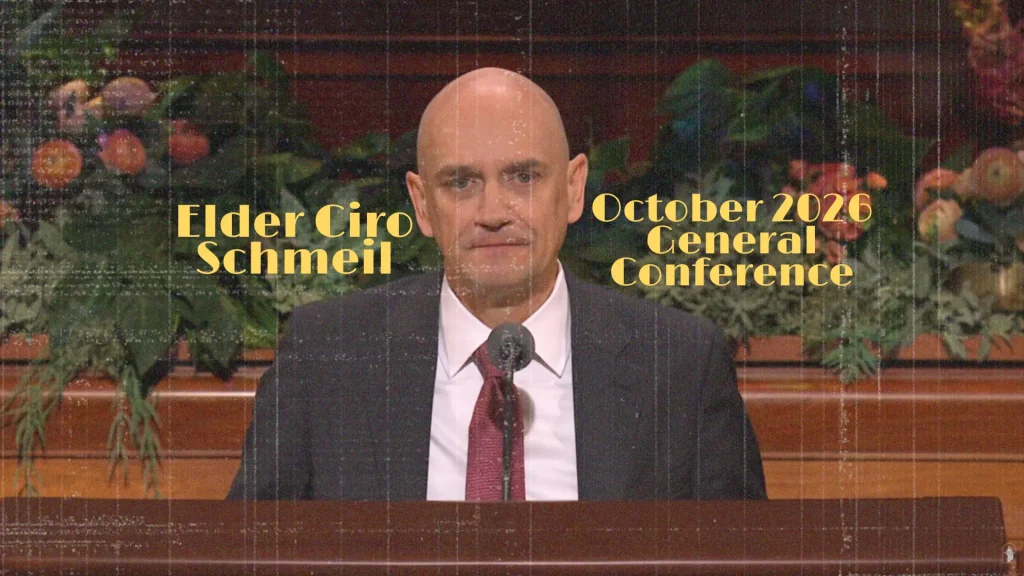
In his General Conference talk, “Consider Your Ways, and from This Day Will the Lord Bless You,” Elder Ciro Schmeil invites us to examine our priorities and strengthen our relationship with Heavenly Father and Jesus Christ through sacred covenants.
Drawing from the Old Testament account of the prophet Haggai, Elder Schmeil teaches that the Israelites were working hard but failing to prioritize the Lord’s house. Despite their efforts, they were not experiencing the blessings they could have received through obedience.
The Lord lovingly invited them to consider their ways.
When they repented and began rebuilding the temple, He promised:
“From this day will I bless you.”
Elder Schmeil applies this principle to our lives today.
We may not be commanded to physically build a temple, but we are invited to build a stronger relationship with God through faith in Jesus Christ, sacred covenants, sacrament worship, and temple participation.
His message reminds us that the Lord does not expect us to navigate mortality alone.
He has provided divine help.
Through Jesus Christ and our covenants, we can receive strength to overcome weaknesses, guidance during difficult decisions, and spiritual power to continue along the covenant path.
Perhaps most importantly, Elder Schmeil teaches that we do not need to be perfect before receiving the blessings associated with covenant worship.
We need willing hearts, faith in Jesus Christ, and a desire to follow Him.

Teaching Relief Society or Elders Quorum soon? Spend less time building slides and more time preparing for meaningful discussion. Gather & Teach helps you create lesson helps and beautiful presentations in minutes.
How to Use This Relief Society Lesson Help
This lesson help follows Elder Schmeil’s talk chronologically, separating it into 10 teaching sections based on the changes in doctrine, emphasis, and application throughout his message.
Each section includes a direct quotation from the talk, doctrinal explanation, 10 discussion questions, 5 object lessons, and 10 personal sharing prompts.
Altogether, this resource provides 100 Relief Society discussion questions, 50 object lessons, and 100 personal sharing prompts.
Teachers can select the material most relevant to their sisters rather than attempting to cover everything in one class.
The lesson offers opportunities to discuss the Savior’s Atonement, humility, covenant relationships, sacrament worship, Sabbath observance, temple worship, repentance, spiritual priorities, and the blessings of faithful discipleship.
Section 1: Heavenly Father’s Plan of Happiness Includes Divine Help for Mortality
Direct Quote from Elder Schmeil
“God is our Father in Heaven, and He prepared a plan for us to return to His presence. The scriptures call this the plan of salvation or ‘the great plan of happiness’ (Alma 42:8). According to this plan, ‘this life is the time for [us] to prepare to meet God’ (Alma 34:32).
And God did not leave us alone in this journey. As President Dallin H. Oaks has taught, God gave us ‘divine helps for mortality’ that can help us back to His presence. I will mention two of these divine helps: the Savior Jesus Christ and our covenants.”
Understanding the Doctrine
Elder Schmeil begins by reminding us of Heavenly Father’s plan of happiness.
Mortality is not an accidental or meaningless experience. It is an essential part of God’s eternal plan for His children.
We came to earth to gain experience, exercise agency, develop faith, and prepare to return to Heavenly Father’s presence.
However, this life also includes weakness, temptation, uncertainty, sorrow, and challenges.
Heavenly Father knew we would need help.
Rather than expecting us to navigate mortality through our own strength, He provided divine assistance.
Elder Schmeil identifies two particularly important sources of that assistance: Jesus Christ and our sacred covenants.
The Savior makes repentance, forgiveness, resurrection, and eternal life possible through His Atonement.
Our covenants establish a sacred relationship with God and help us remain connected to Jesus Christ as we progress along the covenant path.
This means that the plan of happiness is not simply a destination we hope to reach someday.
It is a plan through which Heavenly Father provides guidance, strength, and opportunities for spiritual growth throughout our lives.
Doctrinal Connections
Alma 42:8: God’s plan is a plan of happiness.
Alma 34:32: Mortality is a time to prepare to meet God.
Moses 1:39: God’s work and glory center on the immortality and eternal life of His children.
10 Relief Society Discussion Questions
- Why do you think the scriptures describe Heavenly Father’s plan as the “great plan of happiness”?
- How does understanding the purpose of mortality change the way we view everyday challenges?
- What does it teach us about Heavenly Father’s character that He provided divine help before sending us to earth?
- Why is it important to remember that we are not expected to navigate mortality alone?
- How can the plan of salvation provide perspective during seasons of uncertainty?
- What is the difference between viewing mortality as a test we must survive and a journey through which God helps us grow?
- Why do you think Elder Schmeil specifically identifies Jesus Christ and covenants as divine helps?
- How can remembering our eternal destination influence our daily priorities?
- In what ways can God’s plan bring happiness even when our circumstances are difficult?
- How can we help others recognize Heavenly Father’s love through His plan of happiness?
5 Object Lesson Ideas
1. The Journey Map
Materials: A map, a compass, and a picture of the Savior.
Instructions: Display the map and ask what someone would need to successfully reach an unfamiliar destination.
Discuss the importance of direction, guidance, and help.
Connect the destination to returning to Heavenly Father and the compass to the guidance He provides.
Teaching application: Heavenly Father has given us a plan and divine helps to guide our journey through mortality.
2. The Prepared Backpack
Materials: Backpack containing a flashlight, water bottle, map, and other travel supplies.
Instructions: Remove each item and discuss why someone preparing for a difficult journey would appreciate having it.
Ask sisters to identify spiritual resources Heavenly Father has provided.
Teaching application: God understands our mortal needs and has prepared help for us.
3. The Missing Piece
Materials: Puzzle with one piece removed.
Instructions: Display the incomplete puzzle.
Discuss how our understanding of mortality changes when we recognize the essential role of Jesus Christ.
Place the missing piece into the puzzle.
Teaching application: Jesus Christ is central to Heavenly Father’s plan.
4. The Lifeline
Materials: Length of rope.
Instructions: Display the rope and discuss situations where a lifeline provides security and assistance.
Explain that the illustration represents our dependence on divine help, not an absence of personal responsibility.
Teaching application: We can rely on Jesus Christ as we face mortality’s challenges.
5. The Prepared Path
Materials: Paper pathway with several obstacles and markers.
Instructions: Place obstacles along the path labeled temptation, uncertainty, sorrow, and weakness.
Add markers labeled Savior, covenants, prayer, scriptures, and Holy Ghost.
Teaching application: God provides resources that help us continue toward our eternal destination.
10 Personal Sharing Prompts
- Share a time when understanding the plan of salvation brought you comfort.
- Describe an experience when you recognized Heavenly Father’s help during a difficult season.
- Tell about someone who helped you better understand God’s plan of happiness.
- Share how your perspective on mortality has changed as your testimony has grown.
- Describe a moment when you felt that Heavenly Father was aware of your individual needs.
- Tell about an experience when the Savior helped you continue through a challenge.
- Share how understanding your eternal identity influences your decisions.
- Describe a time when an eternal perspective helped you navigate disappointment.
- Tell about a gospel teaching that has strengthened your confidence in Heavenly Father’s plan.
- Share what it means to you that God has not left us alone.
Section 2: Jesus Christ Can Help Turn Our Weaknesses into Strengths
Direct Quote from Elder Schmeil
“Our Savior, Jesus Christ, and our covenants are essential to guide us through the covenant path and help us overcome our challenges and weaknesses. Jesus Christ knows us individually, and He will help us if we seek Him: ‘And if men come unto me I will show unto them their weakness. … For if they humble themselves before me, and have faith in me, then will I make weak things become strong unto them’ (Ether 12:27).”
Understanding the Doctrine
After introducing the two divine helps provided by Heavenly Father, Elder Schmeil focuses first on Jesus Christ.
He reminds us that the Savior knows us individually.
Jesus Christ understands our strengths, weaknesses, fears, desires, and circumstances.
Because of His Atonement, He can provide help that reaches beyond what we can accomplish through personal effort alone.
Elder Schmeil references Ether 12:27, where the Lord promises that weak things can become strong through humility and faith.
This scripture does not teach that we must eliminate every weakness before approaching the Savior.
Instead, it teaches that coming unto Him is the very means through which we can receive divine strength.
Sometimes the Lord helps us overcome a weakness.
Other times, He strengthens us to endure challenges that remain.
In either circumstance, our relationship with Jesus Christ can transform us.
Doctrinal Connections
Ether 12:27: The Lord can make weak things strong through humility and faith.
Philippians 4:13: We can receive strength through Christ.
Alma 7:11–12: The Savior understands our pains, afflictions, and infirmities.
10 Relief Society Discussion Questions
- What does it mean to you that Jesus Christ knows you individually?
- Why might the Lord allow us to recognize our weaknesses?
- How can awareness of our weaknesses help us draw closer to the Savior?
- What is the difference between relying on our own strength and relying on Christ?
- Why are humility and faith necessary for spiritual growth?
- How can the Savior strengthen us even when a particular challenge does not disappear?
- What can Ether 12:27 teach someone who feels discouraged by personal imperfections?
- How does the Savior’s understanding of our circumstances influence our willingness to seek His help?
- What does it mean for a weakness to become a strength?
- How can we recognize the Savior’s strengthening power in ordinary experiences?
5 Object Lesson Ideas
1. The Weak Branch
Materials: Thin twig and sturdy support stick.
Instructions: Show how the twig bends easily.
Place it beside the stronger support and gently secure them together.
Teaching application: The Savior can provide strength beyond our individual abilities.
2. The Empty Battery
Materials: Battery-powered flashlight and batteries.
Instructions: Show a flashlight without batteries and discuss its limitations.
Insert the batteries and turn it on.
Teaching application: We need spiritual power beyond our own efforts.
3. The Cracked Vessel
Materials: Picture of a repaired ceramic bowl.
Instructions: Discuss how imperfections do not eliminate an object’s usefulness.
Connect the illustration to the Savior’s ability to help us grow despite weaknesses.
Teaching application: Weakness does not make us worthless or beyond divine help.
4. The Growing Plant
Materials: Small plant and watering can.
Instructions: Discuss what a plant needs to grow.
Compare spiritual growth to receiving consistent nourishment from the Savior.
Teaching application: Becoming spiritually strong is often a gradual process.
5. The Helping Hand
Materials: Heavy book.
Instructions: Invite someone to hold the book at arm’s length briefly, then offer support beneath their arm.
Discuss how assistance changes the experience.
Teaching application: Christ’s strength can help us bear burdens that feel difficult alone.
10 Personal Sharing Prompts
- Share a time when the Savior helped you through a personal weakness.
- Describe an experience when you felt strengthened beyond your natural ability.
- Tell about a weakness that has taught you greater dependence on Jesus Christ.
- Share how Ether 12:27 has influenced your testimony.
- Describe a moment when you recognized that the Savior understood your circumstances.
- Tell about a time when asking for help required humility.
- Share an experience when spiritual growth occurred gradually.
- Describe a challenge that helped strengthen your faith.
- Tell about someone whose example taught you to rely on Christ.
- Share how your relationship with the Savior has helped you become stronger.
Section 3: Humility and Faith Allow Us to Trust God Without Having Every Answer
Direct Quote from Elder Schmeil
“According to this scripture, we need to be humble and have faith in Christ for the weak things to become strong. A central feature of humility is having a broken heart, which means to be receptive to the will of God. To be receptive to the will of God, we must have faith in Christ, which means that we trust Him even when we don’t have all the answers. President Oaks said: ‘By far, God’s strongest mortal help was His provision of a Savior, Jesus Christ, who would suffer to pay the price and provide forgiveness for repented sins. That merciful and glorious Atonement explains why faith in the Lord Jesus Christ is the first principle of the gospel.’”
Understanding the Doctrine
Elder Schmeil explains that humility and faith are essential to receiving the Savior’s help.
He defines an important characteristic of humility as having a broken heart.
A broken heart does not necessarily mean feeling defeated or hopeless.
In the gospel context, it refers to a willingness to be taught, corrected, and guided by God.
Humility means recognizing that Heavenly Father sees and understands things we cannot.
Faith in Jesus Christ allows us to trust Him even when we do not have complete understanding.
This can be particularly meaningful during seasons when prayers seem unanswered, circumstances are uncertain, or God’s timing differs from our expectations.
We may not know exactly how a challenge will be resolved.
But we can trust the Savior’s character, His Atonement, and His ability to guide us.
Elder Schmeil emphasizes that the Atonement of Jesus Christ is Heavenly Father’s greatest provision of help for mortality.
Doctrinal Connections
Ether 12:27: Humility and faith allow us to receive the Lord’s strength.
3 Nephi 9:20: The Savior invites us to offer a broken heart and a contrite spirit.
Proverbs 3:5–6: Trust in the Lord rather than relying entirely on our own understanding.
10 Relief Society Discussion Questions
- How would you describe the difference between humility and low self-worth?
- What does it mean to have a broken heart in the gospel sense?
- Why does humility make us more receptive to God’s will?
- How can we demonstrate faith when we do not understand God’s timing?
- What helps you trust Jesus Christ when answers to prayers are delayed?
- Why might surrendering our preferred outcome require spiritual courage?
- How does the Savior’s Atonement strengthen our confidence in Him?
- What can we learn from experiences when God’s direction differs from our expectations?
- How can we distinguish between trusting God and expecting a particular outcome?
- What does it look like to approach the Lord with both humility and faith?
5 Object Lesson Ideas
1. The Open Hands
Materials: Small object.
Instructions: Hold the object tightly in a closed fist.
Then open your hand.
Discuss how openness symbolizes willingness to receive direction.
Teaching application: Humility involves becoming receptive to God’s will.
2. The Foggy Window
Materials: Picture of a foggy road.
Instructions: Discuss how drivers must sometimes move carefully when they cannot see far ahead.
Connect this to trusting God without knowing every detail of the future.
Teaching application: Faith does not require complete knowledge.
3. The Unfinished Puzzle
Materials: Partially completed puzzle.
Instructions: Display the puzzle without its box image.
Discuss how difficult it can be to understand the complete picture.
Teaching application: Heavenly Father understands more than we currently see.
4. The Softened Clay
Materials: Modeling clay.
Instructions: Compare hardened clay with soft, workable clay.
Discuss how receptiveness allows something to be shaped.
Teaching application: Humility helps us become willing to receive the Lord’s direction.
5. The Trust Walk
Materials: Simple marked path.
Instructions: Invite a volunteer to follow verbal directions along the path while looking at the floor immediately ahead.
Avoid blindfolding or creating hazards.
Teaching application: Faith often involves taking the next step without seeing the entire journey.
10 Personal Sharing Prompts
- Share a time when trusting the Lord required faith without complete understanding.
- Describe an experience when humility helped you receive guidance.
- Tell about a prayer that was answered differently than you expected.
- Share how the Savior has helped you accept uncertainty.
- Describe a time when you felt prompted to change your plans.
- Tell about an experience when your faith grew through waiting.
- Share a scripture that helps you trust God’s timing.
- Describe a moment when you recognized the Lord’s wisdom after a difficult experience.
- Tell about someone whose humility has influenced you.
- Share what having a broken heart and contrite spirit means to you.
Section 4: Sacred Covenants Bind Us to Jesus Christ and Help Lighten Our Burdens
Direct Quotes from Elder Schmeil
“We show our faith in Christ by making and keeping covenants with God. ‘A covenant is a sacred promise between God and His children. God gives the conditions for the covenant, and His children agree to obey those conditions. God promises to bless His children as they fulfill the covenant.’”
“Covenants bind us to Jesus Christ because He is central to every covenant we make. In Matthew 11, the Savior extends a beautiful invitation and a promise to all of us. He said:
‘Come unto me, … and I will give you rest.
‘Take my yoke upon you, and learn of me; … and ye shall find rest unto your souls.
‘For my yoke is easy, and my burden is light’ (Matthew 11:28–30).
It is through covenants that we become yoked with the Savior Jesus Christ and our burdens become lighter.”
Understanding the Doctrine
After teaching about faith and humility, Elder Schmeil introduces the second divine help: sacred covenants.
A covenant is a sacred relationship established through promises between God and His children.
Unlike ordinary agreements, covenants are established according to God’s conditions and accompanied by His promised blessings.
Elder Schmeil emphasizes that Jesus Christ is central to every covenant we make.
Through covenants, we bind ourselves to Him.
He uses the Savior’s invitation in Matthew 11 to illustrate this relationship.
A yoke traditionally connects animals so they can work together to pull a load.
The Savior’s invitation to take His yoke upon us symbolizes the opportunity to become joined with Him.
This does not mean that covenant keeping removes every challenge.
Instead, it means we do not have to face those challenges without divine help.
Through our covenant relationship with Jesus Christ, we can receive strength, guidance, spiritual power, and rest for our souls.
Doctrinal Connections
Matthew 11:28–30: Jesus Christ invites us to take His yoke upon us.
Mosiah 18:8–10: Baptismal covenants include willingness to bear burdens, mourn, comfort, and stand as witnesses of God.
Doctrine and Covenants 84:20: The power of godliness is manifest through priesthood ordinances.
10 Relief Society Discussion Questions
- What does it mean to be bound to Jesus Christ through covenants?
- Why is the Savior central to every covenant we make?
- What does the imagery of being yoked with Jesus Christ teach us?
- How can covenant keeping help lighten burdens that do not immediately disappear?
- What is the difference between carrying a burden alone and carrying it with the Savior’s help?
- How do covenants demonstrate Heavenly Father’s love and commitment to His children?
- Why does keeping covenants require both faith and action?
- How can remembering our covenants influence daily decisions?
- What does the Savior’s promise of rest mean during difficult seasons?
- How have sacred covenants strengthened your relationship with Jesus Christ?
5 Object Lesson Ideas
1. The Yoke Illustration
Materials: Picture of a traditional yoke.
Instructions: Explain how a yoke connects animals working together.
Discuss the Savior’s invitation in Matthew 11.
Teaching application: Through covenants, we become connected to Jesus Christ and receive His help.
2. The Shared Load
Materials: Bag containing several books.
Instructions: Invite a volunteer to hold the bag.
Then offer to help support its weight.
Teaching application: The Savior can strengthen us as we bear mortal burdens.
3. The Covenant Connection
Materials: Two paper hearts and ribbon.
Instructions: Label one heart “Disciple” and the other “Jesus Christ.”
Connect them with ribbon.
Teaching application: Covenants establish a sacred relationship with the Savior.
4. The Promise Cards
Materials: Cards labeled “Promises We Make” and “Blessings God Promises.”
Instructions: Invite sisters to identify examples of covenant commitments and associated blessings.
Teaching application: Covenants involve sacred commitments and divine promises.
5. The Strong Foundation
Materials: Building blocks and a sturdy base.
Instructions: Build a small tower on a firm surface.
Discuss how covenant relationships help provide spiritual stability.
Teaching application: Covenants can help us remain grounded in Jesus Christ.
10 Personal Sharing Prompts
- Share a time when remembering your covenants gave you strength.
- Describe an experience when the Savior helped lighten a burden.
- Tell about a moment when you felt closer to Jesus Christ through covenant worship.
- Share how your understanding of covenants has grown.
- Describe a challenge that helped you appreciate the Savior’s promise of rest.
- Tell about someone whose covenant faithfulness has inspired you.
- Share how baptismal or temple covenants influence your choices.
- Describe a time when the Lord strengthened you to fulfill a responsibility.
- Tell about an experience when you felt sustained through a difficult season.
- Share what being yoked with Jesus Christ means to you.
Section 5: The Sacrament Helps Us Remember Jesus Christ and Renew Our Commitment to Him
Direct Quote from Elder Schmeil
“The baptismal covenant is the first covenant we make with God. We then make a new covenant with Him each week as we partake of the sacrament during our Sunday worship wherein we renew promises made at baptism and covenant to always remember the Savior. Jesus Christ instituted the sacrament to help us remember Him with the promise that if we do so, we will have His Spirit with us (see Luke 22:19–20; 3 Nephi 18:11).”
Understanding the Doctrine
Elder Schmeil next focuses on the sacrament.
The sacrament is one of the most important recurring opportunities we have to remember Jesus Christ and recommit ourselves to following Him.
Each week, as we partake of the bread and water, we remember the Savior’s body and blood and His infinite Atonement.
We also renew our commitment to the covenants we made at baptism.
The sacrament prayers remind us of our willingness to take upon ourselves the name of Jesus Christ, always remember Him, and keep His commandments.
In return, God promises that we may always have His Spirit with us.
This promise is especially meaningful because we need the guidance and companionship of the Holy Ghost throughout the week.
The sacrament provides an opportunity to pause, reflect, repent, and remember the Savior.
Doctrinal Connections
Doctrine and Covenants 20:77, 79: The sacrament prayers teach our commitments and God’s promise of the Spirit.
3 Nephi 18:7–11: Jesus Christ commands His disciples to partake of the sacrament in remembrance of Him.
Mosiah 18:8–10: Baptismal covenants establish our commitment to follow Jesus Christ.
10 Relief Society Discussion Questions
- Why do you think the Savior instituted the sacrament as a recurring ordinance?
- What does it mean to always remember Jesus Christ?
- How can remembering the Savior influence our choices throughout the week?
- Why is the promise of the Holy Ghost such a significant blessing?
- How can the sacrament help us renew our commitment to baptismal covenants?
- What can we do to make sacrament worship more meaningful?
- How can we prepare spiritually before arriving at sacrament meeting?
- Why is it important to view the sacrament as more than a weekly routine?
- How can the sacrament strengthen us during difficult seasons?
- What have you learned about Jesus Christ through regularly partaking of the sacrament?
5 Object Lesson Ideas
1. The Reminder
Materials: Calendar or phone reminder.
Instructions: Discuss why people create reminders for important responsibilities.
Connect the illustration to the Savior’s commandment to remember Him.
Teaching application: The sacrament helps us regularly refocus on Jesus Christ.
2. The Weekly Reset
Materials: Whiteboard and eraser.
Instructions: Write examples of everyday distractions on the board.
Erase them and write “Jesus Christ.”
Explain that the sacrament helps us refocus and repent; it does not automatically erase sins without repentance.
Teaching application: Sacrament worship provides an opportunity for spiritual renewal.
3. The Covenant Promise
Materials: Printed sacrament prayers.
Instructions: Invite sisters to identify the commitments mentioned in the prayers and the promised blessing.
Teaching application: The sacrament reminds us of our covenant relationship with God.
4. The Center of the Week
Materials: Seven cards representing the days of the week.
Instructions: Arrange the cards and place a picture of Jesus Christ near Sunday.
Discuss how sacrament worship can influence the rest of the week.
Teaching application: Remembering the Savior should extend beyond Sunday.
5. The Quiet Moment
Materials: Scriptures.
Instructions: Read a short passage about the Savior’s Atonement.
Allow a brief period of silent reflection.
Teaching application: Reverent reflection can help deepen our sacrament experience.
10 Personal Sharing Prompts
- Share a time when the sacrament brought you peace.
- Describe an experience when sacrament worship strengthened your testimony.
- Tell about a scripture that helps you prepare for the sacrament.
- Share how your understanding of the sacrament has changed over time.
- Describe a moment when you felt especially grateful for the Savior during sacrament meeting.
- Tell about a habit that helps you prepare spiritually for Sunday worship.
- Share how the promise of the Holy Ghost has blessed your life.
- Describe a time when remembering your baptismal covenants influenced a decision.
- Tell about someone who taught you to appreciate the sacrament.
- Share what it means to you to renew your commitment to Jesus Christ each week.
Section 6: We Do Not Need to Be Perfect to Partake of the Sacrament
Direct Quote from Elder Schmeil
“In the sacrament prayer we have a good reminder that we do not need to be perfect to partake of the sacrament. We need to be willing to take upon us His name, remember Him, and keep His commandments, and in return we have the promise to always have His Spirit with us. The sacrament is essential to have the Spirit and the strength to continue on the covenant path.”
Understanding the Doctrine
This is one of the most encouraging principles in Elder Schmeil’s message.
He reminds us that the sacrament prayers emphasize willingness.
We do not promise that we have already become perfect.
We express our willingness to take upon ourselves the Savior’s name, remember Him, and keep His commandments.
This is significant because discipleship involves continual growth.
We make mistakes.
We experience weakness.
We sometimes fall short of our intentions.
But through repentance and the Atonement of Jesus Christ, we can continue progressing.
The sacrament is not reserved for people who have already completed their spiritual journey.
It is an ordinance that helps repentant disciples receive strength to continue.
This does not eliminate the importance of worthily partaking of the sacrament or seeking appropriate priesthood guidance when serious transgression is involved.
Rather, Elder Schmeil’s message helps us understand that ordinary imperfections and ongoing efforts to improve should not cause us to believe we must become flawless before approaching the Savior.
Teaching Focus
The sacrament is a source of spiritual strength for repentant disciples who are willing to follow Jesus Christ.
10 Relief Society Discussion Questions
- Why is the word “willing” so meaningful in the sacrament prayers?
- How is willingness different from perfection?
- Why might some people feel they are not spiritually good enough to approach the Savior?
- How does the sacrament help us continue progressing despite weaknesses?
- What does the Savior’s Atonement teach us about the possibility of change?
- Why is repentance an essential part of covenant discipleship?
- How can we avoid allowing discouragement to distance us from Jesus Christ?
- What does it mean to sincerely strive to keep the commandments?
- How can the sacrament help us begin again after a difficult week?
- How would your sacrament experience change if you focused more intentionally on your willingness to follow the Savior?
5 Object Lesson Ideas
1. The Unfinished Drawing
Materials: Partially completed drawing.
Instructions: Display the unfinished picture.
Discuss how something can be meaningful even while it remains a work in progress.
Teaching application: Spiritual growth is ongoing, and the Savior helps us progress.
2. The Willing Heart
Materials: Paper heart.
Instructions: Write “Willing” on the heart.
Invite sisters to identify what a willing heart looks like in everyday discipleship.
Teaching application: God values sincere willingness to follow Him.
3. The Growing Seed
Materials: Seed and mature plant.
Instructions: Compare the seed with the plant.
Discuss how growth requires time, nourishment, and patience.
Teaching application: Spiritual development does not happen all at once.
4. The Journey Checkpoint
Materials: Map with several checkpoints.
Instructions: Explain how travelers use checkpoints to evaluate their progress and receive needed supplies.
Compare this to weekly sacrament worship.
Teaching application: The sacrament helps us reflect, repent, and receive strength to continue.
5. The Eraser and Pencil
Materials: Pencil and eraser.
Instructions: Write a sentence, correct a mistake, and continue writing.
Explain that repentance is more than simply erasing mistakes; it includes turning toward Christ and changing.
Teaching application: Through the Savior, we can learn, repent, and keep progressing.
10 Personal Sharing Prompts
- Share a time when the word “willing” brought you hope.
- Describe an experience when the sacrament helped you begin again.
- Tell about a time when you learned to be patient with your spiritual progress.
- Share how the Savior has helped you overcome discouragement.
- Describe an experience when repentance strengthened your relationship with Christ.
- Tell about someone who helped you understand that growth takes time.
- Share how your understanding of worthiness has developed.
- Describe a moment when you felt the Savior’s mercy.
- Tell about a gospel teaching that helps you continue despite imperfections.
- Share what it means to approach the sacrament with a willing heart.
Section 7: Choosing the Sacrament and Honoring the Sabbath Bring Spiritual Strength
Direct Quotes from Elder Schmeil
“Elder Dale G. Renlund has reminded and warned us that ‘the time will come, in each of your lives, when there will be a hesitation to go to church and partake of the sacrament. If it hasn’t happened yet, it will. But know this: if you follow the Savior’s direction and go and partake of the sacrament, with a broken heart and a contrite spirit, blessings will pour upon you that will keep you firm, that will keep you solid, that will keep you established on that firm foundation that is Jesus Christ.’”
“In Preach My Gospel we also learn that ‘as we make our Sabbath activities compatible with God’s intent for the day, we will feel joy and peace. We will be spiritually nourished and physically refreshed.’ What a blessing it is for us to partake of the sacrament each week.”
Understanding the Doctrine
Elder Schmeil next emphasizes the importance of consistently participating in sacrament worship.
He quotes Elder Dale G. Renlund, who acknowledges that there may be times when we hesitate to attend Church or partake of the sacrament.
That hesitation can arise for many reasons.
We may feel exhausted, overwhelmed, discouraged, spiritually distant, or burdened by difficult circumstances.
Elder Renlund’s counsel reminds us that the very times we feel least inclined to seek spiritual nourishment may be times when we especially need the Savior’s strength.
Elder Schmeil also connects sacrament worship to honoring the Sabbath.
The Sabbath is intended to provide opportunities for spiritual nourishment, worship, and renewal.
It invites us to temporarily step away from some of the demands of everyday life and focus on our relationship with Heavenly Father and Jesus Christ.
For sisters whose Sundays include significant caregiving responsibilities, work obligations, or other challenges, this principle can be applied with compassion and flexibility.
The central invitation is to intentionally make room for worship and spiritual renewal.
Teaching Focus
Sacrament worship and Sabbath observance can help us remain spiritually grounded in Jesus Christ.
10 Relief Society Discussion Questions
- Why might we sometimes hesitate to attend Church or partake of the sacrament?
- What does Elder Renlund’s counsel teach us about acting in faith?
- How can worship strengthen us during spiritually difficult seasons?
- Why is consistency important in developing a relationship with Jesus Christ?
- What does it mean to make our Sabbath activities compatible with God’s intent for the day?
- How can the Sabbath provide spiritual nourishment?
- What does spiritual rest look like for someone with demanding family or work responsibilities?
- How can we make sacrament meeting meaningful when circumstances are distracting?
- Why might the blessings of worship become especially important during periods of discouragement?
- What is one way you could make the Sabbath more centered on Jesus Christ?
5 Object Lesson Ideas
1. The Spiritual Recharge
Materials: Phone charger.
Instructions: Discuss why electronic devices require regular charging.
Compare this to our need for consistent spiritual nourishment.
Teaching application: Sabbath worship helps us receive spiritual strength.
2. The Firm Foundation
Materials: Building blocks and a solid base.
Instructions: Build a tower on a stable surface.
Discuss Elder Renlund’s promise of becoming established on the foundation of Jesus Christ.
Teaching application: Consistent worship helps strengthen our foundation in the Savior.
3. The Weekly Calendar
Materials: Weekly calendar.
Instructions: Ask sisters to identify how many responsibilities compete for their time.
Discuss how Sabbath worship can help us intentionally prioritize spiritual renewal.
Teaching application: Spiritual priorities require deliberate attention.
4. The Nourishment Comparison
Materials: Water bottle and scriptures.
Instructions: Discuss why physical nourishment must be received regularly.
Connect this to our need for spiritual nourishment.
Teaching application: Our spirits need consistent care.
5. The Rest Stop
Materials: Picture of a rest area along a highway.
Instructions: Discuss why travelers stop to rest and regain strength.
Compare this to the Sabbath.
Teaching application: God provides opportunities for renewal during our mortal journey.
10 Personal Sharing Prompts
- Share a time when attending Church blessed you during a difficult week.
- Describe an experience when the sacrament strengthened your faith.
- Tell about a Sabbath tradition that helps you feel closer to the Savior.
- Share how your understanding of Sabbath worship has changed.
- Describe a time when you experienced spiritual renewal on Sunday.
- Tell about someone who helped you appreciate the importance of sacrament meeting.
- Share a lesson you learned during a season when Church attendance was challenging.
- Describe an experience when worship brought unexpected peace.
- Tell about a small adjustment that made your Sabbath more meaningful.
- Share what it means to you to be spiritually nourished and refreshed.
Section 8: Consider Your Ways—Are Your Priorities Aligned with God’s Will?
Direct Quotes from Elder Schmeil
“The sacrament also prepares us to make and keep temple covenants. We can draw insight about the importance and the blessings of the temple covenants as we read the account of the prophet Haggai in the Old Testament.
The Lord had commanded the Israelites to rebuild the temple, but they did not make it a priority. Displeased with them, the Lord said:
‘Consider your ways.
‘Ye have sown much, and bring in little; … and he that earneth wages earneth wages to put it into a bag with holes.
‘Thus saith the Lord of hosts; Consider your ways.
‘… Why? … Because of mine house that is waste, and ye run every man unto his own house’ (Haggai 1:5–7, 9).”
“We learn from this account that the Lord could not magnify their efforts because their actions were not aligned with God’s will. Although they were doing much, they were not accomplishing much because God’s holy house was not a priority in their lives.”
Understanding the Doctrine
This section introduces the central scriptural account behind Elder Schmeil’s message.
In the book of Haggai, the Israelites had been commanded to rebuild the temple.
However, they had allowed other responsibilities and priorities to take precedence.
They were busy.
They were working.
They were attending to their own needs.
Yet they were neglecting something the Lord had specifically commanded them to do.
The Lord invited them to consider their ways.
Elder Schmeil highlights the contrast between being busy and making meaningful spiritual progress.
The Israelites were doing much, but their efforts were not producing the results they hoped for because their priorities were not aligned with God’s will.
This principle invites us to examine our own lives.
We may spend considerable time on worthwhile responsibilities while unintentionally neglecting prayer, scripture study, temple worship, sacrament preparation, or other opportunities to strengthen our relationship with Jesus Christ.
The lesson is not that family responsibilities, employment, or everyday duties are unimportant.
Rather, it is that our relationship with God should guide how we approach those responsibilities.
Doctrinal Connections
Haggai 1:5–9: The Lord invites His people to consider their priorities.
Matthew 6:33: Seek first the kingdom of God.
Doctrine and Covenants 88:119: The Lord commands His people to establish a house of God.
10 Relief Society Discussion Questions
- What stands out to you about the Lord’s repeated invitation to “consider your ways”?
- Why do you think the Israelites delayed rebuilding the temple?
- How can we become busy with good things while neglecting spiritually essential things?
- What is the difference between productivity and spiritual progress?
- What might the image of earning wages only to place them in a bag with holes represent in our lives?
- How can we recognize when our priorities are no longer aligned with God’s will?
- Why is it important to periodically evaluate how we spend our time and energy?
- How can temple worship influence the priorities we establish at home?
- What does it mean to seek God’s kingdom first while still fulfilling family and professional responsibilities?
- What might the Lord be inviting you to reconsider or adjust?
5 Object Lesson Ideas
1. The Bag with Holes
Materials: Small bag with a few holes and large paper tokens.
Instructions: Place the tokens into the bag and observe how they fall through.
Discuss the Lord’s imagery in Haggai.
Teaching application: Great effort does not always produce spiritual progress when our priorities are misaligned.
2. The Jar of Priorities
Materials: Jar, large stones, and small pebbles.
Instructions: Place the pebbles into the jar first and then attempt to fit the large stones.
Repeat by placing the large stones in first.
Teaching application: Important spiritual priorities require intentional room in our lives.
3. The Busy Calendar
Materials: Weekly planner.
Instructions: Fill the planner with fictional responsibilities.
Ask sisters where they would intentionally make room for prayer, scripture study, and worship.
Teaching application: Spiritual priorities are strengthened through deliberate choices.
4. The Foundation First
Materials: Building blocks.
Instructions: Attempt to build a tall structure without a stable base.
Then rebuild it with a strong foundation.
Teaching application: Our relationship with God provides spiritual stability for other responsibilities.
5. The Direction Check
Materials: Compass or map.
Instructions: Discuss how travelers periodically verify that they are moving in the correct direction.
Teaching application: Spiritual self-evaluation helps us recognize when adjustments are needed.
10 Personal Sharing Prompts
- Share a time when you realized you needed to adjust your priorities.
- Describe an experience when putting God first brought greater peace.
- Tell about a season when you were very busy but felt spiritually depleted.
- Share how temple worship has influenced your priorities.
- Describe a time when a small spiritual adjustment made a meaningful difference.
- Tell about someone who models balanced, faithful discipleship.
- Share how your priorities have changed during different stages of life.
- Describe an experience when scripture study helped you recognize something that needed to change.
- Tell about a time when following spiritual promptings required rearranging your schedule.
- Share what the invitation to “consider your ways” means to you.
Section 9: When We Repent and Realign Our Priorities, the Lord Promises to Bless Us
Direct Quote from Elder Schmeil
“As they considered their ways, they repented and followed God’s direction. As soon as they started to rebuild the temple, the Lord said, ‘From this day will I bless you’ (Haggai 2:19).”
Understanding the Doctrine
After describing the Israelites’ misplaced priorities, Elder Schmeil explains what happened when they responded to the Lord’s invitation.
They considered their ways.
They repented.
They began rebuilding the temple.
And the Lord promised to bless them.
This account teaches an encouraging principle about repentance and obedience.
The Israelites did not have to complete the entire temple before the Lord expressed His willingness to bless them.
As Elder Schmeil explains, the promise came when they began acting upon God’s direction.
This reminds us that Heavenly Father recognizes sincere efforts to turn toward Him.
We may need to make adjustments in our lives.
We may recognize neglected spiritual habits, misplaced priorities, or areas where we have not been following the Lord’s direction.
The invitation to repent is not meant to discourage us.
It is an invitation to receive the Savior’s help and begin again.
God’s blessings are not always immediate, visible, or given in the form we expect.
However, we can trust that He honors His promises according to His wisdom and timing.
Doctrinal Connections
Haggai 2:19: The Lord promises blessings as His people turn toward Him.
Doctrine and Covenants 58:42–43: The Lord promises forgiveness to those who repent.
Doctrine and Covenants 130:20–21: Blessings are connected to divine law.
10 Relief Society Discussion Questions
- What is significant about the Lord’s promise, “From this day will I bless you”?
- Why do you think the Lord made this promise as the Israelites began rebuilding the temple?
- What does this account teach us about repentance?
- How can recognizing misplaced priorities become an opportunity for spiritual growth?
- Why might beginning to change be difficult even when we know what the Lord wants us to do?
- How can faith help us act before we see the promised blessings?
- What is the difference between seeking blessings and seeking a stronger relationship with God?
- How can we recognize blessings that come in unexpected forms?
- Why is it important to trust the Lord’s timing?
- What small adjustment could help you move closer to the Savior today?
5 Object Lesson Ideas
1. The First Step
Materials: Paper footprints.
Instructions: Place several footprints leading toward a picture of the temple.
Discuss the importance of taking the first step toward a righteous goal.
Teaching application: Repentance begins with turning toward God and acting in faith.
2. The Turning Point
Materials: Directional arrow.
Instructions: Point the arrow away from a picture of the Savior, then turn it toward Him.
Teaching application: Repentance involves changing direction and returning to Jesus Christ.
3. The Small Beginning
Materials: Seed and plant.
Instructions: Compare a seed with a mature plant.
Discuss how meaningful growth begins with small actions.
Teaching application: God recognizes sincere beginnings and continued effort.
4. The Promise Envelope
Materials: Envelope containing Haggai 2:19.
Instructions: Read the verse and discuss how the Lord’s promises can encourage faithful action.
Teaching application: God’s promises provide hope as we strive to obey Him.
5. The Course Correction
Materials: Map with a route drawn on it.
Instructions: Show a route that veers away from its destination.
Draw a corrected route.
Teaching application: Spiritual adjustments help us return to the covenant path.
10 Personal Sharing Prompts
- Share a time when making a spiritual adjustment brought blessings.
- Describe an experience when repentance helped you feel closer to the Savior.
- Tell about a moment when you felt prompted to begin something important.
- Share how the Lord has blessed your efforts to obey Him.
- Describe a time when blessings came differently than you expected.
- Tell about an experience when taking a small step required faith.
- Share how your understanding of repentance has grown.
- Describe a moment when you recognized the Lord’s patience with you.
- Tell about a time when acting on spiritual direction brought peace.
- Share what the promise “From this day will I bless you” means to you.
Section 10: Strengthening Our Covenant Relationship with God Leads to Eternal Happiness
Direct Quotes from Elder Schmeil
“May we also consider our ways. Heavenly Father is not asking us to physically build the temple, but He is asking us to build a strong relationship with Him and His Son, Jesus Christ, through our covenants. He will magnify our efforts as we consider our ways and make the proper adjustments to make and keep covenants with Him. God knows what is best for us and is eager to bless us. Remember what He said to the Israelites: ‘From this day will I bless you’ (Haggai 2:19). I know that God keeps His promises. I have seen it in my life. He gave me spiritual and physical strength when I needed it most.”
“The sacrament has helped me to keep my baptismal and temple covenants. It is a weekly reminder of what the Savior Jesus Christ has done for me and how much I need Him in my life as I walk the covenant path back to His presence.
May we consider our ways and remember the words of King Benjamin when he said: ‘Consider on the blessed and happy state of those that keep the commandments of God. For behold, they are blessed in all things, both temporal and spiritual; and if they hold out faithful to the end they are received into heaven, that thereby they may dwell with God in a state of never-ending happiness’ (Mosiah 2:41). This is possible only as we make and keep covenants.”
Understanding the Doctrine
Elder Schmeil concludes by applying the story of Haggai directly to our lives.
He reminds us that Heavenly Father is not asking each of us to physically build a temple.
Instead, He is asking us to build a stronger relationship with Him and Jesus Christ through sacred covenants.
This provides a beautiful conclusion to the entire message.
The purpose of covenant keeping is not simply to complete religious responsibilities.
It is to develop and strengthen an eternal relationship with God.
Elder Schmeil testifies that Heavenly Father is eager to bless His children.
He shares that the Lord has provided spiritual and physical strength during moments when he needed it most.
He also emphasizes the role of the sacrament in helping him remain faithful to his baptismal and temple covenants.
Finally, he references King Benjamin’s teaching that those who keep God’s commandments are blessed both temporally and spiritually and can receive eternal happiness through faithfulness.
This promise does not mean covenant disciples will never experience suffering, loss, or disappointment.
Rather, it means that God’s eternal promises extend beyond the limitations and difficulties of mortality.
Through Jesus Christ, we can receive strength now and hope for eternal life in Heavenly Father’s presence.
Doctrinal Connections
Mosiah 2:41: Faithful disciples can receive temporal and spiritual blessings and eternal happiness.
Haggai 2:19: The Lord promises to bless His people.
Doctrine and Covenants 82:10: The Lord is faithful to His promises.
10 Relief Society Discussion Questions
- What does it mean to build a stronger relationship with Heavenly Father through covenants?
- Why is it important to view covenants as relationships rather than simply obligations?
- How can we recognize the Lord magnifying our efforts?
- What does Elder Schmeil’s testimony teach us about God’s willingness to bless His children?
- How does the sacrament help us remain connected to our baptismal and temple covenants?
- What does King Benjamin’s description of the blessed and happy state of faithful disciples mean to you?
- How can we understand God’s promised blessings when faithful people still experience significant trials?
- Why is eternal happiness different from temporary pleasure or favorable circumstances?
- How can we develop greater trust in God’s promises?
- What is one way you can strengthen your covenant relationship with Jesus Christ?
5 Object Lesson Ideas
1. The Relationship Tree
Materials: Picture of a tree.
Instructions: Label the roots “Faith in Jesus Christ,” the trunk “Covenants,” and the branches “Obedience,” “Sacrament,” “Temple Worship,” and “Repentance.”
Teaching application: Our relationship with God grows through consistent covenant discipleship.
2. The Covenant Path
Materials: Paper pathway and picture of the Savior.
Instructions: Place markers along the path representing baptism, sacrament worship, temple covenants, and continued faithfulness.
Teaching application: Sacred covenants help us progress toward eternal life.
3. The Strengthened Thread
Materials: Several strands of string.
Instructions: Show how a single strand can be weaker than several strands woven together.
Teaching application: Consistent gospel practices can strengthen our covenant discipleship.
4. The Blessing Journal
Materials: Notebook.
Instructions: Invite sisters to write down ways they have recognized God’s help.
Encourage them to continue recording spiritual experiences.
Teaching application: Remembering past blessings can strengthen faith in God’s future promises.
5. The Eternal Perspective
Materials: Long ribbon with a small section marked “Mortality.”
Instructions: Discuss how mortality is one part of our eternal existence.
Connect this to King Benjamin’s promise of never-ending happiness.
Teaching application: Covenant faithfulness prepares us for blessings that extend beyond this life.
10 Personal Sharing Prompts
- Share a time when you recognized the Lord magnifying your efforts.
- Describe an experience when your covenants strengthened you during a challenge.
- Tell about a blessing you have received through temple worship.
- Share how the sacrament helps you remain focused on Jesus Christ.
- Describe a moment when you felt Heavenly Father’s eagerness to bless you.
- Tell about a time when remembering God’s promises brought hope.
- Share how your understanding of eternal happiness has changed.
- Describe an experience when the Lord provided strength at the moment you needed it.
- Tell about someone whose covenant faithfulness has influenced your life.
- Share what it means to you to build an eternal relationship with Heavenly Father and Jesus Christ.
Conclusion: Consider Your Ways and Strengthen Your Relationship with Jesus Christ
Elder Ciro Schmeil’s General Conference message, “Consider Your Ways, and from This Day Will the Lord Bless You,” offers an encouraging invitation to examine our spiritual priorities and strengthen our relationship with Heavenly Father and Jesus Christ.
Throughout his talk, Elder Schmeil reminds us that we are not expected to navigate mortality alone.
Heavenly Father has provided divine help through His Son, Jesus Christ, and through sacred covenants.
The Savior understands our weaknesses and challenges.
As we approach Him with humility and faith, He can strengthen us, guide us, and help us become more like Him.
Our covenants bind us to Jesus Christ and allow us to receive His promised blessings.
Through baptism, sacrament worship, and temple covenants, we establish and strengthen our relationship with God.
Elder Schmeil’s teaching about the sacrament is particularly meaningful.
We do not need to be perfect before partaking of the sacrament.
We need willing hearts and sincere desires to follow the Savior.
The sacrament provides a recurring opportunity to remember Jesus Christ, repent, and receive spiritual strength to continue along the covenant path.
The account of Haggai then invites us to examine our priorities.
Like the Israelites, we may sometimes become so occupied with everyday responsibilities that we neglect the spiritual practices that help us remain close to God.
The Lord’s invitation to “consider your ways” is not simply a warning.
It is an opportunity.
It invites us to pause, reflect, and make adjustments that will help us experience greater spiritual strength.
And when the Israelites responded to that invitation, the Lord promised:
“From this day will I bless you.”
That same principle can bring hope to us today.
We may not be able to change every circumstance in our lives.
We may not immediately overcome every weakness or resolve every challenge.
But we can choose to turn toward Jesus Christ.
We can choose to remember our covenants.
We can choose to prioritize worship, repentance, prayer, and temple participation.
And we can trust that Heavenly Father knows our circumstances and is eager to bless us according to His wisdom.
What This Means for Relief Society Sisters
This lesson offers meaningful opportunities to discuss the challenges of maintaining spiritual priorities during busy seasons of life.
Many sisters are balancing family responsibilities, employment, caregiving, Church callings, personal challenges, and other demands.
There may be seasons when spiritual habits feel difficult to maintain.
Elder Schmeil’s message offers hope rather than discouragement.
The Lord is not asking us to become perfect overnight.
He is inviting us to consider our ways and make meaningful adjustments.
Sometimes those adjustments may involve attending the temple more intentionally.
Other times, they may involve preparing more thoughtfully for the sacrament, setting aside time for prayer, studying the scriptures, or remembering our covenants during difficult decisions.
The important principle is that we continue turning toward Jesus Christ.
How This Lesson Can Strengthen Your Relief Society
Teachers can use this talk to encourage meaningful discussion about the relationship between faith, covenants, and divine blessings.
The opening sections provide opportunities to discuss Heavenly Father’s plan of happiness and the Savior’s power to strengthen us.
The teachings about humility and faith can help sisters reflect on trusting God during uncertainty.
The discussion of covenants and the Savior’s yoke provides an opportunity to explore how covenant relationships help us bear burdens.
The sacrament sections can encourage sisters to approach Sunday worship with renewed appreciation.
And the account of Haggai offers a powerful invitation to evaluate spiritual priorities without comparing ourselves to others.
Teachers might conclude by inviting sisters to identify one small adjustment that could help them strengthen their relationship with Jesus Christ.
A Final Invitation for Your Relief Society Lesson
Consider asking sisters to quietly reflect on three questions:
1. What is one area of my life where the Lord may be inviting me to reconsider my priorities?
2. How can I more intentionally rely on Jesus Christ and the strength available through my covenants?
3. What small adjustment could I make this week to strengthen my relationship with Heavenly Father and the Savior?
Allow a few moments for personal reflection.
You might invite sisters to write down one action they feel inspired to take.
Remind them that the purpose of this invitation is not to add unnecessary pressure to already demanding lives.
It is to help them recognize the opportunities Heavenly Father has provided to receive His help.
Conclude with Elder Schmeil’s testimony:
“God knows what is best for us and is eager to bless us. Remember what He said to the Israelites: ‘From this day will I bless you’ (Haggai 2:19). I know that God keeps His promises. I have seen it in my life. He gave me spiritual and physical strength when I needed it most.”
The message of this talk is ultimately one of faith, hope, and divine love.
Heavenly Father knows us.
Jesus Christ understands our challenges.
Our covenants connect us to His power.
And as we consider our ways and continue turning toward Him, we can trust that He will guide, strengthen, and bless us.
The invitation to “consider your ways” is an invitation to draw closer to Jesus Christ, strengthen our covenant relationship with Him, and experience the blessings Heavenly Father has prepared for His faithful children.

Leave a Reply