Introduction: Finding the Savior’s Light in Every Season of Life
What do we do when life feels overwhelming, relationships become strained, or we cannot clearly see the way forward?
Sometimes our challenges are significant. We may be experiencing grief, uncertainty, financial difficulties, family struggles, or overwhelming responsibilities.
Other times, the difficulties we face are part of ordinary life: a disagreement with someone we love, a discouraging day, an unexpected disappointment, or a decision we do not know how to make.
Regardless of the circumstances, we all experience moments when we need greater spiritual light.
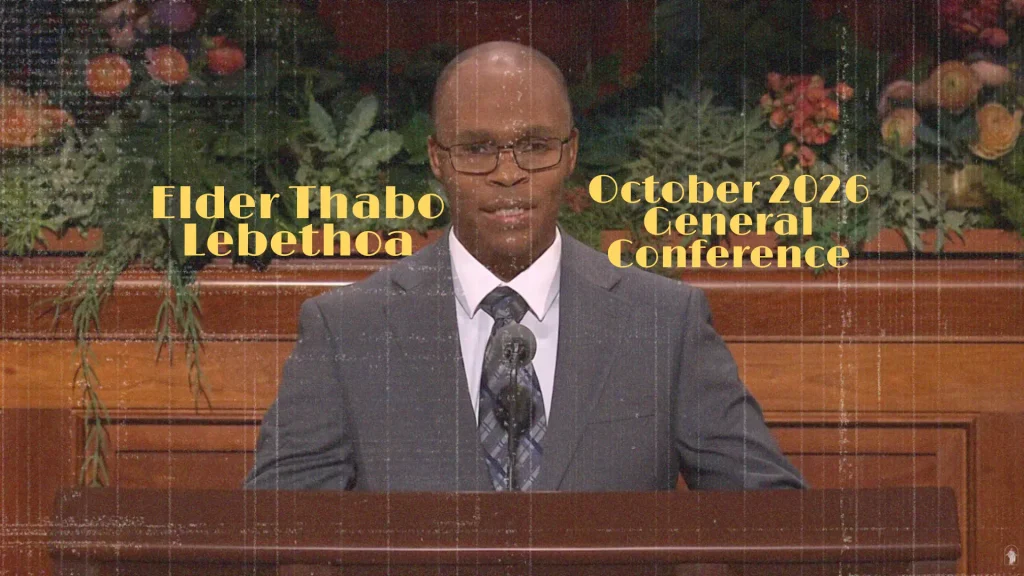
In his General Conference talk, “Jesus Christ Is the Light and Life of the World,” Elder Thabo Lebethoa teaches that Jesus Christ is the source of the light we need.
He begins with a personal experience from the early days of his marriage, when a disagreement with his wife escalated into an argument. As he considered how to resolve the conflict, a scripture about contention came to his mind.
That scripture helped him recognize what needed to change.
Elder Lebethoa uses this experience to illustrate how the Savior enlightens our minds through His Spirit, His teachings, and His perfect example.
He then shares three practices that can help us receive more of the Savior’s light:
- Increase our faith in Jesus Christ.
- Study the scriptures daily, especially the Book of Mormon.
- Practice repentance daily.
Each of these invitations offers a way to draw closer to the Savior and receive His guidance.
For Relief Society sisters, this message provides opportunities for meaningful conversations about navigating relationships, developing faith, recognizing revelation, creating consistent spiritual habits, and experiencing the joy of repentance.
It also reminds us that we do not have to navigate life’s difficulties through our own strength alone.
Jesus Christ knows our circumstances, understands our weaknesses, and can help us move forward.
This lesson help explores Elder Lebethoa’s message through 10 chronological discussion sections. Each section includes doctrinal insights, 10 discussion questions, 5 object lessons, and 10 personal sharing prompts.
The goal is to help Relief Society teachers create lessons that go beyond reviewing the talk and instead encourage sisters to recognize the Savior’s influence in their own lives.
How to Use This Relief Society Lesson Help
This outline follows the order of Elder Lebethoa’s message, separating the talk whenever he introduces a new experience, doctrine, or principle.
Each section includes a direct quotation from the talk, an explanation of the principle, questions designed to encourage meaningful class participation, hands-on object lesson ideas, and prompts that invite personal experiences and testimonies.
In total, this resource includes 100 discussion questions, 50 object lessons, and 100 personal sharing prompts.
You do not need to use every question or activity. Choose the portions that best meet the needs of your Relief Society sisters, and allow the Holy Ghost to guide the conversation.
The selected quotations are excerpts from the talk you provided. Refer to the original talk when reading the full passages in context.
Section 1: Even Happy Relationships Can Experience Contention
Direct Quote from Elder Lebethoa
“But shortly after we were married, a discussion one evening unexpectedly turned into our first serious disagreement. It quickly escalated into an argument, and we went from being a cheerful, happy couple to giving each other the silent treatment in a selfish state of quiet desperation.”
Understanding the Doctrine
Elder Lebethoa begins with a personal experience that many people can relate to.
He explains that his name means “joy,” while his wife’s middle name means “eternal or endless.” Together, their names mean “eternal joy.”
Despite that meaningful combination, their marriage was not immune to disagreements.
Shortly after they married, a conversation escalated into an argument that left both feeling frustrated and disconnected.
This experience teaches an important principle about relationships.
Even relationships built on love and good intentions can experience contention.
Disagreements are part of mortality. We have different personalities, expectations, experiences, and perspectives.
However, the way we respond to disagreements can either strengthen or weaken our relationships.
The Savior does not require us to agree on everything. He invites us to respond to one another with love, humility, patience, and respect.
Elder Lebethoa’s willingness to share this personal experience also demonstrates the value of recognizing our own weaknesses.
Spiritual growth often begins when we stop focusing exclusively on what someone else has done and consider what Heavenly Father would have us change.
Teaching Focus
Help sisters recognize that disagreement and contention are not the same thing.
A disagreement involves differing perspectives. Contention involves attitudes or behaviors that create hostility and division.
Invite class members to consider how the Savior can help us navigate difficult conversations.
10 Relief Society Discussion Questions
- Why do you think Elder Lebethoa chose to begin his message with a disagreement from his marriage?
- What is the difference between having a disagreement and allowing contention into a relationship?
- Why can small misunderstandings sometimes escalate into significant arguments?
- How do our expectations influence the way we respond to people we love?
- What role does pride play in unresolved disagreements?
- How can we recognize when a conversation is becoming contentious?
- Why is it sometimes difficult to be the first person to apologize or seek reconciliation?
- How can humility change the direction of a difficult conversation?
- What can we do when someone else does not respond peacefully?
- How can remembering our shared identity as children of God change the way we treat one another?
5 Object Lesson Ideas
Object Lesson 1: The Escalating Dominoes
Materials: Dominoes.
Instructions: Arrange dominoes in a row and gently knock over the first one. Discuss how one reaction can lead to another.
Spiritual application: Small choices in our words and attitudes can escalate conflict. Choosing a peaceful response can interrupt the pattern.
Object Lesson 2: The Tangled String
Materials: A piece of string or yarn.
Instructions: Tie several loose knots in the string, explaining that each knot represents a misunderstanding, harsh word, or unresolved frustration.
Invite sisters to consider how patience and communication can help untangle the knots.
Spiritual application: Relationships require humility, understanding, and intentional effort.
Object Lesson 3: The Two Perspectives
Materials: A picture that can be interpreted in more than one way.
Instructions: Show the picture and invite sisters to describe what they see.
Discuss how different perspectives do not necessarily mean someone is wrong.
Spiritual application: Understanding another person’s perspective can reduce contention.
Object Lesson 4: The Volume Control
Materials: A speaker or phone with adjustable volume.
Instructions: Demonstrate how increasing the volume changes the experience of hearing a message.
Spiritual application: Our tone can influence how our words are received, even when the message itself remains the same.
Object Lesson 5: The Bridge and the Wall
Materials: Building blocks.
Instructions: Use some blocks to construct a wall and others to construct a bridge.
Discuss which structure better represents the Savior’s approach to relationships.
Spiritual application: We can choose responses that create understanding rather than separation.
10 Personal Sharing Prompts
- Share an experience when a small misunderstanding became more significant than expected.
- Describe a time when choosing humility improved a relationship.
- Tell about someone who models peaceful communication.
- Share a lesson you have learned about handling disagreements.
- Describe an experience when listening changed your perspective.
- Tell about a time when an apology helped restore peace.
- Share how prayer has influenced a difficult relationship.
- Describe a moment when you recognized the need to change your own response.
- Tell about a gospel principle that has strengthened your relationships.
- Share what Elder Lebethoa’s experience teaches you about discipleship in everyday life.
Section 2: Contention Is Not the Doctrine of Jesus Christ
Direct Quote from Elder Lebethoa
Elder Lebethoa recalls the Savior’s words in 3 Nephi 11:29–30:
“For verily, verily I say unto you, he that hath the spirit of contention is not of me, but is of the devil, who is the father of contention, and he stirreth up the hearts of men to contend with anger, one with another.
“Behold, this is not my doctrine, to stir up the hearts of men with anger, one against another; but this is my doctrine, that such things should be done away.”
Understanding the Doctrine
As Elder Lebethoa considered how to resolve his disagreement with his wife, he remembered the Savior’s teachings about contention.
In 3 Nephi 11, Jesus Christ explains that contention does not come from Him.
Instead, the adversary encourages anger, division, and hostility.
The Savior’s doctrine invites us to remove contention from our hearts and relationships.
This does not mean disciples of Jesus Christ will never feel frustrated or upset.
Emotions are part of mortality.
The principle concerns what we choose to do with those emotions.
We can experience disappointment without attacking another person.
We can disagree without becoming hostile.
We can express concerns without intentionally hurting someone.
The Savior’s teaching invites us to examine not only our words but also the spirit in which we communicate.
When we choose patience, compassion, and humility, we invite greater peace into our relationships.
Teaching Focus
Invite sisters to consider how contention begins in the heart before it becomes visible through words or actions.
Emphasize that peaceful communication does not require tolerating mistreatment or avoiding necessary boundaries.
10 Relief Society Discussion Questions
- What does the Savior teach about the spiritual source of contention?
- Why does Satan benefit when people become divided?
- What is the difference between feeling anger and choosing contentious behavior?
- How can we disagree while still demonstrating Christlike love?
- Why is the spirit behind our communication as important as the words we use?
- What warning signs help us recognize contention developing in our hearts?
- How can prayer help us respond differently during conflict?
- What does it mean to remove contention rather than simply suppress our feelings?
- How can we teach children to resolve disagreements peacefully?
- What would change in our homes or communities if we consistently applied 3 Nephi 11:29–30?
5 Object Lesson Ideas
Object Lesson 1: The Fire and the Water
Materials: Pictures of a fire and a glass of water.
Instructions: Discuss what causes a fire to grow and what helps extinguish it.
Spiritual application: Harsh reactions can fuel contention, while humility and patience can help restore peace.
Object Lesson 2: The Heart Filter
Materials: A paper heart and a coffee filter.
Instructions: Write examples of unkind responses on small pieces of paper.
Discuss how we can pause and evaluate our words before speaking.
Spiritual application: Christlike discipleship requires examining our intentions.
Object Lesson 3: The Stop Sign
Materials: A printed stop sign.
Instructions: Ask sisters to identify situations when pausing before responding could prevent contention.
Spiritual application: A deliberate pause can create room for the Spirit to influence our response.
Object Lesson 4: The Two Seeds
Materials: Two seed packets.
Instructions: Label one “Contention” and the other “Peace.”
Discuss what kinds of behaviors nourish each.
Spiritual application: Our daily choices influence the spiritual environment of our relationships.
Object Lesson 5: The Reflecting Mirror
Materials: Small mirror.
Instructions: Invite sisters to consider their own reactions rather than focusing only on someone else’s behavior.
Spiritual application: Christlike change begins with personal accountability.
10 Personal Sharing Prompts
- Share a time when a scripture helped you respond more peacefully.
- Describe an experience when choosing patience prevented an argument.
- Tell about someone who demonstrates Christlike disagreement.
- Share how your understanding of contention has changed.
- Describe a time when the Holy Ghost prompted you to remain calm.
- Tell about a lesson you learned from resolving conflict.
- Share a gospel principle that helps you manage frustration.
- Describe an experience when kindness changed a difficult interaction.
- Tell about a time when you recognized the importance of controlling your words.
- Share what 3 Nephi 11:29–30 teaches you about following Jesus Christ.
Section 3: Jesus Christ Enlightens Our Minds Through His Spirit, Example, and Teachings
Direct Quote from Elder Lebethoa
“These words from the scriptures enlightened my mind and helped me know how to resolve the challenge I was facing. This enlightenment comes from the Savior.”
Understanding the Doctrine
After sharing the scripture about contention, Elder Lebethoa explains that the Savior’s words enlightened his mind.
The scripture did more than remind him of a gospel principle.
It helped him recognize how to respond to a specific challenge.
This illustrates one way Jesus Christ brings light into our lives.
Through the Holy Ghost, the Savior can help us understand truths and recognize how to apply them.
His teachings provide direction.
His perfect example shows us how to live.
And His Spirit can enlighten our minds as we seek guidance.
In 3 Nephi 11:11, the Savior identifies Himself as the Light and Life of the World.
In 3 Nephi 18:16, He explains that He has set an example for us.
These teachings remind us that Jesus Christ provides both spiritual understanding and a pattern for righteous living.
When we feel uncertain, we can turn to His words and example.
The light we receive may not answer every question immediately, but it can help us recognize the next faithful step.
Teaching Focus
Help sisters identify different ways the Savior’s light reaches us.
Invite them to consider how scriptural teachings can become personal guidance through the Holy Ghost.
10 Relief Society Discussion Questions
- What does it mean for Jesus Christ to be the Light of the World?
- How did the Savior’s teachings bring light to Elder Lebethoa’s situation?
- What is the difference between knowing a scripture and receiving personal guidance through it?
- How does the Holy Ghost enlighten our minds?
- Why is Jesus Christ’s example essential to our discipleship?
- How can scripture study help us recognize answers to personal challenges?
- What can we do when we feel spiritually uncertain?
- How does the Savior’s light influence our choices?
- Why might spiritual enlightenment come gradually?
- How can we become more attentive to the guidance the Lord offers?
5 Object Lesson Ideas
Object Lesson 1: The Flashlight in Darkness
Materials: Flashlight.
Instructions: Dim the room and turn on the flashlight.
Discuss how even a small amount of light changes what we can see.
Spiritual application: Jesus Christ provides spiritual understanding and direction.
Object Lesson 2: The Pathway Light
Materials: Several battery-operated candles.
Instructions: Arrange the candles along a pathway.
Spiritual application: The Savior’s teachings can illuminate the next steps in our lives.
Object Lesson 3: The Instruction Manual
Materials: Instruction manual.
Instructions: Discuss why instructions are helpful when we do not know how to complete a task.
Spiritual application: The Savior’s teachings provide guidance for discipleship.
Object Lesson 4: The Reflection
Materials: Mirror and flashlight.
Instructions: Shine the flashlight toward the mirror and observe the reflected light.
Spiritual application: As we follow Jesus Christ’s example, we can reflect His light to others.
Object Lesson 5: The Open Scriptures
Materials: Scriptures and a small lamp.
Instructions: Place the lamp beside the scriptures.
Discuss how the Savior’s teachings can help us understand difficult situations.
Spiritual application: Scripture study invites spiritual enlightenment.
10 Personal Sharing Prompts
- Share a time when a scripture provided guidance for a personal challenge.
- Describe an experience when the Holy Ghost enlightened your understanding.
- Tell about a teaching of Jesus Christ that changed your behavior.
- Share how the Savior’s example influences your decisions.
- Describe a time when you received an answer through scripture study.
- Tell about someone who helped you recognize the Savior’s light.
- Share a gospel truth that brought clarity during uncertainty.
- Describe an experience when spiritual guidance came gradually.
- Tell about a time when you felt prompted to apply a scripture.
- Share what it means to you that Jesus Christ is the Light and Life of the World.
Section 4: Whatever Challenges We Face, the Answer Is Always Jesus Christ
Direct Quote from Elder Lebethoa
“Whatever concerns, challenges, and struggles we may have in our lives, the answer is always Jesus Christ.”
Understanding the Doctrine
Elder Lebethoa expands his message beyond contention and relationships.
He acknowledges that disciples of Jesus Christ face many kinds of difficulties.
We may struggle with self-reliance, demanding responsibilities, feelings of inadequacy, fear, doubt, grief, or uncertainty about our future.
These experiences can leave us feeling overwhelmed.
But Elder Lebethoa offers a powerful testimony: Jesus Christ is always the answer.
This does not mean every challenge disappears when we exercise faith.
It means the Savior is the ultimate source of the spiritual strength, guidance, hope, and redemption we need.
Sometimes His help comes through personal revelation.
Sometimes it comes through increased patience or courage.
Sometimes it comes through the support of other people.
And sometimes His light helps us endure circumstances that do not immediately change.
Jesus Christ understands our experiences and can help us move forward.
Teaching Focus
Invite sisters to consider how the Savior can be the answer even when He does not immediately remove a particular difficulty.
Emphasize the difference between receiving Christ’s help and expecting every problem to be resolved according to our preferred timing.
10 Relief Society Discussion Questions
- What does it mean to say that Jesus Christ is always the answer?
- How can the Savior help us with practical, everyday challenges?
- Why does turning to Jesus Christ not necessarily mean our difficulties will disappear?
- How does the Savior provide strength when circumstances remain unchanged?
- What can we learn about Christ from His willingness to help us individually?
- How can we remember to seek His guidance before relying only on ourselves?
- What does it mean to bring our concerns to the Savior?
- How can faith in Jesus Christ influence the way we face uncertainty?
- Why is it important to recognize different ways the Savior answers our prayers?
- How can we help others turn toward Jesus Christ during difficult seasons?
5 Object Lesson Ideas
Object Lesson 1: The Heavy Backpack
Materials: Backpack filled with books.
Instructions: Invite a volunteer to hold the backpack.
Discuss how burdens feel lighter when we receive help carrying them.
Spiritual application: Jesus Christ strengthens us as we face life’s difficulties.
Object Lesson 2: The Puzzle Piece
Materials: Puzzle with a missing piece.
Instructions: Show how an incomplete puzzle can be difficult to understand.
Spiritual application: The Savior helps us gain perspective even when we do not understand every part of our circumstances.
Object Lesson 3: The Lifeline
Materials: Rope.
Instructions: Hold one end of the rope and discuss how a lifeline provides support.
Spiritual application: Jesus Christ offers help when we feel overwhelmed.
Object Lesson 4: The First Aid Kit
Materials: First aid kit.
Instructions: Discuss how different injuries require different kinds of care.
Spiritual application: The Savior understands our individual needs and provides help suited to our circumstances.
Object Lesson 5: The Lighthouse
Materials: Picture of a lighthouse.
Instructions: Discuss how a lighthouse guides ships through difficult conditions.
Spiritual application: Jesus Christ provides direction even when the storms of life continue.
10 Personal Sharing Prompts
- Share an experience when Jesus Christ strengthened you during a challenge.
- Describe a time when you received help in an unexpected way.
- Tell about a scripture that has given you hope.
- Share how your understanding of the Savior’s role in your life has grown.
- Describe a moment when prayer brought peace during uncertainty.
- Tell about someone who helped you recognize the Savior’s love.
- Share an experience when you felt sustained rather than immediately rescued.
- Describe how faith has influenced your response to difficulty.
- Tell about a time when you learned to rely more fully on Jesus Christ.
- Share what Elder Lebethoa’s testimony means to you.
Section 5: Jesus Christ Can Restore Hope and Help Us Begin Again
Direct Quote from Elder Lebethoa
“Jesus Christ can bring light in our moments of darkness and restore hope where there is hopelessness.”
Understanding the Doctrine
Elder Lebethoa teaches that Jesus Christ can bring light into even our darkest moments.
His statement offers hope to anyone who feels discouraged, uncertain, or spiritually distant.
Sometimes we become so focused on our current circumstances that we struggle to imagine a different future.
We may feel trapped by past mistakes.
We may be overwhelmed by present responsibilities.
Or we may worry that our difficulties will never improve.
The Savior offers hope because His power extends beyond what we can accomplish alone.
Through His Atonement, we can repent, change, heal, and continue progressing.
Elder Lebethoa also reminds us that the Savior knows where we have been, where we are, and where we need to be.
This is a powerful expression of Christ’s personal knowledge of each of us.
We do not have to explain our entire history to Him.
He already understands our circumstances.
And He can help us recognize possibilities that we may not currently see.
Teaching Focus
Help sisters recognize that hope in Jesus Christ is not simply optimism.
It is confidence in His power to redeem, strengthen, and guide us.
10 Relief Society Discussion Questions
- What is the difference between worldly optimism and hope in Jesus Christ?
- How can the Savior bring light into moments of spiritual darkness?
- Why is it comforting to know that Jesus Christ understands our past, present, and future?
- How does the Atonement make new beginnings possible?
- What can we do when hope feels difficult to find?
- How can we recognize the Savior’s influence during discouraging seasons?
- Why is it important to remember that our current circumstances do not define our eternal future?
- How can we help others experience hope without minimizing their struggles?
- What does it mean to allow Jesus Christ to guide us toward who we can become?
- How can remembering the Savior’s perfect knowledge of us strengthen our faith?
5 Object Lesson Ideas
Object Lesson 1: The Sunrise
Materials: Picture of a sunrise.
Instructions: Discuss how darkness gradually gives way to light.
Spiritual application: Jesus Christ offers hope and the possibility of new beginnings.
Object Lesson 2: The Eraser
Materials: Pencil and eraser.
Instructions: Write a mistake on paper and erase it.
Clarify that repentance involves more than simply removing consequences.
Spiritual application: Through Jesus Christ, we can repent and change.
Object Lesson 3: The Growing Seed
Materials: Seed and small plant.
Instructions: Compare the seed with the mature plant.
Spiritual application: The Savior sees our potential beyond our present circumstances.
Object Lesson 4: The Dark Room
Materials: Battery-operated candle.
Instructions: Turn on the candle in a dim space.
Spiritual application: Christ’s light can bring hope even when darkness remains around us.
Object Lesson 5: The New Page
Materials: Notebook.
Instructions: Turn from a written page to a blank page.
Spiritual application: Through repentance and faith, the Savior helps us begin again.
10 Personal Sharing Prompts
- Share a time when Jesus Christ helped you find hope.
- Describe an experience when a difficult season eventually brought spiritual growth.
- Tell about a scripture that reminds you of the Savior’s love.
- Share how your understanding of new beginnings has changed.
- Describe a moment when you felt encouraged to keep moving forward.
- Tell about someone who helped you recognize hope during hardship.
- Share an experience when you felt the Savior understood your circumstances.
- Describe a time when repentance brought renewed peace.
- Tell about a lesson you learned while waiting for answers.
- Share what it means to you that Jesus Christ knows where you need to be.
Section 6: Increasing Faith Means Trusting That Jesus Christ Understands Our Difficulties
Direct Quote from Elder Lebethoa
“Having faith in Jesus Christ means trusting that He understands our daily difficulties and knows how to help us rise above them because He has experienced all our pains, afflictions, and infirmities.”
Understanding the Doctrine
Elder Lebethoa introduces the first of three ways to increase the Savior’s light in our lives: strengthening our faith in Jesus Christ.
He connects faith with trust.
Faith is not merely believing that Jesus Christ exists.
It includes trusting His understanding, power, and willingness to help us.
Alma 7:11–12 teaches that the Savior experienced the pains, sicknesses, temptations, and infirmities of His people.
Because of His Atonement, He understands our mortal experiences perfectly.
This means that when we turn to Him in prayer, we are not approaching someone who is unfamiliar with suffering.
We are approaching the Savior who knows exactly how to succor us.
Elder Lebethoa also references Doctrine and Covenants 6:36, which invites us to look unto Christ in every thought and not doubt or fear.
Faith in Jesus Christ helps us remember that we do not face our challenges alone.
Teaching Focus
Invite sisters to explore how the Savior’s personal understanding of suffering strengthens their ability to trust Him.
10 Relief Society Discussion Questions
- What is the difference between believing in Jesus Christ and trusting Him?
- How does Alma 7:11–12 deepen our understanding of the Savior’s Atonement?
- Why is it important that Jesus Christ understands our individual difficulties?
- How can we strengthen our trust in Him during uncertainty?
- What does it mean to look unto Christ in every thought?
- How can faith influence the way we respond to fear?
- Why does trusting Jesus Christ require humility?
- How can we recognize the Savior’s help in ordinary challenges?
- What does the word “succor” teach us about His willingness to help?
- How can we develop greater confidence in the Savior’s ability to guide us?
5 Object Lesson Ideas
Object Lesson 1: The Trust Walk
Materials: A clear, unobstructed pathway.
Instructions: Invite a volunteer to follow simple verbal directions while looking down rather than ahead.
Keep the activity safe and voluntary.
Spiritual application: Faith involves trusting guidance even when we cannot see the entire path.
Object Lesson 2: The Helping Hand
Materials: Picture of two hands reaching toward each other.
Instructions: Discuss what it means to accept help.
Spiritual application: Jesus Christ is willing to strengthen us, but we must turn toward Him.
Object Lesson 3: The Strong Foundation
Materials: Blocks and a sturdy board.
Instructions: Build a structure on the board.
Spiritual application: Faith in Jesus Christ provides a foundation during life’s difficulties.
Object Lesson 4: The Burden and the Support
Materials: Heavy book and sturdy table.
Instructions: Place the book on the table.
Spiritual application: The Savior can sustain us when our burdens feel too heavy.
Object Lesson 5: The Open Hand
Materials: Small object.
Instructions: Hold the object tightly, then open your hand.
Discuss the difference between controlling everything and trusting God.
Spiritual application: Faith includes surrendering our insistence on controlling every outcome.
10 Personal Sharing Prompts
- Share a time when you learned to trust Jesus Christ more fully.
- Describe an experience when the Savior strengthened you.
- Tell about a scripture that increased your faith.
- Share how Alma 7:11–12 has influenced your testimony.
- Describe a time when you felt understood by the Savior.
- Tell about someone whose faith inspired you.
- Share an experience when you chose faith despite uncertainty.
- Describe how prayer has strengthened your trust in Jesus Christ.
- Tell about a challenge that helped your faith grow.
- Share what it means to you that the Savior understands your individual experiences.
Section 7: Strong Faith Requires Intentional, Daily Effort
Direct Quote from Elder Lebethoa
Elder Lebethoa quotes President Dieter F. Uchtdorf:
“Strong faith in Jesus Christ doesn’t happen overnight.”
He also shares President Dallin H. Oaks’s teaching:
“Strong faith requires more than strong desire.”
Understanding the Doctrine
After explaining that faith involves trusting Jesus Christ, Elder Lebethoa emphasizes that strong faith must be developed intentionally.
President Uchtdorf compares faith to a healthy tree that requires nourishment.
President Oaks teaches that faith requires daily effort through practices such as prayer and scripture study.
Together, these teachings remind us that spiritual strength rarely develops accidentally.
We may desire greater faith, but desire alone is not enough.
Faith grows as we consistently choose to turn toward Jesus Christ.
These choices do not have to be dramatic.
Small, sincere efforts can create meaningful spiritual growth over time.
A short prayer, a few verses of scripture, an act of service, or a moment of repentance can help strengthen our relationship with Heavenly Father.
The important principle is consistency.
Teaching Focus
Help sisters identify realistic ways to nourish their faith within their current circumstances.
Avoid comparing the length or complexity of spiritual routines.
10 Relief Society Discussion Questions
- Why does strong faith require intentional effort?
- What can we learn from President Uchtdorf’s comparison of faith to a growing tree?
- Why is spiritual growth often gradual?
- What is the difference between wanting stronger faith and actively developing it?
- How can small daily habits influence our long-term spiritual strength?
- Why is consistency often more important than intensity?
- What challenges make spiritual habits difficult to maintain?
- How can we adapt our spiritual routines during demanding seasons of life?
- How does the Holy Ghost help us recognize opportunities for spiritual growth?
- What is one small change that could strengthen our faith in Jesus Christ?
5 Object Lesson Ideas
Object Lesson 1: The Growing Tree
Materials: Seed, soil, and a small plant.
Instructions: Discuss what a seed needs to grow.
Spiritual application: Faith requires consistent nourishment.
Object Lesson 2: The Watering Can
Materials: Watering can.
Instructions: Discuss why plants need regular care rather than occasional excessive watering.
Spiritual application: Small, consistent spiritual habits help faith grow.
Object Lesson 3: The Building Blocks
Materials: Building blocks.
Instructions: Add one block at a time.
Spiritual application: Spiritual strength develops through repeated faithful choices.
Object Lesson 4: The Daily Calendar
Materials: Calendar.
Instructions: Mark small daily actions that can strengthen faith.
Spiritual application: Intentional discipleship develops through consistent effort.
Object Lesson 5: The Exercise Weight
Materials: Light hand weight.
Instructions: Discuss how physical strength develops through repeated practice.
Spiritual application: Faith grows as we exercise it.
10 Personal Sharing Prompts
- Share a small spiritual habit that has strengthened your faith.
- Describe a time when consistent effort brought spiritual growth.
- Tell about someone who taught you the importance of daily discipleship.
- Share how your prayer habits have changed over time.
- Describe an experience when your faith grew gradually.
- Tell about a season when you had to simplify your spiritual routine.
- Share a scripture study practice that has helped you.
- Describe how you have learned to prioritize spiritual nourishment.
- Tell about a time when a small act of faith made a difference.
- Share what intentional faith development means to you.
Section 8: Daily Scripture Study Invites the Savior’s Light Into Our Lives
Direct Quote from Elder Lebethoa
“There is no single right way to study the scriptures.”
Understanding the Doctrine
Elder Lebethoa introduces the second practice for receiving more of the Savior’s light: studying the scriptures daily, especially the Book of Mormon.
He teaches that scripture study helps us come to know Jesus Christ and experience His love.
Importantly, he acknowledges that there is no single correct method of scripture study.
Some people benefit from reading chronologically.
Others prefer topical study.
Some begin with a question or focus on a specific passage.
The best approach may vary depending on our circumstances.
The central principle is sincere, consistent engagement with the word of God.
This teaching can be especially encouraging for sisters navigating demanding responsibilities.
Scripture study does not have to look identical for everyone.
What matters is our desire to know the Savior and receive His guidance.
Teaching Focus
Encourage sisters to identify scripture study methods that help them connect with Jesus Christ.
Emphasize sincerity and consistency rather than comparison.
10 Relief Society Discussion Questions
- Why does studying the scriptures help us come closer to Jesus Christ?
- What does Elder Lebethoa teach about different scripture study methods?
- Why is it helpful to recognize that there is no single right way to study?
- How can studying by topic help us find answers to personal questions?
- What role does prayer play in scripture study?
- How can we recognize the Savior’s love through the Book of Mormon?
- Why is consistency more important than the length of a study session?
- How can scripture study become more personal and meaningful?
- What can we do when scripture study feels difficult or unproductive?
- How can we make scripture study a more natural part of daily life?
5 Object Lesson Ideas
Object Lesson 1: The Different Paths
Materials: Several routes drawn on paper leading to the same destination.
Instructions: Discuss how different routes can lead to the same place.
Spiritual application: Different scripture study methods can help us draw closer to Jesus Christ.
Object Lesson 2: The Spiritual Meal
Materials: Plate and utensils.
Instructions: Discuss why regular nourishment is important.
Spiritual application: Scripture study provides ongoing spiritual nourishment.
Object Lesson 3: The Magnifying Glass
Materials: Magnifying glass.
Instructions: Examine a small object closely.
Spiritual application: Studying a single verse carefully can reveal meaningful insights.
Object Lesson 4: The Question Jar
Materials: Jar and slips of paper.
Instructions: Write gospel questions on slips of paper.
Discuss how scripture study can help us seek answers.
Spiritual application: The scriptures provide guidance for personal questions.
Object Lesson 5: The Bookmark
Materials: Bookmark.
Instructions: Invite sisters to write a simple scripture study goal on a bookmark.
Spiritual application: Small reminders can encourage consistent spiritual habits.
10 Personal Sharing Prompts
- Share a scripture study method that works well for you.
- Describe a time when the Book of Mormon strengthened your testimony.
- Tell about a verse that helped you understand Jesus Christ better.
- Share an experience when scripture study answered a question.
- Describe how your scripture study habits have changed.
- Tell about someone who encouraged you to study the scriptures.
- Share a time when a familiar passage taught you something new.
- Describe how scripture study has brought peace into your life.
- Tell about a spiritual impression you received while reading.
- Share what it means to you to experience the Savior’s love through scripture study.
Section 9: Scripture Study Can Inspire Us to Make Meaningful Changes
Direct Quote from Elder Lebethoa
“We too can receive enlightenment as we study our scriptures.”
Understanding the Doctrine
Elder Lebethoa shares an experience from his time serving as a mission leader.
A missionary told him about a man who had been reading the Book of Mormon.
After studying the scriptures, the man felt inspired to make a significant change in his life.
He took a shovel, dug a hole in his garden, and buried a newly purchased large tin of coffee.
The experience illustrates the connection between receiving spiritual light and acting upon it.
Scripture study is not intended merely to increase our knowledge.
It can help us recognize what Heavenly Father wants us to change.
Sometimes the Holy Ghost prompts us to adjust a habit.
Other times, we may feel inspired to apologize, serve someone, improve our priorities, or strengthen our obedience.
The specific changes will differ for each person.
But the principle remains the same.
As we study the scriptures sincerely, the Holy Ghost can help us recognize opportunities to become more like Jesus Christ.
Teaching Focus
Invite sisters to consider how scripture study can lead to action.
Emphasize that spiritual impressions should be evaluated in harmony with revealed gospel principles.
10 Relief Society Discussion Questions
- What stands out to you about the man’s response to reading the Book of Mormon?
- Why is acting on spiritual impressions an important part of scripture study?
- What is the difference between gaining knowledge and experiencing conversion?
- How can the Holy Ghost help us recognize habits that need to change?
- Why might spiritual impressions lead different people to make different adjustments?
- How can we become more willing to act when we receive guidance?
- What sometimes prevents us from following spiritual impressions?
- How does obedience influence our ability to receive further light?
- Why is personal revelation connected to personal responsibility?
- What could change if we approached scripture study with the question, “What would the Lord have me do?”
5 Object Lesson Ideas
Object Lesson 1: The Instructions and the Action
Materials: Simple instructions for assembling an object.
Instructions: Read the instructions without completing the task.
Discuss the difference between knowing what to do and doing it.
Spiritual application: Scripture study becomes transformative when we act on what we learn.
Object Lesson 2: The Seed and the Soil
Materials: Seed and soil.
Instructions: Show how a seed must be planted to grow.
Spiritual application: Gospel truths can produce spiritual growth when we apply them.
Object Lesson 3: The Mirror
Materials: Mirror.
Instructions: Discuss how mirrors help us recognize things we may need to adjust.
Spiritual application: Scriptures can help us examine our lives.
Object Lesson 4: The Direction Arrow
Materials: Paper arrow.
Instructions: Rotate the arrow to point in a new direction.
Spiritual application: Personal revelation may invite us to change our direction.
Object Lesson 5: The Action Card
Materials: Blank cards.
Instructions: Invite sisters to write one gospel principle they want to apply.
Spiritual application: Acting on spiritual insights strengthens conversion.
10 Personal Sharing Prompts
- Share a time when scripture study prompted you to make a change.
- Describe an experience when you acted on a spiritual impression.
- Tell about a gospel principle that changed your daily habits.
- Share how the Book of Mormon has influenced your decisions.
- Describe a time when obedience brought greater spiritual clarity.
- Tell about someone whose example inspired you to act on gospel teachings.
- Share a scripture that helped you recognize an area for growth.
- Describe an experience when a small adjustment brought meaningful blessings.
- Tell about a time when you recognized the importance of following through.
- Share what it means to you to allow the scriptures to change your life.
Section 10: Daily Repentance Invites the Savior’s Light and Makes New Beginnings Possible
Direct Quote from Elder Lebethoa
“Repentance means a change of mind and a turning of the heart to God.”
Understanding the Doctrine
Elder Lebethoa concludes his message by teaching the third way to receive more of the Savior’s light: practicing daily repentance.
He explains that repentance involves changing our minds and turning our hearts toward Heavenly Father.
This is more than simply acknowledging mistakes.
Repentance invites us to reconsider our priorities, habits, attitudes, and choices.
Elder Lebethoa offers several areas for reflection.
We might consider how we use our time, what we watch or listen to, and how we communicate with others.
These examples demonstrate that repentance is not limited to serious transgressions.
It is also part of our ongoing effort to become more like Jesus Christ.
Importantly, Elder Lebethoa reminds us that we do not have to repent through our own strength alone.
The Savior understands our weaknesses and is willing to help us.
He references Alma 7:12, which teaches that Jesus Christ knows how to succor His people.
Elder Lebethoa also shares Sister Tamara W. Runia’s teaching that repentance is an expression of God’s love and that accepting His invitation demonstrates our love for Him.
This perspective can transform the way we view repentance.
Rather than seeing it only as a response to failure, we can recognize it as a gift that allows us to draw closer to Jesus Christ.
Teaching Focus
Help sisters understand repentance as a hopeful, Christ-centered process.
Emphasize that the Savior’s willingness to help us is greater than our weaknesses.
10 Relief Society Discussion Questions
- How does Elder Lebethoa define repentance?
- Why is repentance more than simply feeling sorry for mistakes?
- What does it mean to turn our hearts toward God?
- How can daily repentance strengthen our relationship with Jesus Christ?
- Why might we need to repent of attitudes and habits, not just obvious actions?
- How does the Savior help us recognize what needs to change?
- Why is it important to remember that we do not repent alone?
- How does Sister Runia’s teaching change the way we think about repentance?
- What can we do when we feel discouraged by repeated weaknesses?
- How can daily repentance invite greater light and hope into our lives?
5 Object Lesson Ideas
Object Lesson 1: The Course Correction
Materials: Compass.
Instructions: Point the compass in different directions and demonstrate returning to the correct heading.
Spiritual application: Repentance helps us continually turn toward Heavenly Father.
Object Lesson 2: The Open Door
Materials: Door or picture of an open doorway.
Instructions: Discuss the difference between standing outside a doorway and choosing to enter.
Spiritual application: The Savior invites us to repent and come unto Him.
Object Lesson 3: The Clean Window
Materials: Transparent plastic or glass and a cloth.
Instructions: Clean the surface.
Spiritual application: Repentance helps remove spiritual obstacles and allows us to receive greater light.
Object Lesson 4: The New Beginning
Materials: Notebook.
Instructions: Turn to a blank page.
Spiritual application: Through Jesus Christ, repentance makes spiritual renewal possible.
Object Lesson 5: The Heart Turned Toward God
Materials: Paper heart and a picture of Jesus Christ.
Instructions: Position the heart facing away from the picture, then turn it toward the Savior.
Spiritual application: Repentance involves redirecting our desires and choices toward Jesus Christ.
10 Personal Sharing Prompts
- Share how your understanding of repentance has changed.
- Describe a time when repentance brought peace into your life.
- Tell about a gospel teaching that helped you view repentance more positively.
- Share an experience when the Savior helped you overcome a weakness.
- Describe a time when you felt prompted to adjust a habit.
- Tell about someone who taught you the importance of repentance.
- Share how the sacrament helps you recommit to Jesus Christ.
- Describe a moment when you felt the joy of a new beginning.
- Tell about a scripture that helps you remember the Savior’s mercy.
- Share what daily repentance means to you personally.
Conclusion: Letting Jesus Christ Bring More Light Into Our Lives
Elder Thabo Lebethoa’s General Conference talk, “Jesus Christ Is the Light and Life of the World,” reminds us that the Savior is the ultimate source of spiritual guidance, strength, and hope.
Through a personal experience with contention, Elder Lebethoa demonstrates how the Savior’s teachings can provide answers to ordinary challenges.
He then invites us to increase the Savior’s light in our lives through three essential practices: strengthening our faith, studying the scriptures, and practicing daily repentance.
Each invitation provides a way to draw closer to Jesus Christ.
The Savior’s Light Can Transform Our Relationships
One of the most practical lessons from this talk is that the Savior’s teachings can influence how we respond to other people.
When we allow the Holy Ghost to guide us, we can recognize opportunities to choose patience over anger, humility over pride, and understanding over contention.
These choices can strengthen our homes, friendships, and communities.
Faith in Jesus Christ Brings Strength During Challenges
Elder Lebethoa reminds us that Jesus Christ understands our individual difficulties.
Through His Atonement, He knows our pains, afflictions, and weaknesses.
We can trust Him because His understanding is perfect.
As we intentionally nourish our faith, we become better prepared to recognize His help.
Scripture Study Provides Personal Direction
The scriptures do more than teach us about Jesus Christ.
They can help us recognize how to follow Him.
As we study sincerely and consistently, the Holy Ghost can enlighten our minds and inspire meaningful changes.
The method of scripture study may differ for each person, but the invitation remains the same: come closer to the Savior through His word.
Repentance Makes New Beginnings Possible
Daily repentance allows us to continually turn our hearts toward Heavenly Father.
Through Jesus Christ, we can change our habits, strengthen our relationships, and become more like Him.
Repentance is not simply an acknowledgment of weakness.
It is an expression of faith in the Savior’s power to help us become better.
Final Relief Society Reflection
Consider concluding your lesson with these questions:
1. Where do I most need the Savior’s light in my life right now?
2. Which of Elder Lebethoa’s three invitations—faith, scripture study, or repentance—could make the greatest difference in my relationship with Jesus Christ?
3. What is one specific action I can take this week to invite more of His light into my life?
Invite sisters to spend a moment reflecting on their answers.
They might choose to improve a relationship, strengthen a spiritual habit, act on a prompting, or make a change through repentance.
The goal is not to create an overwhelming list of responsibilities.
It is to identify one meaningful way to draw closer to Jesus Christ.
Final Testimony and Invitation
The message of “Jesus Christ Is the Light and Life of the World” is ultimately a testimony of the Savior’s personal love and power.
He understands our challenges.
He knows our weaknesses.
He sees our potential.
And He offers the light we need to move forward.
As Relief Society sisters, we may experience different challenges, responsibilities, and seasons of life.
But we can all turn to the same Savior.
Jesus Christ is the Light and Life of the World. As we increase our faith in Him, study His words, and practice daily repentance, we can receive greater light, direction, peace, and hope.
Through Him, we can continue growing, changing, and becoming more like our Heavenly Father intends us to be.

Leave a Reply