Introduction: Becoming the Kind of Disciples Who Help Before They Judge
Have you ever watched someone make a mistake and immediately formed an opinion about what they should have done differently?
Perhaps you witnessed a parent struggling with a child, noticed someone behaving differently during church, or heard about another person’s difficult circumstances.
Before you knew the full story, you may have found yourself making assumptions.
We have all experienced moments when judgment comes more naturally than compassion.
But what if we approached those situations differently?
What if, instead of immediately evaluating another person’s choices, we first asked ourselves how we could help?
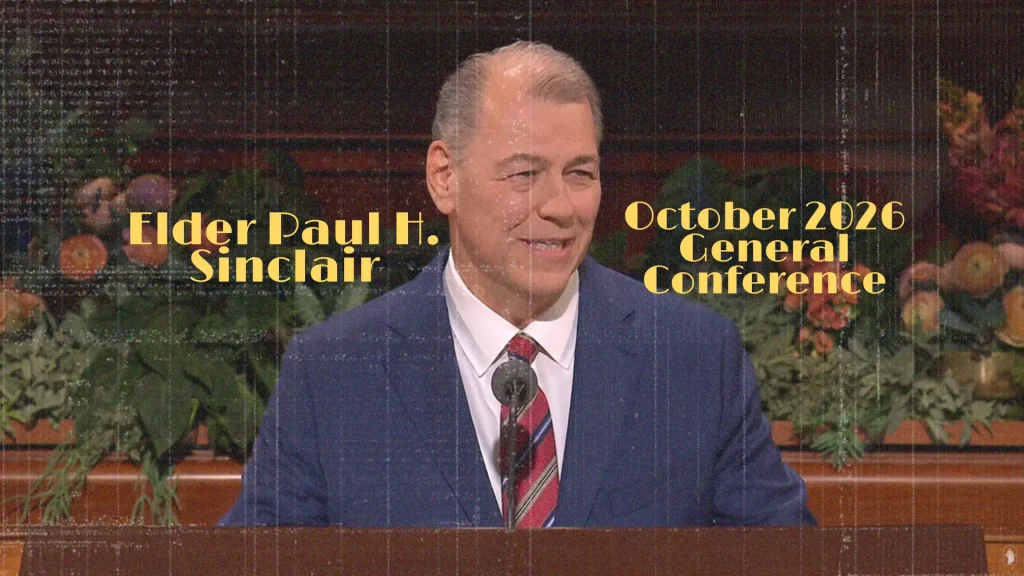
In his General Conference talk, “Quick to Help, Slow to Judge,” Elder Paul H. Sinclair teaches a simple but powerful principle of Christlike discipleship.
Through a humorous experience during a Primary program and the Savior’s interaction with the woman at the well, Elder Sinclair demonstrates that discipleship is not merely about recognizing what is wrong.
It is about recognizing what someone needs.
He reminds us that Jesus Christ knows every person’s history, struggles, weaknesses, and potential. Yet the Savior consistently approaches individuals with compassion, dignity, and an invitation to change.
His example challenges us to examine how we respond to others, especially those whose circumstances or choices we do not fully understand.
For Relief Society sisters, this message provides a meaningful opportunity to discuss judgment, compassion, ministering, belonging, personal transformation, and the power of small acts of kindness.
It also invites us to reflect on the culture we create within our wards and communities.
Do people feel safe asking for help?
Do new members feel welcomed and valued?
Do those who are struggling feel understood rather than evaluated?
And perhaps most importantly, do people experience the love of Jesus Christ through their interactions with us?
This Relief Society lesson help explores Elder Sinclair’s message through eight chronological discussion sections, each centered on a distinct principle or shift in emphasis.
Every section includes selected quotations from the talk, a doctrinal breakdown, 10 discussion questions, 5 object lessons, and 10 personal sharing prompts.
In total, you’ll find 80 discussion questions, 40 object lessons, and 80 personal sharing prompts to help you prepare a meaningful, Spirit-led Relief Society lesson.
How to Use This Relief Society Lesson Help
This outline follows the order of Elder Sinclair’s talk, beginning with his experience during the Primary program, continuing through the Savior’s encounter with the Samaritan woman, and concluding with our responsibility to help others feel welcomed into the Church of Jesus Christ.
Because the talk is relatively short, some sections explore different principles taught within the same story. This allows teachers to highlight important statements without combining every lesson into only two or three broad topics.
Each section includes:
- Direct quotes: Selected passages from Elder Sinclair’s talk that establish the principle being discussed.
- Understanding the doctrine: An explanation of the teaching and how it applies to discipleship.
- 10 Relief Society discussion questions: Thought-provoking questions designed to encourage meaningful participation.
- 5 object lessons: Practical teaching activities with materials, instructions, and spiritual applications.
- 10 personal sharing prompts: Invitations for sisters to share experiences, insights, and testimonies.
You do not need to use every question or activity. Choose those that best fit your class and the direction of the discussion.
Because this talk addresses judgment and personal circumstances, encourage sisters to share their own experiences rather than speculate about or disclose private details concerning others.
The goal is to create a discussion environment that reflects the very principle Elder Sinclair teaches: being quick to help and slow to judge.
Section 1: Our First Reactions Reveal Opportunities for Spiritual Growth
Direct Quotes from Elder Sinclair
Elder Sinclair begins with a humorous experience during a ward Primary program. A young boy named James had discovered an unusual way to use the buttons on his new suit jacket.
“Well, James cleverly devised a purpose for both. I anxiously watched as James delightedly buttoned his right sleeve to his left jacket lapel.”
He then describes his own reaction:
“As James became more and more stuck, I became more and more aggravated.”
Understanding the Doctrine
Elder Sinclair’s experience begins with something ordinary: a young boy exploring the unusual features of his suit.
James was not intentionally creating a problem.
He was curious.
But his curiosity resulted in an uncomfortable situation when he accidentally fastened his arm against his chest.
As Elder Sinclair watched, his initial response was frustration.
This detail is significant because it reveals how quickly we can become focused on another person’s behavior rather than their needs.
James needed assistance.
But Elder Sinclair initially saw an irritating disruption.
How often do we respond similarly?
A child may be struggling during sacrament meeting.
A neighbor may make a decision we do not understand.
A family member may respond emotionally during a difficult conversation.
Someone may behave in a way that seems inconvenient, inappropriate, or frustrating.
Our first instinct may be to evaluate their behavior.
But Elder Sinclair’s story invites us to recognize that our initial reaction is not always the most Christlike response.
The Savior invites us to develop the spiritual maturity to look beyond what someone is doing and consider what they may be experiencing.
This requires humility.
It also requires recognizing that we do not always understand another person’s circumstances.
Teaching Focus: Moving From Irritation to Understanding
Invite sisters to consider how easily irritation can become judgment.
Emphasize that noticing our initial reactions provides an opportunity for growth.
We may not control every immediate thought, but we can choose how to respond.
10 Relief Society Discussion Questions
- Why do you think Elder Sinclair included his own frustration in this story rather than focusing only on James?
- What does his reaction reveal about how easily we can become judgmental?
- Why is it sometimes easier to recognize someone’s mistake than to recognize their need?
- How do our expectations influence the way we interpret another person’s behavior?
- What is the difference between observing a problem and judging the person experiencing it?
- How can we recognize when frustration is beginning to influence our behavior?
- Why might ordinary situations provide some of our greatest opportunities to practice Christlike discipleship?
- How can we develop greater patience with people who inconvenience us?
- What might change if we asked, “What does this person need?” instead of “Why are they doing that?”
- How does humility help us respond more compassionately to others?
5 Object Lesson Ideas
Object Lesson 1: The Tangled Necklace
Materials: A necklace or piece of string with several knots.
Instructions: Show the tangled necklace and ask sisters what their first reaction would be if they needed to untangle it quickly.
Discuss how frustration can make a difficult situation feel worse.
Then slowly begin working through the knots.
Spiritual application: People sometimes find themselves in difficult situations. Rather than becoming frustrated with the problem, we can patiently help them work through it.
Object Lesson 2: The Missing Puzzle Piece
Materials: A puzzle with one piece missing.
Instructions: Show the incomplete puzzle and ask sisters what they notice first.
Many may immediately identify the missing piece.
Discuss how we sometimes focus on what is wrong rather than appreciating what is already good.
Spiritual application: Christlike discipleship includes recognizing someone’s worth and potential rather than focusing exclusively on imperfections.
Object Lesson 3: The Blurry Picture
Materials: A blurry photograph and a clear version of the same image.
Instructions: Show the blurry picture first and ask sisters to describe what they think it represents.
Then reveal the clear picture.
Spiritual application: Our judgments are often based on incomplete information.
Object Lesson 4: The Two Lenses
Materials: Two paper frames labeled “Judgment” and “Compassion.”
Instructions: Present a hypothetical situation involving someone who appears frustrated or distracted.
Invite sisters to consider how they might interpret the situation through each frame.
Spiritual application: The perspective we choose influences the way we treat others.
Object Lesson 5: The Pause Button
Materials: A printed pause symbol.
Instructions: Discuss how pausing a video allows us to stop before the next scene.
Invite sisters to identify moments when pausing before reacting could create room for compassion.
Spiritual application: A brief pause can help us choose a response guided by the Spirit rather than immediate frustration.
10 Personal Sharing Prompts
- Share an experience when your first impression of someone turned out to be incorrect.
- Describe a time when you realized you had misunderstood another person’s actions.
- Tell about someone who showed patience when you made a mistake.
- Share an experience when you chose compassion instead of frustration.
- Describe a situation that taught you to be less judgmental.
- Tell about a time when you recognized that someone needed help rather than correction.
- Share how your understanding of patience has changed over time.
- Describe an experience when the Holy Ghost helped you respond more kindly.
- Tell about someone whose example has taught you to look for the good in others.
- Share what Elder Sinclair’s initial reaction teaches you about your own discipleship.
Section 2: Christlike Disciples Recognize a Need and Act Without Judgment
Direct Quotes from Elder Sinclair
Elder Sinclair describes the little girl who was sitting beside James:
“But instead of being aggravated, she wanted to help.”
He explains that she quickly recognized what James needed and freed him from his predicament.
Understanding the Doctrine
The little girl in Elder Sinclair’s story provides a beautiful example of Christlike service.
She saw the same situation Elder Sinclair saw.
She recognized that James had gotten himself into an uncomfortable predicament.
But her response was entirely different.
Rather than focusing on how James had created the problem, she focused on helping him solve it.
She did not need to understand why he had buttoned his sleeve to his jacket.
She did not need to criticize his decision.
She simply recognized that he needed help.
This is an important principle of discipleship.
Sometimes we delay helping others because we become preoccupied with understanding how they arrived at their circumstances.
We may wonder whether someone could have avoided a problem.
We may evaluate whether they made wise decisions.
We may even question whether they deserve assistance.
But the Savior’s example teaches us to recognize the needs of others and respond with compassion.
The little girl’s actions were small.
She did not give a speech or perform an extraordinary act.
She simply unfastened a button.
Yet that small act made a meaningful difference.
Teaching Focus: Helping Without Requiring an Explanation
Discuss how service can become more Christlike when we stop requiring people to justify their need for help.
Invite sisters to consider opportunities for simple, immediate acts of compassion.
10 Relief Society Discussion Questions
- What made the little girl’s response different from Elder Sinclair’s?
- Why is it significant that she helped without criticizing James?
- How can we become better at recognizing when someone needs assistance?
- What sometimes prevents us from helping immediately?
- Why do we sometimes feel the need to understand someone’s choices before offering help?
- How does the Savior’s example challenge that tendency?
- What can we learn from the simplicity of the little girl’s actions?
- Why can small acts of kindness have lasting spiritual significance?
- How can we help others without making them feel embarrassed or inadequate?
- What would change in our Relief Society if we consistently looked for opportunities to help before judging?
5 Object Lesson Ideas
Object Lesson 1: The Button and Buttonhole
Materials: A jacket with buttons.
Instructions: Demonstrate how a button can become difficult to unfasten when someone is struggling.
Invite a volunteer to help release it.
Spiritual application: Sometimes the help someone needs is simple, but receiving it can make an enormous difference.
Object Lesson 2: The Helping Hand
Materials: A small object placed just beyond someone’s reach.
Instructions: Invite a volunteer to retrieve the object while keeping their feet in place.
Then allow another person to hand it to them.
Spiritual application: We can often make someone’s burden lighter through simple assistance.
Object Lesson 3: The Unopened Gift
Materials: Wrapped gift box.
Instructions: Discuss how a gift provides no immediate benefit if it is never offered or received.
Spiritual application: Compassion becomes meaningful when we act on it.
Object Lesson 4: The Umbrella
Materials: Umbrella.
Instructions: Open the umbrella and discuss how it provides protection from rain.
Ask whether someone must explain why they are standing in the rain before we invite them underneath it.
Spiritual application: We can offer help without requiring someone to defend their circumstances.
Object Lesson 5: The Small Key
Materials: Small key and lock.
Instructions: Demonstrate how a small key can open something much larger.
Spiritual application: Small acts of kindness can open opportunities for connection, relief, and spiritual growth.
10 Personal Sharing Prompts
- Share a time when someone helped you without making you feel judged.
- Describe an experience when a small act of kindness made a significant difference.
- Tell about a time when you recognized a need and felt prompted to help.
- Share an experience when someone helped you through an embarrassing situation.
- Describe a moment when simple service strengthened a relationship.
- Tell about someone who consistently looks for ways to help others.
- Share a time when you learned that helping did not require knowing every detail.
- Describe an experience when you felt the Savior’s love through another person’s actions.
- Tell about a time when you were surprised by the impact of a small act of service.
- Share how the little girl’s example inspires you to minister differently.
Section 3: Becoming More Christlike Requires a Spiritual Reorientation
Direct Quotes from Elder Sinclair
Reflecting on the Primary experience, Elder Sinclair says:
“I felt relieved but also humbled.”
He then describes the experience as a moment of spiritual learning:
“I recognized the quiet rebuke of a misplaced button and tiny fingers reminding me that I should be trying to be more like Jesus.”
Understanding the Doctrine
Elder Sinclair’s experience did more than teach him a lesson about kindness.
It prompted him to examine his own heart.
He realized that the little girl’s response reflected the Savior’s character more closely than his own reaction.
Instead of dismissing the experience, he allowed it to change him.
He describes this process using Elder Patrick Kearon’s phrase, “a radical reorientation.”
Spiritual reorientation involves recognizing when our attitudes, assumptions, or priorities need to change.
Sometimes we focus on improving our outward behavior without examining the beliefs and feelings behind it.
But the Savior invites us to experience a deeper transformation.
He wants us to become more compassionate, humble, patient, and loving.
This requires more than occasionally performing acts of kindness.
It involves changing the way we see people.
When we begin viewing others as beloved children of Heavenly Father, our responses can become more naturally Christlike.
Elder Sinclair’s experience also demonstrates how the Holy Ghost can teach us through ordinary circumstances.
A Primary program became an opportunity for personal revelation and spiritual growth.
Teaching Focus: Allowing the Holy Ghost to Change Our Hearts
Invite sisters to consider how spiritual growth sometimes begins with recognizing an uncomfortable truth about ourselves.
Emphasize that correction from the Holy Ghost can be an expression of Heavenly Father’s love.
10 Relief Society Discussion Questions
- What does the phrase “spiritual reorientation” mean to you?
- Why was Elder Sinclair’s willingness to recognize his own mistake important?
- How can ordinary experiences become opportunities for spiritual instruction?
- What is the difference between changing our behavior and changing our hearts?
- Why does becoming more Christlike require humility?
- How can the Holy Ghost help us recognize attitudes that need to change?
- Why might spiritual correction sometimes feel uncomfortable?
- How can we respond positively when we recognize a weakness?
- What does it mean to see others more as Jesus Christ sees them?
- How can we make spiritual self-reflection a regular part of our discipleship?
5 Object Lesson Ideas
Object Lesson 1: The Compass
Materials: Compass.
Instructions: Turn the compass in different directions and observe how the needle continues pointing north.
Spiritual application: The Holy Ghost can help us recognize when we need to realign our attitudes and choices with Jesus Christ.
Object Lesson 2: The Mirror
Materials: Mirror.
Instructions: Invite sisters to consider what mirrors reveal about our outward appearance.
Discuss how the Holy Ghost helps us recognize areas for inward growth.
Spiritual application: Spiritual progress requires honest self-reflection.
Object Lesson 3: The Course Correction
Materials: Map with a highlighted route.
Instructions: Show how travelers sometimes need to change direction after taking a wrong turn.
Spiritual application: Repentance allows us to redirect our lives toward the Savior.
Object Lesson 4: The Softened Clay
Materials: Modeling clay.
Instructions: Demonstrate how soft clay can be shaped.
Spiritual application: Humility allows the Savior to shape our hearts.
Object Lesson 5: The New Perspective
Materials: A photograph viewed from two different angles.
Instructions: Discuss how changing our position can change what we notice.
Spiritual application: Christlike transformation includes learning to see people differently.
10 Personal Sharing Prompts
- Share an experience when the Holy Ghost helped you recognize something you needed to change.
- Describe a time when someone else’s example taught you an important spiritual lesson.
- Tell about a moment when humility helped you grow.
- Share how your understanding of Christlike love has changed.
- Describe an experience when an ordinary event became spiritually meaningful.
- Tell about someone who helped you recognize a better way to respond.
- Share a time when repentance changed your perspective.
- Describe how you have learned to become more patient with others.
- Tell about a spiritual impression that influenced your behavior.
- Share what it means to you to experience a reorientation of your soul.
Section 4: Jesus Christ Offers Grace and Transformative Help to Those Others May Judge
Direct Quotes from Elder Sinclair
Elder Sinclair turns to the Savior’s interaction with the Samaritan woman at the well.
He explains:
“Her interaction with the Lord Jesus Christ teaches many lessons.”
He identifies one particularly important lesson:
“One critical lesson is the example of the Savior being quick to offer grace and transformative help.”
Understanding the Doctrine
Elder Sinclair moves from the Primary experience to a powerful example from the Savior’s mortal ministry.
In John 4, Jesus Christ encounters a Samaritan woman at a well.
This meeting is significant for several reasons.
During that time, Jews and Samaritans experienced longstanding cultural and religious divisions.
The woman also had a complicated personal history.
Yet Jesus Christ approached her and began a conversation.
Rather than avoiding her, He engaged with her.
Rather than treating her as unworthy of His attention, He offered her the opportunity to receive living water.
This encounter reveals the Savior’s willingness to reach across social boundaries and extend grace to individuals who may feel overlooked or judged.
Jesus Christ knew the woman’s circumstances.
But His knowledge did not prevent Him from offering help.
Instead, He recognized her divine worth and spiritual potential.
The Savior’s example challenges us to consider whether our assumptions about others sometimes prevent us from extending kindness.
Teaching Focus: Recognizing Worth Beyond Circumstances
Invite sisters to discuss how the Savior treated people who were misunderstood, excluded, or judged by others.
Emphasize that grace and compassion do not require ignoring gospel principles.
Rather, they reflect the Savior’s ability to teach truth while honoring individual dignity.
10 Relief Society Discussion Questions
- Why is the Savior’s interaction with the Samaritan woman such a powerful example of compassion?
- What social or cultural barriers did Jesus Christ cross by speaking with her?
- Why is it significant that the Savior initiated the conversation?
- How does this story challenge the way we sometimes view people with complicated circumstances?
- What can we learn from the Savior’s willingness to offer grace?
- How can we recognize someone’s divine worth without knowing their full history?
- Why is it important to remember that Jesus Christ knows every person’s circumstances perfectly?
- How can we demonstrate compassion while remaining faithful to gospel teachings?
- What does the Savior’s example teach us about reaching out to people who feel excluded?
- How can we become more willing to approach those who may be hesitant to seek help?
5 Object Lesson Ideas
Object Lesson 1: The Cup of Water
Materials: Cup and pitcher of water.
Instructions: Pour water into the cup.
Discuss how water provides refreshment and relief.
Spiritual application: Jesus Christ offers living water to all who come unto Him.
Object Lesson 2: The Open Invitation
Materials: Invitation card.
Instructions: Discuss how it feels to receive a sincere invitation.
Spiritual application: The Savior invites individuals to come unto Him regardless of their circumstances.
Object Lesson 3: The Different Containers
Materials: Several cups of different shapes and sizes.
Instructions: Fill each cup with water.
Discuss how the containers differ but all can receive water.
Spiritual application: Heavenly Father’s children have different circumstances, but all need the Savior’s grace.
Object Lesson 4: The Bridge
Materials: Blocks or craft sticks.
Instructions: Build a small bridge between two separated objects.
Spiritual application: Christlike compassion helps us overcome barriers that separate people.
Object Lesson 5: The Empty Chair
Materials: Empty chair.
Instructions: Place an empty chair near the front of the room.
Invite sisters to imagine someone who feels overlooked or unwelcome.
Spiritual application: We can intentionally make room for people who need connection and belonging.
10 Personal Sharing Prompts
- Share a time when someone extended grace to you.
- Describe an experience when you felt welcomed despite feeling different.
- Tell about someone who demonstrates the Savior’s compassion.
- Share how the story of the woman at the well has influenced your understanding of Jesus Christ.
- Describe a time when you reached out to someone outside your usual social circle.
- Tell about an experience when kindness helped overcome a barrier.
- Share a moment when you recognized another person’s divine worth more clearly.
- Describe how the Savior has helped you feel accepted and loved.
- Tell about a time when someone offered support without focusing on your past.
- Share what the Savior’s example teaches you about ministering.
Section 5: We Do Not Need to Know Every Detail of Someone’s Story to Offer Compassion
Direct Quotes from Elder Sinclair
Elder Sinclair acknowledges that the Samaritan woman had experienced difficult relationships, but he challenges readers to consider what they actually know about her circumstances.
“But what do we actually know about her circumstances?”
He then emphasizes:
“We do not know.”
Understanding the Doctrine
One of the most important principles in Elder Sinclair’s talk concerns the limits of our knowledge.
We often observe only a small portion of another person’s life.
We may see their behavior, hear about their circumstances, or become aware of a difficult decision.
But we rarely understand every experience that has influenced their situation.
Elder Sinclair uses the Samaritan woman’s history to illustrate this principle.
The scriptures reveal certain details about her relationships.
However, they do not explain every circumstance surrounding those relationships.
Elder Sinclair asks whether she may have been widowed, divorced, or abandoned.
His point is not to provide an alternative explanation for her history.
It is to remind us that we do not know everything.
Jesus Christ possesses perfect knowledge of every person.
We do not.
This distinction should encourage humility in the way we evaluate others.
We can recognize the importance of righteous choices without assuming that we understand every detail of someone else’s life.
We can uphold gospel standards while extending compassion.
And we can help people without demanding that they explain private experiences.
Teaching Focus: Replacing Assumptions With Humility
Encourage sisters to recognize how easily assumptions can influence relationships.
Discuss how respecting privacy and withholding unnecessary judgment can create a safer, more welcoming Relief Society environment.
10 Relief Society Discussion Questions
- Why does Elder Sinclair emphasize how little we know about the Samaritan woman’s circumstances?
- How can incomplete information lead us to make unfair judgments?
- Why do we sometimes feel confident evaluating situations we do not fully understand?
- What does humility look like when we encounter someone whose choices differ from ours?
- How can we avoid making assumptions about someone’s marriage, family, or spiritual circumstances?
- Why is respecting privacy an important part of Christlike ministering?
- What is the difference between exercising discernment and judging another person’s worth?
- How can we respond when others begin speculating about someone’s circumstances?
- Why is it important to remember that Jesus Christ understands what we cannot see?
- How might our Relief Society change if we became more intentional about withholding unnecessary judgment?
5 Object Lesson Ideas
Object Lesson 1: The Iceberg
Materials: Picture of an iceberg.
Instructions: Show how only a small portion of an iceberg is visible above the water.
Spiritual application: We often see only a small portion of another person’s experiences.
Object Lesson 2: The Closed Book
Materials: Book with a plain cover.
Instructions: Ask sisters what they can know about the story without opening the book.
Spiritual application: We cannot fully understand someone’s life based on outward appearances.
Object Lesson 3: The Hidden Objects
Materials: Bag containing several unfamiliar objects.
Instructions: Allow sisters to feel the outside of the bag and guess what is inside.
Then reveal the contents.
Spiritual application: Assumptions based on limited information can be inaccurate.
Object Lesson 4: The Missing Context
Materials: A short, ambiguous sentence printed on paper.
Instructions: Ask sisters to interpret the sentence.
Then provide additional context that changes its meaning.
Spiritual application: Context matters when understanding another person’s actions.
Object Lesson 5: The Covered Picture
Materials: Picture covered by several pieces of paper.
Instructions: Reveal one section at a time.
Discuss how each new detail changes the overall understanding.
Spiritual application: Only Heavenly Father and Jesus Christ possess complete knowledge of an individual’s circumstances.
10 Personal Sharing Prompts
- Share an experience when learning more about someone changed your perspective.
- Describe a time when someone misunderstood your circumstances.
- Tell about a lesson you learned concerning assumptions.
- Share how you have learned to respect others’ privacy.
- Describe an experience when withholding judgment strengthened a relationship.
- Tell about someone who demonstrates humility in the way they speak about others.
- Share a time when you realized there was more to a situation than you initially understood.
- Describe how the Savior’s perfect knowledge brings you comfort.
- Tell about a moment when compassion helped you overcome a misunderstanding.
- Share what it means to you to remember that we do not know another person’s entire story.
Section 6: The Savior Looks Beyond Our Past and Sees Our Divine Potential
Direct Quotes from Elder Sinclair
Elder Sinclair explains that Jesus Christ did not define the Samaritan woman by her past.
“He did not hold her hostage to her history.”
He then teaches:
“Jesus Christ reminds us that to help people transform their lives, we must look not only to their past—we must look to their possible.”
Understanding the Doctrine
This is one of the most powerful teachings in Elder Sinclair’s message.
The Savior knows everything about us.
He knows our mistakes, weaknesses, fears, disappointments, and regrets.
But He also knows who we can become.
When Jesus Christ spoke with the Samaritan woman, He did not treat her as someone permanently defined by her history.
He offered her living water.
He taught her eternal truths.
And He gave her an opportunity to respond to His invitation.
This reflects a central principle of the gospel of Jesus Christ.
Through the Savior’s Atonement, individuals can repent, change, grow, and become more like Heavenly Father.
Our past does not have to determine our eternal future.
This principle also changes how we should treat others.
When we continually remind someone of past mistakes, we may unintentionally make it more difficult for them to feel that change is possible.
But when we recognize their potential, we can encourage spiritual growth.
Christlike love sees more than what someone has been.
It recognizes what they can become through Jesus Christ.
Teaching Focus: Seeing People Through the Savior’s Eyes
Invite sisters to consider how their words and attitudes can either reinforce someone’s past or encourage their future.
Emphasize that the Savior’s power to redeem and transform is greater than any person’s mistakes.
10 Relief Society Discussion Questions
- What does it mean that Jesus Christ does not hold people hostage to their history?
- Why is it sometimes difficult to see beyond someone’s past mistakes?
- How does the Atonement make personal transformation possible?
- What is the difference between remembering someone’s past and defining them by it?
- How can we help others recognize their divine potential?
- Why is it important to allow people room to grow and change?
- How can our expectations influence someone’s confidence in their ability to improve?
- What does the Savior’s interaction with the Samaritan woman teach us about redemption?
- How can we apply this principle when thinking about our own past mistakes?
- What would change if we consistently viewed others according to who they can become through Jesus Christ?
5 Object Lesson Ideas
Object Lesson 1: The Seed and the Tree
Materials: Seed and picture of a mature tree.
Instructions: Show the seed and ask sisters what it could eventually become.
Spiritual application: Jesus Christ sees our divine potential even when it is not yet fully developed.
Object Lesson 2: The Before and After
Materials: Pictures of an unfinished and completed project.
Instructions: Compare the two images.
Spiritual application: Our present condition does not determine our ultimate potential.
Object Lesson 3: The Blank Canvas
Materials: Blank canvas or paper.
Instructions: Discuss the possibilities represented by a blank canvas.
Spiritual application: Through Jesus Christ, our future can include growth and transformation.
Object Lesson 4: The Growing Plant
Materials: Small plant.
Instructions: Discuss how a plant changes as it receives light, water, and nourishment.
Spiritual application: Spiritual growth requires opportunity, patience, and nourishment.
Object Lesson 5: The Restored Object
Materials: Picture of an old object before and after restoration.
Instructions: Discuss how restoration can reveal beauty and value that were difficult to recognize.
Spiritual application: The Savior’s redeeming power allows individuals to change and become more like Him.
10 Personal Sharing Prompts
- Share a time when someone believed in your potential.
- Describe an experience when you felt the Savior helping you change.
- Tell about someone whose spiritual growth inspired you.
- Share how your understanding of repentance has changed.
- Describe a time when you learned to stop defining yourself by a past mistake.
- Tell about someone who encouraged you during a difficult season.
- Share an experience when you recognized another person’s growth.
- Describe how the Atonement gives you hope for the future.
- Tell about a time when you learned to be more patient with someone’s progress.
- Share what it means to you that Jesus Christ sees who you can become.
Section 7: Christlike Ministering Helps People Discover Purpose Through Jesus Christ
Direct Quotes from Elder Sinclair
Elder Sinclair describes how the Savior treated the Samaritan woman:
“He spoke to the woman with dignity, not shame.”
He then summarizes the transformation that occurred through her encounter with Jesus Christ:
“She walked to the well that day as a pariah. She walked away from the well with a purpose.”
Understanding the Doctrine
Elder Sinclair’s description of the Samaritan woman highlights the transforming influence of Jesus Christ.
When she arrived at the well, she may have felt isolated or misunderstood.
But her encounter with the Savior changed the direction of her day.
Jesus Christ treated her with dignity.
He listened to her questions.
He taught her eternal truths.
And He offered her something far greater than temporary relief from physical thirst.
He offered living water.
In John 4, the woman’s encounter with Jesus Christ leads her to speak with others about Him.
Her experience becomes an opportunity to share what she has learned.
This transformation demonstrates that Christlike ministering is not simply about solving immediate problems.
It is also about helping others recognize their worth, purpose, and relationship with Jesus Christ.
When we minister as the Savior did, we can help people feel seen, understood, and spiritually strengthened.
We may not be able to resolve every difficulty someone faces.
But we can help them experience love and recognize that they matter to Heavenly Father.
Teaching Focus: Ministering With Dignity and Purpose
Invite sisters to consider whether their efforts to help others leave people feeling respected, valued, and encouraged.
Discuss how the Savior’s example can shape both what we do and how we do it.
10 Relief Society Discussion Questions
- What does it mean to treat someone with dignity rather than shame?
- How did Jesus Christ demonstrate respect toward the Samaritan woman?
- Why is listening an important part of Christlike ministering?
- What can we learn from the Savior’s willingness to answer her questions?
- How does helping someone recognize their worth differ from simply solving a problem?
- Why is it important that our service leaves people feeling valued?
- How can we share gospel truth without making others feel belittled?
- What does the woman’s transformation teach us about the Savior’s power?
- How can ministering help people discover greater purpose?
- What could we change in our approach to ministering to better reflect Jesus Christ?
5 Object Lesson Ideas
Object Lesson 1: The Empty Cup
Materials: Empty cup and pitcher of water.
Instructions: Fill the cup while discussing the Savior’s invitation to receive living water.
Spiritual application: Jesus Christ offers spiritual nourishment and eternal hope.
Object Lesson 2: The Name Tag
Materials: Blank name tags.
Instructions: Invite sisters to write positive qualities they believe Heavenly Father sees in His children.
Spiritual application: Christlike ministering helps people recognize their divine worth.
Object Lesson 3: The Listening Exercise
Materials: None.
Instructions: Invite two volunteers to demonstrate a short conversation, first with distractions and then with attentive listening.
Spiritual application: Listening communicates dignity, compassion, and respect.
Object Lesson 4: The Lighted Candle
Materials: Battery-operated candle.
Instructions: Turn on the candle and discuss how light changes a dark space.
Spiritual application: Through Christlike love, we can help others recognize the Savior’s light.
Object Lesson 5: The Open Door
Materials: Picture of an open doorway.
Instructions: Discuss how an open door represents opportunity and welcome.
Spiritual application: Ministering can help people recognize new possibilities through Jesus Christ.
10 Personal Sharing Prompts
- Share a time when someone treated you with dignity during a difficult experience.
- Describe an experience when being listened to made a difference.
- Tell about someone who helped you recognize your worth.
- Share a time when ministering strengthened your relationship with Jesus Christ.
- Describe an experience when you felt spiritually encouraged by another person.
- Tell about someone who demonstrates compassionate listening.
- Share how the story of the woman at the well has influenced your understanding of service.
- Describe a time when you helped someone feel included or valued.
- Tell about an experience when sharing your testimony encouraged someone else.
- Share what it means to you to help others discover purpose through Jesus Christ.
Section 8: Helping Others Feel They Have Come Home Prepares the World for Jesus Christ
Direct Quotes from Elder Sinclair
Elder Sinclair concludes by inviting disciples to help friends and new members experience the Savior’s love.
He expresses this hope:
“I pray that when these modern-day men and women at the well meet you and me, they will know they have ‘come home.’”
He connects this invitation to our preparation for the Savior’s Second Coming:
“I testify that when we help people, one by one, in our own small and simple ways, rather than judge them, we are preparing the world for the Second Coming of Jesus Christ.”
Understanding the Doctrine
Elder Sinclair concludes by connecting Christlike compassion to our responsibility as members of The Church of Jesus Christ of Latter-day Saints.
Missionaries throughout the world meet individuals who are searching for truth, belonging, and spiritual direction.
Some may be excited to learn about the restored gospel.
Others may feel uncertain or afraid of being judged.
As members of the Church, we have opportunities to influence how these individuals experience the gospel community.
Our interactions can help people feel welcomed.
They can communicate that each person matters.
And they can demonstrate the Savior’s love in practical ways.
Elder Sinclair expresses the hope that those who meet us will feel they have come home.
This invitation extends beyond new members.
It applies to returning members, visitors, individuals who feel disconnected, and those who may be struggling quietly within our own wards.
A Christ-centered community should be a place where people experience compassion, encouragement, and opportunities for spiritual growth.
Elder Sinclair also connects our individual acts of kindness to the larger work of preparing the world for the Savior’s Second Coming.
This is a powerful reminder that small acts of service have eternal significance.
Helping one person feel loved may seem insignificant compared with the great work of gathering Israel.
But the gathering happens one person at a time.
When we help rather than judge, we participate in the Savior’s work.
Teaching Focus: Creating a Relief Society Where Everyone Belongs
Invite sisters to consider the experience of someone attending Relief Society for the first time.
What would help that person feel welcomed?
What attitudes or behaviors might unintentionally make them feel excluded?
Encourage the class to identify practical ways to create a more compassionate ward community.
10 Relief Society Discussion Questions
- What does it mean to help someone feel they have “come home”?
- Why might new or returning members worry about being judged?
- How can our actions influence someone’s experience with the Church?
- What does Christlike belonging look like in Relief Society?
- How can we welcome people without making assumptions about their circumstances?
- Why is it important to develop genuine relationships rather than simply extending invitations?
- How can ministering help individuals feel connected to the Savior and His Church?
- What can we do when someone feels overlooked or excluded?
- How do small acts of compassion contribute to preparing the world for the Second Coming?
- What is one specific change our Relief Society could make to become more welcoming and Christlike?
5 Object Lesson Ideas
Object Lesson 1: The Welcome Mat
Materials: Welcome mat.
Instructions: Place the mat near the front of the room.
Discuss what makes someone feel genuinely welcomed into a home.
Spiritual application: Our wards should reflect the Savior’s invitation to come unto Him.
Object Lesson 2: The Open Circle
Materials: Chairs arranged in a circle.
Instructions: Begin with the chairs close together, leaving little room for another person.
Then rearrange them to create an open space.
Spiritual application: Christlike communities intentionally make room for others.
Object Lesson 3: The Puzzle
Materials: Puzzle with one piece removed.
Instructions: Show the incomplete puzzle and discuss how every piece contributes to the whole.
Spiritual application: Every individual brings unique gifts and experiences to the body of Christ.
Object Lesson 4: The Connected Chain
Materials: Paper strips.
Instructions: Invite sisters to write examples of small acts of kindness on the strips.
Connect them into a paper chain.
Spiritual application: Small acts of compassion contribute to the larger work of gathering God’s children.
Object Lesson 5: The Open Invitation
Materials: Invitation card.
Instructions: Discuss the difference between receiving a formal invitation and experiencing genuine belonging.
Spiritual application: Helping people feel at home requires ongoing love, friendship, and inclusion.
10 Personal Sharing Prompts
- Share a time when someone helped you feel welcomed at church.
- Describe an experience when you helped a new person feel included.
- Tell about someone who consistently creates a sense of belonging.
- Share how your understanding of ministering has changed.
- Describe a time when a small act of kindness strengthened someone’s connection to the Church.
- Tell about an experience when you felt the Savior’s love through your ward community.
- Share a lesson you learned from developing a friendship with someone whose circumstances differed from yours.
- Describe a time when you recognized the importance of including someone.
- Tell about an experience when service strengthened your testimony of gathering Israel.
- Share what it means to you to help prepare the world for the Second Coming through Christlike compassion.
Additional Relief Society Teaching Ideas
Opening Activity: Help or Judge?
Begin the lesson by presenting three hypothetical situations.
Situation 1: A mother arrives late to sacrament meeting with several children who are restless and noisy.
Situation 2: A new Relief Society sister attends church wearing clothing that differs from what most members typically wear.
Situation 3: A sister has missed several Sundays and has not responded to ministering messages.
For each situation, ask:
- What assumptions might someone make?
- What important information might we not know?
- What would a judgmental response look like?
- What would a Christlike response look like?
- What is one practical way we could help?
This activity can establish the central principle of the lesson before discussing Elder Sinclair’s examples.
Encourage sisters to recognize that the goal is not to speculate about the people in the scenarios.
The goal is to practice choosing compassion.
Class Activity: From Judgment to Compassion
Write two headings on the board:
| Quick to Judge | Quick to Help |
|---|---|
| Assumes the worst | Seeks understanding |
| Focuses on mistakes | Recognizes needs |
| Criticizes behavior | Offers assistance |
| Defines people by their past | Recognizes potential |
| Creates embarrassment | Preserves dignity |
| Waits for others to change | Takes initiative |
| Notices differences | Recognizes divine worth |
| Creates distance | Builds connection |
Invite sisters to discuss how these approaches influence relationships.
Then ask:
Which of these changes would make the greatest difference in our homes, friendships, and Relief Society?
Scripture Study: The Woman at the Well
Read selected portions of John 4 together.
As sisters listen, invite them to identify how the Savior demonstrates compassion.
Consider discussing:
John 4:7–10: Jesus Christ initiates a conversation and introduces living water.
John 4:13–14: The Savior teaches about the eternal blessings He offers.
John 4:16–19: Jesus demonstrates His knowledge of the woman’s circumstances.
John 4:25–26: He reveals His identity as the Messiah.
John 4:28–30: The woman returns to her community and invites others to learn about Him.
Ask sisters to consider:
What did Jesus Christ know about this woman?
How did He treat her?
What did He offer her?
How did the encounter influence what she did afterward?
What can we learn about ministering from His example?
Conclusion: Becoming More Like Jesus Christ by Helping Before We Judge
Elder Paul H. Sinclair’s General Conference talk, “Quick to Help, Slow to Judge,” offers a simple but deeply meaningful invitation to become more like the Savior.
Through the experience of a young boy with a buttoned jacket and the Savior’s encounter with the woman at the well, Elder Sinclair teaches that Christlike discipleship involves more than recognizing another person’s mistakes.
It requires compassion.
It requires humility.
And it requires a willingness to act when someone needs help.
Christlike Compassion Begins With How We See Others
One of the central lessons of this talk is that our perspective influences our actions.
When we focus exclusively on someone’s mistakes, we may overlook opportunities to serve.
But when we see others as beloved children of Heavenly Father, we become more willing to recognize their needs.
The little girl in Elder Sinclair’s story did not need to understand why James had gotten himself stuck.
She simply recognized that he needed help.
Her example reminds us that compassion does not always require complicated solutions.
Sometimes it requires noticing, caring, and acting.
Jesus Christ Sees More Than Our Past
The Savior’s interaction with the Samaritan woman teaches us that our history does not have to define our future.
Jesus Christ knows our circumstances perfectly.
He understands our weaknesses and mistakes.
But He also recognizes our divine potential.
Through His Atonement, we can repent, change, and become more like Him.
As His disciples, we can help others recognize that same possibility.
We can encourage rather than discourage.
We can extend grace rather than shame.
And we can help people feel that spiritual growth is possible.
We Can Create a Culture of Belonging
Elder Sinclair’s concluding invitation challenges us to consider how people experience the Church through their interactions with us.
Do visitors feel welcomed?
Do new members feel valued?
Do those who are struggling feel supported?
Do people who have made mistakes feel that they can continue progressing?
These questions are particularly meaningful in Relief Society.
Our classes, ministering relationships, and everyday interactions provide opportunities to demonstrate the Savior’s love.
When we become quicker to help and slower to judge, we help create a community where people feel they belong.
Small Acts of Kindness Have Eternal Significance
Perhaps one of the most encouraging teachings in this talk is that preparing the world for Jesus Christ does not require extraordinary acts.
Elder Sinclair reminds us that small, simple acts of compassion matter.
We participate in the Savior’s work when we help one person.
When we welcome someone who feels alone.
When we offer assistance without judgment.
When we recognize another person’s potential.
And when we allow the Holy Ghost to change our own hearts.
These actions may seem ordinary, but they reflect the character of Jesus Christ.
Final Relief Society Reflection
Consider concluding the lesson with three questions:
1. When I encounter someone who is struggling, am I more likely to notice what they are doing wrong or what they might need?
2. Is there someone in my life whom I need to begin seeing through the Savior’s eyes rather than through their past mistakes or present circumstances?
3. What is one small, specific way I can be quicker to help and slower to judge this week?
Allow sisters a few moments to reflect privately.
You might invite them to write down the name of someone they could reach out to, encourage, or serve.
Encourage them to act on any appropriate impressions they receive.
Final Invitation
The message of “Quick to Help, Slow to Judge” is ultimately an invitation to follow the example of Jesus Christ.
He knows our hearts.
He understands our circumstances.
He sees our potential.
And He offers us grace, truth, and transformative help.
As Relief Society sisters, we have countless opportunities to extend that same love to others.
We may not always know what someone is experiencing.
We may not understand every decision they have made.
And we may not be able to resolve every challenge they face.
But we can choose compassion.
We can offer encouragement.
We can preserve dignity.
And we can help others recognize that they are loved by Heavenly Father.
Being quick to help and slow to judge is not merely a way to become kinder. It is a way to become more like Jesus Christ.
As we follow His example, we can strengthen our relationships, create greater belonging in our wards, and participate in His work of gathering Heavenly Father’s children—one person, one conversation, and one small act of love at a time.


Leave a Reply