Introduction: You Don’t Have to Be a Perfect Teacher to Make an Eternal Difference
Have you ever received a Church calling and immediately wondered whether you were qualified?
Perhaps you have been asked to teach a Relief Society lesson and felt overwhelmed by the responsibility of helping others understand the gospel.
Maybe you have worried that you don’t know enough scripture, aren’t particularly good at asking questions, or don’t have the same teaching abilities as someone else.
Or perhaps your greatest concern isn’t teaching a class at all. Maybe it’s wondering whether you’re doing enough to teach your children, strengthen your family, minister to others, or share your testimony.
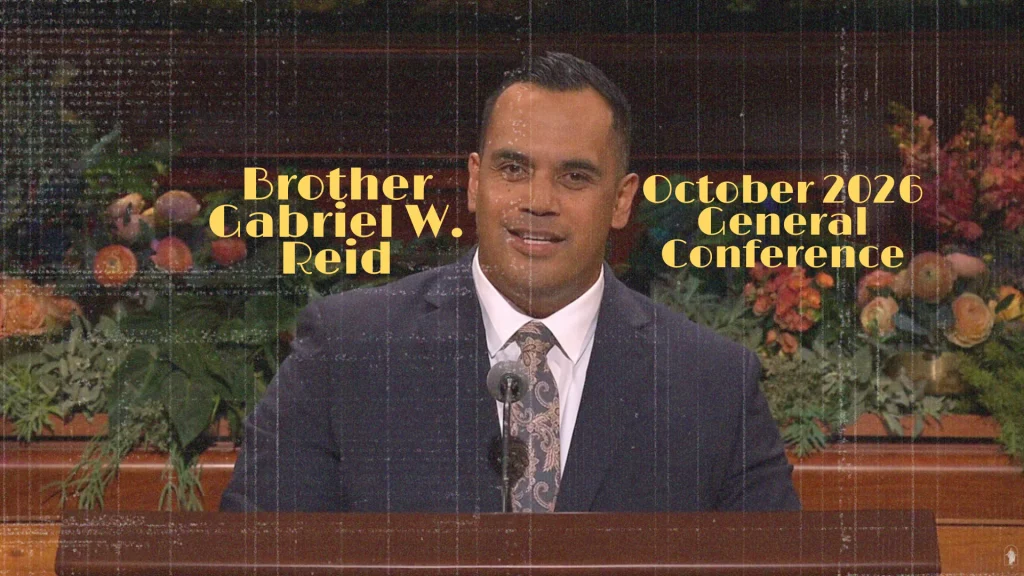
In his General Conference talk, “You Are Good Enough to Teach,” Brother Gabriel W. Reid offers a reassuring message to anyone who has ever felt inadequate in their efforts to teach the gospel of Jesus Christ.
Drawing from his personal experiences, the Savior’s example, and the influence of faithful gospel teachers throughout his life, Brother Reid teaches that effective gospel teaching is not primarily about knowledge, experience, or presentation skills.
It is about love.
More specifically, it is about loving Jesus Christ and allowing that love to influence the way we teach and serve others.
Throughout his message, Brother Reid reminds us that the Savior does not expect us to become perfect teachers before inviting us to participate in His work.
Instead, He invites us to follow Him and promises to help us become who He needs us to be.
This principle applies to every disciple of Jesus Christ.
Whether we teach in a classroom, around the dinner table, during family scripture study, through ministering, or in quiet conversations with loved ones, we have opportunities to help others come closer to the Savior.
And we do not have to do that work alone.
What This Relief Society Lesson Help Covers
This lesson help follows Brother Reid’s talk in chronological order, separating it into 10 discussion sections based on the principles he teaches and the natural transitions throughout his message.
Each section includes selected direct quotations, doctrinal explanations, 10 discussion questions, 5 object lessons, and 10 personal sharing prompts.
Altogether, you’ll find:
- 10 lesson sections organized in the order of the original talk.
- 100 Relief Society discussion questions designed to encourage meaningful gospel conversations.
- 50 object lessons with materials, instructions, and spiritual applications.
- 100 personal sharing prompts to help sisters connect gospel principles with their own experiences.
- Additional teaching activities to help introduce, reinforce, and conclude the lesson.
This resource is intended to provide options rather than a lesson plan that must be completed in its entirety.
Teachers can prayerfully select the questions, stories, and activities that best meet the needs of their Relief Society sisters.
The quotations are taken directly from the talk you provided, with longer passages preserved where they best illustrate a complete teaching point.
Section 1: Feeling Inadequate Doesn’t Mean You’re Unqualified to Serve
Direct Quotes from Brother Reid
Brother Reid begins his talk by describing his feelings after being called to serve in the Sunday School General Presidency.
“Shortly after I was sustained as a member of the Sunday School General Presidency, I felt inadequate, overwhelmed, and completely out of place.”
He then describes the question that continued to trouble him:
“Lord, I love You, but do You really have the right person?”
And he invites listeners to consider whether they have experienced similar feelings:
“Do I know enough?”
Understanding the Doctrine
Brother Reid begins with an experience that many Relief Society sisters can relate to.
He had received a calling to serve in a significant Church leadership position, yet rather than feeling completely confident, he experienced feelings of inadequacy.
He wondered whether the Lord had chosen the right person.
This experience teaches an important principle: feeling inadequate does not necessarily mean we are incapable of fulfilling the Lord’s assignments.
Sometimes the callings and responsibilities we receive require us to develop abilities we do not yet possess.
We may feel unprepared because the work stretches us beyond our previous experience.
However, the Lord’s invitations often create opportunities for spiritual growth.
Throughout scripture, individuals called to serve God have expressed feelings of weakness or uncertainty.
Moses questioned his ability to speak effectively.
Enoch described himself as young and inexperienced.
The brother of Jared recognized his weaknesses as he sought the Lord’s help.
Yet the Lord worked through each of them.
These examples remind us that our limitations do not prevent Heavenly Father from accomplishing His purposes.
The Lord knows our strengths and weaknesses.
He understands our potential.
And He can help us develop the abilities necessary to fulfill the responsibilities He gives us.
For Relief Society sisters, this principle extends beyond formal Church callings.
We may feel inadequate as parents, spouses, ministering sisters, leaders, friends, or disciples of Jesus Christ.
But the Lord does not require us to possess every answer before we begin serving.
He invites us to trust Him and move forward in faith.
Teaching Focus: Recognizing the Difference Between Inadequacy and Inability
Help sisters recognize that feelings of inadequacy are common, even among faithful and capable disciples.
Discuss how relying on the Lord can transform feelings of weakness into opportunities for growth.
10 Relief Society Discussion Questions
- Why do you think Brother Reid chose to begin his message by openly sharing his feelings of inadequacy?
- Have you ever felt that the Lord had asked you to do something beyond your abilities? What made it feel overwhelming?
- Why do we sometimes assume that other people are more qualified to serve than we are?
- How can feelings of inadequacy influence our willingness to accept Church callings or other opportunities to serve?
- What is the difference between humility and believing that we are incapable?
- Why might the Lord invite us to serve in ways that stretch our abilities?
- How can we distinguish between the desire to improve and the pressure to be perfect?
- What can we learn from scriptural figures who initially felt unqualified?
- How does understanding that the Lord knows our potential change the way we approach difficult assignments?
- What would you say to a sister who believes she isn’t good enough to teach or serve?
5 Object Lesson Ideas
Object Lesson 1: The Unfinished Puzzle
Materials: A puzzle with several pieces still missing.
Instructions: Display the unfinished puzzle.
Ask sisters whether the puzzle is worthless because it is incomplete.
Discuss how the picture gradually becomes clearer as additional pieces are added.
Spiritual application: We do not need to be finished products before the Lord can use us. He helps us grow as we serve.
Object Lesson 2: The Small Seed
Materials: A seed and a picture of the mature plant.
Instructions: Show the seed and ask whether it currently looks capable of becoming the mature plant.
Discuss what the seed needs to grow.
Spiritual application: Heavenly Father sees our potential even when we see only our present limitations.
Object Lesson 3: The Empty Notebook
Materials: Blank notebook.
Instructions: Display the notebook and discuss how its empty pages represent opportunities to learn.
Ask whether someone must already know everything before beginning to study.
Spiritual application: Teaching and serving can become opportunities for continued learning.
Object Lesson 4: The Training Wheels
Materials: Picture of a bicycle with training wheels.
Instructions: Discuss how people develop new abilities through practice and support.
Spiritual application: The Lord does not expect immediate mastery. He helps us develop as we move forward.
Object Lesson 5: The Measuring Tape
Materials: Measuring tape.
Instructions: Ask sisters to consider how often they measure themselves against others.
Discuss the limitations of comparing different people using the same standard.
Spiritual application: The Lord knows our individual circumstances, abilities, and opportunities for growth.
10 Personal Sharing Prompts
- Share a time when you felt inadequate in a Church calling.
- Describe an experience when you questioned whether you were capable of fulfilling a responsibility.
- Tell about a time when the Lord helped you accomplish something you initially thought was beyond your abilities.
- Share how your confidence in serving has changed over time.
- Describe an experience when someone encouraged you to recognize your potential.
- Tell about a calling that helped you develop an unexpected ability.
- Share a time when you learned to rely more fully on the Lord.
- Describe an experience when your weaknesses helped you become more humble.
- Tell about someone who served faithfully despite feeling unqualified.
- Share what helps you move forward when you don’t feel good enough.
Section 2: The Savior Calls Ordinary People and Promises to Help Them Become More
Direct Quotes from Brother Reid
Brother Reid identifies a pattern in the Savior’s invitations to teach.
“Often, as He invited someone to teach His gospel, He also gave them a promise.”
He illustrates this principle through the Savior’s invitation to the fishermen of Galilee:
“Come ye after me, and I will make you to become fishers of men.”
Brother Reid explains the significance of the invitation:
“He did not expect them to become master teachers before they followed Him.”
Understanding the Doctrine
Brother Reid reminds us that the Savior did not begin His mortal ministry by calling only highly educated or experienced religious teachers.
He invited ordinary fishermen to follow Him.
These men had willing hearts, but they did not yet possess all the knowledge and abilities they would eventually need.
The Savior’s invitation was accompanied by a promise.
He would help them become fishers of men.
This distinction is important.
The disciples were not required to transform themselves before accepting the invitation.
Their transformation would occur as they followed Jesus Christ.
The same principle applies to us.
When the Lord invites us to teach, serve, or lead, He does not necessarily expect us to already possess every skill we will need.
Instead, He invites us into a process of becoming.
As we exercise faith, study His teachings, seek the Holy Ghost, and act on His invitations, we can develop greater spiritual capacity.
The Savior is not simply assigning us work.
He is helping us become more like Him through that work.
Teaching Focus: Understanding the Lord’s Pattern of Invitation and Growth
Invite sisters to consider how following the Savior has helped them develop abilities they did not initially possess.
Emphasize that discipleship is a process of becoming.
10 Relief Society Discussion Questions
- What stands out to you about the Savior’s invitation to the fishermen?
- Why is it significant that Jesus Christ promised to make them into fishers of men?
- How does this invitation differ from the way the world often evaluates qualifications?
- What does the Savior’s example teach us about spiritual growth?
- Why might willingness be more important than experience when beginning to serve?
- How does following Jesus Christ change our abilities over time?
- What role does faith play when accepting responsibilities we don’t feel prepared for?
- How can we recognize the Lord’s influence in our personal development?
- What might happen if we waited until we felt completely qualified before serving?
- How does this principle influence the way we view ourselves as gospel teachers?
5 Object Lesson Ideas
Object Lesson 1: The Clay
Materials: Modeling clay.
Instructions: Show a piece of clay and demonstrate how it can be shaped into something useful.
Spiritual application: As we willingly follow Jesus Christ, He can help shape our character and abilities.
Object Lesson 2: The Fishing Net
Materials: Small net or picture of a fishing net.
Instructions: Discuss how fishermen learn to use their equipment through experience.
Spiritual application: The Savior helps us develop abilities as we participate in His work.
Object Lesson 3: The Staircase
Materials: Picture of a staircase.
Instructions: Discuss why people generally climb stairs one step at a time.
Spiritual application: Spiritual growth usually occurs through consistent, faithful steps.
Object Lesson 4: The Apprentice
Materials: Picture of an apprentice learning from a skilled craftsperson.
Instructions: Discuss how apprentices develop abilities by learning from someone experienced.
Spiritual application: Jesus Christ is the Master Teacher, and we learn to teach by following Him.
Object Lesson 5: The Growing Plant
Materials: Small plant and mature plant.
Instructions: Compare the two stages of growth.
Spiritual application: The Lord sees who we can become, not merely who we are today.
10 Personal Sharing Prompts
- Share a time when the Lord helped you develop a new ability.
- Describe an experience when you accepted a responsibility before feeling prepared.
- Tell about a time when following the Savior changed your perspective.
- Share how a Church calling helped you grow spiritually.
- Describe an experience when you recognized the Lord’s patience with your development.
- Tell about someone who helped you become more capable.
- Share a time when faith helped you take an unfamiliar step.
- Describe how your testimony has grown through serving.
- Tell about a responsibility that became easier as you relied on the Lord.
- Share what it means to you that the Savior can help you become who He needs you to be.
Section 3: Our Past Does Not Prevent the Lord From Using Us in His Work
Direct Quotes from Brother Reid
Brother Reid turns to the Book of Mormon and the example of the sons of Mosiah.
He explains:
“Their past was marked by rebellion, yet their hearts had been changed through the Savior’s redeeming power.”
He then shares the Lord’s promise:
“I will make an instrument of thee in my hands.”
Understanding the Doctrine
The sons of Mosiah provide a powerful example of how the Savior’s redeeming power can transform lives.
Earlier in their lives, they had opposed the Church and attempted to lead others away from the truth.
But through repentance and conversion, their hearts changed.
They developed a sincere desire to share the gospel with others.
The Lord did not define them permanently by their past mistakes.
Instead, He invited them to participate in His work.
This teaches an important principle: our past does not have to determine our future.
Through the Atonement of Jesus Christ, we can repent, change, and become instruments in the Lord’s hands.
This principle is especially meaningful for those who may feel disqualified because of past choices, periods of inactivity, or spiritual struggles.
Sometimes we believe that effective gospel teachers must have perfect histories.
But the sons of Mosiah demonstrate that repentance and personal conversion can prepare us to bless others.
Our experiences with the Savior’s mercy may deepen our compassion for those who are struggling.
As we turn to Jesus Christ, He can help us use our experiences to strengthen others.
Teaching Focus: Recognizing the Transformative Power of Jesus Christ
Invite sisters to consider how repentance and conversion prepare us to serve others.
Emphasize that the Lord can use willing disciples who are continually striving to follow Him.
10 Relief Society Discussion Questions
- Why do you think Brother Reid included the example of the sons of Mosiah?
- What does their story teach us about the power of repentance?
- How can our past experiences influence our ability to help others?
- Why do we sometimes believe our mistakes disqualify us from serving?
- What does it mean to become an instrument in the Lord’s hands?
- How can personal conversion deepen our desire to teach the gospel?
- Why is it important to recognize that spiritual growth is possible at every stage of life?
- How can we help others feel welcomed back into gospel participation?
- What does the sons of Mosiah’s experience teach about the Savior’s confidence in repentant disciples?
- How can remembering the Lord’s mercy help us become more compassionate teachers?
5 Object Lesson Ideas
Object Lesson 1: The Restored Object
Materials: Picture of an object before and after restoration.
Instructions: Discuss how something damaged can be restored and become useful again.
Spiritual application: Through Jesus Christ, repentance and spiritual renewal are possible.
Object Lesson 2: The Pencil
Materials: Pencil and eraser.
Instructions: Write a sentence, erase an error, and correct it.
Spiritual application: Repentance allows us to change direction and continue progressing.
Object Lesson 3: The Instrument
Materials: Musical instrument or picture.
Instructions: Discuss how an instrument becomes useful when placed in capable hands.
Spiritual application: As we yield ourselves to the Lord, He can use us to bless others.
Object Lesson 4: The New Page
Materials: Notebook.
Instructions: Turn from a page containing mistakes to a blank page.
Spiritual application: The Savior offers opportunities for change and new beginnings.
Object Lesson 5: The Light Switch
Materials: Flashlight.
Instructions: Turn on the flashlight in a dim room.
Spiritual application: Conversion can bring spiritual light into our lives and influence those around us.
10 Personal Sharing Prompts
- Share a time when repentance helped you experience spiritual growth.
- Describe an experience when the Savior helped you change.
- Tell about a time when your personal struggles helped you understand someone else.
- Share how your testimony of the Atonement has developed.
- Describe a moment when you recognized that the Lord still had work for you to do.
- Tell about someone whose conversion inspired you.
- Share an experience when you felt the Lord’s mercy.
- Describe a time when your past experiences helped you minister to someone.
- Tell about a scripture that reminds you change is possible.
- Share what it means to you to be an instrument in the Lord’s hands.
Section 4: We Were Never Meant to Do the Lord’s Work Alone
Direct Quotes from Brother Reid
After describing the Savior’s promises to His disciples, Brother Reid broadens the invitation to everyone.
“The Lord invites all of us to teach His gospel.”
He then offers a reassuring reminder:
“We were never meant to do His work alone.”
Understanding the Doctrine
Brother Reid emphasizes that the responsibility to teach the gospel belongs to all disciples of Jesus Christ.
Teaching is not limited to formal classroom settings.
It happens in homes, during missionary work, through ministering, and in personal conversations.
Every disciple has opportunities to help others understand and experience the gospel.
However, the Lord does not expect us to fulfill these responsibilities through our own abilities alone.
He promises divine help.
The Holy Ghost can guide our preparation, influence our words, and help those we teach receive spiritual understanding.
This is especially important because gospel teaching involves more than communicating information.
Its purpose is to invite people to come unto Jesus Christ.
Only the Holy Ghost can ultimately carry truth into the hearts of those who are willing to receive it.
Our responsibility is to prepare, love, teach truth, and create opportunities for the Spirit to work.
We do not need to control every outcome.
We can trust the Lord to accomplish His purposes.
Teaching Focus: Learning to Rely on Divine Help
Invite sisters to consider how their teaching changes when they rely on the Holy Ghost rather than solely on preparation or personal ability.
10 Relief Society Discussion Questions
- What does it mean that we were never meant to do the Lord’s work alone?
- How does this promise change the way we approach teaching responsibilities?
- What role does the Holy Ghost play in gospel teaching?
- Why is preparation still important when we know the Lord will help us?
- How can we recognize divine help during a lesson or gospel conversation?
- What can we do when a lesson does not unfold as planned?
- Why is it important to remember that conversion comes through the Holy Ghost?
- How can relying on the Lord reduce unnecessary pressure?
- What does it mean to teach the gospel in everyday relationships?
- How can we invite greater spiritual guidance into our preparation?
5 Object Lesson Ideas
Object Lesson 1: The Heavy Box
Materials: Box containing several moderately heavy objects.
Instructions: Ask a volunteer to lift the box safely, then invite another person to help.
Spiritual application: The Lord provides help as we carry responsibilities.
Object Lesson 2: The Compass
Materials: Compass.
Instructions: Demonstrate how a compass provides direction.
Spiritual application: The Holy Ghost can guide us as we teach and serve.
Object Lesson 3: The Two-Strand Rope
Materials: Two pieces of string.
Instructions: Compare the strength of one strand with strands twisted together.
Spiritual application: We are strengthened when we rely on divine help rather than only our own abilities.
Object Lesson 4: The Lamp
Materials: Battery-operated lamp.
Instructions: Discuss how a lamp requires a source of power to produce light.
Spiritual application: Spiritual teaching depends on the influence of the Holy Ghost.
Object Lesson 5: The Map
Materials: Map.
Instructions: Discuss how a map helps travelers navigate unfamiliar places.
Spiritual application: The Lord provides guidance as we move forward in faith.
10 Personal Sharing Prompts
- Share a time when you felt the Holy Ghost help you teach.
- Describe an experience when the Lord helped you fulfill a calling.
- Tell about a moment when you received unexpected inspiration while serving.
- Share how prayer has influenced your lesson preparation.
- Describe a time when you felt strengthened beyond your own abilities.
- Tell about an experience when a lesson went differently than you expected.
- Share how the Holy Ghost has helped you minister to someone.
- Describe a moment when you recognized that the Lord was guiding your words.
- Tell about a time when you learned to trust the Lord with an outcome.
- Share what it means to you that you do not have to do His work alone.
Section 5: The Foundation of Christlike Teaching Is Loving God and Loving Others
Direct Quotes from Brother Reid
Brother Reid shifts from the Lord’s promise of help to the kind of disciples He invites us to become.
He teaches:
“His first lesson was not about teaching—it was about discipleship.”
He then identifies the central principle of that discipleship:
“And at the heart of discipleship and all that He does is love.”
Brother Reid summarizes the Savior’s commandments with a direct invitation:
“Love the Lord and love those you teach.”
Understanding the Doctrine
Brother Reid teaches that before the Savior instructed His disciples about where to go and what to teach, He focused on who they needed to become.
This is a significant distinction.
Effective gospel teaching begins with discipleship.
And discipleship is rooted in love.
When Jesus Christ was asked which commandment was greatest, He taught that we should love God with all our hearts, souls, and minds and love our neighbors as ourselves.
These commandments provide the foundation for Christlike teaching.
Our love for Heavenly Father and Jesus Christ motivates us to learn Their doctrine and follow Their example.
Our love for others influences how we teach, listen, encourage, and serve.
Without love, teaching can become focused on information, performance, or completing a lesson outline.
But when love becomes the foundation, our priorities change.
We begin to see those we teach as children of Heavenly Father.
We become more patient with questions.
We recognize individual needs.
And we seek to help others develop their own relationships with Jesus Christ.
Teaching Focus: Becoming Before Teaching
Invite sisters to consider how their relationship with Jesus Christ influences the way they teach others.
Emphasize that love is not simply a teaching technique. It is a central characteristic of discipleship.
10 Relief Society Discussion Questions
- Why did the Savior focus on discipleship before teaching methods?
- What does it mean that love is at the heart of discipleship?
- How does loving the Lord influence our ability to teach His gospel?
- Why is loving those we teach essential?
- How can we recognize when our teaching becomes more focused on information than people?
- What does Christlike love look like in a classroom setting?
- How can we demonstrate love toward people who have different experiences or perspectives?
- Why is it important to develop genuine relationships with those we teach?
- How can the two great commandments guide our preparation?
- What would change in our teaching if love became our primary measure of success?
5 Object Lesson Ideas
Object Lesson 1: The Foundation
Materials: Building blocks.
Instructions: Build a structure with and without a stable foundation.
Spiritual application: Love for God and others provides the foundation for Christlike teaching.
Object Lesson 2: The Heart
Materials: Paper heart.
Instructions: Write “Love God” on one side and “Love Others” on the other.
Spiritual application: The two great commandments work together in discipleship.
Object Lesson 3: The Tree and Roots
Materials: Picture of a tree.
Instructions: Discuss how roots nourish and stabilize the tree.
Spiritual application: Love for Jesus Christ nourishes our efforts to teach others.
Object Lesson 4: The Gift
Materials: Wrapped gift.
Instructions: Discuss the difference between giving something out of obligation and giving because of love.
Spiritual application: Our motivation influences how we serve and teach.
Object Lesson 5: The Bridge
Materials: Blocks and a small board.
Instructions: Build a bridge connecting two surfaces.
Spiritual application: Love helps create relationships through which gospel teaching can occur.
10 Personal Sharing Prompts
- Share an experience when someone’s love helped you feel closer to Jesus Christ.
- Describe a teacher who demonstrated genuine Christlike love.
- Tell about a time when love influenced how you taught someone.
- Share how your relationship with the Savior has changed the way you serve.
- Describe an experience when listening was more important than speaking.
- Tell about a time when patience helped strengthen a relationship.
- Share how the two great commandments influence your daily decisions.
- Describe a moment when you felt the Savior’s love through another person.
- Tell about someone whose discipleship has inspired you.
- Share what it means to you to love the Lord and love those you teach.
Section 6: The Most Powerful Gospel Lessons Are Often Taught Through Example
Direct Quotes from Brother Reid
Brother Reid shares memories of his childhood in American Samoa and the influence of his parents.
He explains:
“My first gospel teachers were my parents.”
He describes the faith that shaped their home:
“They loved the Lord with all their hearts, and because they loved Him, they loved us in a way that helped us love Him too.”
He then identifies one of the most meaningful aspects of their teaching:
“Some of the greatest lessons they taught were the ones we caught simply by watching them.”
Understanding the Doctrine
Brother Reid’s childhood home in Leone, American Samoa, became his first classroom of gospel learning.
His parents did not necessarily possess extensive formal education.
But they had deep faith in Jesus Christ.
Their love for the Savior influenced how they treated their children and lived the gospel.
Brother Reid emphasizes that some of the most meaningful lessons he learned were not delivered through formal instruction.
They were taught through example.
This principle is especially meaningful in homes and families.
Children often learn about faith, prayer, service, repentance, and love by observing how adults live.
But the principle also applies beyond parenting.
Our actions teach others what we believe.
The way we respond to challenges, treat people, keep covenants, and serve quietly can communicate gospel truths.
This does not mean that we must live perfectly to be effective examples.
In fact, allowing others to see us repent, apologize, and continue trying can teach powerful lessons about the Savior’s grace.
Christlike teaching happens through both words and actions.
Teaching Focus: Teaching Through Everyday Discipleship
Invite sisters to consider how their daily actions communicate gospel principles.
Emphasize that consistent examples of faith can have lasting influence.
10 Relief Society Discussion Questions
- Why does Brother Reid describe his home as his first classroom?
- What does it mean to learn gospel lessons by watching others?
- Why can example sometimes be more powerful than formal instruction?
- How does our love for Jesus Christ influence the atmosphere in our homes?
- What gospel principles are especially important to demonstrate through actions?
- How can we teach faith through ordinary routines?
- Why is it important for children to see adults repent and seek forgiveness?
- How can sisters who are not parents still influence others through example?
- What role does consistency play in teaching through actions?
- How can we become more intentional about the lessons our daily behavior communicates?
5 Object Lesson Ideas
Object Lesson 1: The Mirror
Materials: Mirror.
Instructions: Discuss how a mirror reflects what is placed before it.
Spiritual application: Our actions can reflect the Savior’s teachings to others.
Object Lesson 2: The Footprints
Materials: Paper footprints.
Instructions: Arrange the footprints into a path.
Discuss how following someone’s example can influence where we go.
Spiritual application: Our choices can guide others toward Jesus Christ.
Object Lesson 3: The Recipe Demonstration
Materials: Recipe card and cooking utensil.
Instructions: Discuss how watching someone prepare a recipe can be more helpful than reading instructions alone.
Spiritual application: Gospel principles become clearer when others see them lived.
Object Lesson 4: The Family Photograph
Materials: Family photograph.
Instructions: Discuss the influence of family traditions and daily interactions.
Spiritual application: Homes can become places of meaningful gospel learning.
Object Lesson 5: The Candle
Materials: Battery-operated candle.
Instructions: Turn on the candle and discuss how light influences its surroundings.
Spiritual application: Faithful examples can bless others without requiring formal instruction.
10 Personal Sharing Prompts
- Share a gospel lesson you learned by watching a parent or family member.
- Describe someone whose example strengthened your testimony.
- Tell about a time when your actions influenced someone positively.
- Share how your home has become a place of gospel learning.
- Describe a family tradition that has strengthened faith.
- Tell about a time when you learned from someone’s quiet service.
- Share how observing repentance or forgiveness influenced you.
- Describe an experience when a child learned something through your example.
- Tell about someone who demonstrated Christlike love consistently.
- Share what you hope others learn about Jesus Christ through your actions.
Section 7: People Remember How Gospel Teachers Made Them Feel
Direct Quotes from Brother Reid
Brother Reid describes his early Primary teachers in American Samoa.
He recalls:
“Many of my earliest Primary classes were held beneath the shade of a mango tree.”
He then explains what made those teachers memorable:
“Our teachers faithfully prepared each lesson, but what I remember most is how they loved us.”
He summarizes the principle:
“The impact of a gospel teacher is not just the message—it is the love of the messenger.”
Understanding the Doctrine
Brother Reid’s memories of Primary classes beneath a mango tree illustrate the lasting influence of loving teachers.
His teachers prepared lessons and taught gospel principles.
But decades later, what he remembers most is how they treated him.
They knew him personally.
They remembered his name.
They helped him feel loved.
And through their love, he felt the Savior’s love.
This teaches an important principle about gospel teaching.
People may not remember every scripture, activity, or discussion question from a lesson.
But they often remember whether they felt welcomed, respected, understood, and loved.
When teachers create an environment of genuine care, learners may become more receptive to spiritual experiences.
Love helps create a setting where people feel safe asking questions and participating in discussions.
It can also help individuals recognize the Savior’s love in personal ways.
This principle is particularly meaningful in Relief Society, where sisters bring different experiences, challenges, and spiritual needs.
A teacher who learns names, listens carefully, and demonstrates compassion can make a lasting difference.
Teaching Focus: Creating a Classroom Where People Feel Loved
Invite sisters to consider how relationships influence gospel learning.
Discuss practical ways teachers and class members can help everyone feel valued.
10 Relief Society Discussion Questions
- Why do you think Brother Reid remembers his teachers’ love more than specific lessons?
- How does feeling loved influence our willingness to participate in gospel discussions?
- Why is learning someone’s name a meaningful act of love?
- What makes a classroom feel spiritually safe and welcoming?
- How can teachers demonstrate love without knowing every detail of someone’s circumstances?
- What can we do when someone appears uncomfortable or hesitant to participate?
- How can Relief Society sisters help create an atmosphere of belonging?
- Why is it important to remember that every class member has individual needs?
- How can teachers balance preparation with responsiveness to people?
- What do you hope people remember about the way you taught or served them?
5 Object Lesson Ideas
Object Lesson 1: The Name Tag
Materials: Blank name tags.
Instructions: Invite sisters to write their names.
Discuss why being remembered personally matters.
Spiritual application: Christlike teachers recognize the individual worth of those they teach.
Object Lesson 2: The Warm Blanket
Materials: Blanket.
Instructions: Discuss how warmth and comfort can help someone feel safe.
Spiritual application: Love creates an environment where spiritual learning can flourish.
Object Lesson 3: The Welcome Mat
Materials: Picture of a welcome mat.
Instructions: Discuss what makes someone feel welcome in a home.
Apply those principles to a classroom.
Spiritual application: Christlike teaching includes helping others feel they belong.
Object Lesson 4: The Listening Ears
Materials: Picture of an ear.
Instructions: Discuss the difference between hearing words and listening with genuine interest.
Spiritual application: Listening is an important expression of love.
Object Lesson 5: The Mango Tree
Materials: Picture of a mango tree.
Instructions: Discuss how Brother Reid’s childhood teachers taught in a simple setting.
Spiritual application: Meaningful gospel teaching does not depend on impressive surroundings.
10 Personal Sharing Prompts
- Share a memory of a teacher who made you feel loved.
- Describe an experience when someone remembered your name or noticed you.
- Tell about a time when a simple act of kindness influenced your spiritual experience.
- Share how a Primary or youth teacher affected your life.
- Describe a moment when you felt the Savior’s love through another person.
- Tell about a time when you helped someone feel included.
- Share how your understanding of Christlike teaching has changed.
- Describe a teacher whose influence remained with you for years.
- Tell about a time when listening helped strengthen a relationship.
- Share what you hope people feel when they interact with you.
Section 8: Loving the Savior Helps Us See and Love Others as He Does
Direct Quotes from Brother Reid
Brother Reid shares what he and his wife learned while serving in the Australia Sydney Mission.
He teaches:
“We learned that the surest way to truly love those we taught was to deepen our love for the One we taught about.”
He then explains the result of that growing love:
“As our love for the Savior deepened, He taught us to see the missionaries as He sees them and to love them as He loves them.”
Understanding the Doctrine
Brother Reid describes serving alongside hundreds of missionaries from many different countries.
Through this experience, he and his wife learned that their ability to love others was closely connected to their love for Jesus Christ.
This principle is especially meaningful because loving others does not always come easily.
We may encounter people whose personalities, experiences, opinions, or behaviors differ from our own.
Sometimes relationships require patience and understanding.
Brother Reid teaches that deepening our love for the Savior can help us develop greater love for others.
As we study Jesus Christ’s life and teachings, we begin to understand how He sees people.
He recognizes their divine worth.
He understands their circumstances.
He knows their potential.
And He loves them perfectly.
As we seek to become more like Him, we can learn to see others with greater compassion.
This does not mean we will always agree with every choice someone makes.
But it does mean we can treat people with dignity, patience, and love.
Teaching Focus: Seeing Others Through the Savior’s Eyes
Invite sisters to consider how their relationship with Jesus Christ influences the way they view and treat others.
10 Relief Society Discussion Questions
- Why does Brother Reid connect loving others with deepening our love for Jesus Christ?
- How can studying the Savior’s life influence the way we see people?
- What does it mean to see others as Jesus Christ sees them?
- Why can it be difficult to love people whose experiences differ from ours?
- How does remembering someone’s divine identity influence our compassion?
- What can we learn from the Savior’s interactions with individuals?
- How can prayer help us develop greater love for someone?
- Why is patience an important part of Christlike love?
- How can we demonstrate love while maintaining appropriate boundaries?
- What could change in our relationships if we intentionally sought to see others through the Savior’s eyes?
5 Object Lesson Ideas
Object Lesson 1: The Different Lenses
Materials: Sunglasses and clear glasses.
Instructions: Discuss how different lenses influence what we see.
Spiritual application: As we draw closer to Jesus Christ, our perspective of others can change.
Object Lesson 2: The Family Photograph
Materials: Family photograph.
Instructions: Discuss how knowing someone personally can influence our understanding of their behavior.
Spiritual application: Heavenly Father knows each of His children completely.
Object Lesson 3: The Magnifying Glass
Materials: Magnifying glass.
Instructions: Examine an ordinary object more closely.
Spiritual application: Taking time to understand people can help us recognize qualities we might otherwise overlook.
Object Lesson 4: The Heart Connection
Materials: Two paper hearts connected by string.
Instructions: Label one heart “Love for Christ” and the other “Love for Others.”
Spiritual application: Growing closer to Jesus Christ can deepen our love for those around us.
Object Lesson 5: The Garden
Materials: Pictures of different flowers.
Instructions: Discuss how different plants require different care.
Spiritual application: Christlike love recognizes individual needs rather than treating everyone identically.
10 Personal Sharing Prompts
- Share a time when your love for the Savior helped you love someone else.
- Describe an experience when you began seeing someone differently.
- Tell about a time when prayer helped soften your heart.
- Share how serving others has strengthened your relationship with Jesus Christ.
- Describe someone who demonstrated Christlike compassion.
- Tell about a relationship that improved through greater understanding.
- Share a time when you recognized someone’s divine potential.
- Describe how studying the Savior has influenced your interactions.
- Tell about a moment when you felt prompted to show greater patience.
- Share what it means to you to love others as the Savior loves them.
Section 9: The Savior’s Teaching Was Personal, Compassionate, and Focused on Individuals
Direct Quotes from Brother Reid
Brother Reid turns to the Savior’s ministry among the Nephites.
He explains:
“He began by focusing on the individuals.”
He describes how the Savior responded to the people after teaching them:
“When He perceived the desire of their hearts, He was filled with compassion.”
And he summarizes the principle:
“For the Master Teacher, every lesson was inspired by love for those He taught.”
Understanding the Doctrine
Brother Reid highlights the Savior’s ministry in 3 Nephi as an example of Christ-centered teaching.
When Jesus Christ appeared to the people in the Americas, He invited them to come unto Him individually.
They were able to personally witness that He was the resurrected Savior.
Only afterward did He continue teaching them His doctrine.
Later, when He recognized that the people desired Him to remain, He responded with compassion.
He healed their sick.
He blessed their children.
And He prayed for them.
The Savior’s ministry demonstrates that gospel teaching is not simply about delivering information.
It is about ministering to individuals.
Jesus Christ understood the spiritual and emotional needs of those He taught.
He recognized when they needed instruction.
He also recognized when they needed compassion, healing, or reassurance.
This provides a powerful example for Relief Society teachers.
A lesson plan can provide structure.
But the needs of the people should remain central.
Sometimes the most meaningful part of a lesson is a discussion that helps someone feel understood.
Sometimes it is a testimony that brings comfort.
Sometimes it is a moment when the Spirit prompts a teacher to focus on a different principle than originally planned.
Christlike teaching requires both preparation and sensitivity to individuals.
Teaching Focus: Teaching People, Not Just Lessons
Invite sisters to consider how the Savior’s example can influence the way they prepare and teach.
10 Relief Society Discussion Questions
- Why did the Savior invite the Nephites to come unto Him one by one?
- What does His example teach us about individual worth?
- Why is personal connection important in gospel teaching?
- How did the Savior demonstrate compassion after teaching the people?
- What can we learn from His willingness to respond to their needs?
- How can teachers recognize when a discussion is meeting an important spiritual need?
- Why is flexibility important in Christ-centered teaching?
- How can we prepare lessons while remaining open to spiritual guidance?
- What does it mean to teach individuals rather than simply deliver a lesson?
- How can Relief Society become a place where sisters feel personally ministered to?
5 Object Lesson Ideas
Object Lesson 1: The Individual Stones
Materials: Several small stones.
Instructions: Give each stone a different marking.
Discuss how every stone is distinct.
Spiritual application: The Savior knows and values individuals.
Object Lesson 2: The Shepherd
Materials: Picture of a shepherd with sheep.
Instructions: Discuss how a shepherd cares for the needs of individual sheep.
Spiritual application: Jesus Christ ministers personally to His children.
Object Lesson 3: The Personalized Letter
Materials: Two envelopes, one labeled generically and one addressed by name.
Instructions: Discuss how personal attention can influence how someone feels.
Spiritual application: Christlike teaching recognizes individual needs.
Object Lesson 4: The First Aid Kit
Materials: Small first aid kit.
Instructions: Discuss how different injuries require different forms of care.
Spiritual application: Effective ministering responds to individual needs.
Object Lesson 5: The Open Hands
Materials: Picture of open hands.
Instructions: Discuss how open hands can symbolize willingness to help and receive others.
Spiritual application: Christlike teaching requires compassion and responsiveness.
10 Personal Sharing Prompts
- Share an experience when you felt personally ministered to by the Savior.
- Describe a time when a teacher recognized your individual needs.
- Tell about a moment when the Holy Ghost prompted you to help someone.
- Share how the Savior’s ministry in 3 Nephi has influenced your testimony.
- Describe an experience when compassion was more important than completing a plan.
- Tell about someone who helped you feel seen and understood.
- Share a time when you changed your approach to meet someone’s needs.
- Describe how ministering has influenced your understanding of teaching.
- Tell about a spiritual experience that felt personally meaningful.
- Share what the Savior’s one-by-one ministry teaches you about His love.
Section 10: Successful Gospel Teaching Helps People Come Closer to Jesus Christ
Direct Quotes from Brother Reid
Brother Reid addresses the challenge of teaching shorter lessons.
He asks:
“How can I help those I teach connect to the Savior sooner?”
He then explains the purpose of every gospel lesson:
“The purpose of every lesson is not for people to leave talking about the teacher. It is for them to leave thinking about and loving the Savior.”
Brother Reid offers a reassuring standard:
“If class members leave the lesson feeling closer to the Savior than when they came, we have taught enough.”
Understanding the Doctrine
Brother Reid addresses a concern many gospel teachers experience.
How can we teach everything in a limited amount of time?
This question often comes from a sincere desire to prepare well and help others learn.
But Brother Reid suggests a more meaningful question.
Rather than focusing on how much material we can cover, we should consider how we can help people connect with Jesus Christ.
This principle changes the way we define successful teaching.
A successful lesson is not necessarily the one with the most scriptures, activities, quotations, or discussion questions.
It is a lesson that helps individuals come closer to the Savior.
This does not diminish the importance of doctrine.
In fact, teaching true doctrine is essential to helping people know Jesus Christ.
But the purpose of doctrine is not merely intellectual understanding.
It is to help people develop faith, repent, make and keep covenants, and become more like the Savior.
Brother Reid’s message is especially reassuring for Relief Society teachers.
We do not need to cover every prepared question.
We do not need to share every insight we discovered while studying.
And we do not need to fill every moment with our own words.
Sometimes one meaningful scripture, one thoughtful question, or one sincere testimony can invite powerful spiritual learning.
The goal is not to impress the class.
The goal is to help the class come unto Christ.
Teaching Focus: Measuring Success by Connection to the Savior
Invite sisters to consider how gospel teaching can remain centered on Jesus Christ.
Discuss what teachers can prioritize when time is limited.
10 Relief Society Discussion Questions
- Why does Brother Reid suggest changing the question from teaching everything to helping people connect with the Savior?
- How does this principle redefine successful gospel teaching?
- Why might teachers feel pressure to cover all their prepared material?
- What does it mean to keep Jesus Christ at the center of a lesson?
- How can we recognize when a discussion is helping people draw closer to Him?
- Why can a simple lesson sometimes be more spiritually meaningful than a complicated one?
- How can teachers create opportunities for class members to participate?
- What role does testimony play in Christ-centered teaching?
- How can we prepare with the Savior as our primary focus?
- What would change if we measured lesson success by whether people felt closer to Jesus Christ?
5 Object Lesson Ideas
Object Lesson 1: The Centerpiece
Materials: Picture of Jesus Christ and several teaching materials.
Instructions: Arrange the materials around the picture.
Discuss how every part of a lesson should support the central purpose of helping people come unto Christ.
Spiritual application: Jesus Christ should remain the focus of gospel teaching.
Object Lesson 2: The Backpack
Materials: Backpack and several books.
Instructions: Fill the backpack with books and discuss how carrying too much can become burdensome.
Spiritual application: Teachers can focus on essential truths rather than overwhelming learners with information.
Object Lesson 3: The Target
Materials: Printed target.
Instructions: Place “Come Unto Christ” at the center.
Discuss how different teaching methods should support that goal.
Spiritual application: The purpose of teaching is to help others strengthen their relationship with the Savior.
Object Lesson 4: The Window
Materials: Picture of a window.
Instructions: Discuss how a clean window helps people see what is beyond it.
Spiritual application: Gospel teachers should help learners see Jesus Christ rather than draw attention to themselves.
Object Lesson 5: The Single Candle
Materials: Battery-operated candle.
Instructions: Turn on one candle and discuss how a small light can influence a room.
Spiritual application: One meaningful gospel truth can invite spiritual understanding.
10 Personal Sharing Prompts
- Share a lesson that helped you feel closer to Jesus Christ.
- Describe a teacher who consistently focused on the Savior.
- Tell about a time when one scripture or question influenced your testimony.
- Share an experience when a simple lesson had a lasting impact.
- Describe a moment when you felt the Holy Ghost during a class discussion.
- Tell about a time when you learned more by listening than by speaking.
- Share how your understanding of successful teaching has changed.
- Describe an experience when you felt the Savior’s love during a lesson.
- Tell about a teacher who helped you develop a stronger relationship with Jesus Christ.
- Share what it means to you to leave a gospel lesson feeling closer to the Savior.
Additional Relief Society Teaching Activities
Opening Activity: Am I Good Enough to Teach?
Write the following question on the board:
What makes someone a good gospel teacher?
Invite sisters to share their initial thoughts.
Possible answers may include:
- Knowing the scriptures.
- Preparing meaningful lessons.
- Asking thoughtful questions.
- Having teaching experience.
- Being comfortable speaking in front of others.
- Understanding gospel doctrine.
After discussing these qualities, ask:
Which of these abilities are helpful, and which are absolutely essential?
Explain that Brother Reid’s message invites us to reconsider what matters most in gospel teaching.
His central message is that we can become effective teachers as we love Jesus Christ and those we teach.
Scripture Study: The Savior’s Pattern of Teaching
Read selected passages from the following scriptures.
Mark 1:16–18: The Savior invites fishermen to follow Him.
Alma 17:9–11: The sons of Mosiah prepare to teach the gospel.
Matthew 22:36–40: Jesus Christ teaches the two great commandments.
3 Nephi 11:14–17: The resurrected Savior invites individuals to come unto Him.
3 Nephi 17:5–9: Jesus Christ responds to the needs of the people with compassion.
Invite sisters to identify what these passages teach about Christlike teaching.
Ask:
What does the Savior prioritize?
How does He prepare His disciples?
What does He promise?
How does He demonstrate love?
How can we follow His example?
Class Activity: Remembering a Christlike Teacher
Invite sisters to think of someone who has influenced their relationship with Jesus Christ.
This person could be a parent, grandparent, Primary teacher, missionary, ministering sister, friend, or Church leader.
Ask them to consider:
What did this person teach me?
How did this person make me feel?
What did I learn from their example?
How did their influence help me come closer to Jesus Christ?
Invite willing sisters to share their experiences.
After several responses, discuss the qualities these individuals had in common.
Help the class recognize how often love, patience, kindness, and personal attention contribute to meaningful gospel teaching.
Closing Activity: One Person, One Act of Love
Give each sister a small piece of paper.
Invite her to privately complete the following statements:
One person I have an opportunity to teach or influence is…
One way I can demonstrate greater Christlike love toward that person is…
One thing I can do to strengthen my relationship with the Savior is…
Encourage sisters to act on one prompting during the coming week.
Conclusion: You Are Good Enough Because the Savior Will Help You Become
Brother Gabriel W. Reid’s General Conference talk, “You Are Good Enough to Teach,” offers a message of encouragement to anyone who has ever questioned their ability to teach or serve.
Throughout his address, Brother Reid reminds us that the Lord does not expect us to begin with perfect knowledge, exceptional abilities, or complete confidence.
He invites us to follow Him.
And as we follow Him, He helps us become more capable disciples and teachers.
The Lord Sees Our Potential
Brother Reid’s own feelings of inadequacy remind us that even experienced leaders can question whether they are qualified.
But the Savior’s invitations to the fishermen and the sons of Mosiah demonstrate that He can work through ordinary people.
He sees potential we may not yet recognize.
Through faith, repentance, and continued discipleship, we can become instruments in His hands.
Love Is the Foundation of Christlike Teaching
One of the most important principles in Brother Reid’s message is that effective teaching begins with love.
Our love for Jesus Christ influences the way we see and treat others.
When we deepen our relationship with the Savior, we can develop greater compassion, patience, and understanding.
This love can influence every teaching opportunity, whether in a classroom, home, or personal conversation.
Our Examples Often Teach More Than Our Words
Brother Reid’s memories of his parents and Primary teachers remind us that gospel teaching is not limited to formal instruction.
Our daily actions can communicate powerful spiritual truths.
The way we love, serve, forgive, repent, and demonstrate faith can influence others in lasting ways.
We may never fully recognize the impact of our examples.
But small and consistent acts of discipleship can help others feel the Savior’s love.
The Savior Is the Center of Every Gospel Lesson
Brother Reid concludes by reminding us that the purpose of gospel teaching is not to impress others or cover every possible principle.
It is to help people come closer to Jesus Christ.
This provides a reassuring standard for Relief Society teachers.
We do not need to teach everything.
We need to prayerfully prepare, teach true doctrine, love those we serve, and invite the Holy Ghost.
When sisters leave a lesson with greater faith in Jesus Christ and a stronger desire to follow Him, meaningful gospel teaching has occurred.
Final Relief Society Reflection
Consider concluding your lesson with these three questions:
1. How has Jesus Christ helped me become more capable of serving or teaching others?
2. What can I do to deepen my love for the Savior so that I can better love those around me?
3. How can I help someone feel closer to Jesus Christ through my words, actions, or example this week?
Invite sisters to reflect on their answers.
Encourage them to remember that Christlike teaching is not limited to those with formal teaching callings.
Every disciple has opportunities to influence others for good.
A conversation with a child.
A thoughtful response to a friend.
A moment of ministering.
A simple testimony.
An act of compassion.
These can all become opportunities to teach as the Savior taught.
Final Invitation
The message of “You Are Good Enough to Teach” is not that we already possess every ability we will ever need.
It is that Jesus Christ can help us develop those abilities as we follow Him.
He knows our weaknesses.
He understands our fears.
He sees our potential.
And He invites us to participate in His work.
As we strengthen our relationship with the Savior and develop greater love for those around us, He can help us become more effective teachers and disciples.
We do not have to be perfect teachers to make an eternal difference. We need to be willing disciples who love Jesus Christ and strive to help others come unto Him.
That is the heart of Brother Reid’s message.
To teach like the Savior, we must learn to love like the Savior.



Leave a Reply