Introduction: How Can We Stand for Truth Without Compromising Love?
How do we stand for what we believe without creating unnecessary contention?
How do we show genuine love and compassion toward people whose choices, beliefs, or lifestyles differ from our own?
And how can we remain faithful to our covenants while maintaining meaningful relationships with people who may not share our convictions?
These questions are increasingly relevant for disciples of Jesus Christ.
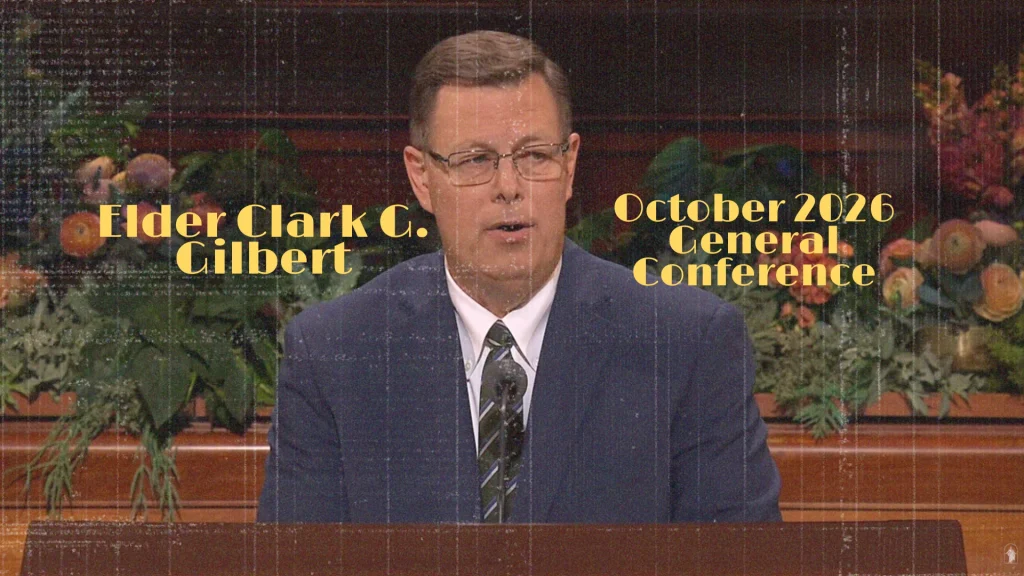
In his General Conference talk, “Teach Truth with Love,” Elder Clark G. Gilbert addresses the challenge of remaining committed to eternal truths while treating others with kindness, dignity, patience, and understanding.
He teaches that standing for truth requires courage, but standing for truth with love requires an even deeper level of discipleship.
Throughout his message, Elder Gilbert shares personal experiences, teachings from latter-day prophets and apostles, and examples from the Savior’s life to illustrate five principles that can help us navigate difficult conversations and relationships.
His message is especially meaningful for Relief Society sisters who desire to be faithful disciples of Jesus Christ while strengthening relationships with family members, friends, neighbors, coworkers, and those they minister to.
Whether we are navigating disagreements about gospel teachings, supporting loved ones who have stepped away from the Church, or simply trying to communicate more compassionately, Elder Gilbert reminds us that we do not have to choose between truth and love.
We can embrace both.
How to Use This Relief Society Lesson Help
This lesson help follows Elder Gilbert’s talk chronologically, dividing it into 10 discussion sections based on the natural transitions in his message.
Each section includes longer direct quotations wherever the original talk provides a substantial teaching passage, along with doctrinal insights and teaching resources.
You’ll find:
- 10 chronological discussion sections covering the central principles and examples in the talk.
- 100 Relief Society discussion questions designed to invite thoughtful, Christ-centered conversation.
- 50 object lessons with materials, instructions, and spiritual applications.
- 100 personal sharing prompts to encourage meaningful experiences and testimonies.
- An introduction, suggested teaching emphasis, and conclusion to help organize your lesson preparation.
Teachers do not need to use every question or activity. Instead, prayerfully choose the sections that best address the needs of your Relief Society sisters.
Some discussions may involve personal experiences with family relationships, faith transitions, or difficult conversations. Encourage voluntary participation and respect for individual privacy.
Section 1: It Takes Courage to Stand for Truth, but Even More Courage to Stand for Truth with Love
Direct Quotes from Elder Gilbert
Elder Gilbert opens his message with a powerful distinction:
“It takes courage to stand for truth. It takes even more courage to stand for truth with love.”
He then quotes President Dallin H. Oaks:
“When we seek to keep all the commandments in our personal lives, we are sometimes accused of having no love for those who don’t. When we show personal love and support loving causes, we are sometimes misunderstood as implying support for results that contradict our … religious duties.”
Understanding the Doctrine
Elder Gilbert begins by acknowledging a challenge many faithful disciples experience.
Sometimes our commitment to gospel commandments is interpreted as a lack of love for those who live differently.
At other times, our efforts to show compassion and support are interpreted as abandoning our beliefs.
This can create a difficult tension.
We may worry that speaking openly about our convictions will damage relationships.
Or we may hesitate to express love because we fear others will misunderstand our intentions.
Elder Gilbert teaches that discipleship requires us to resist the assumption that truth and love must compete.
Jesus Christ perfectly exemplified both.
He taught the commandments of God without apology, yet He consistently demonstrated compassion toward individuals.
He recognized people’s divine worth, ministered to their needs, and invited them to follow Him.
His love was not dependent on agreement.
And His commitment to truth did not prevent Him from showing kindness.
The challenge for us is learning to develop both qualities.
Standing for truth requires conviction.
Standing for truth with love requires conviction, humility, patience, compassion, and spiritual sensitivity.
It requires us to remember that every person we encounter is a child of Heavenly Father.
Teaching Focus: Understanding the Relationship Between Truth and Love
Help sisters recognize that Christlike discipleship includes both faithfulness to God’s commandments and genuine love for His children.
Discuss how misunderstandings can arise when people assume these principles are mutually exclusive.
10 Relief Society Discussion Questions
- Why do you think Elder Gilbert begins by distinguishing between standing for truth and standing for truth with love?
- What makes standing for truth with love more challenging than simply defending a belief?
- Have you noticed situations where someone’s commitment to gospel principles was misunderstood as a lack of compassion?
- Why might showing love toward someone be mistaken for agreeing with all their choices?
- How did Jesus Christ demonstrate both truth and love during His mortal ministry?
- What is the difference between respecting someone’s agency and agreeing with their decisions?
- How can we communicate our convictions without making others feel personally rejected?
- Why is humility important when discussing beliefs with people who disagree?
- What can we do when our sincere efforts to show love are misunderstood?
- How might our relationships change if we consistently approached difficult conversations with both conviction and compassion?
5 Object Lesson Ideas
Object Lesson 1: Two Sides of the Same Coin
Materials: Coin.
Instructions: Hold up a coin and ask sisters to identify its two sides.
Discuss how the coin is incomplete as a representation if we acknowledge only one side.
Explain that truth and love are distinct principles, but both belong in Christlike discipleship.
Spiritual application: We should not abandon either truth or love when seeking to follow Jesus Christ.
Object Lesson 2: The Two-Strand Rope
Materials: Two pieces of string or rope.
Instructions: Hold up each strand separately.
Twist the strands together and demonstrate how they support one another.
Spiritual application: Truth and love strengthen our discipleship when practiced together.
Object Lesson 3: The Compass and the Heart
Materials: Compass and paper heart.
Instructions: Display both objects.
Ask what a compass represents and what a heart represents.
Discuss how direction without compassion can become harsh, while compassion without direction may leave important truths unspoken.
Spiritual application: Gospel truth provides direction, and Christlike love shapes how we share it.
Object Lesson 4: The Bridge
Materials: Two stacks of blocks and a small board.
Instructions: Place the stacks apart and use the board to connect them.
Discuss how bridges make connection possible even when two sides remain distinct.
Spiritual application: We can maintain our convictions while building relationships with people who believe differently.
Object Lesson 5: The Light and the Warmth
Materials: Battery-operated candle.
Instructions: Turn on the candle.
Discuss how a real flame provides both light and warmth.
Spiritual application: The Savior’s example combines the light of truth with the warmth of love.
10 Personal Sharing Prompts
- Share an experience when you had to stand for a gospel principle.
- Describe a time when you learned that the way you communicated mattered as much as what you communicated.
- Tell about someone who demonstrated conviction and compassion together.
- Share an experience when you felt misunderstood because of your beliefs.
- Describe a time when someone showed you love despite a disagreement.
- Tell about a relationship strengthened through mutual respect.
- Share how your understanding of Christlike love has developed.
- Describe a situation when you chose kindness during a difficult conversation.
- Tell about a gospel teaching that has helped you better understand the relationship between truth and love.
- Share what standing for truth with love means to you personally.
Section 2: Before Correcting Others, We Must Examine Our Own Hearts
Direct Quotes from Elder Gilbert
Elder Gilbert expresses concern about how listeners might interpret his message:
“In preparing my message today, I have worried that some would selectively anchor only on truth or others would only anchor on love. I also worried some would see only others’ shortcomings and forget their own weaknesses.”
He then recalls President Russell M. Nelson’s warning about peacemaking:
“You may be thinking … this message would really help someone [else] you know. … But I also hope that you will look deeply into your [own] heart to see if there are shards of pride or jealousy that prevent you from becoming a peacemaker.”
Elder Gilbert concludes this introduction with a personal invitation:
“I extend that same invitation to all of us today.”
Understanding the Doctrine
One of the most significant parts of Elder Gilbert’s introduction is his invitation to self-examination.
When we hear teachings about contention, judgment, or Christlike love, it can be tempting to immediately think of someone else who needs to hear the message.
We may think of a family member who frequently argues.
A friend who seems judgmental.
Or someone whose opinions feel harsh or unkind.
But Elder Gilbert reminds us that discipleship begins with examining our own hearts.
This principle reflects the Savior’s teaching in Matthew 7:3–5 about removing the beam from our own eye before focusing on the mote in another person’s eye.
The Savior did not teach that we should ignore truth or abandon discernment.
Rather, He taught us to approach others with humility and awareness of our own imperfections.
Self-examination helps us recognize attitudes that may prevent us from communicating with love.
Pride may cause us to care more about being right than understanding another person.
Impatience may cause us to interrupt before listening.
Fear may cause us to react defensively.
And judgment may prevent us from recognizing another person’s pain.
As we invite the Holy Ghost to reveal our own weaknesses, we can repent and become more Christlike.
Teaching Focus: Looking Inward Before Looking Outward
Encourage sisters to consider their own opportunities for spiritual growth rather than focusing on the shortcomings of others.
10 Relief Society Discussion Questions
- Why is it often easier to recognize another person’s need to change than our own?
- What does Elder Gilbert’s invitation to examine our hearts teach about humility?
- How can pride influence the way we communicate gospel truths?
- What is the difference between righteous discernment and unrighteous judgment?
- Why is self-examination important before entering a difficult conversation?
- How can prayer help us recognize attitudes that need to change?
- What might be signs that we care more about winning an argument than helping someone?
- How does repentance prepare us to show greater Christlike love?
- Why is it important to remember our own need for the Savior’s mercy?
- How might our relationships improve if we focused first on becoming more Christlike ourselves?
5 Object Lesson Ideas
Object Lesson 1: The Mirror
Materials: Mirror.
Instructions: Hold up the mirror and ask sisters what they see.
Discuss how mirrors direct our attention toward ourselves.
Spiritual application: Before focusing on another person’s shortcomings, we should examine our own hearts.
Object Lesson 2: The Magnifying Glass
Materials: Magnifying glass.
Instructions: Use the magnifying glass to enlarge a small mark on paper.
Discuss how easy it is to magnify another person’s faults.
Spiritual application: We should be careful not to exaggerate others’ weaknesses while overlooking our own.
Object Lesson 3: The Dirty Window
Materials: Clear plastic sheet with removable smudges.
Instructions: Look through the sheet and discuss how the marks affect what we see.
Clean the sheet.
Spiritual application: Pride and judgment can distort our perspective of others.
Object Lesson 4: The Unbalanced Scale
Materials: Simple balance scale or picture.
Instructions: Place objects of different weights on the scale.
Discuss how unfair comparisons can distort judgment.
Spiritual application: We often know our own intentions but see only others’ actions.
Object Lesson 5: The Heart Checkup
Materials: Paper heart and pen.
Instructions: Invite sisters to privately write one Christlike attribute they want to develop.
Spiritual application: Personal repentance prepares us to communicate truth with greater love.
10 Personal Sharing Prompts
- Share a time when a gospel message prompted you to examine your own heart.
- Describe an experience when you recognized pride influencing your reaction.
- Tell about a time when humility helped resolve a disagreement.
- Share how repentance has improved one of your relationships.
- Describe a moment when you realized you had misunderstood someone.
- Tell about an experience when the Holy Ghost helped you recognize a personal weakness.
- Share a scripture that encourages self-examination.
- Describe a time when apologizing strengthened a relationship.
- Tell about someone whose humility has inspired you.
- Share how looking inward has helped you become more compassionate.
Section 3: Principle One — Avoid Overly Contentious Settings
Direct Quotes from Elder Gilbert
Elder Gilbert introduces the first principle:
“First, avoid overly contentious settings.”
He quotes Elder Neil L. Andersen:
“There are times when being a peacemaker means that we resist the impulse to respond and instead, with dignity, remain quiet.”
He then describes an experience with academic leaders who strongly criticized the role of faith in higher education:
“Recognizing the escalating tension of the moment, I chose at least for that setting to table the discussion despite my strong disagreement with what was being said.”
Understanding the Doctrine
Elder Gilbert’s first principle teaches that standing for truth does not require us to respond to every disagreement immediately.
Sometimes the most Christlike response is to remain quiet.
This can be difficult, especially when someone criticizes beliefs that are deeply important to us.
We may feel an immediate need to defend the Church, explain our position, or correct misinformation.
However, Elder Gilbert reminds us that the emotional and spiritual atmosphere of a conversation matters.
When anger and contention escalate, people may become less willing to listen or understand.
Continuing the discussion may strengthen defensiveness rather than invite understanding.
Choosing not to engage in that moment does not necessarily mean surrendering our convictions.
It may simply mean recognizing that the current setting is not conducive to meaningful communication.
The Savior Himself demonstrated wisdom in choosing when to speak and when to remain silent.
He did not respond to every accusation or provocation.
Instead, He acted according to His Father’s will.
This principle invites us to develop spiritual discernment.
We can ask ourselves whether responding will help someone understand truth or simply intensify contention.
Sometimes love requires us to speak.
Sometimes love requires us to wait.
Teaching Focus: Recognizing When Silence Is an Act of Peacemaking
Help sisters understand that choosing not to argue can be an expression of spiritual strength rather than weakness.
10 Relief Society Discussion Questions
- Why can remaining silent require courage?
- How can we recognize when a conversation is becoming overly contentious?
- What is the difference between avoiding contention and avoiding difficult conversations altogether?
- Why might timing matter when discussing important gospel principles?
- How can the Holy Ghost help us know when to speak and when to remain quiet?
- What can happen when we respond while feeling angry or defensive?
- How did the Savior demonstrate restraint during His mortal ministry?
- Why might postponing a conversation create better opportunities for understanding later?
- How can we respectfully end a conversation that is becoming unproductive?
- What does it mean to defend truth without participating in contention?
5 Object Lesson Ideas
Object Lesson 1: The Boiling Water
Materials: Picture or short video of boiling water.
Instructions: Discuss how heat changes the behavior of water.
Ask what happens when emotions become heated.
Spiritual application: Sometimes we need to allow emotions to settle before meaningful communication can occur.
Object Lesson 2: The Pause Button
Materials: Picture of a pause symbol.
Instructions: Discuss how pausing a video does not end the story.
Spiritual application: Pausing a difficult conversation does not mean abandoning truth.
Object Lesson 3: The Traffic Light
Materials: Red, yellow, and green paper circles.
Instructions: Discuss when it is appropriate to stop, slow down, or proceed.
Spiritual application: Spiritual discernment helps us recognize when to speak, listen, or wait.
Object Lesson 4: The Unsent Letter
Materials: Paper and envelope.
Instructions: Discuss the value of writing down strong feelings without immediately sending them.
Spiritual application: Delaying a response can create space for prayer, reflection, and greater compassion.
Object Lesson 5: The Calm Water
Materials: Clear container of water.
Instructions: Stir the water and observe the movement.
Allow it to settle.
Spiritual application: A peaceful environment can make it easier to communicate clearly.
10 Personal Sharing Prompts
- Share a time when choosing silence prevented an argument.
- Describe an experience when you wished you had waited before responding.
- Tell about a time when postponing a conversation led to a better outcome.
- Share how prayer has helped you respond calmly.
- Describe a situation when you felt prompted not to engage in contention.
- Tell about someone who models peaceful communication.
- Share an experience when listening was more effective than arguing.
- Describe how you have learned to recognize emotional triggers.
- Tell about a time when restraint strengthened a relationship.
- Share what helps you remain peaceful when your beliefs are challenged.
Section 4: Hidden Pain Can Sometimes Look Like Hostility
Direct Quotes from Elder Gilbert
Elder Gilbert continues the first principle by explaining why difficult behavior may not tell the whole story.
He quotes President Nelson:
“If friends and family should step away from the Church, continue to love them. … Do not be led astray by those whose doubts may be fueled by things you cannot see in their lives.”
He then shares a personal experience:
“I failed to see this with a friend who had at one time been spiritually faithful but was now attacking the Church. My frustration came not just because of his bitterness but because I knew he knew better. Unfortunately, rather than recognize the tension of the moment or that he might be hurting for reasons I could not see, I shot back an angry retort. I may have won the debate in the moment, but I lost the Spirit and I failed to help my struggling friend. That day I stood for truth, but I did it without love and without charity.”
Understanding the Doctrine
One of the most insightful teachings in Elder Gilbert’s message is that behavior we interpret as hostility may sometimes be connected to pain we cannot see.
He references Sister Anette Dennis’s story of a wounded dog that behaved unexpectedly because it was hurt.
He then connects that example to his own experience with a friend who had become critical of the Church.
Rather than considering what his friend might be experiencing, Elder Gilbert responded with frustration.
He acknowledges that although he may have won the debate, he failed to help his friend.
This experience teaches an important lesson about Christlike compassion.
We rarely know everything another person is experiencing.
Someone who appears angry may be grieving.
Someone who seems dismissive may feel betrayed or misunderstood.
Someone who has stepped away from the Church may be navigating complicated experiences that are not visible to us.
This does not mean every disagreement is caused by hidden pain or that we should assume we understand another person’s motivations.
Rather, it reminds us to approach others with humility and curiosity instead of immediate judgment.
The Savior knows every person’s circumstances completely.
We do not.
Because our understanding is limited, compassion should guide our responses.
Teaching Focus: Choosing Compassion When We Don’t Know the Whole Story
Invite sisters to consider how remembering another person’s unseen struggles can influence the way they respond.
10 Relief Society Discussion Questions
- Why can it be difficult to recognize pain behind someone’s anger?
- What does Elder Gilbert’s experience with his friend teach about the limitations of winning arguments?
- How can remembering that we don’t know someone’s full story help us become more compassionate?
- Why is it important not to assume we understand another person’s reasons for questioning faith?
- What does it mean to continue loving someone who has stepped away from the Church?
- How can we show compassion without feeling responsible for changing another person’s choices?
- What might we learn by asking sincere questions rather than immediately offering explanations?
- Why can defensiveness make it harder to recognize another person’s needs?
- How does the Savior’s perfect understanding of individuals differ from our limited perspective?
- What could change if we approached difficult behavior with curiosity and compassion?
5 Object Lesson Ideas
Object Lesson 1: The Hidden Weight
Materials: Closed backpack containing several books.
Instructions: Ask sisters to estimate how heavy the backpack is.
Then reveal its contents.
Spiritual application: We often cannot see the burdens others carry.
Object Lesson 2: The Iceberg
Materials: Picture of an iceberg.
Instructions: Discuss how most of an iceberg lies beneath the water.
Spiritual application: Visible behavior may represent only a small part of someone’s experience.
Object Lesson 3: The Bandage
Materials: Bandage.
Instructions: Discuss how injuries sometimes require gentleness rather than pressure.
Spiritual application: Compassion helps us respond more appropriately to those who may be hurting.
Object Lesson 4: The Closed Book
Materials: Book with a cover.
Instructions: Show the cover and ask whether it reveals every detail of the story.
Spiritual application: We should avoid assuming we know another person’s full experience.
Object Lesson 5: The Listening Chair
Materials: Two chairs.
Instructions: Place the chairs facing each other.
Invite sisters to discuss how the physical act of sitting and listening can communicate respect.
Spiritual application: Sometimes the most helpful response is to listen without immediately trying to correct.
10 Personal Sharing Prompts
- Share a time when you discovered someone was facing a struggle you hadn’t recognized.
- Describe an experience when someone responded compassionately to your difficult emotions.
- Tell about a time when listening helped you better understand another person.
- Share how your perspective changed after learning more about someone’s circumstances.
- Describe an experience when you chose compassion over defensiveness.
- Tell about someone who continued loving you during a difficult period.
- Share a time when you learned not to judge by appearances.
- Describe how the Savior’s compassion has influenced your relationships.
- Tell about a moment when you realized winning an argument was not the most important outcome.
- Share what helps you respond with kindness when someone seems angry or critical.
Section 5: Principle Two — Find Common Ground Before Trying to Teach
Direct Quotes from Elder Gilbert
Elder Gilbert introduces his second principle:
“A second way to stand for truth with love is to first find common ground.”
He then shares an experience involving a stake president and five individuals with different concerns.
“As I listened to their stories, I was tempted at times to interject, but the Spirit kept prompting me to wait. After nearly two hours of listening, going right through our next meeting, I began to better understand their struggles and I could feel their heartfelt strivings. And when I invited them to come to stake conference that evening, each one of them accepted.”
He explains what made the experience meaningful:
“Resisting the impulse to initially respond built common ground, which allowed me later to teach from a place of love. As with the Savior, ‘we love him, because he [loved us first].’”
Understanding the Doctrine
Elder Gilbert’s second principle emphasizes the importance of listening before teaching.
During a ministering visit, he encountered five individuals with different concerns.
Rather than immediately responding to each concern, he felt prompted to listen.
The conversation lasted nearly two hours.
As he listened, he began to understand their struggles and recognize their sincere efforts.
Only after developing that understanding did he extend an invitation.
All five individuals accepted.
This experience illustrates the power of building relationships before attempting to persuade.
Sometimes we enter difficult conversations already preparing our response.
We listen for statements we disagree with.
We search for scriptures that support our position.
Or we begin explaining before fully understanding what someone is trying to communicate.
But Elder Gilbert teaches that genuine listening can create common ground.
It communicates respect.
It helps us understand another person’s perspective.
And it allows us to respond more thoughtfully.
The Savior consistently demonstrated this principle.
He asked questions.
He listened.
He recognized individual needs.
And He taught in ways that connected with the people He served.
Teaching Focus: Listening as an Expression of Christlike Love
Invite sisters to consider how listening can prepare hearts for meaningful gospel conversations.
10 Relief Society Discussion Questions
- Why is finding common ground important when discussing difficult subjects?
- What stands out to you about Elder Gilbert’s experience with the five individuals?
- Why can listening be more difficult than speaking?
- How does genuine listening communicate love?
- What is the difference between listening to understand and listening to respond?
- How can we find common ground without compromising our beliefs?
- Why might someone become more receptive after feeling heard?
- How can the Holy Ghost guide us as we listen?
- What can we learn from the Savior’s use of questions?
- How might our relationships change if we prioritized understanding before explaining?
5 Object Lesson Ideas
Object Lesson 1: The Puzzle Pieces
Materials: Puzzle pieces.
Instructions: Give several sisters different pieces of the same puzzle.
Discuss how each piece contributes to the larger picture.
Spiritual application: Listening helps us understand perspectives we may not initially see.
Object Lesson 2: The Bridge of Understanding
Materials: Blocks and a small board.
Instructions: Build a bridge between two separated stacks.
Spiritual application: Common ground creates opportunities for meaningful communication.
Object Lesson 3: The Two Ears and One Mouth
Materials: Picture of a face.
Instructions: Discuss the importance of balancing speaking and listening.
Spiritual application: Christlike communication requires sincere attention to others.
Object Lesson 4: The Shared Circle
Materials: Two overlapping paper circles.
Instructions: Write different perspectives in the separate areas and shared values in the overlap.
Spiritual application: People can disagree while still sharing important values.
Object Lesson 5: The Empty Cup
Materials: Empty cup.
Instructions: Discuss how an empty cup has room to receive something.
Spiritual application: Humility and willingness to listen create room for understanding.
10 Personal Sharing Prompts
- Share a time when listening helped resolve a misunderstanding.
- Describe an experience when someone made you feel genuinely heard.
- Tell about a conversation that improved after you found common ground.
- Share how the Holy Ghost has guided you while listening.
- Describe a time when you learned something unexpected from another person’s perspective.
- Tell about a relationship strengthened through patient conversation.
- Share an experience when asking questions was more helpful than giving advice.
- Describe someone who models excellent listening.
- Tell about a time when you resisted the urge to interrupt.
- Share what you have learned about teaching from a place of love.
Section 6: Principle Three — Be a Light Through Your Own Covenant Faithfulness
Direct Quotes from Elder Gilbert
Elder Gilbert introduces the third principle:
“The third principle is to be a light.”
He quotes President Nelson:
“Let your skeptical friends see how much you love the Lord and His gospel. Surprise their doubting hearts with your believing heart!”
He then shares a practical principle:
“The best way to help someone else keep their covenants is to keep your covenants.”
He also quotes Sister Tamara Runia:
“Stay at the tree, … continue to beckon to those you love … that eating the fruit is a happy thing!”
Understanding the Doctrine
Elder Gilbert’s third principle teaches that our example can communicate gospel truth in powerful ways.
Sometimes we believe that helping others develop faith requires us to provide convincing arguments or detailed explanations.
But Elder Gilbert reminds us that our own discipleship can become a source of light.
When we faithfully keep our covenants, seek the Savior, and demonstrate joy in gospel living, others can see the influence of Jesus Christ in our lives.
This principle connects with the Savior’s teaching in Matthew 5:14–16.
He taught His disciples to let their light shine before others so that their good works would glorify Heavenly Father.
Being a light does not mean pretending that life is always easy.
It does not require us to hide struggles or appear constantly happy.
Rather, it means allowing others to see our sincere faith in Jesus Christ.
We can demonstrate how the gospel provides strength during difficulty.
How repentance brings hope.
How covenants give direction.
And how discipleship influences the way we love and serve.
Sister Runia’s invitation to remain at the tree of life is particularly meaningful.
Rather than abandoning our own faith or trying to force others to return, we can continue enjoying the blessings of the gospel and lovingly invite others to partake.
Teaching Focus: Teaching Through Faithful Example
Invite sisters to consider how their covenant faithfulness can bless others.
10 Relief Society Discussion Questions
- What does it mean to be a light to others?
- Why can personal example be more influential than argument?
- How does keeping our own covenants strengthen our ability to help others?
- What does President Nelson’s invitation to surprise doubting hearts with a believing heart mean to you?
- How can we demonstrate joy in gospel living without pretending life is perfect?
- What does Sister Runia’s invitation to stay at the tree teach about loving those who struggle with faith?
- How can we continue inviting others without pressuring them?
- Why is consistency important in our personal discipleship?
- How can our responses to adversity demonstrate faith in Jesus Christ?
- What are practical ways we can let our light shine in everyday relationships?
5 Object Lesson Ideas
Object Lesson 1: The Flashlight
Materials: Flashlight.
Instructions: Turn on the flashlight in a dim room.
Discuss how light influences its surroundings.
Spiritual application: Our faithful example can help others recognize the Savior’s influence.
Object Lesson 2: The Tree of Life
Materials: Picture of Lehi’s tree of life.
Instructions: Discuss Lehi’s desire to share the fruit after partaking of it.
Spiritual application: We can lovingly invite others to experience gospel blessings while continuing our own discipleship.
Object Lesson 3: The Lighthouse
Materials: Picture of a lighthouse.
Instructions: Discuss how a lighthouse provides direction without forcing ships to follow it.
Spiritual application: Our example can offer guidance while respecting agency.
Object Lesson 4: The Candle and Mirrors
Materials: Battery-operated candle and small mirror.
Instructions: Use the mirror to reflect the candle’s light.
Spiritual application: As we follow Jesus Christ, we can reflect His light to others.
Object Lesson 5: The Roots
Materials: Picture of a tree with visible roots.
Instructions: Discuss how roots help a tree remain stable.
Spiritual application: Personal covenant faithfulness strengthens us as we seek to bless others.
10 Personal Sharing Prompts
- Share an experience when someone’s faithful example strengthened your testimony.
- Describe a time when keeping your covenants helped you through difficulty.
- Tell about someone whose love for the gospel has inspired you.
- Share how your relationship with Jesus Christ influences your daily choices.
- Describe a moment when you felt encouraged by another person’s quiet faith.
- Tell about a time when you tried to be a light without saying much.
- Share how the tree of life vision has influenced your understanding of family relationships.
- Describe an experience when gospel living brought you peace.
- Tell about someone who remained faithful while lovingly supporting others.
- Share what it means to you to let your light shine.
Section 7: Being a Light Can Open Doors That Arguments Cannot
Direct Quotes from Elder Gilbert
Elder Gilbert returns to his earlier experience with academic leaders.
He explains:
“Perhaps in part because I chose not to engage in the moment, later a university chancellor reached out for counsel in creating a course on character at one of the nation’s most prestigious academic institutions.”
He then summarizes the principle:
“Being a light opens more doors than any pointed argument ever will.”
Understanding the Doctrine
This brief experience provides an important continuation of Elder Gilbert’s third principle.
Earlier in his talk, he described choosing not to engage when a discussion about faith in higher education became contentious.
Later, someone from that setting reached out to him for counsel.
His decision to avoid unnecessary contention may have helped preserve a relationship and create an opportunity for future collaboration.
This teaches that the influence of our actions is not always immediate.
Sometimes we may feel that remaining quiet means missing an opportunity to defend our beliefs.
But Elder Gilbert’s experience demonstrates that peaceful conduct can build trust.
People may remember how we treated them.
They may recognize our sincerity.
And they may become more willing to seek our perspective later.
This principle does not guarantee that every peaceful response will lead to agreement or future opportunities.
But it reminds us that Christlike behavior can create possibilities that contention often closes.
The Savior taught His disciples to be examples of goodness.
When our conduct reflects His teachings, others may become curious about the faith that influences our lives.
Teaching Focus: Recognizing the Long-Term Influence of Christlike Conduct
Invite sisters to consider how peaceful responses can preserve relationships and create future opportunities for meaningful conversations.
10 Relief Society Discussion Questions
- Why might being a light open doors that arguments cannot?
- What does Elder Gilbert’s experience teach about the long-term influence of our actions?
- How can respectful disagreement build trust?
- Why is it important to consider the future of a relationship during a difficult conversation?
- What can happen when we prioritize preserving dignity over winning a debate?
- How does consistency influence the way others perceive our faith?
- Why might people become more willing to listen after observing our example?
- How can we recognize opportunities to share truth naturally?
- What does this experience teach about patience?
- How can we become people others feel comfortable approaching with spiritual questions?
5 Object Lesson Ideas
Object Lesson 1: The Open Door
Materials: Picture of an open door.
Instructions: Discuss what an open door represents.
Compare communication that creates opportunities with communication that closes them.
Spiritual application: Christlike conduct can preserve opportunities for future connection.
Object Lesson 2: The Key
Materials: Key.
Instructions: Discuss how keys provide access when used appropriately.
Spiritual application: Respect and trust can create opportunities for meaningful gospel conversations.
Object Lesson 3: The Seed
Materials: Seed.
Instructions: Discuss how seeds require time to grow.
Spiritual application: The influence of faithful example may not be immediately visible.
Object Lesson 4: The Dominoes
Materials: Dominoes.
Instructions: Arrange dominoes and demonstrate how one action influences another.
Spiritual application: Small choices can have consequences that extend beyond the present moment.
Object Lesson 5: The Welcome Sign
Materials: Small welcome sign.
Instructions: Discuss what makes someone feel comfortable approaching another person.
Spiritual application: Kindness and respect can make us approachable sources of gospel light.
10 Personal Sharing Prompts
- Share a time when patience created an unexpected opportunity.
- Describe an experience when respectful conduct strengthened a relationship.
- Tell about someone whose example made you interested in their beliefs.
- Share a time when you chose not to argue and later saw a positive result.
- Describe a relationship that developed gradually through trust.
- Tell about a time when kindness opened a door for conversation.
- Share how your understanding of influence has changed.
- Describe someone who consistently demonstrates peaceful conviction.
- Tell about an experience when you learned the value of long-term relationships.
- Share what it means to you to influence others through Christlike example.
Section 8: Principle Four — Loving Others Does Not Require Surrendering God’s Truth
Direct Quotes from Elder Gilbert
Elder Gilbert introduces his fourth principle:
“Now, the fourth principle is to hold to truth even in our outreach.”
He quotes President Oaks:
“Showing love for others ‘does not mean surrendering our values. The covenants we have made inevitably position us as devoted participants in the eternal contest between truth and error.’”
He then shares President Jeffrey R. Holland’s teaching:
“Jesus clearly understood what many in our modern culture seem to forget: that there is a crucial difference between the commandment to forgive sin (which He had an infinite capacity to do) and the warning against condoning it (which He never ever did even once).”
President Holland further explains:
“As near as I can tell, Christ never once withheld His love from anyone, but He also never once said to anyone, ‘Because I love you, you are exempt from keeping my commandments.’”
Understanding the Doctrine
Elder Gilbert’s fourth principle addresses an important distinction.
Loving someone does not require us to abandon our covenants or change our understanding of God’s commandments.
Sometimes people assume that genuine love must include complete agreement.
But Elder Gilbert teaches that we can demonstrate compassion while remaining committed to revealed truth.
Jesus Christ provides the perfect example.
He showed extraordinary mercy toward those who struggled with sin.
He forgave.
He healed.
He invited people to come unto Him.
Yet He also taught repentance and obedience.
His love did not eliminate the importance of God’s commandments.
Rather, His love motivated His invitation to follow them.
This distinction matters because gospel commandments are connected to Heavenly Father’s plan for our eternal happiness.
We can respect another person’s agency while remaining faithful to our own covenants.
We can maintain relationships with people who make different choices.
We can offer support, kindness, and friendship without pretending that every belief or action is consistent with gospel teachings.
The challenge is learning to communicate this distinction without pride, harshness, or judgment.
Truth should never become an excuse for cruelty.
And love should never become an excuse for abandoning discipleship.
Teaching Focus: Understanding the Difference Between Love and Agreement
Invite sisters to consider how the Savior demonstrated compassion while teaching repentance and obedience.
10 Relief Society Discussion Questions
- Why is it important to understand that love does not require agreement?
- What does President Holland’s teaching reveal about the Savior’s example?
- How can we respect another person’s agency while remaining faithful to our covenants?
- Why might people feel pressured to choose between relationships and religious convictions?
- How can we communicate gospel beliefs without making others feel personally rejected?
- What is the difference between forgiving someone and approving of every choice?
- How does the Savior’s invitation to repent demonstrate His love?
- Why is humility essential when discussing God’s commandments?
- How can we avoid using truth as a justification for harshness?
- What does it mean to hold firmly to truth while keeping our hearts open to others?
5 Object Lesson Ideas
Object Lesson 1: The Anchor
Materials: Small anchor or picture.
Instructions: Discuss how an anchor provides stability.
Spiritual application: Gospel covenants help us remain grounded while navigating relationships and differing perspectives.
Object Lesson 2: The Compass
Materials: Compass.
Instructions: Discuss how a compass continues pointing in the same direction even when the traveler changes course.
Spiritual application: We can remain faithful to gospel truth while treating others with compassion.
Object Lesson 3: The Open Hands
Materials: Picture of open hands.
Instructions: Discuss how open hands symbolize welcome and willingness to help.
Spiritual application: Holding to truth does not require closing our hearts to others.
Object Lesson 4: The Fence and Gate
Materials: Picture of a fence with an open gate.
Instructions: Discuss how boundaries and welcome can coexist.
Spiritual application: Personal convictions and loving relationships are not necessarily opposites.
Object Lesson 5: The Straight Path
Materials: Tape marking a path on the floor.
Instructions: Discuss how travelers can encourage one another while making their own choices.
Spiritual application: We can invite others to follow Jesus Christ while respecting their agency.
10 Personal Sharing Prompts
- Share a time when you maintained a relationship despite differing beliefs.
- Describe an experience when someone respected your convictions.
- Tell about a time when you learned to separate love from agreement.
- Share how the Savior’s example has influenced your understanding of mercy.
- Describe a relationship strengthened through mutual respect.
- Tell about a time when you felt supported despite making a different choice.
- Share how your covenants influence your decisions.
- Describe an experience when you demonstrated compassion while maintaining boundaries.
- Tell about someone who models faithful discipleship and genuine kindness.
- Share what it means to you to love others without surrendering your values.
Section 9: Loving God First Helps Us Love Others More Fully
Direct Quotes from Elder Gilbert
Elder Gilbert addresses the relationship between the first and second great commandments.
He quotes President D. Todd Christofferson:
“Putting the first commandment first does not diminish or limit our ability to keep the second commandment. To the contrary, it amplifies and strengthens it. … Our love of God elevates our ability to love others more fully and perfectly because we in essence partner with God in the care of His children.”
Elder Gilbert then teaches:
“When we try to love others by minimizing God’s laws, we separate ourselves from the one person who loves them the very most.”
He points to the Savior’s interaction with the woman taken in adultery:
“The Savior showed love for the woman taken in adultery. But He also charged her to ‘go, and sin no more.’”
Understanding the Doctrine
Elder Gilbert continues his fourth principle by explaining that the first and second great commandments are not in competition.
Jesus Christ taught that the greatest commandment is to love God with all our hearts, souls, and minds.
The second is to love our neighbors as ourselves.
Sometimes these commandments are presented as though prioritizing one requires diminishing the other.
But Elder Gilbert teaches that loving God actually increases our capacity to love His children.
This is a profound principle.
Heavenly Father knows each of His children perfectly.
He understands their needs, weaknesses, circumstances, and eternal potential.
When we seek to love Him and follow His commandments, we can become more aligned with His purposes.
Our love for others can become less dependent on personal preferences, emotional reactions, or social expectations.
Instead, it can become more Christlike.
The Savior’s interaction with the woman taken in adultery illustrates this relationship.
He demonstrated mercy and protected her from condemnation by those who sought to accuse her.
He also invited her to leave sin behind.
His response combined compassion with an invitation to change.
As we draw closer to Heavenly Father and Jesus Christ, we can learn to care for others with greater wisdom and charity.
Teaching Focus: Understanding How Love for God Strengthens Love for Others
Invite sisters to consider how keeping the first great commandment influences their ability to keep the second.
10 Relief Society Discussion Questions
- Why does loving God first strengthen our ability to love others?
- What does President Christofferson mean when he says our love of God amplifies our love for others?
- How does our relationship with Heavenly Father influence the way we see His children?
- Why is it important to remember that God loves every person more perfectly than we can?
- How can following God’s commandments help us develop greater charity?
- What does the Savior’s interaction with the woman taken in adultery teach about mercy?
- How can we demonstrate compassion while inviting others toward Jesus Christ?
- Why is it important to avoid treating the two great commandments as competing priorities?
- How can prayer and scripture study deepen our ability to love others?
- What would change in our relationships if we intentionally sought to partner with God in caring for His children?
5 Object Lesson Ideas
Object Lesson 1: The Tree and Branches
Materials: Picture of a tree.
Instructions: Discuss how branches receive nourishment through the tree’s roots and trunk.
Spiritual application: Our love for others is strengthened as our relationship with God deepens.
Object Lesson 2: The Fountain
Materials: Picture of a flowing fountain.
Instructions: Discuss how water flows outward from its source.
Spiritual application: Christlike love flows more abundantly as we draw closer to its divine source.
Object Lesson 3: The Two Great Commandments
Materials: Two connected paper hearts.
Instructions: Label one heart “Love God” and the other “Love Others.”
Discuss how the commandments reinforce each other.
Spiritual application: Loving God helps us love His children more fully.
Object Lesson 4: The Sun and Plants
Materials: Picture of sunlight nourishing plants.
Instructions: Discuss how plants depend on light for growth.
Spiritual application: Our relationship with Jesus Christ nourishes our capacity for charity.
Object Lesson 5: The Family Portrait
Materials: Family photograph.
Instructions: Discuss how love for a parent can influence how we treat other family members.
Spiritual application: Recognizing Heavenly Father as the Father of all helps us see others as brothers and sisters.
10 Personal Sharing Prompts
- Share how your love for Heavenly Father has influenced your relationships.
- Describe an experience when prayer helped you feel greater compassion.
- Tell about a time when following a commandment strengthened your ability to love.
- Share what the two great commandments mean to you.
- Describe how the Savior’s mercy has influenced the way you treat others.
- Tell about a time when you recognized someone as a child of God.
- Share an experience when scripture study helped soften your heart.
- Describe someone whose love for God is reflected in their treatment of others.
- Tell about a time when your testimony influenced a difficult relationship.
- Share how you have learned to partner with God in caring for His children.
Section 10: Principle Five — Stay Anchored in Jesus Christ and Develop Charity
Direct Quotes from Elder Gilbert
Elder Gilbert introduces his final principle by contrasting the adversary’s influence with Heavenly Father’s communication.
He quotes President Nelson:
“The ‘messages [of the adversary] tend to be loud, bold, and boastful,’ while Heavenly Father communicates ‘simply, quietly, and with such stunning plainness that we cannot misunderstand.’”
Elder Gilbert then identifies the fifth principle:
“The fifth principle then is to stay anchored in Jesus Christ.”
He invites us to examine our own discipleship through the scriptural description of charity:
“And charity suffereth long, and is kind, and envieth not, and is not puffed up, seeketh not her own, is not easily provoked, thinketh no evil, and rejoiceth not in iniquity but rejoiceth in … truth.”
Finally, Elder Gilbert concludes with his central message:
“For disciples of Jesus Christ, truth and love always walk together. I believe teaching truth with love will be the hallmark of Christ’s disciples in the last days. For some this will require greater conviction. For others it will demand greater charity. I know the Lord will help us as we strive to teach truth with love.”
Understanding the Doctrine
Elder Gilbert concludes his message by identifying the foundation of all five principles: Jesus Christ.
Without the Savior, our efforts to balance truth and love can become dependent on personal opinions, emotions, or social expectations.
But when we remain anchored in Him, we have a perfect example to follow.
Jesus Christ demonstrated complete obedience to Heavenly Father.
He also demonstrated perfect charity.
He taught truth with clarity.
He responded to individuals with compassion.
He remained firm in His mission without becoming contentious.
And He invited others to repent because He loved them.
Elder Gilbert connects this example to the scriptural description of charity.
Charity is patient.
It is kind.
It is not prideful.
It is not easily provoked.
It rejoices in truth.
These attributes provide a meaningful way to evaluate our own responses during difficult conversations.
Rather than asking only whether our statements are correct, we can also ask whether our attitudes and actions reflect Jesus Christ.
Are we patient?
Are we kind?
Are we seeking understanding?
Are we motivated by love?
Are we willing to listen?
Are we maintaining our convictions without becoming harsh?
Elder Gilbert’s final teaching is that truth and love always walk together for disciples of Jesus Christ.
Some of us may need to develop greater courage to stand for truth.
Others may need to develop greater charity in the way we communicate.
Most of us likely have opportunities to grow in both areas.
But we do not have to develop these attributes alone.
Through sincere prayer, repentance, scripture study, and covenant faithfulness, the Savior can help us become more like Him.
Teaching Focus: Becoming Disciples Who Reflect Both Truth and Love
Invite sisters to evaluate their own discipleship through the attributes of charity.
Encourage them to identify one practical way to become more Christlike in their relationships.
10 Relief Society Discussion Questions
- Why is staying anchored in Jesus Christ essential to teaching truth with love?
- How does the Savior’s example help us navigate difficult conversations?
- What does it mean that truth and love always walk together?
- Which attributes of charity are especially important when discussing sensitive subjects?
- Why is it significant that charity rejoices in truth?
- How can we recognize when pride or impatience is influencing our communication?
- What is the difference between speaking boldly and speaking contentiously?
- Why might some disciples need greater conviction while others need greater charity?
- How can the Atonement of Jesus Christ help us develop these attributes?
- What would it look like for teaching truth with love to become a defining characteristic of our Relief Society?
5 Object Lesson Ideas
Object Lesson 1: The Anchor
Materials: Anchor or picture.
Instructions: Discuss how an anchor helps keep a vessel stable during changing conditions.
Spiritual application: Jesus Christ provides stability as we navigate difficult relationships and conversations.
Object Lesson 2: The Charity Checklist
Materials: Printed description of charity from Moroni 7 or 1 Corinthians 13.
Instructions: Invite sisters to quietly identify one attribute they would like to strengthen.
Spiritual application: Charity is a Christlike attribute we can seek through prayer and discipleship.
Object Lesson 3: The North Star
Materials: Picture of the night sky.
Instructions: Discuss how travelers have used stars for navigation.
Spiritual application: Jesus Christ provides a constant example when opinions and circumstances change.
Object Lesson 4: The Balance Scale
Materials: Balance scale or picture.
Instructions: Place objects labeled “Truth” and “Love” on opposite sides.
Explain that the illustration represents our tendency to treat these principles as competing priorities.
Then place both labels together beneath a picture of the Savior.
Spiritual application: In Jesus Christ, truth and love are perfectly united.
Object Lesson 5: The Path to Christ
Materials: Paper footprints and picture of Jesus Christ.
Instructions: Arrange the footprints leading toward the picture.
Write a Christlike attribute on each footprint.
Spiritual application: We become more capable of teaching truth with love as we develop the Savior’s attributes.
10 Personal Sharing Prompts
- Share an experience when the Savior helped you respond with greater charity.
- Describe a time when you felt strengthened to stand for truth.
- Tell about someone who demonstrates both conviction and compassion.
- Share which attribute of charity has been especially meaningful in your life.
- Describe an experience when prayer helped you overcome contention.
- Tell about a time when you recognized the need for greater patience.
- Share how studying Jesus Christ has influenced your communication.
- Describe a relationship strengthened through Christlike love.
- Tell about a moment when you felt the Holy Ghost guide your response.
- Share one way you hope to become more anchored in Jesus Christ.
Additional Relief Society Teaching Activities
Opening Activity: Truth and Love — Do We Have to Choose?
Write two words on the board:
TRUTH and LOVE
Ask the class:
What challenges arise when we emphasize one without the other?
Invite sisters to consider how truth and love are sometimes presented as competing principles.
Then introduce Elder Gilbert’s central message: disciples of Jesus Christ are invited to embrace both.
Explain that the lesson will explore five principles that help us remain faithful to gospel truth while developing greater Christlike love.
Group Activity: Five Principles for Difficult Conversations
Divide the class into five groups.
Assign each group one of Elder Gilbert’s principles:
- Avoid overly contentious settings.
- Find common ground.
- Be a light.
- Hold to truth even in our outreach.
- Stay anchored in Jesus Christ.
Invite each group to discuss how its assigned principle might apply to a realistic situation.
Possible situations include a disagreement with a family member, a difficult conversation about Church teachings, a friend who has stepped away from the Church, or an uncomfortable interaction on social media.
Ask each group to identify one practical way to apply its principle.
Invite representatives to share their insights.
Scripture Study: Charity Rejoices in Truth
Read 1 Corinthians 13:4–7 or Moroni 7:45–48.
Invite sisters to identify attributes of charity that can influence difficult conversations.
Ask:
Which attribute would make the greatest difference in our communication?
How can we develop that attribute?
Why is charity essential when teaching gospel truth?
Discuss how charity is a gift we can seek from Heavenly Father through sincere prayer.
Personal Reflection: Am I Teaching Truth with Love?
Invite sisters to privately consider the following questions:
- Do I listen carefully before responding?
- Do I recognize that others may be carrying burdens I cannot see?
- Do I remain faithful to my covenants?
- Do I demonstrate love toward those who believe differently?
- Do I care more about helping people than winning arguments?
- Do my words and actions reflect Jesus Christ?
Encourage each sister to identify one area where she would like to improve.
Conclusion: Truth and Love Always Walk Together
Elder Clark G. Gilbert’s General Conference talk, “Teach Truth with Love,” offers a timely reminder that discipleship requires both conviction and charity.
Throughout his message, Elder Gilbert teaches that we do not have to choose between standing for gospel truth and loving Heavenly Father’s children.
Instead, we are invited to develop both qualities as we become more like Jesus Christ.
We Can Stand for Truth Without Creating Contention
Elder Gilbert’s first principle reminds us that not every disagreement requires an immediate response.
Sometimes the most Christlike choice is to remain quiet, allow emotions to settle, and preserve opportunities for future conversations.
Choosing peace does not require us to abandon our beliefs.
It requires wisdom, patience, and spiritual discernment.
We Can Listen Before We Teach
His second principle emphasizes the importance of finding common ground.
When we listen sincerely, we begin to understand the experiences and concerns of others.
We create opportunities for trust.
And we become better prepared to share truth from a place of love.
We Can Teach Through Our Example
Elder Gilbert’s third principle reminds us that faithful discipleship can be a powerful witness.
As we keep our covenants, demonstrate joy in the gospel, and reflect the Savior’s light, others may recognize the influence of Jesus Christ in our lives.
Our example can open doors that arguments cannot.
We Can Love Others Without Surrendering Our Convictions
His fourth principle teaches that genuine love does not require complete agreement.
Jesus Christ demonstrated compassion toward individuals while remaining perfectly faithful to Heavenly Father’s commandments.
We can follow His example by respecting agency, maintaining relationships, and remaining committed to revealed truth.
We Must Remain Anchored in Jesus Christ
Finally, Elder Gilbert reminds us that the Savior is the foundation of Christlike communication.
Jesus Christ perfectly demonstrated both truth and love.
As we draw closer to Him, we can develop greater charity, patience, humility, and courage.
We can learn to speak truth without harshness.
To demonstrate compassion without abandoning our convictions.
And to strengthen relationships while remaining faithful disciples.
Final Relief Society Reflection
Consider concluding your lesson with these three questions:
1. Which of Elder Gilbert’s five principles do I most need to strengthen in my life?
2. Is there a relationship in which I could demonstrate greater Christlike love while remaining faithful to my beliefs?
3. What can I do this week to become more anchored in Jesus Christ?
Invite sisters to reflect prayerfully on their answers.
Encourage them to remember that teaching truth with love is not limited to formal gospel conversations.
It is a principle that can influence every relationship.
The way we speak to our children.
The way we respond to disagreements.
The way we treat those who have stepped away from the Church.
The way we communicate online.
And the way we minister to people whose circumstances differ from our own.
Every interaction provides an opportunity to reflect the Savior’s example.
Final Invitation
Elder Gilbert’s message is not simply an invitation to become better communicators.
It is an invitation to become more Christlike disciples.
Some of us may need greater courage to stand for truth.
Others may need greater patience, understanding, or charity.
And all of us can benefit from examining our hearts and seeking the Savior’s help.
As we remain anchored in Jesus Christ, He can teach us how to demonstrate both conviction and compassion.
He can help us recognize the needs of others.
He can strengthen our ability to communicate with humility.
And He can help us become disciples whose words and actions reflect His love.
For disciples of Jesus Christ, truth and love are not opposing forces. They belong together.
As we strive to follow the Savior, may we become women who stand firmly for His truth, love others with genuine charity, and help those around us feel the influence of Jesus Christ.



Leave a Reply