Introduction
What does it mean to put the Lord first when so many opportunities, responsibilities, and decisions compete for our attention?
For young adults preparing for their futures, choices about education, careers, relationships, and personal goals can feel overwhelming. Among these important decisions is the opportunity—and, for worthy, able young men, the priesthood responsibility—to prepare for full-time missionary service.
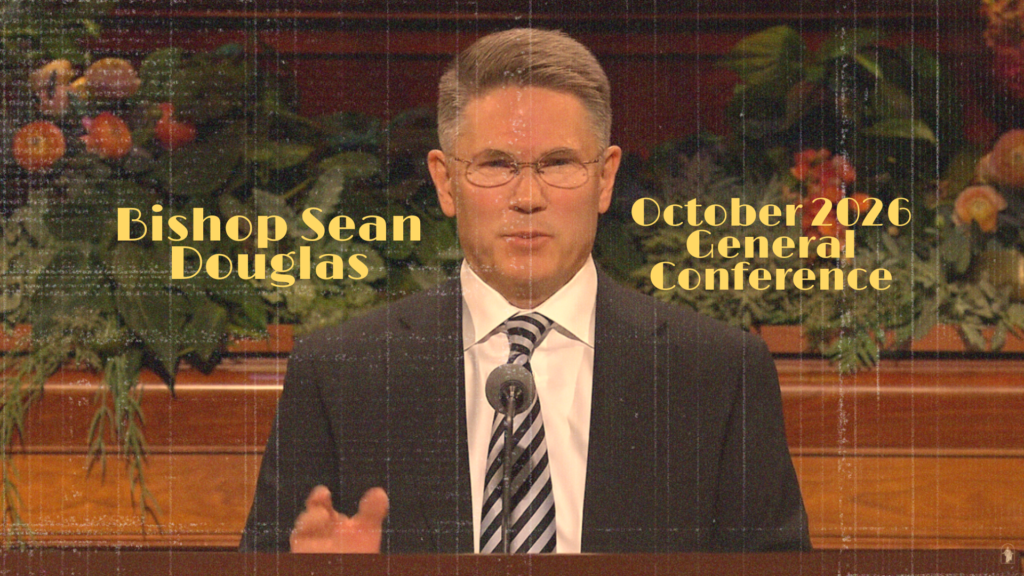
In his October 2026 General Conference address, “The Hour of Your Mission Is Come,” Bishop Sean Douglas teaches that missionary service is not simply an assignment or a temporary interruption to life’s plans. It is a sacred opportunity to draw closer to Jesus Christ, participate in His work of salvation, and establish a foundation for lifelong discipleship.
Through the inspiring story of Elder Merlin Sanchez, the example of the sons of Mosiah, and the Lord’s promises in Doctrine and Covenants 31, Bishop Douglas reminds us that God prepares His children for meaningful opportunities to serve.
Although his invitation focuses primarily on the rising generation, this message contains powerful lessons for Relief Society sisters of every age.
As mothers, grandmothers, leaders, ministering sisters, friends, and disciples of Jesus Christ, we can encourage future missionaries, strengthen those currently serving, help returning missionaries continue their discipleship, and participate in sharing the gospel ourselves.
This Relief Society lesson help follows Bishop Douglas’s message in chronological order, dividing the talk into nine discussion sections based on the natural transitions in his teachings.
Each section includes powerful direct quotes, doctrinal insights, 10 engaging discussion questions, five object lesson ideas, and 10 personal sharing prompts.
With 90 discussion questions, 45 object lessons, and 90 personal sharing prompts, teachers can choose the ideas that best meet the needs of their Relief Society sisters.
The goal is not to cover every question or activity. Instead, use this resource to encourage thoughtful discussion, meaningful personal experiences, and a deeper desire to participate in the Savior’s work.
Section 1: Missionaries Are Divinely Commissioned to Bring Others to Christ
The Principle
Bishop Douglas begins by expressing his love for missionaries and explaining the sacred nature of their calling.
Missionaries are not simply representatives of an organization. They are set apart and commissioned to assist in the Savior’s work of inviting God’s children to come unto Him.
Their purpose is centered on the doctrine of Christ, including faith in Jesus Christ, repentance, baptism, receiving the gift of the Holy Ghost, and enduring faithfully.
This section provides an opportunity to discuss the divine purpose of missionary work and why sharing the gospel is an essential part of the Lord’s work.
Direct Quotes from the Talk
“As a member of the Presiding Bishopric, I have the privilege of serving on the Church’s Missionary Executive Council. I have a deep love for the missionaries of the Church. They are uniquely set apart from the world and divinely commissioned by the Savior.”
Bishop Douglas shares this teaching from President Dallin H. Oaks:
“We invite all [of God’s children] to come unto Christ by repentance and baptism and confirmation in order to open the doors of the celestial kingdom to the sons and daughters of God. No one else can do this.”
He then explains:
“Missionaries are called to assist in this great work.”
He describes the growing missionary effort:
“Today more missionaries are serving in more missions and more of God’s children are choosing to enter the Lord’s Church through baptism than ever before in this dispensation.”
Teaching Insights
One of the most important teachings in this section is that missionary work belongs to Jesus Christ.
Missionaries participate in His work by helping people come unto Him through His restored gospel.
This perspective changes the way we think about missionary service.
A mission is not simply about traveling to another place, learning a language, or gaining personal experiences.
It is about helping God’s children develop faith in Jesus Christ and receive the blessings of His gospel.
For Relief Society sisters, this section can inspire discussion about how we support missionary work in our homes, wards, communities, and personal relationships.
It also provides an opportunity to recognize that every member can participate in inviting others to come unto Christ.
10 Relief Society Discussion Questions
- What does it mean for missionaries to be “divinely commissioned by the Savior”?
- How does understanding the divine purpose of missionary work change the way we view missionary service?
- Why is the doctrine of Christ central to missionary work?
- What do you think missionaries learn about Jesus Christ through teaching His gospel?
- How can we help young people understand that missionary service is about bringing others to Christ?
- Why is it important to recognize missionary work as the Savior’s work rather than simply a Church program?
- How can Relief Society sisters support missionaries who are currently serving?
- What role can ordinary members play in helping people prepare for baptism and confirmation?
- How can we develop greater love for the people missionaries are called to serve?
- What can we do to make missionary work a more meaningful part of our personal discipleship?
5 Object Lesson Ideas
1. The Invitation — Inviting Others to Christ
Bring an invitation card.
Discuss how an invitation offers someone an opportunity to participate in something meaningful.
Compare this to inviting others to learn about Jesus Christ and His gospel.
Emphasize that an invitation should be extended with love and respect for another person’s agency.
2. The Open Door — The Blessings of the Gospel
Display a picture of an open door.
Discuss President Oaks’s teaching about opening the doors of the celestial kingdom through the doctrine of Christ.
Ask sisters how missionaries help people understand the Savior’s invitation.
3. The Name Tag — Representing Jesus Christ
Display a missionary name tag or photograph of one.
Discuss what it means to represent the Savior.
Invite sisters to consider how their own actions can reflect His name.
4. The Map — A Worldwide Work
Bring a world map.
Invite sisters to identify places where family members or friends have served missions.
Discuss how the gospel reaches people in different cultures and circumstances.
5. The Seed — Planting Faith
Bring a seed.
Discuss how missionary efforts may begin with simple conversations or acts of kindness.
Explain that faith can grow gradually through the influence of the Holy Ghost.
10 Personal Sharing Prompts
- Share an experience when a missionary blessed your life.
- Describe how your testimony of missionary work has grown.
- Share a memory of someone who helped you understand the gospel.
- Talk about a time you felt inspired to invite someone to learn about Jesus Christ.
- Share an experience when you supported a missionary.
- Describe a lesson you learned from a family member who served a mission.
- Share how participating in missionary work strengthened your faith.
- Talk about someone whose example helped you understand the importance of sharing the gospel.
- Share an experience when you felt joy watching someone grow closer to Christ.
- Complete this statement: “One reason missionary work matters to me is…”
Section 2: Missionaries Are Living Examples of the Gospel They Teach
The Principle
Bishop Douglas next praises missionaries for their faith, love, and willingness to serve.
He emphasizes that missionaries do more than deliver a message.
Their lives can become examples of the message they teach.
This principle invites us to consider the relationship between our testimonies and our actions.
Direct Quotes from the Talk
This entire passage offers a powerful foundation for discussion:
“We love missionaries of all ages. You are an army of righteousness with the doctrine of Christ as your purpose. You are a force of faith, power, love, and joy. You are what you preach. You are not only the messengers but also living examples of the message.”
Bishop Douglas continues:
“Make no mistake—you are doing the most important work you could be doing. We thank you for building up the kingdom of God on earth.”
Teaching Insights
One of the most memorable statements in this section is:
“You are what you preach.”
Missionaries teach about faith, repentance, charity, obedience, and following Jesus Christ.
But their example can demonstrate those principles in powerful ways.
A missionary’s patience, kindness, sacrifice, and willingness to serve can communicate the love of Jesus Christ even before a formal gospel lesson begins.
This principle applies to every disciple.
Our families, friends, neighbors, and coworkers may learn as much about our faith through our actions as through our words.
Relief Society sisters can discuss how ordinary Christlike behavior becomes a form of testimony.
10 Relief Society Discussion Questions
- What does Bishop Douglas mean when he says missionaries are “what you preach”?
- Why can personal example be such a powerful form of missionary work?
- How can our actions strengthen the message of our testimony?
- What qualities make someone a living example of Jesus Christ?
- How do faith, love, and joy influence the way we share the gospel?
- Why is authenticity important when representing the Savior?
- How can we teach children to live the principles they believe?
- What can we learn from missionaries who serve with enthusiasm despite challenges?
- How can our everyday behavior invite others to become curious about the gospel?
- What is one Christlike quality we could develop to become better examples of our beliefs?
5 Object Lesson Ideas
1. The Mirror — Reflecting Christ
Bring a mirror.
Discuss how a mirror reflects what is placed before it.
Compare this to reflecting the Savior’s teachings through our actions.
2. The Candle — Sharing Light
Turn on a battery-operated candle.
Discuss how light can influence a room without making a sound.
Compare this to the quiet influence of righteous examples.
3. The Book Cover — Actions and Beliefs
Bring a book.
Discuss how the outside of a book can create expectations about its contents.
Compare this to the importance of consistency between what we believe and how we live.
4. The Footprints — Leading by Example
Display paper footprints.
Discuss how others may follow the examples we set.
Invite sisters to consider the direction their examples are leading others.
5. The Uniform — Representing a Greater Purpose
Display a photograph of a uniform.
Discuss how uniforms can represent responsibility and commitment.
Connect this to missionaries representing Jesus Christ.
10 Personal Sharing Prompts
- Share an experience when someone’s example strengthened your testimony.
- Describe a missionary whose actions reflected the Savior.
- Share a time you learned an important gospel lesson through observing someone.
- Talk about a person who consistently lives what they believe.
- Share an experience when you felt prompted to demonstrate Christlike love.
- Describe a time someone’s kindness influenced your faith.
- Share how serving others has helped you better understand the gospel.
- Talk about a lesson you learned from a missionary’s sacrifice.
- Share a time you recognized the influence of your example.
- Complete this statement: “Someone who has shown me what discipleship looks like is…”
Section 3: Missionary Service Requires Putting the Lord Above Other Ambitions
The Principle
Bishop Douglas shares the example of his two great-nephews preparing to serve missions.
Their enthusiasm reminds him of the sons of Mosiah, who desired to share the gospel with everyone.
He teaches that missionary service requires sacrifice and a willingness to place the Lord’s work above competing priorities.
This section can encourage meaningful discussion about sacrifice, consecration, and choosing eternal priorities.
Direct Quotes from the Talk
Bishop Douglas shares:
“A few months ago, I attended a sacrament meeting where my two great-nephews, who are brothers, spoke before departing for their missions. They were beaming with enthusiasm and eager to get going.”
He continues:
“Maybe it was because their assignments are thousands of miles from home at opposite ends of the earth. But in truth, their desire to serve the Lord was unmistakable.”
He compares them to the sons of Mosiah:
“They reminded me of the sons of Mosiah in the Book of Mormon, who ‘were desirous that salvation should be declared to every creature, for they could not bear that any human soul should perish.’”
Bishop Douglas then teaches:
“Their desire to serve the Lord rose above every other personal ambition. It’s what makes missionaries special; it’s why they radiate the Light of Christ and teach with convincing power.”
He explains the sacrifices involved:
“For a season, all else takes a back seat—education, dating, careers, family time, and even sleeping in on Saturday mornings. Yes, the Lord’s expectations are high for you! But, oh, is it worth it!”
He concludes with President Russell M. Nelson’s teaching:
“Nothing else compares in magnitude, nothing else compares in importance, nothing else compares in majesty.”
Teaching Insights
One of the central teachings in this section is that missionary service requires prioritizing the Lord.
For many young adults, serving a mission means temporarily setting aside meaningful personal goals.
Education may be postponed.
Career plans may change.
Relationships and familiar routines may be interrupted.
But Bishop Douglas teaches that these sacrifices can be worthwhile because missionary service is part of the Lord’s work.
The sons of Mosiah provide a powerful scriptural example.
Their desire to share the gospel came from genuine love for God’s children.
This is an important distinction.
Missionary service is not simply about fulfilling expectations.
At its best, it is motivated by love for Jesus Christ and a desire to bless others.
10 Relief Society Discussion Questions
- What do you admire about the enthusiasm of Bishop Douglas’s great-nephews?
- Why do you think the sons of Mosiah were so passionate about sharing the gospel?
- How does love for others influence our willingness to sacrifice?
- What sacrifices might young adults make to serve missions?
- Why can it be difficult to place the Lord’s work above personal ambitions?
- How can parents encourage missionary service while respecting their children’s agency?
- What blessings can come from putting spiritual priorities first?
- How can we help young people recognize the eternal significance of missionary service?
- What does consecration look like during different seasons of life?
- How can we develop a greater desire to participate in the Lord’s work?
5 Object Lesson Ideas
1. The Jar of Priorities
Bring a jar, several large stones, and small pebbles.
Place the small pebbles in first, then attempt to fit the larger stones.
Repeat with the large stones first.
Discuss the importance of making room for our highest priorities.
2. The Calendar — Making Time for the Lord
Display a calendar.
Discuss how our schedules reveal what we prioritize.
Invite sisters to consider how young people can prepare for missionary service amid other responsibilities.
3. The Backpack — Sacrifice and Service
Bring a backpack containing items representing school, work, hobbies, and relationships.
Discuss what missionaries temporarily set aside to serve the Lord.
4. The Treasure Box — Eternal Value
Bring a small box labeled “Eternal Priorities.”
Discuss how some opportunities have spiritual value beyond immediate worldly rewards.
5. The Heart — Motivation Matters
Display a paper heart.
Write “Love for Christ” and “Love for Others” inside.
Discuss how love can motivate meaningful sacrifice.
10 Personal Sharing Prompts
- Share a time you made a sacrifice to follow the Lord.
- Describe an experience when putting God first brought unexpected blessings.
- Share a story about someone who joyfully prepared for missionary service.
- Talk about a time you felt a strong desire to share the gospel.
- Share how the sons of Mosiah have influenced your testimony.
- Describe a lesson you learned through sacrifice.
- Share an experience when serving others became more important than personal convenience.
- Talk about how your family has supported missionary service.
- Share a time you recognized the eternal value of a difficult choice.
- Complete this statement: “One sacrifice that helped me grow spiritually was…”
Section 4: God Has Prepared the Rising Generation for This Time
The Principle
Bishop Douglas turns directly to the rising generation.
He teaches that God has prepared them for the opportunities and responsibilities of their time.
He urges them not to become distracted from their divine potential and the opportunity to participate in the Lord’s work.
This section invites discussion about spiritual identity, preparation, and recognizing God’s purposes.
Direct Quotes from the Talk
Bishop Douglas declares:
“God held you in reserve for this time. You were taught and prepared, before you were born, to invite God’s children to come unto Christ.”
He continues:
“We could say this is in your spiritual DNA.”
Then he offers this direct invitation:
“Take care not to become distracted. Prioritize it; don’t let anything get in the way. You are needed!”
Teaching Insights
Bishop Douglas teaches that the rising generation has a meaningful role in the Lord’s work.
He reminds young people of their divine identity and encourages them to recognize their spiritual potential.
The phrase “You are needed!” is especially significant.
Young people may sometimes question their abilities, worthiness, or readiness to serve.
They may compare themselves with others or feel uncertain about the future.
Bishop Douglas’s message reminds them that their willingness to follow the Savior matters.
Relief Society sisters can play an important role in helping young people recognize their spiritual gifts and develop confidence in the Lord.
This section also encourages us to consider how we help children and youth establish eternal priorities.
10 Relief Society Discussion Questions
- What does it mean to be prepared for a particular time in God’s plan?
- How can understanding our divine identity influence our decisions?
- Why is the phrase “You are needed!” so powerful?
- What distractions can make missionary preparation difficult?
- How can we help young people recognize their spiritual potential?
- Why is it important to teach children that they have meaningful roles in God’s work?
- How can parents and leaders help youth develop confidence in the Savior?
- What spiritual habits can help young people prepare for missionary service?
- How can we encourage young adults who feel uncertain about their abilities?
- What can we do to help the rising generation recognize the importance of their discipleship?
5 Object Lesson Ideas
1. The Seed Packet — Divine Potential
Bring a packet of seeds.
Discuss how seeds contain the potential for future growth.
Compare this to the spiritual potential Heavenly Father sees in His children.
2. The Toolbox — Preparing to Serve
Bring a toolbox.
Discuss how tools help us accomplish important work.
Compare spiritual habits and gospel knowledge to tools that prepare young people for missionary service.
3. The Compass — Avoiding Distractions
Bring a compass.
Discuss how a compass helps maintain direction.
Compare this to keeping eternal priorities in focus.
4. The Name Card — You Are Needed
Write “You Are Needed” on a card.
Discuss how these words can encourage someone who feels inadequate.
5. The Puzzle Piece — Every Person Has a Place
Display a puzzle piece.
Discuss how every person can contribute to the Lord’s work in meaningful ways.
10 Personal Sharing Prompts
- Share a time someone helped you recognize your spiritual potential.
- Describe an experience when you felt needed in the Lord’s work.
- Share how understanding your divine identity has influenced your choices.
- Talk about someone who encouraged you during a period of uncertainty.
- Share a time you overcame a distraction to focus on something spiritually important.
- Describe a lesson you learned while preparing for a calling or responsibility.
- Share how you have helped a young person develop faith.
- Talk about a spiritual habit that prepared you for future challenges.
- Share an experience when you recognized God’s timing in your life.
- Complete this statement: “One way I have seen Heavenly Father prepare someone for His work is…”
Section 5: The Lord Can Remove Obstacles as We Choose to Follow Him
The Principle
Bishop Douglas introduces Elder Merlin Sanchez, a young convert whose path to missionary service was not straightforward.
Through the encouragement of faithful friends and leaders, Merlin returned to Church activity and developed a desire to serve.
His experience demonstrates how the Lord can work through others to help us recognize opportunities for spiritual growth.
It also teaches the importance of acting in faith, even when the path ahead appears difficult.
Direct Quotes from the Talk
Bishop Douglas introduces Merlin:
“Sister Douglas and I served as mission leaders in Lima, Peru. One of our amazing missionaries was Elder Merlin Sanchez. Merlin was baptized when he was nearly 24 years old. As some do, he stopped participating for a time.”
He describes the influence of a faithful friend:
“A faithful friend helped him begin to fill out his mission papers and schedule a physical exam, even though Merlin had not yet decided to serve a mission.”
Bishop Douglas continues:
“With the help of friends and leaders, Merlin returned to church at age 25. A desire to serve a mission suddenly swelled in his heart. Thankfully, his mission papers were well advanced.”
He describes what happened next:
“Once he made the decision to go, it was miraculous to see how the Lord removed seemingly insurmountable obstacles one by one.”
Merlin’s explanation for serving is especially powerful:
“When I asked him why he wanted to serve, he replied, ‘I only want to be close to Jesus Christ and to follow Him.’”
Teaching Insights
Merlin’s story illustrates several important gospel principles.
First, spiritual growth does not always follow a predictable timeline.
Merlin joined the Church as a young adult and later experienced a period of inactivity.
Yet his story did not end there.
Through the support of friends and leaders, he returned and eventually chose to serve a mission.
Second, faithful encouragement can make a meaningful difference.
Merlin’s friend helped him begin preparing before he had made a final decision.
This support created opportunities for Merlin to act when his desire to serve developed.
Third, Merlin’s motivation was centered on Jesus Christ.
He did not describe serving because of pressure or expectations.
He wanted to draw closer to the Savior and follow Him.
This is an important principle for missionary preparation.
10 Relief Society Discussion Questions
- What stands out to you most about Merlin Sanchez’s story?
- How did faithful friends and leaders influence his decision?
- What can we learn about encouraging others without pressuring them?
- Why is it important to remember that spiritual growth happens at different times?
- How can we help young converts feel included in missionary opportunities?
- What does Merlin’s desire to be close to Jesus Christ teach us about motivation?
- Why might the Lord allow us to face obstacles before important opportunities?
- How can acting in faith help us move forward when circumstances seem difficult?
- What can Relief Society sisters do to support someone considering missionary service?
- How can we become the kind of faithful friend who helps someone take a meaningful spiritual step?
5 Object Lesson Ideas
1. The Dominoes — The Influence of One Friend
Arrange several dominoes.
Tip the first domino and watch the others fall.
Discuss how one person’s encouragement can begin a chain of meaningful events.
2. The Obstacle Course — Moving Forward in Faith
Create a simple obstacle course using classroom objects.
Discuss how challenges can make progress difficult.
Compare this to moving forward with faith despite uncertainty.
3. The Bridge — Helping Others Take the Next Step
Display a picture of a bridge.
Discuss how friends and leaders can help others cross difficult transitions.
4. The Heart — Christ-Centered Motivation
Bring a paper heart.
Write Merlin’s words inside: “I only want to be close to Jesus Christ and to follow Him.”
Discuss how love for the Savior can influence major decisions.
5. The Open Door — Recognizing Opportunities
Display a picture of an open door.
Discuss how spiritual opportunities may become available as we prepare and act in faith.
10 Personal Sharing Prompts
- Share a time a friend encouraged you to take a spiritual step.
- Describe an experience when someone helped you return to a gospel practice.
- Share how your relationship with Jesus Christ has influenced an important decision.
- Talk about a time the Lord helped you overcome an obstacle.
- Share an experience when preparation made an unexpected opportunity possible.
- Describe a time you supported someone who was unsure about a decision.
- Share how a Church leader helped strengthen your faith.
- Talk about someone whose spiritual journey has inspired you.
- Share a time you felt a new desire to follow the Savior.
- Complete this statement: “Someone who helped me move closer to Jesus Christ was…”
Section 6: Missionary Service Can Become a Foundation for Lifelong Discipleship
The Principle
Bishop Douglas continues Merlin’s story by describing how missionary service shaped his life.
Merlin’s experiences helped him become more deeply converted to Jesus Christ.
His mission was not the conclusion of his discipleship.
Instead, it became part of a lifelong journey of following the Savior.
This section provides an opportunity to discuss the lasting spiritual influence of missionary service and the importance of continuing discipleship after a mission.
Direct Quotes from the Talk
Bishop Douglas explains:
“He became a wonderful missionary, converted to Jesus Christ and His doctrine. His every experience, trial, and companion was consecrated for his gain.”
He shares an interesting detail:
“Interestingly, Elder Sanchez served with the same companion twice, for a total of eight months. Though opposite in personality, they became united in purpose—assigned together by divine design.”
Bishop Douglas then describes Merlin’s life after missionary service:
“Merlin met his eternal sweetheart, Gali, just a few months following his mission. On the day of their marriage, he was called to be a bishop—quite the wedding gift!”
He teaches:
“There was no time for his discipleship to be interrupted or his faith to be diminished. After all, serving a mission is just one of many significant steps on the path of lifelong discipleship.”
He concludes Merlin’s story:
“Merlin and Gali today have a beautiful family with three children, while Merlin serves as a stake president. They cannot fathom what their lives would be if Merlin had not served a mission.”
Teaching Insights
One of the most meaningful teachings in this section is that a mission is not the final destination of discipleship.
It is one step along the covenant path.
Missionary service can help individuals develop habits of prayer, scripture study, obedience, service, and reliance on Jesus Christ.
These habits can continue blessing their lives long after their missionary assignments end.
Merlin’s story also illustrates how challenging experiences can contribute to spiritual growth.
Bishop Douglas explains that his trials and companionships were consecrated for his gain.
This does not mean every missionary experience is easy.
Rather, it reminds us that the Lord can help us learn and grow through both joyful and difficult experiences.
Relief Society sisters can discuss how to support returning missionaries as they continue building their lives and testimonies.
10 Relief Society Discussion Questions
- What does Merlin’s story teach us about lifelong discipleship?
- Why is missionary service a beginning rather than an ending?
- How can missionary experiences prepare someone for future responsibilities?
- What does it mean for difficult experiences to be consecrated for our gain?
- How can challenging relationships help us develop Christlike attributes?
- Why is unity important in missionary companionships?
- How can we help returning missionaries continue their spiritual growth?
- What spiritual habits developed during missionary service can bless someone throughout life?
- Why is it important to recognize that discipleship continues through every season?
- How can we strengthen our commitment to Jesus Christ regardless of our current responsibilities?
5 Object Lesson Ideas
1. The Path — Lifelong Discipleship
Create a simple pathway using paper.
Label different points with experiences such as baptism, missionary service, temple worship, family responsibilities, and ministering.
Discuss how discipleship continues throughout life.
2. The Building Blocks — Spiritual Foundations
Build a small tower using blocks.
Discuss how spiritual habits developed during one season can support future responsibilities.
3. The Rope — Unity Through Differences
Bring several strands of rope.
Twist them together.
Discuss how people with different personalities can become united through a shared purpose.
4. The Journal — Lessons That Last
Bring a journal.
Discuss the value of recording lessons learned through spiritual experiences.
5. The Growing Tree — Continuing Conversion
Display a picture of a tree.
Discuss how spiritual growth continues long after an important milestone.
10 Personal Sharing Prompts
- Share how missionary service influenced your life or the life of someone you know.
- Describe a spiritual habit that has blessed you over many years.
- Share an experience when a difficult relationship helped you grow.
- Talk about a time the Lord consecrated a challenge for your benefit.
- Share how your discipleship has changed through different seasons of life.
- Describe an experience when you recognized the long-term blessings of a past decision.
- Share how you have supported a returning missionary.
- Talk about a lesson you learned from someone who remained faithful throughout life.
- Share an experience when you felt prepared for a responsibility because of earlier spiritual experiences.
- Complete this statement: “One experience that helped shape my lifelong discipleship was…”
Section 7: The Prophetic Invitation to Prepare for Missionary Service
The Principle
After sharing Merlin’s story, Bishop Douglas extends a direct invitation to the rising generation.
He encourages young converts and other young members to seriously consider missionary service.
He also reiterates the prophetic distinction between missionary service for young men and young women.
Worthy, able young men have a priesthood responsibility to prepare for and serve missions.
For young women, missionary service is a powerful but optional opportunity, and they are invited to seek the Lord’s guidance.
This distinction is important when teaching the talk.
Direct Quotes from the Talk
Bishop Douglas addresses young converts:
“To you wonderful young converts of the Church, a mission may not have been on your radar, but it ought to be now.”
He extends this invitation:
“To all the rising generation of the Church, I invite you to place serving a full-time mission high on your list. Don’t be distracted by alternatives of far less worth.”
He warns against ignoring spiritual invitations:
“Some might be like Amulek of the Book of Mormon, who expressed, ‘For I was called many times and I would not hear.’”
He then quotes prophetic counsel:
“Prophets of God today strongly reaffirm ‘that the Lord has asked every worthy, able young man to prepare for and serve a mission. For [you], missionary service is a priesthood responsibility. … For you young and able sisters, a mission is also a powerful, but optional, opportunity. … Pray to know if the Lord would have you serve a mission.’”
Teaching Insights
This section is especially important for Relief Society teachers because it addresses missionary service with both encouragement and doctrinal clarity.
Bishop Douglas invites young people to place missionary service high among their priorities.
He also emphasizes the importance of listening to prophetic counsel.
For worthy, able young men, missionary service is a priesthood responsibility.
For young women, it is an optional opportunity that can bring great spiritual blessings.
Young women are encouraged to pray and seek personal revelation about whether the Lord would have them serve.
This means Relief Society discussions should encourage missionary preparation while respecting personal agency and individual circumstances.
Not every young woman will serve a full-time mission.
That does not diminish her faithfulness, spiritual worth, or opportunities to participate in the Lord’s work.
10 Relief Society Discussion Questions
- Why is it important to understand the prophetic counsel regarding missionary service?
- How can we encourage young people to prioritize missionary preparation?
- What can we learn from Amulek’s experience of being called but not listening?
- Why is personal revelation especially important for young women considering missions?
- How can we encourage missionary service without creating unnecessary pressure?
- What can parents do to help children prepare spiritually for future decisions?
- How can we support young adults whose circumstances make missionary service difficult?
- Why is it important to recognize different paths of faithful discipleship?
- How can we help young converts understand their opportunities to serve?
- What does it mean to respond faithfully to prophetic invitations?
5 Object Lesson Ideas
1. The Listening Ear — Recognizing Invitations
Display a picture of an ear.
Discuss Amulek’s experience and the importance of recognizing spiritual invitations.
2. The Crossroads — Making Faithful Decisions
Display a picture of a crossroads.
Discuss how young adults face important decisions and can seek divine guidance.
3. The Compass — Personal Revelation
Bring a compass.
Discuss how the Holy Ghost can guide personal decisions.
4. The Open Hands — Respecting Agency
Invite sisters to open their hands.
Discuss how encouragement can be offered with love while allowing others to make their own choices.
5. The Preparation Checklist
Display a simple checklist with prayer, scripture study, testimony, service, and spiritual preparation.
Discuss habits that can help young people prepare for missionary opportunities.
10 Personal Sharing Prompts
- Share a time prophetic counsel influenced an important decision.
- Describe an experience when you sought personal revelation.
- Share how your family encouraged spiritual preparation.
- Talk about a time someone respected your agency during a difficult decision.
- Share an experience when you recognized a spiritual invitation.
- Describe how you have encouraged a young person to follow the Lord.
- Share a time you learned to trust Heavenly Father’s guidance.
- Talk about a lesson you learned from making a prayerful decision.
- Share how you have seen different forms of faithful discipleship bless others.
- Complete this statement: “One thing I have learned about following prophetic counsel is…”
Section 8: There Is a Place for You in the Lord’s Missionary Work
The Principle
Bishop Douglas expresses gratitude for those who have responded to the prophetic call to serve.
He reminds the rising generation that they are needed and that there is room for more missionaries.
He also emphasizes that their testimonies of Jesus Christ can bless people who do not yet know Him.
This section invites discussion about the power of testimony and the joy of participating in missionary work.
Direct Quotes from the Talk
Bishop Douglas teaches:
“We rejoice exceedingly for your faithful response to the prophet’s call to action.”
He continues:
“Record numbers of missionaries of all ages are finding great joy as they humbly dedicate themselves to serving the Lord by laboring among Heavenly Father’s children.”
He extends this enthusiastic invitation:
“I wish to wholeheartedly add: There is still plenty of room and a special place reserved for each one of you! We need you! ‘Come join the ranks!’”
He then explains why their testimonies matter:
“You have a testimony of Jesus Christ and His Atonement that can bless a world suffering without knowledge of His divine mission.”
Bishop Douglas concludes this thought:
“I pray that you will make the Savior’s grand commission your very own.”
Teaching Insights
One of the most encouraging teachings in this section is that every testimony of Jesus Christ has value.
Young people may feel that they do not know enough about the gospel to serve effectively.
They may worry about teaching, speaking, or answering difficult questions.
But Bishop Douglas reminds them that their testimonies can bless others.
Missionary work does not require perfect knowledge.
It requires a willingness to follow the Savior and share what we sincerely believe.
This section also provides an opportunity to discuss the joy of missionary work.
Missionaries may face rejection, homesickness, exhaustion, and disappointment.
Yet their service can also bring profound joy as they witness the influence of Jesus Christ in the lives of others.
10 Relief Society Discussion Questions
- Why is it meaningful to hear Bishop Douglas say, “We need you”?
- How can we help young people recognize the value of their testimonies?
- Why might someone feel unqualified to serve a mission?
- How can faith in Jesus Christ help overcome feelings of inadequacy?
- What does it mean to make the Savior’s commission our own?
- How can sharing our testimonies bless people who are struggling?
- Why does missionary work bring joy?
- What can we learn from missionaries who serve despite challenges?
- How can we help young people develop confidence in sharing the gospel?
- What opportunities do we have to participate in missionary work without serving a full-time mission?
5 Object Lesson Ideas
1. The Small Light — The Power of Testimony
Turn on a small battery-operated light.
Discuss how even a small light can make a difference in darkness.
Compare this to sharing a sincere testimony.
2. The Invitation Card — Come Join the Ranks
Bring an invitation card.
Discuss how Bishop Douglas invites young people to participate in the Lord’s work.
3. The Puzzle — Everyone Has a Place
Display a puzzle.
Discuss how different individuals contribute unique gifts and experiences to missionary work.
4. The Megaphone — Sharing Good News
Bring a small toy megaphone or picture of one.
Discuss how the gospel is good news worth sharing.
Emphasize that effective sharing can be gentle, personal, and respectful.
5. The Gift Box — Sharing What We Have Received
Bring a wrapped gift.
Discuss how our testimonies are blessings we can share with others.
10 Personal Sharing Prompts
- Share a time someone encouraged you by expressing confidence in your abilities.
- Describe an experience when sharing your testimony blessed someone.
- Share how missionary work has brought joy to your family.
- Talk about a time you felt inadequate but received strength from the Lord.
- Share a lesson you learned from someone who served faithfully.
- Describe an experience when a simple testimony made a difference.
- Share how you have participated in missionary work.
- Talk about someone whose testimony strengthened yours.
- Share an experience when you recognized the value of your spiritual gifts.
- Complete this statement: “One way my testimony of Jesus Christ has blessed someone else is…”
Section 9: The Lord Promises Joy, Strength, and Divine Help to Those Who Serve Him
The Principle
Bishop Douglas concludes with the Lord’s words to Thomas B. Marsh in Doctrine and Covenants 31.
He invites listeners to place their own names into the revelation.
This creates a personal opportunity to reflect on the Savior’s invitation to serve.
The passage contains promises of joy, divine assistance, forgiveness, and opportunities to bless others.
This section provides a powerful way to conclude a Relief Society lesson by encouraging personal application.
Direct Quotes from the Talk
Bishop Douglas introduces the revelation:
“I conclude with the words of our Savior given through Joseph Smith to Thomas B. Marsh, who was called to preach the gospel in 1830. I invite each of you to substitute your name for Thomas’s:”
He then quotes the Lord:
“Thomas, my son [or daughter], …
“Lift up your heart and rejoice, for the hour of your mission is come; and your tongue shall be loosed, and you shall declare glad tidings of great joy unto this generation. …”
The revelation continues:
“Therefore, thrust in your sickle with all your soul, and your sins are forgiven you, and you shall be laden with sheaves upon your back. … Wherefore, your family shall live.”
The Lord also promises:
“Behold, … go from them only for a little time, and declare my word, and I will prepare a place for them.”
The passage concludes:
“… I will open the hearts of the people, and they will receive you. And I will establish a church by your hand.”
Bishop Douglas closes his address:
“In the name of Jesus Christ, amen.”
Teaching Insights
This concluding section is particularly meaningful because it centers on the Savior’s own words.
The Lord does not simply command Thomas B. Marsh to preach.
He offers encouragement and promises divine assistance.
He tells Thomas to rejoice.
He promises to help him speak.
He assures him that his family will be cared for.
And He promises to prepare hearts to receive the gospel.
These teachings can help young people recognize that missionary service is not something they must accomplish through their own abilities alone.
The Savior is involved in His work.
He can strengthen those who serve Him.
Bishop Douglas’s invitation to substitute our own names into the revelation makes the message deeply personal.
Although Doctrine and Covenants 31 was originally directed to Thomas B. Marsh, its teachings can inspire us to consider how the Lord invites us to participate in His work today.
10 Relief Society Discussion Questions
- What stands out to you most about the Lord’s words to Thomas B. Marsh?
- Why does the Lord begin by telling Thomas to rejoice?
- What does the promise “your tongue shall be loosed” teach us about divine assistance?
- How can the Lord strengthen someone who feels nervous about sharing the gospel?
- What does it mean to serve with all our soul?
- How can the Lord prepare the hearts of people to receive His message?
- Why might these promises bring comfort to prospective missionaries?
- How can we help young people trust the Lord’s promises?
- What do we learn about the Savior’s love for those He calls to serve?
- How does placing your own name into the revelation change the way you understand its message?
5 Object Lesson Ideas
1. The Personalized Scripture — Making the Invitation Personal
Print a portion of Doctrine and Covenants 31 with a blank space where Thomas’s name appears.
Invite sisters to silently insert their own names.
Discuss how personalizing scripture can encourage reflection.
2. The Harvest Basket — Gathering God’s Children
Bring a small basket and artificial fruit.
Discuss the scriptural image of gathering sheaves.
Compare this to helping people come unto Jesus Christ.
3. The Open Door — Prepared Hearts
Display a picture of an open door.
Discuss the Lord’s promise to open the hearts of people.
4. The Microphone — Divine Help in Speaking
Bring a microphone or picture of one.
Discuss the Lord’s promise to help His servants speak.
Emphasize that the Holy Ghost can help us share sincere testimonies.
5. The Promise Cards — Remembering the Lord’s Words
Write several promises from Doctrine and Covenants 31 on separate cards.
Invite sisters to select one and discuss why it is meaningful.
10 Personal Sharing Prompts
- Share a scripture promise that has strengthened your faith.
- Describe an experience when the Lord helped you speak or teach.
- Share a time you felt divine assistance while serving.
- Talk about an experience when you recognized that someone’s heart had been prepared to receive the gospel.
- Share how personalizing scripture has influenced your testimony.
- Describe a time you felt joy while participating in the Lord’s work.
- Share an experience when you trusted the Lord with concerns about your family.
- Talk about a promise from Heavenly Father that brings you comfort.
- Share how serving others has strengthened your relationship with Jesus Christ.
- Complete this statement: “One promise from the Lord that gives me courage to serve is…”
Conclusion: Helping the Rising Generation Answer the Savior’s Call
Bishop Sean Douglas’s message, “The Hour of Your Mission Is Come,” is a powerful reminder that missionary service is a sacred opportunity to participate in the work of Jesus Christ.
Throughout his talk, Bishop Douglas teaches that missionaries are divinely commissioned to invite God’s children to come unto the Savior.
They are not simply messengers.
They are living examples of the gospel they teach.
Their service requires sacrifice, faith, and a willingness to place the Lord’s work above competing priorities.
Through the story of Elder Merlin Sanchez, Bishop Douglas also demonstrates how missionary service can influence an entire lifetime.
Merlin’s decision to serve helped him draw closer to Jesus Christ, strengthen his conversion, and establish a foundation for future discipleship.
His experience reminds us that missionary service is not the conclusion of our spiritual journey.
It is one meaningful step along the covenant path.
Perhaps one of the most encouraging teachings in this address is Bishop Douglas’s reminder that the rising generation is needed.
Young people may feel uncertain about their abilities or overwhelmed by the decisions ahead of them.
Yet the Lord can prepare and strengthen those who choose to follow Him.
Bishop Douglas’s invitation is clear:
“To all the rising generation of the Church, I invite you to place serving a full-time mission high on your list.”
For Relief Society sisters, this message provides an opportunity to consider how we can encourage the next generation to follow the Savior.
We can strengthen their testimonies.
We can help them recognize their divine potential.
We can encourage spiritual preparation.
And we can support them as they seek personal revelation and make important decisions.
How This Lesson Can Strengthen Relief Society Sisters
Although Bishop Douglas directs much of his message toward young adults, the principles he teaches apply to disciples of Jesus Christ throughout their lives.
Relief Society sisters can use this lesson to reflect on their own experiences with missionary work and consider how they can support others.
Some sisters may have served full-time missions.
Others may have children or grandchildren preparing to serve.
Some may have loved ones currently serving or recently returned.
Others may have never served a mission but have meaningful experiences sharing the gospel through friendships, ministering, and everyday interactions.
Every sister can contribute to the Lord’s work.
This lesson can also encourage sisters to recognize that faithful encouragement matters.
Merlin Sanchez’s story demonstrates the influence of a friend who helped him begin preparing before he had fully decided to serve.
Sometimes our role is not to make a decision for someone else.
It is simply to love, encourage, and support them as they seek the Lord’s guidance.
As you prepare your Relief Society lesson, consider which themes will be most meaningful for the sisters in your ward.
You might focus on the blessings of missionary service, the importance of spiritual preparation, the influence of faithful friends, or the relationship between missionary work and lifelong discipleship.
You can also use the personal sharing prompts to invite sisters to share experiences that strengthen faith in Jesus Christ.
A Final Relief Society Discussion Invitation
Consider closing your lesson with this question:
“What can we do as Relief Society sisters to help the rising generation recognize that they are needed in the Lord’s work?”
Allow sisters to share their thoughts.
Then ask:
“How can we encourage missionary service in a way that strengthens faith in Jesus Christ and respects individual agency?”
These questions can help sisters move from discussing the importance of missionary service to identifying meaningful ways to support others.
A Simple Invitation for the Week
Invite sisters to prayerfully consider one way they can strengthen missionary work.
They might choose to:
- Reach out to a missionary currently serving and offer encouragement.
- Express confidence in a young person who is preparing for missionary service.
- Share a meaningful missionary experience with a child or grandchild.
- Pray for opportunities to share their testimony of Jesus Christ.
- Study Doctrine and Covenants 31 and reflect on the Lord’s promises to those who serve Him.
Encourage sisters to recognize that even small acts of faith and encouragement can make a meaningful difference.
Bishop Douglas concludes his message with the Savior’s invitation:
“Lift up your heart and rejoice, for the hour of your mission is come; and your tongue shall be loosed, and you shall declare glad tidings of great joy unto this generation.”
These words remind us that the Lord’s work is a work of joy.
He prepares His servants.
He strengthens them.
And He invites them to participate in bringing His children closer to Him.
As we encourage the rising generation to follow the Savior, may we also remember that our own opportunities to love, serve, testify, and invite others to come unto Christ continue throughout our lives.



Leave a Reply