Introduction
Have you ever prayed for relief from a trial, only to find that your circumstances did not immediately change? Have you wondered why Heavenly Father allows faithful people to experience heartbreak, disappointment, illness, or loss? Have you ever needed reassurance that the Savior was aware of you, even when you could not see how things would work out?
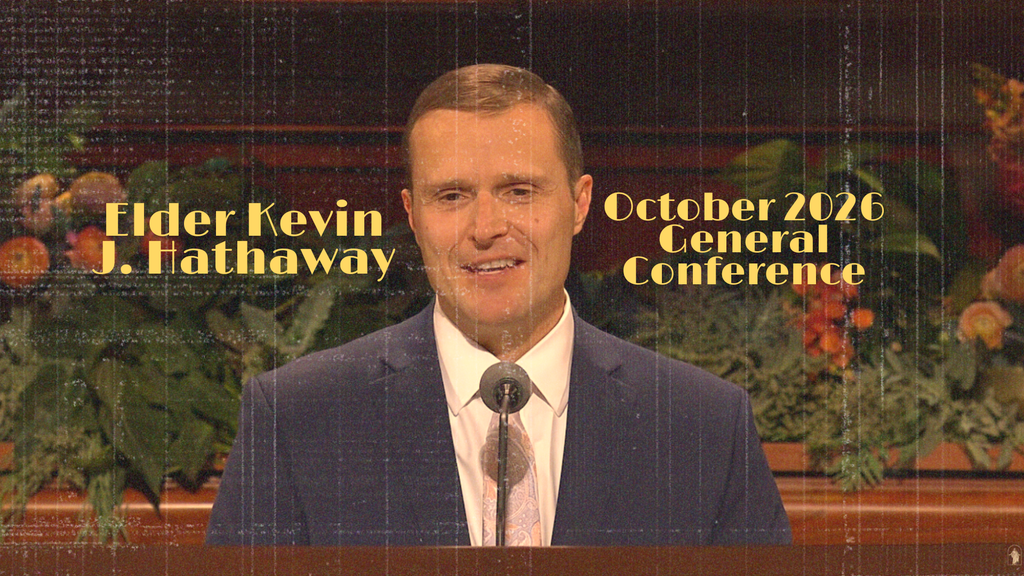
In his General Conference talk, “Jesus Christ Is the Great Deliverer!” Elder Kevin J. Hathaway offers a message of hope to anyone who has ever wondered when—or how—the Lord would answer their prayers.
Through personal experiences, scriptural accounts, and powerful testimony, Elder Hathaway teaches that Jesus Christ’s power to deliver us is certain, even when the timing and manner of that deliverance are unknown.
He introduces a beautiful pattern of divine deliverance that can help us better understand how the Savior works in our lives:
- Opposition brings heartrending questions and emotions.
- Sincere spiritual seeking invites divine assurances.
- Christ’s grace enables us to endure and grow.
- Deliverance comes in the Savior’s time and way.
This message is especially meaningful for Relief Society sisters because every woman carries burdens that others may not fully understand. Some are grieving loved ones, navigating difficult family relationships, facing health challenges, struggling with unanswered prayers, or quietly wondering how much longer they can endure.
Elder Hathaway reminds us that the Savior does not abandon us in these experiences. He understands our suffering perfectly, offers peace while we wait, and provides strength beyond our own.
This Relief Society lesson help follows the talk in nine chronological discussion sections, beginning with the Savior’s divine power to deliver and ending with His promise to heal, restore, and strengthen His children.
Each section includes:
- Longer, powerful direct quotes from Elder Hathaway’s talk
- Teaching insights explaining the doctrines and principles
- 10 engaging Relief Society discussion questions
- 5 object lesson ideas with explanations
- 10 personal sharing prompts to encourage meaningful experiences and testimonies
Teachers can select the sections, questions, and activities that best meet the needs of their sisters. There is no need to cover every idea in one class.
The goal is to create a Christ-centered discussion where sisters feel comfortable expressing their faith, acknowledging their struggles, and recognizing the Savior’s hand in their lives.
Section 1: Jesus Christ Understands Every Affliction and Has the Power to Deliver
The Principle
Elder Hathaway begins with a bold declaration: Jesus Christ is the Great Deliverer.
He immediately makes this doctrine personal by acknowledging the many different afflictions people experience.
Some trials are visible. Others are carried silently.
But no experience is beyond the Savior’s understanding or His power to redeem.
Through His infinite Atonement, Jesus Christ understands our suffering perfectly and knows how to succor us.
The central doctrine of this section is that Christ’s deliverance is certain, even when we do not know how or when it will come.
Direct Quotes from the Talk
“Jesus Christ is the Great Deliverer!”
Elder Hathaway then asks a series of questions that can immediately connect with Relief Society sisters:
“Have you ever felt left out, wondered if you were enough, lost someone you loved, faced illness, experienced family difficulties, or carried a burden no one else could see? My message today is that Jesus Christ delivers the righteous from these and every other affliction of mortality.”
He explains why the Savior is uniquely qualified to deliver us:
“Jesus Christ descended below all things and suffered ‘pains and afflictions and temptations of every kind’; therefore, He comprehends our suffering, is filled with mercy, and knows how to succor us according to our infirmities.”
He then offers one of the central teachings of the entire talk:
“With perfect understanding and infinite power, He can deliver the righteous from all things, forever. His deliverance is certain; the question for most righteous followers is not if He will deliver but how and when He will do so.”
Teaching Insights
One of the most comforting truths about Jesus Christ is that He understands more than our outward circumstances.
He understands the emotions accompanying those circumstances.
He knows what it feels like to be rejected, misunderstood, afraid, lonely, exhausted, and overwhelmed.
Because of His Atonement, we never have to explain our suffering to someone who cannot comprehend it.
Elder Hathaway’s declaration also changes the questions we might ask during difficult experiences.
Instead of asking only, “Will the Savior help me?” we can begin asking, “How might the Savior be helping me right now?”
Sometimes deliverance means a change in circumstances.
Sometimes it means receiving peace, courage, or strength while those circumstances remain.
And sometimes the complete fulfillment of divine promises awaits the Resurrection.
This section is a wonderful opportunity to help sisters distinguish between the certainty of Christ’s power and the uncertainty of mortal timelines.
10 Relief Society Discussion Questions
- What does the title “Great Deliverer” teach us about the nature and mission of Jesus Christ?
- Why do you think Elder Hathaway begins by mentioning so many different types of personal struggles?
- How does knowing that the Savior understands our suffering change the way we approach Him?
- What is the difference between believing that Christ can deliver us and trusting that He will deliver us in His time and way?
- Why is it sometimes difficult to believe the Savior understands our particular experiences?
- How does Alma 7:11–12 deepen our understanding of the Savior’s ability to succor us?
- What forms of deliverance might we overlook because we are expecting a particular outcome?
- How can we strengthen our faith in Christ’s promises when our circumstances remain unchanged?
- Why is it important to remember that deliverance may not come during mortality?
- What would change in our daily lives if we truly believed that no burden was beyond the Savior’s understanding?
5 Object Lesson Ideas
1. The Heavy Backpack — The Burdens We Carry
Bring a backpack filled with books or other heavy objects.
Invite a volunteer to hold it while you discuss the different burdens people carry.
Remove one object at a time, explaining that the Savior can provide relief in different ways. Sometimes He removes a burden, while other times He gives us strength to continue carrying it.
2. The Hidden Weight — Unseen Afflictions
Place a heavy object inside a closed box.
Ask sisters to estimate its weight without seeing what is inside.
Explain that we often cannot see or fully understand another person’s burdens, but Jesus Christ knows them perfectly.
3. The Lifeline — Christ’s Power to Save
Bring a rope and discuss how a lifeline can help someone in danger.
Connect the illustration to the Savior’s power to reach us when we cannot rescue ourselves.
4. The Puzzle Piece — Understanding Only Part of the Plan
Display a few pieces from a larger puzzle.
Explain that we often see only a small part of our circumstances, while Heavenly Father understands the eternal picture.
5. The Open Hands — Receiving the Savior’s Help
Ask sisters to hold their hands tightly closed, then open them.
Discuss how humility, prayer, and faith help us become willing to receive the Savior’s grace.
10 Personal Sharing Prompts
- Share a time you felt that Jesus Christ understood something you were experiencing.
- Describe a moment when the Savior brought peace even though your circumstances did not change.
- Share a scripture that has helped you trust Christ during a difficult time.
- Talk about an experience when you recognized the Savior’s help in an unexpected way.
- Share how your understanding of the Atonement has grown through personal trials.
- Describe a time you felt strengthened beyond your own abilities.
- Share a moment when someone reminded you of the Savior’s love.
- Talk about a burden that helped you develop greater compassion for others.
- Share a gospel truth that helps you trust in eventual deliverance.
- Complete this statement: “I know Jesus Christ is my Deliverer because…”
Section 2: Sometimes the Lord Gives Us Peace Before He Gives Us Deliverance
The Principle
Elder Hathaway shares a personal experience involving a frightening accident while his family was traveling to begin their service as mission leaders.
They had sacrificed to serve the Lord, yet their journey was suddenly interrupted by a dangerous collision.
Their experience teaches that faithful service does not exempt us from unexpected trials.
It also demonstrates that divine reassurance can come before circumstances improve.
Direct Quotes from the Talk
“Our family experienced a sudden trial and the Lord’s deliverance as we drove in two cars to begin our service as mission leaders. While driving in a construction zone, two large tires came loose from a semitruck and struck both cars at high speed.”
He describes the aftermath:
“The airbags deployed, the cars were destroyed, and we were left stranded on the roadside wondering why this had happened when we had left everything to serve the Lord.”
Then comes the turning point:
“In that moment, the Spirit brought us peace: Everything would be all right. We were not immediately delivered from the trial, but that assurance gave us hope in the deliverance that would come.”
He explains how their experience eventually unfolded:
“With the help of many wonderful people, we arrived on time and began our mission without serious injury.”
Elder Hathaway then identifies the spiritual pattern illustrated by their experience:
“The experience on that freeway illustrates a scriptural pattern of divine deliverance as follows: Opposition brings heartrending questions and emotions, sincere seeking invites assurances, Christ’s grace enables us to endure and grow, and deliverance comes in the Savior’s time and way.”
Teaching Insights
One of the most important details in this story is that Elder Hathaway’s family received peace before their situation was resolved.
Their cars were still destroyed.
They were still stranded.
They still had questions.
Yet the Holy Ghost reassured them that everything would be all right.
This illustrates an important difference between peace and the absence of problems.
The peace of Jesus Christ is not dependent on ideal circumstances.
Through the Holy Ghost, we can receive assurance that Heavenly Father is aware of us even when we cannot yet see a solution.
Elder Hathaway’s experience also demonstrates that divine deliverance often involves the kindness and service of other people.
10 Relief Society Discussion Questions
- Why do we sometimes expect faithful service to protect us from unexpected trials?
- What stands out to you about the timing of the peace Elder Hathaway’s family received?
- How is spiritual peace different from having our problems solved?
- Why might Heavenly Father offer reassurance before offering a solution?
- What does this experience teach us about the Holy Ghost?
- How can we recognize spiritual assurances when our emotions are overwhelming?
- Why is it important to remember that faithful disciples still experience opposition?
- How might the Lord use other people as part of our deliverance?
- What can we learn from the fact that the Hathaway family’s circumstances did not immediately change?
- How can we better trust the Savior when the next step is unclear?
5 Object Lesson Ideas
1. The Flashlight — Enough Light for the Next Step
Dim the room slightly and turn on a flashlight.
Explain that a flashlight may not illuminate the entire path, but it can provide enough light to move forward.
Compare this to the peace and direction we receive through the Holy Ghost.
2. The Storm and the Anchor
Display a small anchor.
Discuss how an anchor does not stop a storm but can help provide stability.
Compare this to the Savior’s peace during affliction.
3. The Road Map — Unexpected Detours
Bring a map and mark a route with an unexpected detour.
Discuss how the Lord can help us continue toward righteous goals even when our journey changes.
4. The Wrapped Gift — Peace Before Answers
Place a card reading “Peace” inside a gift box.
Discuss how divine peace can be a gift we receive before the trial ends.
5. The Helping Hands — Deliverance Through Others
Invite several sisters to work together to move a large, lightweight object.
Discuss how the Lord often answers prayers through the service of His children.
10 Personal Sharing Prompts
- Share a time you received peace before receiving an answer.
- Describe an unexpected trial that interrupted your plans.
- Share how the Holy Ghost helped you during a stressful experience.
- Talk about a time someone became part of the Lord’s answer to your prayers.
- Share a moment when you felt reassured that everything would eventually be all right.
- Describe an experience when your plans changed but the Lord still guided you.
- Share how a difficult experience strengthened your trust in God.
- Talk about a time you learned that peace does not require perfect circumstances.
- Share an experience when you recognized the Lord’s protection.
- Complete this statement: “One way the Lord has reassured me during uncertainty is…”
Section 3: Opposition and Difficult Emotions Are Not Signs of Spiritual Weakness
The Principle
After introducing the pattern of divine deliverance, Elder Hathaway begins explaining its first stage: opposition.
He reminds us that even righteous disciples experience heartbreaking circumstances.
These trials can produce difficult questions and powerful emotions.
Rather than describing these reactions as sinful or weak, Elder Hathaway teaches that they can become moments in which we exercise agency and choose to turn toward Jesus Christ.
Direct Quotes from the Talk
“Opposition comes to all, even the righteous.”
He then explains the emotional effects of opposition:
“It can stir heartrending questions and deep emotions, like Joseph Smith’s cry from Liberty Jail, ‘O God, where art thou?’ or the grief and fear felt by Helaman’s stripling warriors.”
Elder Hathaway provides an especially comforting teaching:
“Such questions and emotions are not sin or weakness; they can create a sacred space where agency is activated and we choose whether to turn toward Jesus Christ.”
Teaching Insights
This section can lead to a particularly meaningful Relief Society discussion.
Sometimes we assume that strong faith should eliminate fear, disappointment, confusion, or grief.
But Elder Hathaway reminds us that these emotions are part of mortal experience.
Joseph Smith experienced anguish.
Faithful people in the scriptures experienced fear.
Even disciples who trust God deeply can struggle emotionally.
The important question is not whether we experience difficult feelings.
It is how we respond to those feelings.
We can allow our questions to lead us toward the Savior rather than assuming they disqualify us from receiving His help.
This principle can be especially comforting for sisters who feel guilty because their trials have been emotionally overwhelming.
10 Relief Society Discussion Questions
- Why is it important to understand that opposition comes even to the righteous?
- How can unrealistic expectations about faith make trials more difficult?
- What can we learn from Joseph Smith’s question, “O God, where art thou?”
- Why do we sometimes interpret difficult emotions as evidence of weak faith?
- How can questions and uncertainty become opportunities for spiritual growth?
- What does it mean to exercise agency in the middle of suffering?
- How can we turn toward Jesus Christ when we feel disappointed or afraid?
- Why is it important to create a Relief Society environment where sisters can acknowledge struggles without judgment?
- How can we respond compassionately when someone expresses difficult questions about their circumstances?
- What is the difference between having questions and abandoning faith?
5 Object Lesson Ideas
1. The Pressure Cooker — Emotions Under Pressure
Display a pressure cooker or a picture of one.
Discuss how pressure builds and why acknowledging emotions can be important.
Connect this to turning toward the Savior rather than hiding our struggles.
2. Two Paths — Exercising Agency
Place two paper arrows on the floor pointing in different directions.
Discuss how opposition creates opportunities to choose where we turn for help.
3. A Journal — Bringing Questions to God
Bring a journal.
Invite sisters to consider writing their questions and feelings as part of sincere prayer and reflection.
4. The Tangled String — Complicated Emotions
Show a tangled piece of string.
Explain that difficult emotions are not always simple to understand or resolve.
Discuss how the Savior can help us work through them patiently.
5. The Open Door — Turning Toward Christ
Display a picture of an open door.
Discuss how trials can become invitations to seek a closer relationship with Jesus Christ.
10 Personal Sharing Prompts
- Share a time you learned that having questions did not mean you lacked faith.
- Describe a scripture that helped you during emotional difficulty.
- Share an experience when you turned toward Christ despite uncertainty.
- Talk about a time someone responded compassionately to your struggles.
- Share how your understanding of faithful endurance has changed.
- Describe a time prayer helped you express difficult feelings.
- Share a moment when you felt permission to be honest with Heavenly Father.
- Talk about a lesson you learned from a scriptural figure who experienced opposition.
- Share how you have learned to support someone who is struggling emotionally.
- Complete this statement: “One thing I have learned about faith during difficult emotions is…”
Section 4: Sincere Spiritual Seeking Draws Us Closer to Jesus Christ
The Principle
Elder Hathaway next explains the second part of the pattern of deliverance.
When opposition comes, we can respond by sincerely seeking Heavenly Father and Jesus Christ.
Prayer, fasting, and scripture study become more than religious routines.
They become expressions of our dependence on God and our willingness to receive His help.
Direct Quotes from the Talk
“Sincere seeking means turning toward Heavenly Father and Jesus Christ through heartfelt prayer, purposeful fasting, and scripture study.”
Elder Hathaway offers examples from scripture:
“Alma’s people in bondage ‘began to cry mightily to God.’ King Darius fasted through the night as he waited for Daniel’s deliverance from the lions’ den.”
He concludes:
“Such acts of faith draw us closer to Jesus Christ.”
Teaching Insights
One of the most important words in this section is sincere.
Elder Hathaway does not simply encourage prayer, fasting, and scripture study.
He emphasizes heartfelt prayer and purposeful fasting.
These practices are most meaningful when they help us turn our hearts toward Heavenly Father and Jesus Christ.
During difficult times, we may feel tempted to withdraw spiritually.
But sincere seeking creates opportunities to receive comfort, revelation, strength, and reassurance.
It is also important to remember that spiritual practices are not transactions that guarantee immediate solutions.
Their purpose is to deepen our relationship with God and help us receive the blessings He knows we need.
10 Relief Society Discussion Questions
- What is the difference between going through the motions of prayer and sincerely seeking God?
- Why can spiritual habits become especially important during trials?
- What does it mean to pray with your whole heart?
- How can fasting become more purposeful?
- Why might scripture study help us receive answers to personal questions?
- What can we learn from Alma’s people crying mightily to God?
- How does sincere seeking strengthen our relationship with Jesus Christ?
- What challenges sometimes make prayer or scripture study difficult during trials?
- How can we continue seeking God when answers do not come quickly?
- What is one way we could make our spiritual seeking more intentional?
5 Object Lesson Ideas
1. A Compass — Turning Toward God
Bring a compass.
Discuss how a compass provides direction.
Compare it to spiritual practices that help orient our hearts toward Heavenly Father.
2. A Phone Connection — Staying Spiritually Connected
Use a phone as an illustration.
Discuss the importance of maintaining communication in meaningful relationships.
Connect this to prayer.
3. A Watering Can — Nourishing Faith
Bring a watering can and a plant.
Discuss how repeated spiritual nourishment helps faith grow.
4. A Scripture Bookmark — Searching with Purpose
Place a question on a bookmark inside the scriptures.
Discuss how bringing sincere questions to scripture study can make it more meaningful.
5. A Doorbell — Seeking and Receiving
Display a doorbell or picture of one.
Discuss the Savior’s invitation to ask, seek, and knock.
10 Personal Sharing Prompts
- Share a time heartfelt prayer brought you comfort.
- Describe an experience when fasting strengthened your faith.
- Share a scripture that answered a personal question.
- Talk about a time you felt closer to Christ through sincere seeking.
- Share how your prayers have changed as you have matured spiritually.
- Describe an experience when you felt prompted to study a particular scripture.
- Share a time you continued praying despite not receiving an immediate answer.
- Talk about a spiritual habit that has helped you through difficult seasons.
- Share how someone else’s faith encouraged you to seek God.
- Complete this statement: “I feel closest to Heavenly Father when…”
Section 5: The Savior Visits Us in Our Afflictions Through Sacred Assurances
The Principle
Elder Hathaway moves into the third part of his message by discussing divine assurances.
He teaches that as we humbly and patiently keep our covenants, the Savior can bring peace and reassurance even while our afflictions continue.
He illustrates this principle through the heartbreaking experience of Sister Kenzie Brinkerhoff, a missionary whose father died shortly before she returned home.
Her story demonstrates that covenant faithfulness does not prevent sorrow, but it can help us draw upon the Savior’s healing power.
Direct Quotes from the Talk
“As we humbly and patiently keep our covenants, the Savior will visit us in our afflictions and bring assurances of deliverance.”
Elder Hathaway explains:
“Many in the scriptures received assurances of peace, faith, and hope for deliverance in Christ.”
He then shares Sister Brinkerhoff’s experience:
“On the last preparation day before Sister Brinkerhoff returned home from her mission, her father, Kelly, called early in the morning to tell her he loved her, was proud of her, and was excited to hug her soon.”
He describes the tragedy:
“Heartbreakingly, while driving home from work that night, Kelly was in a vehicle accident and passed away.”
Elder Hathaway recalls her grief:
“When my wife and I arrived soon after Kenzie received the news, she was grieving deeply. Through her tears came the heartrending question, ‘President, how could this happen when I was one week away from hugging my dad?’”
Several weeks later, Kenzie shared this testimony:
“The past few weeks have been the most awful and the most sacred time in my life. I have never clung so tightly to my covenants. I know that Jesus knows what this feels like, and He will heal me.”
Teaching Insights
Sister Brinkerhoff’s statement is one of the most powerful moments in Elder Hathaway’s talk.
She describes the same period of her life as both “the most awful” and “the most sacred.”
These two experiences might seem contradictory.
But her testimony demonstrates that deep sorrow and profound spiritual experiences can exist together.
She did not claim that her grief had disappeared.
She did not pretend to understand why her father had died.
Instead, she testified that Jesus Christ understood her suffering and would heal her.
Her experience illustrates how covenants can become a source of spiritual strength during heartbreaking circumstances.
Teachers should approach this section sensitively, especially when discussing grief and loss.
10 Relief Society Discussion Questions
- What does it mean for the Savior to visit us in our afflictions?
- Why is it significant that Kenzie described her experience as both awful and sacred?
- How can grief and spiritual closeness exist at the same time?
- What does it mean to cling tightly to our covenants?
- How can covenant relationships with God strengthen us during loss?
- Why is it comforting to know that Jesus Christ understands grief personally?
- What is the difference between receiving assurance of healing and experiencing complete healing immediately?
- How can we recognize sacred moments during difficult experiences?
- How can we support someone who is grieving without minimizing their pain?
- What does Kenzie’s testimony teach us about trusting the Savior?
5 Object Lesson Ideas
1. The Covenant Knot — Holding Fast
Tie a secure knot in a rope.
Discuss how covenant commitments can help us remain spiritually connected to Heavenly Father and Jesus Christ during trials.
2. A Candle in Darkness
Turn on a battery-operated candle.
Discuss how divine assurance can bring light even when difficult circumstances remain.
3. A Comforting Letter
Bring a handwritten letter.
Discuss how words of love and reassurance can provide comfort.
Compare this to the spiritual assurances we receive through the Holy Ghost.
4. A Strong Foundation
Use blocks to build a simple foundation.
Discuss how covenant living can strengthen our spiritual foundation before and during trials.
5. A Healing Bandage
Display a bandage.
Discuss how healing can be gradual and how the Savior’s power reaches beyond what we can see.
10 Personal Sharing Prompts
- Share a time you felt the Savior close during a difficult experience.
- Describe how keeping your covenants has strengthened you.
- Share a moment when sorrow and spiritual peace existed together.
- Talk about a time the Holy Ghost reassured you.
- Share how temple worship has brought you comfort.
- Describe an experience when you felt that Christ understood your grief.
- Share a scripture that helped you during loss.
- Talk about someone who helped you feel God’s love.
- Share how your understanding of covenant blessings has deepened.
- Complete this statement: “One assurance the Savior has given me is…”
Section 6: The Grace of Jesus Christ Enables Us to Endure What We Cannot Bear Alone
The Principle
Elder Hathaway next explains the enabling power of the Savior’s grace.
Sometimes we think of grace primarily in connection with forgiveness.
But grace also provides divine strength that helps us endure circumstances beyond our natural abilities.
This does not mean that suffering disappears.
Rather, through Jesus Christ, we can receive strength to continue faithfully even when life remains difficult.
Direct Quotes from the Talk
“Enabled enduring comes through the grace of Jesus Christ and strengthens us to ‘cheerfully do all things that lie in our power’ and then ‘stand still, with the utmost assurance, to see the salvation of God, and for his arm to be revealed.’”
Elder Hathaway explains the enabling nature of grace:
“This grace does not remove the pain and difficulty of affliction; it is an enabling power that allows us, after all we can do, to receive divine strength beyond our own and lay hold on eternal promises through Jesus Christ.”
He applies this principle to Sister Brinkerhoff:
“As Kenzie binds herself to Heavenly Father and Jesus Christ in prayer, obedience, and covenant keeping, They help her endure what she cannot bear alone.”
He then extends the promise to everyone:
“That same enabling grace is available to all who turn to Jesus Christ.”
Teaching Insights
One of the most important distinctions in this section is the difference between having a trial removed and being strengthened to endure it.
Sometimes we pray for our circumstances to change.
But the Lord may first change our capacity to face those circumstances.
Through His grace, we can receive strength, patience, hope, and spiritual resilience beyond what we could produce alone.
This is not a call to pretend that suffering is easy or to push ourselves beyond healthy limits.
It is a reminder that the Savior’s enabling power can sustain us as we seek appropriate help, fulfill what we reasonably can, and trust Him with what remains beyond our control.
10 Relief Society Discussion Questions
- How would you explain the enabling power of grace to someone unfamiliar with the gospel?
- What is the difference between enduring through our own strength and enduring through Christ’s grace?
- Why does the Lord sometimes strengthen us rather than immediately remove our trials?
- What does it mean to do all things that lie in our power?
- How can we recognize when we need to stop striving alone and seek divine help?
- Why is it important to understand that grace does not necessarily remove pain?
- How can prayer, obedience, and covenant keeping help us receive the Savior’s strength?
- What does it mean to stand still with assurance after doing what we can?
- How can grace help us become more compassionate toward others?
- What would change if we relied more intentionally on the Savior’s enabling power?
5 Object Lesson Ideas
1. The Heavy Box — Strength Beyond Our Own
Bring a moderately heavy box.
Ask a volunteer to move it, then offer assistance.
Discuss how the Savior strengthens us in circumstances that exceed our abilities.
2. The Battery — Receiving Power
Display a battery-powered device.
Discuss how the device needs power beyond itself to function.
Compare this to our need for divine strength.
3. The Bridge — Crossing Difficult Places
Build a simple bridge from blocks or cardboard.
Discuss how the Savior helps us move through experiences we could not navigate alone.
4. The Walking Stick — Support During the Journey
Bring a walking stick.
Discuss how support can help someone continue moving even when the path remains difficult.
5. The Watering Can — Sustained Strength
Water a small plant.
Discuss how spiritual strength often comes through consistent nourishment rather than one dramatic experience.
10 Personal Sharing Prompts
- Share a time you received strength beyond your own.
- Describe an experience when the Savior helped you endure rather than escape a trial.
- Share how your understanding of grace has changed.
- Talk about a time you learned to rely more fully on Jesus Christ.
- Share a scripture that teaches you about divine strength.
- Describe an experience when you felt supported after doing all you could.
- Share a time someone helped you recognize the Lord’s enabling power.
- Talk about a challenge that increased your dependence on God.
- Share how covenant keeping has helped sustain you.
- Complete this statement: “Through the grace of Jesus Christ, I have been able to…”
Section 7: Waiting on the Lord Can Bring Growth That Immediate Deliverance Might Not
The Principle
Elder Hathaway now turns to the timing of divine deliverance.
One of the hardest parts of trusting God is waiting.
We may believe that the Savior has the power to help us while still wondering why relief has not come.
Elder Hathaway teaches that waiting can become a time of spiritual growth, refinement, and deeper conversion.
He also reassures us that the Lord has not forgotten those who continue to suffer.
Direct Quotes from the Talk
“As we wait upon the Lord and exercise faith in Him, needed growth and spiritual stretching come, and the Savior delivers us from our afflictions and consecrates them for our gain.”
He emphasizes:
“He does this in His time and way.”
Then comes one of the most comforting passages in the entire talk:
“To Kenzie and all who wait for divine deliverance, I testify that the Lord is not delayed, distracted, or derelict in His deliverance. He has not forgotten you. He does not take joy in your suffering.”
Elder Hathaway explains:
“However, He knows that lessons learned while waiting can bring converting growth that an earlier rescue might not produce.”
Teaching Insights
Waiting can be one of the most difficult spiritual experiences.
We may pray faithfully and continue to face the same challenges.
We may wonder whether we have been forgotten.
But Elder Hathaway offers a direct reassurance:
The Lord is not delayed.
He is not distracted.
He is not neglecting His children.
This does not mean we will always understand His timing.
It means that His love and awareness are not dependent on our ability to see what He is doing.
The promise that afflictions can be consecrated for our gain is also significant.
The Savior can bring eternal good from experiences that are painful and unwanted.
Teachers should be careful not to imply that every tragedy was deliberately caused by God to teach someone a lesson.
The focus of this section is the Savior’s ability to redeem and consecrate difficult experiences.
10 Relief Society Discussion Questions
- Why is waiting often one of the hardest parts of exercising faith?
- What does it mean to wait upon the Lord?
- How can we distinguish between trusting God’s timing and becoming spiritually passive?
- What comfort do you find in Elder Hathaway’s statement that the Lord has not forgotten us?
- Why is it important to know that Heavenly Father does not take joy in our suffering?
- How can waiting deepen our relationship with Jesus Christ?
- What does it mean for the Savior to consecrate afflictions for our gain?
- How can we continue to recognize God’s love when deliverance has not come?
- What spiritual growth might occur during seasons of waiting?
- How can we support someone who has been waiting a long time for relief?
5 Object Lesson Ideas
1. The Growing Seed — Growth Takes Time
Plant a seed in a small container.
Discuss how growth occurs gradually, often before it becomes visible.
2. The Hourglass — Divine Timing
Bring an hourglass.
Discuss how waiting can feel slow from our perspective.
Connect the illustration to trusting the Lord’s wisdom without assuming we know His timetable.
3. Bread Dough — Development Through Time
Show dough before and after rising, using prepared examples.
Discuss how some processes require time to develop.
4. The Unfinished Puzzle — Trusting Without Seeing
Display an unfinished puzzle.
Discuss how we may not yet understand how the pieces of our lives fit together.
5. The Calendar — Faith Through Uncertainty
Display a calendar with no date marked for an expected answer.
Discuss how trusting God sometimes means moving forward without knowing when relief will come.
10 Personal Sharing Prompts
- Share a time waiting strengthened your faith.
- Describe an experience when an answer came later than you expected.
- Share how you have learned to trust the Lord’s timing.
- Talk about a season when you felt spiritually stretched.
- Share a scripture that has helped you wait with hope.
- Describe a time you recognized blessings during an unresolved trial.
- Share how your prayers changed during a period of waiting.
- Talk about someone who helped you remain hopeful.
- Share a lesson you learned while waiting for an answer.
- Complete this statement: “One thing the Lord has taught me while waiting is…”
Section 8: No Mortal Timeline Can Place Us Beyond Christ’s Power to Deliver
The Principle
Elder Hathaway then addresses a particularly difficult question:
What happens when deliverance appears impossible?
He turns to the scriptural account of Jairus, whose daughter died before Jesus arrived.
From a mortal perspective, the opportunity for healing seemed to have passed.
But the Savior demonstrated that His power is not limited by human expectations or timelines.
Direct Quotes from the Talk
Elder Hathaway asks:
“But what of moments when the hour seems too late, the loss too final, and deliverance appears impossible?”
He then shares the experience of Jairus:
“Surely, Jairus must have felt the time had passed and deliverance was impossible when he received news that his daughter had died.”
The Savior’s response was simple:
“Be not afraid, only believe.”
Elder Hathaway explains:
“Holding on to that assurance, Jairus watched the Savior deliver his daughter from death, showing that no mortal timeline can place us beyond Christ’s power to deliver.”
He then quotes Elder Patrick Kearon:
“Jesus specializes in the seemingly impossible. He came here to make the impossible possible, the irredeemable redeemable, to heal the unhealable, to right the unrightable, to promise the unpromisable. And He’s really good at it. In fact, He’s perfect at it.”
Teaching Insights
This section moves the discussion from delayed deliverance to seemingly impossible deliverance.
Jairus had sought the Savior’s help while his daughter was still alive.
But before Jesus arrived, she died.
From a human perspective, the opportunity for healing had ended.
Yet the Savior’s power extended beyond death.
This account reminds us that Jesus Christ is not limited by the boundaries of mortality.
Some circumstances cannot be reversed during this life.
Some losses remain with us until the Resurrection.
But through Jesus Christ, death itself is not the final word.
His Resurrection guarantees that all will rise again.
And His infinite Atonement makes eternal redemption possible.
10 Relief Society Discussion Questions
- What do you imagine Jairus felt when he learned his daughter had died?
- Why is the Savior’s instruction “Be not afraid, only believe” so powerful?
- What does this miracle teach us about Christ’s authority over death?
- How can we maintain faith when circumstances appear irreversible?
- What does it mean that no mortal timeline can limit the Savior’s power?
- How does the Resurrection change our understanding of loss?
- Why is it important to distinguish between faith in Christ and expectations about specific outcomes?
- What comfort do you find in Elder Kearon’s description of the Savior?
- How can we help others maintain hope without promising a particular miracle?
- What seemingly impossible situation becomes different when viewed through the lens of eternity?
5 Object Lesson Ideas
1. The Stopped Clock — Beyond Mortal Time
Display a stopped clock.
Discuss how our perspective is limited by mortal time, while the Savior’s power extends beyond it.
2. The Sealed Envelope — Trusting What We Cannot See
Place a promise from scripture inside a sealed envelope.
Discuss how faith allows us to trust God’s promises before seeing their fulfillment.
3. The Broken Object — Hope Beyond Repair
Display a broken item.
Discuss how some mortal losses cannot be reversed through human effort, but Christ’s power reaches beyond mortal limitations.
4. The Sunrise — Hope After Darkness
Show a picture of a sunrise.
Discuss how the Resurrection brings hope beyond the darkness of death.
5. The Open Tomb — Christ’s Victory Over Death
Display an image of the empty tomb.
Invite sisters to discuss what the Resurrection means for their families and loved ones.
10 Personal Sharing Prompts
- Share how the Resurrection has brought you hope.
- Describe a time you trusted God despite an uncertain outcome.
- Share a scripture that strengthens your faith in Christ’s power.
- Talk about a moment when you felt hope return after discouragement.
- Share how your understanding of eternal life has grown.
- Describe an experience when you learned that the Savior’s power is greater than human limitations.
- Share a teaching about Jesus Christ that gives you courage.
- Talk about a time you felt prompted to keep believing.
- Share how the Savior’s Resurrection influences your daily life.
- Complete this statement: “Because Jesus Christ lives, I have hope that…”
Section 9: Jesus Christ Will Ultimately Heal, Restore, and Deliver His Children
The Principle
Elder Hathaway concludes by returning to the certainty of divine deliverance.
He acknowledges that some miracles come immediately, some come after a long wait, and others await the Resurrection.
This final section invites us to place our confidence not in a particular timeline but in the Savior Himself.
Jesus Christ is the Great Deliverer because His power extends beyond every mortal limitation.
Direct Quotes from the Talk
Elder Hathaway offers this invitation:
“To all who continue to face the pain, fear, and loneliness of life, I echo the Savior’s words: ‘Be not afraid, only believe.’”
He then testifies:
“In His time and way, Jesus Christ will deliver you.”
He explains the different ways divine deliverance may unfold:
“Some miracles are immediate, some come after long waiting, and some await the Resurrection.”
He closes with a beautiful scriptural promise:
“May we hear, believe, and act on our ‘great Deliv’rer’s’ reassuring voice when He says, ‘I will seek that which was lost, and bring again that which was driven away, and will bind up that which was broken, and will strengthen that which was sick.’”
Finally, Elder Hathaway declares:
“I testify that Jesus Christ is the Great Deliverer, now and forever, in the name of Jesus Christ, amen.”
Teaching Insights
The conclusion of Elder Hathaway’s talk is filled with hope.
He does not promise that every problem will disappear quickly.
He does not suggest that every righteous person will receive the miracle they desire during mortality.
Instead, he points us toward the Savior’s eternal promises.
Some miracles happen now.
Others come gradually.
And some await the Resurrection.
But the Savior’s love, power, and commitment to His children remain constant.
The final scripture is especially meaningful because it describes Jesus Christ as One who actively seeks, restores, heals, and strengthens.
He seeks those who are lost.
He gathers those who have been driven away.
He binds up what is broken.
He strengthens those who are sick.
These promises reveal the personal and compassionate nature of our Redeemer.
10 Relief Society Discussion Questions
- What does the phrase “Be not afraid, only believe” mean to you personally?
- Why is it important to remember that miracles can come at different times?
- How does the Resurrection influence our understanding of complete deliverance?
- What does the Savior’s promise to bind up the broken teach us about His character?
- How can we develop faith in Christ without demanding a particular outcome?
- Why is it comforting to know that Jesus Christ actively seeks those who are lost?
- How can we recognize the Savior’s healing influence in our daily lives?
- What does it mean to act on the Great Deliverer’s reassuring voice?
- How can we share this message with someone who is struggling?
- After studying this talk, what does the title “Jesus Christ Is the Great Deliverer!” mean to you now?
5 Object Lesson Ideas
1. The Bandage — Christ Binds Up the Broken
Display a bandage.
Discuss the Savior’s promise to heal wounds that cannot always be seen.
2. The Lost Coin — Christ Seeks His Children
Hide a coin somewhere in the classroom.
Discuss the Savior’s willingness to seek those who feel lost or forgotten.
3. The Sunrise — The Promise of Resurrection
Display a sunrise photograph.
Discuss how the Resurrection guarantees that death is not the end of our story.
4. The Restored Picture — Healing Through Christ
Tear a printed picture into several pieces, then carefully tape it back together.
Discuss how the Savior can bring healing and meaning even when our experiences leave lasting marks.
5. The Empty Tomb — Ultimate Deliverance
Display an image of the empty tomb.
Discuss how the Resurrection is the foundation of our hope in eventual deliverance.
10 Personal Sharing Prompts
- Share a time you experienced the Savior’s healing power.
- Describe how your testimony of the Resurrection has strengthened you.
- Share a miracle you have witnessed, whether large or small.
- Talk about a time you felt the Savior seeking you.
- Share how you have learned to trust Christ’s promises.
- Describe an experience when hope helped you endure.
- Share a scripture that reminds you of the Savior’s love.
- Talk about a time you felt spiritually restored.
- Share what the title “Great Deliverer” means to you.
- Complete this statement: “I know Jesus Christ will deliver His children because…”
Conclusion: Trusting Jesus Christ, Our Great Deliverer
Elder Kevin J. Hathaway’s message, “Jesus Christ Is the Great Deliverer!”, offers a deeply comforting reminder that the Savior’s power extends to every affliction we experience in mortality.
Whether our burdens involve grief, illness, family challenges, loneliness, uncertainty, or unanswered prayers, Jesus Christ understands our suffering perfectly.
Through His infinite Atonement, He has experienced our pains and afflictions.
He knows how to succor us.
And He has the power to deliver us.
But one of the most important teachings in Elder Hathaway’s message is that divine deliverance does not always happen according to our preferred timeline.
Sometimes the Lord removes a trial.
Sometimes He gives us peace before our circumstances change.
Sometimes He strengthens us through His grace so we can endure what we could not bear alone.
And sometimes complete deliverance awaits the Resurrection.
Throughout his talk, Elder Hathaway teaches a beautiful pattern that can help us recognize the Savior’s influence in our lives.
Opposition brings difficult questions and emotions.
Those experiences can lead us to sincerely seek Heavenly Father and Jesus Christ.
Through the Holy Ghost, we may receive sacred assurances of peace and hope.
The Savior’s grace can then strengthen us as we continue faithfully.
And in His time and way, divine deliverance comes.
This pattern does not eliminate the pain of mortality.
But it helps us understand that we are never abandoned in our afflictions.
The Lord has not forgotten us.
He is not distracted.
He does not take joy in our suffering.
And His promises remain certain.
How This Lesson Can Strengthen Relief Society Sisters
This talk provides meaningful opportunities for sisters to discuss some of the most personal aspects of discipleship.
Many women carry burdens that are not immediately visible to others.
Some may be waiting for healing.
Others may be grieving someone they love.
Some may be praying for changes in their families.
Others may be struggling to understand why righteous efforts have not produced the outcomes they hoped for.
Elder Hathaway’s message can help sisters recognize that these experiences do not mean they have been forgotten by Heavenly Father.
It can also help them understand that faith does not require pretending that life is easy.
Questions, grief, fear, and disappointment are real parts of mortality.
What matters is that we continue turning toward Jesus Christ.
As teachers prepare this Relief Society lesson, the discussion questions, object lessons, and personal sharing prompts throughout this guide can help create an environment where sisters feel comfortable expressing both their faith and their struggles.
Teachers may choose to focus on the Savior’s understanding of suffering, the importance of spiritual seeking, the blessings of covenants, the enabling power of grace, or the challenge of waiting upon the Lord.
Whatever direction the discussion takes, the central message should remain focused on Jesus Christ.
He is the source of our peace.
He is the source of our strength.
He is the source of our hope.
And He is the source of our ultimate deliverance.
A Final Relief Society Discussion Invitation
Consider closing the lesson by asking:
“When you think about the trials you are currently facing, what would it look like to trust Jesus Christ as your Deliverer—even before your circumstances change?”
Allow sisters time to reflect.
Then ask:
“How have you seen the Savior bring peace, strength, or hope during a season when you were still waiting for deliverance?”
These questions can invite sisters to recognize the Savior’s influence in their lives without feeling pressured to share painful details.
A Simple Invitation for the Week
Invite each sister to identify one area of her life where she is waiting for the Lord’s help.
Encourage her to reflect on Elder Hathaway’s pattern of divine deliverance.
She might consider:
- What opposition or difficult emotions am I experiencing?
- How can I more sincerely seek Heavenly Father and Jesus Christ?
- What assurances of peace or hope have I already received?
- How is the Savior strengthening me through His grace?
- What would it look like to trust His timing more fully?
Encourage sisters to record any spiritual impressions they receive and look for opportunities to recognize the Lord’s hand throughout the coming week.
The purpose is not to demand an immediate miracle but to become more aware of the Savior’s sustaining presence.
As Elder Hathaway teaches:
“As we humbly and patiently keep our covenants, the Savior will visit us in our afflictions and bring assurances of deliverance.”
And perhaps the most important reassurance from his message is this:
“The Lord is not delayed, distracted, or derelict in His deliverance. He has not forgotten you. He does not take joy in your suffering.”
Jesus Christ is the Great Deliverer.
His power is infinite.
His love is perfect.
And His promises are eternal.
May we learn to trust Him not only when miracles come quickly, but also when we are asked to wait—knowing that through His grace, His Atonement, and His Resurrection, ultimate deliverance is assured.



Leave a Reply