Introduction
When we think about fasting, what comes to mind first? Is it going without food and water? Fast Sunday? Paying fast offerings? Or perhaps a time when we desperately needed an answer to prayer?
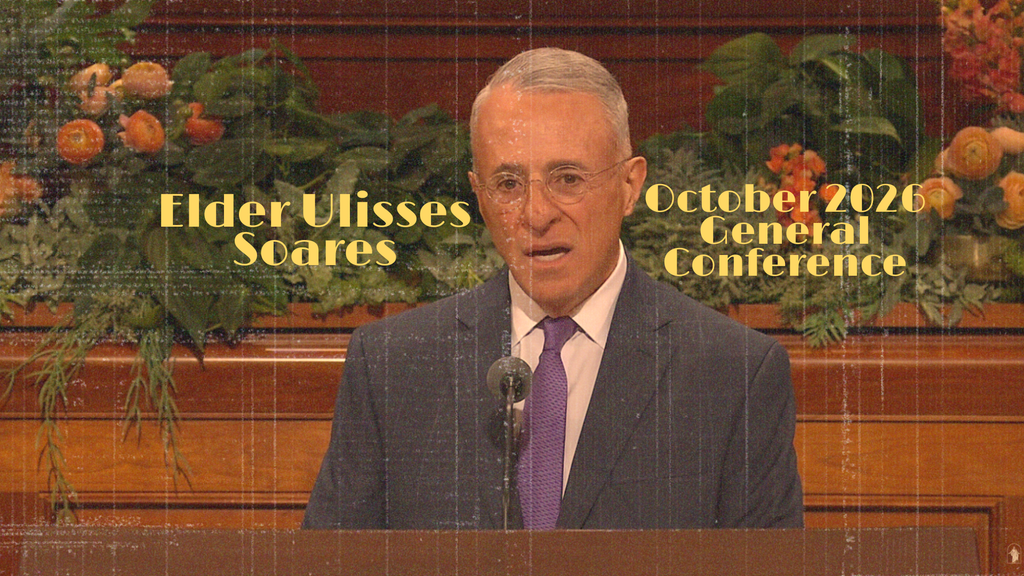
For many of us, fasting is a familiar gospel practice. Yet Elder Ulisses Soares invites us to consider whether we have fully understood its sacred purpose.
In his General Conference talk, “A Higher and Holier Fast,” Elder Soares teaches that fasting is much more than a physical sacrifice or an opportunity to request blessings. It is a divine pattern of worship that can strengthen our relationship with Heavenly Father, increase our sensitivity to the Holy Ghost, align our desires with God’s will, and inspire us to serve His children.
Drawing from Isaiah 58, the Savior’s example, and the teachings of latter-day prophets, Elder Soares explains how fasting can become a sanctifying experience.
His message encourages us to move beyond simply observing the law of the fast and toward embracing it with greater faith, joy, humility, prayer, and generosity.
For Relief Society sisters, this talk offers meaningful opportunities to discuss personal revelation, spiritual preparation, trusting God’s timing, ministering, consecration, and the blessings of drawing closer to Jesus Christ.
This lesson help follows Elder Soares’s talk chronologically, separating it into 10 discussion sections based on the natural progression of his message.
Each section includes:
- Powerful direct quotes from the talk, prioritizing longer passages that teach doctrine and invite meaningful reflection
- Teaching insights to help explain the principles
- 10 engaging Relief Society discussion questions
- 5 object lesson ideas with explanations
- 10 personal sharing prompts to encourage testimonies and experiences
With 100 discussion questions, 50 object lesson ideas, and 100 personal sharing prompts, this resource provides a wide variety of options for preparing a Christ-centered Relief Society lesson.
Teachers do not need to use every question or activity. Instead, consider the spiritual needs of your sisters and select the ideas most likely to encourage participation, personal reflection, and meaningful discussion.
As you prepare, remember that fasting may look different for sisters experiencing pregnancy, illness, disability, medication requirements, or other health circumstances. Discussions can emphasize the spiritual principles of prayer, sacrifice, charity, and devotion without encouraging anyone to disregard their health needs.
The central invitation of Elder Soares’s message is to discover how fasting can become a higher and holier expression of our love for God and His children.
Section 1: Fasting Is a Sacred Law That Brings Us Closer to God
The Principle
Elder Soares begins by testifying of the spiritual power available through sincere observance of the law of the fast.
Rather than presenting fasting as merely a commandment to obey, he describes it as a divine pattern of devotion.
Through fasting, we can draw closer to Heavenly Father and Jesus Christ, receive spiritual strength, and experience greater peace and guidance.
The central teaching of this section is that fasting is intended to deepen our relationship with God, not simply demonstrate our ability to abstain from food.
Direct Quotes from the Talk
Elder Soares opens with this testimony:
“My beloved brothers and sisters, I have prayerfully pondered the sacred blessings our Heavenly Father and His Beloved Son, Jesus Christ, offer us as we draw near to Them through sincere and faithful observance of the law of the fast.”
He then describes the sanctifying power of fasting:
“Therefore, this morning, from the bottom of my heart, I testify of the sanctifying spiritual power that flows into our lives as we seek to live this law in a higher and holier way. This divine pattern of devotion brings strength, guidance, peace, and divine help to sustain us throughout our mortal journey.”
Teaching Insights
One of the most important words in this introduction is sanctifying.
Sanctification is the process of becoming more holy through the grace and power of Jesus Christ.
Elder Soares teaches that fasting can be part of this process.
When we fast with sincerity, we are not simply demonstrating self-control. We are choosing to turn our attention away from physical appetites and toward our relationship with Heavenly Father.
This shift in focus can help us become more spiritually receptive.
It can also help us recognize how dependent we are upon the Lord.
Fasting becomes a way of expressing humility, devotion, and a desire to receive divine guidance.
An important discussion point is the difference between fasting out of habit and fasting with intentional spiritual purpose.
10 Relief Society Discussion Questions
- When you hear the phrase “a higher and holier fast,” what do you think Elder Soares is inviting us to change?
- How is fasting different when we approach it as an act of worship rather than simply a commandment?
- What does it mean for fasting to have sanctifying spiritual power?
- Why do you think Heavenly Father asks us to make physical sacrifices as part of spiritual worship?
- How can fasting help us recognize our dependence upon the Lord?
- What is the difference between completing a fast and having a meaningful fasting experience?
- How can we prepare spiritually before beginning a fast?
- Why might fasting strengthen our relationship with Heavenly Father and Jesus Christ?
- How can we keep fasting from becoming a routine that we observe without much thought?
- What would change if we approached every Fast Sunday as an opportunity to draw closer to the Savior?
5 Object Lesson Ideas
1. The Empty Cup — Making Room for Spiritual Blessings
Bring an empty cup and a pitcher of water.
Explain that the cup represents our willingness to receive spiritual blessings.
As you pour water into the cup, discuss how sincere fasting can help us become more receptive to the Holy Ghost.
2. The Invitation — Drawing Near to God
Bring a printed invitation.
Explain that an invitation is meaningful when we choose to accept and act upon it.
Compare fasting to an invitation from Heavenly Father to deepen our relationship with Him.
3. The Plant and Water — Spiritual Nourishment
Display a healthy plant and a watering can.
Discuss how plants require regular nourishment.
Compare this to the spiritual nourishment we receive through prayer, scripture study, and meaningful fasting.
4. The Gift Box — Discovering the Purpose of Fasting
Place a card inside a gift box that reads “Closer to God.”
Ask sisters what blessings they normally associate with fasting.
Open the box and explain that one of the greatest blessings of fasting is a deeper relationship with Heavenly Father.
5. The Compass — Spiritual Direction
Bring a compass.
Discuss how a compass helps us find direction.
Compare this to the guidance we can receive as fasting helps us become more sensitive to the Holy Ghost.
10 Personal Sharing Prompts
- Share a time fasting helped you feel closer to Heavenly Father.
- Describe an experience when fasting brought you peace.
- Share how your understanding of fasting has changed throughout your life.
- Talk about a time you approached fasting with a specific spiritual purpose.
- Share a blessing you have received through observing the law of the fast.
- Describe something that has helped make your fasting experiences more meaningful.
- Share a time you felt spiritually strengthened during or after a fast.
- Talk about someone whose example taught you the importance of fasting.
- Share how fasting has influenced your testimony of Jesus Christ.
- Complete this statement: “One thing I have learned about fasting is…”
Section 2: Isaiah’s Promises — Light, Healing, and the Assurance That God Is Near
The Principle
Elder Soares turns to Isaiah 58 to explain the divine purpose and promised blessings of fasting.
The Lord’s teachings through Isaiah show that fasting is not merely an outward religious observance.
It is intended to shape our discipleship, refine our hearts, and bring us closer to God.
Isaiah promises light, healing, and divine reassurance to those who sincerely embrace the principles of an acceptable fast.
Direct Quotes from the Talk
Elder Soares introduces Isaiah’s teachings:
“The Lord’s call to fast in these latter days is an echo of the message He gave through the Old Testament prophet Isaiah—a message of healing, covenant power, and divine blessing that continues to be offered to all of God’s children.”
He explains the deeper purpose of fasting:
“In Isaiah chapter 58, the Lord lifted the vision of His covenant people beyond the outward observance of this law. He also revealed its divine purpose as an act of worship that shapes and refines our discipleship and draws us closer to Him.”
Elder Soares then shares these promises:
“Then shall thy light break forth as the morning, and thine health shall spring forth speedily. …
“Then shalt thou call, and the Lord shall answer; thou shalt cry, and he shall say, Here I am.”
He beautifully explains their meaning:
“What a tender promise: light after darkness, healing after weariness, and the comforting assurance that when we call upon the Lord, He is near.”
He also quotes President Joseph F. Smith:
“President Joseph F. Smith taught that proper fasting ‘would … place the body in subjection to the spirit, and so promote communion with the Holy Ghost’ and that ‘this law would bring [us] nearer to God.’”
Teaching Insights
Isaiah 58 offers some of the most beautiful promises associated with fasting.
The Lord promises light.
He promises healing.
He promises to answer when His children call.
These blessings are especially meaningful because they address spiritual needs that nearly everyone experiences.
We all face periods of darkness, uncertainty, weariness, or discouragement.
Through Isaiah, the Lord teaches that sincere worship can bring us closer to His light.
One particularly powerful phrase is “Here I am.”
This promise reminds us that Heavenly Father is not distant or indifferent.
He is aware of His children and invites us to seek Him.
It is important to understand that these promises should not be interpreted as guarantees that every illness will be physically healed or every difficult circumstance immediately resolved.
They teach us to trust the Lord’s ability to bless, strengthen, and ultimately heal us according to His wisdom.
10 Relief Society Discussion Questions
- Which of Isaiah’s promises about fasting stands out to you most, and why?
- What does it mean for our light to “break forth as the morning”?
- How can fasting bring spiritual light during periods of uncertainty?
- What kinds of healing might Heavenly Father offer through sincere fasting?
- Why is the Lord’s promise “Here I am” so comforting?
- What is the difference between outwardly observing a commandment and allowing it to refine our discipleship?
- How can fasting help us become more receptive to the Holy Ghost?
- What does it mean to place the body in subjection to the spirit?
- How can Isaiah 58 change the way we prepare for Fast Sunday?
- How can we better recognize the blessings the Lord has already given us through fasting?
5 Object Lesson Ideas
1. The Sunrise — Light After Darkness
Display a photograph of a sunrise.
Discuss how darkness gradually gives way to light.
Compare this to the spiritual light Heavenly Father can bring during difficult experiences.
2. The Flashlight — Receiving Direction
Dim the room slightly and turn on a flashlight.
Discuss how even a small amount of light can help us move forward.
Connect this to personal revelation received through fasting and prayer.
3. The Bandage — Divine Healing
Display a bandage.
Discuss the different forms of healing people may need, including emotional and spiritual healing.
Explain that the Savior’s healing power is not limited to physical wounds.
4. The Open Door — “Here I Am”
Display a picture of an open door.
Discuss how the Lord invites us to approach Him.
Connect this to Isaiah’s promise that He hears those who sincerely call upon Him.
5. The Mirror — Refining Our Discipleship
Bring a mirror.
Discuss how fasting can encourage honest spiritual reflection and help us recognize areas where we want to become more Christlike.
10 Personal Sharing Prompts
- Share a time Heavenly Father brought light into a difficult situation.
- Describe an experience when you felt the Lord was near.
- Share a scripture from Isaiah 58 that has special meaning to you.
- Talk about a time fasting helped you receive spiritual clarity.
- Share an experience when you felt emotionally or spiritually healed.
- Describe how the Holy Ghost has comforted you during uncertainty.
- Share a time you recognized an answer to prayer.
- Talk about a blessing you received that was different from what you expected.
- Share how fasting has helped refine your discipleship.
- Complete this statement: “I have felt the Lord say ‘Here I am’ when…”
Section 3: Fasting and Prayer Work Together to Invite Personal Revelation
The Principle
Elder Soares next explains that fasting is most meaningful when accompanied by sincere prayer.
Fasting and prayer work together to help us communicate our desires to Heavenly Father, understand His will, and become more receptive to the Holy Ghost.
Rather than simply asking God to grant our requests, fasting can help us develop the humility necessary to seek His direction.
Direct Quotes from the Talk
This entire passage is especially valuable for Relief Society discussion:
“A sincere and faithful fast is accompanied by earnest and intentional prayer. As we lift our hearts to the Lord in humility, fasting becomes an expression of our desire to draw near to Him, communicate the true desires of our hearts, and understand His will for us.”
Elder Soares continues:
“Through the union of fasting and prayer, our faith, love, and devotion to Him deepen. We become more humble and more aware of our complete dependence upon the Lord.”
He then explains the spiritual blessings that follow:
“Our hearts are softened, our souls become more receptive to the influence of the Holy Ghost, and we are better prepared to receive personal revelation and move forward along the covenant path.”
Teaching Insights
One of the most significant teachings in this section is that fasting helps prepare us to receive revelation.
It does not force Heavenly Father to give us an answer.
Instead, it can change our spiritual receptiveness.
Elder Soares describes several ways fasting and prayer work together.
They deepen faith.
They increase humility.
They soften our hearts.
They help us recognize our dependence upon God.
And they prepare us to receive the influence of the Holy Ghost.
This section can help sisters consider whether their fasting prayers are focused only on receiving desired outcomes or whether they also include a willingness to understand Heavenly Father’s will.
10 Relief Society Discussion Questions
- Why do you think fasting and prayer are so closely connected?
- What is the difference between ordinary prayer and intentional prayer?
- How can fasting help us communicate the true desires of our hearts?
- Why is humility important when seeking personal revelation?
- What does it mean for our hearts to become softened?
- How can fasting help us recognize our dependence upon Heavenly Father?
- What are some ways the Holy Ghost communicates personal revelation?
- How can we become better prepared to recognize answers to our prayers?
- Why might fasting change our desires rather than our circumstances?
- How can we make prayer a more meaningful part of our fasting experiences?
5 Object Lesson Ideas
1. The Radio — Tuning In to the Spirit
Bring a radio or show a picture of one.
Explain that a radio must be tuned to the correct frequency to receive a clear signal.
Compare this to becoming more receptive to spiritual impressions through fasting and prayer.
2. The Sponge — A Receptive Heart
Bring a dry sponge and a bowl of water.
Place the sponge in the water and discuss how it absorbs what surrounds it.
Compare this to preparing our hearts to receive the influence of the Holy Ghost.
3. The Written Question — Purposeful Prayer
Write a question on a piece of paper.
Discuss how identifying sincere questions can help us approach fasting with greater purpose.
4. The Two Strands — Fasting and Prayer
Twist two strands of yarn together.
Explain that fasting and prayer work together to strengthen our spiritual devotion.
5. The Open Notebook — Receiving Revelation
Bring a notebook.
Discuss the value of recording spiritual impressions received during fasting, prayer, and scripture study.
10 Personal Sharing Prompts
- Share a time fasting and prayer helped you make an important decision.
- Describe an experience when you received personal revelation.
- Share how your prayers have changed over time.
- Talk about a time you felt your heart soften.
- Share an experience when fasting helped you recognize the Holy Ghost.
- Describe a moment when you received guidance you had not expected.
- Share how recording spiritual impressions has blessed you.
- Talk about a time prayer helped you understand God’s will.
- Share a spiritual practice that helps you become more receptive to revelation.
- Complete this statement: “One way I recognize the Holy Ghost is…”
Section 4: Jesus Christ Showed Us the Highest and Holiest Pattern of Fasting
The Principle
Elder Soares turns our attention to the perfect example of Jesus Christ.
Before beginning His mortal ministry, the Savior spent 40 days in the wilderness communing with His Father.
His example demonstrates that fasting can be a powerful means of spiritual preparation.
It also teaches that fasting is not intended to eliminate every difficulty but to help us remain faithful through the challenges we face.
Direct Quotes from the Talk
Elder Soares begins:
“This divine pattern finds its highest and holiest expression in the life of Jesus Christ. As in all things, the Savior did not merely teach divine principles—He exemplified them perfectly.”
He then describes the Savior’s preparation:
“Before His earthly ministry began, He withdrew into the wilderness and spent 40 days communing with His Father. He was the Only Begotten Son of God in the flesh, and of all the things He could have done to prepare for His sacred mission, He chose to seek complete alignment with His Father’s will through earnest fasting and prayer.”
Elder Soares explains the result:
“Spiritually fortified, the Savior triumphed over the temptations of the adversary, began His mortal ministry, and fulfilled His divine destiny as Redeemer of the world.”
He then applies the Savior’s example to our lives:
“His example teaches us that fasting and prayer may not remove every burden from our path, but they draw heaven near and endow us with divine power to overcome or endure whatever circumstances we may face, giving us the spiritual fortitude to remain faithful to the Father’s will.”
Teaching Insights
One of the most striking details in this section is that Jesus Christ chose fasting and prayer as part of His preparation for His sacred mission.
He did not fast because He lacked divine purpose.
He fasted as an expression of complete devotion and alignment with His Father’s will.
His example invites us to consider fasting as a means of spiritual preparation.
We might fast as we prepare for significant decisions, responsibilities, transitions, or opportunities to serve.
But perhaps the most important lesson is that fasting does not guarantee an easier path.
The Savior still faced temptation, rejection, suffering, and ultimately the agony of His Atonement.
Fasting helped prepare Him to remain faithful to His Father’s will.
Likewise, fasting can strengthen us to face our own challenges with greater spiritual fortitude.
10 Relief Society Discussion Questions
- Why is it significant that Jesus Christ chose to fast before beginning His ministry?
- What does the Savior’s example teach us about spiritual preparation?
- How can fasting help us align our desires with Heavenly Father’s will?
- Why might fasting be especially meaningful before important decisions or responsibilities?
- What does it mean to be spiritually fortified?
- How can fasting strengthen us against temptation?
- Why is it important to understand that fasting does not remove every burden?
- What can we learn from the Savior’s willingness to submit to His Father’s will?
- How can fasting help us remain faithful during difficult circumstances?
- What would change if we approached fasting as an opportunity to follow the Savior’s example more closely?
5 Object Lesson Ideas
1. The Training Shoes — Spiritual Preparation
Bring a pair of athletic shoes.
Discuss how preparation helps people face demanding physical activities.
Compare this to the spiritual preparation we receive through fasting and prayer.
2. The Armor — Strength Against Temptation
Display a picture of armor.
Discuss how spiritual habits can help strengthen our ability to resist temptation.
3. The Foundation Blocks — Preparing Before Trials
Build a small structure using blocks.
Discuss how a strong foundation helps a structure remain stable under pressure.
Compare this to developing spiritual strength before challenges arise.
4. The Road Sign — Following Christ’s Example
Display a sign pointing in one direction.
Discuss how the Savior’s example provides a pattern for our discipleship.
5. The Olive Branch — Submitting to God’s Will
Bring an olive branch or a picture of one.
Discuss the Savior’s submission to Heavenly Father’s will and how fasting can help us develop greater willingness to follow Him.
10 Personal Sharing Prompts
- Share a time fasting helped prepare you for an important responsibility.
- Describe an experience when you felt spiritually strengthened before a challenge.
- Share how the Savior’s example has influenced your approach to fasting.
- Talk about a time you needed strength to resist temptation.
- Share an experience when you learned to submit your will to Heavenly Father.
- Describe a time spiritual preparation made a difference in your life.
- Share how prayer helped you remain faithful during difficulty.
- Talk about a lesson you have learned from studying the Savior’s mortal ministry.
- Share a time you received strength to endure rather than escape a challenge.
- Complete this statement: “One way I want to follow the Savior’s example more closely is…”
Section 5: A Higher Fast Aligns Our Desires with God’s Will
The Principle
After discussing the Savior’s example, Elder Soares explains that fasting is more than physical restraint or a request for specific blessings.
A higher and holier fast can become an expression of trust.
It helps us align our desires with God’s purposes and our expectations with His wisdom.
This principle is especially meaningful when our prayers are not answered in the way we hoped.
Direct Quotes from the Talk
Elder Soares teaches:
“Adopting this holy pattern of fasting is more than a physical test of restraint or a petition for specific blessings. It is an elevating expression of faith and trust in the Lord through which our hearts can be filled with rejoicing as we commune with Him more deeply.”
He continues:
“It is a way to align our desires with His purposes, and our expectations with His wisdom.”
Then he offers this powerful reminder:
“Even when answers do not come in the way we expect, fasting and prayer help us develop greater confidence in the Lord, in our covenants with Him, and in His plan for our lives, as well as a deeper willingness to accept His will.”
Teaching Insights
This section provides an opportunity to explore the relationship between fasting, faith, and submission to God’s will.
Sometimes we approach fasting with a specific outcome in mind.
We may fast for healing, employment, family relationships, missionary opportunities, or guidance.
These are meaningful reasons to seek the Lord.
But Elder Soares reminds us that fasting is not simply a way to request blessings.
It is also a way to become more willing to accept God’s wisdom.
A meaningful fast may not always change the answer we receive.
Sometimes it changes our hearts.
It can help us move from asking only for what we want to seeking what Heavenly Father knows is best.
10 Relief Society Discussion Questions
- What is the difference between fasting for a desired outcome and fasting to understand God’s will?
- Why can it be difficult to surrender our expectations to Heavenly Father?
- What does it mean to align our desires with God’s purposes?
- How can fasting strengthen our trust when prayers are not answered as expected?
- Why might spiritual growth come through accepting an answer we did not want?
- How can fasting help us develop greater confidence in our covenants?
- What does it mean to rejoice while fasting?
- How can we approach fasting with both specific requests and a willingness to accept God’s will?
- What can we learn from the Savior’s example of submission?
- How might our fasting experiences change if our primary goal became drawing closer to God?
5 Object Lesson Ideas
1. The GPS — Trusting Divine Direction
Display a GPS or navigation app.
Discuss how a route may change because of information we cannot see.
Compare this to trusting Heavenly Father’s wisdom when our plans change.
2. The Clay — Becoming Willing to Be Shaped
Bring modeling clay.
Discuss how clay can be shaped into something different from its original form.
Compare this to allowing God to refine our desires.
3. The Two Lists — My Will and Thy Will
Write “What I Want” and “What God May Be Teaching Me” on two sheets of paper.
Discuss how fasting can help us move from focusing only on outcomes toward seeking spiritual understanding.
4. The Closed and Open Hands — Surrendering Expectations
Invite sisters to make fists and then open their hands.
Discuss how releasing control can symbolize willingness to accept Heavenly Father’s will.
5. The Puzzle — Trusting the Bigger Picture
Display a partially completed puzzle.
Discuss how Heavenly Father understands the eternal picture even when we see only a few pieces.
10 Personal Sharing Prompts
- Share a time fasting helped you accept God’s will.
- Describe an experience when an answer to prayer differed from your expectations.
- Share how you have learned to trust Heavenly Father’s timing.
- Talk about a time your desires changed through prayer.
- Share an experience when surrendering control brought peace.
- Describe how fasting strengthened your confidence in God’s plan.
- Share a time you recognized blessings in an unexpected answer.
- Talk about a gospel teaching that helps you trust the Lord.
- Share how your understanding of faith has grown through unanswered prayers.
- Complete this statement: “One thing Heavenly Father has taught me about trusting His will is…”
Section 6: True Fasting Turns Our Hearts Toward the Needs of Others
The Principle
Elder Soares now shifts from the personal blessings of fasting to its outward expression through charity.
Isaiah teaches that an acceptable fast involves helping the oppressed and relieving burdens.
This means that fasting is not only about our relationship with God.
It is also about how we treat His children.
A higher and holier fast should increase our love, compassion, and willingness to serve.
Direct Quotes from the Talk
Elder Soares introduces this important shift:
“Through this holy law, the Lord also invites us to look beyond ourselves and turn our hearts toward His children.”
He quotes Isaiah:
“Isaiah taught that an acceptable fast helps us ‘to let the oppressed go free’ and to ‘break every yoke.’”
He then shares a powerful teaching from Joseph Smith:
“The Prophet Joseph Smith once taught, ‘A man filled with the love of God, is not content with blessing his family alone, but ranges through the whole world, anxious to bless the whole human race.’”
Elder Soares concludes:
“Thus, our fast becomes not only a personal act of devotion to God but also an outward expression of Christlike charity and love.”
Teaching Insights
This section reveals that fasting and charity are inseparably connected.
When we draw closer to Heavenly Father, we should also become more aware of the needs of His children.
Isaiah’s language is especially powerful.
He speaks of freeing the oppressed and breaking yokes.
These images represent the removal of burdens and the relief of suffering.
In our daily lives, this might involve noticing someone who is lonely, helping a struggling family, offering encouragement, or finding practical ways to relieve another person’s burden.
Fasting can soften our hearts so that we become more willing to serve.
This is a meaningful opportunity to discuss how personal worship should influence the way we minister to others.
10 Relief Society Discussion Questions
- Why do you think the Lord connects fasting with caring for people in need?
- What does it mean to “break every yoke” in our modern lives?
- How can fasting help us become more aware of other people’s struggles?
- What is the relationship between personal worship and Christlike charity?
- Why is it important that our fasting blesses more than ourselves?
- What can we learn from Joseph Smith’s description of someone filled with God’s love?
- How can we recognize burdens that others may be carrying silently?
- What are some practical ways Relief Society sisters can help relieve suffering?
- How can fasting inspire more meaningful ministering?
- What would change in our ward if every Fast Sunday inspired additional acts of charity?
5 Object Lesson Ideas
1. The Heavy Backpack — Relieving Burdens
Bring a backpack filled with books.
Invite a volunteer to hold it while others remove books one at a time.
Discuss how small acts of service can help lighten another person’s burdens.
2. The Chain — Breaking Yokes
Bring a lightweight decorative chain.
Discuss how burdens can make people feel trapped or overwhelmed.
Connect the illustration to Isaiah’s invitation to help free others from suffering.
3. The Heart — Expanding Charity
Cut a large heart from paper.
Write different ways to serve others on smaller hearts and place them inside.
Discuss how fasting can expand our capacity to love.
4. The Ripple Effect — Small Acts of Service
Drop a pebble into a bowl of water.
Discuss how one act of kindness can influence many people.
5. The Helping Hands — Ministering Together
Trace several hands on paper.
Write different service opportunities on them.
Discuss how Relief Society sisters can work together to bless others.
10 Personal Sharing Prompts
- Share a time fasting increased your compassion for someone.
- Describe an experience when you helped relieve another person’s burden.
- Share a moment when someone ministered to you during a difficult time.
- Talk about a time you felt prompted to help someone.
- Share how serving others has strengthened your relationship with Jesus Christ.
- Describe an experience when a small act of kindness made a difference.
- Share a lesson you learned from someone who demonstrated Christlike charity.
- Talk about a time you became more aware of another person’s needs.
- Share how Relief Society has helped you feel supported.
- Complete this statement: “One way I have seen Christlike love change someone’s life is…”
Section 7: Generous Fast Offerings Are an Expression of Christlike Love
The Principle
Elder Soares continues his discussion of charity by explaining how fast offerings allow us to help fulfill Isaiah’s teachings.
Through generous fast offerings, we can help relieve suffering and support those in need.
But Elder Soares emphasizes that these contributions are more than financial donations.
They are expressions of faith, love, and discipleship.
Direct Quotes from the Talk
Elder Soares explains:
“In our day, our desire to help ‘the oppressed go free’ and ‘break every yoke,’ as the Lord taught through the prophet Isaiah, finds tangible expression in generous fast offerings.”
He then describes the spiritual meaning behind these contributions:
“Each contribution reflects a willing heart, faith in the Lord Jesus Christ, and a sincere desire to bless those in need.”
Elder Soares connects generosity to the Savior’s example:
“This spirit of generosity also reflects the Savior’s own example. He came down from heaven, dwelt among the children of men, and suffered ‘pains and afflictions and temptations of every kind … that he [might] know according to the flesh how to succor his people according to their infirmities.’”
He concludes:
“As we follow His perfect example by seeking to succor God’s children, our hearts are opened to the needs of others, and we become better prepared to minister in a more Christlike way.”
Teaching Insights
Fast offerings are one of the most practical ways we can connect fasting with charity.
They allow our personal sacrifice to become a blessing in someone else’s life.
Elder Soares emphasizes that the spiritual value of fast offerings is not measured only by the amount contributed.
He focuses on the heart behind the offering.
A willing heart.
Faith in Jesus Christ.
A sincere desire to help those in need.
These qualities transform giving into an act of worship.
Fast offerings also reflect the Savior’s example of succoring His children.
Through His Atonement, Jesus Christ understands suffering perfectly.
As we seek to relieve the suffering of others, we participate in His work.
10 Relief Society Discussion Questions
- How do fast offerings connect our personal worship with the needs of others?
- Why is the attitude behind our giving so important?
- What does it mean to give with a willing heart?
- How can fast offerings become an expression of love for Jesus Christ?
- Why do you think Elder Soares connects fast offerings with the Savior’s Atonement?
- How can generosity help us become more Christlike?
- What blessings can come from giving even when our resources are limited?
- How can we teach children the spiritual purpose of fast offerings?
- Why is it important to remember that contributions help real people with real needs?
- How can we make our fast offerings a more intentional part of our worship?
5 Object Lesson Ideas
1. The Small Coin — The Heart Behind the Gift
Bring a coin.
Discuss how the spiritual meaning of an offering depends on faith and willingness, not simply its monetary value.
2. The Offering Envelope — Worship Through Giving
Display a blank donation envelope.
Discuss how financial contributions can become expressions of devotion and charity.
3. The Empty Bowl — Remembering Those in Need
Bring an empty bowl.
Discuss how fasting can remind us of the physical needs experienced by others.
4. The Gift Bag — Giving with Love
Place a small item inside a gift bag.
Discuss the difference between giving out of obligation and giving out of love.
5. The Helping Hands Jar — Blessings Through Generosity
Place slips of paper describing different forms of assistance into a jar.
Discuss how generous contributions can help provide practical relief to people in need.
10 Personal Sharing Prompts
- Share how your understanding of fast offerings has changed over time.
- Describe an experience when giving brought you joy.
- Share a lesson you learned about generosity from your family.
- Talk about a time someone else’s generosity blessed your life.
- Share how paying fast offerings has strengthened your faith.
- Describe an experience when you felt prompted to give.
- Share how serving someone in need helped you feel closer to Christ.
- Talk about a time you recognized the spiritual blessings of generosity.
- Share something you have learned about giving with a willing heart.
- Complete this statement: “One blessing I have experienced through generosity is…”
Section 8: Small Offerings Become Sacred Through Consecration
The Principle
Elder Soares moves from discussing generous fast offerings to the broader principle of consecration.
He teaches that even small and simple offerings can become sacred expressions of love and service.
As we give our means, time, and hearts to the Lord, we participate in building His kingdom.
This section emphasizes that consecration is not merely about what we give.
It is about our willingness to give ourselves to God.
Direct Quotes from the Talk
Elder Soares teaches:
“Though our fast offerings may seem small and simple, they become consecrated expressions of compassion, concern, and service.”
He explains the deeper meaning of giving:
“As we give generously—not only for the benefit of those in need but also as an expression of our love for the Lord and our commitment to His work—we consecrate both our means and our time to Him.”
He continues:
“In doing so, we give more fully of ourselves to the building of the kingdom of God.”
He then shares this promise:
“As we embrace this spirit of consecration, the Lord guides and strengthens us to become instruments in His hands.”
Teaching Insights
One of the most encouraging teachings in this section is that small offerings can have sacred significance.
Sometimes we may feel that what we have to give is insignificant.
Our financial resources may be limited.
Our time may be stretched thin.
Our opportunities to serve may seem small.
But Elder Soares reminds us that offerings given with love can become consecrated expressions of discipleship.
Consecration involves dedicating our resources, abilities, time, and hearts to the Lord’s purposes.
This means that even ordinary acts of service can become meaningful expressions of worship.
The Lord can magnify our efforts as we willingly participate in His work.
10 Relief Society Discussion Questions
- What does consecration mean in our everyday lives?
- Why can small offerings have great spiritual significance?
- How is consecration different from simply donating money?
- What does it mean to give our time to the Lord?
- How can we consecrate our talents and abilities?
- Why might Heavenly Father value our willingness more than the size of our contribution?
- How can we recognize opportunities to participate in building God’s kingdom?
- What does it mean to become an instrument in the Lord’s hands?
- How can we practice consecration during busy or demanding seasons of life?
- What is one small offering we could make more intentionally?
5 Object Lesson Ideas
1. The Small Seed — Great Things from Small Offerings
Bring a small seed.
Discuss how something small can grow into something much greater.
Compare this to offerings the Lord can magnify.
2. The Puzzle Piece — Every Contribution Matters
Display a puzzle with one missing piece.
Discuss how each person’s contribution has value in building God’s kingdom.
3. The Instrument — Being Useful in God’s Hands
Bring a simple musical instrument.
Discuss how an instrument can produce beautiful results when used skillfully.
Compare this to allowing the Lord to guide our efforts.
4. The Clock — Consecrating Time
Bring a clock.
Discuss how giving our time can be a meaningful expression of devotion.
5. The Basket — Offering What We Have
Place several small objects in a basket.
Discuss how Heavenly Father can use different talents, resources, and abilities to bless His children.
10 Personal Sharing Prompts
- Share a time a small act of service made a meaningful difference.
- Describe an experience when the Lord magnified your efforts.
- Share how you have learned to consecrate your time.
- Talk about a talent you have used to bless others.
- Share an experience when you felt like an instrument in God’s hands.
- Describe a time you gave something that required personal sacrifice.
- Share how your understanding of consecration has grown.
- Talk about someone whose quiet service has inspired you.
- Share a time you discovered that your contribution mattered.
- Complete this statement: “One way I can give more fully of myself to the Lord is…”
Section 9: Joyful Fasting Can Transform Our Hearts and Deepen Our Relationship with God
The Principle
After explaining the spiritual and charitable purposes of fasting, Elder Soares shares his personal witness of its blessings.
He describes how fasting can quietly transform lives.
It can soften hearts, strengthen testimonies, sanctify souls, and increase personal revelation.
He also emphasizes that fasting can be accompanied by joy.
Direct Quotes from the Talk
Elder Soares shares:
“I have personally witnessed how the blessings of fasting often enter people’s lives quietly and tenderly—softening hearts, strengthening testimonies, sanctifying souls, and transforming lives.”
He continues:
“I have also seen sacred blessings come to those who turn their hearts toward God’s children through generous fast offerings.”
He then shares his own experience:
“Personally, I have felt an increase of inspiration and revelation as I have sought to live this law with greater sincerity.”
Finally, he summarizes the blessings of a higher and holier fast:
“Fasting, when observed with joy and joined with prayer and generosity, brings sweeter communion with the Lord and a deeper, more personal connection with Him.”
Teaching Insights
This section offers a beautiful summary of Elder Soares’s message.
Fasting is not simply about sacrifice.
It can also bring joy.
This does not mean that the physical experience of fasting is always comfortable.
Rather, the joy comes through deeper communion with Heavenly Father and Jesus Christ.
Elder Soares also emphasizes that the blessings of fasting often come quietly.
We may not always experience dramatic answers or immediate miracles.
Instead, we may notice greater patience, increased compassion, stronger faith, or a deeper sensitivity to the Holy Ghost.
These quiet changes can be evidence of spiritual transformation.
10 Relief Society Discussion Questions
- Why do you think Elder Soares describes the blessings of fasting as quiet and tender?
- What does it mean for fasting to soften our hearts?
- How can fasting strengthen our testimonies?
- What does it mean to experience joy through fasting?
- Why might spiritual transformation happen gradually?
- How can we recognize subtle blessings that come through fasting?
- What does “sweeter communion with the Lord” mean to you?
- How can fasting help us develop a more personal relationship with Jesus Christ?
- Why is sincerity so important in spiritual worship?
- What blessings of fasting might we overlook because they are not dramatic?
5 Object Lesson Ideas
1. The Growing Plant — Quiet Spiritual Growth
Display a plant.
Discuss how growth often occurs gradually and without dramatic changes.
Compare this to the quiet blessings of fasting.
2. The Honey — Sweet Communion
Bring a sealed container of honey.
Discuss how Elder Soares describes fasting as bringing sweeter communion with the Lord.
3. The Candle — Gentle Spiritual Light
Turn on a battery-operated candle.
Discuss how spiritual impressions may be quiet but meaningful.
4. The Heart — Softening Through Worship
Bring a paper heart.
Invite sisters to write words describing spiritual qualities they hope to develop through fasting.
5. The Gratitude Jar — Recognizing Blessings
Bring a jar and small pieces of paper.
Invite sisters to write blessings they have recognized through prayer, fasting, or service.
10 Personal Sharing Prompts
- Share a quiet blessing you have received through fasting.
- Describe an experience when fasting softened your heart.
- Share how your testimony has grown through spiritual worship.
- Talk about a time you felt joy through sacrifice.
- Share an experience when you recognized personal revelation.
- Describe how fasting has helped you feel closer to Jesus Christ.
- Share a time your compassion increased through service.
- Talk about a subtle spiritual impression that made a difference.
- Share how your relationship with Heavenly Father has deepened over time.
- Complete this statement: “One quiet blessing I have received from the Lord is…”
Section 10: The Invitation and Promise to Embrace a Higher and Holier Fast
The Principle
Elder Soares concludes by extending a direct invitation to more intentionally embrace the divine purpose of fasting.
He promises that as we seek to live this law with greater sincerity, the Lord will bless us with miracles, spiritual strength, greater sensitivity to others, and an increased outpouring of His Spirit.
He returns to Isaiah’s promises, reminding us that Heavenly Father hears and answers His children.
Direct Quotes from the Talk
Elder Soares extends this invitation:
“My dear friends, I invite you to prayerfully ponder Isaiah’s teachings and more intentionally embrace the divine purpose of the law of the fast in a higher and holier way as part of our worship.”
He then gives a powerful apostolic promise:
“As you do so, I promise, in the name of our Savior, Jesus Christ, that miracles will come into your life. You will draw nearer to the Savior, receive strength to overcome your weaknesses, and become more sensitive to the needs of others.”
He continues:
“Through this divinely appointed practice, the Lord will sanctify us and pour His Spirit and blessings more abundantly into our lives.”
Elder Soares concludes by returning to Isaiah’s promises:
“I bear my solemn testimony that as we remember, restore, and more fully honor the sacred purpose of the law of the fast with sincere hearts, the Lord will fulfill the promises declared by Isaiah: our ‘light [shall] break forth as the morning’; our ‘health shall spring forth speedily’; then shall we ‘call, and the Lord shall answer’; we shall cry, and He shall say, ‘Here I am.’”
His final testimony is simple and powerful:
“Of these things I bear my witness in His holy name, even Jesus Christ, amen.”
Teaching Insights
Elder Soares concludes with both an invitation and a promise.
He invites us to remember, restore, and more fully honor the sacred purpose of fasting.
These words suggest that we may need to reconsider how we currently observe this law.
Perhaps fasting has become routine.
Perhaps we have focused primarily on physical abstinence.
Perhaps we have overlooked the connection between fasting and generosity.
Or perhaps we have forgotten to approach fasting with joy.
Elder Soares invites us to restore the deeper spiritual meaning of this practice.
His promised blessings include drawing closer to Jesus Christ, receiving strength to overcome weaknesses, becoming more sensitive to the needs of others, and experiencing greater spiritual blessings.
These promises give us meaningful reasons to approach future fasting experiences with renewed faith.
10 Relief Society Discussion Questions
- What does it mean to remember and restore the sacred purpose of fasting?
- Why do you think Elder Soares emphasizes intentional observance?
- Which of his promised blessings stands out to you most?
- How can fasting help us overcome personal weaknesses?
- Why is becoming more sensitive to others an important blessing of fasting?
- What kinds of miracles might come through sincere fasting?
- How can we approach Isaiah’s promises with both faith and humility?
- What would a higher and holier fast look like in your personal circumstances?
- How can we help our families better understand the purpose of fasting?
- What is one specific change you feel inspired to make after studying this talk?
5 Object Lesson Ideas
1. The Invitation Card — Accepting the Prophet’s Counsel
Bring an invitation card.
Write Elder Soares’s invitation to embrace a higher and holier fast.
Discuss what it means to accept and act upon prophetic counsel.
2. The Checklist — Preparing for a Meaningful Fast
Create a simple checklist containing prayer, purpose, charity, and reflection.
Discuss how preparation can help fasting become more intentional.
3. The Sunrise — Remembering Isaiah’s Promise
Display a sunrise photograph.
Discuss the promise that our light can break forth as the morning.
4. The Gift Box — Recognizing Promised Blessings
Place cards inside a box labeled with blessings from Elder Soares’s talk.
Invite sisters to draw cards and discuss how those blessings might appear in their lives.
5. The Written Commitment — Acting on Inspiration
Provide small cards.
Invite sisters to privately write one way they want to approach fasting differently.
Encourage them to keep the card as a reminder before their next fast.
10 Personal Sharing Prompts
- Share a blessing you have received from following prophetic counsel.
- Describe how you have learned to make fasting more meaningful.
- Share an experience when fasting strengthened you spiritually.
- Talk about a miracle or unexpected blessing connected to prayer.
- Share how fasting has helped you overcome a weakness.
- Describe a time you felt prompted to serve someone.
- Share a scripture from Isaiah 58 that inspires you.
- Talk about a change you have made that strengthened your worship.
- Share how your testimony of fasting has grown.
- Complete this statement: “After studying this talk, I feel inspired to…”
Conclusion: Making Fasting a Higher and Holier Expression of Discipleship
Elder Ulisses Soares’s message, “A Higher and Holier Fast,” reminds us that fasting is much more than abstaining from food and water.
It is a sacred opportunity to draw closer to Heavenly Father and Jesus Christ.
Through sincere fasting and prayer, we can soften our hearts, deepen our faith, increase our sensitivity to the Holy Ghost, and become more willing to follow God’s will.
But Elder Soares also teaches that fasting is not only about our personal relationship with the Lord.
It is about becoming more like Him.
As we embrace the divine purpose of fasting, our hearts can become more sensitive to the needs of others.
We can develop greater compassion.
We can give more generously.
And we can become instruments in the Lord’s hands.
The teachings of Isaiah 58 remind us that fasting and charity belong together.
An acceptable fast is not merely an outward religious observance.
It is an expression of worship that influences how we live, love, and serve.
Through generous fast offerings, meaningful ministering, and willing consecration, we can help relieve the burdens of Heavenly Father’s children.
Perhaps one of the most beautiful teachings from Elder Soares’s message is that fasting can bring joy.
We may begin a fast with a specific question or concern.
We may hope for a particular answer.
But the greatest blessing may be the spiritual transformation that occurs as we draw closer to God.
Our circumstances may not immediately change.
Our prayers may not be answered in the way we expect.
Yet through fasting, we can develop greater trust in Heavenly Father’s wisdom and a deeper willingness to accept His will.
How This Lesson Can Strengthen Relief Society Sisters
This talk offers meaningful opportunities for Relief Society sisters to reconsider how they approach fasting.
For some, fasting may have become a familiar monthly routine.
For others, it may be something they primarily turn to during difficult circumstances.
Some sisters may have experienced remarkable answers to fasting and prayer, while others may still be waiting for answers.
Elder Soares’s message can help every sister recognize that fasting is not simply about obtaining a desired outcome.
It is about drawing closer to Jesus Christ.
It is about allowing the Holy Ghost to soften and refine our hearts.
It is about becoming more willing to follow Heavenly Father’s will.
And it is about extending Christlike love to others.
As teachers prepare this lesson, the discussion questions, object lessons, and personal sharing prompts throughout this guide can help create an environment where sisters feel comfortable reflecting on their experiences and sharing their testimonies.
Consider selecting questions that invite sisters to discuss the blessings of prayer, personal revelation, consecration, and charity.
You might also focus on Isaiah’s promises and invite sisters to identify which blessings they most need in their lives.
The goal is not to make sisters feel that their fasting experiences have been inadequate.
Instead, it is to help them discover the greater spiritual blessings available as they intentionally draw closer to the Savior.
A Final Relief Society Discussion Invitation
Consider closing the lesson with this question:
“If the greatest blessing of fasting is drawing closer to Heavenly Father and Jesus Christ, how might that change the way we approach our next fast?”
Allow sisters time to reflect.
Then ask:
“What is one way we could make our fasting more meaningful—not only in our relationship with God but also in the way we love and serve others?”
These questions can help sisters move from discussing doctrine to considering personal application.
A Simple Invitation for the Week
Invite sisters to prepare more intentionally for their next opportunity to fast.
They might consider these five steps:
- Begin with prayer. Ask Heavenly Father to help identify a meaningful spiritual purpose for the fast.
- Study Isaiah 58. Reflect on the blessings and responsibilities associated with an acceptable fast.
- Seek God’s will. Approach fasting with both sincere desires and a willingness to accept Heavenly Father’s wisdom.
- Look outward. Consider how the fast could inspire greater generosity, compassion, or ministering.
- Record spiritual impressions. Take time afterward to reflect on any peace, guidance, or increased sensitivity to the Holy Ghost.
For sisters whose health circumstances prevent traditional fasting, encourage them to prayerfully consider appropriate ways to participate in the spiritual purposes of the law of the fast.
The invitation is to approach this sacred practice with greater sincerity, devotion, and love.
Elder Soares offers this beautiful promise:
“Fasting, when observed with joy and joined with prayer and generosity, brings sweeter communion with the Lord and a deeper, more personal connection with Him.”
And through Isaiah, the Lord gives us this reassuring promise:
“Then shalt thou call, and the Lord shall answer; thou shalt cry, and he shall say, Here I am.”
May we remember that the greatest purpose of fasting is not simply to receive blessings from Heavenly Father, but to draw closer to Him and become more like His Son, Jesus Christ.
As we embrace a higher and holier fast, may our hearts become more humble, our faith more steadfast, our charity more generous, and our relationship with the Savior more personal and profound.


Leave a Reply