Introduction
What would you be willing to sacrifice to hear the words of a living Apostle of Jesus Christ?
For most of us, listening to General Conference requires little more than turning on a television, opening an app, or pressing play on our phones. We can access prophetic counsel almost anywhere, at any time.
But what happens when something so sacred becomes so accessible that we begin to take it for granted?
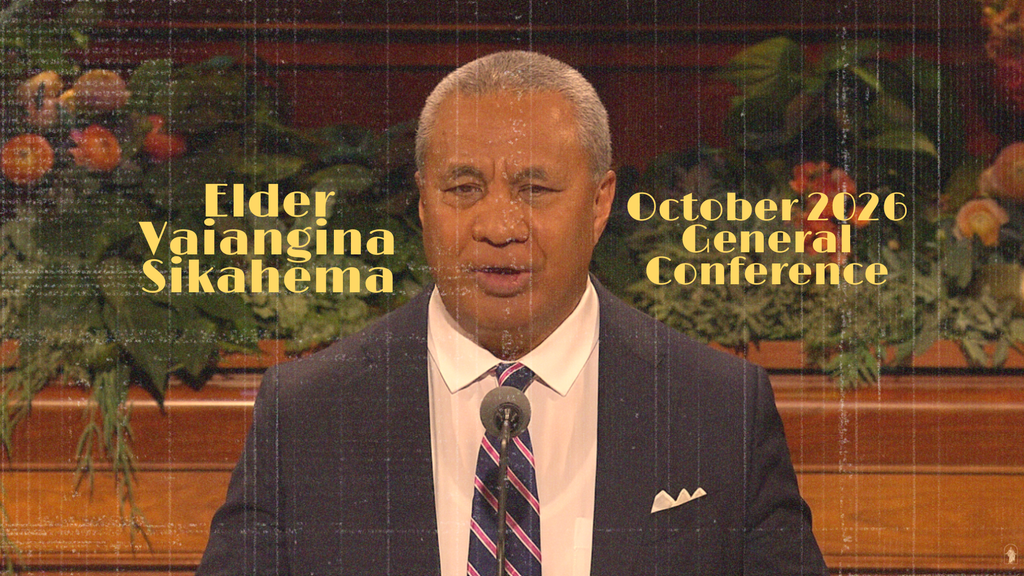
In his General Conference talk, “Prophets, Seers, and Revelators,” Elder Vaiangina Sikahema shares a deeply moving story about his grandparents, who endured unimaginable heartbreak while traveling across the Pacific Ocean to hear an Apostle of the Lord.
Their experience invites us to consider how much we truly value living prophets, the Restoration of the gospel of Jesus Christ, and the blessings of priesthood authority.
Throughout his message, Elder Sikahema teaches that having prophets and apostles on the earth is not simply a wonderful feature of the restored Church. It is evidence that Heavenly Father continues to communicate with His children.
He also reminds us that the Restoration brought more than additional scripture or Church organization. Through the Prophet Joseph Smith, priesthood authority and sacred ordinances were restored, making eternal family relationships possible.
For Relief Society sisters, this message offers meaningful opportunities to discuss faith, sacrifice, revelation, family history, spiritual priorities, and our willingness to follow the Lord’s living servants.
This lesson help follows Elder Sikahema’s talk in chronological order, dividing it into nine discussion sections based on the natural transitions in his message.
Each section includes longer direct quotations, teaching insights, 10 discussion questions, five object lesson ideas, and 10 personal sharing prompts.
Because this talk contains the heartbreaking death of an infant, teachers may want to approach discussions of grief and family loss with particular sensitivity. Sisters should always feel free to participate without sharing painful experiences.
The purpose of this lesson is to help sisters leave with a deeper appreciation for the restored gospel, stronger confidence in living prophets, and a greater desire to treasure the word of God.
Section 1: A Legacy of Faith Begins with Willingness to Serve
The Principle
Elder Sikahema begins by introducing his grandparents, Sione Tufui and Salote Tongi Wolfgramm.
They were young parents serving as missionaries in Tonga in 1947.
They did not have wealth, extensive education, or easy circumstances. Nevertheless, they had accepted an opportunity to serve the Lord.
Their example introduces one of the foundational principles of the talk: Faithful discipleship does not depend on ideal circumstances.
Sometimes the most meaningful legacies of faith begin with ordinary people who are willing to serve despite limited resources.
Direct Quotes from the Talk
“In 1947, my maternal grandparents, Sione Tufui and Salote Tongi Wolfgramm, were serving a full-time mission in Niuatoputapu, a small, isolated volcanic island in the Kingdom of Tonga in the South Pacific.”
Elder Sikahema describes their circumstances:
“My grandparents were poor farmers with no formal education. Grampa was 28, Gramma was 25, and with them were their three children: my mother, Potenitila (Ruby), age 4; Makeleta (Maggie), age 3; and 9-month-old Vilimanulea, at the time their only son.”
He explains the missionary opportunities available to local members:
“With limited visas for Americans, Tongan couples like the Wolfgramms were routinely called to serve on neighboring islands or in villages as ‘senior’ couple missionaries.”
Teaching Insights
One of the most meaningful details about Elder Sikahema’s grandparents is how ordinary their circumstances were.
They were young parents.
They had three small children.
They were poor farmers.
They had no formal education.
Yet none of these circumstances prevented them from participating in the Lord’s work.
Sometimes we unintentionally associate meaningful Church service with a particular stage of life, level of education, financial stability, or amount of gospel knowledge.
The Wolfgramms remind us that the Lord’s work has always moved forward through the faith of ordinary disciples.
Their willingness to serve also became part of a spiritual legacy that would influence future generations.
This section provides an opportunity to discuss how seemingly small acts of faithfulness can bless families long after those acts occur.
10 Relief Society Discussion Questions
- What stands out to you about the circumstances in which Elder Sikahema’s grandparents served?
- Why do we sometimes feel we need better circumstances before we can serve the Lord?
- What does their willingness to serve teach us about faith?
- How can financial limitations, family responsibilities, or a lack of experience affect our confidence in accepting opportunities to serve?
- What is the difference between being qualified by worldly standards and being willing to serve God?
- How might our perspective on Church service change if we viewed it as an opportunity to build a legacy of faith?
- Why are ordinary acts of discipleship often more influential than we realize?
- How can we recognize opportunities to serve the Lord in our present circumstances?
- What can we learn from faithful members who have served with very limited resources?
- What kind of spiritual legacy do you hope your faithfulness will leave for future generations?
5 Object Lesson Ideas
1. A Small Seed: Great Things Have Small Beginnings
Bring a seed and explain that something small can eventually produce fruit far beyond its original size.
Compare the seed to the seemingly ordinary acts of faith that influence future generations.
2. A Family Tree: The Reach of Faithfulness
Display a family tree.
Begin with one person and trace the generations that follow.
Discuss how the decisions of one faithful individual can influence descendants they may never meet.
3. An Empty Suitcase: Willingness to Go
Bring a suitcase and ask sisters what they would need to leave behind to accept an unexpected opportunity to serve.
Discuss how the Lord sometimes asks us to act before our circumstances feel ideal.
4. A Simple Tool: God Uses Willing Servants
Display an ordinary gardening tool.
Explain that something simple can accomplish important work when placed in capable hands.
Connect this to the Lord’s ability to work through faithful disciples.
5. Building Blocks: One Decision at a Time
Stack blocks labeled faith, service, sacrifice, obedience, and love.
Discuss how a spiritual legacy is built through repeated choices.
10 Personal Sharing Prompts
- Share a story about an ancestor whose faith has influenced your life.
- Describe a time you served the Lord despite difficult circumstances.
- Share an experience when you felt inadequate for a Church responsibility.
- Talk about someone who taught you faithfulness through their example.
- Share a sacrifice your family made because of the gospel.
- Describe a time you accepted an opportunity to serve before feeling fully prepared.
- Share how your understanding of service has changed over time.
- Talk about a family tradition that has strengthened your testimony.
- Share a lesson you learned from a faithful parent, grandparent, or mentor.
- Complete this statement: “One legacy of faith I hope to leave is…”
Section 2: The Desire to Hear an Apostle Can Inspire Extraordinary Sacrifice
The Principle
Elder Sikahema next explains why his grandparents wanted to travel to the main island of Tonga.
An Apostle, Elder Matthew Cowley, was coming to visit.
For members living on isolated Pacific islands, hearing an Apostle in person was an extraordinary opportunity.
The Wolfgramms were willing to undertake a difficult journey because they valued the chance to receive counsel from one of the Lord’s appointed servants.
This introduces an important question for modern disciples:
How much do we value the opportunity to hear living prophets and apostles?
Direct Quotes from the Talk
“In June of that same year, Apostle Matthew Cowley, who was over the Pacific, was coming to Tonga. Only twice before had an Apostle visited our island kingdom: David O. McKay in 1921, followed by George Albert Smith in 1938.”
Elder Sikahema describes the significance of the visit:
“For Saints scattered across the Pacific, having an Apostle of the Lord among them was the chance of a lifetime.”
He then describes the journey:
“Reaching the Apostle meant a long voyage for my grandparents across the largest body of water on the planet to the main island of Tongatapu, but first stopping midway on their home island of Vava‘u.”
And the challenges they faced:
“The Pacific is known for its fickle weather patterns, and the week of their trip was no different.”
Teaching Insights
For the Wolfgramms, listening to an Apostle required intentional preparation and significant sacrifice.
Today, prophetic messages are available almost instantly.
We can listen to General Conference live, replay talks, read transcripts, and study prophetic counsel at our convenience.
These conveniences are tremendous blessings.
But they can also make it easier to overlook the sacred nature of what we are receiving.
The Wolfgramms’ example encourages us to evaluate not only whether we have access to prophetic counsel but also how much we treasure it.
10 Relief Society Discussion Questions
- Why do you think the opportunity to hear an Apostle meant so much to these Saints?
- What does the Wolfgramms’ willingness to travel teach us about spiritual priorities?
- How has modern technology changed our access to prophets and apostles?
- Can something become easier to take for granted when it becomes more accessible?
- What sacrifices do we make today to receive spiritual instruction?
- How can we approach General Conference with greater anticipation?
- What is the difference between listening to a prophet and truly seeking prophetic counsel?
- Why might preparation influence what we receive from General Conference?
- How can we help children and youth appreciate the blessing of living apostles?
- If hearing an Apostle required significant sacrifice today, how might that change the way we listen?
5 Object Lesson Ideas
1. A Phone and a Map
Display a phone beside a map of the Pacific Ocean.
Contrast the difficulty of the Wolfgramms’ journey with the ease of accessing prophetic messages today.
2. A Ticket to Something Valuable
Bring a ticket to a concert or event.
Discuss the preparation people make for experiences they value.
Ask how we might prepare similarly to hear the Lord’s servants.
3. A Calendar Reminder
Display a calendar marked with General Conference dates.
Discuss how anticipation and preparation can influence spiritual experiences.
4. A Treasure Box
Place a printed General Conference talk inside a small box.
Discuss why prophetic counsel can be considered a spiritual treasure.
5. A Long Path
Use string or paper footprints to represent the Wolfgramms’ journey.
Invite sisters to consider what effort they personally invest in receiving and applying prophetic counsel.
10 Personal Sharing Prompts
- Share a General Conference experience that was particularly meaningful to you.
- Describe a time you made a special effort to hear a prophet or apostle.
- Share how your family prepared for General Conference when you were younger.
- Talk about a prophetic message that changed your priorities.
- Share a time you felt excited to receive counsel from Church leaders.
- Describe a sacrifice you made to participate in a spiritual experience.
- Share how modern technology has blessed your gospel study.
- Talk about a tradition that helps your family value General Conference.
- Share an experience when preparing spiritually helped you receive an answer.
- Complete this statement: “One way I can show greater appreciation for living prophets is…”
Section 3: Faith and Discipleship Can Continue Through Heartbreaking Trials
The Principle
The story takes a heartbreaking turn when Elder Sikahema describes the storm his grandparents encountered.
Their journey became dangerous, and their infant son died after suffering severe dehydration.
Despite their grief, they continued their journey.
This section should be taught with compassion.
The lesson is not that faithful disciples must suppress grief, ignore their physical or emotional needs, or respond to tragedy in one prescribed way.
Rather, the Wolfgramms’ experience provides a deeply personal example of faith continuing in the midst of profound suffering.
Direct Quotes from the Talk
“The Wolfgramms sailed into a storm; a journey that should have taken 16 hours to Vava‘u stretched into two and a half brutal days at sea.”
Elder Sikahema shares his grandmother’s journal:
“We were completely soaked, … battered, and sick, … too weak to eat. … I held Vilimanulea to my chest until finally arriving to Vava‘u.”
He describes their loss:
“Yet their trial was not over. The storm left the baby severely dehydrated. With no medicine, the Wolfgramms’ precious son died of exposure.”
“Within two days, they buried their baby in Vava‘u and continued their voyage.”
Elder Sikahema connects their experience to the pioneers:
“For the Wolfgramms, burying their infant child was akin to the pioneers who buried their children on the trail to Zion. Like the early pioneers, they yearned to hear and be in the presence of an Apostle.”
Then comes one of the most moving statements in the talk:
“Grieving with empty arms, my grandparents got back on the boat, their mission not yet complete.”
Teaching Insights
The phrase “grieving with empty arms” carries enormous emotional weight.
The Wolfgramms were not spared tragedy because they were serving a mission.
Their faith did not eliminate their suffering.
Yet Elder Sikahema describes their continued desire to be with an Apostle of the Lord.
Their story invites discussion about the relationship between faith and grief.
Faith does not mean that loss becomes easy.
It does not mean we understand why painful things happen.
It can mean continuing to turn toward Jesus Christ even when life is not unfolding as we hoped.
Teachers may find it helpful to connect this discussion to the Savior’s promise of comfort and the doctrine of eternal families, while allowing space for the reality of sorrow.
10 Relief Society Discussion Questions
- What feelings arise as you consider the Wolfgramms’ experience?
- What does their story teach us about the difference between faith and freedom from trials?
- Why is it important to recognize that faithful people still experience devastating losses?
- How can we continue turning toward the Savior when life becomes painful?
- What does it mean to have faith when we do not understand our circumstances?
- How can Relief Society sisters support someone experiencing profound grief?
- Why should we avoid assuming that another person’s suffering reflects a lack of faith?
- How can we honor both someone’s grief and their testimony?
- What role can eternal perspective play in helping us endure hardship?
- What can we learn from the Wolfgramms without assuming that everyone must respond to tragedy in the same way?
5 Object Lesson Ideas
1. A Storm in a Jar
Place water in a clear jar and gently swirl it.
Discuss how life’s circumstances can become turbulent and difficult to control.
Connect the illustration to seeking the Savior’s peace amid storms.
2. A Frayed Rope
Bring a rope with visible wear.
Discuss how trials can leave lasting effects and why disciples need support, compassion, and the strengthening power of Christ.
3. A Picture of the Savior
Display an image of Jesus Christ comforting someone.
Invite sisters to discuss what His compassion teaches us about responding to grief.
4. A Blanket of Comfort
Bring a blanket.
Discuss practical and spiritual ways we can offer comfort to those experiencing loss.
5. An Anchor
Display a small anchor or picture of one.
Discuss how faith in Christ can provide spiritual stability even when circumstances remain painful.
10 Personal Sharing Prompts
- Share a time your faith helped you through a difficult experience.
- Describe how someone offered meaningful comfort during a hard season.
- Share a scripture that has helped you feel close to the Savior during trials.
- Talk about a time you learned that faith does not remove every difficulty.
- Share an experience when you felt supported by your ward or Relief Society.
- Describe something helpful you have learned about ministering to grieving people.
- Share a time you felt the Savior’s compassion.
- Talk about a family story that taught you endurance.
- Share a gospel truth that brings you hope during uncertainty.
- Complete this statement: “One way I have learned to find strength in Christ is…”
Section 4: Priesthood Keys and Temple Ordinances Make Eternal Families Possible
The Principle
After describing the Wolfgramms’ devastating loss, Elder Sikahema explains why they continued their journey.
They were not simply traveling to hear an inspiring religious speaker.
They were traveling toward an Apostle who held priesthood keys.
They understood that the restored gospel included sacred ordinances and authority that would eventually make it possible for their family to be sealed together eternally.
This is one of the most doctrinally significant moments in the talk.
Direct Quotes from the Talk
“They were sailing toward an Apostle, who held priesthood keys, held the authority for the ordinances that would later seal them as an eternal family.”
Elder Sikahema explains another purpose of their journey:
“They sailed to sit at the feet of an Apostle, who would teach them their duty so they could bless others on their island with the message of the restored gospel of Jesus Christ.”
He then connects their faith to the Restoration:
“You see, my grandparents understood that the gospel restored by Joseph Smith revealed truths previously withheld from them.”
“Joseph helped restore the Savior’s Church with prophets, seers, and revelators who held priesthood keys that would one day bind them together as a family forever.”
Finally:
“My grandparents girded up their loins, fresh courage took (see ‘Come, Come, Ye Saints,’ Hymns, no. 30), and sailed to be with Elder Matthew Cowley.”
Teaching Insights
This section connects the Wolfgramms’ sacrifice directly to the doctrine of eternal families.
The Restoration was not merely the reestablishment of a religious institution.
Through Jesus Christ, priesthood authority and sacred ordinances were restored to the earth.
These ordinances make possible covenant relationships that extend beyond mortality.
The Wolfgramms understood that the Apostle they were traveling to hear held keys associated with the restored priesthood and its sacred work.
Their faith was connected to something greater than their immediate circumstances.
They looked toward the eternal blessings made possible through Jesus Christ.
This section provides an opportunity to discuss temple ordinances, sealing blessings, and the significance of priesthood keys.
Teachers should be sensitive to sisters whose family circumstances are complicated or whose hoped-for temple blessings have not yet been realized.
10 Relief Society Discussion Questions
- Why were priesthood keys so significant to the Wolfgramms?
- What is the difference between priesthood authority and priesthood keys?
- Why are sacred ordinances an essential part of the restored gospel?
- How does the doctrine of eternal families change our perspective on mortality?
- What does the sealing power teach us about Heavenly Father’s plan for His children?
- Why is the Restoration especially meaningful when we consider temple ordinances?
- How can temple covenants provide hope during difficult circumstances?
- What blessings come from knowing that family relationships can continue beyond death?
- How can we discuss eternal families sensitively when sisters have different family circumstances?
- What would be missing from our understanding of the gospel without restored priesthood keys and temple ordinances?
5 Object Lesson Ideas
1. A Key
Bring a key.
Explain that priesthood keys represent authority to direct the use of priesthood authority in the Lord’s work.
2. A Family Photograph
Display a family photograph.
Discuss how the doctrine of eternal families gives deeper meaning to relationships.
3. A Temple Picture
Show a picture of a temple.
Invite sisters to identify blessings made possible through restored priesthood authority.
4. A Chain of Links
Connect several paper links.
Discuss how sealing ordinances are part of Heavenly Father’s plan to unite families eternally.
Clarify that the paper chain is only a visual representation, not a literal description of how sealing ordinances work.
5. A Door and Key Illustration
Show a picture of a locked door and a key.
Discuss how priesthood authority and ordinances make covenant blessings available through Jesus Christ.
10 Personal Sharing Prompts
- Share how the doctrine of eternal families has influenced your testimony.
- Describe a time the temple brought you peace.
- Share a teaching about priesthood keys that helped you understand the Restoration.
- Talk about a family history experience that strengthened your faith.
- Share how temple worship has influenced your relationship with Jesus Christ.
- Describe a time you felt gratitude for sacred ordinances.
- Share a lesson you learned from an ancestor’s faith in temple blessings.
- Talk about how your understanding of eternal families has grown.
- Share a scripture that gives you hope concerning God’s eternal promises.
- Complete this statement: “One blessing of restored priesthood authority that means a great deal to me is…”
Section 5: A World Without Prophets Is Like a Famine of Hearing God’s Word
The Principle
Elder Sikahema transitions from his grandparents’ story to the period preceding the Restoration.
He describes the loss of prophetic revelation following the deaths of the ancient apostles and prophets.
Using the words of Amos, he compares this spiritual condition to a famine.
A physical famine leaves people longing for food.
A spiritual famine leaves people longing to hear the word of the Lord.
Direct Quotes from the Talk
“For centuries after the deaths of the ancient apostles and prophets until the boy Joseph knelt in the grove of trees near Palmyra, New York, there was no revelation to prophets.”
Elder Sikahema quotes Amos:
“Behold, the days come … that I will send a famine in the land, not a famine of bread, nor a thirst for water, but of hearing the words of the Lord:”
The passage continues:
“And [people] shall wander from sea to sea, and from the north even to the east, they shall run to and fro to seek the word of the Lord, and shall not find it.”
He then shares another teaching from Amos:
“Surely the Lord God will do nothing, but he revealeth his secret unto his servants the prophets.”
Elder Sikahema explains the warnings about the ancient Church:
“The Savior foretold of false prophets who would decimate His ancient Church.”
He quotes the Apostle Paul:
“For I know this, that after my departing shall grievous wolves enter in among you, not sparing the flock.”
Elder Sikahema then observes:
“Reformers in the Middle Ages sought and yearned for prophetic voices but could not find them.”
And he connects this spiritual longing to our day:
“Even in modern times, there are people who thirst to hear prophetic direction and guidance.”
Teaching Insights
The image of a spiritual famine is powerful because it invites us to consider something we rarely experience in the restored Church: life without living prophets.
We often focus on what prophets teach.
But Elder Sikahema encourages us to consider the blessing of having prophets at all.
The Restoration ended the period he describes as a famine of prophetic revelation.
Heavenly Father once again called a prophet and began restoring His Church through Joseph Smith.
This section can help sisters appreciate the significance of continuing revelation and the blessing of living in a dispensation when the Lord speaks through His servants.
10 Relief Society Discussion Questions
- Why do you think Amos compared the absence of God’s word to a famine?
- What does spiritual hunger feel like?
- Why do people seek divine direction during uncertainty?
- How would our spiritual lives be different without living prophets?
- What does Amos 3:7 teach about God’s relationship with His prophets?
- Why is continuing revelation important to the restored Church?
- What can we learn from people who longed for prophetic direction before the Restoration?
- How can we recognize spiritual hunger in ourselves or others?
- What blessings come from knowing that Heavenly Father continues to communicate with His children?
- How can we develop greater gratitude for prophetic revelation?
5 Object Lesson Ideas
1. An Empty Plate
Display an empty plate.
Ask sisters to consider what happens when the body goes without nourishment.
Compare this to the spiritual need for God’s word.
2. A Glass of Water
Bring a glass of water.
Discuss the difference between physical thirst and spiritual thirst.
3. A Closed Book
Place a closed book on a table.
Ask sisters to imagine wanting answers from God but believing no living prophet could receive revelation for the Church.
4. A Food Storage Container
Display a container of stored food.
Discuss how regular study of prophetic counsel helps nourish faith.
5. A Light in Darkness
Begin with an unlit LED lantern, then turn it on.
Discuss how restored revelation brings spiritual understanding.
10 Personal Sharing Prompts
- Share a time you felt spiritually hungry for answers.
- Describe how prophetic counsel helped satisfy a spiritual need.
- Share an experience when you felt grateful for continuing revelation.
- Talk about a time scripture study helped you feel closer to God.
- Share a teaching from a living prophet that brought you clarity.
- Describe a moment when you felt the Lord was aware of your questions.
- Share how your understanding of the Restoration has grown.
- Talk about someone whose desire for spiritual truth inspired you.
- Share a time you found answers through prayer and prophetic teachings.
- Complete this statement: “I am grateful that Heavenly Father continues to speak because…”
Section 6: We Must Not Take the Words of Living Prophets for Granted
The Principle
After explaining the spiritual famine that existed before the Restoration, Elder Sikahema turns directly to modern disciples.
Today, we have unprecedented access to the words of living prophets and apostles.
Yet easy access does not guarantee that we value what we receive.
Elder Sikahema warns against treating the Lord’s revelations lightly.
Direct Quotes from the Talk
Elder Sikahema shares the Lord’s warning to Joseph Smith:
“And all they who receive the oracles of God, let them beware how they hold them lest they are accounted as a light thing.”
He then makes a particularly relevant observation:
“I suspect the Lord knew that even when we would have these devices (cell phones) to easily see and hear His anointed servants, many of us would still take them for granted.”
He quotes President Jeffrey R. Holland:
“Are the heavens open? Does God reveal His will to prophets and apostles as in days of old?”
President Holland’s answer is direct:
“That they are and that He does is the unflinching declaration of The Church of Jesus Christ of Latter-day Saints to all the world.”
The quotation concludes:
“And in that declaration lies the significance of Joseph Smith, the Prophet, for nearly 200 years now.”
Teaching Insights
This section is especially relevant to modern Relief Society sisters.
We live in a time when General Conference messages are available almost instantly.
We can access talks while driving, cooking, cleaning, exercising, or preparing lessons.
These opportunities are extraordinary.
But Elder Sikahema warns that accessibility can sometimes lead to casualness.
We may hear prophetic counsel without studying it.
We may admire a message without acting on it.
We may save a quote without allowing it to change our behavior.
His warning invites us to move beyond merely consuming prophetic content toward treasuring and applying it.
10 Relief Society Discussion Questions
- What does it mean to treat the oracles of God as a light thing?
- Why can frequent access to something sacred make it easier to take for granted?
- What is the difference between hearing prophetic counsel and valuing it?
- How can we recognize when we are becoming spiritually casual about General Conference?
- What habits help us take prophetic teachings seriously?
- Why is acting on prophetic counsel an important expression of faith?
- How can we use technology more intentionally to strengthen our discipleship?
- What might change if we approached every General Conference talk as a personal opportunity to receive direction?
- How can we teach children to appreciate the words of living prophets?
- What is one prophetic teaching you have heard but would like to apply more fully?
5 Object Lesson Ideas
1. A Smartphone
Hold up a phone.
Discuss how remarkable it is that prophetic messages are available through such a small device.
Ask whether convenience has changed the way we value them.
2. A Wrapped Treasure
Place a printed General Conference talk inside a gift box.
Discuss how we treat things we consider precious.
3. A Bookmark
Bring a bookmark and a General Conference magazine.
Discuss the difference between marking a meaningful passage and actually applying it.
4. A Mirror
Display a mirror.
Ask sisters to consider how prophetic teachings can help us examine our lives.
5. A To-Do List
Write “Listen,” “Study,” “Pray,” and “Act” on a card.
Discuss how each step helps us receive more from prophetic counsel.
10 Personal Sharing Prompts
- Share a General Conference teaching you have tried to apply.
- Describe a time you realized you had been overlooking important counsel.
- Share how you study General Conference talks between conferences.
- Talk about a prophetic message that changed a habit or decision.
- Share an experience when technology helped you receive spiritual guidance.
- Describe how your appreciation for living prophets has changed over time.
- Share a time you felt prompted to revisit a particular talk.
- Talk about a family tradition that encourages prophetic study.
- Share something you learned after acting on prophetic counsel.
- Complete this statement: “One way I can better treasure the words of living prophets is…”
Section 7: The First Vision Opened the Heavens and Began the Restoration
The Principle
Elder Sikahema now turns to the First Vision.
He explains that through Joseph Smith, the heavens opened and the Restoration of Jesus Christ’s Church began.
The First Vision was not simply a meaningful personal experience for Joseph.
It marked the beginning of a work that would bless generations throughout the world.
Direct Quotes from the Talk
Elder Sikahema quotes Joseph Smith’s account:
“When the light rested upon me I saw two Personages, whose brightness and glory defy all description, standing above me in the air.”
Joseph continues:
“One of them spake unto me, calling me by name and said, pointing to the other—This is My Beloved Son. Hear Him!”
Elder Sikahema reflects on the significance of those words:
“With that clear, simple, and understated introduction, the Father and His Son, Jesus Christ, would begin the work of restoring the Savior’s ancient Church through a then-teenage boy in upstate New York.”
He then describes the blessings that followed:
“In the years that followed this momentous event, greater truths, priesthood authority, sacred ordinances, additional scriptures, and knowledge of God’s plan of salvation would all be restored or rediscovered through the Prophet Joseph Smith.”
Teaching Insights
The First Vision teaches several foundational truths.
Heavenly Father and Jesus Christ are real.
They know and love Their children.
They hear sincere prayers.
And they continue to reveal truth.
Elder Sikahema emphasizes the remarkable simplicity of the Father’s introduction:
“This is My Beloved Son. Hear Him!”
At the beginning of the Restoration, Heavenly Father directed Joseph Smith’s attention toward Jesus Christ.
This reminds us that the purpose of the Restoration is to bring us to the Savior.
The restored Church, priesthood ordinances, scriptures, and prophetic teachings all point toward Him.
10 Relief Society Discussion Questions
- What does the First Vision teach us about Heavenly Father and Jesus Christ?
- Why is it significant that Heavenly Father addressed Joseph Smith by name?
- What do you learn from the Father’s instruction to “Hear Him”?
- Why is the First Vision foundational to the restored gospel?
- How does the First Vision demonstrate that God hears prayers?
- What does Joseph Smith’s youth teach us about whom the Lord can call?
- How did the First Vision begin a work that would bless future generations?
- Why is it important to remember that the Restoration centers on Jesus Christ?
- How has the First Vision influenced your understanding of God’s nature?
- What restored truth means the most to you personally?
5 Object Lesson Ideas
1. A Picture of the First Vision
Display artwork depicting the First Vision.
Invite sisters to identify what this experience teaches about Heavenly Father and Jesus Christ.
2. A Door Opening
Use a small door illustration.
Discuss how the First Vision marked the opening of a new dispensation of revelation.
3. A Puzzle
Bring puzzle pieces labeled scripture, priesthood, temple ordinances, revelation, and eternal families.
Discuss how the Restoration helps us understand Heavenly Father’s plan.
4. A Light
Use an LED lantern.
Discuss how revelation brings understanding and spiritual direction.
5. A Listening Exercise
Read the words “Hear Him.”
Invite sisters to reflect silently on what they can do to hear the Savior more clearly.
10 Personal Sharing Prompts
- Share how you gained a testimony of Joseph Smith.
- Describe a time you felt Heavenly Father heard your prayer.
- Share a restored gospel truth that has blessed your life.
- Talk about what the First Vision means to you personally.
- Share an experience when you felt the Savior guiding you.
- Describe how your understanding of Heavenly Father has grown.
- Share a time scripture study strengthened your testimony of the Restoration.
- Talk about a person who helped you understand the First Vision.
- Share a blessing you have received because of the restored gospel.
- Complete this statement: “Because of the First Vision, I know…”
Section 8: The Blessing of Living Prophets Should Never Become Ordinary
The Principle
After discussing the Restoration, Elder Sikahema returns to his grandparents’ story.
He reminds listeners of the extraordinary sacrifice they made to hear an Apostle.
He then invites us to consider our own privilege of living in a time when prophets and apostles are on the earth.
The contrast is powerful.
His grandparents endured a dangerous voyage and heartbreaking loss while seeking the opportunity to hear an Apostle.
We can hear living prophets from our own homes.
The question becomes whether we truly recognize the value of that blessing.
Direct Quotes from the Talk
Elder Sikahema returns to his family’s experience:
“Perhaps you can appreciate why my beloved grandparents were so eager to be in the presence of one of the Lord’s anointed.”
He continues:
“Even in their despair and while mourning the tragic loss of their only son—their handsome, cheerful little boy—they solemnly buried him and made the Herculean effort to sail just to listen to an Apostle of the Lord.”
Then he gives his central reminder:
“What a blessing it is to live in a time when apostles and prophets are on the earth.”
And his invitation:
“As we begin this opening session of the 196th Semiannual General Conference of the Church, let us not be guilty of holding ‘the oracles of God … as a light thing.’”
Teaching Insights
The Wolfgramms’ story becomes a lens through which we can examine our own spiritual priorities.
Their sacrifice does not mean that we must experience similar hardship to demonstrate faith.
Rather, their experience helps us recognize the extraordinary value they placed on prophetic counsel.
We may never need to cross an ocean to hear an Apostle.
But we can demonstrate appreciation through preparation, attention, study, and obedience.
This section is an excellent opportunity to invite sisters to identify practical ways they can more fully treasure the words of living prophets.
10 Relief Society Discussion Questions
- How does knowing the Wolfgramms’ story change the way you think about General Conference?
- What does their sacrifice reveal about their testimony of living apostles?
- Why is gratitude an important part of receiving prophetic counsel?
- How can we demonstrate appreciation for living prophets without making extraordinary physical sacrifices?
- What distractions sometimes prevent us from giving prophetic messages our full attention?
- How can we make General Conference a more sacred experience?
- What does it mean to treasure the words of the Lord’s servants?
- How might our spiritual lives change if we consistently acted on prophetic counsel?
- What can we teach future generations about the blessing of living prophets?
- What specific change would help you take greater advantage of this blessing?
5 Object Lesson Ideas
1. A Map and a Phone
Display a map of the Pacific beside a smartphone.
Discuss the contrast between the Wolfgramms’ journey and our modern access to General Conference.
2. A Precious Photograph
Bring a photograph of someone meaningful.
Discuss why certain things become precious because of what they represent.
Connect this to prophetic counsel.
3. A Journal
Display a journal.
Discuss how recording and reviewing prophetic teachings can demonstrate that we value them.
4. A Treasure Chest
Place scriptures or a printed General Conference talk inside a small chest.
Ask what makes the words of living prophets spiritually valuable.
5. A Personal Invitation
Write “Hear Him” on an invitation card.
Discuss how General Conference can be approached as an invitation to hear the Savior through His servants.
10 Personal Sharing Prompts
- Share a time General Conference felt especially sacred to you.
- Describe a prophetic teaching you treasure.
- Share how your appreciation for living prophets has grown.
- Talk about a family member who taught you to value prophetic counsel.
- Share a time you acted on a General Conference invitation.
- Describe an experience when a prophetic message brought you peace.
- Share a tradition that helps you prepare for General Conference.
- Talk about a time you felt grateful to live during the Restoration.
- Share something you want future generations to understand about living prophets.
- Complete this statement: “Because I value living prophets, I want to…”
Section 9: The Lord’s Word Is the Same Whether Spoken by Him or Through His Servants
The Principle
Elder Sikahema concludes by addressing the authority of the Lord’s revelations.
He recalls that some early Church leaders were hesitant to publish Joseph Smith’s revelations because of concerns about the young prophet’s writing abilities.
This provides an important lesson about the difference between human imperfection and divine authority.
God can speak through imperfect servants.
The validity of His word does not depend on worldly eloquence or polish.
Direct Quotes from the Talk
Elder Sikahema explains:
“It is interesting to note that when the Church was only about one and a half years old, some early Church leaders opposed the idea of publishing the Lord’s revelations through the Prophet Joseph that would eventually become the Doctrine and Covenants.”
He describes their concern:
“Some of them were embarrassed by the young prophet’s poor writing skills.”
Then he quotes the Savior:
“What I the Lord have spoken, I have spoken, and I excuse not myself; and though the heavens and the earth pass away, my word shall not pass away, but shall all be fulfilled, whether by mine own voice or by the voice of my servants, it is the same.”
Elder Sikahema closes with gratitude for his ancestors:
“How grateful I am for noble progenitors who left me and my posterity a legacy of faith and courage in the face of difficulties and obstacles.”
And with his testimony:
“I witness of the truths of the restored gospel and of living prophets, seers, and revelators in the sacred name of Jesus Christ, amen.”
Teaching Insights
This final section brings the talk back to its central theme: the importance of receiving the Lord’s word through His appointed servants.
The early Church leaders’ concerns about Joseph Smith’s writing illustrate how easy it can be to focus on human limitations.
But the Lord reminded them that His word remains His word when delivered through His servants.
This does not mean that every personal opinion expressed by a Church leader is automatically revelation.
Rather, Elder Sikahema emphasizes the divine authority of the Lord’s revelations and the importance of receiving His word faithfully.
His concluding gratitude for his ancestors also reminds us that our response to prophetic counsel can influence future generations.
10 Relief Society Discussion Questions
- Why might some early Church leaders have been concerned about publishing Joseph Smith’s revelations?
- What does this experience teach us about human weakness and divine revelation?
- Why does the Lord work through imperfect people?
- What does Doctrine and Covenants 1:38 teach about the authority of God’s word?
- How can we distinguish between human limitations and the Lord’s revealed teachings?
- Why is humility important when receiving prophetic counsel?
- How can we develop confidence in the Lord while recognizing that His servants are human?
- What does it mean to receive the Lord’s word with faith?
- How can following prophetic counsel become part of our family’s spiritual legacy?
- What is one thing you want to remember from Elder Sikahema’s message?
5 Object Lesson Ideas
1. An Imperfect Envelope
Place a carefully written message inside a wrinkled envelope.
Discuss how the appearance of the messenger does not determine the value of the message.
2. A Simple Pencil
Bring an ordinary pencil.
Discuss how an imperfect instrument can still be used to communicate something meaningful.
3. A Sealed Letter
Display a letter.
Discuss the importance of recognizing the authority behind a message.
4. A Family Heirloom
Bring an object passed down through generations.
Discuss how spiritual legacies can be more valuable than material possessions.
5. A Chain of Faith
Create paper links labeled Joseph Smith, living prophets, parents, children, and future generations.
Discuss how receiving and living God’s word can bless those who come after us.
10 Personal Sharing Prompts
- Share a time you learned to trust the Lord despite someone’s human limitations.
- Describe a prophetic teaching that strengthened your faith.
- Share an experience when you felt the Lord’s guidance through Church leaders.
- Talk about a time you needed humility to receive counsel.
- Share how the Doctrine and Covenants has blessed your life.
- Describe a family member whose faithfulness influenced you.
- Share a time you acted on spiritual counsel and saw blessings.
- Talk about a gospel truth you hope to pass to future generations.
- Share how your testimony of living prophets has developed.
- Complete this statement: “One way I can honor the legacy of faithful disciples is…”
Conclusion: What a Blessing It Is to Have Living Prophets
Elder Vaiangina Sikahema’s message, “Prophets, Seers, and Revelators,” is a powerful reminder that living prophets and apostles are among the great blessings of the restored gospel of Jesus Christ.
Through the story of his grandparents, we see what it looks like when disciples place extraordinary value on hearing the Lord’s servants.
The Wolfgramms were young parents with limited resources, serving faithfully on an isolated island.
When they learned that an Apostle would be visiting Tonga, they undertook a difficult journey to hear him.
Their voyage brought unimaginable sorrow when they lost their infant son.
Yet Elder Sikahema explains that their faith was rooted in the eternal truths restored through the Prophet Joseph Smith.
They understood the significance of priesthood keys.
They believed in the blessings of eternal families.
And they valued the opportunity to hear an Apostle of Jesus Christ.
Their story invites us to consider how we approach the same blessing today.
We live in a time when prophetic messages are available with extraordinary ease.
We can listen to General Conference in our homes.
We can study the words of prophets and apostles on our phones.
We can return to their teachings whenever we need guidance.
But Elder Sikahema reminds us that easy access should never diminish our appreciation.
His message also emphasizes the importance of the Restoration.
For centuries, the world experienced what Amos described as a famine of hearing the word of the Lord.
Through Joseph Smith, the heavens opened again.
The Father and the Son appeared.
Priesthood authority was restored.
Additional scripture came forth.
Sacred ordinances became available.
And the Lord once again called prophets, seers, and revelators to lead His Church.
These blessings are not simply historical events.
They influence our lives today.
They provide direction for our families, hope through sacred covenants, and opportunities to draw closer to Jesus Christ.
How This Lesson Can Strengthen Relief Society Sisters
This talk creates meaningful opportunities for sisters to reflect on their relationship with prophetic counsel.
Some sisters may leave with a greater appreciation for the sacrifices of faithful ancestors.
Others may feel inspired to study General Conference more intentionally.
Some may find renewed hope in the doctrine of eternal families.
And others may recognize that the Lord’s words are available to guide them through challenges they are facing right now.
As teachers prepare this lesson, the goal is not simply to help sisters admire the faith of Elder Sikahema’s grandparents.
It is to help them consider how they can demonstrate that same appreciation for the restored gospel in their own lives.
The discussion questions, object lessons, and personal sharing prompts throughout this lesson help can be adapted to the needs of each Relief Society class.
Teachers might focus on the blessings of living prophets, the sacrifices of faithful disciples, the Restoration, priesthood keys, or the importance of acting on prophetic counsel.
Whatever direction the discussion takes, the central message remains the same:
Living prophets and apostles are a sacred blessing, and we should never take their words for granted.
A Final Relief Society Discussion Invitation
Consider closing the lesson with this question:
“If our access to living prophets were suddenly taken away, what would we miss most?”
Allow sisters time to reflect.
Then ask:
“Knowing that we have this blessing today, what can we do to treasure it more fully?”
These questions can help sisters move from gratitude to action.
A Simple Invitation for the Week
Invite each sister to choose one General Conference message and study it with greater intention.
Encourage them to identify one teaching they can apply during the coming week.
They might write it down, discuss it with their family, share it with someone they minister to, or make a specific change in response to the counsel.
The purpose is to move beyond simply hearing the words of living prophets and begin acting on them.
As Elder Sikahema reminds us:
“What a blessing it is to live in a time when apostles and prophets are on the earth.”
And perhaps the most important invitation from his message is this:
“Let us not be guilty of holding ‘the oracles of God … as a light thing.’”
May we treasure the blessing of living prophets, receive their inspired counsel with faith, and build our own legacies of discipleship for generations to come.

Leave a Reply