Introduction: How Can We Become More United in Jesus Christ?
What does it really mean to be united as disciples of Jesus Christ?
Does unity mean agreeing about everything? Having similar personalities, backgrounds, opinions, or experiences? Or does the Savior invite us to develop a deeper kind of unity—one that transcends our differences and connects us through our shared love for Him?
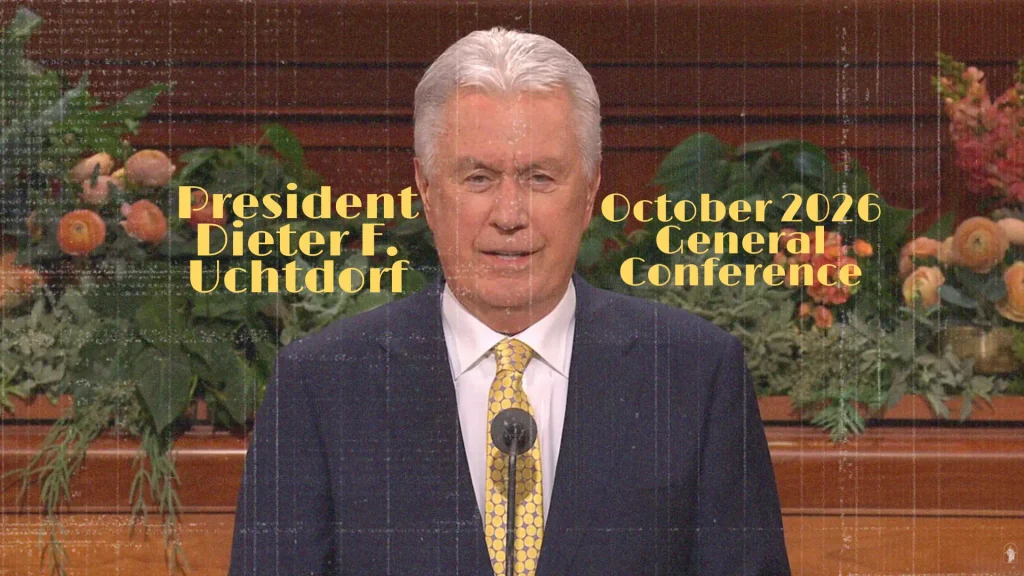
In his General Conference talk, “Christ-Centered Unity,” President Dieter F. Uchtdorf teaches that true unity is not created by shared political beliefs, cultural backgrounds, or personal interests. Rather, it comes through our relationship with Jesus Christ and our commitment to His restored gospel.
President Uchtdorf reminds us that although baptism is an individual ordinance, it also unites us with a worldwide family of covenant disciples. When we choose to follow Jesus Christ, we commit not only to strengthening our personal relationship with Him but also to loving, serving, and supporting one another.
Throughout his message, President Uchtdorf contrasts the Savior’s work of gathering God’s children with the adversary’s efforts to divide them.
He teaches that Jesus Christ has the power to overcome divisions that may seem impossible to resolve.
He also reminds us that unity is something we must intentionally develop during mortality. Every small effort to become more patient, forgiving, compassionate, and Christlike helps prepare us for eternal relationships.
Perhaps one of the most meaningful teachings in this talk is President Uchtdorf’s explanation of the sacrament.
Although we partake of the sacrament individually, we do so surrounded by fellow disciples. Each week, we renew our covenants together and remember that we are part of something greater than ourselves.
We have the Savior, and we have each other.
How to Use This Relief Society Lesson Help
This lesson help follows President Uchtdorf’s talk in chronological order, dividing it into 10 teaching sections based on the progression of his message.
Each section includes a substantial quotation from the talk, doctrinal insights, 10 Relief Society discussion questions, 5 object lessons, and 10 personal sharing prompts.
Altogether, this resource includes 100 discussion questions, 50 object lessons, and 100 personal sharing prompts.
Teachers can choose the sections and activities that best meet the needs of their Relief Society sisters. The goal is not to cover every question but to encourage meaningful discussion, personal reflection, and greater commitment to Jesus Christ.
Section 1: Spiritual Growth Begins with Small Acts of Faith and Continues Along the Covenant Path
Direct Quote from President Uchtdorf
“Recently, Sister Uchtdorf and I attended the baptisms of two of our great-grandchildren. We rejoiced with them as they chose to follow Jesus Christ and made sacred covenants to take upon themselves the Savior’s name, keep God’s commandments, and serve Him. By entering the waters of baptism, they literally followed not only the Savior’s example but also the examples of siblings, cousins, parents, and many trusted friends.
My heart fills with gratitude when I think back on my own baptism. I was baptized at age eight in an impressive indoor public swimming pool. Back then, as we walked into the water, my mind and heart were preoccupied with this thought: ‘The pool is getting deeper and deeper, and I can’t swim!’
Spiritual growth is rarely dramatic at the beginning. Like an exponential curve, it often starts gradually—with loving parents, simple prayers, and small acts of faith.
Then, as we progress along the covenant path, our relationship with God deepens, and our capacity for a joyful life expands. The temple endowment, missionary service, celestial marriage in the house of the Lord, ongoing service in God’s kingdom—these experiences do not merely add to our discipleship; they multiply greatly our potential for divine understanding and blessings. The arc of discipleship helps us to grow closer to our role model, Jesus Christ, and it continues eternally.”
Understanding the Doctrine
President Uchtdorf begins with a personal reflection on baptism and spiritual growth.
His experience illustrates an important principle: spiritual development is not always immediately recognizable.
When President Uchtdorf was baptized, his attention was focused on the depth of the swimming pool rather than the eternal significance of the ordinance.
Yet that moment marked the beginning of a lifelong covenant journey.
He compares spiritual growth to an exponential curve.
An exponential curve may begin with very little visible change, but over time its growth becomes increasingly significant.
Similarly, our relationship with Heavenly Father often develops through small, consistent acts of faith.
Simple prayers, scripture study, obedience, service, and covenant keeping may seem ordinary in the moment, but they contribute to lasting spiritual transformation.
President Uchtdorf also teaches that covenant experiences build upon one another.
Baptism begins our covenant journey, but the blessings of discipleship continue to expand as we make and keep additional covenants and serve in God’s kingdom.
The important principle is that spiritual growth is not limited to dramatic experiences.
Faithful discipleship is often built through ordinary acts of devotion repeated over time.
Doctrinal Connections
2 Nephi 31:17–20: Baptism is the gate to the covenant path, and disciples must continue pressing forward in Christ.
Alma 32:28–43: Faith can grow from a small beginning when it is nourished.
Doctrine and Covenants 64:33: Great things proceed from small beginnings.
10 Relief Society Discussion Questions
- Why do you think President Uchtdorf begins his message about unity by discussing baptism and spiritual growth?
- What does his experience at his own baptism teach us about how spiritual understanding develops?
- How can small acts of faith produce significant spiritual growth over time?
- Why might we sometimes underestimate the spiritual value of ordinary gospel habits?
- What does the comparison to an exponential curve teach us about patience in discipleship?
- How have your covenants deepened your relationship with Heavenly Father and Jesus Christ?
- Why is it important to remember that spiritual growth continues throughout eternity?
- How can we avoid comparing our spiritual progress with someone else’s?
- What role do family members, friends, and fellow disciples play in our spiritual development?
- How can we recognize spiritual growth that may not be immediately obvious?
5 Object Lesson Ideas
1. The Exponential Growth Curve
Materials: Whiteboard and marker.
Instructions: Draw a curve that begins almost flat and gradually rises more steeply.
Explain President Uchtdorf’s comparison between exponential growth and discipleship.
Ask sisters to identify small gospel habits that can contribute to long-term spiritual growth.
Teaching application: Consistent faithfulness can produce significant spiritual development over time.
2. The Growing Seed
Materials: Seed, soil, and small plant.
Instructions: Show the seed and discuss how little growth is visible immediately after planting.
Then show the plant.
Teaching application: Spiritual growth requires patience, nourishment, and consistent effort.
3. The Building Blocks of Faith
Materials: Building blocks.
Instructions: Label blocks with gospel practices such as prayer, scripture study, sacrament worship, service, and temple worship.
Build a tower one block at a time.
Teaching application: Small, repeated acts of discipleship strengthen our spiritual foundation.
4. The Ripple Effect
Materials: Bowl of water and small pebble.
Instructions: Drop the pebble into the water and observe the ripples.
Discuss how a single act of faith or kindness can influence others.
Teaching application: Small acts of discipleship can bless more people than we realize.
5. The Covenant Journey
Materials: Paper pathway and pictures representing baptism, sacrament worship, temple covenants, and service.
Instructions: Arrange the pictures along the pathway.
Discuss how our relationship with Jesus Christ deepens as we progress along the covenant path.
Teaching application: Discipleship is an ongoing journey rather than a single event.
10 Personal Sharing Prompts
- Share a memory from your baptism or a baptism that influenced your testimony.
- Describe a small spiritual habit that has made a significant difference in your life.
- Tell about someone who helped you develop faith when you were young.
- Share an experience when you recognized spiritual growth only after looking back.
- Describe how your understanding of covenants has changed over time.
- Tell about a time when a simple prayer strengthened your relationship with God.
- Share how serving others has contributed to your spiritual development.
- Describe a season when your spiritual growth felt slow but meaningful.
- Tell about someone whose consistent discipleship has inspired you.
- Share what it means to you that our progression toward becoming like Jesus Christ continues eternally.
Section 2: Baptism Makes Us Part of a Covenant People, Not Just Individual Disciples
Direct Quote from President Uchtdorf
“Baptism is the gate through which we enter this ‘strait and narrow path.’ We must enter that gate one by one. Baptism is an individual ordinance.
However, it is also a unifying one. It joins us to a worldwide community of Saints.
Through baptism, we become not only covenant individuals but also part of a covenant people.
When we are baptized, we declare before God and witnesses that we ‘are desirous to come into the fold of God.’ We show that we do not want to live only for ourselves. We desire to be part of a people who ‘bear one another’s burdens,’ ‘mourn with those that mourn,’ and ‘comfort those that stand in need of comfort.’
In other words, when we join the Church of Jesus Christ, we say—humbly, gratefully, and with quiet confidence—that we want to follow our beloved Savior, Jesus Christ. And we want to walk that path together.”
Understanding the Doctrine
President Uchtdorf teaches that baptism has both an individual and a collective purpose.
Each person must personally choose to follow Jesus Christ.
We cannot make sacred covenants on behalf of another person who is accountable for their own decisions.
However, baptism also connects us to a community of disciples who have made similar commitments.
When we are baptized, we become part of a covenant people.
This means our discipleship is not intended to be lived entirely in isolation.
Through baptism, we promise to bear one another’s burdens, mourn with those who mourn, and comfort those who need comfort.
These promises are especially meaningful within Relief Society.
Relief Society provides opportunities to live our baptismal covenants through ministering, friendship, compassion, service, and belonging.
President Uchtdorf’s message challenges us to think beyond our personal spiritual development.
Following Jesus Christ includes helping one another progress toward Him.
Doctrinal Connections
Mosiah 18:8–10: Baptismal covenants include bearing burdens, mourning, comforting, and standing as witnesses of God.
1 Corinthians 12:12–27: Members of the Church are compared to parts of one body.
Moroni 6:4–5: Members of the Church are nourished by the good word of God and meet together often.
10 Relief Society Discussion Questions
- What does it mean to become part of a covenant people?
- Why is baptism both an individual and a unifying ordinance?
- How does understanding our baptismal covenants change the way we view Church membership?
- What does it look like to bear another person’s burdens in everyday life?
- How can we mourn with someone without trying to immediately solve their problems?
- Why is belonging an important part of discipleship?
- How can Relief Society become a place where sisters genuinely feel supported?
- What responsibilities do we have toward members whose experiences differ from ours?
- How can we help sisters who feel disconnected from the ward or Relief Society?
- What does President Uchtdorf’s statement about walking the covenant path together mean to you?
5 Object Lesson Ideas
1. The Woven Threads
Materials: Several strands of yarn.
Instructions: Show how individual strands can be woven together.
Discuss how individual disciples contribute to a stronger community.
Teaching application: Baptism connects us to a covenant people who support one another.
2. The Shared Burden
Materials: Bag containing several books.
Instructions: Invite one sister to hold the bag, then invite others to help support its weight.
Teaching application: Bearing burdens becomes easier when we serve one another.
3. The Puzzle Pieces
Materials: Puzzle.
Instructions: Give several sisters individual puzzle pieces.
Invite them to work together to complete the picture.
Teaching application: Every member contributes something meaningful to the covenant community.
4. The Circle of Belonging
Materials: Paper circles with words such as compassion, friendship, service, and forgiveness.
Instructions: Arrange the circles around a picture of Jesus Christ.
Discuss how these Christlike qualities help create belonging.
Teaching application: Christ-centered unity develops through covenant living.
5. The Linked Chain
Materials: Paper strips and tape.
Instructions: Invite sisters to write ways they can support one another.
Connect the strips into a paper chain.
Teaching application: Our covenant commitments connect us through love and service.
10 Personal Sharing Prompts
- Share a time when another Church member helped carry one of your burdens.
- Describe an experience when Relief Society helped you feel that you belonged.
- Tell about a time when someone mourned with you.
- Share an experience when you were able to comfort another person.
- Describe a friendship that developed through Church service.
- Tell about someone who helped you feel included in a new ward.
- Share how ministering has strengthened your understanding of baptismal covenants.
- Describe a moment when you recognized the blessings of belonging to a worldwide Church.
- Tell about a time when you learned to support someone whose circumstances differed from yours.
- Share what it means to you to walk the covenant path alongside other disciples.
Section 3: Jesus Christ Reaches Across Divisions and Welcomes Those Who Feel Like Outsiders
Direct Quote from President Uchtdorf
“When I read the scriptures, I’m impressed with how much of the Savior’s work has to do with bringing people peacefully together. For example, think about the world Jesus Christ was born in. At that time and place, Jews and Samaritans avoided each other. Gentiles were considered unclean. Pharisees and Sadducees agreed on little except their dislike of publicans and sinners. The people were divided in a dozen different ways—culturally, politically, religiously.
When you think about it, it wasn’t so different from our world today.
But the Savior of the world, the Son of God, transcended worldly boundaries and divisions. As Paul said, He ‘[broke] down the middle wall of partition between us.’ He consistently reached out to those who would otherwise be shunned as outsiders. He touched lepers. He praised Gentiles for their faith. He used a Samaritan as an example of compassion. He gathered people from different walks of life and asked them to serve together in positions of trust. He ministered to the poor and rich alike. And today He continues to invite all to come unto Him.”
Understanding the Doctrine
President Uchtdorf turns our attention to the example of Jesus Christ.
During His mortal ministry, the Savior lived in a society divided by religious beliefs, cultural identities, social status, and longstanding prejudices.
Yet Jesus Christ consistently reached beyond those divisions.
He ministered to people who were overlooked, rejected, or considered outsiders.
He showed compassion to individuals whom others avoided.
He recognized faith in unexpected places.
He invited people from different backgrounds to follow Him and serve together.
President Uchtdorf teaches that the Savior’s work has always involved gathering people and helping them become one.
This example has important implications for Relief Society.
Our wards may include sisters with different backgrounds, political opinions, family circumstances, economic situations, and life experiences.
Christ-centered unity does not require us to become identical.
It requires us to recognize the divine worth of others and treat them as the Savior would.
Doctrinal Connections
Ephesians 2:14: Jesus Christ breaks down barriers of separation.
John 13:34–35: Disciples are commanded to love one another.
2 Nephi 26:33: All are alike unto God.
10 Relief Society Discussion Questions
- What stands out to you about the Savior’s willingness to minister across social and cultural boundaries?
- Why do you think Jesus Christ intentionally reached out to people who were considered outsiders?
- What can we learn from the Savior’s treatment of those who were rejected by society?
- What kinds of invisible barriers can exist within a ward or Relief Society?
- How can we become more aware of people who may feel overlooked?
- What does it mean to see others as Jesus Christ sees them?
- How can we develop meaningful relationships with people whose backgrounds differ from ours?
- Why is Christlike love essential to overcoming prejudice and judgment?
- How can we make Relief Society a place where newcomers feel welcomed?
- What is one way we can follow the Savior’s example of reaching across divisions?
5 Object Lesson Ideas
1. The Wall and the Bridge
Materials: Building blocks.
Instructions: Build a small wall.
Discuss how differences can become barriers.
Rearrange the blocks into a bridge.
Teaching application: Jesus Christ teaches us to overcome barriers through love.
2. The Open Door
Materials: Picture of an open door.
Instructions: Discuss how an open door symbolizes welcome and belonging.
Invite sisters to identify ways they can extend Christlike invitations.
Teaching application: The Savior invites all to come unto Him.
3. The Different Colors
Materials: Colored paper.
Instructions: Arrange different colors into a single pattern.
Discuss how differences can contribute to something beautiful.
Teaching application: Unity does not require uniformity.
4. The Outsider’s Perspective
Materials: Empty chair.
Instructions: Place a chair slightly apart from the others.
Invite sisters to imagine how someone might feel sitting alone in a room full of people.
Discuss practical ways to create belonging.
Teaching application: Christlike disciples notice and include others.
5. The Savior at the Center
Materials: Picture of Jesus Christ and paper figures.
Instructions: Arrange the figures at different distances from the Savior’s picture.
Move them closer to the center.
Teaching application: As we draw closer to Jesus Christ, we can become more united with one another.
10 Personal Sharing Prompts
- Share a time when someone helped you feel included.
- Describe an experience when you learned from someone with a different background.
- Tell about a moment when you witnessed Christlike compassion toward someone who felt excluded.
- Share how a friendship helped you overcome an assumption about another person.
- Describe a time when you felt prompted to reach out to someone.
- Tell about someone who models the Savior’s inclusive love.
- Share an experience when you felt welcomed in an unfamiliar environment.
- Describe how your understanding of Christlike love has expanded.
- Tell about a time when serving someone helped you develop greater compassion.
- Share what it means to you that Jesus Christ invites everyone to come unto Him.
Section 4: The Savior Gathers God’s Family While the Adversary Seeks to Divide Us
Direct Quote from President Uchtdorf
“However, while Jesus Christ is reaching across worldly boundaries to unite Heavenly Father’s family, Satan is seeking to divide us. He aims to weaken God’s children by isolating us from each other. He emphasizes our differences, making them feel like impassable barriers. We can see the fruits of his efforts in the contention, mistrust, and hatred all around us.
And yet the Savior’s work of gathering continues, undaunted. In fact, it is accelerating. And as covenant followers of Jesus Christ, we recognize that we are all brothers and sisters, joyfully participating with Christ in gathering and uniting the great family of God.”
Understanding the Doctrine
President Uchtdorf contrasts two opposing influences.
Jesus Christ gathers.
Satan divides.
The Savior invites us to recognize our shared divine identity as children of Heavenly Father.
The adversary seeks to emphasize our differences until they appear impossible to overcome.
Division can begin in subtle ways.
We may make assumptions about others, focus on disagreements, withdraw from relationships, or allow resentment to grow.
Over time, these attitudes can weaken trust and connection.
President Uchtdorf teaches that isolation, contention, mistrust, and hatred are among the fruits of the adversary’s efforts.
By contrast, the Savior’s work is characterized by gathering, belonging, compassion, and love.
This principle is especially relevant in families, wards, neighborhoods, and online communities.
We may not be able to eliminate every disagreement.
However, we can choose whether our words and actions contribute to greater division or greater understanding.
Doctrinal Connections
3 Nephi 11:29–30: The Savior teaches that contention is not of Him.
Moses 7:18: Zion is described as a people of one heart and one mind.
John 17:20–23: Jesus Christ prays that His followers may be one.
10 Relief Society Discussion Questions
- Why does the adversary seek to isolate God’s children?
- How can focusing excessively on differences weaken relationships?
- What are some subtle ways division can develop within families or wards?
- How can we recognize when our attitudes are contributing to contention?
- Why is unity an important part of the Savior’s work of gathering?
- What does it mean to participate joyfully in gathering God’s family?
- How can we maintain relationships with people whose opinions differ from ours?
- Why is belonging spiritually important?
- What can we do when we notice someone becoming isolated?
- How can we become more intentional participants in the Savior’s work of gathering?
5 Object Lesson Ideas
1. The Divided Rope
Materials: Several strands of rope or string.
Instructions: Separate the strands, then braid them together.
Discuss the strength that comes through connection.
Teaching application: Christ-centered relationships can strengthen us against isolation.
2. The Scattered Pieces
Materials: Puzzle pieces.
Instructions: Scatter the pieces across a table.
Invite sisters to work together to assemble them.
Teaching application: The Savior’s work involves gathering God’s children.
3. The Barrier Cards
Materials: Cards labeled pride, assumptions, resentment, mistrust, and judgment.
Instructions: Arrange the cards as a barrier.
Invite sisters to suggest Christlike attitudes that could replace them.
Teaching application: We can intentionally choose attitudes that promote unity.
4. The Gathering Circle
Materials: Small paper figures.
Instructions: Place the figures around the room or table.
Move them toward a picture of Jesus Christ.
Teaching application: The Savior gathers people into His covenant family.
5. The Connected Lights
Materials: Battery-operated string lights.
Instructions: Display the lights and discuss how they work together to illuminate a space.
Teaching application: Our individual efforts can contribute to the Savior’s larger work of gathering.
10 Personal Sharing Prompts
- Share a time when someone helped you overcome feelings of isolation.
- Describe an experience when choosing kindness prevented a disagreement from escalating.
- Tell about a relationship that grew stronger through understanding.
- Share how participating in Church service has helped you feel connected.
- Describe a time when you recognized the importance of belonging.
- Tell about someone who consistently brings people together.
- Share an experience when you chose connection instead of withdrawal.
- Describe how your family has worked to overcome differences.
- Tell about a moment when you felt part of the worldwide family of God.
- Share what participating in the Savior’s gathering work means to you.
Section 5: True Unity Comes Through Jesus Christ, Not Shared Opinions or Backgrounds
Direct Quote from President Uchtdorf
“Throughout history, people have united over a variety of purposes. Some have united over social causes or political ideas. Some unite to celebrate their cultural heritage. Some, sadly, have united because of hatred for another group. Others unite around hobbies, professional interests, or even love for a favorite soccer team or brand of soft drink. Often these desires to unify are driven by very strong feelings or opinions.
In the Savior’s Church, it is not our political views, culture, or personal interests that unite us. It is our love for God and neighbor, God’s children. It is our commitment to our covenants with Jesus Christ and to His restored gospel. We are ‘one in Christ.’”
Understanding the Doctrine
President Uchtdorf explains that people can experience unity for many different reasons.
Shared interests, cultural identities, political beliefs, and common goals can bring people together.
However, the unity Jesus Christ offers is different.
Within the Savior’s Church, our deepest source of unity is our shared love for God and His children.
We are united through our commitment to Jesus Christ and His restored gospel.
This distinction matters because Church members are not expected to share identical opinions about every issue.
We come from different families, cultures, backgrounds, and experiences.
We may have different personalities, preferences, and perspectives.
But our common commitment to Jesus Christ can become stronger than those differences.
Christ-centered unity is not built on everyone becoming the same. It is built on everyone choosing to follow the same Savior.
Doctrinal Connections
Galatians 3:26–28: Those who belong to Christ are one in Him.
Mosiah 18:21: The Saints are taught to have their hearts knit together in unity and love.
Ephesians 4:1–6: Paul teaches unity through humility, patience, love, and one faith.
10 Relief Society Discussion Questions
- What is the difference between worldly unity and Christ-centered unity?
- Why is it important that our unity does not depend on shared political or cultural views?
- How can our commitment to Jesus Christ help us navigate disagreements?
- What does it mean to be “one in Christ”?
- How can we appreciate differences without allowing them to divide us?
- Why is love for God and neighbor essential to lasting unity?
- How can covenant keeping strengthen our relationships with other Church members?
- What can we do when personal preferences begin to overshadow gospel principles?
- How can Relief Society create unity among sisters with very different life experiences?
- What would change in our relationships if we consistently prioritized our shared discipleship?
5 Object Lesson Ideas
1. The Common Center
Materials: Picture of Jesus Christ and several strings.
Instructions: Place the picture in the center of a table.
Extend strings outward in different directions.
Discuss how every string connects to the same center.
Teaching application: Jesus Christ is the common foundation of our unity.
2. The Different Instruments
Materials: Pictures of musical instruments.
Instructions: Discuss how instruments with different sounds can contribute to one musical composition.
Teaching application: Differences can contribute to unity when people work toward a shared purpose.
3. The Mosaic
Materials: Different colored paper squares.
Instructions: Arrange the squares into a single picture.
Teaching application: Unity does not require everyone to be identical.
4. The Shared Foundation
Materials: Building blocks and sturdy base.
Instructions: Build several different structures on one foundation.
Teaching application: Our individual lives may look different while remaining grounded in Jesus Christ.
5. The Covenant Connection
Materials: Paper circles and ribbon.
Instructions: Label circles with different life experiences or backgrounds.
Connect them with ribbon labeled “Jesus Christ.”
Teaching application: Covenant discipleship unites people across differences.
10 Personal Sharing Prompts
- Share a time when your faith connected you with someone very different from you.
- Describe an experience when you learned to appreciate another person’s perspective.
- Tell about a friendship that developed despite significant differences.
- Share how your covenants influence the way you treat others.
- Describe a moment when you felt united with other Saints.
- Tell about a time when focusing on Jesus Christ helped resolve tension.
- Share an experience when cultural differences enriched your understanding of the gospel.
- Describe how Relief Society has helped you build relationships outside your usual social circle.
- Tell about someone who demonstrates Christ-centered unity.
- Share what being “one in Christ” means to you.
Section 6: Jesus Christ Has the Power to Transform Generations of Contention into Peace
Direct Quote from President Uchtdorf
“The Book of Mormon tells us of two nations, the Nephites and the Lamanites, who were engaged in one of the longest-running sibling rivalries in the world. Wars and contentions literally defined their history for generations. But all of that changed when Jesus Christ appeared, taught them His gospel, and established His Church. For the next 200 years, the love of God replaced contention, and bitter enemies became ‘one’—they became ‘the children of Christ.’ They became His covenant people.
The catalyst for this change was Jesus Christ and His doctrine.
It always has been, and it always will be.
Jesus Christ has the power to change us—you and me—purify us, and unite us. The closer we come to Him, the closer we will come to each other—and the closer we will come to the unity He wants for us.
If we are not one, we are not His.”
Understanding the Doctrine
President Uchtdorf uses one of the most remarkable examples of unity in the Book of Mormon.
For generations, the Nephites and Lamanites experienced conflict, resentment, warfare, and division.
Their disagreements were deeply rooted in their history.
Yet when the resurrected Jesus Christ appeared and taught His gospel, their society experienced extraordinary transformation.
The people became united through their faith in Him.
For approximately 200 years, they experienced a period of remarkable peace and righteousness.
President Uchtdorf identifies the catalyst for this transformation: Jesus Christ and His doctrine.
This teaches us that Christ-centered unity is not simply the result of improved communication or shared interests.
It is the result of hearts being changed through Jesus Christ.
The Savior can help us overcome resentment, pride, prejudice, and longstanding conflict.
He can transform not only individuals but also relationships, families, and communities.
Doctrinal Connections
4 Nephi 1:15–17: The love of God dwelt in the hearts of the people, and contention ceased.
Doctrine and Covenants 38:27: The Lord commands His people to be one.
Mosiah 5:2: The Spirit of the Lord can bring about a mighty change in our hearts.
10 Relief Society Discussion Questions
- What makes the unity described in 4 Nephi so remarkable?
- Why was Jesus Christ the catalyst for this transformation?
- What does this account teach us about the Savior’s power to change hearts?
- How can longstanding disagreements become part of our identity if we are not careful?
- Why does lasting unity require more than simply avoiding arguments?
- How can coming closer to Jesus Christ improve our relationships?
- What does it mean to become the children of Christ?
- Why is unity an essential characteristic of covenant discipleship?
- How can the Savior help us overcome resentment or pride?
- What lessons from 4 Nephi could strengthen our families and Relief Society?
5 Object Lesson Ideas
1. The Before and After
Materials: Two pictures—one depicting conflict and another depicting peaceful cooperation.
Instructions: Discuss the differences between the pictures.
Connect them to the transformation described in 4 Nephi.
Teaching application: Jesus Christ can transform relationships and communities.
2. The Heart Transformation
Materials: Paper hearts.
Instructions: Write pride, resentment, and judgment on one heart.
Write compassion, forgiveness, and love on another.
Discuss how the Savior changes our hearts.
Teaching application: Lasting unity begins with spiritual transformation.
3. The Divided Path
Materials: Two paper pathways leading toward a picture of Jesus Christ.
Instructions: Begin the paths far apart and gradually bring them together near the Savior.
Teaching application: Drawing closer to Jesus Christ helps us draw closer to one another.
4. The Broken Bridge
Materials: Building blocks.
Instructions: Create two separated platforms.
Invite sisters to construct a bridge between them.
Teaching application: Christlike forgiveness and love help overcome divisions.
5. The Change Over Time
Materials: Timeline marked with 200 years.
Instructions: Discuss the length of peace described in 4 Nephi.
Invite sisters to consider how individual choices can influence future generations.
Teaching application: Christ-centered unity can have lasting effects.
10 Personal Sharing Prompts
- Share a time when the Savior helped you change your attitude toward someone.
- Describe an experience when forgiveness strengthened a relationship.
- Tell about a family relationship that improved through faith.
- Share how the Book of Mormon has influenced your understanding of unity.
- Describe a time when you witnessed someone experience a change of heart.
- Tell about an experience when prayer helped you overcome resentment.
- Share how focusing on Jesus Christ has helped you navigate conflict.
- Describe a moment when you recognized the power of Christlike love.
- Tell about someone whose example demonstrates the possibility of reconciliation.
- Share what the unity described in 4 Nephi teaches you about Jesus Christ.
Section 7: Christ-Centered Unity Requires Us to See Others as the Savior Sees Them
Direct Quote from President Uchtdorf
“When our attention is riveted on Christ, superficial things are hardly worth noticing. We learn to see as He sees—looking on the heart rather than the outward appearance. When our ‘eye [is] single to [His] glory,’ we are ‘filled with [His] light.’ When we try to be a little more patient, a little kinder, more forgiving, more helpful, more neighborly, there will be less room for pride or judgmental attitudes or contention. Such things can no longer stand in the way of Christ-centered unity with each other and with our beloved Father in Heaven.”
Understanding the Doctrine
President Uchtdorf explains that Christ-centered unity changes how we see other people.
When our attention is focused on Jesus Christ, differences that once seemed important may become less significant.
We begin to look beyond outward appearances, personal preferences, and superficial judgments.
Instead, we seek to recognize the divine worth and potential of others.
President Uchtdorf identifies several practical ways to develop this kind of unity.
We can become more patient.
We can choose kindness.
We can forgive more readily.
We can become more helpful and neighborly.
These actions may seem small, but they can create meaningful changes in relationships.
As we intentionally develop Christlike attributes, pride and judgment have less room to influence our behavior.
Doctrinal Connections
1 Samuel 16:7: The Lord looks upon the heart.
Moroni 7:45–48: Charity is patient, kind, and enduring.
3 Nephi 12:9: Blessed are the peacemakers.
10 Relief Society Discussion Questions
- What does it mean to see others as Jesus Christ sees them?
- Why are outward appearances often unreliable measures of a person’s character?
- How can focusing on the Savior change our assumptions about others?
- Why does patience contribute to unity?
- How can small acts of kindness influence relationships?
- What is the connection between forgiveness and Christ-centered unity?
- How can we recognize pride or judgmental attitudes in ourselves?
- What does it mean to have our eye single to God’s glory?
- How can we practice being more neighborly within our wards and communities?
- Which Christlike attribute could most strengthen unity in your relationships?
5 Object Lesson Ideas
1. The Covered Gift
Materials: Gift wrapped in plain paper.
Instructions: Ask sisters what they can determine about the gift from its outward appearance.
Open it to reveal something meaningful.
Teaching application: Outward appearances do not reveal a person’s full worth or potential.
2. The Heart Lens
Materials: Paper frame shaped like glasses.
Instructions: Label the frame “Christlike Perspective.”
Invite sisters to identify how viewing others through the Savior’s example changes our attitudes.
Teaching application: Jesus Christ teaches us to look upon the heart.
3. The Kindness Jar
Materials: Jar and paper slips.
Instructions: Invite sisters to write simple acts of kindness on the slips.
Place them in the jar.
Teaching application: Small Christlike actions help create unity.
4. The Space for Love
Materials: Two containers and small objects.
Instructions: Fill one container with objects labeled pride, resentment, and judgment.
Fill another with patience, compassion, and forgiveness.
Discuss what attitudes we choose to cultivate.
Teaching application: Developing Christlike attributes helps reduce contention.
5. The Light of Christ
Materials: Battery-operated candle.
Instructions: Turn on the candle and discuss President Uchtdorf’s teaching about being filled with the Savior’s light.
Teaching application: Focusing on Jesus Christ can influence how we see and treat others.
10 Personal Sharing Prompts
- Share a time when you learned to look beyond someone’s outward appearance.
- Describe an experience when patience improved a relationship.
- Tell about a moment when someone’s kindness changed your day.
- Share a time when forgiveness helped you feel peace.
- Describe an experience when you realized an assumption about someone was incorrect.
- Tell about someone who consistently sees the good in others.
- Share how focusing on Jesus Christ has influenced your relationships.
- Describe a time when you chose compassion instead of judgment.
- Tell about an act of neighborly love that blessed you.
- Share which Christlike attribute you are currently trying to develop.
Section 8: Unity Is an Eternal Attribute We Must Begin Developing Now
Direct Quote from President Uchtdorf
“Does that sound too lofty? Out of reach? It may seem that way. But then, the Savior is always urging us to reach beyond what seems possible, because ‘with God all things are possible.’
We may not achieve perfect Christ-centered unity in this life, but the ‘spiritual momentum’ we build here will carry us into eternity. In other words, now is the time to unify. Unity won’t magically happen in the next life if we haven’t earnestly tried to learn it here. Every step we take toward unity matters, however small it may seem.”
Understanding the Doctrine
President Uchtdorf acknowledges that perfect unity can feel impossible.
Human relationships are complicated.
People misunderstand one another.
Differences in personality, experiences, and opinions can create challenges.
Even when we sincerely desire unity, we may not always know how to achieve it.
Yet President Uchtdorf reminds us that the Savior invites us to reach beyond what seems possible.
Through God’s help, we can develop attributes that may initially feel beyond our natural abilities.
He also teaches that unity is something we must begin learning during mortality.
We should not assume that every difficulty in our relationships will automatically disappear in the next life.
Instead, we can begin developing Christlike patterns of love, patience, forgiveness, and compassion now.
President Uchtdorf emphasizes that every step toward unity matters.
This is an encouraging reminder that progress does not require perfection.
Doctrinal Connections
Luke 1:37: With God, nothing is impossible.
Ether 12:27: The Lord can make weak things strong.
Doctrine and Covenants 130:18–19: Intelligence gained through diligence and obedience rises with us in the resurrection.
10 Relief Society Discussion Questions
- Why might Christ-centered unity sometimes feel impossible?
- How does the Savior help us accomplish things beyond our natural abilities?
- What does President Uchtdorf mean by building spiritual momentum toward unity?
- Why is it important to begin developing unity during mortality?
- How can small efforts toward unity produce lasting spiritual growth?
- What is the difference between striving for unity and expecting perfect relationships?
- How can we remain hopeful when relationships are difficult?
- Why does developing Christlike attributes require consistent effort?
- How can we recognize progress toward unity even when challenges remain?
- What small step toward greater unity could you take this week?
5 Object Lesson Ideas
1. The Small Steps
Materials: Paper footprints.
Instructions: Arrange footprints leading toward a picture of Jesus Christ.
Discuss how progress occurs through individual steps.
Teaching application: Every effort toward unity matters.
2. The Momentum Ball
Materials: Small ball.
Instructions: Roll the ball gently across a table.
Discuss how consistent effort helps maintain movement.
Teaching application: Repeated Christlike choices build spiritual momentum.
3. The Growing Tree
Materials: Picture of a tree at different stages of growth.
Instructions: Discuss how a tree develops gradually.
Teaching application: Unity is an attribute developed over time.
4. The Practice Principle
Materials: Musical instrument or picture of one.
Instructions: Discuss how musicians improve through repeated practice.
Teaching application: Christlike unity develops through intentional effort.
5. The Progress Chart
Materials: Simple chart.
Instructions: Label the chart with attributes such as patience, kindness, forgiveness, and compassion.
Invite sisters to privately consider areas where they have grown.
Teaching application: Spiritual growth can be recognized through consistent effort.
10 Personal Sharing Prompts
- Share a time when a small effort improved a relationship.
- Describe an experience when the Savior helped you do something difficult.
- Tell about a Christlike attribute that has taken time to develop.
- Share how your understanding of unity has changed over the years.
- Describe a relationship that improved gradually.
- Tell about a time when persistence in doing good brought blessings.
- Share an experience when you recognized spiritual momentum in your life.
- Describe how you have learned to be patient with imperfect relationships.
- Tell about someone whose consistent efforts toward peace inspire you.
- Share what it means to you that every step toward unity matters.
Section 9: The Sacrament Unites Us as Fellow Disciples of Jesus Christ
Direct Quote from President Uchtdorf
“On this path to more unity, let us not miss the unifying power of the sacrament. Each week we gather as fellow disciples of Jesus Christ to renew our baptismal covenant and to remember all the covenants we’ve personally made with God. My dear brothers and sisters, the sacrament can become a fresh starting point for our personal relationship with God and for a greater Christ-centered unity in our lives.
Have you ever noticed that the sacrament is the only ordinance we receive during which we are not addressed by name? Rather, it is performed for ‘the souls of all those who partake of it.’ The only names that are used are those of God the Father and Jesus Christ. We partake individually but also as a group.
There is something powerful, something empowering, about renewing covenants with God while surrounded by brothers and sisters who have made or are considering making the same covenants. The sacrament is a weekly reminder, a sacred reminder, that we are not alone. We have the Savior, and we have each other.”
Understanding the Doctrine
President Uchtdorf shares a particularly meaningful insight about the sacrament.
Unlike other ordinances, the sacrament does not address individual participants by name.
Instead, the sacrament prayers refer to all those who partake.
President Uchtdorf explains that this reflects the unifying nature of the ordinance.
We partake of the sacrament individually, but we do so as part of a congregation of fellow disciples.
Each week, we gather to remember Jesus Christ, renew our baptismal covenants, and reflect on the promises we have made with God.
The sacrament also reminds us that we are connected to one another through those sacred commitments.
We may arrive at Church carrying different burdens.
Some may be experiencing joy.
Others may be grieving, struggling, or feeling spiritually discouraged.
Yet we gather around the same Savior.
President Uchtdorf teaches that the sacrament can become a fresh starting point for both our relationship with God and our relationships with others.
Doctrinal Connections
Doctrine and Covenants 20:77, 79: The sacrament prayers refer to all those who partake.
3 Nephi 18:7–11: The Savior institutes the sacrament among His disciples.
1 Corinthians 10:16–17: Paul connects partaking of the sacrament with unity among believers.
10 Relief Society Discussion Questions
- What stands out to you about President Uchtdorf’s observation that we are not addressed individually by name during the sacrament?
- How does the sacrament unite us as fellow disciples?
- Why is it meaningful that we partake individually but also as a congregation?
- How can the sacrament become a fresh starting point for our relationships?
- What does it mean to remember our covenants while surrounded by other covenant disciples?
- How might our sacrament experience change if we thought more intentionally about the people worshipping around us?
- Why is the reminder that we are not alone spiritually significant?
- How can sacrament worship help soften feelings of resentment or division?
- What does the sacrament teach us about our shared dependence on Jesus Christ?
- How can we carry the unity we experience during sacrament meeting into the rest of the week?
5 Object Lesson Ideas
1. The Shared Table
Materials: Picture of the Last Supper.
Instructions: Display the picture and discuss how the Savior gathered His disciples together.
Connect the illustration to sacrament worship.
Teaching application: The sacrament centers our worship on Jesus Christ and connects us as disciples.
2. The One Prayer
Materials: Printed sacrament prayers.
Instructions: Invite sisters to identify references to the group rather than individual names.
Discuss President Uchtdorf’s observation.
Teaching application: The sacrament reminds us of our shared covenant identity.
3. The Connected Circles
Materials: Paper circles.
Instructions: Label each circle with a different life experience.
Arrange them around a picture of Jesus Christ.
Teaching application: We come to the sacrament with different circumstances but a shared Savior.
4. The Fresh Start
Materials: Blank notebook page.
Instructions: Discuss how a fresh page can symbolize a new opportunity.
Explain that sacrament worship invites us to repent, recommit, and turn toward Jesus Christ.
Teaching application: The sacrament offers an opportunity for spiritual renewal.
5. The Shared Light
Materials: Several battery-operated candles.
Instructions: Place the candles around a picture of Jesus Christ.
Discuss how individual disciples contribute to a worshipping community.
Teaching application: We strengthen one another as we gather in faith.
10 Personal Sharing Prompts
- Share a time when the sacrament helped you feel closer to Jesus Christ.
- Describe an experience when sacrament worship brought you peace.
- Tell about a moment when you felt connected to other members during Church worship.
- Share how your understanding of the sacrament has deepened.
- Describe a time when the sacrament helped you begin again spiritually.
- Tell about an experience when you felt grateful for your ward family.
- Share how remembering your covenants has influenced your relationships.
- Describe a moment when you felt the Savior’s love during sacrament meeting.
- Tell about someone who helped you appreciate the sacredness of the sacrament.
- Share what President Uchtdorf’s statement “We have the Savior, and we have each other” means to you.
Section 10: Christ-Centered Unity Requires Every One of Us—Come and Belong
Direct Quote from President Uchtdorf
“Wherever you are, I invite you to join the Christ-centered unity we are trying to build. It would be incomplete without you. Please, come and see, come and help, and come and belong.
Jesus promised, ‘Where two or three are gathered … in my name, there am I in the midst of them.’ I testify that the more united in Christ we are and the more we desire to build bridges instead of walls, the more our individual lives, our families, our communities, and our nations will experience God’s presence and supernal blessings.
May God bless us to unite in the Savior’s name and center our minds, hearts, and lives on Him.”
Understanding the Doctrine
President Uchtdorf concludes with a personal invitation.
He reminds every listener that they are needed in the Savior’s work of unity.
His words are simple but powerful:
“It would be incomplete without you.”
This invitation teaches that every person has value and a place within God’s family.
We do not need to have identical experiences, personalities, or abilities to contribute.
We do not need to feel that we have everything figured out before participating.
The Savior invites us to come, help, and belong.
President Uchtdorf also teaches that unity can invite greater blessings into our lives, families, communities, and nations.
He encourages us to build bridges rather than walls.
This is an important reminder that unity requires intentional effort.
We can choose to extend invitations.
We can choose to include others.
We can choose to listen, forgive, serve, and love.
And we can choose to center our relationships on Jesus Christ.
Doctrinal Connections
Matthew 18:20: The Savior promises His presence when disciples gather in His name.
John 13:34–35: Love is a defining characteristic of discipleship.
Moroni 6:4–5: Church members are remembered, nourished, and gathered together.
10 Relief Society Discussion Questions
- What does President Uchtdorf’s statement “It would be incomplete without you” teach us about individual worth?
- Why is belonging such an important part of the Savior’s Church?
- How can we help someone feel that their presence matters?
- What does it mean to build bridges instead of walls?
- How can we create opportunities for sisters to contribute their unique gifts?
- Why might someone hesitate to participate or feel that they belong?
- How can we extend invitations without creating pressure or guilt?
- What does it mean to gather in the Savior’s name?
- How can Christ-centered unity bless families and communities?
- What can our Relief Society do to become a place where every sister feels welcomed and valued?
5 Object Lesson Ideas
1. The Missing Puzzle Piece
Materials: Puzzle with one piece removed.
Instructions: Display the nearly completed puzzle.
Ask what is missing.
Place the final piece into the puzzle.
Teaching application: Every person has unique worth and can contribute to the covenant community.
2. The Bridge Builders
Materials: Building blocks.
Instructions: Create two separated platforms.
Invite sisters to work together to build a bridge.
Teaching application: Christ-centered unity requires intentional efforts to connect.
3. The Empty Chair
Materials: Empty chair.
Instructions: Place an empty chair near the group.
Discuss people who may feel absent, overlooked, or disconnected.
Invite sisters to identify compassionate ways to reach out.
Teaching application: We can help others feel remembered and valued.
4. The Invitation Cards
Materials: Blank cards.
Instructions: Invite sisters to write a simple invitation or encouraging message to someone.
They may choose whether and when to deliver it.
Teaching application: Small invitations can help strengthen belonging.
5. The Unity Circle
Materials: Picture of Jesus Christ.
Instructions: Place the picture in the center of a circle of chairs.
Discuss how focusing on the Savior can influence relationships.
Teaching application: Jesus Christ is the center of lasting unity.
10 Personal Sharing Prompts
- Share a time when someone helped you feel that you belonged.
- Describe an experience when a simple invitation made a meaningful difference.
- Tell about a time when you helped someone feel included.
- Share how Relief Society has blessed your life.
- Describe a moment when you recognized your ability to contribute to God’s work.
- Tell about someone who consistently builds bridges between people.
- Share an experience when you felt the Savior’s presence while gathered with others.
- Describe a time when you stepped outside your comfort zone to connect with someone.
- Tell about a relationship strengthened through service.
- Share what President Uchtdorf’s invitation to “come and see, come and help, and come and belong” means to you.
Conclusion: Becoming One in Jesus Christ
President Dieter F. Uchtdorf’s General Conference message, “Christ-Centered Unity,” teaches that unity is an essential part of discipleship.
It is not simply a desirable characteristic of strong families or healthy communities.
It is part of the Savior’s work.
Jesus Christ came to gather Heavenly Father’s children, overcome divisions, and help us become one.
Through His example, we learn that true unity reaches beyond cultural differences, political opinions, social backgrounds, and personal preferences.
The Savior sees people as children of God.
He recognizes their eternal worth.
He invites them to follow Him.
And He teaches us to do the same.
President Uchtdorf reminds us that our journey toward unity begins with sacred covenants.
Through baptism, we become part of a covenant people.
We promise to bear one another’s burdens, mourn with those who mourn, and comfort those who need comfort.
These promises connect our personal discipleship with our responsibility to love and serve others.
As we continue along the covenant path, our relationship with Jesus Christ deepens.
And as we draw closer to Him, we can become more united with one another.
Unity Begins with Our Relationship with Jesus Christ
One of the most powerful principles in this talk is President Uchtdorf’s reminder that Jesus Christ is the catalyst for lasting unity.
The Nephites and Lamanites had experienced generations of division and conflict.
Yet through the Savior’s teachings, their hearts were changed.
They became one in Christ.
This example reminds us that the Savior can help us overcome divisions that may seem impossible to resolve.
He can soften hearts.
He can help us forgive.
He can teach us to see others with greater compassion.
And He can help us develop relationships rooted in love rather than judgment.
Although we may not achieve perfect unity during mortality, every effort matters.
Each time we choose patience instead of frustration, forgiveness instead of resentment, or understanding instead of judgment, we move closer to the unity the Savior desires for us.
The Sacrament Reminds Us That We Belong to One Another
President Uchtdorf’s teachings about the sacrament offer a particularly meaningful opportunity for Relief Society discussion.
Each week, we gather as individual disciples with different experiences, challenges, and circumstances.
Yet we partake of the sacrament together.
We remember the same Savior.
We renew our covenants with the same Heavenly Father.
And we are reminded that we are part of a covenant community.
The sacrament teaches us that we are not alone in our journey toward eternal life.
As President Uchtdorf explains:
“The sacrament is a weekly reminder, a sacred reminder, that we are not alone. We have the Savior, and we have each other.”
This principle can help us approach our fellow Church members with greater love and understanding.
How This Lesson Can Strengthen Your Relief Society
This General Conference talk provides meaningful opportunities to discuss belonging, forgiveness, inclusion, and Christlike love.
Relief Society sisters come from different backgrounds and life experiences.
Some may be lifelong members of the Church.
Others may be recent converts or returning members.
Some may have large families, while others live alone.
Some may feel deeply connected to their ward, while others may struggle to feel that they belong.
President Uchtdorf’s message reminds us that every sister matters.
Our unity does not depend on having identical circumstances.
It depends on our shared commitment to Jesus Christ.
Teachers can use this lesson to encourage sisters to reflect on how they contribute to the spiritual atmosphere of Relief Society.
Do we notice those who may feel overlooked?
Do we make room for different perspectives?
Do we seek to understand before judging?
Do we extend invitations that communicate genuine love?
And do we help one another feel that there is a place for everyone in the Savior’s Church?
These questions can encourage meaningful reflection without placing unnecessary pressure on sisters whose circumstances may limit their ability to participate in particular activities.
A Final Invitation for Your Relief Society Lesson
Consider concluding your lesson by inviting sisters to reflect quietly on the following questions:
1. Is there someone in my life whom I could make a greater effort to understand, include, or love?
2. What Christlike attribute could help me contribute to greater unity in my family, ward, or community?
3. How can I make the sacrament a more meaningful reminder of my connection to Jesus Christ and my fellow disciples?
Allow a few moments for personal reflection.
You might invite sisters to write down one small action they feel inspired to take during the coming week.
Remind them that building unity does not require dramatic gestures.
Sometimes it begins with a conversation.
Sometimes it begins with an invitation.
Sometimes it begins with choosing to listen, extending forgiveness, or simply noticing someone who feels alone.
President Uchtdorf concludes with a beautiful reminder:
“Wherever you are, I invite you to join the Christ-centered unity we are trying to build. It would be incomplete without you. Please, come and see, come and help, and come and belong.”
These words capture the heart of his message.
Every person matters to Heavenly Father.
Every disciple has something meaningful to contribute.
And every effort to become more like Jesus Christ can strengthen the unity of God’s family.
As we center our hearts, minds, and lives on Jesus Christ, we can become more united with Him, more compassionate toward one another, and more committed to helping every child of God feel that they belong.



Leave a Reply