Introduction: Finding Comfort When Life Cannot Be Fixed
What do we do when we face a challenge that cannot be solved?
Sometimes life presents problems that can be addressed through effort, planning, patience, or perseverance. We work harder, seek advice, make adjustments, and eventually find a solution.
But what happens when there is no immediate solution?
What happens when a loved one passes away, a relationship falls apart, a family member struggles, or an unexpected trial changes everything?
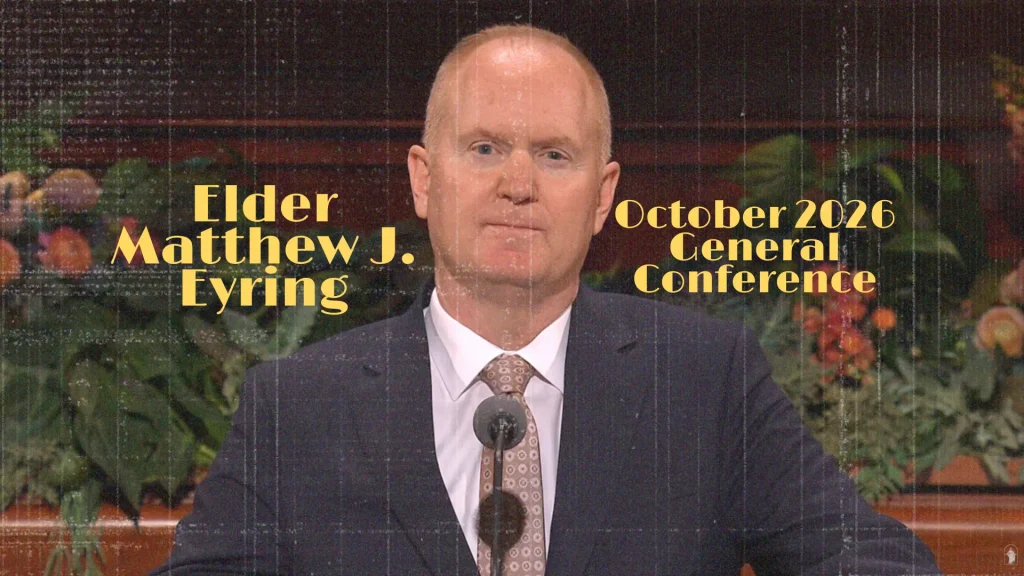
In his General Conference talk, “Comfort from the Holy Ghost,” Elder Matthew J. Eyring teaches that although we cannot solve every problem or remove every burden, we can find peace through Jesus Christ and the comforting influence of the Holy Ghost.
He begins by sharing the experience of a father who received devastating news about the unexpected death of his son. In that moment, the father’s immediate thought was simple: “I can’t fix this.”
Those words introduce a truth that every disciple of Jesus Christ must eventually confront.
Regardless of our abilities, resources, or determination, there will be experiences in mortality that exceed our capacity to manage alone.
But Elder Eyring reminds us that we were never intended to navigate these challenges without divine help.
Through the Atonement of Jesus Christ, the Savior understands our grief, pain, fear, and uncertainty. Through the Holy Ghost, He offers comfort that reaches beyond our circumstances and helps us continue forward with faith.
Elder Eyring also teaches that the Resurrection and the Savior’s victory over spiritual death provide an eternal perspective on mortal suffering.
Although some trials may last throughout our lives, the Savior has prepared a way for us to overcome the only forms of separation that could otherwise be permanent.
This message offers meaningful opportunities for Relief Society sisters to discuss grief, personal limitations, compassion, faith, the Holy Ghost, the Resurrection, eternal hope, and the Savior’s promises.
It is especially relevant for sisters who are facing challenges they cannot resolve, praying for loved ones, experiencing loss, or struggling to recognize God’s presence during difficult circumstances.
This lesson help follows Elder Eyring’s talk chronologically and divides it into 10 discussion sections, each highlighting a significant principle or change in emphasis.
Every section includes direct quotes from the talk, a doctrinal explanation, 10 Relief Society discussion questions, 5 object lesson ideas, and 10 personal sharing prompts.
Teachers can prayerfully select the material most appropriate for their class rather than attempting to cover every activity in a single lesson.
Section 1: When Life Presents Problems We Cannot Fix
The Principle
Elder Eyring begins his message with a heartbreaking experience involving a father who unexpectedly lost his young married son.
When the father received the news, his immediate thought was, “I can’t fix this.”
This statement captures a difficult reality of mortal life.
We are often taught to be independent, responsible, resilient, and capable of solving problems. These qualities can bless our lives, but they cannot eliminate every hardship.
Some experiences are beyond our ability to change.
Death, illness, the choices of others, and unexpected tragedies can leave us feeling helpless.
Elder Eyring teaches that our limitations reveal an important spiritual truth: we were never intended to rely entirely upon ourselves.
Recognizing our need for Jesus Christ is not a failure of faith or strength.
It is an opportunity to turn toward the One who possesses the power, understanding, and compassion we lack.
Direct Quotes from the Talk
“Recently a friend of mine received a call from his wife informing him that their young married son had unexpectedly passed away the night before. He told me a single thought came to his mind at that moment: ‘I can’t fix this.’”
“We are trained from a young age to solve problems, to be independent, to have perseverance and resilience.”
“But our apparent self-reliance masks a deeper reality: All of us, regardless of experience, talent, or willpower, will sooner or later encounter burdens we cannot possibly carry ourselves.”
10 Relief Society Discussion Questions
- Why do you think the father’s immediate thought was, “I can’t fix this”?
- What does this experience teach us about the limitations of self-reliance?
- Why is it sometimes difficult to accept that we cannot solve every problem?
- How can our desire to be independent influence our willingness to seek divine help?
- What is the difference between healthy self-reliance and trying to carry every burden alone?
- Why might Heavenly Father allow us to experience circumstances beyond our own abilities?
- How can recognizing our limitations strengthen our relationship with Jesus Christ?
- What can we learn from the Savior’s invitation to bring our burdens to Him?
- How can we support someone facing a problem that cannot be fixed?
- What might change in our prayers if we approached Heavenly Father with greater humility about our limitations?
5 Object Lesson Ideas
1. The Unsolvable Puzzle
Bring a puzzle with several pieces missing.
Invite sisters to consider how frustrating it would be to complete the puzzle without all the necessary pieces.
Explain that some mortal experiences cannot be resolved through our own abilities.
Discuss how faith in Jesus Christ helps us trust Him even when we cannot see the complete picture.
2. The Heavy Backpack
Fill a backpack with several books.
Ask a volunteer to hold it.
Add additional books until the weight becomes uncomfortable, without pushing anyone beyond a safe limit.
Discuss how life’s burdens can eventually exceed our personal capacity.
Connect the experience to the importance of seeking divine and practical assistance.
3. The Broken Object
Display a broken item that cannot easily be repaired.
Discuss how some experiences cannot simply be returned to their previous condition.
Explain that the Savior can provide healing and hope even when circumstances cannot be reversed in mortality.
4. The Empty Hands
Invite sisters to hold their hands open.
Discuss how accepting help requires acknowledging that we cannot always provide everything we need ourselves.
Connect this to humility and dependence on Jesus Christ.
5. The Two Columns
Write two headings on the board:
“What I Can Control” and “What I Must Entrust to God.”
Invite sisters to identify examples for each category.
Discuss how recognizing the difference can help us focus our efforts while placing our trust in Heavenly Father.
10 Personal Sharing Prompts
- Share a time when you faced a problem you could not solve.
- Describe an experience when you learned to rely more fully on Heavenly Father.
- Tell about a moment when accepting help was difficult but necessary.
- Share how your understanding of self-reliance has changed through adversity.
- Describe a time when prayer helped you accept circumstances beyond your control.
- Tell about someone who supported you during a difficult experience.
- Share an experience when you learned that faith does not mean having every answer.
- Describe a challenge that helped you recognize your need for the Savior.
- Tell about a time when you found peace without finding a solution.
- Share what the phrase “I can’t fix this” teaches you about trusting Jesus Christ.
Section 2: Mourning with Those Who Mourn and Comforting Those in Need
The Principle
Elder Eyring next shares a deeply personal experience involving a young couple who lost one of their twins shortly before birth.
He and his wife had experienced a similar loss many years earlier.
Because of their experience, they were able to offer empathy and understanding to the grieving couple.
This experience illustrates the covenant responsibility to mourn with those who mourn and comfort those who stand in need of comfort.
It also teaches that our own experiences with suffering can increase our capacity for compassion.
Although we would never wish painful experiences upon ourselves or others, the Lord can help us use what we have learned to bless those facing similar challenges.
Sometimes the most meaningful form of ministering is simply being present, listening, and allowing someone to share their grief.
Direct Quotes from the Talk
“On another occasion we had the opportunity to go to dinner with a young couple who had recently lost one of their twins right before birth. It was the couple’s first pregnancy.”
“My wife and I went through a similar experience many years ago when she was preparing to deliver twins and one of them passed away before birth.”
“As we sat at the table expressing empathy gained through our own suffering, we were grateful ‘to mourn with those that mourn … and comfort those that stand in need of comfort.’”
“We spoke together of parenthood, feelings of loss, and the path to healing and hope.”
10 Relief Society Discussion Questions
- What does Elder Eyring’s experience teach about mourning with those who mourn?
- How can our own difficult experiences help us develop greater compassion?
- Why is listening sometimes more helpful than offering advice?
- What does it mean to comfort someone when we cannot remove their pain?
- How can we avoid minimizing another person’s grief?
- Why is it important to recognize that everyone experiences grief differently?
- How can Relief Society sisters become more sensitive to those experiencing pregnancy loss, infertility, or the death of a loved one?
- What does this experience teach about the connection between suffering and Christlike empathy?
- How can we provide comfort when we have never experienced someone else’s particular challenge?
- How does mourning with others help us fulfill our baptismal covenants?
5 Object Lesson Ideas
1. The Empty Chair
Place an empty chair near the front of the room.
Explain that loss can leave an absence that others may not fully understand.
Discuss how compassionate presence can help someone feel supported without pretending the loss can be erased.
2. The Listening Ears
Display a picture of an ear.
Discuss how listening is an important form of ministering.
Invite sisters to consider how they can become better listeners.
3. The Comfort Blanket
Display a blanket.
Discuss how comfort does not necessarily remove a difficult situation but can provide warmth and reassurance.
Connect this to compassionate ministering.
4. The Two Hearts
Cut two hearts from paper.
Place them side by side.
Discuss how shared experiences can create understanding and connection.
Emphasize that empathy can also be developed through listening and sincere love.
5. The Ministering Card
Provide a card with the words:
“Listen. Love. Be Present.”
Discuss how these three actions can help us comfort someone who is grieving.
10 Personal Sharing Prompts
- Share a time when someone comforted you during a difficult experience.
- Describe an experience when listening helped you support another person.
- Tell about someone who demonstrated Christlike compassion toward you.
- Share how a personal challenge increased your empathy for others.
- Describe a time when someone’s presence meant more than their words.
- Tell about an experience when you felt prompted to reach out to someone who was grieving.
- Share a lesson you have learned about ministering to people experiencing loss.
- Describe a moment when someone helped you feel understood.
- Tell about a time when you learned that comfort does not require having all the answers.
- Share how your understanding of baptismal covenants has influenced the way you minister.
Section 3: Mortal Challenges Are Different, but Everyone Needs the Savior
The Principle
Elder Eyring broadens his message by acknowledging the many different challenges people experience throughout mortality.
Some individuals struggle to provide basic necessities for their families.
Others face physical illness, emotional difficulties, strained relationships, loneliness, or repeated struggles with personal weaknesses.
These challenges differ according to individual circumstances.
One person’s burden may look very different from another’s.
Elder Eyring teaches that mortality is designed to test our faith, but those tests do not all take the same form.
This principle invites us to develop greater compassion and avoid comparing the difficulties of others with our own experiences.
Every person needs the Savior, regardless of the specific challenges they face.
Direct Quotes from the Talk
“Our mortal journey is designed to try our faith. Our challenges will be different depending on personal circumstance and even where we live in the world.”
“I know that some of you worry about having enough food each day for you and your family.”
“All of us face eventual limitations of physical or emotional health or the health of loved ones.”
“We mourn when those close to us stray from the gospel path.”
“We can be hurt by someone we love or hurt by the pain we have caused someone we love.”
“We may feel misunderstood or deeply lonely. We might have a bad habit we’ve tried to overcome repeatedly without success.”
10 Relief Society Discussion Questions
- Why do you think Elder Eyring lists so many different kinds of challenges?
- How can recognizing the diversity of mortal experiences increase our compassion?
- Why is it unhelpful to compare our trials with someone else’s?
- How can we become more sensitive to burdens that are not immediately visible?
- What does it mean that mortality is designed to try our faith?
- How can challenges influence our relationship with Heavenly Father?
- Why might loneliness or discouragement be especially difficult burdens to recognize in others?
- How can we support loved ones who are struggling with their faith?
- What can we do when a personal weakness seems difficult to overcome?
- How can Relief Society become a place where sisters feel safe acknowledging their struggles?
5 Object Lesson Ideas
1. The Different Weights
Display several objects of different sizes and weights.
Explain that people carry different burdens.
Discuss why we should avoid assuming that one person’s challenge is easier than another’s.
2. The Hidden Backpack
Place several objects inside a closed backpack.
Ask sisters to guess what is inside.
Discuss how we cannot always see or understand the burdens others carry.
3. The Different Paths
Display pictures of several different roads.
Explain that mortal experiences vary.
Discuss how Jesus Christ understands every individual journey.
4. The Cracked Cup
Display a cup with a visible crack, without using it to hold liquid.
Discuss how imperfections and challenges are part of mortal life.
Connect this to the need for the Savior’s healing power.
5. The Compassion Cards
Prepare cards describing different challenges, such as loneliness, illness, financial stress, or family difficulties.
Invite sisters to discuss compassionate ways to respond to each situation.
10 Personal Sharing Prompts
- Share a challenge that helped you develop greater compassion.
- Describe a time when you realized someone was carrying a burden you had not noticed.
- Tell about an experience when you felt understood during a difficult season.
- Share how your faith has been strengthened through adversity.
- Describe a time when you learned not to compare your challenges with others.
- Tell about someone who demonstrated sensitivity toward your circumstances.
- Share an experience when you found strength to continue working on a personal weakness.
- Describe a moment when you felt the Savior understood your individual situation.
- Tell about a time when you were able to support someone facing a different challenge than your own.
- Share what helps you remember that every person needs the grace of Jesus Christ.
Section 4: Jesus Christ Understands Our Pain and Invites Us to Draw Near
The Principle
After acknowledging the many difficulties of mortality, Elder Eyring directs our attention to Jesus Christ.
He teaches that the Savior suffered for us and understands exactly how we feel, especially during our darkest moments.
This is one of the most comforting doctrines of the restored gospel.
Through His Atonement, Jesus Christ understands not only sin and death but also the pains, griefs, weaknesses, and struggles of mortality.
He invites us to draw near to Him and promises that He will draw near to us.
Elder Eyring also reminds us that answers may come according to the Lord’s timetable and through a variety of means.
Sometimes those answers include practical resources, inspired assistance, or help from other people.
The Savior’s comfort can be both spiritual and practical.
Direct Quotes from the Talk
“It is important to not allow our challenges to negatively impact our faith.”
“Our Savior, Jesus Christ, suffered for us. He knows exactly how we feel, especially in our darkest and most trying times.”
“As you humbly turn to the Lord and cast your burdens on Him, you have His promise: ‘Draw near unto me and I will draw near unto you.’”
“He will provide comfort; He will provide answers on His timetable as you turn to Him.”
“Answers will come by various means as guided by the Spirit, sometimes in the form of tools, resources, and help from other people.”
“The Lord has promised:
‘And I will pray the Father, and he shall give you another Comforter, that he may abide with you for ever;
‘Even the Spirit of truth; … for he dwelleth with you, and shall be in you.’”
10 Relief Society Discussion Questions
- What does it mean to you that Jesus Christ knows exactly how you feel?
- How can understanding the Atonement help us during emotional or physical suffering?
- What does it mean to cast our burdens upon the Lord?
- How can we draw nearer to the Savior during difficult circumstances?
- Why might answers to prayer come differently than we expect?
- How can the Holy Ghost guide us toward practical resources and assistance?
- What is the relationship between faith and seeking help from others?
- Why is humility important when asking Heavenly Father for comfort?
- How can we recognize the Savior’s influence when our circumstances remain unchanged?
- What does the promise of another Comforter teach about Heavenly Father’s awareness of our needs?
5 Object Lesson Ideas
1. The Burden Basket
Place a basket at the front of the room.
Invite sisters to privately write a burden on a piece of paper.
They may place it in the basket as a symbol of their desire to entrust that burden to the Savior.
Explain that turning to Christ does not necessarily remove a challenge immediately, but it invites His help.
2. The Open Door
Display a picture of an open door.
Discuss the Savior’s invitation to draw near to Him.
3. The First Aid Kit
Display a first aid kit.
Discuss how Heavenly Father may provide help through both spiritual comfort and practical resources.
4. The Compass
Display a compass.
Discuss how the Holy Ghost can guide us toward answers and assistance.
5. The Helping Hands
Display a picture of someone helping another person.
Discuss how the Savior often answers prayers through the actions of others.
10 Personal Sharing Prompts
- Share a time when you felt the Savior understood your pain.
- Describe an experience when prayer brought you closer to Heavenly Father.
- Tell about a moment when you recognized the Holy Ghost guiding you toward help.
- Share how your understanding of the Atonement has brought you comfort.
- Describe a time when an answer to prayer came through another person.
- Tell about an experience when you had to trust the Lord’s timing.
- Share a scripture that has helped you cast your burdens upon Jesus Christ.
- Describe a moment when you felt comforted despite difficult circumstances.
- Tell about a time when accepting practical help became an answer to prayer.
- Share what the Savior’s invitation to draw near means to you personally.
Section 5: The Holy Ghost Is Essential to Our Spiritual Survival
The Principle
Elder Eyring next emphasizes the importance of maintaining the constant influence of the Holy Ghost.
He refers to prophetic warnings that spiritual survival will become increasingly difficult without the Holy Ghost’s guidance and comfort.
As the world becomes more turbulent, reliable sources of lasting peace can be difficult to find.
Elder Eyring explains that without divine comfort, people may begin to lose hope.
When hope disappears, faith can weaken, and the desire to keep trying may diminish.
This creates an important connection between the Holy Ghost, hope, faith, and spiritual endurance.
The Holy Ghost does more than provide occasional reassurance.
His influence can sustain our discipleship during periods of uncertainty and discouragement.
Direct Quotes from the Talk
“We have received repeated prophetic warnings that in coming days we will not survive spiritually without the constant influence of the Holy Ghost.”
“One reason is that in a world of increasing temporal and spiritual turbulence, true sources of comfort will become more scarce.”
“Without divine comfort, we risk losing hope; and without hope, we can lose our faith and stop trying.”
“Our hearts can fail us.”
“There is hope in Jesus Christ.”
10 Relief Society Discussion Questions
- Why is the constant influence of the Holy Ghost essential to spiritual survival?
- What does Elder Eyring mean by temporal and spiritual turbulence?
- Why might reliable sources of comfort become more difficult to find?
- How does the Holy Ghost help us maintain hope?
- What is the relationship between hope and faith?
- Why can discouragement make it difficult to continue trying?
- How can we distinguish between temporary distractions and lasting spiritual comfort?
- What habits help us recognize the Holy Ghost more consistently?
- How can we invite the Spirit into our homes and relationships?
- Why is Jesus Christ the ultimate source of hope?
5 Object Lesson Ideas
1. The Phone Battery
Display a phone with a battery indicator.
Discuss how devices require regular charging to function.
Compare this to the importance of regularly seeking the influence of the Holy Ghost.
Clarify that spiritual strength is not a measurable battery level, but the comparison can help illustrate the value of consistent spiritual habits.
2. The Lighthouse
Display a picture of a lighthouse during a storm.
Discuss how the Holy Ghost provides direction and reassurance during uncertainty.
3. The Candle
Light a battery-operated candle.
Discuss how the Spirit can provide light when circumstances feel dark.
4. The Anchor
Display a small anchor or picture of one.
Discuss how hope in Jesus Christ helps us remain spiritually grounded.
5. The Spiritual Priorities List
Write several activities on the board.
Invite sisters to identify habits that help them invite the Holy Ghost.
Discuss ways to prioritize those habits during busy or difficult seasons.
10 Personal Sharing Prompts
- Share a time when the Holy Ghost helped you maintain hope.
- Describe an experience when spiritual comfort strengthened your faith.
- Tell about a habit that helps you recognize the Spirit.
- Share how prayer or scripture study has brought you peace.
- Describe a moment when you felt spiritually renewed.
- Tell about an experience when the Holy Ghost helped you continue during discouragement.
- Share a time when you recognized the difference between temporary relief and lasting peace.
- Describe how your relationship with the Holy Ghost has developed.
- Tell about someone who helped you recognize the importance of spiritual preparation.
- Share what helps you remember that there is hope in Jesus Christ.
Section 6: The Resurrection Changes Our Perspective on Death and Mortal Suffering
The Principle
After declaring that there is hope in Jesus Christ, Elder Eyring turns to the doctrine of the Resurrection.
He quotes President Dallin H. Oaks, who teaches that the reality of a universal Resurrection changes how we understand mortality.
Death is not the end of our identity or existence.
Through Jesus Christ, every person will be resurrected.
This doctrine does not eliminate the pain of losing someone we love.
However, it provides an eternal perspective that can strengthen us during grief.
The Resurrection also reminds us that the physical limitations of mortality are temporary.
Illness, disability, aging, and death do not define our eternal future.
Direct Quotes from the Talk
“There is hope in Jesus Christ.”
“President Dallin H. Oaks said recently: ‘I wonder if we fully appreciate the enormous significance of this belief in a literal, universal resurrection.”
“‘The conviction that death is not the conclusion of our identity changes the whole perspective of our mortal life.”
“‘It affects how we look on the physical challenges of mortality. It gives us the strength and perspective to endure the mortal challenges faced by each of us and by those we love.”
“‘It signifies that mortal deficiencies are only temporary!”
“‘It also gives us the courage to face our own death or that of loved ones—even deaths we might call premature.’”
10 Relief Society Discussion Questions
- How does the doctrine of the Resurrection change our understanding of death?
- Why is it significant that the Resurrection is universal?
- How can eternal perspective provide comfort during grief?
- What does it mean that death is not the conclusion of our identity?
- How does the Resurrection influence the way we view physical limitations?
- Why is it important to remember that mortal deficiencies are temporary?
- How can we strengthen our testimony of the Resurrection?
- What does the Savior’s victory over death teach about Heavenly Father’s love?
- How can we offer comfort to someone who is grieving without minimizing their pain?
- How does the Resurrection give us courage to face uncertainty?
5 Object Lesson Ideas
1. The Seed
Display a seed and a picture of a mature plant.
Discuss how the seed can symbolize hope for life beyond what is presently visible.
Explain that the Resurrection is made possible through Jesus Christ, not through a natural cycle.
2. The Empty Tomb
Display a picture of the empty tomb.
Read a scripture about the Savior’s Resurrection.
Discuss how His victory over death provides hope for every person.
3. The Timeline
Draw a timeline representing premortal life, mortality, the spirit world, and Resurrection.
Discuss how mortality is only one part of our eternal existence.
4. The Broken Clock
Display a stopped clock.
Discuss how mortal life is limited by time.
Connect this to the eternal nature of our existence.
5. The Family Photograph
Display a family photograph.
Discuss how the doctrine of the Resurrection influences our understanding of death and eternal relationships.
10 Personal Sharing Prompts
- Share how the Resurrection has strengthened your testimony of Jesus Christ.
- Describe a scripture that has brought you comfort when thinking about death.
- Tell about a time when eternal perspective helped you face a challenge.
- Share how your understanding of the Resurrection has developed.
- Describe an experience when the hope of eternal life brought you peace.
- Tell about someone whose faith in the Resurrection has inspired you.
- Share how Easter has influenced your testimony of the Savior.
- Describe a time when you felt reassured of Heavenly Father’s eternal plan.
- Tell about a gospel teaching that has helped you understand mortality.
- Share what the promise of a universal Resurrection means to you personally.
Section 7: Jesus Christ Rescues Us from Physical and Spiritual Death
The Principle
Elder Eyring continues by explaining that the Savior’s mission accomplishes something far greater than providing temporary relief from mortal challenges.
Through His Atonement and Resurrection, Jesus Christ provides a way to overcome physical death and spiritual death.
Physical death separates our spirits from our bodies.
Spiritual death involves separation from God’s presence because of sin.
Through the Resurrection, all people will overcome physical death.
Through the redeeming power of Jesus Christ, repentance, and the gospel covenant path, we can overcome spiritual separation and return to Heavenly Father.
Elder Eyring emphasizes that although the Savior comforts us during temporary suffering, He has also prepared our rescue from permanent tragedy.
This eternal perspective helps us recognize the magnitude of His sacrifice.
Direct Quotes from the Talk
“Do we truly appreciate all the Lord has done for us?”
“He spares us from the only two things that can bring us permanent misery: separation from our bodies and separation from God because of sin.”
“Even as He comforts us through temporary times of challenge and pain, He has prepared our rescue from permanent tragedy.”
“Jacob, in the Book of Mormon, taught: ‘O how great the goodness of our God, who prepareth a way for our escape from the grasp of this awful monster; yea, that monster, death and hell, which I call the death of the body, and also the death of the spirit.’”
10 Relief Society Discussion Questions
- What does Elder Eyring mean by permanent tragedy?
- How does the Savior rescue us from physical death?
- How does Jesus Christ make it possible to overcome spiritual death?
- Why is it important to understand both aspects of the Atonement?
- How does this teaching influence our perspective on temporary suffering?
- What does Jacob’s testimony reveal about the goodness of God?
- Why might we sometimes focus more on temporary problems than eternal blessings?
- How can understanding the Savior’s eternal mission strengthen our gratitude?
- What role do repentance and covenants play in returning to Heavenly Father?
- How does this doctrine deepen your understanding of Jesus Christ as our Redeemer?
5 Object Lesson Ideas
1. The Two Barriers
Place two signs on the board labeled “Physical Death” and “Spiritual Death.”
Discuss how Jesus Christ provides the way to overcome both.
2. The Bridge
Display a picture of a bridge.
Discuss how the Savior makes our return to Heavenly Father possible.
3. The Locked Door
Display a picture of a locked door and a key.
Discuss how Jesus Christ opens the way to eternal life.
4. The Scripture Comparison
Read 2 Nephi 9:10 alongside a passage about the Resurrection.
Discuss how the scriptures teach the Savior’s victory over death and hell.
5. The Eternal Perspective
Draw two circles, one small and one large.
Use the smaller circle to represent mortality and the larger circle to suggest our eternal existence.
Discuss how eternal perspective can influence present challenges.
10 Personal Sharing Prompts
- Share how the Atonement of Jesus Christ has influenced your life.
- Describe a time when repentance helped you feel closer to Heavenly Father.
- Tell about a scripture that strengthened your understanding of redemption.
- Share how the Resurrection gives you hope.
- Describe an experience when you felt gratitude for the Savior’s sacrifice.
- Tell about a moment when eternal perspective changed your priorities.
- Share how your understanding of spiritual death has developed.
- Describe a time when you felt the Savior helping you overcome sin.
- Tell about a gospel principle that has strengthened your hope in eternal life.
- Share what it means to you that Jesus Christ has prepared our rescue from permanent tragedy.
Section 8: Heavenly Father Has Prepared Blessings Beyond Our Understanding
The Principle
Elder Eyring next invites us to consider how much more we will understand about Heavenly Father’s goodness in the future.
During mortality, our perspective is limited.
We may struggle to understand why certain challenges occur or why some prayers seem unanswered.
But Elder Eyring teaches that someday we will more fully appreciate the depth of the Savior’s sacrifice and the blessings Heavenly Father has prepared.
He quotes Paul’s teaching that God’s promised blessings exceed what we can presently imagine.
This principle encourages us to trust Heavenly Father’s goodness even when we do not understand our current circumstances.
Elder Eyring also teaches that suffering which draws us closer to the Savior can prepare us for greater blessings.
This does not mean every tragedy is easily explained or that suffering is desirable.
Rather, it means that through Jesus Christ, even painful experiences can become opportunities for spiritual growth and deeper faith.
Direct Quotes from the Talk
“Someday we will more fully realize how generous and kind the Lord has been to each of us.”
“We will better understand and appreciate the depth of the Savior’s sacrifice and the reality that He and the Father are truly givers of good gifts.”
“‘Eye hath not seen, nor ear heard, neither have entered into the heart of man, the things which God hath prepared for them that love him.’”
“We will realize that all the suffering that brought us closer to the Savior was preparing us for greater blessings.”
10 Relief Society Discussion Questions
- Why might we not fully recognize Heavenly Father’s goodness during mortality?
- What does Paul’s teaching reveal about the blessings God has prepared?
- How can eternal perspective strengthen us during unanswered prayers?
- Why is it important to remember that our current understanding is limited?
- How can suffering draw us closer to Jesus Christ?
- What is the difference between trusting God and understanding every reason for our trials?
- How can we develop greater gratitude for blessings we cannot yet see?
- What does it mean that Heavenly Father and Jesus Christ are givers of good gifts?
- How can this teaching help us remain hopeful during prolonged difficulties?
- What might change if we viewed our lives through the perspective of eternity?
5 Object Lesson Ideas
1. The Wrapped Gift
Display a wrapped gift.
Explain that we cannot see everything inside until it is opened.
Discuss how Heavenly Father has prepared blessings we do not yet fully understand.
2. The Unfinished Puzzle
Display an incomplete puzzle.
Discuss how limited perspective can make it difficult to recognize the larger picture.
3. The Seed and Plant
Display a seed and a mature plant.
Discuss how growth often takes time and may not be immediately visible.
4. The Mountain View
Display two pictures of the same landscape, one taken from a valley and another from a mountaintop.
Discuss how perspective influences understanding.
5. The Gratitude Journal
Display a journal.
Discuss how recording blessings can help us recognize Heavenly Father’s goodness over time.
10 Personal Sharing Prompts
- Share a time when you recognized a blessing only after a challenge had passed.
- Describe an experience when you learned to trust Heavenly Father’s timing.
- Tell about a moment when gratitude helped change your perspective.
- Share how a difficult experience strengthened your relationship with Jesus Christ.
- Describe a time when an unexpected blessing came into your life.
- Tell about a scripture that helps you trust God’s promises.
- Share how your understanding of eternal blessings has developed.
- Describe an experience when you recognized Heavenly Father’s generosity.
- Tell about a time when you found hope despite uncertainty.
- Share what helps you remember that God has prepared blessings beyond your current understanding.
Section 9: The Holy Ghost Can Give Us Peace That Passes Understanding
The Principle
Elder Eyring returns to the experience of the young couple who had lost one of their twins.
During their earlier hospital stay, the mother had received a priesthood blessing, but the father had not.
After sharing dinner together, Elder Eyring had the opportunity to give the grieving father a blessing.
Through the Holy Ghost, the father was promised peace that would surpass his understanding.
Elder Eyring then describes the visible change in the couple’s countenances.
Their grief had not disappeared.
Their loss had not been reversed.
But they had received a measure of divine peace.
This experience illustrates one of the central truths of the talk: the Holy Ghost can bring comfort that is not dependent upon the immediate resolution of our problems.
The peace of Jesus Christ can coexist with grief, uncertainty, and unanswered questions.
Direct Quotes from the Talk
“While in the hospital following the loss of the young couple’s twin baby, the new mother received a priesthood blessing. The husband, however, did not.”
“After our dinner together, I had the opportunity to give this grieving father a priesthood blessing.”
“Through the whisperings of the Spirit, he was promised peace ‘which passeth all understanding’ during this difficult time and throughout his life.”
“As he and his wife left that evening, their countenances shone with the light of the One in whom we must all put our complete trust.”
10 Relief Society Discussion Questions
- What stands out to you about the blessing given to the grieving father?
- What does it mean to receive peace that passes understanding?
- How is spiritual peace different from the absence of problems?
- Why might the Holy Ghost provide comfort even when circumstances remain painful?
- What does this experience teach about the power of priesthood blessings?
- How can we recognize the influence of the Holy Ghost during grief?
- Why is it important to remember that comfort and sadness can exist at the same time?
- How can trusting Jesus Christ help us experience peace?
- What does the change in the couple’s countenances suggest about the influence of the Spirit?
- How can we help others seek spiritual comfort without pressuring them to feel better immediately?
5 Object Lesson Ideas
1. The Storm and the Calm
Display a picture of a stormy sea.
Discuss how the Savior can provide peace even when the storm has not ended.
2. The Battery-Operated Candle
Place a small battery-operated candle in a dimly lit area.
Discuss how spiritual comfort can provide light during dark experiences.
3. The Comfort Blanket
Display a blanket.
Discuss how comfort can surround someone without removing the source of their pain.
4. The Priesthood Blessing Scripture
Read James 5:14–15.
Discuss the role of faith and priesthood blessings in seeking divine help.
Emphasize that the Lord determines the blessings and outcomes according to His wisdom.
5. The Two Words
Write “Grief” and “Peace” on the board.
Discuss how these feelings are not necessarily opposites.
Invite sisters to consider how the Holy Ghost can provide peace while someone continues to mourn.
10 Personal Sharing Prompts
- Share a time when you experienced peace during difficult circumstances.
- Describe an experience when a priesthood blessing strengthened your faith.
- Tell about a moment when the Holy Ghost comforted you.
- Share how your understanding of spiritual peace has changed.
- Describe a time when you felt the Savior’s presence during grief.
- Tell about someone who helped you feel peace during uncertainty.
- Share an experience when prayer brought reassurance.
- Describe a moment when you recognized the difference between peace and happiness.
- Tell about a scripture that has helped you feel comforted.
- Share what the phrase “peace which passeth all understanding” means to you.
Section 10: Prioritizing the Holy Ghost and Trusting the Savior’s Promise
The Principle
Elder Eyring concludes his message by returning to the central promise of his talk.
The Savior’s peace is made available through the comforting power of the Holy Ghost.
This comfort helps us face inevitable hardships, including experiences we cannot resolve through our own abilities.
Because of the Holy Ghost’s essential role in our spiritual lives, Elder Eyring teaches that seeking His constant companionship should be one of our highest priorities.
He then concludes with the Savior’s promise that He will not leave us comfortless.
This promise does not mean disciples will never experience grief, loneliness, or uncertainty.
It means that Jesus Christ has provided divine help and invites us to receive it.
Through faith, repentance, covenants, and efforts to live worthy of the Spirit’s companionship, we can seek the peace and guidance Heavenly Father offers.
Direct Quotes from the Talk
“The Savior’s peace is made manifest through the comforting power of the Holy Ghost.”
“That comfort will help us when we go through the inevitable hardships of life and times when we can’t fix things on our own.”
“Living worthy of the constant companionship of the Holy Ghost should be one of our highest priorities.”
“I bear my witness that Jesus Christ lives.”
“May we forever place our faith and hope in Him and believe and find comfort in His promise: ‘I will not leave you comfortless: I will come to you.’”
10 Relief Society Discussion Questions
- Why should the constant companionship of the Holy Ghost be one of our highest priorities?
- What does the Savior’s promise not to leave us comfortless mean to you?
- How can we invite the Holy Ghost more consistently into our lives?
- What daily habits help us recognize the Spirit’s influence?
- How can the sacrament strengthen our relationship with the Holy Ghost?
- Why is it important to seek spiritual comfort before difficult circumstances arise?
- How can repentance help us become more receptive to the Holy Ghost?
- What does this talk teach about the relationship between faith, hope, and comfort?
- How can we help our families recognize the influence of the Holy Ghost?
- What is one change you feel inspired to make after studying Elder Eyring’s message?
5 Object Lesson Ideas
1. The Daily Priorities Jar
Fill a jar with objects representing daily responsibilities.
Discuss how spiritual priorities can become crowded out by other activities.
Invite sisters to consider how they can intentionally make room for prayer, scripture study, and quiet reflection.
2. The Compass
Display a compass.
Discuss how the Holy Ghost provides direction and guidance.
3. The Open Invitation
Display a card reading:
“I will not leave you comfortless.”
Discuss what this promise reveals about the Savior’s love.
4. The Spiritual Habits Checklist
Provide a simple list of habits that invite the Spirit.
Examples might include prayer, scripture study, sacrament worship, repentance, and service.
Invite sisters to privately identify one habit they want to strengthen.
5. The Anchor
Display a small anchor.
Discuss how faith in Jesus Christ and the influence of the Holy Ghost help us remain spiritually grounded.
10 Personal Sharing Prompts
- Share a time when the Holy Ghost helped you through a difficult experience.
- Describe a spiritual habit that has strengthened your relationship with Heavenly Father.
- Tell about a moment when you felt the Savior’s promise of comfort fulfilled.
- Share how your understanding of the Holy Ghost has changed.
- Describe an experience when repentance helped you feel closer to the Spirit.
- Tell about a time when the sacrament brought you peace.
- Share how you have learned to recognize spiritual promptings.
- Describe a moment when the Holy Ghost helped you make an important decision.
- Tell about someone who taught you the importance of seeking the Spirit.
- Share what you hope to remember from Elder Eyring’s message during future challenges.
Conclusion: We May Not Be Able to Fix Everything, but We Can Find Comfort in Jesus Christ
Elder Matthew J. Eyring’s message, “Comfort from the Holy Ghost,” reminds us that mortal life will inevitably include experiences beyond our ability to solve or control.
No matter how capable, prepared, or faithful we may be, there will be moments when our own strength is insufficient.
We may face grief, illness, family challenges, uncertainty, or personal struggles that do not have immediate solutions.
Like the father who unexpectedly lost his son, we may find ourselves thinking, “I can’t fix this.”
But Elder Eyring teaches that we do not have to face these experiences alone.
Jesus Christ understands our pain.
Through His Atonement, He has experienced the full depth of mortal suffering and offers compassion that no one else can perfectly provide.
Through the Holy Ghost, He makes His peace available to us.
Sometimes that comfort comes through prayer, scripture study, or priesthood blessings.
Sometimes it comes through inspired resources, practical assistance, or the compassion of another person.
And sometimes it comes as a quiet reassurance that Heavenly Father knows us and has not forgotten us.
Elder Eyring also reminds us that the Savior’s mission reaches far beyond the temporary challenges of mortality.
Through His Resurrection and redeeming sacrifice, Jesus Christ has prepared the way for us to overcome physical and spiritual death.
Although we may not understand every trial in this life, we can trust that Heavenly Father has prepared eternal blessings beyond our present understanding.
Perhaps the most important message of this talk is that peace does not require every problem to be solved.
Through Jesus Christ and the comforting power of the Holy Ghost, we can experience reassurance, hope, and spiritual strength even when our circumstances remain difficult.
Using This Lesson Help in Relief Society
This General Conference talk provides an opportunity for Relief Society sisters to strengthen their understanding of the Holy Ghost’s role as Comforter.
Teachers can use the discussion questions to explore the relationship between grief, faith, hope, the Atonement, the Resurrection, and the Savior’s promises.
The object lessons can help illustrate how spiritual comfort differs from simply removing a problem.
The personal sharing prompts encourage sisters to recognize experiences when Heavenly Father has provided peace, guidance, and reassurance.
Because this talk addresses sensitive experiences such as death, pregnancy loss, illness, and family difficulties, teachers should approach the lesson with compassion.
Some sisters may be actively grieving or carrying burdens they are not ready to discuss.
The goal should not be to encourage everyone to share painful experiences, but to create an environment where sisters feel loved, respected, and spiritually supported.
Teachers might also remind the class that spiritual comfort can coexist with grief and that seeking professional or practical help when needed is compatible with faith.
A Final Invitation for Your Relief Society Lesson
Consider concluding the lesson by inviting sisters to reflect on three questions:
1. What challenge am I currently facing that I need to more fully entrust to Jesus Christ?
2. How have I experienced the comforting influence of the Holy Ghost during difficult circumstances?
3. What can I do this week to make the constant companionship of the Holy Ghost a greater priority in my life?
Allow a few moments for quiet reflection.
You might invite sisters to write down a personal impression or a commitment they want to act upon.
Then conclude with Elder Eyring’s testimony:
“May we forever place our faith and hope in Him and believe and find comfort in His promise: ‘I will not leave you comfortless: I will come to you.’”
This promise is at the heart of the gospel of Jesus Christ.
We may not always be able to change our circumstances.
We may not receive every answer when we want it.
And we may experience moments when our own abilities are simply not enough.
But through the Holy Ghost, the Savior can provide peace that reaches beyond our understanding.
We may not be able to fix everything, but we can trust the One who understands everything. And through His Spirit, we can find comfort, strength, and hope as we continue our journey back to Heavenly Father.


Leave a Reply