Introduction: Finding Courage Through Faith in Jesus Christ
What does it mean to have spiritual courage?
When we think about courage, we might imagine someone facing a dangerous situation, standing up against opposition, or accomplishing something that once seemed impossible.
But spiritual courage often looks very different.
Sometimes courage means getting out of bed and facing another difficult day.
Sometimes it means choosing to keep a commandment when the world encourages us to do otherwise.
It may mean accepting a calling when we feel inadequate, attending church when life feels overwhelming, forgiving someone who has hurt us, or trusting Heavenly Father when our circumstances seem uncertain.
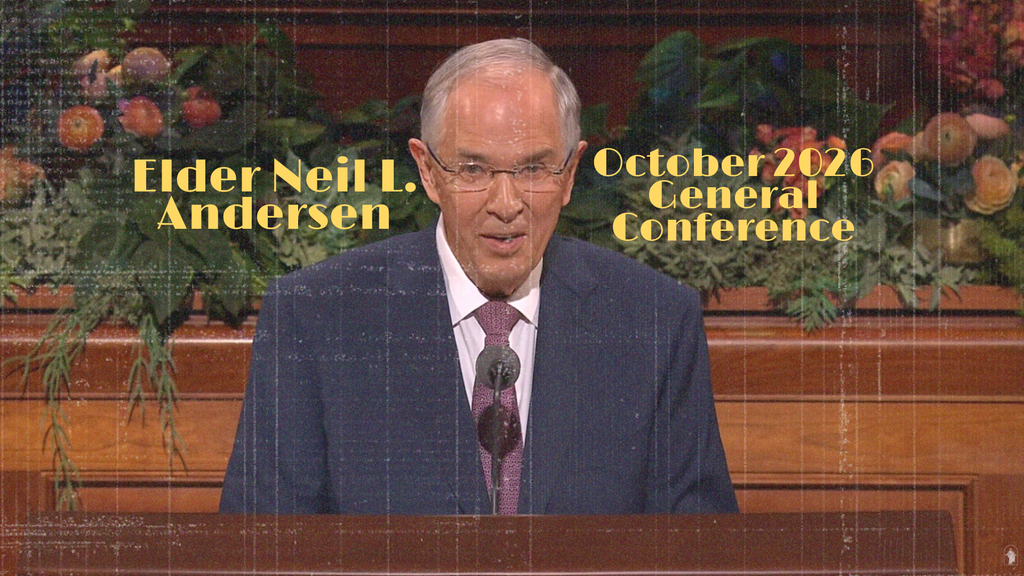
In his General Conference talk, “Courage Born of Our Faith in Jesus Christ,” Elder Neil L. Andersen teaches that spiritual courage and faith in Jesus Christ are deeply connected.
He explains that as we exercise faith in the Savior, we receive courage to make righteous choices. And as we act courageously, our faith grows stronger.
This creates a powerful pattern of spiritual growth.
Faith inspires courage.
Courage leads to righteous action.
Righteous action strengthens faith.
Throughout his message, Elder Andersen shares examples of disciples who demonstrated courage in different circumstances.
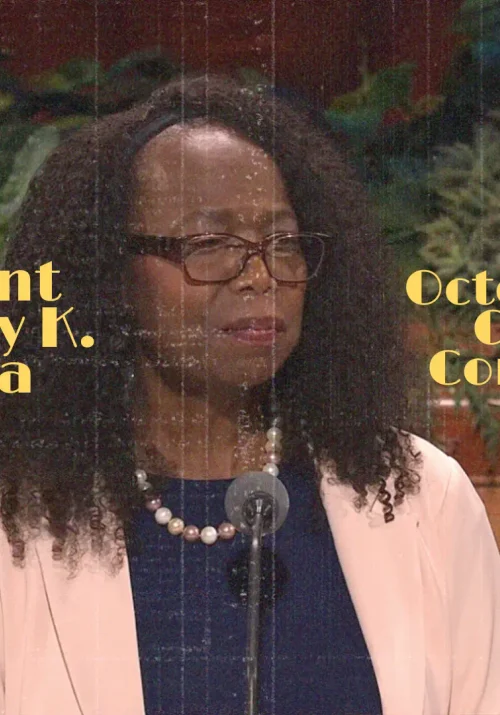
He tells of President Rosemary Chibota’s conversion as a teenager, Moroni’s determination to remain faithful despite persecution, President Dallin H. Oaks accepting a demanding Church calling, families who remained faithful after devastating wildfires, and a woman who trusted Jesus Christ despite experiencing profound personal betrayal.
Each example demonstrates that spiritual courage does not require a life free from fear, uncertainty, or hardship.
Instead, courage grows as we choose to trust Jesus Christ while facing those experiences.
Elder Andersen also teaches that spiritual courage is strengthened through prayer, sacrament covenants, obedience, ministering, temple worship, repentance, and following the Holy Ghost.
His message offers meaningful opportunities for Relief Society sisters to discuss the challenges of discipleship, the relationship between faith and courage, and the ways Jesus Christ strengthens us as we choose to follow Him.
How to Use This Relief Society Lesson Help
This lesson help follows Elder Andersen’s talk in chronological order, separating his message into 12 discussion sections based on the major principles and changes in emphasis throughout the talk.
Each section includes:
- Direct quotations from Elder Andersen’s talk
- An explanation of the doctrine or principle being taught
- 10 engaging Relief Society discussion questions
- 5 object lesson ideas with teaching applications
- 10 personal sharing prompts to encourage meaningful experiences and testimony sharing
With 120 discussion questions, 60 object lessons, and 120 personal sharing prompts, this resource is intended to provide teachers with a variety of options for preparing their lessons.
You do not need to use every question or activity.
Instead, prayerfully select the material that will best meet the needs of the sisters in your Relief Society.
The purpose is to help sisters recognize that spiritual courage is available to them through Jesus Christ, regardless of their circumstances, abilities, or challenges.
Section 1: Faith and Courage Are Hallmarks of Disciples of Jesus Christ
Understanding the Principle
Elder Andersen begins by sharing the conversion story of President Rosemary Chibota.
At just 17 years old, she discovered a pamphlet about Joseph Smith that missionaries had left at her home in Zimbabwe.
After reading it, she received a spiritual witness that Joseph Smith had seen Heavenly Father and Jesus Christ.
She chose to act upon that witness by learning more about the restored gospel and being baptized.
Her decision required faith and courage.
As a young convert, she became an example to her parents, who eventually joined the Church 19 years later.
This story demonstrates that spiritual courage often begins with a personal conviction of truth.
It also teaches that our courageous choices can influence others, sometimes in ways we do not immediately recognize.
Elder Andersen then centers his message on Jesus Christ and His divine mission.
The Savior’s perfect life, teachings, Atonement, Crucifixion, and Resurrection provide the foundation for our faith.
Because of Him, we can repent, receive forgiveness, overcome death through resurrection, and prepare for eternal life.
Our courage as disciples is not simply confidence in ourselves.
It is confidence in Jesus Christ.
Direct Quotes from the Talk
“We welcome President Rosemary Chibota to the general leadership of the Church. Her story is an example of courage born of faith in Jesus Christ.”
“Seventeen-year-old Rosemary found a Joseph Smith pamphlet missionaries had left at her home in Zimbabwe. She read it and immediately received a spiritual witness that it was true; Joseph had seen God the Father and His Son, Jesus Christ. She was taught and baptized and became an example to her parents, who joined the Church 19 years later.”
“Faith and courage are hallmarks of disciples of Jesus Christ.”
“Jesus Christ is the divine Son of God. He came to earth in the humblest of circumstances. He lived a perfect life. He taught us how to live our mortal lives and how to prepare for our eternal lives.”
“Because of His incomparable love for each of us, He gave a gift only He could give, suffering for our sins, allowing us to repent and be forgiven.”
“He was crucified on the cross and, in the majesty of our Heavenly Father’s plan, rose the third day. Because He rose from the tomb, we too will be resurrected.”
10 Relief Society Discussion Questions
- Why do you think Elder Andersen begins his message with President Chibota’s conversion story?
- What spiritual courage might be required for a teenager to join the Church?
- How does receiving a personal testimony give us courage to act?
- What does President Chibota’s experience teach about influencing family members through our example?
- Why is it significant that her parents joined the Church 19 years later?
- What does it mean that faith and courage are hallmarks of disciples of Jesus Christ?
- How does understanding the Savior’s Atonement strengthen our courage?
- Why is faith in Jesus Christ different from simply having confidence in ourselves?
- How can remembering the Resurrection help us face difficult circumstances?
- What qualities of Jesus Christ inspire you to become a more courageous disciple?
5 Object Lesson Ideas
1. The First Step
Materials: A stepping stone or piece of paper marked “Faith.”
Place the stone at the front of the room.
Discuss how President Chibota’s decision to investigate the gospel began with a spiritual witness.
Invite sisters to consider how one courageous step can lead to other blessings.
Teaching application: Spiritual courage often begins with acting upon the faith we already possess.
2. The Small Seed
Materials: Seed and picture of a mature tree.
Show the seed and discuss how something small can eventually grow into something significant.
Connect the illustration to President Chibota’s conversion and the eventual conversion of her parents.
Teaching application: Small acts of faith can have lasting influence, even when results take years.
3. The Foundation Stone
Materials: Large stone.
Place the stone on a table and explain that it represents Jesus Christ.
Discuss why courage built upon faith in Him provides a more dependable foundation than confidence based solely on circumstances.
Teaching application: Jesus Christ is the foundation of spiritual courage.
4. The Domino Effect
Materials: Dominoes.
Arrange dominoes and gently push the first one.
Discuss how one action can influence others.
Clarify that people retain their agency and that righteous examples do not guarantee particular outcomes.
Teaching application: Our courageous choices can create opportunities for others to learn about the gospel.
5. The Gift Box
Materials: Wrapped gift box.
Discuss the gifts made possible through Jesus Christ’s Atonement and Resurrection.
Invite sisters to identify blessings that give them courage.
Teaching application: Faith in the Savior’s redeeming power strengthens our willingness to follow Him.
10 Personal Sharing Prompts
- Share a time when you had to exercise courage to act upon your testimony.
- Describe someone whose faithful example influenced your spiritual journey.
- Tell about an experience when a small act of faith led to unexpected blessings.
- Share how your testimony of Jesus Christ has grown over time.
- Describe a moment when you felt prompted to make a difficult but righteous decision.
- Tell about someone who demonstrated courage in joining or returning to the Church.
- Share how the Savior’s Atonement gives you hope.
- Describe an experience when your faith influenced someone else.
- Tell about a time when you had to wait patiently to see the results of a righteous choice.
- Share what being a courageous disciple of Jesus Christ means to you.
Section 2: Spiritual Courage Is Choosing the Right Despite Obstacles, Doubt, and Fear
Understanding the Principle
After establishing the connection between faith and courage, Elder Andersen defines spiritual courage.
He teaches that discipleship is not a casual pursuit.
Following Jesus Christ requires commitment, obedience, trust, and a willingness to overcome opposition.
Spiritual courage does not mean that we never experience fear or doubt.
Instead, it means choosing to follow the Savior even when those feelings are present.
Elder Andersen uses Moroni as an example.
Moroni experienced profound loneliness and loss.
His family had been killed, his people had been destroyed, and his enemies threatened anyone who refused to deny Jesus Christ.
Yet Moroni courageously declared that he would not deny the Savior.
His circumstances did not remove his faith.
This example reminds us that spiritual courage is not measured by how easy our lives are.
It is revealed in the choices we make when discipleship becomes difficult.
Direct Quotes from the Talk
“Being His true disciple, overcoming the world, keeping His commandments, and trusting in Him and His promises are not casual pursuits.”
“Spiritual courage is the triumph over obstacles, doubt, and fear in choosing the right.”
“It has always taken spiritual courage, born of faith in Jesus Christ, to be His disciple.”
“‘I am alone,’ Moroni wrote. ‘My father [and all my family have] been slain in battle, … and I have not friends nor whither to go.’”
“Even as his adversaries were putting to death everyone who would not deny the Christ, in his courage he declared, ‘And I, Moroni, will not deny the Christ.’”
“Our world is different than Moroni’s day, but discipleship always requires courage.”
10 Relief Society Discussion Questions
- How does Elder Andersen’s definition of spiritual courage differ from the world’s definition of courage?
- Why is spiritual courage necessary for discipleship?
- What does Moroni’s example teach about remaining faithful during loneliness?
- How can we choose the right even when we experience fear?
- What obstacles commonly challenge our commitment to Jesus Christ?
- Why might courage be necessary even when no one else sees our choices?
- How can we strengthen our faith before difficult situations arise?
- What does it mean to overcome the world in everyday life?
- How can we remain faithful when those around us make different choices?
- What can we learn from Moroni’s declaration, “I will not deny the Christ”?
5 Object Lesson Ideas
1. The Obstacle Course
Materials: Several small objects.
Arrange objects to represent obstacles along a path.
Place a picture of Jesus Christ at the end.
Discuss how following Him requires navigating challenges.
Teaching application: Spiritual courage helps us continue choosing the Savior despite obstacles.
2. The Shield of Faith
Materials: Paper shield.
Write “Faith in Jesus Christ” on the shield.
Invite sisters to identify fears or doubts that challenge discipleship.
Teaching application: Faith in Christ can help us respond courageously to opposition.
3. The Courage Stone
Materials: Small stones.
Invite sisters to hold a stone while reflecting on Moroni’s declaration.
Discuss what it means to remain spiritually steadfast.
Teaching application: Courage involves remaining committed to Christ even during difficult circumstances.
4. The Crossroads
Materials: Two arrows pointing in different directions.
Label one arrow “Easy Choice” and the other “Right Choice.”
Discuss situations where the right choice may require sacrifice.
Teaching application: Spiritual courage helps us prioritize righteousness over convenience.
5. The Candle
Materials: Battery-operated candle.
Dim the lights if appropriate.
Discuss how a small light remains visible in darkness.
Teaching application: Faithful discipleship can remain meaningful even when surrounded by opposition.
10 Personal Sharing Prompts
- Share a time when choosing the right required courage.
- Describe an experience when you felt spiritually alone.
- Tell about someone whose faith remained strong during difficult circumstances.
- Share how you have learned to act despite fear.
- Describe a time when you had to stand by your beliefs.
- Tell about a moment when the scriptures strengthened your courage.
- Share an experience when you felt opposition to a righteous decision.
- Describe how Moroni’s example influences your understanding of discipleship.
- Tell about a time when you chose faith over uncertainty.
- Share what helps you remain committed to Jesus Christ.
Section 3: Finding Spiritual Stillness in a World of Constant Distraction
Understanding the Principle
Elder Andersen next addresses the challenges of modern discipleship.
Although we do not face the same circumstances as Moroni, we live in a world filled with distractions, misinformation, and competing influences.
Technology allows us to receive information constantly.
But not every message strengthens our faith or helps us recognize truth.
Elder Andersen reflects on his childhood experiences working on a dairy farm.
He recalls spending entire days guiding cows to a meadow without phones, music, or electronic distractions.
Those quiet hours provided opportunities to think and reflect.
He then teaches that although the world has changed, our spirits still need stillness.
Spiritual stillness creates opportunities to pray, ponder, study the scriptures, and recognize the influence of the Holy Ghost.
Direct Quotes from the Talk
“The doubts, distractions, and deceptions of our day can be described in the words of the Apostle Paul: ‘We wrestle not against flesh and blood, but against principalities, against powers, against the rulers of the darkness of this world.’”
“Our world is in constant commotion.”
“Our phone seems almost attached to our hand, bringing a flood of information, misinformation, and now artificial information.”
“I grew up on a small dairy farm. For a season our three dozen cows were housed near a small canyon.”
“Nearly every summer morning after milking, I would saddle my horse and guide the cows into a high meadow to graze, with no cell phone, no earbuds, no music, no texting.”
“All day long, just me and the cows, alone with my thoughts.”
“Times have changed, but our spirits have not changed. We need stillness to nourish our faith in Christ.”
10 Relief Society Discussion Questions
- Why do you think Elder Andersen connects spiritual courage with the need for stillness?
- How can constant information affect our ability to recognize the Holy Ghost?
- What is the difference between physical quiet and spiritual stillness?
- Why might our spirits need time away from distractions?
- How can we create moments of stillness during busy seasons of life?
- What are some ways technology can strengthen faith rather than distract from it?
- How can we recognize when information is weakening our spiritual confidence?
- Why is pondering an important part of scripture study?
- How can stillness help us face difficult decisions with courage?
- What changes could we make to create more opportunities for spiritual reflection?
5 Object Lesson Ideas
1. The Jar of Cloudy Water
Materials: Clear jar, water, and a small amount of dirt.
Stir the dirt into the water.
Allow the jar to sit undisturbed while discussing stillness.
Observe how some particles begin to settle.
Teaching application: Quiet reflection can help us recognize thoughts and impressions that become harder to notice amid constant distraction.
2. The Phone Notification
Materials: Phone.
Demonstrate several notification sounds.
Discuss how interruptions can affect concentration.
Teaching application: Creating intentional moments without distractions can support prayer and pondering.
3. The Radio Static
Materials: Radio or audio example.
Compare a clear signal with static.
Discuss the importance of reducing competing influences.
Teaching application: Spiritual attentiveness requires effort and intentionality.
4. The Empty Calendar Space
Materials: Weekly calendar.
Show a busy schedule.
Identify a small space for scripture study, prayer, or quiet reflection.
Teaching application: Spiritual stillness can be incorporated into everyday routines.
5. The Candle and the Wind
Materials: Battery-operated candle and small fan.
Use the fan to illustrate distraction around the candle.
Discuss how protecting time for spiritual reflection can help us focus.
Teaching application: We can create conditions that make it easier to concentrate on Jesus Christ.
10 Personal Sharing Prompts
- Share a time when quiet reflection helped you receive spiritual understanding.
- Describe how you create moments of stillness in your daily life.
- Tell about an experience when reducing distractions strengthened your faith.
- Share a time when you received an impression while pondering.
- Describe how technology has influenced your spiritual habits.
- Tell about a place where you feel especially close to Heavenly Father.
- Share an experience when scripture study brought clarity.
- Describe a time when prayer helped calm your thoughts.
- Tell about a change you made to improve your spiritual focus.
- Share what spiritual stillness means to you.
Section 4: Faith and Courage Strengthen Each Other
Understanding the Principle
Elder Andersen then introduces one of the central teachings of his message.
Faith in Jesus Christ gives us courage to choose the right.
And when we act with courage, our faith becomes stronger.
This relationship is important because spiritual courage is not something we must develop entirely before taking action.
Sometimes we begin with only enough faith to make one righteous choice.
As we act, we experience the blessings of discipleship and develop greater trust in the Savior.
This growing faith can then provide courage for future decisions.
The process continues throughout our lives.
Direct Quotes from the Talk
“As we choose faith in Christ, He blesses us with the courage, sometimes in very difficult situations, to choose the right, and as we manifest our courage to choose the right, our faith in Christ strengthens.”
“We rejoice in the faith in Jesus Christ and the spiritual courage we see in you, our members of the Church across the world.”
10 Relief Society Discussion Questions
- How do faith and courage strengthen one another?
- Why might courage increase after we make a righteous decision?
- How can acting in faith help us overcome uncertainty?
- What does this principle teach about spiritual growth?
- Why is it important to act even when our faith feels small?
- How can we recognize the Savior’s help after making a courageous choice?
- What role does obedience play in strengthening faith?
- How can remembering previous experiences help us face new challenges?
- Why might the Lord allow us to grow through difficult decisions?
- What is one area of your life where acting courageously could strengthen your faith?
5 Object Lesson Ideas
1. The Faith and Courage Circle
Materials: Paper and marker.
Draw a circle with arrows connecting “Faith,” “Courage,” “Righteous Action,” and “Greater Faith.”
Discuss how each step supports the next.
Teaching application: Faith and courage develop together through discipleship.
2. The Staircase
Materials: Building blocks.
Build a small staircase.
Discuss how spiritual growth often happens one step at a time.
Teaching application: Each righteous decision can prepare us for future challenges.
3. The Exercise Weight
Materials: Small hand weight.
Discuss how muscles grow through repeated effort.
Explain that faith is strengthened through spiritual practice and reliance on Christ, not merely through personal effort.
Teaching application: Repeated acts of discipleship can strengthen spiritual confidence.
4. The Growing Plant
Materials: Small plant.
Discuss how consistent care supports growth.
Teaching application: Faith grows as we nourish it through righteous choices.
5. The Bridge
Materials: Picture of a bridge.
Discuss how crossing a bridge requires trusting that it will support us.
Connect the illustration to acting upon faith in Jesus Christ.
Teaching application: Trust grows as we choose to rely upon the Savior.
10 Personal Sharing Prompts
- Share a time when acting in faith strengthened your testimony.
- Describe a decision that required courage but brought spiritual growth.
- Tell about a moment when you felt the Savior helping you choose the right.
- Share how your confidence in Jesus Christ has developed.
- Describe an experience when obedience brought greater faith.
- Tell about a time when you acted despite uncertainty.
- Share how a previous spiritual experience helped you face a new challenge.
- Describe someone whose courage has strengthened your faith.
- Tell about a small righteous choice that had lasting influence.
- Share what helps you continue acting in faith.
Section 5: Prayer Gives Us Courage to Win the Battles Within Our Souls
Understanding the Principle
Elder Andersen next teaches that private prayer strengthens spiritual courage.
He explains that faith in Jesus Christ gives us the desire to kneel before Heavenly Father and communicate with Him.
During these quiet moments, we can receive strength to choose the right.
He then shares a statement from President David O. McKay about the greatest battle of life being fought within the soul.
Many of our most important spiritual battles are unseen.
They may involve temptation, discouragement, fear, resentment, doubt, or the struggle to remain faithful.
Others may not know what we are experiencing.
But Heavenly Father does.
Through prayer and faith in Jesus Christ, we can receive divine help to face these personal battles.
Direct Quotes from the Talk
“It is our faith in Jesus Christ that gives us the desire to humbly kneel alone and pray to our Heavenly Father.”
“In those quiet moments when we speak with our Heavenly Father privately, independently, we are given the increased courage to choose the right.”
“As a young man, I heard President David O. McKay say, ‘The greatest battle of life is fought within the silent chambers of your own soul.’”
“As we courageously win the battles of the soul, our faith in our Savior multiplies.”
10 Relief Society Discussion Questions
- Why does private prayer strengthen spiritual courage?
- What do you think President McKay meant by the greatest battle being fought within the soul?
- Why are some of our most difficult spiritual challenges invisible to others?
- How can prayer help us respond to temptation or discouragement?
- What is the relationship between humility and spiritual courage?
- Why is it important to seek Heavenly Father’s help before making difficult decisions?
- How can we recognize answers to prayers for courage?
- What can we do when answers to prayer do not come immediately?
- How can consistent prayer strengthen our trust in Jesus Christ?
- What does it mean to win a spiritual battle through faith in the Savior?
5 Object Lesson Ideas
1. The Quiet Room
Materials: None.
Invite sisters to sit quietly for a brief moment.
Discuss how personal prayer creates opportunities to communicate with Heavenly Father.
Teaching application: Spiritual courage is strengthened through personal communion with God.
2. The Closed Door
Materials: Picture of a closed door.
Discuss the importance of private prayer.
Teaching application: Some of our most meaningful spiritual growth occurs in moments unseen by others.
3. The Written Prayer
Materials: Paper and pens.
Invite sisters to privately write a prayer asking for courage in a specific area.
Teaching application: Honest prayer helps us acknowledge our need for divine strength.
4. The Shield
Materials: Paper shield.
Write “Prayer” on the shield.
Discuss how prayer can strengthen us against temptation.
Teaching application: Prayer helps us rely upon Heavenly Father during spiritual challenges.
5. The Anchor
Materials: Small anchor or picture.
Discuss how an anchor provides stability.
Teaching application: Consistent prayer helps us remain spiritually grounded.
10 Personal Sharing Prompts
- Share a time when prayer gave you courage.
- Describe an experience when you faced a private spiritual struggle.
- Tell about a moment when you felt Heavenly Father’s reassurance.
- Share how your prayers have changed over time.
- Describe a time when prayer helped you make a difficult decision.
- Tell about an experience when you felt strengthened to resist temptation.
- Share how private worship has influenced your testimony.
- Describe a moment when you learned to trust Heavenly Father’s timing.
- Tell about someone whose example of prayer has influenced you.
- Share what helps you make prayer a meaningful part of your life.
Section 6: Sacrament Covenants Strengthen Our Courage to Follow Jesus Christ
Understanding the Principle
Elder Andersen next connects spiritual courage with the sacrament.
Each week, we have the opportunity to renew our commitment to take upon ourselves the name of Jesus Christ, remember Him, and keep His commandments.
These covenant promises invite us to live as His disciples throughout the week.
Covenant keeping often requires courage.
We may need to make difficult choices, resist temptation, forgive others, or remain faithful when our circumstances are challenging.
As we honor our covenants, Elder Andersen teaches that the Lord blesses us with increased faith.
The sacrament is therefore more than a weekly routine.
It is a sacred opportunity to remember Jesus Christ and renew our commitment to follow Him.
Direct Quotes from the Talk
“Each week we prayerfully receive the sacrament and witness before God, and in the presence of others, that we ‘are willing to take upon [ourselves] the name of [Jesus Christ], and always remember him and keep his commandments.’”
“Then, with courage, we are true to our covenants, and in turn, the Lord blesses us with increased faith.”
10 Relief Society Discussion Questions
- How does partaking of the sacrament strengthen spiritual courage?
- What does it mean to willingly take upon ourselves the name of Jesus Christ?
- How can remembering the Savior influence our decisions throughout the week?
- Why does covenant keeping sometimes require courage?
- How does honoring our covenants strengthen faith?
- What can we do to make the sacrament more meaningful?
- How can the sacrament help us after a difficult week?
- What does it mean to remain true to our covenants during adversity?
- How does the sacrament remind us of the Savior’s grace?
- How might our lives change if we approached every week with a renewed commitment to Jesus Christ?
5 Object Lesson Ideas
1. The Covenant Reminder Card
Materials: Card with the sacrament promises.
Display the promises and discuss their meaning.
Teaching application: Remembering our covenants can guide our daily choices.
2. The Weekly Calendar
Materials: Calendar.
Mark Sunday and discuss how the sacrament can influence the rest of the week.
Teaching application: Covenant discipleship extends beyond Sunday worship.
3. The Compass
Materials: Compass.
Discuss how a compass helps travelers maintain direction.
Teaching application: Our covenants help orient our lives toward Jesus Christ.
4. The Renewal Illustration
Materials: Rechargeable flashlight.
Discuss how a flashlight needs a source of power.
Clarify that the sacrament is not a mechanical recharge but a sacred ordinance through which we renew covenant commitment and seek the Spirit.
Teaching application: Weekly worship can strengthen our faith and spiritual resolve.
5. The Name Card
Materials: Card reading “Jesus Christ.”
Discuss what it means to take His name upon ourselves.
Teaching application: Our covenant identity should influence how we live.
10 Personal Sharing Prompts
- Share a time when the sacrament strengthened your faith.
- Describe how you prepare spiritually for the sacrament.
- Tell about an experience when remembering your covenants helped you make a decision.
- Share what taking upon yourself the name of Jesus Christ means to you.
- Describe a moment when sacrament worship brought peace.
- Tell about a time when keeping a covenant required courage.
- Share how your appreciation for the sacrament has grown.
- Describe an experience when the Holy Ghost taught you during sacrament meeting.
- Tell about someone whose covenant faithfulness has influenced you.
- Share how the sacrament helps you remain focused on Jesus Christ.
Section 7: Faith Gives Us Courage to Accept Callings Even When We Feel Inadequate
Understanding the Principle
Elder Andersen next teaches that faith in Jesus Christ gives us courage to accept Church callings.
He shares an experience from President Dallin H. Oaks’s life.
As a young attorney, President Oaks was working demanding hours at a prestigious law firm.
Despite his professional responsibilities, he was called to serve as a counselor in the stake mission presidency.
The calling required several evenings each week.
President Oaks accepted the calling through faith.
He later described that decision as an important moment in his life.
His experience illustrates how accepting opportunities to serve can strengthen both courage and faith.
It also reminds us that the Lord can help us fulfill responsibilities that initially feel beyond our abilities.
This principle should not be interpreted to mean that every calling must be accepted regardless of health, family responsibilities, or personal circumstances. Faithful disciples can honestly counsel with leaders about their capacity and seek revelation concerning how to serve.
Direct Quotes from the Talk
“It is our faith in Jesus Christ that gives us the courage to accept a calling from our priesthood leaders even when we feel inadequate or without sufficient time to accept the responsibility.”
“As a young attorney, President Dallin H. Oaks was energetically working in a prestigious law firm, including working evenings and Saturdays.”
“His stake president called him to be a counselor in the stake mission presidency, necessitating at least three to four evenings per week.”
“President Oaks reflected, ‘Gathering all my faith, I accepted the call.’”
“President Oaks described this as a very important decision in his life.”
“His faith strengthened his courage, and his decision brought increasing faith.”
10 Relief Society Discussion Questions
- Why might accepting a Church calling require courage?
- What stands out to you about President Oaks’s experience?
- How can feelings of inadequacy influence our willingness to serve?
- What does it mean to gather all our faith before making a decision?
- How can the Lord strengthen us in responsibilities that feel overwhelming?
- Why is it important to recognize that faithful service can look different during different seasons of life?
- How can we seek revelation when deciding how to fulfill a calling?
- What spiritual blessings can come through service?
- How can we support sisters who feel overwhelmed by their responsibilities?
- What does this example teach about the relationship between faith, courage, and growth?
5 Object Lesson Ideas
1. The Backpack
Materials: Backpack.
Place several objects inside to represent responsibilities.
Discuss how a new calling can initially feel overwhelming.
Invite sisters to consider the role of prayer, support, delegation, and realistic planning.
Teaching application: We can seek the Lord’s help and wisely use available support when serving.
2. The Small Tool
Materials: Simple tool.
Discuss how a tool becomes useful when placed in capable hands.
Teaching application: The Lord can work through imperfect disciples who are willing to serve.
3. The Calendar
Materials: Busy weekly calendar.
Discuss how President Oaks faced competing responsibilities.
Invite sisters to consider how prayer and wise priorities guide service.
Teaching application: Faithful service requires both courage and thoughtful stewardship.
4. The Puzzle Piece
Materials: Puzzle piece.
Discuss how each piece contributes something unique.
Teaching application: Every member can contribute meaningfully to the Lord’s work.
5. The Growing Plant
Materials: Small plant.
Discuss how growth takes place through continued care and experience.
Teaching application: Service can become an opportunity for spiritual development.
10 Personal Sharing Prompts
- Share a time when accepting a calling required courage.
- Describe an experience when you felt inadequate but received divine help.
- Tell about a calling that strengthened your testimony.
- Share how you have learned to balance service with other responsibilities.
- Describe a moment when the Holy Ghost guided you in a calling.
- Tell about someone who supported you during a challenging assignment.
- Share an experience when service helped you discover new abilities.
- Describe a time when you learned to trust the Lord’s help.
- Tell about a calling that brought unexpected blessings.
- Share what you have learned about serving faithfully during different seasons of life.
Section 8: Spiritual Courage Helps Us Keep Commandments and Trust God During Adversity
Understanding the Principle
Elder Andersen then broadens his discussion to the many ways faith inspires courageous discipleship.
He explains that spiritual courage is required to minister, keep commandments, honor the Sabbath, pay tithing, and remain faithful during unexpected challenges.
He then shares an experience from Spokane, Washington, where devastating fires destroyed hundreds of homes.
During his visit, he met members who had lost their homes but continued to express faith in Jesus Christ.
Their example illustrates that spiritual courage does not always remove hardship.
Instead, faith can provide strength and perspective while we endure difficult circumstances.
Trusting Jesus Christ does not mean that we will avoid loss, grief, financial difficulties, or natural disasters.
It means we can seek His help and remain spiritually anchored even when life changes unexpectedly.
Direct Quotes from the Talk
“It is our faith in Jesus Christ that brings the spiritual courage to minister to others, live the Word of Wisdom, keep the law of chastity, honor the Sabbath day, be honest in our tithing, and trust our Father and His Son when unforeseen illness, financial troubles, or natural disaster upend our life.”
“A month ago I accompanied President Dieter F. Uchtdorf to Spokane, Washington, where fires destroyed more than 800 homes.”
“We visited members whose neighborhoods were completely destroyed.”
“‘Our family is safe,’ Cody and Haylee Woodbury said to me, ‘and our faith is secure. We can build another house.’”
“Their faith in Jesus Christ lifted their courage, and their courage has elevated their faith.”
10 Relief Society Discussion Questions
- Why does keeping commandments sometimes require spiritual courage?
- How can obedience strengthen our relationship with Jesus Christ?
- What stands out to you about the Woodbury family’s response to losing their home?
- How can faith help us maintain perspective during unexpected trials?
- Why is it important to distinguish spiritual strength from the absence of suffering?
- How can we support people who are facing devastating circumstances?
- What does it mean to trust Heavenly Father when life does not unfold as expected?
- How can keeping covenants provide stability during uncertainty?
- What spiritual habits help prepare us for unexpected challenges?
- How can we remain hopeful when our circumstances do not immediately improve?
5 Object Lesson Ideas
1. The House Foundation
Materials: Building blocks.
Build a small structure on a stable surface.
Discuss the importance of a strong foundation.
Teaching application: Faith in Jesus Christ provides spiritual stability during life’s challenges.
2. The Anchor
Materials: Anchor or picture.
Discuss how an anchor helps a vessel remain secure.
Teaching application: Covenants and faith can help us remain spiritually grounded.
3. The Emergency Kit
Materials: Emergency preparedness kit.
Discuss the importance of preparing before emergencies occur.
Connect this to spiritual preparation through prayer, scripture study, and covenant keeping.
Teaching application: Consistent discipleship can strengthen us before unexpected challenges arise.
4. The Broken Object
Materials: Damaged household item.
Discuss how material possessions can be lost or damaged.
Contrast temporary possessions with eternal gospel truths.
Teaching application: Faith can help us maintain perspective during material loss.
5. The Umbrella
Materials: Umbrella.
Discuss how an umbrella provides protection without stopping the rain.
Clarify that faith does not prevent every hardship.
Teaching application: Jesus Christ can strengthen us as we endure difficult experiences.
10 Personal Sharing Prompts
- Share a time when obedience required courage.
- Describe an experience when faith helped you through an unexpected challenge.
- Tell about someone who remained spiritually strong during adversity.
- Share how your priorities changed during a difficult experience.
- Describe a time when keeping a commandment strengthened your testimony.
- Tell about an experience when others helped you through a trial.
- Share how covenant keeping has provided stability.
- Describe a moment when you felt the Savior’s strength during uncertainty.
- Tell about a time when you learned to trust Heavenly Father despite disappointment.
- Share what helps you remain hopeful during difficult circumstances.
Section 9: Everyday Discipleship Requires Quiet and Consistent Courage
Understanding the Principle
Elder Andersen next recognizes the courage demonstrated by members of the Church throughout the world.
He mentions young people who attend early-morning seminary, serve missions, and prepare for family responsibilities.
He also acknowledges those who are unable to marry but continue faithfully honoring their covenants.
He then describes a young mother preparing her children for church, knowing that some Sundays will be exhausting rather than spiritually refreshing.
These examples are particularly meaningful because they recognize that spiritual courage is not always dramatic.
Sometimes it is found in ordinary, repeated acts of discipleship.
It may involve showing up when we are tired, continuing to pray when answers seem distant, or remaining faithful when our circumstances differ from what we once expected.
Elder Andersen also identifies courage in sharing the gospel, making temple covenants, repenting, following prophets, and responding to the Holy Ghost.
Direct Quotes from the Talk
“It is the faith of tens of thousands of remarkable young men and women across the world that gives them the courage to get up before the sun rises to attend seminary and then to serve missions and, upon returning, to marry and begin a family.”
“And for those not able to marry, their courage helps them to remain true to their covenants.”
“With faith in Christ and remarkable courage, a young mother prepares her small children for church, knowing that some Sundays will be more a wrestle of survival than a spiritual renewal.”
“It is our faith in Christ that gives us the spiritual courage to speak openly with others about our Savior, make covenants in the house of the Lord, repent and receive forgiveness, follow living prophets, and be guided by the quiet impressions of the Holy Ghost.”
10 Relief Society Discussion Questions
- Why is everyday discipleship an important expression of spiritual courage?
- What stands out to you about Elder Andersen’s description of a mother preparing her children for church?
- How can we recognize courage in ordinary acts of faithfulness?
- Why is it important to acknowledge that discipleship looks different in different circumstances?
- How can we encourage those whose lives have not followed the path they expected?
- What spiritual courage is required to repent?
- Why might sharing our testimony require courage?
- How can temple covenants strengthen our commitment to Jesus Christ?
- What does it mean to follow quiet impressions from the Holy Ghost?
- How can we better recognize and appreciate the faithfulness of those around us?
5 Object Lesson Ideas
1. The Everyday Shoes
Materials: Pair of shoes.
Discuss how shoes carry us through ordinary daily activities.
Connect this to consistent discipleship.
Teaching application: Spiritual courage is often demonstrated through repeated everyday choices.
2. The Small Steps
Materials: Paper footprints.
Arrange footprints along a path.
Write acts of discipleship on each footprint.
Teaching application: Small, consistent choices help us progress toward Jesus Christ.
3. The Morning Alarm
Materials: Alarm clock.
Discuss the sacrifice involved in early-morning seminary or other faithful routines.
Teaching application: Discipleship sometimes requires choosing eternal priorities over convenience.
4. The Temple Picture
Materials: Picture of a temple.
Discuss how making and keeping covenants requires commitment.
Teaching application: Temple worship strengthens our relationship with Heavenly Father and Jesus Christ.
5. The Daily Checklist
Materials: Simple checklist.
Write ordinary acts of discipleship such as prayer, kindness, repentance, and service.
Discuss how spiritual courage can be expressed through everyday choices.
Teaching application: Consistent discipleship is spiritually meaningful even when it feels ordinary.
10 Personal Sharing Prompts
- Share a time when attending church required extra effort.
- Describe an ordinary act of discipleship that has strengthened your faith.
- Tell about someone whose quiet faithfulness inspires you.
- Share how you have learned to remain faithful during a demanding season.
- Describe an experience when repentance required courage.
- Tell about a time when you followed a prompting from the Holy Ghost.
- Share how temple worship has strengthened your commitment.
- Describe a moment when you felt encouraged despite exhaustion.
- Tell about a time when you shared your testimony with someone.
- Share what helps you continue choosing Jesus Christ in everyday life.
Section 10: Trusting Jesus Christ Through Betrayal, Grief, and Personal Heartache
Understanding the Principle
Elder Andersen then shares an experience involving a woman who had endured profound personal pain.
He explains that she had been devastated by her husband’s betrayal.
Despite her suffering, she bore a powerful testimony of her trust in Jesus Christ.
Her example demonstrates that spiritual courage is not the absence of grief.
It is the decision to continue trusting the Savior while experiencing pain.
Elder Andersen connects this experience to the Apostle Paul’s teaching that disciples can be troubled without being overcome by despair.
This principle is especially meaningful for sisters who are experiencing difficult family relationships, loss, disappointment, or circumstances beyond their control.
Faith in Jesus Christ does not require us to pretend that painful experiences are easy.
It allows us to acknowledge our suffering while continuing to seek hope and strength through Him.
Direct Quotes from the Talk
“Recently a noble woman of deep faith shared her testimony in church.”
“Confidentially, I knew that she had been devastated by the betrayal of her husband.”
“But with courage born of her faith, she powerfully declared that in happiness or unspeakable grief, she would trust in the rock of her salvation, her Savior, Jesus Christ.”
“With our hope alive in Christ, even with life’s challenges, we too may be, as the Apostle Paul said, ‘troubled on every side, yet not distressed; … perplexed, but not in despair.’”
10 Relief Society Discussion Questions
- What does this woman’s experience teach about spiritual courage?
- Why is it important to understand that faith does not eliminate grief?
- How can we continue trusting Jesus Christ when others hurt us?
- What does it mean to make the Savior the rock of our salvation?
- How can hope in Christ exist alongside deep sorrow?
- What does Paul’s statement about being troubled but not in despair teach us?
- How can we support someone who is experiencing personal betrayal or grief?
- Why is it important to avoid judging another person’s response to suffering?
- How can the Savior provide strength when circumstances remain difficult?
- What does this example teach about the difference between faith in Christ and confidence in a particular outcome?
5 Object Lesson Ideas
1. The Rock
Materials: Large stone.
Place the stone on a table.
Discuss the Savior as the rock of our salvation.
Teaching application: Jesus Christ provides a dependable foundation even when relationships or circumstances become unstable.
2. The Storm Picture
Materials: Picture of a storm.
Discuss how storms can symbolize unexpected trials.
Teaching application: Faith in Christ can provide spiritual strength without removing every hardship.
3. The Torn Paper
Materials: Sheet of paper.
Tear the paper.
Discuss how painful experiences can leave lasting effects.
Emphasize that healing is personal and may require time, support, and appropriate help.
Teaching application: The Savior understands our suffering and can accompany us through healing.
4. The Anchor
Materials: Anchor.
Discuss how an anchor helps provide stability.
Teaching application: Hope in Jesus Christ can help us endure uncertainty.
5. The Light in Darkness
Materials: Battery-operated candle.
Dim the room if appropriate.
Discuss how light remains meaningful in darkness.
Teaching application: Hope in the Savior can coexist with grief and uncertainty.
10 Personal Sharing Prompts
For this section, invite sisters to share only experiences they feel comfortable discussing. Personal betrayal and grief can be deeply sensitive.
- Share a time when faith helped you through a difficult experience.
- Describe how Jesus Christ has strengthened you during uncertainty.
- Tell about a scripture that has brought you comfort.
- Share how your understanding of hope has changed through adversity.
- Describe an experience when someone offered meaningful support.
- Tell about a time when you felt peace despite difficult circumstances.
- Share how prayer has helped you process disappointment.
- Describe someone whose faith during hardship has inspired you.
- Tell about a moment when you recognized the Savior’s love during a trial.
- Share what it means to you to build your life upon Jesus Christ.
Section 11: The Lord Promises Greater Spiritual Power and Courage as We Follow Him
Understanding the Principle
As Elder Andersen approaches the conclusion of his message, he offers an apostolic promise.
He teaches that as we strengthen our faith in Jesus Christ through belief, obedience, and discipleship, we can receive answers, increased spiritual power, and greater courage.
He then shares the Savior’s promise that those who love Him and keep His words can enjoy the presence of the Father and the Son.
This teaching reminds us that spiritual courage is connected to our relationship with Jesus Christ.
As we seek to follow Him, we invite His influence more fully into our lives.
The promised blessings do not mean that every question will be answered immediately or that every challenge will disappear.
Rather, we can trust that the Lord knows our needs and will provide divine guidance according to His wisdom and timing.
Direct Quotes from the Talk
“I promise you that as you strengthen your faith in Jesus Christ by believing and following Him and keeping His commandments, your answers will come, your spiritual power will increase, and your courage in following Christ will define your eternal soul.”
“The Savior declared, ‘If a man love me, he will keep my words: and my Father will love him, and we will come unto him, and make our abode with him.’”
10 Relief Society Discussion Questions
- What stands out to you about Elder Andersen’s apostolic promise?
- How does obedience strengthen our relationship with Jesus Christ?
- What does it mean for spiritual power to increase?
- Why is courage an important part of our eternal development?
- How can we remain faithful while waiting for answers?
- What does the Savior’s promise about making His abode with us teach about divine companionship?
- How can we recognize spiritual growth that occurs gradually?
- Why is it important to focus on following Christ rather than controlling outcomes?
- What spiritual blessings have you noticed through consistent discipleship?
- How can we apply Elder Andersen’s promise to our current circumstances?
5 Object Lesson Ideas
1. The Promise Card
Materials: Card containing Elder Andersen’s promise.
Display the quotation.
Invite sisters to identify the blessings mentioned.
Teaching application: The Lord promises spiritual strength as we follow Jesus Christ.
2. The Growing Plant
Materials: Plant.
Discuss how growth often occurs gradually.
Teaching application: Spiritual power and courage can increase through consistent discipleship.
3. The Compass
Materials: Compass.
Discuss how a compass provides direction.
Teaching application: Following Jesus Christ helps guide our eternal progression.
4. The Light Switch
Materials: Lamp.
Turn the lamp on.
Discuss how light changes what we can see.
Teaching application: The Savior provides spiritual understanding and guidance.
5. The Pathway
Materials: Paper footprints.
Arrange footprints leading toward a picture of Jesus Christ.
Teaching application: Following the Savior involves repeated choices that strengthen our relationship with Him.
10 Personal Sharing Prompts
- Share a time when obedience brought spiritual blessings.
- Describe an experience when your courage increased through faith.
- Tell about a moment when you received an answer to prayer.
- Share how your relationship with Jesus Christ has strengthened over time.
- Describe a time when you recognized spiritual growth.
- Tell about an experience when you felt guided by the Holy Ghost.
- Share what Elder Andersen’s promise means to you.
- Describe a moment when keeping a commandment strengthened your testimony.
- Tell about someone whose discipleship has influenced your faith.
- Share how you hope to become more courageous in following Jesus Christ.
Section 12: Peter and John Demonstrate Courage Born of Their Witness of the Resurrected Christ
Understanding the Principle
Elder Andersen concludes his message by sharing the example of Peter and John.
After witnessing the resurrected Savior, they later faced opposition from religious rulers.
They had healed a man who could not walk.
When questioned about the miracle, they boldly testified that the man had been healed through the power of Jesus Christ.
Their courage was rooted in their witness of the Savior.
They knew He lived.
They knew His divine power was real.
And they were willing to testify of Him despite opposition.
Elder Andersen then concludes with his own apostolic witness that Jesus Christ lives and guides His restored Church.
This final example brings the entire message back to its central foundation.
Spiritual courage comes through faith in the living Jesus Christ.
Direct Quotes from the Talk
“Peter and John were in the room when the resurrected Christ appeared to the Apostles.”
“‘Behold my hands and my feet,’ Jesus said, ‘that it is I myself: handle me, and see.’”
“Soon after this sacred experience, disbelieving rulers confronted Peter and John about healing a man unable to walk.”
“‘Filled with the Holy Ghost,’ Peter and John declared, with courage born of their faith, ‘If we this day be examined … by what means [this man] is made whole; be it known unto … all … that by the name of Jesus Christ of Nazareth, whom ye crucified, whom God raised from the dead, even by him doth this man stand here before you whole.’”
“As Peter and John of old, I too witness the reality of ‘Jesus Christ of Nazareth.’”
“He lives. He guides this holy work, the restored gospel of Jesus Christ.”
10 Relief Society Discussion Questions
- How did witnessing the resurrected Savior influence Peter and John’s courage?
- Why is a testimony of Jesus Christ essential to spiritual courage?
- What stands out to you about Peter and John’s response to opposition?
- How does the Holy Ghost strengthen our ability to testify?
- What does this experience teach about standing as witnesses of Jesus Christ?
- How can we develop greater confidence in sharing our testimonies?
- Why is the reality of the Resurrection central to Christian hope?
- How does knowing that Jesus Christ lives influence our daily choices?
- What does Elder Andersen’s apostolic witness add to your understanding of his message?
- How can we become more courageous witnesses of Jesus Christ in our own circumstances?
5 Object Lesson Ideas
1. The Witness Stand
Materials: Chair.
Place a chair at the front of the room.
Discuss what it means to be a witness.
Invite sisters to consider how they can testify of Jesus Christ through words and actions.
Teaching application: Disciples are invited to stand as witnesses of the Savior.
2. The Scripture Testimony
Materials: Scriptures.
Read the account of Peter and John in Acts 4.
Discuss how their experience demonstrates spiritual courage.
Teaching application: A testimony of Jesus Christ can strengthen us during opposition.
3. The Light
Materials: Battery-operated candle.
Discuss how light can be shared without diminishing its source.
Teaching application: Sharing testimony can strengthen others.
4. The Foundation Stone
Materials: Stone.
Write “Jesus Christ Lives” on a card beside the stone.
Discuss how this testimony provides the foundation for spiritual courage.
Teaching application: Faith in the living Savior gives meaning to discipleship.
5. The Testimony Card
Materials: Blank cards.
Invite sisters to write a short statement of what they know or believe about Jesus Christ.
Allow them to keep the card privately or share if they wish.
Teaching application: Reflecting on our testimony can strengthen our willingness to follow and speak of the Savior.
10 Personal Sharing Prompts
- Share how your testimony of Jesus Christ has developed.
- Describe an experience when the Holy Ghost strengthened your testimony.
- Tell about a time when you felt courage to speak about the Savior.
- Share a scripture that has deepened your faith in the Resurrection.
- Describe how knowing Jesus Christ lives influences your life.
- Tell about someone whose testimony strengthened your faith.
- Share a moment when you felt the Savior’s presence in your life.
- Describe an experience when you stood by your beliefs.
- Tell about a time when a General Conference testimony influenced you.
- Share what you would want others to know about Jesus Christ.
Conclusion: Spiritual Courage Grows as We Choose Jesus Christ
Elder Neil L. Andersen’s General Conference message, “Courage Born of Our Faith in Jesus Christ,” reminds us that courage is an essential part of discipleship.
Following Jesus Christ has never been a path free from difficulty.
Throughout history, disciples have faced opposition, uncertainty, fear, sacrifice, and suffering.
Yet they have also experienced divine strength as they placed their trust in the Savior.
Elder Andersen teaches that spiritual courage is not simply a personality trait possessed by unusually confident people.
It is a blessing that grows through faith in Jesus Christ.
As we choose to believe in Him, keep His commandments, and honor our covenants, He strengthens our ability to make righteous decisions.
And as we act with courage, our faith grows stronger.
This pattern can be seen throughout the examples Elder Andersen shares.
President Rosemary Chibota demonstrated courage when she accepted the restored gospel as a teenager.
Moroni demonstrated courage when he refused to deny Jesus Christ despite persecution and loneliness.
President Dallin H. Oaks demonstrated courage when he accepted a demanding Church calling.
Families affected by devastating wildfires demonstrated courage as they continued trusting the Savior.
A grieving woman demonstrated courage when she testified of her faith in Jesus Christ despite profound personal betrayal.
And Peter and John demonstrated courage when they boldly testified of the resurrected Savior.
Although their circumstances were different, each example reveals the same eternal principle.
Faith in Jesus Christ gives us courage to follow Him, and courageous discipleship strengthens our faith.
What This Means for Relief Society Sisters
This message is especially meaningful because spiritual courage is required in so many aspects of everyday life.
Some sisters may need courage to face difficult family circumstances.
Others may need courage to repent, forgive, accept a calling, make a major decision, or continue honoring covenants during a challenging season.
Some may be struggling with feelings of inadequacy.
Others may be experiencing grief, loneliness, financial uncertainty, or disappointment.
Elder Andersen’s message reminds us that courage does not require perfect circumstances.
It requires turning toward Jesus Christ.
Through prayer, sacrament worship, scripture study, covenant keeping, repentance, and the influence of the Holy Ghost, we can receive greater spiritual strength.
And as we continue following the Savior, we can develop greater confidence in His promises.
Using This Lesson Help in Relief Society
This lesson provides opportunities for meaningful discussion about spiritual courage, personal revelation, obedience, and trust in Jesus Christ.
Teachers can use the discussion questions to help sisters explore how faith and courage influence one another.
The object lessons can illustrate the importance of spiritual preparation, covenant keeping, and relying upon the Savior.
The personal sharing prompts can invite sisters to reflect upon moments when they exercised courage or experienced divine help.
Because this lesson includes examples involving grief, betrayal, financial difficulty, and personal challenges, teachers should be mindful of the experiences sisters may be carrying.
Encourage participation without requiring anyone to disclose sensitive personal circumstances.
The purpose is not to compare hardships or measure the strength of another person’s faith.
Instead, it is to help every sister recognize that Jesus Christ can strengthen her as she seeks to follow Him.
A Final Invitation for Your Relief Society Lesson
Consider concluding the lesson by inviting sisters to reflect upon three questions.
1. Where in my life do I currently need greater spiritual courage?
2. What is one righteous choice I can make that will demonstrate my faith in Jesus Christ?
3. How can I strengthen my relationship with the Savior so that my courage continues to grow?
Allow a few moments for quiet reflection.
You might invite sisters to write down a personal commitment or spiritual impression they received during the lesson.
Then conclude with Elder Andersen’s apostolic promise:
“I promise you that as you strengthen your faith in Jesus Christ by believing and following Him and keeping His commandments, your answers will come, your spiritual power will increase, and your courage in following Christ will define your eternal soul.”
This promise reminds us that spiritual courage is not something we must develop alone.
Jesus Christ knows our circumstances.
He understands our fears.
He recognizes our weaknesses.
And He can strengthen us as we choose to follow Him.
As we manifest courage to choose the right, our faith in Jesus Christ strengthens. And as our faith strengthens, we become more courageous disciples of the living Savior.



Leave a Reply