Introduction: Finding Confidence in the Promise That God Is at Your Side
Have you ever felt uncertain about your future, questioned your abilities, or wondered whether Heavenly Father truly understands what you are going through?
Perhaps you have faced a difficult decision without knowing which direction to take. Maybe you have felt inadequate in a calling, discouraged by your weaknesses, or overwhelmed by expectations.
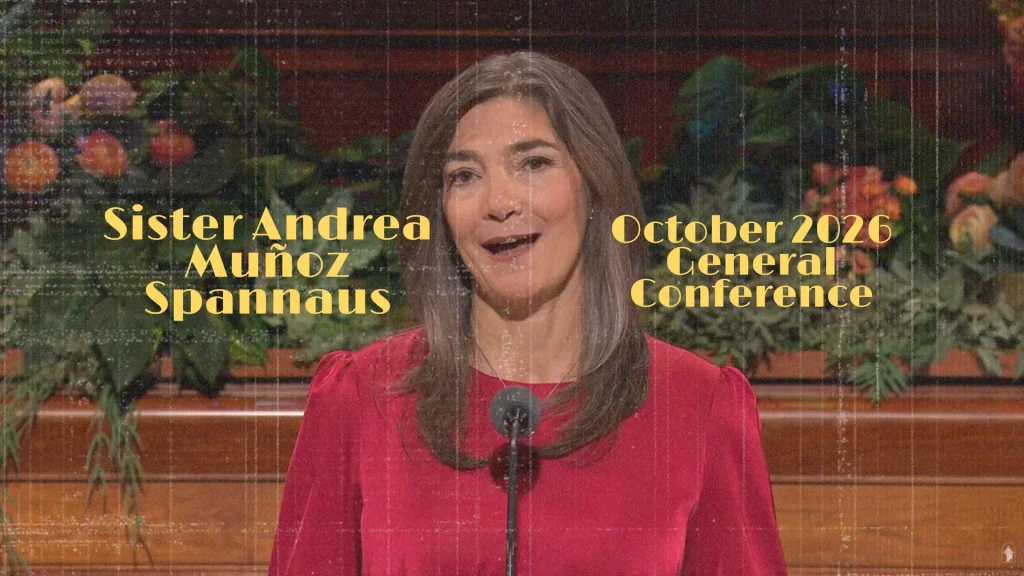
In her General Conference talk, “God Is at Your Side,” Sister Andrea Muñoz Spannaus offers a reassuring message: Heavenly Father knows exactly where we are, understands our desires and struggles, and has the power to guide us toward the blessings He has prepared for us.
Although Sister Spannaus addresses young women, the principles she teaches are relevant to women of every age and circumstance.
Her message invites us to recognize our divine identity, pursue righteous aspirations, strengthen our relationship with Heavenly Father, and trust that we are never beyond His awareness or love.
One of the most powerful truths she teaches is that God’s complete knowledge of us does not diminish His love.
He knows our strengths and weaknesses, our mistakes and accomplishments, our questions and fears. Yet His love remains constant.
Through personal experiences, scriptural examples, and practical invitations, Sister Spannaus teaches that we can move forward with greater confidence because the Father, Jesus Christ, and the Holy Ghost are at our side.
How to Use This Relief Society Lesson Help
This lesson help follows Sister Spannaus’s talk in chronological order, separating it into 10 discussion sections based on the progression of her message.
Each section includes:
- A direct quotation from the talk, with longer passages preserved where appropriate.
- An explanation of the doctrine or principle being taught.
- 10 engaging Relief Society discussion questions.
- 5 object lessons with materials, instructions, and spiritual applications.
- 10 personal sharing prompts designed to encourage meaningful experiences and testimony sharing.
Altogether, this lesson help provides 100 discussion questions, 50 object lessons, and 100 personal sharing prompts.
Teachers are not expected to use everything in one lesson. Instead, select the sections, questions, and activities that best meet the needs of your Relief Society sisters.
The goal is to create opportunities for meaningful discussion, personal reflection, and spiritual growth centered on the reassuring truth that God knows us and will guide us as we turn to Him.
Section 1: Seeking After Virtuous Things and Creating Righteous Aspirations
Direct Quote from Sister Spannaus
“When I was your age, I remember a lesson where we studied the thirteenth article of faith. When the class was over, I kept thinking about this part: ‘If there is anything virtuous, lovely, or of good report or praiseworthy, we seek after these things.’ I wondered what my aspirations were and what I wanted to achieve in my life. So I decided to make a list of those things—good, positive things that would bring me closer to God and would help me learn, contribute, create, and be happy. I spent that Sunday afternoon thinking and writing about the virtuous and good things I wanted to have happen in my life.
Today I invite you to look at your life and what you want to achieve with enthusiasm and the certainty that your Father in Heaven will guide you on that journey and show you the best way to make the righteous desires of your heart come true.”
Understanding the Doctrine
Sister Spannaus begins her message by reflecting on an experience from her youth.
After studying the thirteenth article of faith, she began considering what she wanted to accomplish in her life.
Rather than focusing exclusively on worldly achievements, she created a list of aspirations that would bring her closer to God.
Her list included things that would help her learn, contribute, create, and experience happiness.
This experience teaches an important principle: our righteous desires can become a meaningful part of our discipleship.
Sometimes we separate spiritual goals from personal aspirations.
We may think of spiritual growth as something that happens through scripture study, prayer, temple worship, and Church service, while viewing education, creativity, personal development, and other ambitions as entirely separate.
However, Sister Spannaus encourages us to seek after things that are virtuous, lovely, praiseworthy, and good.
This includes opportunities to develop our talents, expand our understanding, bless others, and experience joy.
Her invitation also teaches us to approach the future with enthusiasm rather than fear.
We may not know exactly how our aspirations will unfold, but we can trust Heavenly Father to guide us as we seek His will.
Righteous aspirations are not guarantees that every desired outcome will happen. Instead, they provide opportunities to exercise faith, seek revelation, and allow Heavenly Father to shape our desires and decisions.
Doctrinal Connections
Articles of Faith 1:13: We seek after things that are virtuous, lovely, of good report, or praiseworthy.
Doctrine and Covenants 6:8: The Lord invites us to do good and promises blessings according to righteous desires.
Proverbs 3:5–6: Trusting in the Lord allows Him to direct our paths.
10 Relief Society Discussion Questions
- Why do you think Sister Spannaus begins her talk by inviting us to consider our aspirations?
- What does the thirteenth article of faith teach us about the kinds of things we should pursue?
- How can personal goals become opportunities for spiritual growth?
- What is the difference between pursuing something good and pursuing something that brings us closer to God?
- How can we recognize whether an aspiration is aligned with Heavenly Father’s will?
- Why might it be difficult for some women to identify their personal aspirations?
- How can our righteous desires change during different seasons of life?
- What does it mean to approach our future with enthusiasm and faith?
- How can we pursue meaningful goals while remaining open to Heavenly Father’s direction?
- What can we learn from Sister Spannaus’s decision to intentionally write down the good things she wanted to accomplish?
5 Object Lesson Ideas
Object Lesson 1: The List of Righteous Aspirations
Materials: Paper, pens, and a copy of the thirteenth article of faith.
Instructions: Read the final portion of the thirteenth article of faith.
Invite sisters to privately write down several things they would like to learn, accomplish, create, or contribute during the coming years.
Encourage them to consider how those aspirations could bring them closer to Heavenly Father.
Spiritual application: Our aspirations can become opportunities to seek God’s guidance and develop our divine potential.
Object Lesson 2: The Compass of Righteous Desires
Materials: Compass or picture of a compass.
Instructions: Show how a compass provides direction.
Discuss how gospel principles can help us evaluate the direction of our goals.
Spiritual application: When our aspirations are guided by eternal principles, we can make decisions that move us closer to God.
Object Lesson 3: The Seed of an Aspiration
Materials: Seeds and a small plant.
Instructions: Display a seed and explain that it contains the potential for growth.
Discuss the conditions necessary for a seed to develop.
Spiritual application: Righteous aspirations often begin as small desires that grow through faith, effort, and God’s guidance.
Object Lesson 4: The Priority Jar
Materials: Jar, several large stones, and small pebbles.
Instructions: Place the small pebbles in the jar first, then attempt to fit the large stones.
Repeat by placing the large stones first.
Discuss how priorities influence our ability to pursue what matters most.
Spiritual application: Making room for spiritually meaningful aspirations helps us use our time intentionally.
Object Lesson 5: The Vision Board of Good Things
Materials: Paper, magazines, pictures, or printed words.
Instructions: Invite sisters to create a simple visual representation of aspirations connected to learning, service, creativity, family, or spiritual growth.
Spiritual application: Intentionally seeking after good things can help us recognize opportunities to grow.
10 Personal Sharing Prompts
- Share a righteous aspiration you had when you were younger and how it influenced your life.
- Describe a time when Heavenly Father guided you toward something good.
- Tell about a goal that helped you grow spiritually.
- Share an experience when your aspirations changed as you came to understand God’s will.
- Describe something you have learned or created that brought you closer to Heavenly Father.
- Tell about a time when you felt inspired to pursue an opportunity.
- Share how the thirteenth article of faith has influenced your choices.
- Describe a season when you rediscovered a meaningful personal aspiration.
- Tell about someone who encouraged you to develop your gifts or talents.
- Share what it means to you to pursue the righteous desires of your heart.
Section 2: Heavenly Father Knows Exactly Where You Are and Can Guide You
Direct Quote from Sister Spannaus
“I want to illustrate this concept with an experience. On my way to the dentist, I put the address in my phone. While I was driving on the freeway, the GPS thought I was on a parallel street and kept telling me to turn right—when there was no place to turn. Finally, I pulled off the freeway and called my husband for help. When I gave him my exact location, he was able to guide me to the place I wanted to go.
Dear young women, the Lord knows where you are; He has your exact location and can guide you. He knows your dreams and your gifts. He knows when you feel alone and what your questions are. He knows your challenges and how to turn your weaknesses into strengths. He knows everything. And knowing everything about you does not make Him love you less.”
Understanding the Doctrine
Sister Spannaus shares an experience involving a GPS that incorrectly identified her location.
Because the GPS thought she was on a different road, it repeatedly gave her directions she could not follow.
Eventually, she contacted her husband, who was able to guide her after learning her exact location.
She uses this experience to illustrate Heavenly Father’s perfect awareness of His children.
Unlike an unreliable GPS, Heavenly Father never loses track of us.
He knows our circumstances.
He understands our challenges.
He recognizes our gifts and potential.
He knows our questions, fears, and desires.
Most importantly, He knows exactly where we are spiritually and emotionally.
Sometimes we may feel lost because our lives have taken unexpected turns.
We may compare our circumstances to what we thought our lives would look like.
We may feel that we have fallen behind or that our weaknesses have placed us beyond God’s reach.
Sister Spannaus reminds us that Heavenly Father does not need us to reach a particular destination before He can guide us.
He begins with a perfect understanding of where we are right now.
Her final statement is especially powerful: God’s complete knowledge of us does not cause Him to love us less.
We do not need to hide our struggles, weaknesses, or uncertainties from Him.
He already knows them, and He continues to love us.
Doctrinal Connections
1 Nephi 9:6: The Lord knows all things from the beginning.
Psalm 139:1–12: God knows our thoughts, actions, and circumstances.
Ether 12:27: Through humility and faith, the Lord can help weak things become strong.
10 Relief Society Discussion Questions
- What does Sister Spannaus’s GPS experience teach us about Heavenly Father’s guidance?
- Why is it comforting to know that God understands our exact circumstances?
- How does Heavenly Father’s knowledge differ from our limited understanding?
- Why might we sometimes feel spiritually lost even when we are trying to follow Him?
- What does it mean that Heavenly Father knows our dreams and gifts?
- How can we seek His guidance when we do not know which direction to take?
- Why is it significant that God knows our weaknesses but does not love us less?
- How can this truth change the way we approach prayer?
- What can we do when God’s direction differs from what we expected?
- How can we help others remember that Heavenly Father knows and loves them individually?
5 Object Lesson Ideas
Object Lesson 1: The GPS and the Correct Location
Materials: Phone with a map application.
Instructions: Display a map and explain how navigation depends on identifying the correct starting location.
Relate this to Sister Spannaus’s experience.
Spiritual application: Heavenly Father knows our circumstances perfectly and can guide us from wherever we are.
Object Lesson 2: The Blindfolded Path
Materials: Blindfold and several safe floor markers.
Instructions: Invite a volunteer to navigate a simple, obstacle-free route while receiving verbal guidance from another person.
Ensure the activity is safe and voluntary.
Spiritual application: We may not see the entire path, but we can learn to trust divine guidance.
Object Lesson 3: The Incomplete Map
Materials: Map with a portion covered.
Instructions: Ask sisters how difficult it would be to navigate using incomplete information.
Reveal the full map.
Spiritual application: Our perspective is limited, but Heavenly Father sees the complete picture.
Object Lesson 4: The Known and Unknown
Materials: Two columns on a whiteboard.
Instructions: Label the columns “What I Know” and “What Heavenly Father Knows.”
Discuss examples of things we may not understand about our future.
Spiritual application: Faith allows us to trust God’s wisdom when our knowledge is incomplete.
Object Lesson 5: The Guiding Light
Materials: Flashlight.
Instructions: Shine the flashlight on a short section of a pathway.
Explain that light often reveals only the next few steps.
Spiritual application: Heavenly Father may guide us gradually rather than revealing every detail of our future.
10 Personal Sharing Prompts
- Share a time when you felt Heavenly Father knew exactly what you were experiencing.
- Describe an experience when you received guidance during uncertainty.
- Tell about a time when your life took an unexpected direction.
- Share how prayer helped you make an important decision.
- Describe a moment when you recognized God’s awareness of a personal need.
- Tell about a time when you learned to trust God’s timing.
- Share an experience when a weakness became an opportunity for growth.
- Describe how your understanding of Heavenly Father’s love has changed.
- Tell about someone who helped you recognize divine guidance.
- Share what it means to you that God knows everything about you and still loves you perfectly.
Section 3: Jesus Christ Loves Us Before Inviting Us to Change
Direct Quote from Sister Spannaus
“Once a young man came running, kneeling before Jesus Christ, and asking Him, ‘What can I do to gain eternal life?’ The young man said he had always obeyed the commandments. Would Jesus know what else this young man could do? Of course! But before He tells him, look at what happened. In Mark 10:21, we read, ‘Jesus beholding him loved him.’
Can you imagine those moments when Jesus looks at this young man? A look that conveys only love: love of the highest quality. Only after transmitting that love did He tell him what he could do to improve.
Our Father and our Savior know you and have the same perfect love for you. Part of that love and mercy is giving us many opportunities and being patient as we learn and work on our list of aspirations.”
Understanding the Doctrine
Sister Spannaus draws our attention to a powerful detail in the account of the rich young man.
Before Jesus Christ instructed the young man about what he still needed to do, the scripture records that the Savior looked upon him and loved him.
This order is significant.
The Savior’s love came before His invitation to change.
Jesus Christ understood the young man’s strengths, weaknesses, and spiritual needs.
He knew what the young man still needed to surrender.
Yet His response began with love.
This teaches us something important about the relationship between divine love and spiritual growth.
Heavenly Father and Jesus Christ do not wait until we have overcome every weakness before loving us.
Their love is already present as They invite us to repent, grow, and become more like Them.
Sister Spannaus also emphasizes the patience of Heavenly Father and the Savior.
They provide opportunities to learn and improve.
They understand that spiritual growth takes time.
Their commandments and invitations are expressions of divine love, not evidence that we are inadequate or unwanted.
Doctrinal Connections
Mark 10:17–22: Jesus Christ loves the rich young man before inviting him to make a difficult change.
Romans 5:8: Christ demonstrated His love for us while we were yet sinners.
Doctrine and Covenants 58:42–43: The Lord promises forgiveness to those who repent.
10 Relief Society Discussion Questions
- Why is it significant that Jesus loved the young man before inviting him to change?
- What does this account teach us about the Savior’s character?
- How does understanding Christ’s love influence our willingness to repent?
- Why do we sometimes mistakenly believe that we must improve before we are worthy of God’s love?
- How can we distinguish loving correction from condemnation?
- What does divine patience teach us about spiritual growth?
- How can we extend the same combination of love and encouragement to others?
- Why might some invitations from the Savior feel difficult even when they come from love?
- How does the Savior’s example influence the way we approach our own weaknesses?
- What would change if we consistently remembered that Jesus Christ loves us throughout our efforts to improve?
5 Object Lesson Ideas
Object Lesson 1: The Mirror of Divine Love
Materials: Mirror.
Instructions: Display a mirror and invite sisters to consider how they sometimes view themselves through their weaknesses.
Discuss how the Savior sees our divine worth and potential.
Spiritual application: God’s love is not dependent on our current level of perfection.
Object Lesson 2: The Unfinished Artwork
Materials: Partially completed drawing or painting.
Instructions: Show the unfinished artwork.
Discuss how something can be valuable and meaningful even while it is still developing.
Spiritual application: Heavenly Father loves us during the process of becoming.
Object Lesson 3: The Growing Plant
Materials: Small plant.
Instructions: Discuss how a plant requires nourishment and patience.
Explain that growth cannot always be rushed.
Spiritual application: The Savior patiently helps us develop spiritually.
Object Lesson 4: The Invitation Envelope
Materials: Envelope containing a card labeled “Come Follow Me.”
Instructions: Open the envelope and discuss the difference between receiving an invitation and receiving a condemnation.
Spiritual application: Christ’s invitations to change are motivated by love.
Object Lesson 5: The Foundation of Love
Materials: Building blocks.
Instructions: Place a large block labeled “Divine Love” at the bottom.
Add blocks labeled repentance, obedience, growth, and discipleship.
Spiritual application: Our relationship with the Savior is strengthened as we respond to His love through faith and obedience.
10 Personal Sharing Prompts
- Share a time when you felt the Savior’s love during a period of personal growth.
- Describe an experience when loving encouragement helped you improve.
- Tell about a moment when you recognized God’s patience with you.
- Share how understanding divine love has changed your perspective on repentance.
- Describe a time when you felt invited rather than condemned to make a change.
- Tell about someone who helped you feel valued while you were learning.
- Share an experience when a difficult gospel principle became meaningful through the Savior’s love.
- Describe how your relationship with Jesus Christ has influenced your view of yourself.
- Tell about a time when you learned to extend greater patience to another person.
- Share what the words “Jesus beholding him loved him” mean to you personally.
Section 4: Understanding Our Divine Identity and Individual Purpose
Direct Quote from Sister Spannaus
“Dear young women, I testify that you are beloved daughters of heavenly parents, with a divine nature and an eternal destiny. Each of you has a crucial and important work to do here on earth. That work is different for each person, but if you choose to love God and Jesus Christ and to trust Them, doing that work will bring you the same great joy.”
Understanding the Doctrine
Sister Spannaus reminds young women of their divine identity and eternal potential.
Her message is equally meaningful for Relief Society sisters.
Each woman is a beloved daughter of heavenly parents.
Her worth does not depend on her age, marital status, family circumstances, career, accomplishments, or the approval of others.
Her divine identity exists because of her relationship with Heavenly Father.
Sister Spannaus also teaches that every daughter of God has important work to accomplish during mortality.
That work will not look identical for everyone.
Some women may find meaningful opportunities through motherhood, education, employment, Church service, community involvement, creativity, or personal relationships.
Others may serve in quiet ways that receive little public recognition.
The importance of our work is not measured solely by its visibility.
Rather, we can seek to understand how Heavenly Father wants us to use our gifts, experiences, and opportunities to bless others.
Sister Spannaus emphasizes that joy comes through loving and trusting Heavenly Father and Jesus Christ as we fulfill our individual responsibilities.
Doctrinal Connections
Romans 8:16–17: We are children of God and heirs with Christ.
Doctrine and Covenants 18:10: The worth of souls is great in the sight of God.
Moses 1:39: God’s work is to bring to pass the immortality and eternal life of His children.
10 Relief Society Discussion Questions
- What does it mean to be a beloved daughter of heavenly parents?
- How does understanding our divine identity influence our choices?
- Why is it important to separate our eternal worth from worldly accomplishments?
- What does Sister Spannaus mean when she says each person has important work to do?
- Why might our individual purposes look different from those of other women?
- How can comparison distract us from recognizing our own gifts?
- What role does trust in Heavenly Father play in discovering our purpose?
- How can we recognize meaningful work that may not receive public recognition?
- How can Relief Society help sisters feel valued in different seasons of life?
- What brings you joy as you seek to fulfill your responsibilities and divine potential?
5 Object Lesson Ideas
Object Lesson 1: The Different Tools
Materials: Several tools, such as a hammer, paintbrush, measuring tape, and screwdriver.
Instructions: Discuss how each tool serves a different purpose.
Explain that no single tool can accomplish every task.
Spiritual application: Heavenly Father gives His children different gifts and opportunities.
Object Lesson 2: The Unique Fingerprint
Materials: Paper, pencil, and optional washable ink pad.
Instructions: Invite sisters to examine the unique patterns of their fingerprints.
Discuss individuality and divine worth.
Spiritual application: Each daughter of God has unique gifts and potential.
Object Lesson 3: The Puzzle of Purpose
Materials: Puzzle pieces.
Instructions: Give sisters different pieces of a puzzle.
Discuss how each piece contributes to the completed picture.
Spiritual application: Our individual contributions matter in God’s work.
Object Lesson 4: The Gift Box
Materials: Wrapped gift box containing cards labeled compassion, creativity, teaching, patience, faith, and service.
Instructions: Open the box and discuss how different gifts can bless others.
Spiritual application: Heavenly Father can help us recognize and develop our individual gifts.
Object Lesson 5: The Different Paths
Materials: Paper pathways leading toward a picture of Jesus Christ.
Instructions: Create several pathways of different shapes and lengths.
Discuss how individual life circumstances vary.
Spiritual application: Our experiences may differ, but we can all choose to follow Jesus Christ.
10 Personal Sharing Prompts
- Share an experience that strengthened your understanding of your divine identity.
- Describe a time when you recognized a gift Heavenly Father had given you.
- Tell about someone who helped you see your worth.
- Share how your understanding of personal purpose has changed over time.
- Describe a responsibility that has brought you unexpected joy.
- Tell about a time when you learned to stop comparing your life with someone else’s.
- Share an experience when you felt that your contribution mattered.
- Describe how trusting Heavenly Father has influenced your decisions.
- Tell about a woman whose quiet service has inspired you.
- Share what it means to you to have a divine nature and eternal destiny.
Section 5: Inviting the Holy Ghost Through the Sacrament and Daily Prayer
Direct Quote from Sister Spannaus
“I would like to share seven ways that will help you in this endeavor. I invite you to listen to the Spirit to choose one to focus on over the next few weeks.
- Partake of the sacrament with a humble heart, grateful for the promise that as you keep your covenants, the Holy Ghost will be your constant companion. Begin each day by asking the Father for that companionship.”
Understanding the Doctrine
Sister Spannaus transitions from teaching about divine identity and personal purpose to sharing practical ways we can strengthen our relationship with Heavenly Father.
Her first invitation centers on the sacrament and the companionship of the Holy Ghost.
Through baptism, we enter into a covenant relationship with God.
Each week, the sacrament provides an opportunity to remember Jesus Christ and renew our commitment to Him.
The sacrament prayers include the promise that those who are willing to take upon themselves the name of Christ, always remember Him, and keep His commandments may always have His Spirit to be with them.
Sister Spannaus encourages us to approach the sacrament with humility and gratitude.
She also invites us to begin each day by asking Heavenly Father for the companionship of the Holy Ghost.
This teaches that spiritual guidance is not reserved for extraordinary circumstances.
We can seek the Spirit’s influence in our ordinary responsibilities, decisions, conversations, and challenges.
Doctrinal Connections
Doctrine and Covenants 20:77: The sacrament prayer includes the promise of the Spirit’s companionship.
John 14:26: The Holy Ghost teaches and brings truth to our remembrance.
3 Nephi 18:7–11: Jesus Christ commands His disciples to remember Him through the sacrament.
10 Relief Society Discussion Questions
- Why does Sister Spannaus begin her seven invitations with the sacrament?
- What does it mean to partake of the sacrament with a humble heart?
- How can gratitude influence our sacrament experience?
- Why is the companionship of the Holy Ghost essential to our spiritual journey?
- How might our mornings change if we intentionally asked Heavenly Father for the Spirit’s guidance?
- What can we do to become more sensitive to spiritual impressions?
- How does covenant keeping strengthen our relationship with the Holy Ghost?
- What distractions can interfere with our ability to recognize spiritual guidance?
- How can the sacrament prepare us for the challenges of the coming week?
- What is one way we could make our sacrament worship more meaningful?
5 Object Lesson Ideas
Object Lesson 1: The Daily Invitation
Materials: Small card labeled “Invite the Spirit.”
Instructions: Invite sisters to place the card somewhere they will see it in the morning.
Discuss how daily prayer can become an intentional invitation for divine guidance.
Spiritual application: We can actively seek the companionship of the Holy Ghost.
Object Lesson 2: The Clear Signal
Materials: Radio or phone.
Instructions: Discuss how interference can make a signal difficult to recognize.
Relate this to distractions that may affect our spiritual sensitivity.
Spiritual application: Creating space for quiet reflection can help us recognize spiritual impressions.
Object Lesson 3: The Weekly Renewal
Materials: Calendar.
Instructions: Mark each Sunday on the calendar.
Discuss how the sacrament provides recurring opportunities for spiritual renewal.
Spiritual application: Consistent sacrament worship helps us remember Jesus Christ.
Object Lesson 4: The Guiding Compass
Materials: Compass.
Instructions: Explain how a compass provides direction.
Discuss the Holy Ghost’s role in guiding our decisions.
Spiritual application: The Spirit helps us recognize truth and make righteous choices.
Object Lesson 5: The Open Invitation
Materials: Invitation card.
Instructions: Write “Companionship of the Holy Ghost” on the card.
Discuss what it means to sincerely seek and welcome spiritual guidance.
Spiritual application: Daily prayer can help us intentionally turn toward Heavenly Father.
10 Personal Sharing Prompts
- Share a time when the sacrament strengthened your testimony.
- Describe an experience when you felt guided by the Holy Ghost.
- Tell about a time when prayer helped you begin your day with greater peace.
- Share how your understanding of the sacrament has changed.
- Describe a moment when you recognized a spiritual prompting.
- Tell about a time when the Holy Ghost helped you make a decision.
- Share an experience when you felt spiritually renewed.
- Describe how you prepare your heart for sacrament worship.
- Tell about someone who helped you understand the role of the Holy Ghost.
- Share what the promise of the Spirit’s companionship means to you.
Section 6: Daily Repentance and Scripture Study Help Us Become More Like God
Direct Quote from Sister Spannaus
“2. Repent daily and at the end of the day, as you pray, ask for forgiveness.
- Study the scriptures with a desire to know God’s character so you can do His will, increase your love for Him, and advance His work.”
Understanding the Doctrine
Sister Spannaus’s second and third invitations focus on daily repentance and meaningful scripture study.
These practices are closely connected because both help us strengthen our relationship with Heavenly Father.
Repentance allows us to acknowledge our weaknesses, seek forgiveness, and turn more fully toward Jesus Christ.
Rather than viewing repentance only as a response to serious transgression, Sister Spannaus encourages us to make it part of our daily lives.
This can include recognizing unkind thoughts, impatience, missed opportunities to serve, or attitudes that need to change.
Daily repentance invites humility and helps us remain receptive to the Savior’s influence.
Scripture study serves a complementary purpose.
Sister Spannaus specifically encourages us to study the scriptures with a desire to know God’s character.
This shifts our focus from simply completing a reading assignment to developing a deeper relationship with Heavenly Father and Jesus Christ.
As we study Their words and actions, we learn about Their love, patience, mercy, justice, and faithfulness.
Greater understanding can lead to greater trust.
And greater trust can help us follow Their direction more willingly.
Doctrinal Connections
Alma 34:32–33: Mortality is a time to prepare to meet God.
Mosiah 4:10: Those who believe in repentance are invited to repent.
John 5:39: The scriptures testify of Jesus Christ.
10 Relief Society Discussion Questions
- Why does Sister Spannaus encourage daily repentance?
- How can repentance become a hopeful rather than discouraging practice?
- What is the relationship between humility and repentance?
- How can evening prayer help us reflect on our spiritual progress?
- Why is it important to study the scriptures to understand God’s character?
- How does knowing Heavenly Father’s character strengthen our trust in Him?
- What have the scriptures taught you about Jesus Christ’s mercy?
- How can scripture study influence our willingness to do God’s will?
- What is the difference between reading the scriptures and studying them with spiritual intent?
- How can daily repentance and scripture study work together to strengthen discipleship?
5 Object Lesson Ideas
Object Lesson 1: The Daily Reflection Mirror
Materials: Mirror.
Instructions: Explain how a mirror helps us notice things we may otherwise overlook.
Discuss how daily prayer and repentance encourage spiritual self-examination.
Spiritual application: Repentance helps us recognize opportunities for growth.
Object Lesson 2: The Clean Page
Materials: Whiteboard and eraser.
Instructions: Write examples of attitudes or behaviors we may need to change.
Erase them while discussing the Savior’s power to forgive and transform us.
Clarify that repentance involves sincere turning to Christ, not merely erasing consequences.
Spiritual application: Jesus Christ makes forgiveness and spiritual renewal possible.
Object Lesson 3: The Scripture Magnifying Glass
Materials: Magnifying glass and scriptures.
Instructions: Use the magnifying glass to examine a small section of text.
Discuss how thoughtful study helps us notice details about God’s character.
Spiritual application: Studying with purpose deepens our understanding.
Object Lesson 4: The Daily Nourishment
Materials: Glass of water.
Instructions: Discuss why physical nourishment is necessary on a regular basis.
Compare this with consistent spiritual nourishment.
Spiritual application: Daily scripture study helps strengthen our relationship with God.
Object Lesson 5: The Character Study Cards
Materials: Cards labeled merciful, patient, loving, just, and faithful.
Instructions: Invite sisters to identify scriptural examples demonstrating each attribute.
Spiritual application: Learning God’s character helps us trust and follow Him.
10 Personal Sharing Prompts
- Share how repentance has brought you closer to Jesus Christ.
- Describe a time when you felt the peace of forgiveness.
- Tell about a scripture that helped you understand Heavenly Father’s character.
- Share how your approach to scripture study has changed.
- Describe an experience when evening prayer helped you recognize something important.
- Tell about a time when scripture study strengthened your trust in God.
- Share a gospel principle you came to understand more deeply through repentance.
- Describe how consistent spiritual habits have influenced your life.
- Tell about someone who helped you develop a love for the scriptures.
- Share what you have learned about the Savior through studying His life.
Section 7: Recognizing Divine Help Through Ministering Angels
Direct Quote from Sister Spannaus
“4. Study what it means to have ministering angels help you.”
Understanding the Doctrine
Sister Spannaus’s fourth invitation is brief, but it introduces a meaningful subject for personal study and Relief Society discussion.
She encourages us to learn more about the ministry of angels.
The scriptures contain numerous accounts of angels ministering to God’s children.
Angels delivered messages, provided instruction, strengthened individuals, and participated in the Lord’s work.
For example, an angel strengthened the Savior during His suffering in Gethsemane.
Angels also ministered to prophets and disciples throughout scripture.
The scriptures teach that angels act under God’s direction.
Their ministry is part of His work to bless His children and bring them unto Christ.
Although we may not always recognize how divine assistance is provided, we can trust that Heavenly Father has means of helping us beyond our immediate understanding.
It is also important to avoid assuming that every comforting experience or unexpected blessing necessarily involved an angel.
Instead, Sister Spannaus invites us to study the doctrine and become more aware of Heavenly Father’s power and care.
Doctrinal Connections
Moroni 7:29–32: Angels minister according to God’s word and help prepare the way for faith in Christ.
Doctrine and Covenants 84:88: The Lord promises divine assistance to those engaged in His work.
Luke 22:43: An angel strengthens Jesus Christ in Gethsemane.
10 Relief Society Discussion Questions
- Why do you think Sister Spannaus encourages us to study the ministry of angels?
- What do the scriptures teach about the purposes of angelic ministry?
- How can understanding this doctrine strengthen our faith?
- What scriptural accounts of ministering angels are especially meaningful to you?
- Why is it important to understand that angels act under God’s direction?
- How can we recognize divine help without making assumptions about its source?
- What does the ministry of angels teach us about Heavenly Father’s concern for His children?
- How does the promise of divine assistance influence our willingness to serve?
- How can studying this doctrine help us feel less alone?
- What would you like to understand better about the ministry of angels?
5 Object Lesson Ideas
Object Lesson 1: The Unseen Support
Materials: Table and a sturdy support placed beneath it.
Instructions: Show how the table is supported even when the support is not immediately noticeable.
Discuss the difference between visible and unseen assistance.
Spiritual application: Heavenly Father can provide help through means we do not fully understand.
Object Lesson 2: The Scripture Search
Materials: Scriptures and reference cards.
Instructions: Assign sisters passages describing angelic ministry.
Invite them to identify what the angels were sent to accomplish.
Spiritual application: Scripture study helps us understand the purposes of angelic ministry.
Object Lesson 3: The Messenger Envelope
Materials: Envelope containing a scripture reference.
Instructions: Open the envelope and read the passage.
Discuss how angels sometimes serve as messengers from God.
Spiritual application: God communicates and ministers according to His wisdom.
Object Lesson 4: The Strengthened Branch
Materials: Small branch and support stake.
Instructions: Demonstrate how a support can help a young plant remain upright.
Spiritual application: Heavenly Father provides strengthening help to His children.
Object Lesson 5: The Circle of Divine Care
Materials: Picture of Jesus Christ and cards with scripture references about divine assistance.
Instructions: Arrange the cards around the picture.
Discuss how angelic ministry points us toward Jesus Christ.
Spiritual application: All divine assistance operates within Heavenly Father’s plan and the Savior’s work.
10 Personal Sharing Prompts
- Share a scriptural account of angelic ministry that has strengthened your testimony.
- Describe a time when you felt Heavenly Father’s help during a difficult experience.
- Tell about a moment when a scripture reminded you that God was aware of you.
- Share how your understanding of divine assistance has changed.
- Describe an experience when someone provided timely encouragement.
- Tell about a time when you felt strengthened beyond your own abilities.
- Share a scripture that helps you remember God’s care.
- Describe how learning about angels has influenced your faith.
- Tell about someone whose service reminded you of Heavenly Father’s love.
- Share what it means to you that God has many ways of helping His children.
Section 8: Protecting Our Physical Rest and Real Relationships
Direct Quote from Sister Spannaus
“5. Protect your sleep; go to bed early. Get enough sleep to keep your mind clear and alert. When we sleep, the brain performs vital functions to work properly.
- Limit cell phone use. Social media makes us believe we are connected; however, it is a thief of our peace of mind, self-esteem, and the real connection that makes us feel loved, accepted, heard, and valued when spending time face to face with others.
- And number seven is an invitation from our prophet, President Dallin H. Oaks: ‘Seek friends … who are striving to follow the Lord … with whom you can feel the Spirit and … reinforce your faith.’”
Understanding the Doctrine
Sister Spannaus concludes her seven practical invitations with counsel about sleep, technology, and friendship.
These subjects may initially seem less spiritual than prayer, repentance, or scripture study.
However, they are connected to our ability to make wise choices, recognize spiritual impressions, and maintain meaningful relationships.
First, Sister Spannaus encourages us to protect our sleep.
Physical exhaustion can affect our concentration, emotions, and ability to manage everyday responsibilities.
Rest is an important part of caring for the bodies Heavenly Father has given us.
For women experiencing seasons of interrupted sleep because of caregiving, health concerns, work responsibilities, or other circumstances, this invitation can be approached with compassion rather than guilt.
The principle is to value rest and protect it when reasonably possible.
Second, Sister Spannaus warns about excessive cell phone and social media use.
Technology can provide valuable opportunities for communication, learning, and service.
However, it can also encourage comparison, distraction, and a false sense of connection.
She emphasizes the importance of relationships that help us feel loved, accepted, heard, and valued.
Finally, she encourages us to seek friendships that strengthen our faith.
The people we spend time with can influence our attitudes, priorities, and spiritual direction.
Faith-strengthening friendships do not require us to associate only with people who share our beliefs. Rather, we can intentionally nurture relationships that encourage goodness, respect, and discipleship.
Doctrinal Connections
Doctrine and Covenants 88:124: The Lord counsels His people to retire to bed early and arise early.
Doctrine and Covenants 89:18–21: The Word of Wisdom includes promises of physical and spiritual blessings.
Proverbs 13:20: Wise companions can influence our choices.
10 Relief Society Discussion Questions
- Why do you think Sister Spannaus includes sleep and technology in a message about spiritual guidance?
- How can physical exhaustion affect our emotional and spiritual well-being?
- What does it mean to care for our bodies as gifts from Heavenly Father?
- How can we approach the principle of rest realistically during demanding seasons of life?
- What are some benefits of technology when it is used intentionally?
- How can excessive social media use influence our self-esteem?
- What is the difference between digital connection and meaningful personal relationships?
- How can we create healthier boundaries around technology?
- What qualities make a friendship spiritually strengthening?
- How can we become the kind of friend who helps others feel loved, accepted, heard, and valued?
5 Object Lesson Ideas
Object Lesson 1: The Empty Battery
Materials: Phone or battery icon.
Instructions: Discuss how devices require regular charging.
Compare this with the importance of physical and emotional rest.
Spiritual application: Caring for our bodies supports our ability to serve and function well.
Object Lesson 2: The Distraction Experiment
Materials: Phone and short reading passage.
Instructions: Invite a volunteer to read while notifications or simulated interruptions occur.
Discuss how distractions affect concentration.
Spiritual application: Intentional technology boundaries can create more room for meaningful experiences.
Object Lesson 3: The Connection Web
Materials: Yarn.
Instructions: Invite sisters to name qualities of meaningful friendships as they pass yarn between participants.
Create a web of connections.
Spiritual application: Genuine relationships are strengthened through attention, care, and trust.
Object Lesson 4: The Social Media Filter
Materials: Two pictures of the same scene, one carefully cropped and one showing the wider context.
Instructions: Discuss how limited perspectives can create misleading comparisons.
Spiritual application: Remembering that we rarely see another person’s complete circumstances can protect our peace.
Object Lesson 5: The Friendship Garden
Materials: Pictures of flowers or small plants.
Instructions: Label each plant with a friendship quality such as kindness, honesty, encouragement, and faith.
Discuss how relationships grow through intentional care.
Spiritual application: Spiritually strengthening friendships require nurturing.
10 Personal Sharing Prompts
- Share a time when getting adequate rest helped you feel more capable of handling challenges.
- Describe a change you made to create healthier technology habits.
- Tell about a friendship that strengthened your faith.
- Share an experience when face-to-face connection made a meaningful difference.
- Describe a time when stepping away from social media brought greater peace.
- Tell about someone who helped you feel genuinely heard.
- Share how your understanding of physical self-care has changed.
- Describe a friendship that encouraged you to become more Christlike.
- Tell about a time when you learned to set a healthy boundary.
- Share one habit that helps you maintain spiritual, emotional, or physical balance.
Section 9: Heavenly Father Can Strengthen Us When We Feel Inadequate
Direct Quote from Sister Spannaus
“A few years ago, we had recently moved from Argentina to the United States, and I was learning English. (I am still learning!) At that time, my calling involved teaching. That day I felt everything I said had been wrong, that I had mispronounced words and made many grammatical errors—that it had been a complete disaster! I felt depressed, as if I were in a black cloud. I wondered why God had given me this calling if I couldn’t even speak! I was confused and didn’t see a way out. That night I went to sleep in tears, hoping I would feel better in the morning. But in the morning, I woke up feeling the same.
Then my husband gave me a priesthood blessing, and in that moment, I felt the heavens open. In the blessing, I was told, ‘Satan wants to destroy your self-esteem, your mind, your thoughts, and your spirit.’ And then I received these words: ‘But the Father, Jesus Christ, and the Holy Ghost are at your side.’”
Understanding the Doctrine
Sister Spannaus shares a deeply personal experience from a time when she was learning English after moving from Argentina to the United States.
Her Church calling required her to teach, but she felt inadequate because of her language difficulties.
After one particularly discouraging experience, she questioned why Heavenly Father had given her a responsibility she felt unable to fulfill.
Her discouragement continued into the following morning.
Then, through a priesthood blessing, she received a powerful reminder of divine support.
The blessing acknowledged the adversary’s desire to weaken her confidence and reminded her that the Father, Jesus Christ, and the Holy Ghost were at her side.
This experience illustrates the difference between recognizing our weaknesses and allowing those weaknesses to define our identity.
We may feel inadequate in callings, family responsibilities, employment, education, or other areas of life.
We may focus so intensely on our mistakes that we forget our gifts and potential.
Sister Spannaus reminds us that Heavenly Father is aware of these feelings.
He does not abandon us when we struggle.
Instead, He can provide reassurance, strength, and guidance as we continue learning.
It is important to recognize that feelings of discouragement or low self-esteem are not automatically evidence of personal spiritual failure. Heavenly Father understands our emotional needs and can support us through spiritual means as well as through trusted relationships and appropriate professional help.
Doctrinal Connections
Ether 12:27: The Lord can help weak things become strong.
Doctrine and Covenants 6:36: Look unto Christ in every thought.
Isaiah 41:10: The Lord promises to strengthen and uphold His people.
10 Relief Society Discussion Questions
- What stands out to you about Sister Spannaus’s experience of feeling inadequate?
- Why do we sometimes judge ourselves more harshly than we judge others?
- How can feelings of inadequacy affect our willingness to serve?
- What is the difference between humility and destructive self-criticism?
- How does Heavenly Father help us recognize our worth when we feel discouraged?
- Why is it important to remember that our weaknesses do not define our identity?
- What can we learn from the reassurance Sister Spannaus received through her priesthood blessing?
- How can we support someone who feels inadequate in a calling or responsibility?
- How can the Savior help us develop confidence without becoming prideful?
- What does it mean to trust Heavenly Father with responsibilities that stretch our abilities?
5 Object Lesson Ideas
Object Lesson 1: The Cracked Pot
Materials: Picture of a cracked clay pot.
Instructions: Discuss how an imperfect container can still serve a meaningful purpose.
Spiritual application: Our weaknesses do not eliminate our ability to contribute to God’s work.
Object Lesson 2: The Distorted Mirror
Materials: Distorted reflection image or funhouse mirror picture.
Instructions: Discuss how distorted reflections can give an inaccurate picture of reality.
Relate this to harsh self-judgment.
Spiritual application: Heavenly Father’s understanding of our worth is more accurate than our discouraging self-perceptions.
Object Lesson 3: The Supportive Foundation
Materials: Blocks and sturdy base.
Instructions: Build a structure on an unstable surface, then place it on a firm foundation.
Spiritual application: Trusting Jesus Christ provides stability when confidence in our own abilities feels uncertain.
Object Lesson 4: The Encouragement Cards
Materials: Cards with scriptural promises.
Instructions: Invite sisters to read promises of divine strength.
Discuss how scripture can help counter discouraging thoughts.
Spiritual application: God’s words can remind us of His love and support.
Object Lesson 5: The Unfinished Project
Materials: Partially completed craft or drawing.
Instructions: Show the unfinished project.
Discuss how progress involves mistakes, learning, and improvement.
Spiritual application: Heavenly Father understands that we are still developing.
10 Personal Sharing Prompts
- Share a time when you felt inadequate but received strength from Heavenly Father.
- Describe an experience when a calling stretched your abilities.
- Tell about someone who helped you recognize your worth.
- Share how you have learned to respond to self-criticism.
- Describe a time when you felt spiritually reassured during discouragement.
- Tell about an experience when a weakness became an opportunity to grow.
- Share how a priesthood blessing or another spiritual experience strengthened your faith, if you feel comfortable doing so.
- Describe a moment when you learned to trust God’s confidence in you.
- Tell about someone who encouraged you when you doubted yourself.
- Share what Sister Spannaus’s experience teaches you about divine support.
Section 10: The Father, Jesus Christ, and the Holy Ghost Are at Your Side
Direct Quote from Sister Spannaus
“Dear young women, I testify that the Lord has greater power than the enemy. He knows where you are and has promised to lead you by the hand. Always put Him first and remain faithful to the covenants you made at your baptism. Angels can minister to you. The Father, Jesus Christ, and the Holy Ghost are at your side.
I invite you to study the thirteenth article of faith and to create your own list of aspirations. I express my love for you and my confidence in all the beautiful things you will achieve in your lives.”
Understanding the Doctrine
Sister Spannaus concludes by returning to the central message of her talk.
Heavenly Father knows us.
Jesus Christ has power to strengthen and redeem us.
The Holy Ghost can guide, comfort, and testify of truth.
Together, the members of the Godhead are united in Their purpose to help Heavenly Father’s children return to Him.
Sister Spannaus reminds us that the Lord has greater power than the adversary.
This does not mean that disciples of Jesus Christ will never experience difficulty, temptation, discouragement, or uncertainty.
Rather, it means that the Savior’s power is greater than the forces that oppose God’s work.
She also reminds us that Heavenly Father has promised to lead us by the hand.
This image suggests personal care and guidance.
We do not need to navigate mortality entirely through our own understanding.
As we put God first, remain faithful to our covenants, and seek spiritual guidance, we can move forward with confidence.
Sister Spannaus concludes by repeating her invitation to study the thirteenth article of faith and create a list of righteous aspirations.
This brings her message full circle.
We began by considering what we hope to accomplish.
We end with the reassurance that Heavenly Father knows our potential and will guide us as we seek Him.
Doctrinal Connections
Doctrine and Covenants 112:10: The Lord promises to lead the humble by the hand.
Romans 8:31: If God is for us, who can be against us?
Doctrine and Covenants 84:88: The Lord promises His presence and support in His work.
10 Relief Society Discussion Questions
- What does it mean to you that the Father, Jesus Christ, and the Holy Ghost are at your side?
- How does this promise influence the way you approach challenges?
- Why is it important to remember that the Lord has greater power than the adversary?
- What does the image of being led by the hand teach us about Heavenly Father’s love?
- How can our baptismal covenants help us remain spiritually grounded?
- What does it mean to put Heavenly Father first in everyday decisions?
- How can we develop greater confidence in divine guidance?
- Why is it important to remember that God’s help may come in different ways?
- How does understanding our divine identity influence our aspirations?
- What is one invitation from Sister Spannaus’s talk that you feel inspired to act upon?
5 Object Lesson Ideas
Object Lesson 1: The Guiding Hand
Materials: Picture of a parent holding a child’s hand.
Instructions: Discuss how holding someone’s hand can communicate protection, reassurance, and guidance.
Connect the image to the Lord’s promise to lead us.
Spiritual application: Heavenly Father offers personal guidance and support.
Object Lesson 2: The Three Witnesses
Materials: Scriptures containing teachings about the Father, Son, and Holy Ghost.
Instructions: Invite sisters to identify the distinct roles of the members of the Godhead.
Discuss how They are united in purpose.
Spiritual application: Heavenly Father, Jesus Christ, and the Holy Ghost work together for our eternal good.
Object Lesson 3: The Lighthouse
Materials: Picture of a lighthouse.
Instructions: Discuss how a lighthouse provides direction during difficult conditions.
Spiritual application: Divine guidance helps us navigate uncertainty.
Object Lesson 4: The Covenant Anchor
Materials: Picture or small model of an anchor.
Instructions: Discuss how an anchor provides stability.
Relate this to covenant faithfulness.
Spiritual application: Sacred covenants connect us to Jesus Christ and provide spiritual stability.
Object Lesson 5: The Aspiration Letter
Materials: Paper and envelopes.
Instructions: Invite sisters to write a private letter describing a righteous aspiration and how they hope to seek Heavenly Father’s guidance.
Encourage them to keep the letter for future reflection.
Spiritual application: Faith-filled aspirations can help us intentionally seek God’s direction.
10 Personal Sharing Prompts
- Share a time when you felt Heavenly Father guiding you.
- Describe an experience when Jesus Christ strengthened you during difficulty.
- Tell about a moment when the Holy Ghost brought you comfort.
- Share how your baptismal covenants have influenced your choices.
- Describe a time when you felt the Lord leading you one step at a time.
- Tell about an experience when your faith became stronger through a challenge.
- Share what helps you remember that you are not alone.
- Describe how your understanding of divine guidance has changed over time.
- Tell about a righteous aspiration you feel inspired to pursue.
- Share what the promise “The Father, Jesus Christ, and the Holy Ghost are at your side” means to you personally.
Conclusion: Moving Forward with Confidence Because God Is at Your Side
Sister Andrea Muñoz Spannaus’s General Conference message, “God Is at Your Side,” offers a powerful reminder that Heavenly Father knows His children individually and desires to guide them through mortality.
Her message begins with an invitation to seek after virtuous and good things.
She encourages us to consider our aspirations, recognize our gifts, and approach the future with enthusiasm.
Rather than allowing fear or uncertainty to determine our choices, we can seek Heavenly Father’s direction and trust that He understands our potential.
Through her experience with an unreliable GPS, Sister Spannaus teaches that God knows exactly where we are.
He understands our circumstances even when we feel lost.
He knows our questions, challenges, strengths, and weaknesses.
And His complete knowledge of us does not diminish His love.
God’s Love Comes Before Our Perfection
One of the most meaningful principles in this talk comes from the account of the rich young man.
Before Jesus Christ invited him to make a difficult change, the Savior looked upon him and loved him.
This reminds us that divine love is not something we earn through flawless obedience.
Heavenly Father and Jesus Christ love us as we are while inviting us to become more like Them.
Their love includes patience, mercy, correction, and opportunities for growth.
This principle can bring comfort to Relief Society sisters who may feel discouraged by their weaknesses or overwhelmed by responsibilities.
We do not need to have everything figured out before seeking the Savior.
We can come to Him with humility, faith, and a willingness to grow.
Our Divine Identity Gives Meaning to Our Aspirations
Sister Spannaus also reminds us that we are beloved daughters of heavenly parents with divine natures and eternal destinies.
Each woman has meaningful work to accomplish.
That work may look different from person to person and may change throughout different seasons of life.
Some contributions may be visible to many people.
Others may be quiet and deeply personal.
But each daughter of God has eternal worth.
Understanding this truth can help us stop measuring our value through comparison and begin recognizing the opportunities Heavenly Father has placed before us.
Small Spiritual Habits Invite Greater Divine Guidance
Sister Spannaus offers seven practical invitations to help us strengthen our relationship with Heavenly Father.
She encourages us to partake of the sacrament with humility, seek the companionship of the Holy Ghost, repent daily, study the scriptures, learn about ministering angels, protect our rest, establish healthier technology habits, and seek spiritually strengthening friendships.
These invitations remind us that discipleship involves both spiritual devotion and wise everyday choices.
We do not need to transform every habit immediately.
Instead, Sister Spannaus invites us to listen to the Spirit and choose one area to focus on.
This approach can help sisters make meaningful changes without becoming overwhelmed.
Heavenly Father Can Strengthen Us in Our Weaknesses
Sister Spannaus’s personal experience of feeling inadequate in her teaching calling offers a particularly meaningful opportunity for Relief Society discussion.
Many women understand what it feels like to question their abilities.
We may feel inadequate as mothers, wives, daughters, leaders, employees, friends, or disciples.
We may compare ourselves to others or focus on what we believe we are doing wrong.
Sister Spannaus reminds us that discouragement does not change our divine identity.
Heavenly Father understands our weaknesses and can help us develop greater confidence in Him.
Her experience teaches that we can seek reassurance through prayer, priesthood blessings, scripture study, and the companionship of the Holy Ghost.
We can also receive strength through supportive relationships and other appropriate resources.
A Final Invitation for Your Relief Society Lesson
Consider concluding your lesson by returning to Sister Spannaus’s original invitation.
Read the final portion of the thirteenth article of faith together:
“If there is anything virtuous, lovely, or of good report or praiseworthy, we seek after these things.”
Then invite sisters to quietly reflect on three questions:
1. What is one righteous aspiration I would like to pursue during this season of my life?
2. What is one practice from Sister Spannaus’s seven invitations that could strengthen my relationship with Heavenly Father?
3. How would my life change if I more consistently remembered that the Father, Jesus Christ, and the Holy Ghost are at my side?
Give sisters a few moments to write down their thoughts.
Encourage them to choose one small action they can take during the coming week.
The purpose is not to create another overwhelming list of responsibilities.
Instead, it is to help each sister recognize that she can move forward with faith, even when the future is uncertain.
Sister Spannaus offers this reassuring testimony:
“Dear young women, I testify that the Lord has greater power than the enemy. He knows where you are and has promised to lead you by the hand. Always put Him first and remain faithful to the covenants you made at your baptism. Angels can minister to you. The Father, Jesus Christ, and the Holy Ghost are at your side.”
This is the central message of her talk.
Heavenly Father knows where we are.
He understands what we hope to become.
He recognizes the challenges we face and the gifts we have been given.
And He invites us to trust Him as we continue along the covenant path.
As we seek after good things, remain faithful to our covenants, and invite the Holy Ghost into our daily lives, we can move forward with greater confidence, knowing that God is aware of us, loves us, and will guide us as we turn to Him.

Leave a Reply