Introduction: Helping Relief Society Sisters Trust in the Promises of God
Have you ever been so overwhelmed by something happening in your life that you struggled to recognize the blessings God had already given you?
Perhaps you have prayed for something that hasn’t happened yet, faced a trial that seemed unfair, or wondered whether God’s promises truly apply to your circumstances.
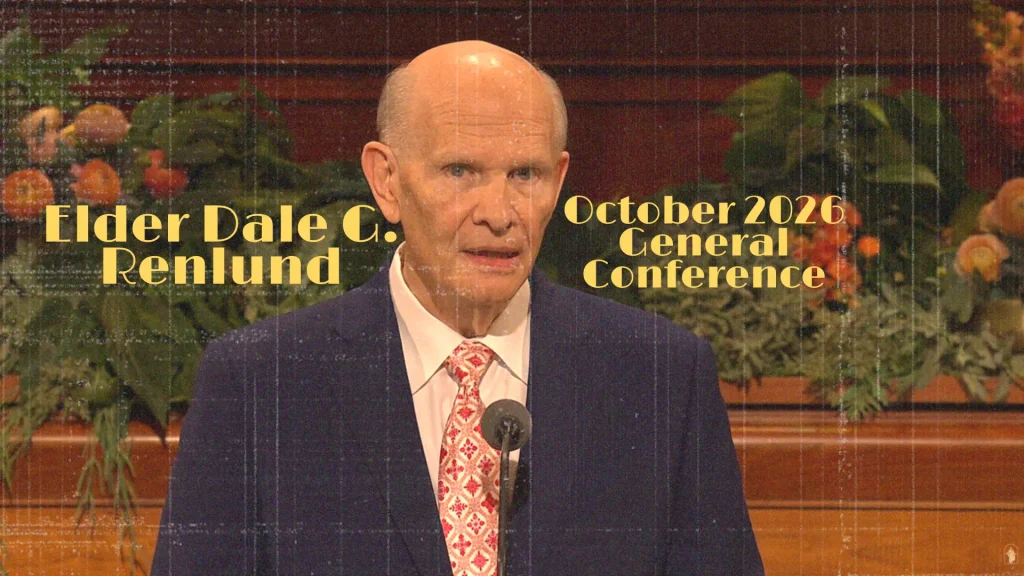
In his General Conference talk, “How Long Will It Be Ere They Believe Me?”, Elder Dale G. Renlund teaches that we can experience peace and joy in our present circumstances by remembering God’s goodness, trusting His promises, and placing our faith in Jesus Christ.
Through a memorable story about a heart transplant patient, the experiences of the children of Israel, and a personal lesson from his sister, Elder Renlund reminds us that even faithful disciples can lose sight of God’s blessings when life’s immediate difficulties consume their attention.
One of the most comforting messages of this talk is that God’s promises are not reserved for people whose lives seem more righteous, successful, or spiritually impressive than ours. His promises apply to us, too.
This Relief Society lesson help divides Elder Renlund’s message into 10 chronological teaching sections. Each section includes direct quotes from the talk, doctrinal insights, discussion questions, object lesson ideas, and personal sharing prompts.
Teachers can use these resources to create a lesson that invites meaningful conversation, strengthens faith in Jesus Christ, and helps sisters recognize the Lord’s promises in their own lives.
Section 1: When Life’s Small Frustrations Cause Us to Forget God’s Miracles
The Principle
It is possible to experience extraordinary blessings and still become consumed by everyday frustrations.
Elder Renlund begins with the experience of Mr. Martin, a heart transplant patient who survived life-threatening complications and two transplants. Despite receiving a remarkable second chance at life, Mr. Martin became upset about his hospital breakfast.
This experience illustrates how easily our immediate circumstances can overshadow the blessings we have received.
Gratitude does not require us to pretend that difficulties are insignificant. Instead, it invites us to recognize God’s goodness alongside those difficulties.
Direct Quotes from the Talk
“Fortunately, the marginal heart functioned beautifully. Within hours, Mr. Martin’s liver, kidneys, and lungs began to recover, and the mechanical pumps were removed. Ten days later, I walked into Mr. Martin’s hospital room, knowing that he would be discharged from the hospital the next day. He was sitting on his bed, gripping his breakfast tray, and was clearly irritated. I asked what was wrong. Through clenched teeth, Mr. Martin replied, ‘The oatmeal isn’t hot, and the milk isn’t cold!’”
“But at that moment, Mr. Martin focused on the cold oatmeal in front of him and seemingly dismissed the miracle he had experienced. He lost sight of the bigger picture, both where he had been and the promise the future now held.”
“We too can easily fall into the same trap that Mr. Martin did that morning in the hospital, especially when our day-to-day challenges loom. We focus on the here and now—the ‘cold oatmeal’—and lose sight of the bigger picture, both where we have been and God’s promises to us.”
10 Relief Society Discussion Questions
- Why do you think it is sometimes easier to notice what is going wrong than what God has already made right?
- What does Elder Renlund’s story about Mr. Martin teach us about perspective?
- What might “cold oatmeal” represent in our everyday lives?
- How can small frustrations gradually influence our feelings about God?
- What is the difference between acknowledging our difficulties and allowing them to consume our perspective?
- Why might we forget spiritual experiences after the immediate excitement or relief has passed?
- How can remembering past blessings change the way we approach current challenges?
- What practices help us recognize God’s hand when our circumstances feel ordinary or disappointing?
- How can we help someone see the bigger picture without minimizing their struggles?
- What would change in our lives if we regularly considered where God has brought us from and what He has promised ahead?
5 Object Lesson Ideas
1. The Cold Oatmeal
Bring a bowl of oatmeal or display a picture of one. Ask the sisters what Mr. Martin’s breakfast represents. Discuss how small frustrations can become disproportionately important when we lose perspective.
2. The Zoomed-In Photograph
Show a photograph zoomed in so closely that the subject is difficult to recognize. Then reveal the full picture. Explain that our immediate challenges can prevent us from seeing God’s larger work in our lives.
3. The Gratitude Jar
Fill a jar with slips of paper representing blessings, miracles, and answered prayers. Place one slip labeled “Today’s Frustration” on top. Discuss how one difficulty can capture our attention even when many blessings surround it.
4. The Rearview Mirror
Display a small mirror. Explain that although we cannot spend our entire lives looking backward, occasionally remembering where God has brought us can strengthen our confidence in the road ahead.
5. The Pebble and the Mountain
Hold a small pebble close to your eyes so it blocks your view of a larger object or landscape. Explain how a relatively small difficulty can dominate our perspective when it becomes our only focus.
10 Personal Sharing Prompts
- Share a time when you realized you had been focusing on a small frustration while overlooking a greater blessing.
- Describe an experience when gratitude changed your perspective.
- Tell about a blessing you did not fully appreciate until much later.
- Share a time when looking back helped you recognize God’s hand.
- Describe a season when daily responsibilities made it difficult to notice spiritual blessings.
- Share an experience when someone helped you see your circumstances differently.
- Tell about an unexpected miracle or tender mercy you almost overlooked.
- Describe a time when something that once seemed overwhelming eventually became less significant.
- Share a practice that helps you remember answered prayers.
- Tell about a moment when you recognized how far the Lord had brought you.
Section 2: Remembering God’s Past Miracles Strengthens Our Trust in Him
The Principle
The children of Israel witnessed extraordinary miracles, yet they repeatedly struggled to trust God when new challenges appeared.
Their experiences demonstrate that witnessing miracles does not automatically produce enduring faith.
Remembering God’s goodness is an intentional spiritual practice. As we recall His previous help, we strengthen our confidence that He remains aware of us.
Direct Quotes from the Talk
“This is not just a modern phenomenon. As recorded in the Old Testament, the Lord led the children of Israel out of slavery in Egypt. God saved them when they were trapped at the Red Sea and provided for them when they lacked food and water. Even when they complained about a monotonous diet, the Lord miraculously helped them.”
“They survived because of God’s miracles, yet they repeatedly focused on cold oatmeal. As they overlooked both the Lord’s blessings and His promises, their trust eroded in God and in God’s prophet, Moses.”
“When the children of Israel reached the promised land, they were intimidated by the challenges ahead. They again bemoaned their situation, saying, ‘Would God that we had died in the land of Egypt! or would God we had died in this wilderness!’ In other words, they thought that they had it better before and that this challenge was surely too much, even for the Lord.”
10 Relief Society Discussion Questions
- Why did the children of Israel struggle to trust God despite witnessing so many miracles?
- What similarities do you see between their experiences and our own?
- How can fear of an uncertain future cause us to forget previous blessings?
- Why is remembering God’s miracles different from simply knowing that they happened?
- What does the Israelites’ experience teach us about the relationship between gratitude and trust?
- How can repeated complaining influence our spiritual sensitivity?
- Why might we sometimes idealize the past when facing a difficult present?
- How can family stories of faith strengthen future generations?
- What role do scriptures play in helping us remember God’s faithfulness?
- How can we intentionally build a personal history of remembering the Lord?
5 Object Lesson Ideas
1. Stones of Remembrance
Provide several small stones. Invite sisters to think of a blessing or spiritual experience each stone could represent. Connect the activity to scriptural examples of remembering God’s works.
2. The Memory Timeline
Draw a timeline on the board. Mark significant moments when God helped the children of Israel. Then invite sisters to silently consider similar moments in their own lives.
3. The Covered List
Write several blessings on a board, then cover them with paper. Reveal them one at a time while discussing how easily blessings disappear from our immediate attention.
4. The Backpack of Experiences
Place objects representing answered prayers, difficult experiences, and spiritual lessons into a backpack. Explain that past experiences can become resources that strengthen us during future challenges.
5. The Promise Journal
Show a journal containing scriptures, spiritual impressions, or answered prayers. Discuss how recording sacred experiences can help us remember them when faith is tested.
10 Personal Sharing Prompts
- Share a time when remembering a past blessing strengthened you during a new trial.
- Describe a miracle or tender mercy your family continues to talk about.
- Tell about a time when you initially doubted but later recognized God’s help.
- Share an experience when scripture reminded you of God’s faithfulness.
- Describe a spiritual experience you have recorded and returned to.
- Tell about a family member whose faith has influenced your trust in God.
- Share a time when you recognized a pattern of divine help in your life.
- Describe an experience when gratitude helped overcome fear.
- Tell about a moment when a previous trial prepared you for a later one.
- Share something God has done for you that you never want to forget.
Section 3: God’s Question: “How Long Will It Be Ere They Believe Me?”
The Principle
Elder Renlund draws attention to the Lord’s question to the children of Israel after they repeatedly doubted His ability to help them.
The question invites us to examine whether we truly trust God’s character, faithfulness, and promises.
Trusting God does not mean we know exactly what He will do. It means we believe He will remain faithful to His covenants, even when the outcome is uncertain.
Direct Quotes from the Talk
“Scripture records the Lord’s response: ‘And the Lord said unto Moses, … how long will it be ere they believe me, for all the signs which I have [shown] among them?’ In other words, the Lord was asking: ‘Why don’t they trust me? Despite all I have done, why won’t they believe me?’”
“How often the Lord reassured the children of Israel, and reassures us, of His constancy, declaring, ‘I will never break my covenant with you.’”
“Perhaps you have been served more than your share of cold oatmeal. Perhaps, like the children of Israel, you have doubted God’s care for you, His willingness to succor you, or His capacity to keep His promises. Yet God invites us to trust Him and His promises.”
10 Relief Society Discussion Questions
- What feelings arise when you consider the Lord’s question, “How long will it be ere they believe me?”
- How is believing in God different from believing God?
- Why can trusting God’s promises become difficult during prolonged trials?
- What does God’s declaration that He will not break His covenant teach us about His character?
- How can we develop trust when we do not understand His timing?
- What is the relationship between covenant keeping and confidence in God’s promises?
- How might our prayers change if we approached them with greater trust?
- What can we learn from the Lord’s patience with the children of Israel?
- How can we strengthen faith without expecting ourselves to be free from every doubt?
- What is one promise of God you want to trust more fully?
5 Object Lesson Ideas
1. The Trust Fall Alternative
Instead of a physical trust fall, place a sturdy chair in front of the class. Discuss why we sit without repeatedly testing whether the chair will hold us. Compare this with learning to rely on God’s trustworthy character.
2. The Unopened Gift
Wrap a box labeled “God’s Promises.” Discuss how receiving a promise and trusting it are different experiences.
3. The Knot of Uncertainty
Tie a knot in a piece of string. Explain that unanswered questions may remain even while our relationship with God becomes stronger.
4. The Anchor
Display an anchor or picture of one. Explain that trust in God’s promises can stabilize us even when our circumstances remain unsettled.
5. The Covenant Reminder
Display a picture of the sacrament table or temple. Discuss how covenants remind us of God’s commitments and our relationship with Him.
10 Personal Sharing Prompts
- Share a time when you had to trust God without knowing the outcome.
- Describe an experience when a covenant promise gave you courage.
- Tell about a season when God’s timing differed from your expectations.
- Share a scripture that helps you trust the Lord.
- Describe a moment when you felt reassured of God’s faithfulness.
- Tell about a time when your trust grew gradually rather than immediately.
- Share an experience when prayer helped you surrender an outcome.
- Describe how a past trial changed your understanding of God’s promises.
- Tell about someone whose trust in God inspires you.
- Share a time when you chose faith while still having unanswered questions.
Section 4: Jesus Christ Offers Peace and Joy in Our Present Circumstances
The Principle
One of the central messages of Elder Renlund’s talk is that peace and joy are possible even before our circumstances improve.
Jesus Christ has already overcome the world. Because of Him, we do not have to overcome every difficulty through our own strength.
Our covenant relationship with Him gives us access to spiritual peace that is not dependent on a trouble-free life.
Direct Quotes from the Talk
“During His mortal ministry, the Savior told His disciples: ‘These things I have spoken unto you, that in me ye might have peace. In the world ye shall have tribulation: but be of good cheer; I have overcome the world.’”
“Jesus overcame the world; we do not have to do so ourselves. When our faith is centered on Jesus Christ, He promises spiritual peace no matter our circumstances. We can experience joy in our here and now because of Him and through our covenant relationship with Him.”
10 Relief Society Discussion Questions
- What does it mean that Jesus Christ has overcome the world?
- How does knowing that the Savior has already overcome the world change our perspective on personal challenges?
- What is the difference between spiritual peace and the absence of problems?
- Why is it important that Jesus promises peace “in me” rather than peace in the world?
- How can we experience joy without denying our sadness or grief?
- What role do covenants play in helping us access the Savior’s peace?
- How can we recognize spiritual peace when our circumstances remain difficult?
- Why might we mistakenly believe that happiness must wait until a trial ends?
- What does it look like to rely on Christ rather than our own ability to control outcomes?
- How can we help others discover peace through Jesus Christ?
5 Object Lesson Ideas
1. The Storm in a Jar
Fill a clear jar with water and gently swirl it. Discuss how life’s circumstances can feel unsettled. As the water settles, connect the illustration to the peace Christ can provide. Clarify that His peace can be present even when external problems continue.
2. The Umbrella and the Rain
Display an umbrella. Discuss the difference between expecting God to prevent every storm and trusting Him to sustain us through storms.
3. The Battery and the Power Source
Show a rechargeable device. Explain that our strength is limited, but we can continually turn to Jesus Christ for spiritual renewal.
4. The Two Lists
Write “Circumstances I Cannot Control” and “Ways I Can Turn to Christ” on the board. Invite sisters to identify faithful choices available even when circumstances remain unchanged.
5. The Candle in Darkness
Display a battery-operated candle in a dim room. Explain that Christ’s light can provide hope without requiring every surrounding difficulty to disappear.
10 Personal Sharing Prompts
- Share a time when you experienced peace despite difficult circumstances.
- Describe an experience when Jesus Christ helped you endure something you could not change.
- Tell about a moment when you felt joy during an otherwise challenging season.
- Share how your covenants have strengthened you.
- Describe a time when prayer brought peace rather than an immediate solution.
- Tell about a scripture that helped you feel the Savior’s presence.
- Share an experience when you stopped trying to control an outcome and turned to Christ.
- Describe how your understanding of joy has changed over time.
- Tell about someone who demonstrated Christ-centered peace during adversity.
- Share a moment when you felt the Savior helping you carry a burden.
Section 5: Our Redemption Depends on the Righteousness of Jesus Christ
The Principle
Elder Renlund teaches that our hope of redemption rests on the righteousness of Jesus Christ rather than our ability to achieve perfection independently.
This principle can be particularly comforting for sisters who feel inadequate, discouraged by mistakes, or burdened by unrealistic expectations.
Faith in Christ means trusting His redeeming power and receiving the blessings of His Atonement through repentance and covenant discipleship.
Direct Quotes from the Talk
“Faith in Jesus Christ frees us from uncertainty because our hope rests on His faithfulness and righteousness, not on our own.”
“The prophet Lehi testified to his son Jacob, ‘Wherefore, I know that thou art redeemed, because of the righteousness of thy Redeemer.’ Jacob was a good and faithful person. Yet his righteousness would not be the source of his redemption. No, Jacob’s redemption would come through the righteousness of Jesus Christ. The same is true for each of us.”
10 Relief Society Discussion Questions
- What does it mean that our redemption comes through Christ’s righteousness?
- Why might we sometimes act as though we must earn the Savior’s love through perfect performance?
- How can this teaching bring relief to someone struggling with feelings of inadequacy?
- What is the difference between striving to keep commandments and relying on our own righteousness for salvation?
- How does faith in Jesus Christ free us from uncertainty?
- Why is the Savior’s perfect faithfulness a stronger foundation for hope than our own abilities?
- How does repentance demonstrate reliance on Jesus Christ?
- What can we learn from Lehi’s words to Jacob?
- How can we teach children to strive for righteousness without developing perfectionistic expectations?
- How would our discipleship change if we focused more consistently on the Savior’s power to redeem?
5 Object Lesson Ideas
1. The Bridge
Draw a gap between two cliffs and a bridge connecting them. Explain that Jesus Christ makes our return to Heavenly Father possible through His Atonement.
2. The Eraser
Write words such as “Mistakes,” “Regret,” and “Failure” on a whiteboard. Use an eraser to illustrate the possibility of repentance and forgiveness through Christ, while acknowledging that healing may take time.
3. The Heavy Backpack
Place books in a backpack representing guilt and unrealistic expectations. Discuss how repentance and reliance on Christ help us receive His redeeming and strengthening power.
4. The Unfinished Puzzle
Display an incomplete puzzle. Explain that we are still becoming and growing, and our unfinished condition does not place us beyond the Savior’s reach.
5. The Lifeline
Show a rope or picture of a rescue line. Discuss why rescue requires trusting and receiving help rather than insisting on accomplishing everything alone.
10 Personal Sharing Prompts
- Share a time when you felt the Savior’s forgiveness.
- Describe an experience when you learned to rely more fully on Christ’s grace.
- Tell about a time when you struggled with spiritual perfectionism.
- Share how repentance has brought peace into your life.
- Describe a moment when you recognized that your worth is not determined by your mistakes.
- Tell about a scripture that strengthened your confidence in Christ’s Atonement.
- Share an experience when someone helped you better understand the Savior’s mercy.
- Describe how your relationship with Jesus Christ has changed your understanding of righteousness.
- Tell about a time when you felt spiritually strengthened beyond your own abilities.
- Share a lesson you have learned about accepting the Savior’s help.
Section 6: Remembering God’s Mercy Helps Us See the Bigger Picture
The Principle
The Book of Mormon repeatedly invites readers to remember the Lord’s goodness, mercy, and covenant promises.
Remembering is more than recalling information. It is a spiritual practice that can deepen gratitude, strengthen faith, and help us interpret our current circumstances through the lens of God’s eternal purposes.
Direct Quotes from the Talk
“One of the purposes of the Book of Mormon is to show us ‘what great things the Lord hath done … that [we] may know the covenants of the Lord, that [we] are not cast off forever.’ Moroni exhorts us ‘that [we should] remember how merciful the Lord hath been unto the children of men [throughout the ages], and ponder it in [our] hearts.’”
“As we reflect on the great things the Lord has already done and remember His goodness and mercy, we are better positioned to grasp the bigger picture and to rely on His promises to us. We can trust Him.”
10 Relief Society Discussion Questions
- Why does the Book of Mormon place such strong emphasis on remembering?
- How does remembering God’s mercy strengthen our ability to trust Him?
- What does it mean to ponder the Lord’s goodness in our hearts?
- Why is it important to remember God’s blessings to others as well as to ourselves?
- How can studying the Book of Mormon strengthen confidence in covenant promises?
- What can we learn from the phrase “not cast off forever”?
- How does remembering differ from simply expressing gratitude?
- What spiritual habits help us preserve meaningful experiences?
- How can remembering God’s mercy change the way we view our weaknesses?
- What might happen in our homes if we shared more stories of God’s goodness?
5 Object Lesson Ideas
1. The Scripture Chain
Prepare several scripture references about remembering God’s mercy. Invite sisters to connect them into a chain of teachings that reinforce the same principle.
2. The Family Photo Album
Show a photo album. Discuss how photographs preserve family memories and how journals and scriptures can preserve spiritual memories.
3. The Bookmark
Give sisters a paper bookmark labeled “Remember His Mercy.” Invite them to write a scripture or experience they want to remember.
4. The Magnifying Glass
Use a magnifying glass to examine a small object. Explain that intentional reflection helps us notice blessings we might otherwise overlook.
5. The Spiritual Memory Box
Place a scripture, a journal, a temple picture, and a family photograph in a box. Discuss how each can remind us of God’s promises and goodness.
10 Personal Sharing Prompts
- Share a Book of Mormon account that reminds you of God’s mercy.
- Describe a time when scripture study changed your perspective.
- Tell about a spiritual experience you have preserved in a journal.
- Share a moment when you felt God’s mercy during a difficult time.
- Describe a family tradition that helps preserve spiritual memories.
- Tell about a time when you recognized God’s goodness in hindsight.
- Share an experience when remembering the Savior strengthened your faith.
- Describe a promise from scripture that has become personally meaningful.
- Tell about a time when someone else’s testimony reminded you of God’s goodness.
- Share a spiritual memory you hope future generations of your family will know.
Section 7: There Is No Asterisk Excluding You from God’s Promises
The Principle
Elder Renlund shares a personal lesson from his sister Linda, who once believed that God’s promised blessings applied to everyone except her.
Her experience addresses a common spiritual struggle: believing in God’s love and promises generally while doubting that we personally qualify to receive them.
Elder Renlund reassures us that we are not excluded from God’s richest blessings.
Although the timing and manner of fulfillment may differ, the Savior’s promises are trustworthy and personally relevant.
Direct Quotes from the Talk
“I remember learning a lesson, one of many, from my younger sister, Linda. She said that she would read her scriptures and see remarkable blessings promised by the Lord. In her mind, though, she saw a big asterisk that seemed to say, ‘Those blessings apply to everyone—except Linda.’”
“Over the years, Linda came to a different realization. She said, ‘I am not extraordinary enough to warrant an exception. The blessings are promised to me too.’ Linda is extraordinary but still no exception. Neither are you, brothers and sisters; there is no asterisk excluding you from God’s richest blessings. If you think there is, take out a big eraser and obliterate that asterisk. You can rely on God’s promises.”
10 Relief Society Discussion Questions
- Why might someone believe that God’s promises apply to everyone except them?
- How can comparison influence our confidence in God’s love?
- What experiences might cause us to feel spiritually excluded?
- What does Linda’s realization teach us about our relationship with Heavenly Father?
- How can we distinguish between waiting for a blessing and believing we are unworthy of it?
- Why might God’s promises be fulfilled differently for different people?
- How does understanding our divine identity help us trust His promises?
- What would it mean to erase the imaginary asterisk from our own lives?
- How can Relief Society become a place where sisters feel included in God’s promises?
- What promise of God do you need to believe applies personally to you?
5 Object Lesson Ideas
1. The Giant Asterisk
Write a scripture promise on the board and add a large asterisk with the words “Except Me.” Invite the class to discuss why we sometimes mentally add this qualification. Erase it as you read Elder Renlund’s words.
2. The Invitation
Display an invitation addressed to “All of God’s Children.” Discuss how God’s invitation to come unto Christ includes each of us.
3. The Mirror
Hold up a mirror. Invite sisters to consider whether they see themselves as someone God loves and remembers.
4. The Name Cards
Prepare cards with the phrase “God’s Promises Apply to Me.” Invite sisters to privately write their own names on the cards.
5. The Unopened Letter
Display an envelope containing a scripture promise. Discuss how a promise may be available to us even when we struggle to believe it is meant for us.
10 Personal Sharing Prompts
- Share a time when you struggled to believe that God’s promises applied to you.
- Describe an experience when you felt personally remembered by Heavenly Father.
- Tell about a blessing you once believed was out of reach.
- Share a scripture promise that has become meaningful in your life.
- Describe a moment when comparison affected your spiritual confidence.
- Tell about someone who helped you recognize your divine worth.
- Share an experience when God’s love felt especially personal.
- Describe a time when you had to trust a promise that had not yet been fulfilled.
- Tell about a moment when you realized you were not forgotten.
- Share how your understanding of God’s promises has changed as you have grown older.
Section 8: The Savior Has Made Ample Provision for Every Circumstance
The Principle
Elder Renlund teaches that no human circumstance is beyond the redemptive reach of Jesus Christ.
The Savior’s Atonement is both infinite and deeply personal.
This doctrine provides hope for those who wonder whether their family situations, mistakes, losses, unmet righteous desires, or unique challenges somehow place them outside God’s plan.
Christ understands every circumstance and has made provision for redemption according to God’s eternal purposes.
Direct Quotes from the Talk
“The Prophet Joseph Smith taught that Jesus Christ ‘knows the situation of both the living and the dead, and has made ample provision for their redemption, according to their several circumstances, and the laws of the kingdom of God, whether in this world, or in the world to come.’”
“‘Ample provision’ means that all human circumstances are within the Savior’s redemptive reach. The Atonement of Jesus Christ permitted our Heavenly Father to give the Savior all power ‘in heaven and in earth.’”
“The power of the Messiah to save and exalt is profoundly intimate and infinite beyond human comprehension; there is more than enough to cover any breach, need, or deficit for all of us, for each of us.”
10 Relief Society Discussion Questions
- What does the phrase “ample provision” teach us about Jesus Christ?
- Why is it important that the Savior’s redeeming power is both infinite and personal?
- How can this doctrine comfort someone whose life has not followed the path they expected?
- What does it mean that all human circumstances are within Christ’s redemptive reach?
- How does the Savior’s knowledge of the living and the dead expand our understanding of His plan?
- Why might we place limitations on Christ’s power that He has not placed on Himself?
- How can this teaching strengthen our hope for loved ones?
- What does the word “enough” mean to you in the context of the Savior’s Atonement?
- How can we apply this doctrine when facing unresolved questions about eternity?
- How does understanding the Savior’s infinite power change the way we view our future?
5 Object Lesson Ideas
1. The Empty Measuring Cup
Show a measuring cup and discuss the limitations of measuring ordinary resources. Contrast this with the infinite power of the Savior’s Atonement, which cannot be measured by earthly standards.
2. The Patchwork Quilt
Display a quilt made of different fabrics. Explain that each life contains different experiences and challenges, yet all can be encompassed by the Savior’s redeeming work.
3. The Broken Pot
Display a cracked pot or a photograph of one that has been repaired. Discuss how the Savior can bring healing and redemption to lives that feel broken.
4. The Open Door
Display a picture of an open door. Explain that Jesus Christ makes possible blessings and opportunities beyond what we can currently see.
5. The Infinite Symbol
Draw an infinity symbol on the board. Invite sisters to discuss what the infinite nature of Christ’s Atonement means for their personal circumstances.
10 Personal Sharing Prompts
- Share a time when you felt the Savior understood your unique circumstances.
- Describe an experience when you discovered greater hope through the Atonement.
- Tell about a situation when you felt there was no clear solution but found peace in Christ.
- Share a scripture that reminds you of the Savior’s infinite power.
- Describe how your understanding of redemption has grown.
- Tell about a time when you felt the Lord provide something you could not provide for yourself.
- Share an experience when you gained hope for a loved one.
- Describe a moment when you realized Christ’s grace was sufficient for your needs.
- Tell about someone whose faith in the Savior’s redeeming power has inspired you.
- Share a time when the Savior helped you see possibilities beyond your immediate circumstances.
Section 9: Choose to Believe the Lord and Stand on His Promises
The Principle
Near the conclusion of his talk, Elder Renlund returns to the Lord’s question: “How long will it be ere they believe me?”
He invites us to respond by remembering God’s goodness and deliberately choosing to trust His promises.
Faith is not merely an acknowledgment that God exists. It is an active decision to rely on His character, His covenant faithfulness, and His eternal purposes.
Direct Quotes from the Talk
“When I consider what Jesus Christ has done for us, I do not think we want Him asking us, ‘How long will it be ere [you] believe me?’ Strive to remember all the times He has inclined His ear to you, especially when confronted with cold oatmeal.”
“With Moroni, I declare, ‘The eternal purposes of the Lord shall roll on, until all his promises shall be fulfilled.’ We can trust the Lord, especially His promises. These promises apply to you.”
“We can joyfully sing:
Standing on the promises of Christ, my King, …
Standing on the promises that cannot fail …
Standing on the promises, I cannot fall, …
Standing on the promises of God.”
10 Relief Society Discussion Questions
- What does it mean to stand on the promises of God?
- How can we actively choose trust when uncertainty remains?
- Why does Elder Renlund invite us to remember times when the Lord has heard our prayers?
- How does trusting God’s eternal purposes help us face temporary disappointments?
- What is the difference between hoping for a specific outcome and trusting God’s promises?
- How can sacred music strengthen our confidence in the Lord?
- What might it look like to build daily decisions around God’s promises?
- How can we remain faithful when promised blessings seem distant?
- What role does patience play in trusting the Lord?
- How would your life change if you more fully believed that God will keep His promises?
5 Object Lesson Ideas
1. The Solid Foundation
Place a small block on a sturdy surface and another on an unstable surface. Discuss the difference between building our confidence on changing circumstances and building it on God’s promises.
2. The Promise Cards
Prepare cards with scripture promises. Invite sisters to select one they want to study and remember during the coming week.
3. The Walking Path
Lay several sheets of paper on the floor labeled “Faith,” “Remembrance,” “Prayer,” and “Covenants.” Discuss the daily choices that help us continue walking toward Christ.
4. The Unfinished Calendar
Display a calendar with several blank future dates. Discuss how we do not know when every blessing will come, but we can trust the One who makes the promises.
5. The Hymn Reflection
Read or sing a verse of “Standing on the Promises.” Invite sisters to identify words that strengthen their faith.
10 Personal Sharing Prompts
- Share a promise of God you are currently learning to trust.
- Describe a time when remembering an answered prayer strengthened your faith.
- Tell about a hymn that has helped you during uncertainty.
- Share an experience when you chose to believe despite not understanding.
- Describe a season when patience strengthened your relationship with God.
- Tell about a time when a scripture promise sustained you.
- Share how your faith has changed through waiting.
- Describe an experience when the Lord fulfilled a promise differently than you expected.
- Tell about someone who demonstrates steadfast trust in God’s promises.
- Share one way you are learning to stand more firmly on the promises of Christ.
Section 10: God’s Precious Promises Help Us Become Like Him
The Principle
Elder Renlund concludes by testifying that God’s promises are certain and that they serve an eternal purpose.
Through Jesus Christ, we can become partakers of the divine nature.
God’s promises are not only about receiving relief from current difficulties. They are also connected to our eternal growth, transformation, and eventual return to Heavenly Father’s presence.
Direct Quotes from the Talk
“I know that God lives and that Jesus is the Christ. Not only that, but I also know that Their ‘exceeding great and precious promises’ are sure and ‘that by these [we] might be partakers of the divine nature, having escaped the corruption that is in the world.’ Of this I bear solemn witness in the name of Jesus Christ, amen.”
10 Relief Society Discussion Questions
- What does it mean to become a partaker of the divine nature?
- How do God’s promises help us become more like Jesus Christ?
- Why is eternal transformation a greater blessing than temporary relief alone?
- How does keeping an eternal perspective influence our daily decisions?
- What attributes of the Savior are we developing through covenant discipleship?
- How can God’s promises give meaning to difficult experiences?
- Why is the certainty of God’s promises important when life feels uncertain?
- How does our divine potential influence the way we see ourselves?
- How can we help children and loved ones understand their eternal potential?
- What does Elder Renlund’s testimony teach us about the ultimate purpose of trusting God?
5 Object Lesson Ideas
1. The Seed and the Plant
Show a seed and a mature plant. Explain that spiritual growth often occurs gradually and that God’s promises point toward what we can become.
2. The Sculptor’s Clay
Display modeling clay. Discuss how our experiences, choices, repentance, and relationship with Jesus Christ contribute to spiritual transformation.
3. The Before-and-After Picture
Show pictures of a growing tree at different stages. Explain that eternal growth is a process and that our present condition is not our final potential.
4. The Mirror of Divine Identity
Display a mirror with the words “Child of God” nearby. Invite sisters to reflect on their eternal identity and potential.
5. The Unfinished Masterpiece
Display an unfinished painting. Explain that God sees our potential even when we see only our present limitations.
10 Personal Sharing Prompts
- Share a time when you recognized spiritual growth in yourself.
- Describe an experience that helped you become more Christlike.
- Tell about a trial that changed your understanding of your divine potential.
- Share a promise of God that inspires you to keep progressing.
- Describe a time when you saw spiritual growth in someone else.
- Tell about a gospel principle that has transformed your perspective.
- Share how your understanding of eternal life has changed over time.
- Describe a moment when you felt hopeful about who you are becoming.
- Tell about someone whose Christlike attributes inspire you.
- Share one way trusting God’s promises has helped you grow closer to Jesus Christ.
Conclusion: Helping Relief Society Sisters Believe God’s Promises Are for Them
Elder Dale G. Renlund’s message, “How Long Will It Be Ere They Believe Me?”, offers a powerful invitation to reconsider how we respond to life’s challenges.
Like Mr. Martin, we may occasionally become so focused on our immediate frustrations that we overlook the miracles God has already performed.
Like the children of Israel, we may struggle to trust the Lord when the path ahead seems uncertain, even after witnessing His goodness in the past.
And like Elder Renlund’s sister Linda, we may sometimes believe that God’s richest promises apply to everyone except ourselves.
Yet the central message of this talk is one of hope: We can trust Jesus Christ. His promises are certain, His redeeming power is sufficient, and His blessings are not beyond our reach.
For Relief Society teachers, this lesson provides opportunities to help sisters reflect on their personal relationships with Heavenly Father and Jesus Christ. The discussion questions invite thoughtful participation, the object lessons provide visual ways to explore important principles, and the personal sharing prompts encourage meaningful testimony and connection.
Teachers do not need to use every question or activity. Instead, they can prayerfully select the sections and resources that best meet the needs of their sisters, allowing the Holy Ghost to guide the discussion.
A meaningful way to conclude the lesson would be to invite each sister to identify one promise from the scriptures that she wants to trust more fully. Encourage her to study that promise, remember past experiences with the Lord, and consider how she can act in faith during the coming week.
Above all, this lesson can remind every sister that she is personally known and loved by God. Her circumstances may be complicated, her questions may remain unanswered, and her blessings may come differently than expected. But none of those realities place her outside the Savior’s redeeming reach.
As Elder Renlund so beautifully teaches:
“We can trust the Lord, especially His promises. These promises apply to you.”
That is a truth worth remembering, discussing, and carrying into every season of life.



Leave a Reply