Introduction: Finding Strength in Our Divine Identity
What would change in our lives if we truly understood how much Heavenly Father loves us?
Not simply knowing that He loves us, but believing it so deeply that it influences our confidence, relationships, decisions, and willingness to repent.
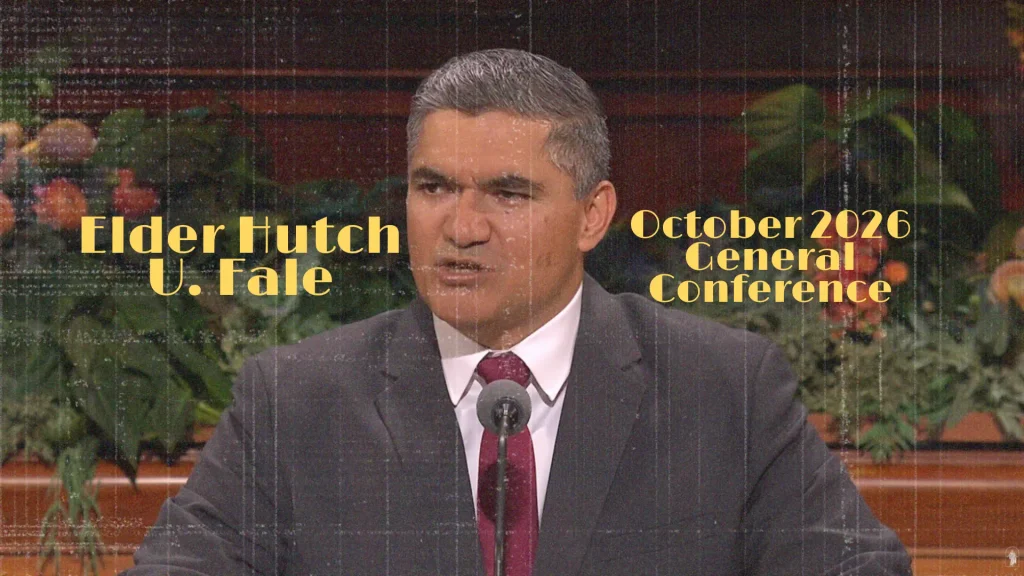
In his General Conference talk, “I Am a Child of God,” Elder Hutch U. Fale teaches that understanding our divine identity is essential to both our daily happiness and our eternal destiny.
He reminds us that being a child of God is not merely an encouraging phrase or a familiar Primary song. It is an eternal truth that gives meaning and purpose to our lives.
Through personal experiences, teachings about eternal families, and powerful testimony of Jesus Christ, Elder Fale explores what it means to be loved by Heavenly Father.
One of the most touching moments in his message comes when he describes showing his children their baby pictures and reminding them that they had done nothing to earn their parents’ love.
Likewise, we did nothing to earn our Heavenly Father’s love.
His love existed before we were born, continues today, and will remain tomorrow.
However, Elder Fale also teaches that understanding God’s love includes recognizing His plan for our salvation. His love does not eliminate the need for repentance, ordinances, covenants, or faithful discipleship.
Instead, His love is the very reason He provided Jesus Christ and the path that leads us home.
This message offers meaningful opportunities for Relief Society sisters to discuss divine identity, self-worth, family relationships, repentance, compassion, covenant discipleship, and the Savior’s redeeming grace.
For sisters who struggle with feelings of inadequacy, complicated family relationships, past mistakes, or uncertainty about their eternal potential, Elder Fale’s teachings offer reassurance and hope.
This lesson help follows the talk chronologically and divides it into 10 discussion sections, each centered on a significant principle or change in emphasis.
Each section includes direct quotes from the talk, a doctrinal explanation, 10 Relief Society discussion questions, 5 object lesson ideas, and 10 personal sharing prompts.
Teachers can prayerfully select the material most appropriate for their class rather than attempting to cover every question or activity in one lesson.

Teaching Relief Society or Elders Quorum soon? Spend less time building slides and more time preparing for meaningful discussion. Gather & Teach helps you create lesson helps and beautiful presentations in minutes.
Section 1: Our Divine Identity Is an Eternal Truth
The Principle
Elder Fale begins with one of the most fundamental truths of the restored gospel: every person is a beloved child of Heavenly Parents.
This identity is not determined by our achievements, appearance, financial circumstances, relationships, or the opinions of others.
It is eternal.
Before coming to earth, we lived as spirit children of Heavenly Parents and accepted Heavenly Father’s plan.
Understanding this truth provides a foundation for recognizing our worth, purpose, and eternal potential.
Elder Fale teaches that our divine identity is not simply comforting knowledge. It protects us from deception and helps us understand the purpose of mortal life.
When we understand who we are, we can make decisions that better reflect who we are becoming.
Direct Quotes from the Talk
“I am a child of God and He loves me. This statement is powerful and empowering. More importantly, it is true, not just for me but for each of us and all of us.”
“All human beings—male and female—are created in the image of God. Each is a beloved spirit son or daughter of heavenly parents, and, as such, each has a divine nature and destiny. …
“In the premortal realm, spirit sons and daughters knew and worshipped God as their Eternal Father and accepted His plan [for] His children.”
“I bear solemn witness of the reality of this ‘plain and precious’ truth, powerful and simple. Understanding our Father’s love and our true identity as His children is essential for our daily and eternal happiness. It prevents deception and gives purpose to this mortal life.”
10 Relief Society Discussion Questions
- What does the statement “I am a child of God” mean to you personally?
- Why do you think Elder Fale describes this truth as both powerful and empowering?
- How is our divine identity different from the identities the world encourages us to embrace?
- Why is it important to remember that every person has divine nature and eternal potential?
- How does knowing we lived with Heavenly Father before mortality influence our understanding of this life?
- What kinds of deception can arise when we forget our divine identity?
- How might our daily decisions change if we consistently remembered who we are?
- Why do you think understanding Heavenly Father’s love is essential for happiness?
- How can we help children and youth develop confidence in their divine identity?
- What is the difference between intellectually knowing we are children of God and spiritually believing that truth?
5 Object Lesson Ideas
1. The Identity Labels
Prepare several sticky notes with labels such as Mother, Employee, Student, Friend, Leader, and Daughter.
Place them on a board.
Then place a larger card above them reading “Child of God.”
Explain that our earthly roles may change, but our divine identity remains constant.
Invite sisters to discuss how remembering this identity can influence the way they approach their responsibilities.
2. The Mirror
Display a mirror.
Ask sisters what people commonly notice when looking in a mirror.
Discuss how Heavenly Father sees more than physical appearance or worldly accomplishments.
Invite sisters to consider what changes when they look at themselves through an eternal perspective.
3. The Name Tag
Display a blank name tag.
Write “Beloved Daughter of God” on it.
Discuss why this identity belongs to every woman, regardless of her circumstances.
4. The Foundation Blocks
Build a small structure using blocks.
Label the foundation “Divine Identity.”
Add blocks labeled Faith, Choices, Relationships, Purpose, and Hope.
Discuss how understanding our divine identity provides a foundation for other aspects of discipleship.
5. The Family Photograph
Display a family photograph.
Explain that earthly family relationships can help us understand our eternal relationship with Heavenly Parents.
Discuss how being part of God’s family influences our sense of belonging.
10 Personal Sharing Prompts
- Share a time when remembering you are a daughter of God strengthened you.
- Describe an experience when you felt Heavenly Father’s love personally.
- Tell about someone who helped you understand your divine worth.
- Share how your understanding of divine identity has changed throughout your life.
- Describe a moment when you recognized that your worth was not determined by your accomplishments.
- Tell about a scripture or hymn that reminds you of your divine identity.
- Share an experience when the Holy Ghost helped you recognize your eternal potential.
- Describe a time when remembering who you are influenced an important decision.
- Tell about someone whose example demonstrates confidence in her divine identity.
- Share what you hope your children or loved ones understand about being children of God.
Section 2: Earthly Families Teach Us About Heavenly Father’s Love
The Principle
Elder Fale next explains that families are part of a divine pattern established by Heavenly Father.
Throughout the scriptures, family relationships help teach us about God’s love, His plan, and His relationship with His children.
Elder Fale points to the New Testament, Book of Mormon, and Old Testament to illustrate the importance of families in God’s eternal purposes.
Families can provide opportunities to experience love, belonging, sacrifice, forgiveness, and commitment.
However, Elder Fale also acknowledges that earthly families are imperfect.
This distinction is important because not everyone experiences a loving or supportive family environment.
The doctrine of eternal families should inspire hope and belonging rather than make individuals feel excluded because of circumstances beyond their control.
Direct Quotes from the Talk
“The divine pattern of families teaches us of our Father’s love and our relationship to Him. In fact, ‘our relationship to God … [is] explained in terms of the family.’”
“Holy scriptures also teach us in terms of the family. The New Testament begins with a young family and a baby born in Bethlehem. The Book of Mormon begins with a family’s journey of faith, and the Old Testament teaches how the Creation was not complete until God had organized a family.”
“It is often through families, despite all their imperfections, that our Father teaches us about His love.”
10 Relief Society Discussion Questions
- Why do you think Heavenly Father uses family relationships to teach us about His love?
- What can earthly families teach us about our relationship with God?
- How do family relationships appear throughout the scriptures?
- What does the Savior’s birth into an earthly family teach us about the importance of families?
- How can imperfect families still provide opportunities for spiritual growth?
- Why is it important to remember that no earthly family perfectly reflects Heavenly Father’s love?
- How can we help those who have difficult family relationships feel included in discussions about eternal families?
- What does the doctrine of eternal families teach about Heavenly Father’s plan?
- How can family relationships help us develop Christlike attributes?
- How can Relief Society become a place of belonging for sisters with different family circumstances?
5 Object Lesson Ideas
1. The Family Tree
Display a family tree.
Explain that families connect individuals across generations.
Discuss how family relationships can help us understand Heavenly Father’s eternal plan.
2. The Imperfect Puzzle
Display a puzzle with a few missing pieces.
Explain that earthly families are often imperfect.
Discuss how Heavenly Father’s love remains constant even when family circumstances are difficult.
3. The Three Scriptures
Display the Bible and Book of Mormon.
Invite sisters to identify important families in scripture.
Discuss what these families teach about faith, sacrifice, and God’s love.
4. The Circle of Belonging
Draw a large circle on the board labeled “God’s Family.”
Discuss how every person belongs within Heavenly Father’s eternal family.
5. The Family Photograph Collection
Display photographs representing different family structures.
Discuss how love, service, and belonging can be experienced through many relationships.
10 Personal Sharing Prompts
- Share a family experience that helped you better understand Heavenly Father’s love.
- Describe something you learned about faith through a family member.
- Tell about a meaningful family tradition.
- Share how an imperfect family experience taught you an important gospel principle.
- Describe someone who provided family-like love or support in your life.
- Tell about a scriptural family whose experiences have influenced you.
- Share a time when family relationships helped you develop patience or compassion.
- Describe how your understanding of eternal families has grown.
- Tell about someone who helped you feel that you belonged.
- Share a way you have tried to create a loving environment for others.
Section 3: Heavenly Father’s Love Is Not Something We Have to Earn
The Principle
Elder Fale shares a tender experience in which he and his wife gathered their children and showed them photographs from when they were babies.
He asked what they had done to earn their parents’ love.
The answer was nothing.
Their parents loved them simply because they were their children.
Through this experience, Elder Fale teaches that Heavenly Father’s love is not earned through accomplishments or perfect behavior.
It is part of our eternal relationship with Him.
This truth is particularly meaningful for individuals who struggle with perfectionism, guilt, or feelings of inadequacy.
Our mistakes may affect our choices, relationships, and spiritual progress, but they do not eliminate Heavenly Father’s love for us.
Direct Quotes from the Talk
“While at a Church meeting last year, I received an impression to do what the teacher was doing. So, in a text, I asked my wife to find a baby picture of each of our children.”
“When I got home, we sat down and showed my kids their pictures. I told them that there are no words to fully express the love we felt when they were born, including the day each picture was taken.”
“I then asked, ‘As of the date of this picture, what had you done to earn our love?’ They lowered their eyes and said, ‘Nothing.’”
“I asked them to look up and said, ‘You are right. You did nothing to earn our love. By that same token, there is nothing you can ever do that will unearn or remove that love from you. You did not earn it; you cannot lose it. It is yours forever.’”
10 Relief Society Discussion Questions
- What stands out to you about Elder Fale’s experience with his children?
- Why do we sometimes feel that we must earn Heavenly Father’s love?
- How is divine love different from worldly approval?
- What does this story teach about our worth in Heavenly Father’s eyes?
- Why is it important to distinguish between God’s love for us and His approval of every choice we make?
- How can understanding God’s love help us overcome feelings of inadequacy?
- What would change if we stopped measuring our worth by our accomplishments?
- How can we help children understand that their worth is not dependent on performance?
- Why might unconditional love make repentance easier rather than less necessary?
- How can we demonstrate this kind of love in our relationships?
5 Object Lesson Ideas
1. The Baby Photograph
Display a baby photograph.
Ask what a newborn has accomplished to deserve love.
Discuss Elder Fale’s teaching that Heavenly Father’s love is not earned.
2. The Empty Resume
Display a blank sheet of paper titled “Qualifications for Being Loved by God.”
Explain that being a child of God is not something we qualify for through achievements.
3. The Gift Box
Display a wrapped gift.
Discuss how love is given rather than purchased or earned.
4. The Permanent Marker
Write “Child of God” on a piece of paper using a permanent marker.
Discuss how our eternal identity remains even when circumstances change.
5. The Measuring Tape
Display a measuring tape.
Explain that the world often measures worth through appearance, income, accomplishments, or popularity.
Discuss why Heavenly Father’s love cannot be measured by these standards.
10 Personal Sharing Prompts
- Share a time when you felt loved despite making a mistake.
- Describe an experience when Heavenly Father helped you recognize your worth.
- Tell about someone who demonstrated unconditional love toward you.
- Share how becoming a parent or caring for someone changed your understanding of divine love.
- Describe a moment when you struggled to believe you were worthy of love.
- Tell about a scripture that reminds you of Heavenly Father’s love.
- Share an experience when someone’s love helped you become better.
- Describe how your relationship with Heavenly Father has influenced your self-worth.
- Tell about a time when you learned to separate your worth from your accomplishments.
- Share what you would want a younger version of yourself to understand about God’s love.
Section 4: God’s Love Gives Us Courage to Grow and Return to Him
The Principle
Elder Fale continues his conversation with his children by explaining that Heavenly Father’s love existed before their birth and will continue forever.
He teaches that understanding this love should inspire us to trust Heavenly Father and live up to our divine potential.
Importantly, he also emphasizes that this love gives us the strength and humility to return when we make mistakes.
This is a beautiful connection between divine love and repentance.
When we understand that Heavenly Father loves us, we can approach Him with greater confidence rather than hiding from Him because of shame.
His love provides both the security to know we belong to Him and the motivation to become more like Him.
Direct Quotes from the Talk
“We need you to always remember that what we feel is but a small fraction of what your Heavenly Father feels for you. You are His child and He loves you.”
“He loved you before you were born, He loves you today, and He will love you tomorrow. He wants you to prepare to be like Him. You must never forget this.”
“We hope this understanding gives you courage to do your best, to trust Him, and to live up to your potential.”
“We also hope it gives you the strength and the humility to come home when you need to, because no matter what has happened, you can always come home, just as you can always turn to your Father in Heaven.”
“There were tears and tender hearts as the Holy Spirit bore witness that this was true.”
10 Relief Society Discussion Questions
- How can knowing Heavenly Father loves us give us courage?
- Why does divine love encourage us to become better rather than remain unchanged?
- What does it mean to live up to our divine potential?
- How can understanding God’s love influence our willingness to repent?
- Why might shame make it difficult to turn toward Heavenly Father?
- What does Elder Fale’s invitation to “come home” teach about repentance?
- How can we help others feel that returning to Christ is always possible?
- What role does humility play in repentance?
- How can parents and leaders create environments where people feel safe admitting mistakes?
- How does the Holy Ghost help us recognize the reality of Heavenly Father’s love?
5 Object Lesson Ideas
1. The Open Door
Display a picture of an open door.
Discuss how Heavenly Father continually invites His children to return to Him.
2. The Road Home
Draw a road leading toward a house.
Discuss how repentance helps us turn toward Heavenly Father.
3. The Growing Plant
Display a growing plant.
Explain that Heavenly Father’s love encourages spiritual growth.
4. The Compass
Display a compass.
Discuss how knowing our divine identity helps us choose a direction that leads toward God.
5. The Welcome Home Sign
Display a sign reading “Welcome Home.”
Discuss how the Savior invites us to return through repentance.
10 Personal Sharing Prompts
- Share a time when Heavenly Father’s love gave you courage.
- Describe an experience when repentance brought you peace.
- Tell about a moment when you felt welcomed back after making a mistake.
- Share how understanding God’s love has helped you trust Him.
- Describe a time when the Holy Ghost confirmed your divine worth.
- Tell about someone who helped you recognize your potential.
- Share an experience when humility helped you grow.
- Describe how your understanding of repentance has changed.
- Tell about a time when you recognized that Heavenly Father had not given up on you.
- Share what the phrase “you can always come home” means to you.
Section 5: God’s Love Extends to Every Family Circumstance
The Principle
Elder Fale broadens his message by acknowledging that not everyone experiences the same kinds of family relationships.
Some people have loving parents, spouses, siblings, or extended family members.
Others experience difficult relationships, loss, separation, loneliness, or an unfulfilled desire for family.
Elder Fale teaches that even when loving earthly family relationships are absent, Heavenly Father’s love remains available.
He also points toward the eternal blessings promised to those who make and keep sacred covenants.
This section provides an important opportunity for Relief Society teachers to help every sister feel included in discussions about family and divine identity.
Direct Quotes from the Talk
“I referenced my children, but for you it might be a special love for siblings, parents, spouse, aunts, uncles, a grandparent you never met before.”
“Or maybe all that is there is a desire for a family or for healthy family-like relationships.”
“Families evidence a divine and eternal pattern, connecting us to our Eternal Father and to His eternal family.”
“Even when a loving family is not part of our earthly experience, knowing that our Heavenly Father loves us can provide power, peace, and comfort, especially as we remember the eternal blessings that await all who make and keep sacred covenants—including all the blessings of an eternal family.”
10 Relief Society Discussion Questions
- Why is it important to acknowledge different family experiences when discussing God’s love?
- How can Heavenly Father’s love provide comfort when earthly relationships are difficult?
- What does it mean to belong to God’s eternal family?
- How can Relief Society help sisters who feel lonely or disconnected?
- Why is it important to avoid assuming everyone has experienced loving family relationships?
- How can covenant promises provide hope when righteous desires remain unfulfilled?
- What are some ways to create family-like relationships through ministering?
- How can we demonstrate sensitivity toward sisters experiencing loss, infertility, divorce, or difficult family relationships?
- What does this teaching reveal about Heavenly Father’s awareness of individual circumstances?
- How can we help others recognize that their divine worth is not determined by their family situation?
5 Object Lesson Ideas
1. The Circle of Belonging
Draw a large circle labeled “Heavenly Father’s Family.”
Discuss how everyone belongs to God’s eternal family.
2. The Empty Chair
Display an empty chair.
Discuss how loneliness and unfulfilled desires can affect people.
Invite sisters to consider ways to help others feel included.
3. The Different Family Pictures
Display photographs representing different family circumstances.
Discuss how Heavenly Father’s love reaches every individual.
4. The Comfort Blanket
Display a blanket.
Discuss how the knowledge of God’s love can provide spiritual comfort.
5. The Temple Picture
Display a temple photograph.
Discuss the eternal promises associated with making and keeping sacred covenants.
10 Personal Sharing Prompts
- Share a time when Heavenly Father’s love comforted you during a family challenge.
- Describe someone who provided family-like support in your life.
- Tell about an experience when you felt included and welcomed.
- Share how covenant promises have given you hope.
- Describe a time when you recognized God’s awareness of your personal circumstances.
- Tell about someone who helped you feel less alone.
- Share an experience when ministering strengthened your sense of belonging.
- Describe how your understanding of eternal families has developed.
- Tell about a time when you were able to extend love to someone experiencing loneliness.
- Share what it means to you to belong to Heavenly Father’s eternal family.
Section 6: God’s Love Does Not Eliminate the Need for Repentance and Covenants
The Principle
After emphasizing the eternal nature of God’s love, Elder Fale offers an important warning.
He teaches that Satan can distort the truth of divine love by suggesting that God’s love makes repentance, obedience, and covenant faithfulness unnecessary.
This is an important doctrinal distinction.
Heavenly Father loves all His children, but His love does not eliminate the need for Jesus Christ, His Atonement, or the ordinances and covenants of the gospel.
Instead, Heavenly Father’s love is the reason He provided the plan of salvation.
The purpose of that plan is not simply to assure us that we are loved, but to help us become like Him and return to His presence.
Direct Quotes from the Talk
“As I bear witness of the eternal depth and nature of our Father’s love, I also offer this warning: Beware of the adversary’s deceitful lie that twists this precious truth.”
“He tries to deceive God’s children into believing that because God loves us, we can be saved regardless of our pride, regardless of our rebellion, regardless of our sins, and regardless of our rejection of His Son and His Son’s servants.”
“Receiving Christ through priesthood ordinances and covenants, and then being faithful to those covenants, is the only way for us to fully understand His love and the only way to exaltation.”
10 Relief Society Discussion Questions
- Why does Elder Fale warn against misunderstanding the doctrine of God’s love?
- What is the difference between being loved by God and being prepared to live in His presence?
- How does repentance demonstrate our willingness to receive the Savior?
- Why are ordinances and covenants essential to Heavenly Father’s plan?
- How can we teach God’s love without minimizing the importance of commandments?
- Why might Satan want us to misunderstand the relationship between love and obedience?
- How do covenants help us become more like Heavenly Father?
- What role does the Atonement play in our ability to change?
- How can we lovingly encourage others to follow Jesus Christ?
- Why is it important to understand both the mercy and the justice of God?
5 Object Lesson Ideas
1. The Road Map
Display a road map.
Explain that knowing someone loves us does not eliminate the need to follow the path that leads to our destination.
Discuss the role of covenants in returning to Heavenly Father.
2. The Prescription
Display an empty medicine bottle.
Explain that a loving physician provides treatment because healing matters.
Discuss how Heavenly Father’s commandments and ordinances are intended to bless us.
3. The Bridge
Display a picture of a bridge.
Discuss how Jesus Christ makes our return to Heavenly Father possible.
4. The Covenant Path
Create a simple path using paper footprints.
Label them Faith, Repentance, Baptism, Holy Ghost, and Enduring in Faith.
Discuss how the gospel of Jesus Christ helps us progress toward eternal life.
5. The Two Truths
Write two statements on the board:
“God loves me.”
“God invites me to change.”
Discuss why both truths are essential.
10 Personal Sharing Prompts
- Share a time when repentance helped you feel closer to Heavenly Father.
- Describe how making covenants has strengthened your relationship with Jesus Christ.
- Tell about an experience when a commandment helped protect you.
- Share how your understanding of divine love has influenced your obedience.
- Describe a moment when you recognized the Savior’s power to help you change.
- Tell about someone who lovingly encouraged you to make a better choice.
- Share an experience when keeping a covenant brought spiritual strength.
- Describe how your understanding of repentance has matured.
- Tell about a time when obedience helped you recognize God’s love.
- Share what it means to you to receive Jesus Christ through sacred ordinances and covenants.
Section 7: Understanding God’s Love Helps Us Better Understand Jesus Christ
The Principle
Elder Fale introduces the first of three blessings that come from understanding Heavenly Father’s love.
He teaches that knowing the Father helps us better understand the Son.
Jesus Christ’s ministry reflects His Father’s love for His children.
When we understand that Heavenly Father loves every person, we can better understand why Jesus Christ devoted His life to saving, healing, teaching, and redeeming others.
This knowledge can also inspire us to participate more willingly in the work of salvation.
Direct Quotes from the Talk
“Knowing and understanding our Father’s love is important for many reasons. I will share just three.”
“First, understanding our Father’s love helps us better understand Jesus Christ. We better understand why He did what He did and why He loves us the way He does.”
“We recognize why He is anxiously engaged in trying to save and bless all of His Father’s children.”
“This understanding makes us eager to quickly and wholeheartedly join Him in His Father’s work. As we are anxiously engaged in this work, we are able to become more like Him.”
10 Relief Society Discussion Questions
- How does understanding Heavenly Father’s love help us better understand Jesus Christ?
- What does the Savior’s ministry reveal about the Father’s love?
- Why do you think Elder Fale describes Jesus Christ as anxiously engaged in saving and blessing others?
- How can recognizing God’s love increase our desire to serve?
- What does it mean to participate in Heavenly Father’s work?
- How does serving others help us become more like Jesus Christ?
- Why is love such an important motivation for discipleship?
- How can we better recognize the Savior’s love in the scriptures?
- What are some ways to participate in the Lord’s work during ordinary daily activities?
- How does understanding the Father’s love change the way we view missionary work, ministering, and temple service?
5 Object Lesson Ideas
1. The Reflection
Display a mirror.
Discuss how Jesus Christ perfectly reflects the character and love of Heavenly Father.
2. The Helping Hands
Display a picture of hands helping someone.
Discuss how disciples can participate in the Savior’s work.
3. The Light
Light a battery-operated candle.
Discuss how Christ brings the light of Heavenly Father’s love into the world.
4. The Service Cards
Prepare cards with simple acts of service.
Invite sisters to consider how these actions can reflect the Savior’s love.
5. The Heart and Hands
Draw a heart connected to two hands.
Discuss how understanding divine love should lead to Christlike action.
10 Personal Sharing Prompts
- Share an experience when serving someone helped you feel closer to Jesus Christ.
- Describe a time when you recognized Heavenly Father’s love through the Savior.
- Tell about someone whose Christlike service inspired you.
- Share how your understanding of Jesus Christ has grown through scripture study.
- Describe a moment when you felt prompted to help someone.
- Tell about a time when ministering strengthened your testimony.
- Share how participating in temple or family history work has influenced your relationship with Christ.
- Describe an experience when you recognized the Savior working through another person.
- Tell about a time when love motivated you to act.
- Share one way you have learned to become more like Jesus Christ.
Section 8: Divine Identity Protects Us from Labels and Inspires Christlike Love
The Principle
The second blessing Elder Fale identifies is freedom from the divisive labels of the world.
When we understand that every person is a child of God, we begin to see ourselves and others differently.
The world often categorizes people according to appearance, income, background, beliefs, accomplishments, or mistakes.
These labels can create division, judgment, and feelings of inadequacy.
But our divine identity is more important than any worldly label.
Elder Fale teaches that understanding God’s love helps us become more willing to repent, slower to judge, and more determined to ensure that others do not feel alone.
Direct Quotes from the Talk
“Second, when we understand God’s love for us and for the rest of His children, we become immune to the divisive and misleading labels of our fallen world, both the labels that people try to put on us and the labels the world tries to put on others.”
“We see ourselves and all of God’s children as beloved and divine.”
“We become quick to repent, slow to judge, and ever hopeful that the best is yet before us.”
“We are forever willing to love and to make sure that no one is ever sitting, standing, or walking alone.”
10 Relief Society Discussion Questions
- What are some labels the world uses to define people?
- How can labels influence the way we see ourselves?
- Why is our identity as children of God more important than worldly categories?
- How can understanding divine identity help us become less judgmental?
- What does it mean to be quick to repent and slow to judge?
- How can we recognize when we are unintentionally labeling others?
- Why is it important to see the divine potential in people whose circumstances differ from ours?
- How can Relief Society help sisters feel valued beyond their roles or accomplishments?
- What does Elder Fale’s invitation to ensure no one is alone teach about ministering?
- How might our communities change if we consistently viewed everyone as beloved children of God?
5 Object Lesson Ideas
1. The Sticky Notes
Place several labels on a board.
Examples might include Successful, Divorced, Unemployed, Popular, Struggling, and Different.
Cover them with a large card reading “Beloved Child of God.”
Discuss why divine identity matters more than worldly labels.
2. The Mirror
Display a mirror with removable sticky notes containing negative labels.
Remove the labels one at a time.
Discuss how the gospel helps us see ourselves more clearly.
3. The Empty Chair
Place an empty chair near the group.
Discuss Elder Fale’s invitation to ensure that no one is left sitting, standing, or walking alone.
4. The Puzzle Pieces
Display several different puzzle pieces.
Explain that every person has unique experiences and contributions.
Discuss how diversity can strengthen a community united by faith in Jesus Christ.
5. The Name Tags
Prepare name tags reading “Beloved Child of God.”
Discuss how our behavior might change if we remembered this identity during every interaction.
10 Personal Sharing Prompts
- Share a time when someone saw beyond a label others had placed on you.
- Describe an experience when you felt included and valued.
- Tell about a time when you learned not to judge someone based on appearances.
- Share how understanding divine identity has influenced your relationships.
- Describe a moment when you recognized someone’s divine potential.
- Tell about someone who helped you feel less alone.
- Share an experience when you reached out to someone who appeared isolated.
- Describe a time when you overcame a negative belief about yourself.
- Tell about a moment when repentance helped you move beyond a past mistake.
- Share how you have learned to see others more as Heavenly Father sees them.
Section 9: It Is Never Too Late to Turn to Jesus Christ
The Principle
The third blessing Elder Fale identifies is protection from the lie that it is too late to change.
Satan often uses discouragement, shame, and hopelessness to convince people that their mistakes have placed them beyond the reach of the Savior.
Elder Fale reminds us that the message of Jesus Christ has always been one of hope and repentance.
Through the parable of the prodigal son and the Savior’s teaching about the lost sheep, we learn that Heavenly Father continues inviting His children to return.
The Savior’s grace is available to those who turn toward Him.
Direct Quotes from the Talk
“Third, understanding our Father’s love protects us from the pernicious lie that it is too late for someone to change, too late for someone to turn to Christ, and too late to receive His redeeming grace.”
“From the prodigal son to leaving the 99 sheep to find the one, our Father’s message, through His Son, has always been that there is still yet time if we turn to Christ today.”
10 Relief Society Discussion Questions
- Why might someone believe it is too late to change?
- How does understanding Heavenly Father’s love protect us from hopelessness?
- What does the parable of the prodigal son teach about repentance?
- What does the parable of the lost sheep teach about the Savior’s concern for individuals?
- Why is it important to remember that change is possible through Jesus Christ?
- How can shame prevent someone from seeking repentance?
- What is the difference between godly sorrow and hopelessness?
- How can we help others recognize that the Savior’s grace is available to them?
- Why does Elder Fale emphasize turning to Christ today?
- How does this teaching influence the way we respond to our own mistakes?
5 Object Lesson Ideas
1. The Eraser
Write a mistake on a whiteboard.
Erase it.
Discuss how repentance allows us to change through Jesus Christ.
Clarify that repentance involves sincere change, not simply pretending a mistake never happened.
2. The Lost Sheep
Display a picture of a shepherd and sheep.
Read Luke 15:4–7.
Discuss the Savior’s concern for every individual.
3. The Open Door
Display a picture of an open door.
Discuss how the Savior continues inviting us to come unto Him.
4. The Turning Arrow
Draw an arrow pointing away from a picture of Jesus Christ.
Turn the arrow toward Him.
Discuss repentance as a change of direction.
5. The New Page
Display a blank page in a notebook.
Discuss how repentance allows us to move forward with hope.
10 Personal Sharing Prompts
- Share a time when repentance brought you peace.
- Describe an experience when the Savior helped you change.
- Tell about a scripture that has strengthened your hope in Christ.
- Share a time when someone extended forgiveness to you.
- Describe how your understanding of grace has grown.
- Tell about an experience when you learned that change was possible.
- Share a moment when you felt the Savior inviting you to return.
- Describe a time when you overcame discouragement through faith.
- Tell about someone whose example demonstrates the power of repentance.
- Share what the parable of the prodigal son means to you personally.
Section 10: Jesus Christ Is the Greatest Evidence of Heavenly Father’s Love
The Principle
Elder Fale concludes by teaching that Jesus Christ is the ultimate evidence of Heavenly Father’s love.
Through His Atonement, Resurrection, and continuing ministry, the Savior makes eternal life possible.
Elder Fale also emphasizes that Jesus Christ taught us to pray to “our Father.”
This phrase reinforces the deeply personal relationship Heavenly Father desires with each of His children.
He then connects the Savior’s work to priesthood keys, sacred ordinances, covenants, and living prophets and apostles.
Finally, Elder Fale shares a personal experience from his childhood in Tonga, when the Holy Ghost confirmed the truth of John 3:16.
His concluding testimony brings the entire message back to its central truth: we are children of God, and He loves us.
Direct Quotes from the Talk
“God’s love is real, and Jesus Christ is evidence of that love. To fulfill His divine responsibility to help His Father’s children, He conquered sin and the grave.”
“While still a mortal, He taught us to pray to ‘our Father.’ Not just His Father, not someone else’s father, but our Father—a loving Heavenly Father who gives better gifts to His children than any other earthly father gives to his.”
“Jesus Christ, through His premortal, mortal, and current ministry, points us to eternal life and personifies our Father’s deep, abiding, and eternal love.”
“Today Christ shows us our Father’s love through priesthood keys held by living prophets and apostles. These priesthood keys allow access to sacred ordinances and covenants that prepare us to return to our Father.”
“Living prophets and apostles stand as witnesses that the resurrected Christ is evidence of the continuing and immeasurable love of our Eternal Father.”
“What I witness before you today first came by way of the Holy Spirit when I was a young boy riding from Nuku‘alofa to my home village of Mu‘a.”
“I was reading a copy of the New Testament that referenced John 3:16 in several different languages: ‘For God so loved the world, that he gave his only begotten Son, that whosoever believeth in him should not perish, but have everlasting life.’ I knew this was true then, and I know it is true now.”
“Jesus is the Christ. He, His restored Church, and the divine pattern of families stand as witnesses of our Father’s love.”
“I, Hutch ‘Ungapapalangi Fale, am a child of God. He loves me and He loves you. May this truth never leave our minds or our hearts, and may it change us forever.”
10 Relief Society Discussion Questions
- Why is Jesus Christ the greatest evidence of Heavenly Father’s love?
- What does John 3:16 teach about the relationship between the Father and the Son?
- Why is it significant that Jesus taught us to pray to “our Father”?
- How does the Atonement demonstrate Heavenly Father’s love for His children?
- What can we learn about divine love from the Savior’s mortal ministry?
- How do priesthood ordinances and covenants help us return to Heavenly Father?
- What role do living prophets and apostles play in helping us understand the Savior?
- How can the Holy Ghost help us develop a personal testimony of Heavenly Father’s love?
- Why do you think Elder Fale concludes by repeating his testimony that he is a child of God?
- How can we allow the truth of our divine identity to change us permanently?
5 Object Lesson Ideas
1. The Picture of Jesus Christ
Display a picture of the Savior.
Invite sisters to identify ways His life demonstrates Heavenly Father’s love.
2. The Gift
Display a wrapped gift.
Read John 3:16.
Discuss the significance of Heavenly Father giving His Only Begotten Son.
3. The Temple Picture
Display a temple photograph.
Discuss how sacred ordinances and covenants help prepare us to return to Heavenly Father.
4. The Family Connection
Display a picture of a family beside an image of Jesus Christ.
Discuss how the Savior makes eternal family relationships possible.
5. The Testimony Card
Provide a card with the words:
“I am a child of God, and He loves me.”
Invite sisters to write a personal testimony or impression on the back.
10 Personal Sharing Prompts
- Share an experience when the Holy Ghost confirmed Heavenly Father’s love for you.
- Describe a time when John 3:16 became meaningful in your life.
- Tell about a moment when the Savior’s Atonement brought you hope.
- Share how prayer has helped you develop a relationship with Heavenly Father.
- Describe an experience when a prophet’s teaching strengthened your testimony.
- Tell about a time when a sacred ordinance helped you feel closer to Jesus Christ.
- Share how your understanding of the Savior has changed throughout your life.
- Describe a moment when you recognized God’s love through another person.
- Tell about a scripture that reminds you of your divine identity.
- Share what you would say if someone asked how you know Heavenly Father loves you.
Conclusion: Let the Truth of Your Divine Identity Change You Forever
Elder Hutch U. Fale’s message, “I Am a Child of God,” offers a powerful reminder that our eternal identity is the foundation of our relationship with Heavenly Father and Jesus Christ.
We are not simply individuals trying to navigate mortality.
We are beloved spirit children of Heavenly Parents, created with divine nature and eternal potential.
This truth can transform how we see ourselves, how we treat others, and how we respond to the challenges of life.
Elder Fale teaches that Heavenly Father’s love is not something we must earn.
It existed before we were born, continues through our mortal experiences, and remains even when we make mistakes.
But His love also invites us to grow.
Through Jesus Christ, we can repent, change, make sacred covenants, and prepare to return to Heavenly Father’s presence.
Understanding our divine identity also changes how we see others.
When we recognize that every person is a child of God, worldly labels become less important. We become more compassionate, more willing to forgive, and more determined to ensure that others feel loved and included.
Perhaps most importantly, this truth reminds us that it is never too late to turn toward Jesus Christ.
No matter where we have been or what challenges we face, the Savior continues inviting us to come unto Him.
Using This Lesson Help in Relief Society
This General Conference talk provides a meaningful opportunity for Relief Society sisters to strengthen their understanding of divine identity and Heavenly Father’s love.
Teachers can use the discussion questions to explore the relationship between divine worth, repentance, covenants, and Christlike love.
The object lessons can help illustrate abstract principles in memorable ways, while the personal sharing prompts invite sisters to connect doctrine with their own experiences.
Because topics such as self-worth, family relationships, and repentance can be deeply personal, teachers should encourage an atmosphere of compassion and understanding.
Some sisters may struggle to believe they are loved by Heavenly Father. Others may carry painful experiences from their families or feel discouraged by past mistakes.
The goal of this lesson is to help every sister recognize that her divine identity remains constant and that Jesus Christ makes spiritual growth and eternal progression possible.
A Final Invitation for Your Relief Society Lesson
Consider concluding the lesson by inviting sisters to reflect on three questions:
1. How would my life change if I consistently remembered that I am a beloved daughter of Heavenly Father?
2. How can understanding God’s love help me become more compassionate toward myself and others?
3. What is one way I can allow my divine identity to influence my decisions this week?
Allow a few moments for quiet reflection.
You might invite sisters to write down a personal impression, a scripture, or a commitment that will help them remember their divine worth.
Then conclude with Elder Fale’s testimony:
“I, Hutch ‘Ungapapalangi Fale, am a child of God. He loves me and He loves you. May this truth never leave our minds or our hearts, and may it change us forever.”
The truth that we are children of God is simple enough for a child to understand, yet profound enough to influence every part of our lives.
It gives us courage when we feel inadequate.
It provides hope when we make mistakes.
It helps us recognize the worth of others.
And it reminds us that Heavenly Father’s greatest desire is for His children to return to Him through Jesus Christ.
We are children of God. He loves us. And as we truly understand that love, it has the power to change us forever.

Leave a Reply