Introduction: Learning to Recognize the Lord’s Promised Blessings
What happens when we faithfully keep a commandment but the blessings we hope for never seem to come?
Perhaps we have prayed for financial stability, greater opportunities, or relief from difficult circumstances. We have tried to obey Heavenly Father’s commandments, made sacrifices, and exercised faith, yet our circumstances have not changed in the ways we expected.
Does that mean the Lord has forgotten us? Have we misunderstood His promises? Or could He be blessing us in ways we have not yet recognized?
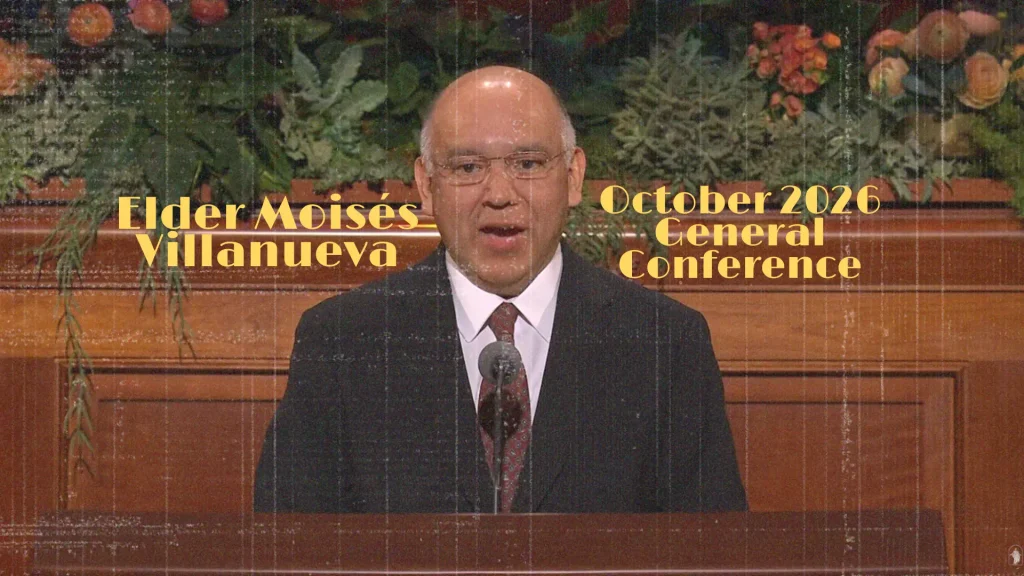
In his General Conference talk, “Prove Me Now Herewith,” Elder Moisés Villanueva explores these questions through personal experiences, scriptural accounts, and powerful testimonies of the law of tithing.
He begins by sharing the remarkable faith of his mother, who chose to pay a full tithe despite the challenges of raising eight children with limited financial resources.
Her decision to trust the Lord’s promises became a defining example of faith and obedience.
Throughout his message, Elder Villanueva reminds us that Heavenly Father is faithful to His promises, but His blessings do not always arrive according to our expectations.
Sometimes those blessings are immediately recognizable.
Other times, they come through quiet spiritual impressions, unexpected protection, opportunities to learn, increased gratitude, or strength to endure difficult circumstances.
The central invitation of this talk is to look beyond the blessings we expect and begin recognizing the many ways Heavenly Father is already blessing our lives.
This Relief Society lesson help explores the doctrines and principles taught throughout Elder Villanueva’s message, offering opportunities for meaningful discussion about faith, sacrifice, obedience, gratitude, and trusting the Lord’s timing.
How to Use This Relief Society Lesson Help
This lesson help follows Elder Villanueva’s talk chronologically, dividing it into 10 discussion sections based on the progression of his message.
Each section includes:
- A direct quotation or brief scriptural excerpt from the talk.
- An explanation of the doctrine or principle being taught.
- 10 engaging Relief Society discussion questions.
- 5 practical object lessons with materials, instructions, and spiritual applications.
- 10 personal sharing prompts to encourage testimony and meaningful experiences.
In total, this resource includes 100 discussion questions, 50 object lessons, and 100 personal sharing prompts.
Teachers do not need to use every section or activity. Instead, select the material most relevant to the needs of your Relief Society sisters.
Because this lesson discusses finances, sacrifice, and personal blessings, create an environment where sisters can participate without feeling obligated to disclose financial circumstances or private experiences.
The purpose is not to compare blessings or measure another person’s faithfulness. It is to strengthen trust in Heavenly Father and His promises.
Section 1: Choosing to Follow Jesus Christ Changes Our Lives
Direct Quote from Elder Villanueva
“When I was 10 years old, my family and I were baptized as members of The Church of Jesus Christ of Latter-day Saints. Entering the covenant path brought some profound changes to our lives.”
Understanding the Doctrine
Elder Villanueva begins his message by describing his family’s conversion to the gospel of Jesus Christ.
At just 10 years old, he and his family were baptized and began a new journey of discipleship.
He explains that entering the covenant path brought significant changes to their lives.
These changes reflected their sincere desire to apply the doctrine of Jesus Christ.
Conversion is more than simply learning new religious beliefs.
It involves allowing the gospel to influence our choices, priorities, relationships, and daily habits.
As we make covenants with Heavenly Father, we commit ourselves to following Jesus Christ.
This commitment may require us to change familiar patterns, sacrifice certain comforts, or develop new habits of obedience.
For Elder Villanueva’s family, one of those changes involved learning to live the law of tithing.
However, the principle extends beyond financial contributions.
Every covenant disciple is invited to continually align their life more closely with the Savior.
Doctrinal Connections
Mosiah 5:2: The people of King Benjamin experienced a mighty change of heart.
2 Corinthians 5:17: Through Jesus Christ, we can become new creatures.
Mosiah 18:8–10: Baptism includes a commitment to follow Christ and serve others.
10 Relief Society Discussion Questions
- Why do you think Elder Villanueva begins his talk by sharing his family’s conversion experience?
- What does it mean to enter the covenant path?
- How can making covenants with God change our priorities?
- Why does genuine conversion often require changes in our daily lives?
- What is the difference between knowing a gospel principle and living it?
- How can obedience strengthen our relationship with Jesus Christ?
- Why might some changes associated with discipleship feel difficult?
- How can we recognize spiritual growth that happens gradually?
- What role does personal sacrifice play in becoming a disciple of Jesus Christ?
- How can we support individuals and families who are adjusting to the responsibilities of covenant discipleship?
5 Object Lesson Ideas
Object Lesson 1: The New Path
Materials: Two pieces of paper representing different pathways.
Instructions: Label one pathway “Old Habits” and the other “Covenant Path.”
Discuss how choosing to follow Jesus Christ can lead us to make different decisions.
Spiritual application: Conversion invites us to align our choices with the Savior’s teachings.
Object Lesson 2: The Changing Heart
Materials: Paper heart and several small labels.
Instructions: Write words such as selfishness, fear, pride, and impatience on removable labels.
Discuss how the gospel helps us replace these attitudes with faith, humility, and love.
Spiritual application: Jesus Christ can help us experience lasting changes of heart.
Object Lesson 3: The Foundation
Materials: Building blocks.
Instructions: Build a small structure without a stable foundation, then rebuild it on a firm surface.
Spiritual application: Covenants with Heavenly Father provide a foundation for discipleship.
Object Lesson 4: The Journey Map
Materials: Road map.
Instructions: Show how a journey involves a starting point, direction, and continued progress.
Spiritual application: Baptism begins a lifelong journey of following Jesus Christ.
Object Lesson 5: The Small Changes Jar
Materials: Clear jar and small stones.
Instructions: Add a stone for each small act of discipleship mentioned by class members.
Spiritual application: Consistent acts of faith can lead to significant spiritual growth.
10 Personal Sharing Prompts
- Share an experience when living the gospel required you to make a meaningful change.
- Describe how your understanding of the covenant path has developed.
- Tell about someone whose conversion strengthened your testimony.
- Share a gospel principle that has influenced your daily decisions.
- Describe a small act of obedience that brought unexpected blessings.
- Tell about a time when you felt closer to Jesus Christ through covenant keeping.
- Share how your family’s gospel traditions have influenced your faith.
- Describe an experience when discipleship required sacrifice.
- Tell about a time when you recognized spiritual growth in yourself.
- Share what entering or continuing on the covenant path means to you.
Section 2: Exercising Faith When Obedience Requires Sacrifice
Direct Quote from Elder Villanueva
“Perhaps the change that required the greatest faith and sacrifice was to honorably pay a full tithe.”
Understanding the Doctrine
After describing his family’s conversion, Elder Villanueva identifies the law of tithing as one of the most challenging commandments for his family to embrace.
His mother was raising eight children while facing significant financial difficulties.
Yet she chose to obey the law of tithing because she trusted Heavenly Father’s promises.
Her decision demonstrates a central principle of discipleship:
Faith often requires us to act before we can see the outcome.
It is relatively easy to express trust in Heavenly Father when obedience requires little sacrifice.
But our faith may be tested when following His commandments seems difficult or when we cannot immediately understand how everything will work out.
The law of tithing provides an opportunity to demonstrate trust in Heavenly Father.
Paying tithing is not a transaction that guarantees financial prosperity.
Rather, it is an act of worship, obedience, and faith.
Elder Villanueva’s mother’s example reminds us that the value of obedience is not determined by the ease of our circumstances.
Her willingness to trust Heavenly Father during hardship became a lasting testimony to her son.
Doctrinal Connections
Malachi 3:10: The Lord invites His people to bring their tithes into the storehouse and trust His promises.
Proverbs 3:5–6: Trust in the Lord rather than relying solely on personal understanding.
Ether 12:6: Faith is tested before a witness is received.
10 Relief Society Discussion Questions
- Why might paying tithing have required significant faith from Elder Villanueva’s mother?
- What does her example teach us about trusting Heavenly Father?
- Why can obedience feel more difficult during seasons of financial uncertainty?
- How does sacrifice help us understand the depth of our faith?
- What is the difference between obeying because we expect a particular blessing and obeying because we trust God?
- How can we strengthen our faith when obedience requires something difficult?
- Why is it important to avoid comparing our sacrifices with those of others?
- How can parents and other family members teach faith through their examples?
- What can we learn from people who remain faithful during challenging circumstances?
- How does the law of tithing invite us to recognize Heavenly Father as the source of our blessings?
5 Object Lesson Ideas
Object Lesson 1: The First Portion
Materials: Ten identical objects.
Instructions: Arrange the objects on a table.
Set one aside to represent a full tithe.
Discuss the principle of willingly offering a portion of our increase to the Lord.
Spiritual application: Tithing is an expression of faith and gratitude.
Object Lesson 2: The Trust Walk
Materials: Simple pathway marked with tape.
Instructions: Invite a volunteer to walk along the pathway while following directions from a trusted guide.
Spiritual application: Faith involves trusting Heavenly Father’s direction even when we cannot see the entire outcome.
Object Lesson 3: The Seed of Faith
Materials: Seed and small plant.
Instructions: Discuss how planting a seed requires action before growth becomes visible.
Spiritual application: Faithful obedience often precedes visible blessings.
Object Lesson 4: The Open Hand
Materials: Small object.
Instructions: Hold the object tightly in a closed fist, then open your hand.
Discuss the difference between holding tightly to something and willingly offering it.
Spiritual application: Sacrifice can teach us to trust Heavenly Father with what we value.
Object Lesson 5: The Family Example
Materials: Several connected paper links.
Instructions: Label the links with qualities such as faith, obedience, sacrifice, and trust.
Discuss how one person’s example can influence future generations.
Spiritual application: Faithful choices can bless families beyond the immediate moment.
10 Personal Sharing Prompts
- Share a time when following a commandment required faith.
- Describe an experience when someone else’s sacrifice strengthened your testimony.
- Tell about a parent or family member whose faith influenced you.
- Share how your understanding of tithing has developed.
- Describe a time when you chose obedience despite uncertainty.
- Tell about an experience when sacrifice helped you feel closer to Heavenly Father.
- Share a lesson you learned from someone who remained faithful during hardship.
- Describe how trusting God has influenced your financial priorities, without sharing private details.
- Tell about a time when your faith grew through a difficult decision.
- Share what Elder Villanueva’s mother’s example teaches you about discipleship.
Section 3: The Lord Invites Us to Prove His Promises
Direct Quote from Elder Villanueva
“The Lord taught this important principle:”
Elder Villanueva then cites Doctrine and Covenants 130:20–21, which teaches that blessings are connected to the laws upon which they are predicated.
He also refers to Doctrine and Covenants 58:31, emphasizing the Lord’s faithfulness to His promises.
Understanding the Doctrine
One of the central messages of Elder Villanueva’s talk is that Heavenly Father keeps His promises.
The title, “Prove Me Now Herewith,” comes from Malachi 3:10.
In that verse, the Lord invites His people to obey the law of tithing and trust Him to fulfill His promises.
This invitation teaches that Heavenly Father desires us to exercise faith in His word.
Doctrine and Covenants 130:20–21 further explains that divine blessings are connected to eternal laws.
However, this principle should not be misunderstood to mean that every act of obedience guarantees a specific temporal outcome.
The Lord determines how and when His promises are fulfilled.
Some blessings are immediate.
Others unfold gradually.
Some are spiritual rather than material.
And some promised blessings may not be fully realized until the life to come.
The essential truth is that Heavenly Father is perfectly trustworthy.
Doctrinal Connections
Malachi 3:10: The Lord invites His people to prove His promise concerning tithing.
Doctrine and Covenants 130:20–21: Blessings are connected to divine laws.
Doctrine and Covenants 58:31: The Lord fulfills His promises.
10 Relief Society Discussion Questions
- What does the phrase “Prove Me Now Herewith” teach us about Heavenly Father’s relationship with His children?
- Why is it significant that the Lord invites us to trust His promises?
- How does obedience demonstrate faith?
- What can Doctrine and Covenants 130:20–21 teach us about divine laws?
- Why should we be careful not to assume that obedience guarantees a particular material blessing?
- How can we strengthen our trust in God’s promises when fulfillment is delayed?
- What does Heavenly Father’s perfect faithfulness teach us about His character?
- How do covenants help us develop confidence in the Lord?
- What is the difference between testing God’s promises through faithful obedience and demanding a particular result?
- How can we remember the Lord’s promises during difficult circumstances?
5 Object Lesson Ideas
Object Lesson 1: The Promise Card
Materials: Card containing Malachi 3:10.
Instructions: Read the verse together.
Invite sisters to identify the commandment and the accompanying promise.
Spiritual application: Heavenly Father invites us to exercise faith in His word.
Object Lesson 2: The Foundation of Trust
Materials: Blocks.
Instructions: Build a structure using blocks labeled faith, obedience, trust, and patience.
Spiritual application: Trust in Heavenly Father develops through continued discipleship.
Object Lesson 3: The Unseen Growth
Materials: Seed planted in soil.
Instructions: Discuss how growth may occur beneath the soil before it becomes visible.
Spiritual application: God’s blessings may be developing even when we cannot immediately recognize them.
Object Lesson 4: The Timeline
Materials: Long strip of paper.
Instructions: Mark different points along the timeline to represent immediate, delayed, and eternal blessings.
Spiritual application: The Lord’s promises are fulfilled according to His wisdom and timing.
Object Lesson 5: The Trusting Child
Materials: Picture of a parent holding a child’s hand.
Instructions: Discuss how a child learns to trust a loving parent.
Spiritual application: Heavenly Father invites us to develop confidence in His goodness.
10 Personal Sharing Prompts
- Share a time when a scriptural promise strengthened your faith.
- Describe an experience when you learned to trust Heavenly Father’s word.
- Tell about a blessing you recognized only after some time had passed.
- Share how covenant keeping has influenced your relationship with God.
- Describe a time when you needed patience while waiting for an answer.
- Tell about a scripture that reminds you of Heavenly Father’s faithfulness.
- Share an experience when obedience strengthened your testimony.
- Describe how your understanding of divine promises has changed.
- Tell about someone whose trust in God inspired you.
- Share what it means to you that Heavenly Father keeps His promises.
Section 4: God’s Blessings Come in His Way and Timing
Direct Quote from Elder Villanueva
“Sometimes we expect the Lord’s blessings to come the way we would wish, rather than in His own way and timing.”
Understanding the Doctrine
Elder Villanueva introduces a challenge that many faithful disciples experience.
We may believe in Heavenly Father’s promises while still expecting Him to fulfill those promises in a particular way.
For example, someone who faithfully pays tithing may hope for increased income, a promotion, or relief from financial challenges.
Those desires are understandable.
However, Heavenly Father’s blessings are not always identical to our expectations.
The Lord sees our lives from an eternal perspective.
He understands needs and opportunities that we may not recognize.
His blessings may come through greater wisdom, strengthened relationships, spiritual guidance, improved judgment, or the ability to endure difficult circumstances.
Sometimes blessings also come through material provision.
The important distinction is that we do not determine the exact form or timing of God’s promised blessings.
Faith includes trusting Heavenly Father when His answers differ from what we hoped for.
Doctrinal Connections
Isaiah 55:8–9: God’s thoughts and ways are higher than ours.
Doctrine and Covenants 88:68: Blessings come in the Lord’s own time and way.
Proverbs 3:5: Trust in the Lord with all your heart.
10 Relief Society Discussion Questions
- Why do we sometimes expect blessings to come in specific ways?
- How can expectations influence our ability to recognize God’s hand?
- What can we learn when Heavenly Father’s answers differ from our desires?
- How does trusting God’s timing strengthen our faith?
- Why might spiritual blessings be more difficult to recognize than material blessings?
- How can we remain faithful when a hoped-for blessing does not come?
- What does this principle teach us about Heavenly Father’s wisdom?
- How can we distinguish between righteous hope and rigid expectations?
- Why is it important to avoid interpreting another person’s circumstances as evidence of their faithfulness?
- How can we develop greater peace while waiting upon the Lord?
5 Object Lesson Ideas
Object Lesson 1: The Wrapped Gift
Materials: Wrapped box containing an unexpected but useful item.
Instructions: Ask sisters what they expect might be inside.
Reveal the item and discuss how expectations can differ from reality.
Spiritual application: Heavenly Father’s blessings may not look the way we anticipate.
Object Lesson 2: The Different Routes
Materials: Map showing multiple routes to the same destination.
Instructions: Discuss why different routes may be appropriate under different circumstances.
Spiritual application: God’s guidance may differ from our preferred path.
Object Lesson 3: The Waiting Seed
Materials: Seeds at different stages of growth.
Instructions: Discuss how growth requires time.
Spiritual application: Some blessings unfold gradually.
Object Lesson 4: The Perspective Puzzle
Materials: Puzzle with several pieces missing.
Instructions: Display an incomplete puzzle.
Discuss how difficult it can be to understand the full picture.
Spiritual application: Heavenly Father understands circumstances beyond our limited perspective.
Object Lesson 5: The Calendar of Faith
Materials: Calendar.
Instructions: Ask sisters to consider how often they attach expectations to particular dates.
Discuss the importance of remaining faithful when circumstances do not change on our preferred schedule.
Spiritual application: Trust includes accepting the Lord’s timing.
10 Personal Sharing Prompts
- Share a time when a blessing came differently than you expected.
- Describe an experience when you learned to trust God’s timing.
- Tell about a prayer that was answered in an unexpected way.
- Share how your understanding of blessings has changed over time.
- Describe a season when patience strengthened your faith.
- Tell about a time when an unexpected opportunity became a blessing.
- Share a scripture that helped you during a period of waiting.
- Describe how you have learned to recognize spiritual blessings.
- Tell about someone whose faith helped you trust Heavenly Father.
- Share what it means to you to trust God’s wisdom rather than your own expectations.
Section 5: Recognizing Significant but Subtle Blessings
Direct Quote from Elder Villanueva
Elder Villanueva quotes Elder David A. Bednar’s teaching that blessings associated with tithing can be meaningful yet subtle and easily overlooked.
Understanding the Doctrine
One of the most important teachings in Elder Villanueva’s message is that some of Heavenly Father’s blessings are difficult to recognize.
We often notice dramatic changes in our circumstances.
A new job, unexpected financial assistance, or recovery from illness may immediately draw our attention.
However, many blessings are quieter.
They may include peace during uncertainty, wisdom in decision-making, improved relationships, or the ability to manage our responsibilities more effectively.
Because these blessings do not always appear extraordinary, we may overlook them.
Elder Villanueva encourages us to become more intentional about recognizing Heavenly Father’s influence.
This requires reflection, gratitude, and spiritual sensitivity.
Rather than focusing exclusively on what has not happened, we can ask what blessings may already be present.
Doctrinal Connections
1 Nephi 1:20: The tender mercies of the Lord are over those He has chosen.
Doctrine and Covenants 59:21: The Lord is pleased when we acknowledge His hand in all things.
Alma 34:38: We are encouraged to live in thanksgiving daily.
10 Relief Society Discussion Questions
- What makes some blessings easy to overlook?
- Why might we focus more on what we lack than on what we have received?
- How can gratitude increase our awareness of Heavenly Father’s influence?
- What are examples of subtle spiritual blessings?
- How can the Holy Ghost help us recognize blessings?
- Why is it important not to measure God’s love solely through material circumstances?
- How can reflection strengthen our testimony?
- What is the relationship between gratitude and faith?
- How can we help children and family members recognize quiet blessings?
- What might change if we regularly looked for the Lord’s tender mercies?
5 Object Lesson Ideas
Object Lesson 1: The Hidden Blessings
Materials: Small objects hidden around the classroom.
Instructions: Invite sisters to find the objects.
Discuss how things can be present even when we do not immediately notice them.
Spiritual application: Heavenly Father’s blessings may require intentional recognition.
Object Lesson 2: The Gratitude Glasses
Materials: Pair of glasses.
Instructions: Discuss how lenses influence what we see.
Spiritual application: Gratitude can change the way we interpret our circumstances.
Object Lesson 3: The Blessing Jar
Materials: Jar and slips of paper.
Instructions: Invite sisters to write down examples of blessings they have recognized.
Place the papers in the jar.
Spiritual application: Remembering blessings can strengthen faith.
Object Lesson 4: The Magnifying Glass
Materials: Magnifying glass.
Instructions: Examine a small object closely.
Discuss how attention reveals details we might otherwise miss.
Spiritual application: Thoughtful reflection helps us recognize subtle blessings.
Object Lesson 5: The Daily Record
Materials: Small notebook.
Instructions: Encourage sisters to record one blessing each day for a week.
Spiritual application: Consistent gratitude can increase awareness of God’s goodness.
10 Personal Sharing Prompts
- Share a subtle blessing you recognized only after reflection.
- Describe an experience when gratitude changed your perspective.
- Tell about a time when the Holy Ghost helped you recognize God’s hand.
- Share a blessing you once considered ordinary.
- Describe how keeping a gratitude journal has influenced you, if applicable.
- Tell about a time when a small kindness became a meaningful blessing.
- Share how your understanding of tender mercies has developed.
- Describe an experience when spiritual guidance blessed your daily life.
- Tell about someone who helped you recognize blessings.
- Share what you have learned about Heavenly Father’s care through small experiences.
Section 6: Making a Personal List of the Lord’s Blessings
Direct Quote from Elder Villanueva
Elder Villanueva describes making a list of blessings he recognized through faithfully living the law of tithing.
His examples include steady employment, good health, preserved possessions, educational opportunities, gratitude, and spiritual guidance.
Understanding the Doctrine
After considering Elder Bednar’s teaching about subtle blessings, Elder Villanueva decided to make a personal list.
As he reflected, the Holy Ghost helped him recognize numerous blessings.
Some were temporal, such as employment and the preservation of his home and possessions.
Others were spiritual, including gratitude and the ability to recognize the Holy Ghost.
This experience illustrates the power of intentional remembrance.
We may be surrounded by blessings without fully recognizing them.
Writing them down can help us identify patterns of divine care.
It can also strengthen our faith during future difficulties.
However, it is important to remember that Elder Villanueva’s list describes his personal experience.
Not every faithful tithe payer will experience the same blessings.
A person may faithfully obey the law of tithing and still experience unemployment, illness, financial loss, or other hardships.
The purpose of the exercise is not to create a checklist of expected outcomes.
Instead, it is to recognize the ways Heavenly Father has personally blessed us.
Doctrinal Connections
Moroni 10:3: Remember how merciful the Lord has been.
Psalm 103:2: Forget not all His benefits.
Alma 37:36–37: Counsel with the Lord in all your doings.
10 Relief Society Discussion Questions
- Why was making a list of blessings meaningful for Elder Villanueva?
- How can writing down blessings strengthen our testimonies?
- What can we learn from the variety of blessings he recognized?
- Why is it important to distinguish personal experiences from universal expectations?
- How can we recognize blessings without comparing our circumstances with others?
- What role does the Holy Ghost play in helping us remember?
- How can recording spiritual experiences bless future generations?
- Why might gratitude be especially important during difficult seasons?
- How can remembering past blessings strengthen our trust in future promises?
- What is one practical way to make gratitude a more intentional part of our lives?
5 Object Lesson Ideas
Object Lesson 1: The Blessing Inventory
Materials: Paper divided into temporal and spiritual blessings.
Instructions: Invite sisters to privately list blessings in both categories.
Spiritual application: Reflection helps us recognize different expressions of Heavenly Father’s care.
Object Lesson 2: The Memory Box
Materials: Small box and note cards.
Instructions: Place written memories of meaningful blessings inside the box.
Spiritual application: Remembering spiritual experiences can strengthen future faith.
Object Lesson 3: The Gratitude Chain
Materials: Paper strips and tape.
Instructions: Write blessings on strips and connect them into a chain.
Spiritual application: Recognizing one blessing often helps us notice others.
Object Lesson 4: The Two Columns
Materials: Whiteboard.
Instructions: Create columns labeled “Expected Blessings” and “Recognized Blessings.”
Discuss how the categories may differ.
Spiritual application: Heavenly Father’s blessings may be different from our expectations.
Object Lesson 5: The Spiritual Journal
Materials: Notebook.
Instructions: Demonstrate how to record a meaningful experience with a date and a few sentences.
Spiritual application: Recording blessings helps preserve our spiritual memories.
10 Personal Sharing Prompts
- Share a blessing you recognized after taking time to reflect.
- Describe how gratitude has influenced your relationship with Heavenly Father.
- Tell about a spiritual experience you chose to record.
- Share how remembering past blessings helped you during a challenge.
- Describe an unexpected blessing that came through an ordinary experience.
- Tell about a time when the Holy Ghost helped you recognize God’s influence.
- Share a lesson you learned from keeping a journal.
- Describe a blessing that strengthened your family.
- Tell about someone whose gratitude inspired you.
- Share what you would include on a personal list of the Lord’s blessings, if you feel comfortable.
Section 7: Recognizing the Lord’s Tender Mercies in Everyday Life
Direct Quote from Elder Villanueva
Elder Villanueva shares an experience involving a faithful sister whose household propane supply lasted longer than expected.
He connects her experience with the account in Deuteronomy 29:5, where the Lord reminded Israel that their clothing and shoes had endured during their wilderness journey.
Understanding the Doctrine
Elder Villanueva shares another example of a blessing that might easily be overlooked.
A faithful sister testified that her propane tank lasted much longer than she expected.
She viewed this experience as a tender mercy from Heavenly Father.
Elder Villanueva connects her testimony to the children of Israel, whose clothing and shoes were preserved during their journey through the wilderness.
Both accounts emphasize the Lord’s ability to provide for His children in ways that may appear ordinary.
Not every blessing comes through receiving something new.
Sometimes we recognize blessings through preservation, endurance, or unexpected sufficiency.
However, these experiences are personal testimonies rather than guarantees that material possessions will last longer for everyone who pays tithing.
The broader principle is that Heavenly Father knows our needs and can provide help in many different ways.
Doctrinal Connections
Deuteronomy 29:5: The Lord preserved the clothing and shoes of Israel.
1 Nephi 1:20: The Lord extends tender mercies to His children.
Matthew 6:25–34: Jesus Christ teaches trust in Heavenly Father’s care.
10 Relief Society Discussion Questions
- What does the sister’s experience with her propane tank teach us about gratitude?
- Why might preservation be a blessing we often overlook?
- What can we learn from the Lord’s care for Israel in the wilderness?
- How can ordinary experiences strengthen our faith?
- Why is it important to recognize that tender mercies differ from person to person?
- How can we avoid assuming that every fortunate circumstance is a guaranteed result of a particular commandment?
- What does this section teach us about Heavenly Father’s awareness of our needs?
- How can gratitude help us recognize blessings during hardship?
- Why are personal testimonies valuable even when others have different experiences?
- How can we develop greater awareness of the Lord’s care in everyday life?
5 Object Lesson Ideas
Object Lesson 1: The Worn Shoes
Materials: Pair of well-used shoes.
Instructions: Discuss how ordinary possessions serve us over time.
Connect the discussion to Israel’s wilderness experience.
Spiritual application: We can express gratitude for everyday provisions.
Object Lesson 2: The Everyday Blessings Basket
Materials: Basket containing ordinary household items.
Instructions: Invite sisters to identify ways these objects bless daily life.
Spiritual application: Many blessings are found in ordinary circumstances.
Object Lesson 3: The Preservation Example
Materials: Two household items, one new and one well-used.
Instructions: Discuss the difference between receiving something new and preserving something already owned.
Spiritual application: Provision may take many forms.
Object Lesson 4: The Tender Mercy Cards
Materials: Cards containing everyday examples of help or encouragement.
Instructions: Read the cards and discuss how different people might recognize blessings.
Spiritual application: Heavenly Father’s care is personal.
Object Lesson 5: The Wilderness Journey
Materials: Picture of a desert pathway.
Instructions: Discuss the challenges faced by the children of Israel.
Identify examples of divine provision in their journey.
Spiritual application: The Lord can sustain His children through difficult circumstances.
10 Personal Sharing Prompts
- Share an everyday blessing that has strengthened your gratitude.
- Describe a time when something you already had met an unexpected need.
- Tell about a tender mercy you recognized during a difficult season.
- Share how the story of Israel in the wilderness influences your faith.
- Describe an experience when you felt Heavenly Father’s care through ordinary circumstances.
- Tell about a time when gratitude helped you feel greater peace.
- Share a personal experience that reminded you of God’s awareness.
- Describe how your understanding of divine provision has changed.
- Tell about someone whose testimony of tender mercies inspired you.
- Share what you have learned about recognizing blessings in daily life.
Section 8: The Widow of Zarephath—Faith Before the Miracle
Direct Quote from Elder Villanueva
“Elijah understood that blessings will come after the trial of our faith.”
Understanding the Doctrine
Elder Villanueva turns to the Old Testament account of the widow of Zarephath.
During a severe famine, the widow had only enough flour and oil to prepare one final meal for herself and her son.
When Elijah asked her to prepare food for him first, the request required extraordinary faith.
Elijah promised that her flour and oil would not fail until the Lord sent rain.
The widow chose to act according to the prophet’s words.
The Lord then fulfilled His promise, preserving her food supply.
This account illustrates the relationship between faith, sacrifice, and divine promises.
The widow acted before she saw the miracle.
She trusted the Lord’s word despite her limited resources.
Her experience also demonstrates the importance of understanding scripture in context.
The widow received a specific promise through Elijah.
Her experience should not be interpreted as a universal guarantee that every financial sacrifice will produce a similar material miracle.
Instead, the account teaches us about trusting Heavenly Father, responding to His direction, and exercising faith when circumstances are uncertain.
Doctrinal Connections
1 Kings 17:8–16: The widow of Zarephath trusts Elijah’s promise.
Ether 12:6: A witness follows the trial of faith.
Mark 12:41–44: Jesus Christ teaches about the widow’s offering.
10 Relief Society Discussion Questions
- What stands out to you about the widow of Zarephath’s circumstances?
- Why would Elijah’s request have required extraordinary faith?
- What does the widow’s response teach us about trust?
- How does this account illustrate the principle of faith before the miracle?
- Why is it important to understand the specific promise given to the widow?
- How can we apply the principle of faith without expecting identical miracles?
- What does the widow’s experience teach us about sacrifice?
- How can we recognize when Heavenly Father is inviting us to act in faith?
- What similarities do you see between the widow and Elder Villanueva’s mother?
- How does this story strengthen your understanding of Heavenly Father’s faithfulness?
5 Object Lesson Ideas
Object Lesson 1: The Last Handful
Materials: Small amount of flour and a little oil in separate containers.
Instructions: Display the limited ingredients.
Read the account of the widow’s circumstances.
Spiritual application: Faith may require trust when resources appear insufficient.
Object Lesson 2: The Empty Container
Materials: Empty jar.
Instructions: Discuss what the jar might have represented to the widow during the famine.
Spiritual application: The Lord’s promises can strengthen us when circumstances seem uncertain.
Object Lesson 3: The Step of Faith
Materials: Paper stepping stones.
Instructions: Label the stones faith, trust, obedience, patience, and gratitude.
Discuss the widow’s actions.
Spiritual application: Faith is expressed through choices.
Object Lesson 4: The Scriptural Comparison
Materials: Two scripture cards: 1 Kings 17 and Mark 12.
Instructions: Compare the widow of Zarephath with the widow who gave her offering at the temple.
Spiritual application: The Lord recognizes the faith and sacrifice behind our offerings.
Object Lesson 5: The Promise and Fulfillment
Materials: Two envelopes labeled “Promise” and “Fulfillment.”
Instructions: Place scripture references inside each envelope.
Read the Lord’s promise and the account of its fulfillment.
Spiritual application: Heavenly Father is faithful to His word.
10 Personal Sharing Prompts
- Share a time when you acted in faith without knowing the outcome.
- Describe an experience when scripture strengthened your trust.
- Tell about someone whose sacrifice inspired you.
- Share a lesson you have learned from the widow of Zarephath.
- Describe a time when obedience required courage.
- Tell about a promise from scripture that has influenced your decisions.
- Share how your understanding of miracles has developed.
- Describe an experience when you felt strengthened during uncertainty.
- Tell about someone who demonstrated quiet faith through sacrifice.
- Share what the widow’s example teaches you about trusting Heavenly Father.
Section 9: Faithful Examples Can Bless Future Generations
Direct Quote from Elder Villanueva
“I am especially grateful that my mother trusted the Lord’s promises and chose to live the law of tithing regardless of our difficult circumstances.”
Understanding the Doctrine
After recounting the widow of Zarephath, Elder Villanueva returns to the example of his mother.
Her decision to faithfully pay tithing became a lasting influence on his testimony.
This teaches that our acts of obedience can bless others beyond ourselves.
Children, family members, friends, and fellow Church members often learn about faith by observing how others respond to difficult circumstances.
A parent who continues to trust Heavenly Father during hardship may teach lessons that remain with a child throughout adulthood.
A Relief Society sister who quietly honors her covenants may strengthen someone else’s faith without realizing it.
Not every act of obedience produces an immediate or visible influence.
Nevertheless, faithful examples can become powerful testimonies of discipleship.
Doctrinal Connections
Alma 56:47–48: The stripling warriors remembered the faith of their mothers.
3 John 1:4: There is joy in seeing others walk in truth.
Doctrine and Covenants 68:25–28: Parents are instructed to teach their children gospel principles.
10 Relief Society Discussion Questions
- Why do you think Elder Villanueva repeatedly returns to his mother’s example?
- How can a parent’s faith influence a child?
- What can we learn from faithful examples outside our immediate families?
- Why are actions sometimes more powerful than words in teaching gospel principles?
- How can our choices influence future generations?
- What role does consistency play in developing a lasting example?
- How can women without children influence others through discipleship?
- Why might we underestimate the impact of quiet faithfulness?
- How can we honor the examples of faithful people who came before us?
- What kind of spiritual legacy would you like to leave?
5 Object Lesson Ideas
Object Lesson 1: The Family Tree
Materials: Picture of a tree.
Instructions: Label branches with gospel principles passed from one generation to another.
Spiritual application: Faithful examples can influence future generations.
Object Lesson 2: The Ripple Effect
Materials: Bowl of water and small pebble.
Instructions: Drop the pebble into the water and observe the ripples.
Spiritual application: One faithful choice can influence many lives.
Object Lesson 3: The Torch of Faith
Materials: Battery-operated candle.
Instructions: Pass the candle between participants.
Discuss how faith can be shared through example.
Spiritual application: Our discipleship can help others recognize gospel truths.
Object Lesson 4: The Written Testimony
Materials: Paper and pens.
Instructions: Invite sisters to write a brief testimony or lesson they hope others will remember.
Spiritual application: Recording faith-filled experiences can bless future generations.
Object Lesson 5: The Connected Chain
Materials: Paper links.
Instructions: Connect links labeled with qualities learned from faithful examples.
Spiritual application: Gospel principles can strengthen relationships across generations.
10 Personal Sharing Prompts
- Share a lesson you learned from a faithful parent or family member.
- Describe someone whose example strengthened your testimony.
- Tell about a time when you recognized the influence of another person’s obedience.
- Share how your family’s faith traditions have shaped your life.
- Describe a gospel principle you hope to pass on to others.
- Tell about a woman whose quiet faith has inspired you.
- Share an experience when someone learned from your example.
- Describe how your understanding of spiritual legacy has changed.
- Tell about a time when remembering someone else’s faith helped you.
- Share what Elder Villanueva’s mother teaches you about lasting discipleship.
Section 10: Heavenly Father Knows Our Needs and Keeps His Promises
Direct Quote from Elder Villanueva
“I bear my testimony that God is our loving Heavenly Father. He knows each of us and is aware of our needs even before we ask (see Matthew 6:8). I testify that Jesus Christ is the Son of the living God and that He directs His Church today. He gives us commandments because He wants us to receive His blessings.”
Understanding the Doctrine
Elder Villanueva concludes his message by testifying of Heavenly Father’s love and Jesus Christ’s divine role.
He reminds us that God knows our needs before we ask.
This truth provides a foundation for trusting His commandments and promises.
Heavenly Father does not give commandments simply to restrict our choices.
His commandments are part of His plan to help us receive blessings and progress spiritually.
The law of tithing is one expression of covenant discipleship.
As we faithfully obey, we demonstrate trust in Heavenly Father and acknowledge His hand in our lives.
Elder Villanueva’s testimony also points us toward Jesus Christ.
The Savior directs His Church and makes our eternal progress possible.
Ultimately, the blessings of covenant discipleship extend far beyond temporary financial circumstances.
Through Jesus Christ, we can receive forgiveness, spiritual strength, covenant blessings, and the promise of eternal life.
Doctrinal Connections
Matthew 6:8: Heavenly Father knows our needs before we ask.
John 14:15: Love for Jesus Christ is expressed through keeping His commandments.
Mosiah 2:41: Those who keep God’s commandments are blessed temporally and spiritually.
10 Relief Society Discussion Questions
- What does it mean to you that Heavenly Father knows your needs before you ask?
- How does understanding God’s love influence your willingness to obey?
- Why does Heavenly Father give His children commandments?
- How can the law of tithing strengthen our relationship with God?
- What have you learned about Jesus Christ through covenant keeping?
- How can we remain faithful when we do not understand the Lord’s timing?
- Why is it important to recognize both temporal and spiritual blessings?
- How does trusting God’s promises bring greater peace?
- What principle from Elder Villanueva’s talk has strengthened your testimony?
- How can we apply the invitation to “prove” the Lord through faithful obedience?
5 Object Lesson Ideas
Object Lesson 1: The Open Windows
Materials: Picture of an open window.
Instructions: Read Malachi 3:10 and discuss the imagery of the windows of heaven.
Invite sisters to identify different forms of divine blessings.
Spiritual application: Heavenly Father’s promised blessings can be both temporal and spiritual.
Object Lesson 2: The Loving Parent
Materials: Picture of a parent caring for a child.
Instructions: Discuss how loving parents seek the well-being of their children.
Relate this to Heavenly Father’s commandments.
Spiritual application: God’s commandments are expressions of His love and wisdom.
Object Lesson 3: The Blessing Tree
Materials: Paper tree and paper leaves.
Instructions: Invite sisters to write examples of blessings on leaves and attach them to the tree.
Spiritual application: Recognizing blessings strengthens gratitude.
Object Lesson 4: The Covenant Path
Materials: Paper pathway.
Instructions: Label sections with faith, repentance, baptism, sacrament, and enduring to the end.
Discuss how covenant keeping helps us remain close to Jesus Christ.
Spiritual application: Obedience is part of our ongoing relationship with Heavenly Father.
Object Lesson 5: The Testimony Card
Materials: Small cards.
Instructions: Invite sisters to write one truth from Elder Villanueva’s message that they want to remember.
Spiritual application: Personal reflection can help turn gospel learning into faithful action.
10 Personal Sharing Prompts
- Share an experience that strengthened your testimony of Heavenly Father’s love.
- Describe a time when you felt God understood your needs.
- Tell about a commandment that has brought blessings into your life.
- Share how your understanding of tithing has developed.
- Describe an experience when you recognized the Lord’s faithfulness.
- Tell about a time when spiritual blessings mattered more than material circumstances.
- Share how Jesus Christ has strengthened you through covenant keeping.
- Describe a scripture that reminds you of God’s promises.
- Tell about a time when gratitude helped you recognize divine care.
- Share your testimony of a principle from Elder Villanueva’s message.
Conclusion: Trusting the Lord and Recognizing the Windows of Heaven
Elder Moisés Villanueva’s General Conference talk, “Prove Me Now Herewith,” offers a powerful reminder that Heavenly Father is faithful to His promises.
Through his mother’s example, the experiences of faithful Church members, and the scriptural account of the widow of Zarephath, Elder Villanueva teaches that obedience often requires faith and sacrifice.
He also reminds us that God’s blessings may come in ways we do not expect.
The Lord’s Blessings Are Not Always What We Expect
One of the central lessons of this talk is that we must be careful not to limit our understanding of blessings to specific material outcomes.
We may hope for financial stability, employment opportunities, or relief from difficult circumstances.
Those desires are understandable.
However, Heavenly Father may bless us through increased wisdom, spiritual strength, gratitude, peace, or opportunities we did not anticipate.
His promises remain trustworthy even when our circumstances are difficult.
Gratitude Helps Us Recognize the Lord’s Hand
Elder Villanueva’s decision to make a list of blessings provides a meaningful invitation for every Relief Society sister.
By intentionally reflecting on our lives, we may begin to recognize blessings that previously seemed ordinary.
We may remember a moment of spiritual guidance.
We may recognize a relationship that strengthened us.
We may discover that Heavenly Father provided peace during a difficult season.
Gratitude does not require us to deny our challenges.
Instead, it allows us to recognize God’s goodness while acknowledging that mortality includes hardship and uncertainty.
Faithful Obedience Can Influence Future Generations
Elder Villanueva’s mother’s example is a powerful reminder that our choices can influence others.
Her willingness to obey the law of tithing during financial hardship became an enduring testimony to her son.
Likewise, our acts of faith may bless family members, friends, and future generations in ways we do not immediately recognize.
We may never fully understand the influence of our quiet obedience.
But Heavenly Father knows our efforts.
A Final Relief Society Invitation
Consider concluding your lesson by inviting sisters to reflect on three questions:
1. What blessing have I been hoping to receive from Heavenly Father?
2. What significant but subtle blessings might I have overlooked while waiting?
3. How can I demonstrate greater trust in the Lord’s promises this week?
Give sisters a few moments to record their thoughts privately.
You might also invite them to create a personal list of blessings during the coming week, following Elder Villanueva’s example.
Encourage them to include both temporal and spiritual blessings.
The purpose is not to prove that every difficulty has been resolved.
Rather, it is to help each sister recognize the many ways Heavenly Father has shown His love and care.
Final Testimony and Reflection
Elder Villanueva concludes by testifying that Heavenly Father knows His children and desires to bless them.
His message invites us to trust the Lord’s commandments, remain faithful to our covenants, and become more attentive to His tender mercies.
The law of tithing is an opportunity to demonstrate faith and gratitude.
But the broader lesson reaches into every aspect of discipleship.
When we trust Heavenly Father, we acknowledge that His wisdom exceeds our own.
When we obey His commandments, we demonstrate our love for Him.
And when we recognize His blessings, our gratitude and faith can deepen.
The windows of heaven may open in ways we never anticipated. As we continue to trust Heavenly Father, we can become more aware of His love, more grateful for His blessings, and more confident that He will fulfill His promises in His own way and timing.

Leave a Reply