Introduction: Understanding the Eternal Promises of Our Covenants
What does it mean to make a covenant with Heavenly Father? And how can we know that the blessings He has promised will ultimately be ours?
For many members of The Church of Jesus Christ of Latter-day Saints, covenants are a familiar part of gospel language. We speak of baptismal covenants, temple covenants, eternal marriage, and the covenant path.
But how often do we stop to consider what makes these covenants eternally binding?
What role does the Holy Ghost play in confirming our covenants? Why is continued faithfulness necessary after receiving sacred ordinances? And what happens when someone else’s choices disrupt the eternal future we had hoped for?
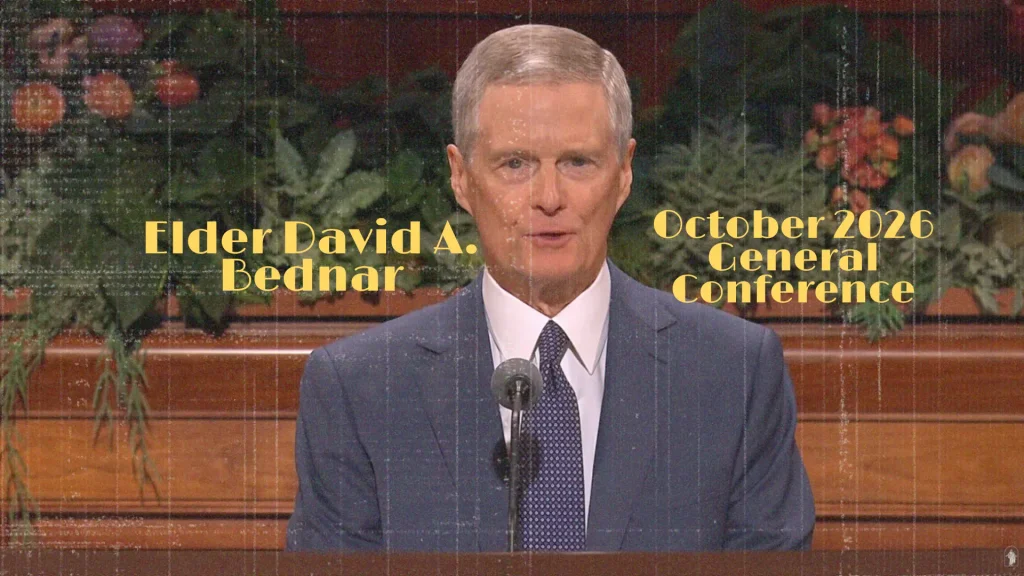
In his General Conference talk, “Sealed by the Holy Spirit of Promise,” Elder David A. Bednar teaches profound truths about the eternal significance of ordinances and covenants.
Beginning with a lesson from President Boyd K. Packer, Elder Bednar describes mortality as a journey back to Heavenly Father’s presence. He then introduces a memorable parable about a damaged passport to illustrate the difference between receiving sacred ordinances and maintaining the spiritual qualifications associated with their promised blessings.
Throughout his message, Elder Bednar explains the role of the Holy Spirit of Promise, the conditional nature of covenant blessings during mortality, and the importance of continually repenting and yielding our hearts to God.
Perhaps one of the most comforting teachings in his message concerns faithful individuals whose temple marriages have been affected by another person’s unrighteous choices.
Elder Bednar offers a powerful reassurance: Heavenly Father’s eternal promises to faithful covenant keepers cannot be defeated by someone else’s misuse of agency.
This lesson is especially meaningful for Relief Society because women experience a wide variety of covenant circumstances.
Some sisters are preparing to receive temple ordinances. Others are faithfully honoring covenants made decades ago. Some are unmarried, divorced, widowed, or navigating painful family circumstances. Others may be struggling with feelings of inadequacy, wondering whether their efforts to keep covenants are enough.
Elder Bednar’s message provides an opportunity to deepen our understanding of the doctrine while offering hope, reassurance, and confidence in the Savior’s power.
This Relief Society lesson help explores the talk through 11 chronological discussion sections, each designed to encourage doctrinal understanding, thoughtful conversation, and personal testimony.
How to Use This Relief Society Lesson Help
This resource follows the progression of Elder Bednar’s talk, dividing it into sections wherever he introduces a new principle, illustration, or doctrinal emphasis.
Each section includes a selected direct quotation, an explanation of the doctrine, 10 discussion questions, 5 object lessons, and 10 personal sharing prompts.
In total, you will find 110 discussion questions, 55 object lessons, and 110 personal sharing prompts.
Because this talk includes sensitive subjects such as divorce, infidelity, family relationships, and eternal marriage, teachers should approach discussions with compassion and sensitivity.
Avoid inviting sisters to disclose private marital difficulties or personal circumstances. Instead, emphasize the universal principles of covenant faithfulness, personal agency, the Atonement of Jesus Christ, and Heavenly Father’s perfect justice.
The quotations below are selected excerpts from the talk you provided. For the complete wording and context of each passage, refer to Elder Bednar’s original message.
Section 1: Mortality Is a Journey Home to Heavenly Father
Direct Quote from Elder Bednar
Elder Bednar begins by sharing a teaching from President Boyd K. Packer:
“No matter what citizenship or race, whether male or female, no matter what occupation, no matter your education, regardless of the generation in which one lives, life is a homeward journey for all of us, back to the presence of God.”
Understanding the Doctrine
Elder Bednar begins his message by establishing an eternal perspective.
Mortality is not simply a collection of experiences, responsibilities, and challenges. It is part of Heavenly Father’s plan to help His children return to His presence.
President Packer’s teaching emphasizes that this divine purpose applies to every person, regardless of background, circumstances, or earthly identity.
We are all children of Heavenly Father.
We have different experiences and responsibilities, but our ultimate destination is the same.
This perspective can transform the way we view our daily lives.
Our choices are not isolated events. They are part of our spiritual journey.
The challenges we face can become opportunities to develop faith, humility, patience, and trust in Jesus Christ.
Understanding mortality as a homeward journey also helps us remember that Heavenly Father has not left us without direction.
Through Jesus Christ, His restored gospel, priesthood ordinances, and sacred covenants, He has provided a way for us to return to Him.
Teaching Focus
Invite sisters to consider how an eternal perspective changes the way they approach ordinary responsibilities and difficult experiences.
The goal is to help class members recognize that their lives have divine purpose, even when their current circumstances feel uncertain.
10 Relief Society Discussion Questions
- What does the phrase “life is a homeward journey” mean to you personally?
- How does remembering our eternal destination influence the choices we make today?
- Why do you think President Packer emphasized that this journey applies to everyone, regardless of circumstances?
- How can an eternal perspective help us during seasons of uncertainty or disappointment?
- What distractions can cause us to lose sight of our ultimate destination?
- How does Jesus Christ make our journey home possible?
- Why is it important to remember that spiritual progress looks different for different people?
- How can we help our families view life through an eternal perspective?
- What does Heavenly Father’s plan teach us about our individual worth?
- How might our daily priorities change if we more consistently remembered that we are preparing to return to God’s presence?
5 Object Lesson Ideas
Object Lesson 1: The Journey Map
Materials: A map and a marker.
Instructions: Mark a starting point and a destination. Discuss how travelers need direction, preparation, and continued movement.
Spiritual application: Heavenly Father’s plan gives our lives direction, while Jesus Christ provides the way home.
Object Lesson 2: The Compass
Materials: A compass.
Instructions: Show how a compass points in a consistent direction, even when the traveler changes position.
Spiritual application: Gospel truths help us maintain an eternal perspective amid changing circumstances.
Object Lesson 3: The Suitcase
Materials: A suitcase and several objects representing priorities.
Instructions: Invite sisters to consider what they would pack for an important journey. Discuss which spiritual qualities matter most for our eternal journey.
Spiritual application: Faith, repentance, humility, and covenant keeping prepare us to return to Heavenly Father.
Object Lesson 4: The Road Signs
Materials: Paper signs labeled Faith, Repentance, Ordinances, Covenants, and Enduring to the End.
Instructions: Arrange the signs along a pathway.
Spiritual application: Heavenly Father has provided guidance for our spiritual journey.
Object Lesson 5: The Destination Picture
Materials: A picture representing a joyful family reunion.
Instructions: Discuss how anticipating a reunion influences the effort we make to reach our destination.
Spiritual application: Remembering our eternal relationship with Heavenly Father can strengthen our desire to return to Him.
10 Personal Sharing Prompts
- Share an experience that helped you recognize your divine purpose.
- Describe a time when an eternal perspective helped you through a challenge.
- Tell about someone who helped you understand Heavenly Father’s plan.
- Share how your understanding of the covenant path has changed over time.
- Describe a moment when you felt Heavenly Father’s guidance.
- Tell about a gospel principle that helps you stay focused on eternal priorities.
- Share an experience when you needed to reconsider your direction.
- Describe how Jesus Christ has helped you continue forward spiritually.
- Tell about a time when you felt reminded that Heavenly Father knows you individually.
- Share what the idea of returning home to Heavenly Father means to you.
Section 2: Receiving Ordinances Is the Quest of a Lifetime—Keeping Covenants Is the Challenge of Mortality
Direct Quote from Elder Bednar
President Packer taught:
“Ordinances and covenants become our credentials for admission into His presence. To worthily receive them is the quest of a lifetime; to keep them thereafter is the challenge of mortality.”
Understanding the Doctrine
This statement introduces one of the most important distinctions in Elder Bednar’s message.
Receiving sacred ordinances and making covenants are essential steps in our eternal progression.
However, receiving an ordinance is not the end of our responsibility.
It is the beginning of an ongoing commitment.
For example, baptism is a sacred ordinance through which we enter into a covenant relationship with Heavenly Father.
But our baptismal covenant is not something we honor only on the day we are baptized.
We continue living that covenant as we strive to remember Jesus Christ, keep His commandments, and follow Him.
Similarly, temple ordinances provide sacred opportunities to enter into covenants with God.
The blessings associated with those covenants require continued faithfulness.
President Packer’s words remind us that covenant discipleship is a lifelong process.
We are not expected to achieve perfection immediately.
Rather, we are invited to continually turn toward Jesus Christ through faith, repentance, and obedience.
Teaching Focus
Help sisters distinguish between receiving an ordinance and faithfully living the covenant associated with it.
Emphasize that continued faithfulness includes sincere repentance, not flawless performance.
10 Relief Society Discussion Questions
- Why do you think President Packer described receiving ordinances as the “quest of a lifetime”?
- What makes keeping covenants the “challenge of mortality”?
- How does this teaching change the way we think about baptism and temple ordinances?
- Why is covenant keeping an ongoing process rather than a one-time accomplishment?
- How can we avoid becoming spiritually complacent after receiving sacred ordinances?
- What does continued faithfulness look like during difficult seasons?
- How does repentance help us remain faithful to our covenants?
- Why is it important to understand the promises we make to Heavenly Father?
- How can the sacrament help us remember and honor our covenants?
- What can we do to make covenant keeping a more intentional part of daily life?
5 Object Lesson Ideas
Object Lesson 1: The Membership Card
Materials: A membership card or library card.
Instructions: Discuss the difference between receiving access to something and actively participating in its benefits.
Spiritual application: Receiving ordinances provides sacred opportunities, while covenant keeping involves continued action.
Object Lesson 2: The Wedding Vows
Materials: A symbolic ring.
Instructions: Discuss how a wedding ceremony begins a marriage, but love and commitment must continue afterward.
Spiritual application: Covenants require ongoing devotion and faithfulness.
Object Lesson 3: The Growing Plant
Materials: A living plant.
Instructions: Explain that planting is only the beginning. Continued care allows the plant to grow.
Spiritual application: Spiritual growth requires consistent nourishment.
Object Lesson 4: The Daily Checklist
Materials: Paper and pen.
Instructions: Invite sisters to identify simple daily practices that help them remember their covenants.
Spiritual application: Small, consistent choices strengthen lifelong discipleship.
Object Lesson 5: The Pathway
Materials: Tape marking a path on the floor.
Instructions: Identify the beginning of the path as receiving an ordinance and the continuing pathway as honoring covenants.
Spiritual application: Covenants are lived through ongoing choices.
10 Personal Sharing Prompts
- Share how your understanding of baptismal covenants has developed.
- Describe a time when remembering your covenants influenced a decision.
- Tell about a spiritual experience connected to receiving an ordinance.
- Share how the sacrament helps you recommit to Jesus Christ.
- Describe an experience when repentance strengthened your discipleship.
- Tell about someone whose covenant faithfulness inspired you.
- Share a lesson you learned about consistency in gospel living.
- Describe how temple worship has influenced your understanding of covenants.
- Tell about a time when you recognized the importance of continued spiritual effort.
- Share what the phrase “challenge of mortality” teaches you about discipleship.
Section 3: The Parable of the Passport—Receiving an Opportunity Does Not Guarantee the Outcome
Direct Quote from Elder Bednar
“The lesson of this story is quite simple: the integrity of a passport must be maintained over time.”
Understanding the Doctrine
Elder Bednar introduces a memorable parable about a man traveling to visit family members in another country.
The man prepares for his trip and arrives at his destination.
However, when he presents his passport to the border official, he discovers a serious problem.
Although his passport was originally valid, it had become damaged.
The personal information page was stained, and a torn page had been repaired without authorization.
Because the passport’s integrity had not been maintained, the official refused to admit him.
Elder Bednar uses this story to illustrate an important spiritual principle.
Receiving sacred ordinances and making covenants provides the opportunity to receive eternal blessings.
However, those ordinances do not automatically guarantee the blessings if we knowingly abandon our covenant commitments.
The analogy is not intended to suggest that ordinary mistakes, weakness, illness, suffering, or circumstances beyond our control invalidate our covenants.
Elder Bednar explicitly acknowledges that the comparison has limitations.
The principle is that covenant discipleship requires ongoing faithfulness.
Teaching Focus
Discuss the difference between having access to a blessing and fulfilling the conditions associated with receiving it.
Avoid portraying Heavenly Father as an unforgiving official searching for minor imperfections. The Savior’s Atonement makes repentance and continued progress possible.
10 Relief Society Discussion Questions
- What stood out to you about Elder Bednar’s passport analogy?
- Why was having a valid passport initially not enough for the traveler?
- How does this story help explain the importance of continued covenant faithfulness?
- What is the difference between receiving an opportunity and receiving its ultimate blessing?
- Why do you think Elder Bednar chose a passport as his illustration?
- What are the limitations of comparing covenants to a physical document?
- How does repentance help us continue honoring our covenants?
- Why should we avoid interpreting this analogy as a demand for immediate perfection?
- How can we maintain spiritual integrity throughout our lives?
- What does the parable teach us about taking our covenants seriously?
5 Object Lesson Ideas
Object Lesson 1: The Passport
Materials: An expired or sample passport, or a printed passport illustration.
Instructions: Explain how passports establish identity and authorize travel.
Relate the illustration to Elder Bednar’s teaching.
Spiritual application: Ordinances and covenants provide sacred opportunities connected to eternal blessings.
Object Lesson 2: The Admission Ticket
Materials: A ticket to an event.
Instructions: Discuss how receiving a ticket creates an opportunity to attend, but additional conditions may still apply.
Spiritual application: Covenant blessings are connected to faithfully honoring divine commitments.
Object Lesson 3: The Damaged Document
Materials: A photocopied document.
Instructions: Show a clean copy and a damaged copy.
Discuss why the integrity of an official document matters.
Spiritual application: Elder Bednar uses the document’s integrity to represent the importance of continued covenant faithfulness.
Object Lesson 4: The Travel Checklist
Materials: Travel checklist.
Instructions: Identify the preparations required before an international journey.
Spiritual application: Our eternal journey requires ongoing spiritual preparation.
Object Lesson 5: The Repair and Renewal
Materials: A torn sheet of paper and tape.
Instructions: Show how physical documents sometimes require authorized replacement rather than improvised repair.
Clarify that spiritual repentance is different from repairing a document.
Spiritual application: Jesus Christ has provided the authorized means for us to repent and continue progressing.
10 Personal Sharing Prompts
- Share what you learned from Elder Bednar’s passport analogy.
- Describe an experience when preparation helped you accomplish something important.
- Tell about a time when you recognized the importance of spiritual consistency.
- Share how repentance has helped you continue forward.
- Describe a gospel habit that helps you honor your covenants.
- Tell about someone whose lifelong faithfulness inspires you.
- Share a time when you gained a deeper appreciation for sacred ordinances.
- Describe how your understanding of spiritual preparation has changed.
- Tell about a moment when you recommitted yourself to discipleship.
- Share how the passport analogy could help someone better understand covenant keeping.
Section 4: Trials and Afflictions Do Not Invalidate Our Covenants
Direct Quote from Elder Bednar
“Unlike damage to a physical passport, the adversities and afflictions we experience through no fault of our own do not diminish God’s promises to us or invalidate our covenants.”
Understanding the Doctrine
Immediately after sharing the passport parable, Elder Bednar makes an important clarification.
Not everything that happens to us reflects our personal righteousness.
We may experience illness, disability, loss, financial hardship, family difficulties, or other challenges through no fault of our own.
These circumstances do not invalidate our covenants.
Nor do they diminish Heavenly Father’s promises.
This distinction is essential.
Without it, someone might incorrectly conclude that difficult circumstances indicate spiritual failure.
Elder Bednar teaches the opposite.
The trials of mortality are not evidence that Heavenly Father has withdrawn His promises.
Our covenant relationship with God is not determined by whether life unfolds according to our expectations.
A faithful disciple may experience tremendous suffering while remaining fully committed to Jesus Christ.
This truth can provide comfort to sisters navigating circumstances they never anticipated.
Teaching Focus
Emphasize that hardship should never be used as a measure of another person’s righteousness.
Heavenly Father’s promises remain meaningful even when life is painful or uncertain.
10 Relief Society Discussion Questions
- Why was Elder Bednar’s clarification about adversity necessary?
- What is the difference between experiencing hardship and choosing unrighteousness?
- How can this doctrine comfort someone facing circumstances beyond their control?
- Why is it dangerous to assume that suffering reflects a lack of faith?
- How can we better support people experiencing difficult trials?
- What does this principle teach us about Heavenly Father’s justice?
- How does Jesus Christ strengthen covenant keepers during adversity?
- Why is it important to distinguish personal agency from circumstances we cannot control?
- How can this teaching change the way we view our own challenges?
- What reassurance can we offer someone who worries that suffering has somehow diminished God’s promises?
5 Object Lesson Ideas
Object Lesson 1: The Storm and the Anchor
Materials: Picture of a boat anchored during a storm.
Instructions: Discuss how storms affect a boat without necessarily breaking its anchor.
Spiritual application: Trials do not automatically destroy our covenant relationship with God.
Object Lesson 2: The Umbrella
Materials: Umbrella.
Instructions: Open the umbrella and discuss how it provides protection without preventing rain.
Spiritual application: Covenants do not eliminate hardship, but Jesus Christ offers spiritual strength.
Object Lesson 3: The Unbroken Promise
Materials: Card containing a scriptural promise.
Instructions: Place objects around the card representing trials.
Spiritual application: Difficult circumstances do not erase Heavenly Father’s promises.
Object Lesson 4: The Strong Foundation
Materials: Blocks and a sturdy board.
Instructions: Build a structure on the board and gently shake the surface.
Spiritual application: A foundation centered on Jesus Christ can help us remain faithful through adversity.
Object Lesson 5: The Burdened Backpack
Materials: Backpack and several books.
Instructions: Add books representing difficult experiences.
Discuss how disciples may carry burdens while continuing their spiritual journey.
Spiritual application: Heavenly Father recognizes faithful effort amid difficult circumstances.
10 Personal Sharing Prompts
- Share a scripture that has comforted you during adversity.
- Describe a time when you felt Heavenly Father’s love during a challenge.
- Tell about someone who demonstrated faith through hardship.
- Share how your understanding of trials has changed.
- Describe an experience when the Savior helped you endure something difficult.
- Tell about a time when someone offered meaningful support during a challenge.
- Share what helps you remember God’s promises.
- Describe how covenant keeping has brought peace during uncertainty.
- Tell about a lesson you learned from someone facing adversity faithfully.
- Share what Elder Bednar’s clarification means to you.
Section 5: Covenants and Ordinances Are Essential to Our Eternal Progression
Direct Quote from Elder Bednar
“For disciples of Jesus Christ, receiving priesthood ordinances and entering into sacred covenants are essential steps in the ‘quest of a lifetime’ to align our hearts, minds, and lives with God’s will.”
Understanding the Doctrine
Elder Bednar moves from the passport analogy into a doctrinal explanation of covenants and ordinances.
A covenant is a sacred commitment between God and His children.
Heavenly Father establishes the conditions, and we exercise our agency to accept and honor them.
Ordinances are sacred acts performed through priesthood authority.
They are connected to God’s laws and help us understand the covenants we make.
For example, baptism is an ordinance associated with entering into a covenant relationship with Heavenly Father.
The sacrament allows us to renew our commitment to Jesus Christ.
Temple ordinances provide additional opportunities to make sacred covenants.
Elder Bednar teaches that these ordinances and covenants are essential because they help us align our hearts, minds, and lives with God’s will.
Their purpose is not merely to provide a record of religious participation.
They help us become more like Jesus Christ.
Teaching Focus
Invite sisters to consider how covenants influence spiritual identity and daily discipleship.
Emphasize that ordinances and covenants are centered on Jesus Christ and His saving power.
10 Relief Society Discussion Questions
- How would you explain the difference between an ordinance and a covenant?
- Why does Heavenly Father establish the conditions of gospel covenants?
- What role does agency play in covenant making?
- How do ordinances teach us about our relationship with God?
- Why are ordinances more than symbolic religious traditions?
- How can covenants help align our hearts with Heavenly Father’s will?
- What does it mean to align our minds and lives with God?
- How can covenant keeping influence everyday decisions?
- Why is Jesus Christ central to every saving ordinance and covenant?
- How can understanding covenants more deeply strengthen our desire to honor them?
5 Object Lesson Ideas
Object Lesson 1: The Sacred Agreement
Materials: Paper with two columns labeled “God’s Promises” and “Our Commitments.”
Instructions: Discuss the nature of covenants and identify general principles of covenant relationships.
Spiritual application: Covenants involve sacred commitments and divine promises.
Object Lesson 2: The Alignment Illustration
Materials: Two rulers.
Instructions: Place the rulers in different directions, then align them.
Spiritual application: Covenant discipleship helps us align our lives with God’s will.
Object Lesson 3: The Foundation Stones
Materials: Building blocks labeled Faith, Repentance, Ordinances, and Covenants.
Instructions: Arrange the blocks into a stable foundation.
Spiritual application: Gospel principles and ordinances support spiritual progression.
Object Lesson 4: The Covenant Pathway
Materials: Paper pathway.
Instructions: Mark significant ordinances along the path.
Spiritual application: Heavenly Father provides sacred opportunities for eternal progression.
Object Lesson 5: The Heart, Mind, and Life
Materials: Three paper circles.
Instructions: Label the circles Heart, Mind, and Life.
Discuss ways covenants influence each area.
Spiritual application: Covenant keeping involves our whole discipleship, not merely outward behavior.
10 Personal Sharing Prompts
- Share how your understanding of covenants has deepened.
- Describe a time when a covenant influenced your decisions.
- Tell about an ordinance that strengthened your testimony.
- Share how the sacrament helps you remember Jesus Christ.
- Describe an experience when you felt closer to Heavenly Father through covenant keeping.
- Tell about someone who taught you the importance of ordinances.
- Share how temple worship has influenced your spiritual perspective.
- Describe a time when you recognized the blessings of obedience.
- Tell about a gospel truth that helped align your priorities with God’s will.
- Share what sacred covenants mean to you personally.
Section 6: Covenants Open Opportunities for Divine Purpose, Direction, and Strength
Direct Quote from Elder Bednar
“The covenants and ordinances of the Savior’s restored gospel are spiritual credentials that can open wide the heavenly windows of opportunity to receive in our lives divine purpose, direction, and strength.”
Understanding the Doctrine
Elder Bednar emphasizes that covenants and ordinances provide more than future promises.
They also invite divine help into our present lives.
As we honor our covenants, we can receive spiritual direction, strength, and a clearer sense of purpose.
These blessings can influence our relationships, responsibilities, and daily choices.
Covenant keeping helps us develop a stronger relationship with Heavenly Father and Jesus Christ.
It also provides opportunities to receive the influence of the Holy Ghost.
The phrase “heavenly windows of opportunity” reminds us that sacred ordinances open possibilities for divine blessings.
However, Elder Bednar also emphasizes that continued faithfulness is necessary.
We should not view ordinances as automatic guarantees disconnected from the choices we make afterward.
Instead, covenants invite us into an ongoing relationship with God.
Teaching Focus
Help sisters recognize the present blessings of covenant discipleship, not only the eternal blessings associated with it.
10 Relief Society Discussion Questions
- What does Elder Bednar mean by “heavenly windows of opportunity”?
- How can covenants bring greater purpose into our lives?
- What forms of divine direction have you learned to recognize?
- How does covenant keeping invite spiritual strength?
- Why are the blessings of covenants not limited to the next life?
- How can honoring covenants influence family relationships?
- What is the relationship between obedience and spiritual sensitivity?
- How can we recognize divine help during ordinary responsibilities?
- Why is continued faithfulness essential to receiving promised blessings?
- How can we more intentionally seek the strength available through Jesus Christ?
5 Object Lesson Ideas
Object Lesson 1: The Open Window
Materials: Picture of an open window.
Instructions: Discuss what an open window allows into a room.
Spiritual application: Covenants provide opportunities to receive divine help.
Object Lesson 2: The Flashlight
Materials: Flashlight.
Instructions: Turn on the flashlight in a dim room.
Spiritual application: Heavenly Father provides spiritual direction as we follow Jesus Christ.
Object Lesson 3: The Strengthened Rope
Materials: Several strands of string.
Instructions: Compare a single strand with multiple strands twisted together.
Spiritual application: Covenant discipleship can strengthen our relationship with God.
Object Lesson 4: The Purpose Compass
Materials: Compass.
Instructions: Discuss how a compass helps travelers maintain direction.
Spiritual application: Covenants help us remain focused on eternal priorities.
Object Lesson 5: The Open Door
Materials: Picture of a doorway.
Instructions: Discuss the difference between a door being open and choosing to walk through it.
Spiritual application: Sacred opportunities invite continued faithful action.
10 Personal Sharing Prompts
- Share a time when covenant keeping brought spiritual strength.
- Describe an experience when you received divine direction.
- Tell about a time when your covenants helped you remember your purpose.
- Share how temple worship has influenced your daily life.
- Describe an experience when the Holy Ghost guided a decision.
- Tell about someone whose covenant faithfulness strengthened you.
- Share a time when you felt sustained during a difficult responsibility.
- Describe how your understanding of covenant blessings has changed.
- Tell about a spiritual opportunity that came through obedience.
- Share what it means to you to receive divine purpose, direction, and strength.
Section 7: The Holy Ghost Is the Holy Spirit of Promise
Direct Quote from Elder Bednar
“The Holy Ghost is the third member of the Godhead. He is a personage of spirit, testifies of all truth, and is the witness of and messenger for the Father and the Son.”
Understanding the Doctrine
Elder Bednar introduces the central doctrine of his talk: the Holy Spirit of Promise.
The Holy Ghost is the third member of the Godhead.
He testifies of Heavenly Father and Jesus Christ, reveals truth, and communicates divine guidance.
But Elder Bednar explains that the Holy Ghost also fulfills another sacred role.
As the Holy Spirit of Promise, He ratifies or confirms that righteous acts are acceptable to God.
This includes the ordinances and covenants of the restored gospel.
Doctrine and Covenants 132:7 teaches the importance of this divine ratification.
The authority to perform an ordinance and the Holy Ghost’s ratifying witness are related but distinct.
An ordinance must be performed through proper priesthood authority.
The Holy Spirit of Promise confirms its eternal validity according to God’s conditions.
This doctrine teaches that eternal blessings are not secured merely through outward participation.
Our hearts, intentions, repentance, and continued faithfulness matter.
Teaching Focus
Help sisters understand that the Holy Spirit of Promise is not a separate being from the Holy Ghost.
It is a title describing one of His sacred functions.
10 Relief Society Discussion Questions
- What do we learn about the Holy Ghost from Elder Bednar’s explanation?
- What does the title “Holy Spirit of Promise” mean?
- How is the Holy Ghost’s role as a witness connected to sacred covenants?
- Why is divine ratification necessary for eternal blessings?
- What is the difference between priesthood authority and the Holy Spirit of Promise?
- Why do outward ordinances need to be accompanied by genuine faithfulness?
- How does this doctrine help us understand the importance of our hearts and intentions?
- What does the Holy Spirit of Promise teach us about Heavenly Father’s eternal order?
- How can we increase our understanding of the Holy Ghost’s different roles?
- Why is the Holy Ghost essential to our eternal progression?
5 Object Lesson Ideas
Object Lesson 1: The Official Seal
Materials: Envelope and decorative seal or stamp.
Instructions: Demonstrate how an official seal can represent authorization or verification.
Spiritual application: The Holy Spirit of Promise confirms what is acceptable to God.
Clarify that the physical seal is only an analogy.
Object Lesson 2: The Witness Signature
Materials: Sample document with a signature line.
Instructions: Discuss the purpose of a witness in confirming an important action.
Spiritual application: The Holy Ghost bears divine witness.
Object Lesson 3: The Light of Truth
Materials: Flashlight.
Instructions: Illuminate a written gospel truth.
Spiritual application: The Holy Ghost testifies of truth and helps us recognize divine principles.
Object Lesson 4: The Two-Part Illustration
Materials: Two cards labeled “Authorized Ordinance” and “Divine Ratification.”
Instructions: Place the cards together.
Discuss why Elder Bednar distinguishes these concepts.
Spiritual application: Sacred ordinances and the ratifying witness of the Holy Ghost are both essential.
Object Lesson 5: The Heart and the Ordinance
Materials: Paper heart and a card representing an ordinance.
Instructions: Place the two objects side by side.
Discuss the importance of both sacred participation and sincere discipleship.
Spiritual application: Heavenly Father considers our faithfulness, not merely outward actions.
10 Personal Sharing Prompts
- Share how your understanding of the Holy Ghost has developed.
- Describe an experience when the Holy Ghost testified of truth.
- Tell about a time when spiritual guidance strengthened your testimony.
- Share what you have learned about the Holy Ghost’s role in covenant discipleship.
- Describe an experience when you felt prompted to repent or change.
- Tell about a scripture that deepened your understanding of the Holy Ghost.
- Share how you prepare to receive spiritual guidance.
- Describe an experience when the Holy Ghost helped you recognize God’s will.
- Tell about someone who taught you to recognize the Spirit.
- Share what the title “Holy Spirit of Promise” means to you.
Section 8: The Ratifying Seal Comes Through Consistent Repentance and Faithfulness
Direct Quote from Elder Bednar
“Receiving this ratifying sealing by the Holy Ghost typically is not a one-time event; rather, it comes over time as we repent sincerely and consistently, honor our covenants, and yield our hearts unto God.”
Understanding the Doctrine
Elder Bednar explains that receiving the ratifying seal of the Holy Spirit of Promise is generally not a single, isolated experience.
It is associated with a continuing pattern of discipleship.
He identifies three essential elements:
Sincere and consistent repentance. We recognize our weaknesses, turn toward Jesus Christ, and seek forgiveness.
Honoring our covenants. We strive to keep the promises we have made to Heavenly Father.
Yielding our hearts to God. We seek to align our desires and choices with His will.
This teaching is deeply reassuring.
Covenant faithfulness is not measured by whether we have lived without mistakes.
It is demonstrated through our willingness to continually repent and follow Jesus Christ.
The Holy Spirit of Promise’s ratifying work is connected to our ongoing relationship with Heavenly Father.
We do not need to assume that a particular emotional experience proves that this eternal ratification has occurred.
Instead, we should focus on the faithful pattern Elder Bednar describes.
Teaching Focus
Emphasize repentance as an essential part of covenant faithfulness.
Help sisters understand that sincere repentance is evidence of turning toward Christ, not proof that they have failed beyond recovery.
10 Relief Society Discussion Questions
- Why is it significant that the ratifying seal generally comes over time?
- What does consistent repentance look like in everyday discipleship?
- How does repentance strengthen rather than weaken our covenant relationship?
- What does it mean to yield our hearts to God?
- Why are our desires and intentions important in covenant keeping?
- How can we avoid becoming discouraged by our imperfections?
- What is the difference between spiritual progress and immediate perfection?
- How does the Savior’s Atonement make continued covenant faithfulness possible?
- Why should we focus on faithfully living our covenants rather than trying to identify a single moment of ratification?
- What daily practices help us turn our hearts toward Heavenly Father?
5 Object Lesson Ideas
Object Lesson 1: The Daily Course Correction
Materials: Compass and a drawn pathway.
Instructions: Show how travelers may need to adjust their direction repeatedly.
Spiritual application: Repentance allows us to continually turn toward Jesus Christ.
Object Lesson 2: The Growing Tree
Materials: Picture of a tree at different stages of growth.
Instructions: Discuss how healthy growth occurs gradually.
Spiritual application: Spiritual maturity develops through consistent faithfulness.
Object Lesson 3: The Softened Heart
Materials: Modeling clay.
Instructions: Demonstrate how soft clay can be shaped.
Spiritual application: Yielding our hearts to God allows Him to influence our character.
Object Lesson 4: The Repeated Practice
Materials: Simple musical instrument or practice worksheet.
Instructions: Discuss how skills improve through continued practice.
Spiritual application: Discipleship involves repeated efforts to follow Jesus Christ.
Object Lesson 5: The Clean Window
Materials: Glass or transparent plastic and a cloth.
Instructions: Gently clean the surface.
Spiritual application: Repentance helps us continually turn away from sin and toward greater spiritual clarity.
10 Personal Sharing Prompts
- Share how your understanding of repentance has changed.
- Describe a time when repentance brought you closer to Jesus Christ.
- Tell about a daily habit that strengthens your covenant faithfulness.
- Share an experience when you felt prompted to change your direction.
- Describe how the sacrament helps you recommit to the Savior.
- Tell about a time when spiritual growth happened gradually.
- Share what yielding your heart to God means to you.
- Describe an experience when humility helped you receive guidance.
- Tell about someone whose consistent discipleship inspired you.
- Share a gospel truth that helps you continue forward despite imperfections.
Section 9: Temple Sealings Include Both Eternal Marriage and Belonging to God’s Eternal Family
Direct Quote from Elder Bednar
“The sealing of a man and a woman in the house of the Lord is a crowning covenant and ordinance of the Savior’s restored gospel.”
Understanding the Doctrine
Elder Bednar turns to the temple sealing ordinance and explains two fundamental aspects of its eternal significance.
The first involves the eternal union of a husband and wife.
He describes this as a lateral sealing.
The second involves the sealing of the husband and wife into God’s eternal family and the linking of generations.
He describes this as a vertical sealing.
Both aspects are essential.
This distinction helps us understand that temple sealings involve more than the relationship between two individuals.
They are also connected to Heavenly Father’s eternal family.
Elder Bednar explains that the intended blessings of temple marriage include spiritual growth, devotion, fidelity, unity, and enduring happiness.
However, these intended outcomes do not always occur during mortality.
Understanding the different aspects of sealing prepares us for the reassurance Elder Bednar offers in the next portion of his talk.
Teaching Focus
Explain the distinction between lateral and vertical sealing carefully.
Avoid speculating about unrevealed details of eternal family relationships.
10 Relief Society Discussion Questions
- Why does Elder Bednar describe temple sealing as a crowning ordinance?
- What is the difference between lateral and vertical sealing?
- Why are both aspects of the sealing ordinance important?
- How does this teaching expand our understanding of eternal families?
- What does it mean to belong to God’s eternal family?
- Why is Jesus Christ central to temple sealing?
- How can temple covenants influence our relationships during mortality?
- What spiritual qualities help strengthen covenant relationships?
- How can we discuss eternal marriage in ways that include sisters with different circumstances?
- How does understanding God’s eternal family strengthen your testimony of His plan?
5 Object Lesson Ideas
Object Lesson 1: The Horizontal and Vertical Lines
Materials: Two strips of paper.
Instructions: Place one strip horizontally and the other vertically.
Explain Elder Bednar’s descriptions of lateral and vertical sealing.
Spiritual application: Temple sealing includes both the marriage relationship and connection to God’s eternal family.
Object Lesson 2: The Family Tree
Materials: Picture of a family tree.
Instructions: Discuss how generations are connected.
Spiritual application: Temple ordinances are part of Heavenly Father’s plan to unite His family.
Object Lesson 3: The Connected Links
Materials: Paper chain.
Instructions: Connect links representing generations.
Spiritual application: Sealing ordinances are connected to God’s eternal purposes for His children.
Object Lesson 4: The Temple Picture
Materials: Picture of a temple.
Instructions: Discuss why temple ordinances have eternal significance.
Spiritual application: The house of the Lord is central to sacred covenant making.
Object Lesson 5: The Two-Part Diagram
Materials: Whiteboard.
Instructions: Draw a horizontal line representing a husband and wife, and a vertical line representing connection to God’s eternal family.
Spiritual application: Elder Bednar teaches that both elements of temple sealing are vital.
10 Personal Sharing Prompts
- Share how your understanding of temple sealing has developed.
- Describe an experience when temple worship strengthened your testimony.
- Tell about a time when you felt connected to your ancestors.
- Share what belonging to God’s eternal family means to you.
- Describe how temple covenants influence your daily priorities.
- Tell about someone who helped you understand the importance of temples.
- Share an experience when family history work strengthened your faith.
- Describe a gospel principle that gives you hope concerning eternal families.
- Tell about a time when you felt peace through temple worship.
- Share what Elder Bednar’s explanation of lateral and vertical sealing teaches you.
Section 10: Another Person’s Unrighteous Choices Cannot Rob a Faithful Disciple of Promised Eternal Blessings
Direct Quote from Elder Bednar
“The unworthy actions of a spouse certainly bring heartache and sorrow to the other spouse and family members.”
Elder Bednar then teaches that another person’s unrighteousness cannot prevent a faithful individual from receiving God’s love, strength, and promised blessings.
Understanding the Doctrine
This section contains one of the most comforting teachings in Elder Bednar’s message.
He acknowledges that temple marriages do not always develop according to their intended and hoped-for outcomes.
A spouse may violate covenants, become unfaithful, leave the Church, or make other choices that deeply affect a marriage.
These experiences can bring tremendous sorrow.
For a faithful spouse, such circumstances may also raise difficult spiritual questions.
What happens to the eternal blessings I was promised?
Can someone else’s choices prevent me from receiving those blessings?
Elder Bednar teaches that another person’s unrighteous exercise of agency cannot ultimately deprive a faithful disciple of the eternal blessings God has promised.
This principle reflects Heavenly Father’s perfect justice and the infinite power of Jesus Christ’s Atonement.
Each individual is accountable for personal choices.
A faithful covenant keeper is not eternally punished because someone else chooses to violate sacred commitments.
Elder Bednar explains that a spouse who violates covenants and does not repent forfeits the opportunity to receive the ratifying seal associated with those covenants.
Meanwhile, a faithful spouse who continues honoring covenants remains worthy to receive the individual blessings associated with the vertical aspect of the sealing ordinance.
This teaching offers hope to those whose eternal expectations have been disrupted by circumstances beyond their control.
It also reminds us that no person has the power to override Heavenly Father’s eternal promises to another faithful child of God.
Teaching Focus
This subject requires particular sensitivity.
Some sisters may have experienced divorce, betrayal, abandonment, or painful family circumstances.
Others may have unanswered questions about eternal marriage.
Keep the discussion centered on revealed doctrine rather than individual situations.
Avoid suggesting that someone should remain in an unsafe or harmful relationship to preserve eternal blessings. Elder Bednar’s teaching concerns God’s promises to faithful individuals; it does not require anyone to accept abuse or mistreatment.
10 Relief Society Discussion Questions
- Why is Elder Bednar’s teaching about personal agency so important?
- What comfort comes from knowing another person’s unrighteous choices cannot ultimately deprive us of promised eternal blessings?
- How does this principle demonstrate Heavenly Father’s perfect justice?
- Why is it important to distinguish our own covenant responsibilities from another person’s choices?
- How does the Atonement of Jesus Christ provide hope in painful family circumstances?
- What does this teaching reveal about Heavenly Father’s love for individual covenant keepers?
- How can we offer support to sisters whose family circumstances differ from what they once hoped for?
- Why should we avoid speculating about the eternal outcomes of another person’s marriage?
- How can this doctrine strengthen faith when the future feels uncertain?
- What does Elder Bednar’s reassurance teach us about the reliability of God’s promises?
5 Object Lesson Ideas
Object Lesson 1: The Individual Covenant Card
Materials: Separate cards representing individual covenant commitments.
Instructions: Give two volunteers separate cards.
Discuss how each person is responsible for personal choices.
Spiritual application: One person’s unrighteousness does not erase another person’s faithfulness.
Object Lesson 2: The Unbroken Promise
Materials: Card containing a scriptural promise and several objects representing challenges.
Instructions: Place the objects around the card without covering its words.
Spiritual application: Another person’s choices cannot defeat God’s promises to faithful covenant keepers.
Object Lesson 3: The Two Pathways
Materials: Two paper pathways.
Instructions: Show how two people may make different choices.
Discuss individual accountability.
Spiritual application: Each person exercises moral agency and is accountable before God.
Object Lesson 4: The Anchor of Christ
Materials: Picture of an anchor.
Instructions: Discuss how an anchor represents stability during uncertainty.
Spiritual application: Jesus Christ provides hope when relationships and circumstances change.
Object Lesson 5: The Eternal Perspective
Materials: A short timeline and a much longer strip of paper.
Instructions: Use the shorter timeline to represent mortality and the longer strip to suggest eternity.
Spiritual application: Heavenly Father’s eternal promises extend beyond circumstances we experience in mortality.
10 Personal Sharing Prompts
- Share a scripture that reminds you of Heavenly Father’s justice.
- Describe a time when the Savior brought peace during uncertainty.
- Tell about a gospel truth that strengthened your confidence in God’s promises.
- Share what individual accountability means to you.
- Describe an experience when you learned to trust Heavenly Father with an unknown future.
- Tell about someone whose faithfulness inspired you during hardship.
- Share how your understanding of the Atonement has expanded.
- Describe a time when a prophetic teaching brought reassurance.
- Tell about a lesson you learned concerning God’s love for His children.
- Share what Elder Bednar’s reassurance means to you, without feeling obligated to discuss private circumstances.
Section 11: Trusting God’s Promises Even When We Do Not Know How or When They Will Be Fulfilled
Direct Quote from Elder Bednar
“The revealed doctrine of The Church of Jesus Christ of Latter-day Saints does not address all details of and nuances about such cases.”
Elder Bednar acknowledges that he cannot explain precisely how and when every promised blessing will be received.
He nevertheless testifies of the certainty of God’s promises.
Understanding the Doctrine
Elder Bednar concludes his message with an important expression of humility and faith.
He acknowledges that not every question about eternal family relationships has been answered through revelation.
There are details we do not know.
There are circumstances we cannot fully explain.
And there are promised blessings whose fulfillment may extend beyond mortality.
Rather than offering speculation, Elder Bednar emphasizes what has been revealed.
Heavenly Father is faithful.
Jesus Christ’s Atonement is infinite.
And faithful covenant keepers can trust that God’s eternal promises will be fulfilled.
Elder Bednar then concludes with King Benjamin’s testimony in Mosiah 2:41.
King Benjamin teaches that those who keep God’s commandments are blessed temporally and spiritually and, if they endure faithfully, can dwell with God in never-ending happiness.
This final scriptural promise connects the entire message.
The purpose of ordinances and covenants is not merely to help us complete religious requirements.
Their purpose is to help us return to Heavenly Father and receive eternal life through Jesus Christ.
Teaching Focus
Invite sisters to distinguish between revealed truths and unanswered questions.
Help them recognize that faith does not require knowing every detail of how Heavenly Father will fulfill His promises.
10 Relief Society Discussion Questions
- Why is Elder Bednar’s willingness to acknowledge unanswered questions significant?
- What can we learn from an Apostle who distinguishes revealed doctrine from speculation?
- How can we remain faithful when we do not understand every detail of God’s plan?
- Why is trusting Heavenly Father’s character sometimes more important than knowing future outcomes?
- How does Jesus Christ make eternal blessings possible?
- What comfort comes from knowing that God’s promises extend beyond mortality?
- How can we avoid becoming consumed by questions that have not yet been answered?
- What does King Benjamin’s teaching in Mosiah 2:41 add to Elder Bednar’s message?
- How can we strengthen our confidence in the Lord’s promises?
- What is one principle from this talk that you want to remember throughout your covenant journey?
5 Object Lesson Ideas
Object Lesson 1: The Unfinished Puzzle
Materials: Puzzle with several missing pieces.
Instructions: Display the incomplete puzzle.
Discuss how we can recognize parts of a picture without seeing every detail.
Spiritual application: Heavenly Father has revealed essential truths even though some eternal details remain unknown.
Object Lesson 2: The Trusting Child
Materials: Picture of a child holding a parent’s hand.
Instructions: Discuss how children can trust loving parents without understanding every decision.
Spiritual application: We can trust Heavenly Father’s wisdom even when we lack complete understanding.
Object Lesson 3: The Promise Envelope
Materials: Sealed envelope containing a written scriptural promise.
Instructions: Discuss the difference between knowing a promise has been made and knowing every detail of its fulfillment.
Spiritual application: Faith includes trusting the Lord’s promises.
Object Lesson 4: The Long View
Materials: Small photograph and a larger photograph of the same scene.
Instructions: Compare the limited view with the broader perspective.
Spiritual application: Heavenly Father sees beyond the limits of mortality.
Object Lesson 5: The Eternal Destination
Materials: Map with a clearly marked destination but several possible routes.
Instructions: Discuss how travelers can trust the destination even when the route changes.
Spiritual application: We can trust Heavenly Father’s eternal promises without knowing every detail of the journey.
10 Personal Sharing Prompts
- Share a time when you learned to trust Heavenly Father without having every answer.
- Describe a scripture that strengthened your confidence in God’s promises.
- Tell about an experience when an eternal perspective brought peace.
- Share how your understanding of faith has changed.
- Describe a time when you felt reassured about an uncertain future.
- Tell about someone whose trust in Heavenly Father inspired you.
- Share a prophetic teaching that helped you feel hope.
- Describe how the Atonement of Jesus Christ influences your understanding of eternal blessings.
- Tell about a time when you chose faith over speculation.
- Share your testimony of Heavenly Father’s faithfulness.
Conclusion: Our Eternal Blessings Are Secure in Jesus Christ
Elder David A. Bednar’s General Conference talk, “Sealed by the Holy Spirit of Promise,” offers a profound explanation of the eternal significance of ordinances, covenants, and the ratifying witness of the Holy Ghost.
Through President Boyd K. Packer’s teaching, the parable of the passport, and the doctrine of temple sealing, Elder Bednar reminds us that receiving sacred ordinances is only part of our spiritual journey.
The ultimate purpose of those ordinances is to help us become faithful disciples of Jesus Christ and return to Heavenly Father’s presence.
Covenants Are More Than Sacred Events
One of the central lessons of this message is that covenants are not merely promises made during important religious ceremonies.
They are ongoing commitments that shape our daily discipleship.
Through sincere repentance, obedience, and a willingness to yield our hearts to God, we demonstrate our desire to honor those covenants.
Our spiritual progress may be gradual.
We may experience setbacks, weaknesses, and difficult circumstances.
But through Jesus Christ, we can continue moving forward.
The Holy Spirit of Promise Confirms Eternal Blessings
Elder Bednar teaches that the Holy Ghost has a sacred role in ratifying ordinances and covenants.
This divine confirmation is connected to continued covenant faithfulness.
Understanding this doctrine can deepen our appreciation for the Holy Ghost and the importance of sincere discipleship.
It reminds us that Heavenly Father considers more than outward participation.
He knows our hearts, desires, and efforts to follow His Son.
Another Person’s Choices Cannot Defeat God’s Promises
Perhaps the most reassuring teaching in Elder Bednar’s message is that faithful covenant keepers will not ultimately lose promised eternal blessings because of another person’s unrighteous choices.
This doctrine offers hope to individuals whose marriages, families, or personal circumstances have unfolded differently than they expected.
Heavenly Father’s promises are not dependent on our ability to control another person’s agency.
His justice is perfect.
His love is infinite.
And the Atonement of Jesus Christ makes eternal blessings possible.
We Can Trust God Without Knowing Every Detail
Elder Bednar also demonstrates the importance of humility when discussing eternal doctrine.
Some questions have not yet been answered through revelation.
We do not know precisely how or when every promised blessing will be fulfilled.
But we can trust Heavenly Father’s character.
We can trust Jesus Christ’s saving power.
And we can continue honoring our covenants with confidence that the Lord will fulfill His promises.
Final Relief Society Reflection
Consider concluding your lesson by inviting sisters to reflect privately on these questions:
1. How can I become more intentional about honoring the covenants I have made with Heavenly Father?
2. What does the Holy Spirit of Promise teach me about the importance of sincere and consistent discipleship?
3. How can I strengthen my trust in Heavenly Father’s eternal promises, especially when I do not understand how or when they will be fulfilled?
Allow a few moments for quiet reflection or journaling.
You might invite sisters to choose one simple action they can take during the coming week to strengthen their covenant relationship with Heavenly Father.
This could include more intentional sacrament worship, personal scripture study, sincere repentance, temple attendance when possible, or prayerfully seeking to align their hearts with God’s will.
Final Testimony and Invitation
The message of “Sealed by the Holy Spirit of Promise” is ultimately a message of hope in Jesus Christ.
Our covenants connect us to Heavenly Father through the Savior.
Our continued faithfulness invites divine blessings.
And the Holy Spirit of Promise confirms the eternal significance of those sacred commitments.
As Relief Society sisters, we may walk different paths through mortality.
Our families, relationships, opportunities, and challenges may look very different.
But every faithful disciple of Jesus Christ can trust Heavenly Father’s eternal promises.
We do not need to understand every detail of eternity to faithfully walk the covenant path today. We need to trust Jesus Christ, honor our covenants, repent sincerely, and continue turning our hearts toward God.
Through the Savior’s infinite Atonement, Heavenly Father’s promised eternal blessings remain available to those who faithfully follow Him.

Leave a Reply