Introduction: Learning to Trust the Lord Through Tithes and Offerings
What does it really mean to trust the Lord when obedience requires sacrifice?
For many of us, paying tithing is something we have practiced for years. We understand the commandment, recognize its importance, and have heard the promises associated with it. Yet there may be seasons when living this law requires more faith than others.
Financial uncertainty, unexpected expenses, family responsibilities, and difficult decisions can challenge our willingness to trust in Heavenly Father’s promises.
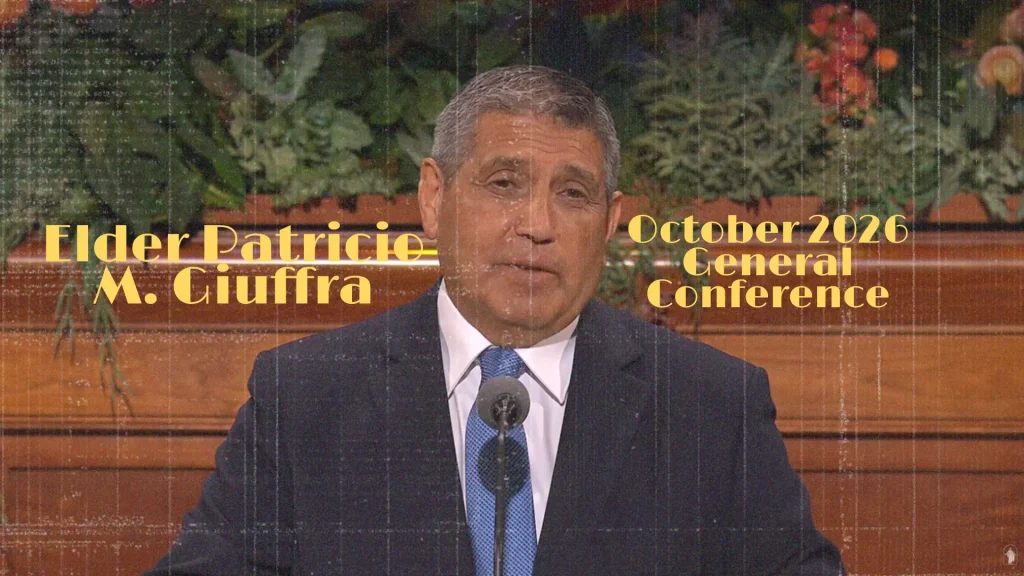
In his October 2026 General Conference talk, “Trusting the Lord Through Tithes and Offerings,” Elder Patricio M. Giuffra teaches that the law of tithing is much more than a financial obligation. It is an expression of faith, love, sacrifice, and trust in Jesus Christ.
Through the experience of a woman he taught during his mission, Elder Giuffra illustrates the challenges that can accompany obedience when resources are limited. He also shares how his understanding of tithing has deepened through personal experience, family teachings, prophetic counsel, and witnessing the blessings that come from faithful discipleship.
One of the most meaningful principles in this talk is that we do not keep commandments merely to receive blessings. We keep them because we love God.
This perspective changes how we understand obedience. Rather than viewing tithing as a transaction in which we give something and expect a particular result, we can recognize it as an opportunity to strengthen our covenant relationship with Heavenly Father and Jesus Christ.
For Relief Society teachers, this message provides opportunities to discuss faith during financial uncertainty, the relationship between sacrifice and discipleship, the purpose of God’s commandments, and the different ways the Lord fulfills His promises.
This lesson help follows Elder Giuffra’s talk chronologically, dividing it into nine discussion sections based on changes in emphasis and important doctrinal teachings.
Each section includes direct quotes from the talk, a doctrinal explanation, 10 discussion questions, 5 object lesson ideas, and 10 personal sharing prompts.
Teachers can prayerfully select the questions and activities that best meet the needs of their class.
Because financial circumstances can be deeply personal, discussions about tithing should be approached with compassion. Sisters should never feel pressured to disclose their income, financial hardships, or personal decisions. The goal is to strengthen faith in Jesus Christ, not to compare individual circumstances.
Section 1: Understanding the Law of Tithing Is a Lifelong Process
The Principle
Elder Giuffra begins by describing how he first learned about tithing before joining the Church.
Although he began paying tithes and offerings shortly after his baptism, he acknowledges that he did not yet fully understand the promises and blessings associated with the commandment.
His experience reminds us that understanding gospel principles often develops gradually.
We may begin keeping a commandment before fully understanding its eternal significance. As we continue in faith, study the doctrine, and recognize the Lord’s influence in our lives, our understanding can deepen.
This is an important principle for Relief Society sisters at every stage of discipleship. Whether someone is a new convert or has been a member of the Church for decades, there is always more to learn about the purposes and blessings of God’s commandments.
Direct Quotes from the Talk
“Before I was baptized into the Church, the missionaries taught me about tithes and offerings. After my baptism, through summer jobs, I had the opportunity to pay full tithes and fast offerings. However, at that time, I did not fully understand the meaning of the promises and blessings associated with obedience to this law.”
“It was not until my missionary service that I had the opportunity to teach this commandment and bear testimony of it.”
10 Relief Society Discussion Questions
- Why do you think we sometimes begin living a gospel principle before fully understanding its purpose?
- How has your understanding of tithing changed throughout your life?
- What is the difference between knowing a commandment and understanding its spiritual significance?
- Why might teaching a gospel principle help strengthen our own testimony of it?
- How does personal experience deepen our understanding of obedience?
- What can we learn from Elder Giuffra’s willingness to acknowledge that his understanding was initially incomplete?
- Why is it important to continue studying commandments we have practiced for many years?
- How can we help children and new members understand the spiritual purpose of tithing?
- What role does the Holy Ghost play in helping us understand God’s commandments?
- How can we remain humble and teachable as our understanding of gospel principles develops?
5 Object Lesson Ideas
1. The Growing Plant
Display a small plant or seedling alongside a picture of a mature tree.
Explain that spiritual understanding develops over time, just as plants grow gradually.
Discuss how Elder Giuffra began obeying the law of tithing before fully understanding its blessings.
Ask sisters what experiences have helped their understanding of gospel principles grow.
2. The Instruction Manual
Display an instruction manual for an unfamiliar appliance.
Explain that we may begin following instructions before fully understanding how everything works.
Discuss the relationship between obedience, experience, and spiritual understanding.
3. The Puzzle
Show a partially completed puzzle.
Explain that we may initially understand only a small part of a gospel principle.
As additional pieces are added, the larger picture becomes clearer.
Discuss how personal experiences can help us better understand the Lord’s purposes.
4. The Open Scriptures
Display a set of scriptures.
Invite sisters to identify scriptures that have helped them understand tithing or another commandment more deeply.
Discuss how scripture study can transform familiar teachings into personal convictions.
5. The Timeline of Testimony
Draw a timeline on the board with three stages: Learning, Practicing, and Understanding.
Invite sisters to discuss how these stages may overlap rather than always occur in a particular order.
10 Personal Sharing Prompts
- Share a time when you obeyed a commandment before fully understanding its purpose.
- Describe how your testimony of tithing has developed over time.
- Tell about someone who helped you understand the importance of obedience.
- Share an experience when teaching a gospel principle strengthened your own testimony.
- Describe a time when your understanding of a commandment changed through personal experience.
- Tell about a gospel principle you appreciate more now than you did when you were younger.
- Share an experience when the Holy Ghost helped you understand a familiar teaching.
- Describe how your parents, leaders, or missionaries influenced your understanding of tithing.
- Tell about a time when you learned to trust the Lord before knowing exactly what would happen.
- Share something you have recently learned about the purpose of God’s commandments.
Section 2: Choosing Faith When Obedience Seems Financially Impossible
The Principle
Elder Giuffra next shares the experience of a woman he taught during his mission in Chile.
This woman worked hard cleaning houses and washing clothes, yet her income was barely enough to provide housing, warmth, and food.
When she learned about the law of tithing, she struggled to imagine how she could obey it.
Her experience highlights an important reality: obedience can sometimes require significant sacrifice.
It also reminds us that financial hardship is real and that conversations about tithing should be approached with sensitivity and compassion.
Faith does not require us to pretend that our challenges are insignificant. Instead, it invites us to bring those challenges before the Lord and seek His guidance.
Direct Quotes from the Talk
“While serving in the Chile Osorno Mission, in the city of Puerto Montt, Elder Ruben Alvarez and I began teaching a woman who was about 70 years old and lived with her son, who was a member of the Church. She could not read and had difficulty retaining what we taught her, so we needed to repeat each lesson twice.”
“When we began teaching the law of tithing and the promised blessings that come to those who obey it, with great sadness she said to me, ‘Elder Giuffra, I clean houses and wash clothes for several families. What I earn is barely enough to pay the rent for the room where we live, buy a small amount of firewood to keep us warm, and provide some food. I don’t think I will ever be able to live the law of tithing because I will not have enough money to do so.’”
“We were deeply moved. Everything she said made sense from a worldly perspective. Although we bore testimony of the great blessings the Lord promises to those who obey this commandment, she insisted that she could not do it.”
10 Relief Society Discussion Questions
- What stands out to you about this woman’s circumstances?
- Why can financial uncertainty make obedience especially challenging?
- How can we demonstrate compassion when someone struggles with the law of tithing?
- What does this experience teach us about the sacrifices some Church members make?
- Why is it important to acknowledge someone’s difficulties rather than dismiss them?
- How can we strengthen our faith when we cannot see how things will work out?
- What is the difference between exercising faith and expecting that every financial difficulty will immediately disappear?
- How can Relief Society sisters support individuals and families experiencing financial hardship?
- Why should we avoid comparing our sacrifices with those of others?
- How can we help someone feel Heavenly Father’s love while they are struggling to understand or live a commandment?
5 Object Lesson Ideas
1. The Limited Resources Illustration
Place several cards on a table labeled Housing, Food, Utilities, Transportation, and Other Needs.
Explain that many families must make difficult decisions about limited resources.
Use the illustration to discuss the importance of faith, compassion, and seeking the Lord’s guidance.
Avoid asking sisters to share personal financial information.
2. The Heavy Backpack
Fill a backpack with books representing different responsibilities.
Invite a volunteer to lift it.
Discuss how challenges can feel overwhelming and why we should be sensitive to burdens we cannot see.
3. The Two Perspectives
Write “What I Can See” and “What God Can See” on the board.
Invite sisters to discuss how our limited perspective can influence our confidence in God’s promises.
4. The Compassion Lens
Display a magnifying glass.
Explain that our assumptions about others may prevent us from seeing their circumstances clearly.
Discuss how Christlike compassion helps us recognize individual needs.
5. The Open Hands
Invite sisters to consider the symbolism of open hands.
Discuss how turning toward Heavenly Father can involve acknowledging our needs and asking for divine guidance.
10 Personal Sharing Prompts
- Share a time when following a commandment required sacrifice.
- Describe an experience when financial uncertainty encouraged you to turn toward Heavenly Father.
- Tell about a time when you felt the Lord’s guidance during a difficult decision.
- Share an experience when someone demonstrated compassion during a challenging season.
- Describe a moment when you had to trust God without knowing the outcome.
- Tell about a time when someone else’s faith inspired you.
- Share how you have learned to respond more compassionately to others’ struggles.
- Describe an experience when a difficult circumstance strengthened your relationship with the Savior.
- Tell about a time when you learned that another person’s challenges were greater than you realized.
- Share what helps you remember Heavenly Father’s love during uncertainty.
Section 3: The Widow’s Mite and the Blessings of Sacrificial Obedience
The Principle
After hearing the woman’s concerns, Elder Giuffra seeks guidance from his mission president.
President Caballero directs him to the account of the widow’s mite, a powerful example of faith and sacrifice.
In Mark 12:41–44, the Savior observes a widow giving a small offering. Although her contribution appears insignificant compared with the offerings of others, Jesus recognizes the depth of her sacrifice.
The account teaches that the Lord sees more than the outward amount of an offering. He knows the circumstances, intentions, and faith of the person giving it.
Elder Giuffra’s experience also illustrates the importance of seeking inspired counsel when we face questions about God’s commandments.
Direct Quotes from the Talk
“The next morning, I called my mission president, President Fernando Caballero, to seek his counsel. In my mind, I wondered whether the Lord might have an exception for someone in her circumstances.”
“President Caballero read to me the account of the widow’s mite and then said, ‘Elder Giuffra, you are no one to deny this sister the blessings of the law of tithing. There are no exceptions to this commandment.’”
“Those words became engraved upon my heart. My companion and I decided to pray and fast because two days later we would return to review the commandments once again before her baptism.”
10 Relief Society Discussion Questions
- Why do you think President Caballero directed Elder Giuffra to the account of the widow’s mite?
- What does the widow’s offering teach us about the relationship between sacrifice and faith?
- How does the Savior’s perspective on giving differ from the world’s perspective?
- Why is the intention behind an offering important?
- What can we learn from Elder Giuffra’s decision to seek counsel?
- Why do you think the missionaries chose to pray and fast before returning?
- How can inspired leaders help us better understand gospel principles?
- What does this experience teach about the blessings associated with obedience?
- How can we teach the law of tithing while remaining sensitive to individual circumstances?
- What does the widow’s mite teach us about how personally the Savior knows His children?
5 Object Lesson Ideas
1. The Widow’s Mite
Display two small coins.
Read Mark 12:41–44.
Discuss why the Savior valued the widow’s offering.
Emphasize that the lesson concerns faith and sacrifice rather than the monetary value of the gift.
2. The Gift Box
Display two gift boxes, one large and one small.
Ask whether the size of a gift always reflects the love behind it.
Discuss how Heavenly Father knows the intentions of our hearts.
3. The Scale
Display a balance scale or a picture of one.
Explain that the world often measures contributions by visible amounts.
Discuss how the Savior recognizes sacrifice, sincerity, and devotion.
4. The Prayer and Fasting Cards
Write “Prayer,” “Fasting,” and “Inspired Counsel” on three cards.
Discuss how Elder Giuffra used these practices while seeking guidance.
5. The Heart-Shaped Paper
Cut out a paper heart.
Write the word “Faith” on it.
Discuss how the spiritual significance of an offering is connected to the heart of the giver.
10 Personal Sharing Prompts
- Share a time when a small sacrifice had great personal meaning.
- Describe an experience when you sought inspired counsel.
- Tell about a time when fasting or prayer helped you prepare for a difficult conversation.
- Share how the account of the widow’s mite has influenced your understanding of giving.
- Describe a moment when you recognized that Heavenly Father knew your individual circumstances.
- Tell about someone whose quiet sacrifice inspired you.
- Share an experience when you learned that the Lord values sincere effort.
- Describe a time when a leader helped you better understand a commandment.
- Tell about an experience when you received strength to do something difficult.
- Share how your understanding of sacrifice has changed as you have grown in the gospel.
Section 4: Prayer, Faith, and Personal Revelation Help Us Choose Obedience
The Principle
The woman Elder Giuffra taught eventually turned directly to Heavenly Father in prayer.
Rather than simply accepting or rejecting the commandment based on her circumstances, she expressed her desire to join the Church and asked for divine help.
Her response illustrates an essential principle of discipleship: when we struggle to live a commandment, we can turn to God for guidance and strength.
Her experience also reminds us that faith is deeply personal.
Others can teach us, encourage us, and testify of God’s promises, but ultimately we must develop our own relationship with Heavenly Father.
Direct Quotes from the Talk
“When we arrived at her home and began reviewing the lessons, we came once again to the law of tithing. She said to us, ‘Last night I knelt in prayer and told Heavenly Father that I truly wanted to become a member of His Church and that He would need to help me live this law.’”
“As we heard those words, a profound feeling of peace and assurance filled our minds and hearts. We knew that the Lord had heard both her prayers and ours.”
“She was baptized the following Saturday. A few weeks later, I was transferred to another area, but I remained in contact with her bishop. He told me she arrived every week with her tithing envelope and that on the first Sunday of every month she also brought her fast offering.”
10 Relief Society Discussion Questions
- What do you admire about this woman’s prayer?
- Why is it meaningful that she asked Heavenly Father to help her live the commandment?
- How does prayer help us develop a personal testimony of obedience?
- What can we learn from the peace the missionaries experienced?
- Why is personal revelation important when we are facing difficult decisions?
- How can we distinguish between understanding a commandment intellectually and developing faith to live it?
- What role does desire play in our willingness to obey God?
- How can we help children and new members learn to seek their own spiritual confirmation?
- Why might obedience become easier as our relationship with Heavenly Father deepens?
- What does this experience teach us about the relationship between faith, prayer, and action?
5 Object Lesson Ideas
1. The Door and the Key
Display a key.
Explain that the key can symbolize turning toward Heavenly Father through prayer.
Discuss how seeking His guidance can help us move forward when we feel uncertain.
2. The Prayer Card
Provide small cards with the words:
“Heavenly Father, please help me…”
Invite sisters to privately consider an area where they need divine strength.
3. The First Step
Place a paper footprint on the floor.
Discuss how faith often requires taking a step before we understand the entire journey.
4. The Envelope
Display a blank envelope.
Explain that the woman’s consistent use of a tithing envelope represented her personal commitment.
Discuss how repeated acts of obedience can reflect growing faith.
5. The Seed of Faith
Display a seed.
Discuss how desire, prayer, and action can contribute to spiritual growth.
Connect the illustration to Alma 32.
10 Personal Sharing Prompts
- Share a time when you prayed for help to keep a commandment.
- Describe an experience when prayer changed your perspective.
- Tell about a moment when you felt peace after making a difficult decision.
- Share an experience when you acted on faith before knowing the outcome.
- Describe a time when your desire to obey God grew stronger.
- Tell about a prayer that helped you feel closer to Heavenly Father.
- Share an experience when you recognized the Lord answering someone else’s prayer.
- Describe a moment when personal revelation strengthened your commitment to the gospel.
- Tell about a time when consistent obedience helped your testimony grow.
- Share what you have learned about asking Heavenly Father for strength.
Section 5: The Lord Fulfills His Promises in Temporal and Spiritual Ways
The Principle
After recounting the woman’s experience, Elder Giuffra reflects on the blessings he has witnessed throughout his own life.
He acknowledges that some blessings associated with tithing have been temporal, while others have been spiritual.
This distinction is important.
The blessings of obedience are not always financial, immediate, or easily measured.
Sometimes the Lord blesses us with peace, strengthened testimony, greater trust, or spiritual understanding.
The promise that the Lord opens the windows of heaven should not be reduced to an expectation of increased income. Elder Giuffra’s testimony invites us to recognize the many ways Heavenly Father can bless His children.
Direct Quotes from the Talk
“Throughout my life, I have learned to trust in the Lord, and I have seen innumerable blessings come to my family and me as we have sought to faithfully live the law of tithing and offerings.”
“Some blessings have been temporal, others spiritual, but all have strengthened our testimony that the Lord always fulfills His promises and that the windows of heaven are opened according to our obedience.”
10 Relief Society Discussion Questions
- What is the difference between temporal and spiritual blessings?
- Why might we sometimes overlook spiritual blessings when looking for answers to our prayers?
- How can paying tithing strengthen our trust in Heavenly Father?
- What does it mean to recognize the windows of heaven opening in our lives?
- Why should we avoid assuming that financial prosperity is the measure of someone’s faithfulness?
- How can we recognize blessings that come in unexpected forms?
- What role does gratitude play in helping us recognize the Lord’s promises?
- How can we maintain trust when blessings do not come in the way we expect?
- Why is it important to remember past experiences with the Lord’s goodness?
- How can we teach children to recognize spiritual blessings as well as temporal ones?
5 Object Lesson Ideas
1. The Window
Display a picture of an open window.
Discuss the scriptural image of the windows of heaven.
Invite sisters to identify different types of blessings Heavenly Father can provide.
2. The Blessing Jar
Place slips of paper labeled Peace, Guidance, Strength, Opportunities, Hope, and Testimony into a jar.
Invite sisters to discuss how these blessings might appear in everyday life.
3. The Gift Bag
Place several wrapped objects of different sizes inside a bag.
Explain that blessings do not always arrive in the form we expect.
Discuss how we can recognize God’s goodness in different circumstances.
4. The Gratitude Journal
Display a notebook.
Discuss how recording blessings can help us recognize the Lord’s influence over time.
5. The Two Columns
Write “Temporal Blessings” and “Spiritual Blessings” on the board.
Invite sisters to identify examples of each, emphasizing that God’s blessings are personal and may come in different ways.
10 Personal Sharing Prompts
- Share a blessing you have recognized from living the law of tithing.
- Describe a time when the Lord blessed you in an unexpected way.
- Tell about an experience when you received spiritual strength during financial uncertainty.
- Share a time when gratitude helped you recognize Heavenly Father’s goodness.
- Describe an experience when a blessing came later than you expected.
- Tell about a time when the Lord provided peace rather than changing your circumstances.
- Share how your understanding of the windows of heaven has developed.
- Describe a moment when remembering past blessings strengthened your faith.
- Tell about someone whose gratitude has inspired you.
- Share a spiritual blessing that has become especially meaningful to you.
Section 6: We Keep the Commandments Because We Love God
The Principle
Elder Giuffra next shares a principle taught by his wife that has become meaningful in their family.
He explains that obedience should be motivated primarily by love for God rather than the expectation of receiving blessings.
This teaching invites us to examine the reasons behind our discipleship.
Do we obey because we expect a particular reward, or because we love Heavenly Father and desire to draw closer to Jesus Christ?
Elder Giuffra also explains that commandments are intended to protect us and strengthen our relationship with the Savior.
Direct Quotes from the Talk
“My wife often teaches a principle that has become very meaningful in our family: We keep the commandments because we love God, not merely because we hope to receive the blessings that come from obedience.”
“Commandments are given to draw us closer to the Savior, to protect us, and to help us remain free from sin and many of the challenges the world presents.”
10 Relief Society Discussion Questions
- What does it mean to obey God because we love Him?
- How does love change our attitude toward commandments?
- What is the difference between transactional obedience and covenant obedience?
- Why might our motivation for obedience change as our testimonies mature?
- How do commandments help us draw closer to Jesus Christ?
- In what ways can commandments provide spiritual protection?
- How can we teach children to love God’s commandments rather than simply fear consequences?
- Why is obedience still meaningful when we do not immediately recognize blessings?
- How does this principle influence the way we understand tithing?
- What can we do to develop a deeper love for Heavenly Father?
5 Object Lesson Ideas
1. The Gift Given in Love
Display a wrapped gift.
Ask how a gift feels different when it is given sincerely rather than out of obligation.
Discuss how love can influence our obedience.
2. The Heart and the Checklist
Display a paper heart beside a checklist.
Explain that commandments involve actions, but our motivations also matter.
Discuss the difference between simply completing tasks and expressing devotion to God.
3. The Protective Fence
Display a picture of a fence surrounding a dangerous area.
Discuss how boundaries can provide protection.
Compare this to the protective purposes of God’s commandments.
4. The Relationship Illustration
Draw two people connected by a line.
Explain that relationships grow through trust, love, and commitment.
Discuss how obedience can strengthen our relationship with Heavenly Father.
5. The Motivation Cards
Prepare cards labeled Love, Fear, Duty, Gratitude, and Trust.
Invite sisters to discuss how different motivations influence our approach to commandments.
10 Personal Sharing Prompts
- Share a time when your love for Heavenly Father motivated you to obey.
- Describe how your reasons for keeping commandments have changed over time.
- Tell about a commandment that has helped you feel closer to Jesus Christ.
- Share an experience when obedience protected you from a difficult situation.
- Describe a time when gratitude influenced your willingness to serve or sacrifice.
- Tell about someone who taught you to love God’s commandments.
- Share how your relationship with the Savior has influenced your understanding of tithing.
- Describe an experience when you obeyed without expecting a particular blessing.
- Tell about a time when a commandment you once struggled with became meaningful.
- Share what helps you remember that God’s commandments are expressions of His love.
Section 7: Faithful Obedience Does Not Exempt Us from Trials
The Principle
Elder Giuffra makes an important clarification about the blessings of obedience.
Keeping commandments does not mean that we will never experience financial hardship, illness, loss, or uncertainty.
This teaching helps us avoid misunderstanding the promises associated with tithing.
The Lord’s faithfulness is not measured by the absence of difficulties in our lives.
Instead, we can trust that Heavenly Father knows our circumstances and fulfills His promises according to His wisdom.
Direct Quotes from the Talk
“This does not mean that we will be free from trials or difficulties. All of us will face moments of uncertainty, financial hardship, illness, or loss.”
“Yet even when we do not understand the purpose of our trials, we can have the assurance that the Lord knows our circumstances, honors our obedience, and fulfills His promises in His own time and way.”
10 Relief Society Discussion Questions
- Why is it important to understand that obedience does not eliminate trials?
- How can unrealistic expectations about blessings affect our faith?
- What does it mean to trust the Lord’s timing?
- How can we remain faithful when our circumstances become more difficult?
- Why should we avoid judging someone’s faithfulness based on their financial situation?
- What can we learn about Heavenly Father’s love from His awareness of our circumstances?
- How does an eternal perspective change our understanding of blessings?
- What helps you trust the Lord when you do not understand His timing?
- How can we support someone who feels disappointed by an unanswered prayer?
- Why is it important to distinguish between God’s promises and our expectations of how those promises will be fulfilled?
5 Object Lesson Ideas
1. The Storm and the Anchor
Display a picture of a boat in a storm.
Explain that an anchor does not prevent storms but helps provide stability.
Discuss how faith can help us remain spiritually grounded during adversity.
2. The Clock
Display a clock.
Discuss how our expectations of timing may differ from the Lord’s.
Invite sisters to consider what helps them remain patient.
3. The Unfinished Puzzle
Display a puzzle with missing pieces.
Explain that we cannot always see how our experiences fit into God’s eternal plan.
Discuss the importance of trusting Him despite incomplete understanding.
4. The Raincoat
Display a raincoat.
Explain that preparation does not prevent rain but can help us face it.
Discuss how obedience strengthens us without eliminating life’s challenges.
5. The Eternal Perspective
Display a long piece of string with a small section marked.
Explain that mortality represents only part of our eternal existence.
Discuss how an eternal perspective influences our understanding of God’s promises.
10 Personal Sharing Prompts
- Share a time when you remained faithful during a difficult trial.
- Describe an experience when the Lord’s timing differed from your expectations.
- Tell about a time when you learned to trust God without understanding His purposes.
- Share an experience when spiritual peace helped you endure uncertainty.
- Describe a moment when your understanding of blessings changed.
- Tell about someone whose faith inspired you during hardship.
- Share a time when you recognized that Heavenly Father knew your circumstances.
- Describe how an eternal perspective has helped you through a challenge.
- Tell about a time when you found strength in the Savior despite unanswered questions.
- Share what helps you remember God’s promises during difficult seasons.
Section 8: Tithing, Sacrifice, and the Law of Consecration
The Principle
Elder Giuffra next discusses the temporal and spiritual blessings he has witnessed while serving in Central America.
He also quotes President Russell M. Nelson and President Dallin H. Oaks regarding the blessings and eternal significance of tithing.
These teachings invite us to see the law of tithing as part of a larger pattern of covenant discipleship.
President Oaks explains that paying tithing demonstrates our acceptance of the law of sacrifice and prepares us for the law of consecration.
Through these higher laws, we learn to place our resources, abilities, and lives in the service of Heavenly Father.
Tithing is therefore not simply about money. It helps prepare our hearts for greater devotion to Jesus Christ.
Direct Quotes from the Talk
“President Russell M. Nelson taught that ‘tithing can break cycles of poverty in poor nations and families.
“‘We preach tithing to the poor people of the world because the poor people of the world have had cycles of poverty, generation after generation,’ he said. ‘That same poverty continues from one generation to another, until people pay their tithing.’”
“During my years of service in Central America, I have seen men and women prosper both temporally and spiritually. I have met families who once worried about their next meal but who now enjoy greater stability. I have known children of God who once could not afford a pair of shoes and who today, through faith and diligent effort, own successful businesses.”
“I have also witnessed the Lord open doors for employment, provide education, strengthen marriages, and fill faithful hearts with peace and hope.”
“President Dallin H. Oaks taught: ‘The payment of tithing … brings the individual tithe payer unique spiritual blessings. Tithe paying is evidence that we accept the law of sacrifice. It also prepares us for the law of consecration and the other higher laws of the celestial kingdom.’”
“These laws are fulfilled as we keep the covenants made in the house of the Lord, which deepens and perpetuates our relationship with Jesus Christ.”
10 Relief Society Discussion Questions
- What does President Nelson’s teaching suggest about the potential blessings of tithing?
- How can we understand accounts of temporal blessings without assuming that every faithful tithe payer will become financially prosperous?
- What stands out to you about the blessings Elder Giuffra witnessed in Central America?
- How can faith and diligent effort work together in our lives?
- Why does President Oaks describe tithing as evidence of accepting the law of sacrifice?
- What is the relationship between tithing and the law of consecration?
- How does the law of consecration invite us to think differently about our resources?
- Why is sacrifice an important part of covenant discipleship?
- How do temple covenants deepen our relationship with Jesus Christ?
- What can the law of tithing teach us about placing the Lord first?
5 Object Lesson Ideas
1. The Ten Coins
Display ten coins or counters.
Set one aside to represent a tenth.
Discuss the law of tithing and how the practice can teach faith, gratitude, and stewardship.
2. The Stewardship Basket
Place cards labeled Time, Talents, Resources, Opportunities, and Relationships into a basket.
Discuss how the law of consecration involves more than financial contributions.
3. The Sacrifice Illustration
Display a picture of an altar from the scriptures.
Discuss the spiritual meaning of sacrifice and how our offerings can reflect devotion to God.
4. The Temple Picture
Display a picture of a temple.
Discuss how temple covenants invite us to dedicate our lives more fully to Heavenly Father.
5. The Open Hands
Invite sisters to consider the symbolism of holding something tightly versus holding it with open hands.
Discuss how consecration can change our perspective on the resources God has entrusted to us.
10 Personal Sharing Prompts
- Share how paying tithing has influenced your understanding of sacrifice.
- Describe a time when you recognized the Lord’s help in providing for your needs.
- Tell about an experience when faith and diligent effort worked together.
- Share how your understanding of consecration has grown.
- Describe a time when you felt prompted to use your resources to bless someone.
- Tell about someone whose generosity or sacrifice has inspired you.
- Share an experience when temple worship helped you understand your covenants more deeply.
- Describe how your perspective on money or possessions has changed through discipleship.
- Tell about a time when you recognized a spiritual blessing associated with obedience.
- Share what it means to you to dedicate your life and resources to the Lord.
Section 9: Opening the Windows of Heaven Through Faith and Trust
The Principle
Elder Giuffra concludes by quoting the Lord’s promise in Malachi 3.
The Lord invites His people to bring their tithes into His storehouse and promises to open the windows of heaven.
This is one of the most familiar scriptural promises associated with tithing.
Yet Elder Giuffra’s concluding testimony reminds us that the central principle is faith.
As we obey the law of tithing, we demonstrate our trust in Heavenly Father and invite Him to work in our lives.
The miracles we experience may not always be the ones we expect, but the Lord knows how to bless His children according to His wisdom.
Direct Quotes from the Talk
“‘Will a man rob God? Yet ye have robbed me. But ye say, Wherein have we robbed thee? In tithes and offerings. …
“‘Bring ye all the tithes into the storehouse, that there may be meat in mine house, and prove me now herewith, saith the Lord of hosts, if I will not open you the windows of heaven, and pour you out a blessing, that there shall not be room enough to receive it.’”
“I testify that the law of tithing is a law of faith. As we obey it, we demonstrate our trust in the Lord and allow Him to work miracles in our lives, often in ways we do not expect.”
“Christ lives. This is His Church, and President Dallin H. Oaks is His prophet. In the sacred name of Jesus Christ, amen.”
10 Relief Society Discussion Questions
- What does the promise of the windows of heaven mean to you?
- Why does the Lord invite His people to prove Him through obedience to the law of tithing?
- How does paying tithing demonstrate trust in Heavenly Father?
- What kinds of miracles might come through faithful obedience?
- Why is it important to recognize that miracles may occur in unexpected ways?
- How can we strengthen our confidence in the Lord’s promises?
- What have you learned about the relationship between faith and sacrifice?
- How can we remember the spiritual purpose of tithing when financial circumstances are difficult?
- What is one principle from Elder Giuffra’s talk that has deepened your understanding of tithing?
- How can we more intentionally demonstrate our love and trust in Jesus Christ through obedience?
5 Object Lesson Ideas
1. The Open Window
Display a picture of an open window.
Discuss the Lord’s promise to open the windows of heaven.
Invite sisters to identify blessings that may not be immediately visible or financial.
2. The Trust Fall Alternative
Rather than having someone physically fall, display a sturdy chair.
Discuss how trust develops through experience and reliability.
Connect this principle to learning to rely on the Lord’s promises.
3. The Promise Cards
Write several scriptural promises on cards.
Invite sisters to read and discuss how these promises can strengthen faith.
4. The Unexpected Gift
Place an unfamiliar object inside a wrapped box.
Explain that we do not always know what form a blessing will take.
Discuss how trusting the Lord involves allowing Him to fulfill His promises according to His wisdom.
5. The Testimony Stone
Give each sister a small stone or display one.
Explain that stones can symbolize firm foundations.
Invite sisters to consider how obedience has strengthened their foundation of faith.
10 Personal Sharing Prompts
- Share a time when you recognized the windows of heaven opening in your life.
- Describe an experience when obedience strengthened your trust in Heavenly Father.
- Tell about a blessing that came in a different way than you expected.
- Share a time when the Lord helped you recognize His promises.
- Describe an experience when sacrifice brought you closer to Jesus Christ.
- Tell about a time when your testimony of tithing was strengthened.
- Share how you have learned to recognize spiritual miracles.
- Describe a moment when trusting the Lord brought you peace.
- Tell about a gospel promise that has become especially meaningful to you.
- Share one lesson about faith and obedience that you hope to pass on to your family.
Conclusion: Trusting the Lord Through Faithful Obedience
Elder Patricio M. Giuffra’s message, “Trusting the Lord Through Tithes and Offerings,” reminds us that the law of tithing is ultimately about our relationship with Heavenly Father and Jesus Christ.
Although tithing involves our financial resources, its spiritual purpose reaches far beyond money.
It teaches us to trust the Lord when circumstances are uncertain, to sacrifice with faith, to recognize blessings in different forms, and to demonstrate our love for God through obedience.
The experience of the woman Elder Giuffra taught during his mission illustrates the courage required to exercise faith when obedience seems difficult.
Her decision to turn to Heavenly Father in prayer reminds us that we do not need to face our challenges alone.
The Lord knows our individual circumstances, understands our concerns, and invites us to seek His help.
Elder Giuffra also teaches that the blessings of obedience are not always immediate or financial.
Sometimes the windows of heaven open through increased peace, stronger relationships, greater spiritual understanding, or opportunities we did not anticipate.
And perhaps one of the most important lessons in this talk is the reminder that we keep the commandments because we love God, not merely because we expect blessings in return.
When love becomes the motivation for obedience, tithing becomes more than a financial practice. It becomes an expression of covenant discipleship.
Using This Lesson Help in Relief Society
This General Conference message provides an opportunity for Relief Society sisters to strengthen their testimonies of tithing while discussing faith, sacrifice, trust, and the Lord’s promises.
The discussion questions can help sisters explore the spiritual purposes of tithing and recognize how their understanding of obedience has developed.
The object lessons can illustrate important principles in simple and memorable ways, while the personal sharing prompts can invite sisters to strengthen one another through testimony and experience.
Because the topic involves personal finances, teachers may find it helpful to emphasize spiritual principles rather than individual financial circumstances.
Sisters should feel comfortable participating without sharing private details about their income, employment, or financial responsibilities.
The most meaningful discussions will focus on the Savior, His promises, and the ways covenant discipleship can strengthen our trust in Him.
A Final Invitation for Your Relief Society Lesson
Consider concluding the lesson by inviting sisters to reflect on three questions:
1. What does the law of tithing teach me about my relationship with Heavenly Father?
2. How can I demonstrate greater trust in the Lord when obedience requires sacrifice?
3. What blessings have I received through keeping God’s commandments that I may not have immediately recognized?
Allow a few moments for quiet reflection.
You might invite sisters to record a thought, a scripture, or a personal commitment that will help them strengthen their trust in the Lord.
As Elder Giuffra testified:
“The law of tithing is a law of faith. As we obey it, we demonstrate our trust in the Lord and allow Him to work miracles in our lives, often in ways we do not expect.”
Ultimately, the greatest purpose of tithing is not simply to receive temporal blessings. It is to become more faithful disciples of Jesus Christ.
As we seek to obey Him with willing hearts, we can develop greater trust in His wisdom, deeper gratitude for His blessings, and a stronger covenant relationship with Him.
The law of tithing invites us to give a portion of what we have while learning to trust the Lord with all that we are.



Leave a Reply