Introduction: When You Feel Like You Cannot Take Another Step
Have you ever reached a point in your life when you felt you had nothing left to give?
Perhaps you were facing a family challenge, struggling through an unexpected trial, carrying overwhelming responsibilities, or praying for relief that did not seem to come.
You were doing everything you could to keep moving forward, but the road ahead still seemed impossibly long.
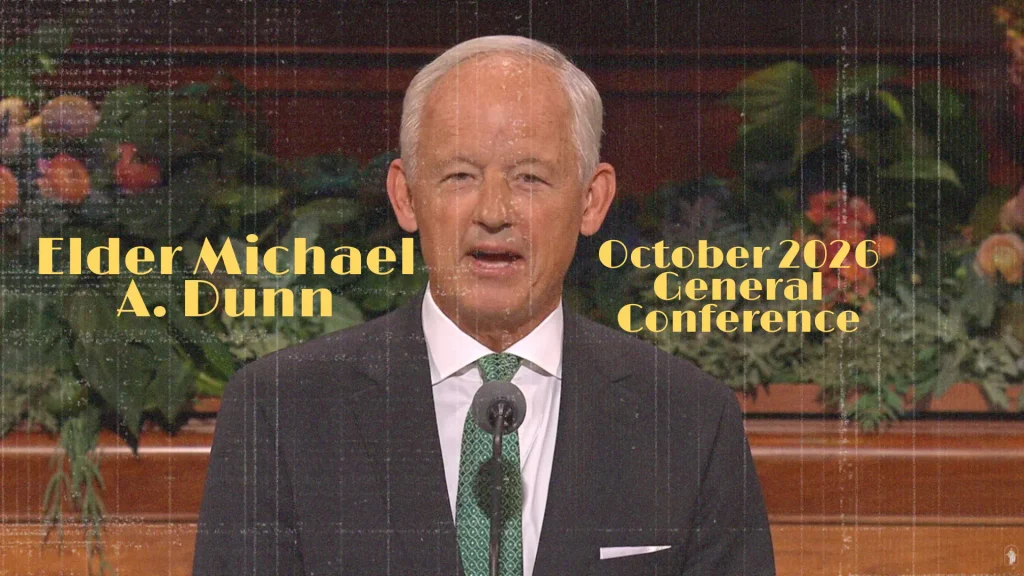
In his General Conference talk, “The Ninety and Ten,” Elder Michael A. Dunn shares a powerful experience from a 100-mile ultramarathon that changed his understanding of how Jesus Christ helps us carry our burdens.
After running 90 miles, Elder Dunn was physically and emotionally exhausted. With only 10 miles remaining, he collapsed beneath a tree and told his running partner, Ted, that he was giving up.
But Ted refused to give up on him.
Through encouragement, reassurance, and an unexpected act of service, Ted helped Elder Dunn find the strength to finish a race he believed was impossible.
It was not until later that Elder Dunn discovered something remarkable.
During those final 10 miles, Ted had quietly carried his water bottles and running pack, lightening a burden Elder Dunn had not even realized was being lifted.
This experience became a powerful illustration of the Savior’s grace.
Elder Dunn teaches that Jesus Christ does not always remove our challenges or shorten the difficult roads we must travel. Instead, He often strengthens us, lightens our burdens, and increases our capacity to endure.
One of the central messages of this talk is that the Savior’s help is not always visible, but His love and power are always available.
This lesson offers meaningful opportunities for Relief Society sisters to discuss grace, endurance, discouragement, the Atonement of Jesus Christ, ministering, divine help, and trusting Heavenly Father’s timing.
It can be especially comforting for sisters who are carrying private burdens, feeling overwhelmed, or struggling to recognize the Lord’s influence in their lives.
This lesson help follows Elder Dunn’s talk chronologically and divides it into 10 discussion sections based on the principles and changes in emphasis throughout his message.
Each section includes:
- Powerful direct quotes from the talk
- A doctrinal explanation
- 10 engaging Relief Society discussion questions
- 5 object lesson ideas with explanations
- 10 personal sharing prompts
Teachers can prayerfully choose the questions and activities that best meet the needs of their class. The goal is not to cover every idea but to create meaningful opportunities for sisters to recognize how Jesus Christ strengthens them through the challenges of mortality.
Section 1: The Savior Promises to Carry Our Burdens
The Principle
Elder Dunn begins his message with a question many disciples of Jesus Christ have asked:
What does it actually mean when we are promised that the Savior will carry our burdens?
We may understand this promise intellectually, but it can be difficult to recognize how it applies during real challenges.
Sometimes we expect divine help to mean that our problems will disappear, our prayers will be answered immediately, or our circumstances will become easier.
But the Savior’s assistance often comes in ways we do not initially recognize.
He may strengthen our ability to endure, provide spiritual peace, inspire another person to help us, or give us enough courage to continue.
This opening question invites us to reconsider what divine assistance can look like in our everyday lives.
Direct Quotes from the Talk
“Among the myriad nearly incomprehensible blessings of our Savior Jesus Christ is His promise to carry our burdens. But what does that look like in practical terms—especially when we are weighed down and seemingly without hope?”
“Years ago I came to better understand how the Savior ministers to us in even more personal, profound, and private ways than I ever thought possible.”
10 Relief Society Discussion Questions
- What does it mean to you that Jesus Christ promises to carry our burdens?
- Why might we sometimes struggle to recognize the Savior’s help during difficult circumstances?
- What are some different ways the Lord might lighten a burden without removing it?
- How does the Savior’s willingness to help us demonstrate His love?
- Why do you think Elder Dunn emphasizes that Christ ministers in personal, profound, and private ways?
- How can our expectations influence whether we recognize divine assistance?
- What is the difference between having a burden removed and receiving strength to carry it?
- How can we learn to recognize the Savior’s influence in ordinary experiences?
- Why is it important to remember that Heavenly Father understands burdens others may not see?
- How might our relationship with Jesus Christ change if we trusted Him more fully with our struggles?
5 Object Lesson Ideas
1. The Heavy Backpack
Fill a backpack with several books.
Invite a volunteer to hold it.
Explain that the backpack represents the challenges and responsibilities we carry.
Remove a few books while the volunteer continues holding it.
Discuss how the Savior may lighten our burdens even when our circumstances do not completely change.
2. The Unseen Support
Place a heavy book on a table.
Explain that the table supports the book even though we rarely think about that support.
Discuss how the Savior’s sustaining influence may be present without drawing attention to itself.
3. The Two Buckets
Display two buckets, one filled with objects and one empty.
Discuss the difference between carrying everything alone and receiving assistance.
Connect the illustration to the Savior’s invitation to come unto Him.
4. The Rope
Display a rope.
Explain that a rope can help someone climb a difficult slope without removing the slope itself.
Discuss how Jesus Christ can provide strength and assistance during challenging experiences.
5. The Written Burden
Invite sisters to privately write a burden on a piece of paper.
They do not need to share it.
Encourage them to consider how they might invite the Savior into that situation through prayer and faith.
10 Personal Sharing Prompts
- Share a time when you felt the Savior helping you carry a burden.
- Describe an experience when divine help came differently than you expected.
- Tell about a challenge that strengthened your relationship with Jesus Christ.
- Share a time when prayer helped you feel less alone.
- Describe an experience when you received peace even though your circumstances did not change.
- Tell about someone who helped lighten a difficult burden.
- Share how your understanding of the Savior’s grace has changed.
- Describe a moment when you recognized Heavenly Father’s awareness of your needs.
- Tell about a scripture that has helped you during a difficult season.
- Share what the promise that Christ will carry our burdens means to you personally.
Section 2: Faith Sometimes Begins with Someone Believing We Can Continue
The Principle
Elder Dunn introduces his ultramarathon experience by explaining that he agreed to participate in a race that seemed far beyond his abilities.
He had run marathons before, but 100 miles was an entirely different challenge.
One of the main reasons he agreed to attempt the race was his friend Ted’s confidence in him.
Ted had completed the race many times and understood what the experience would require.
Because Ted knew the course, Elder Dunn trusted his encouragement.
This becomes an important parallel to our relationship with Jesus Christ.
The Savior understands the path of mortality. He knows its difficulties and has overcome them.
His encouragement is trustworthy because He understands both the journey and our divine potential.
Direct Quotes from the Talk
“That realization came in 1998 when, in one of my very weak moments, my running partner Ted somehow talked me into entering a 100-mile (161-km) ultramarathon race.”
“Clearly, I was not only out of my league but possibly out of my mind for saying yes. Sure, I’d run a few marathons before, but not four of them back-to-back.”
“Everything about it seemed impossible—except for one thing, and that was that Ted believed I could do it.”
“That mattered because he had completed the race himself many times. He knew every twist of the trail and promised that if I would put in the training, he would be there to run with me through the second half of the race when fatigue, blisters, and especially self-doubt would become my worst enemies.”
10 Relief Society Discussion Questions
- Why was Ted’s confidence so important to Elder Dunn?
- How can another person’s belief in us influence our willingness to attempt something difficult?
- What does Ted’s experience with the race teach us about trusting the Savior?
- Why is it comforting to know that Jesus Christ understands the challenges of mortality?
- How can faith help us move forward when we feel inadequate?
- What role does preparation play in receiving divine assistance?
- How can we distinguish between relying on the Savior and expecting Him to do everything for us?
- Why might self-doubt become especially powerful during difficult experiences?
- How can we become people who encourage others to recognize their potential?
- What does this experience teach about the relationship between faith, effort, and divine help?
5 Object Lesson Ideas
1. The Race Map
Display a map of a running course.
Explain that Ted knew the course because he had completed it.
Discuss how Jesus Christ understands the path we are traveling.
2. The Running Shoes
Display a pair of running shoes.
Discuss the preparation required for a difficult race.
Connect this to spiritual preparation through prayer, scripture study, covenants, and obedience.
3. The Encouragement Note
Write “I believe you can do this” on a card.
Discuss the influence of sincere encouragement.
Invite sisters to consider someone who may need reassurance.
4. The Guidebook
Display a guidebook or map.
Discuss why people trust experienced guides when traveling unfamiliar paths.
Connect this to following Jesus Christ.
5. The Training Calendar
Display a calendar with several days marked.
Discuss how consistent preparation strengthens us for future challenges.
10 Personal Sharing Prompts
- Share a time when someone believed in you more than you believed in yourself.
- Describe an experience when encouragement helped you accomplish something difficult.
- Tell about a challenge that initially seemed impossible.
- Share a time when spiritual preparation helped you face adversity.
- Describe someone whose example has strengthened your faith.
- Tell about a moment when you recognized your potential through another person’s encouragement.
- Share how trusting the Savior has helped you overcome self-doubt.
- Describe an experience when you felt guided through unfamiliar circumstances.
- Tell about a time when you encouraged someone who was struggling.
- Share what helps you remember that Jesus Christ understands your journey.
Section 3: When We Reach Our Breaking Point, the Savior Does Not Give Up on Us
The Principle
As Elder Dunn continues his story, he describes the physical and emotional exhaustion he experienced during the race.
After traveling 90 miles, he was completely depleted.
Although only 10 miles remained, he believed he could not continue.
He collapsed beneath a tree and told Ted he was giving up.
This moment represents the times in our own lives when we feel that we have reached the limits of our strength.
We may have already endured more than we thought possible, yet the challenges before us still seem overwhelming.
Elder Dunn’s experience reminds us that feeling exhausted or discouraged does not mean we have failed.
Sometimes we need reassurance, encouragement, and assistance before we can continue.
Direct Quotes from the Talk
“Race day arrived. Setting off in the predawn hours, I quickly realized this was bigger than me.”
“But somehow I kept moving, even through the withering heat of the afternoon, one slogging step at a time.”
“Then, with more than half the race ahead of me, and with daylight and my hopes fading, sure enough, Ted showed up.”
“With Ted’s patience and persistence and my unceasing silent prayers, we miraculously ran—make that trudged—to mile 90.”
“Morning had barely dawned. Just 10 miles remained. But I was completely sapped—running on empty, as it were.”
“Collapsing in the shade of a tree, I looked over at Ted and quietly said, ‘I give up.’”
10 Relief Society Discussion Questions
- Why do you think Elder Dunn felt defeated even though he had already completed 90 miles?
- How can exhaustion affect our ability to recognize how far we have come?
- What does this experience teach about the difference between weakness and failure?
- Why might the final stages of a difficult experience feel especially overwhelming?
- How can we recognize when we need help rather than continuing to struggle alone?
- What role did prayer play in Elder Dunn’s experience?
- How can we offer compassion to someone who feels emotionally or spiritually exhausted?
- Why is it important to avoid judging someone else’s ability to endure?
- How can remembering past progress help us during discouraging moments?
- What does this experience teach about the Savior’s willingness to help us at our weakest moments?
5 Object Lesson Ideas
1. The Ninety and Ten
Draw a line representing 100 miles.
Mark the 90-mile point.
Discuss how someone can accomplish something extraordinary and still feel defeated near the end.
2. The Empty Water Bottle
Display an empty water bottle.
Discuss what it feels like to have nothing left to give.
Connect this to the need for spiritual renewal.
3. The Heavy Weight
Display a weight or heavy object.
Explain that carrying a burden becomes increasingly difficult over time.
Discuss why we should show compassion toward those experiencing prolonged challenges.
4. The Rest Stop
Display a picture of a bench along a trail.
Discuss how rest and receiving help can be important parts of endurance.
5. The Progress Chart
Draw a chart showing gradual progress.
Discuss how focusing only on what remains can prevent us from recognizing what we have already accomplished.
10 Personal Sharing Prompts
- Share a time when you felt you had reached your limit.
- Describe an experience when prayer helped you continue.
- Tell about a time when someone recognized your exhaustion and offered support.
- Share how you have learned to respond to discouragement.
- Describe a challenge that taught you the importance of asking for help.
- Tell about a time when you underestimated how much progress you had made.
- Share an experience when Heavenly Father helped you endure longer than you expected.
- Describe a moment when you needed reassurance rather than advice.
- Tell about someone who demonstrated patience during your struggles.
- Share what helps you remember that difficult moments do not define your entire journey.
Section 4: Christlike Encouragement Can Help Us Take the Next Step
The Principle
When Elder Dunn announced that he was giving up, Ted responded with patience and compassion.
Rather than criticizing him or dismissing his exhaustion, Ted reminded him of his preparation and reassured him that he would not have to finish alone.
His words helped Elder Dunn find the courage to stand up and begin moving again.
This experience illustrates the power of encouragement.
Sometimes the most meaningful help we can offer someone is not a solution to every problem but the reassurance that they are capable, valued, and supported.
The Savior often strengthens us through similar encouragement.
He knows our efforts, understands our weaknesses, and helps us move forward one step at a time.
Direct Quotes from the Talk
“But even as my resignation settled in, I got what you could arguably call the world’s first-ever ‘Ted Talk’!”
“In a gentle, reassuring tone, he reminded me of the months of preparation and those early-morning runs.”
“He then kneeled down, looked me in the eye, and said something I will never forget: ‘I know you can do this, Mike, and I’m going to get you there.’”
“Those simple, sincere words sparked something inside me. After a few more minutes, I got to my feet.”
“At first I walked, then hobbled into, well, a pretty solid shuffle. And somehow, step by step, together we conquered those last 10 miles.”
10 Relief Society Discussion Questions
- What made Ted’s words so meaningful to Elder Dunn?
- Why is encouragement sometimes more helpful than advice?
- How can we recognize when someone needs reassurance?
- What does Ted’s response teach about Christlike compassion?
- Why is it significant that Ted reminded Elder Dunn of his previous efforts?
- How can remembering past spiritual experiences strengthen us during trials?
- What does this experience teach about taking progress one step at a time?
- How can we become more intentional about encouraging others?
- Why might gentle reassurance be more effective than criticism?
- How does the Savior help us recognize strength we may not see in ourselves?
5 Object Lesson Ideas
1. The Encouragement Card
Write Ted’s words on a card:
“I know you can do this.”
Discuss how sincere encouragement can influence someone who is struggling.
2. The Single Step
Place a footprint on the floor.
Explain that Elder Dunn did not need to run the final 10 miles all at once.
He only needed to begin with the next step.
3. The Hand Up
Display a picture of someone helping another person stand.
Discuss how Christlike service can help others regain confidence.
4. The Memory Jar
Fill a jar with slips of paper representing past blessings or accomplishments.
Discuss how remembering previous experiences can strengthen present faith.
5. The Walking Partners
Display two pairs of shoes.
Discuss the importance of companionship and support during difficult experiences.
10 Personal Sharing Prompts
- Share a time when someone’s encouragement changed your outlook.
- Describe an experience when you felt the Savior reassuring you.
- Tell about a moment when you found strength to take one more step.
- Share how remembering past blessings has helped you during trials.
- Describe someone who consistently encourages you.
- Tell about a time when you were prompted to offer reassurance to another person.
- Share an experience when gentle words had a powerful influence.
- Describe how you have learned to encourage yourself through difficult moments.
- Tell about a time when someone helped you recognize your own strength.
- Share a scripture or phrase that helps you keep moving forward.
Section 5: The Savior Helps Us Finish Our Own Race
The Principle
As Elder Dunn approached the finish line, Ted surprised him by stepping away.
Although Ted had helped him through the most difficult part of the race, he wanted Elder Dunn to cross the finish line himself.
This moment illustrates an important principle about divine assistance.
Jesus Christ does not eliminate our agency, responsibilities, or opportunities for growth.
Instead, His grace enables us to accomplish things we could not accomplish through our own strength alone.
The Savior’s assistance does not diminish our efforts.
It makes our progress possible.
Direct Quotes from the Talk
“The impossible now looked possible. But about a hundred yards (91 m) from the finish line, Ted suddenly reached out and grabbed my hand.”
“‘Congrats, man,’ he said. ‘You did it!’”
“And with that, he began to peel off even as I begged him to finish beside me.”
“But he simply smiled and added, ‘This is your race to finish.’ Which I somehow managed to do.”
10 Relief Society Discussion Questions
- Why do you think Ted wanted Elder Dunn to cross the finish line himself?
- What does this moment teach about the relationship between grace and personal effort?
- How does the Savior strengthen us without removing our agency?
- Why is personal growth an important part of Heavenly Father’s plan?
- What does it mean to finish our own race?
- How can we recognize that our accomplishments are possible because of divine help?
- Why might Heavenly Father allow us to experience difficult growth?
- How can we avoid comparing our spiritual progress with someone else’s?
- What does this experience teach about the Savior’s confidence in our potential?
- How can we better recognize both our personal responsibility and our dependence on Jesus Christ?
5 Object Lesson Ideas
1. The Finish Line
Place a strip of tape on the floor representing a finish line.
Discuss how each person’s mortal journey is unique.
2. The Training Wheels
Display a picture of a bicycle with training wheels.
Discuss how support can help us develop confidence and ability.
3. The Graduation Certificate
Display a certificate.
Discuss how learning and growth require personal participation.
4. The Helping Hand
Display a picture of someone helping another person climb.
Discuss how assistance makes progress possible without eliminating effort.
5. The Personal Race Card
Provide cards with the phrase “My Race.”
Invite sisters to privately consider one area of discipleship where they want to keep progressing.
10 Personal Sharing Prompts
- Share a time when divine help enabled you to accomplish something difficult.
- Describe an experience when you recognized personal growth through adversity.
- Tell about a moment when you felt the Savior helping you become more capable.
- Share how your understanding of grace has changed.
- Describe a challenge that taught you greater confidence in Heavenly Father.
- Tell about someone who supported you while allowing you to grow independently.
- Share a time when you learned not to compare your journey with others.
- Describe an experience when you recognized that your efforts mattered.
- Tell about a moment when you felt grateful for both personal effort and divine assistance.
- Share what it means to you to finish your own race with the Savior’s help.
Section 6: The Savior Often Carries Burdens We Do Not Realize He Has Lifted
The Principle
After the race, Elder Dunn received a photograph that revealed something he had not noticed.
During the final 10 miles, Ted had been carrying his running pack and water bottles.
Without drawing attention to himself, Ted had quietly removed some of Elder Dunn’s heaviest burdens.
This becomes one of the most powerful moments in the talk.
Elder Dunn compares Ted’s act of service to the Savior’s willingness to carry our griefs and sorrows.
Sometimes we recognize divine help immediately.
Other times, we discover only later how much the Savior has done for us.
His assistance may be quiet, personal, and unseen.
Direct Quotes from the Talk
“A week or so later, a photograph from the race arrived in the mail. Miraculously, a friend captured that exact moment when Ted and I parted ways. But it also revealed a startling secret.”
“As I looked closer, I saw what Ted really did for me that day.”
“Much to my astonishment, I saw that he wasn’t only carrying his water; he was carrying two of my water bottles and my pack—which he dutifully toted every step of those last 10 grueling miles.”
“Somehow, there on the side of the trail, with me in deep despair and ready to quit, he quietly lightened my load—strapping my hydration pack to his own waist.”
“Without fanfare or fuss, he simply shouldered my heaviest burden.”
10 Relief Society Discussion Questions
- Why was the photograph such a meaningful discovery for Elder Dunn?
- What does Ted’s quiet service teach about the Savior?
- Why might we fail to recognize some of the burdens Christ has already lifted?
- How can looking back help us identify divine assistance?
- What does this experience teach about serving without seeking recognition?
- Why are quiet acts of compassion sometimes especially powerful?
- How can we become more aware of the burdens others are carrying?
- What are some ways to lighten another person’s burden without drawing attention to ourselves?
- How does this experience deepen your understanding of the Atonement?
- What might change if we believed the Savior was helping us in ways we could not yet see?
5 Object Lesson Ideas
1. The Backpack Reveal
Fill a backpack with several objects.
Quietly remove some of the objects before inviting a volunteer to lift it again.
Discuss how burdens can be lightened without our immediately recognizing the source of relief.
2. The Hidden Helper
Place a small support beneath a heavy object.
Discuss how unseen assistance can make difficult things possible.
3. The Photograph
Display a photograph of someone helping another person.
Discuss how pictures sometimes reveal details we missed in the moment.
4. The Two Water Bottles
Display two water bottles and a backpack.
Explain how Ted carried Elder Dunn’s supplies during the final miles.
Discuss the symbolism of Christ carrying our burdens.
5. The Anonymous Service Note
Invite sisters to consider performing an anonymous act of service.
Discuss how serving without recognition reflects Christlike love.
10 Personal Sharing Prompts
- Share a time when you recognized divine help only after a trial had passed.
- Describe an experience when someone quietly served you.
- Tell about a moment when you realized Heavenly Father had been helping you.
- Share how an unexpected act of kindness influenced your life.
- Describe a time when you were prompted to help someone without seeking recognition.
- Tell about an experience when your burden felt lighter even though circumstances remained difficult.
- Share how looking back has strengthened your testimony.
- Describe someone whose quiet service reminds you of Jesus Christ.
- Tell about a time when gratitude helped you recognize God’s hand.
- Share what Elder Dunn’s photograph teaches you about the Savior’s love.
Section 7: Christ’s Grace Does Not Always Shorten the Road—It Strengthens Our Stride
The Principle
After recognizing what Ted had done for him, Elder Dunn reflects on the Savior’s infinite ability to carry our burdens.
He quotes Isaiah’s testimony that Jesus Christ has borne our griefs and carried our sorrows.
Then he teaches one of the central principles of his message:
The Savior does not always shorten our course. Instead, He helps us lengthen our stride.
This is a powerful explanation of enabling grace.
Sometimes we pray for a challenge to disappear, but Heavenly Father instead provides the strength we need to endure it.
Through Jesus Christ, our capacity can increase beyond what we believed possible.
His grace can magnify our efforts, strengthen our faith, and help us continue through experiences that would otherwise overwhelm us.
Direct Quotes from the Talk
“As I marveled at his benevolence, my thoughts immediately turned to an infinitely more amazing load-bearing Friend, our Savior Jesus Christ, who, as Isaiah unequivocally assured, has ‘borne our griefs, and carried our sorrows,’ which I assumed meant the trails we travel would somehow become easier.”
“But as I’ve come to learn through this race and the ups and downs of my life, He simultaneously lifts and uplifts, sometimes in unseen fashion, multiplying and magnifying even our most minuscule offerings.”
“In other words, the Redeemer rescues not by shortening our course but by helping us lengthen our stride.”
10 Relief Society Discussion Questions
- What does it mean that the Savior helps us lengthen our stride rather than shorten our course?
- Why might Heavenly Father sometimes strengthen us instead of removing a trial?
- How does this teaching change the way we understand grace?
- What is the difference between being rescued from a challenge and being strengthened through it?
- How can Jesus Christ magnify our small efforts?
- Why is it comforting to know that the Savior recognizes even our most limited offerings?
- How can this principle help us during prolonged trials?
- What does Isaiah’s teaching about Christ carrying our griefs reveal about the Atonement?
- How can we develop greater trust in the Savior’s ability to increase our capacity?
- How might our prayers change if we asked for strength as well as relief?
5 Object Lesson Ideas
1. The Longer Stride
Mark two different stride lengths on the floor.
Discuss how increasing our stride can help us cover more ground without shortening the distance.
Connect this to the Savior’s enabling grace.
2. The Strengthened Rope
Display a thin string and a stronger rope.
Discuss how additional strength allows something to carry a greater load.
3. The Small Offering
Display a small coin.
Discuss Elder Dunn’s teaching that the Savior can magnify even our smallest efforts.
4. The Hill
Display a picture of a steep hill.
Discuss how strength and endurance can help someone climb even when the hill remains unchanged.
5. The Water Bottle
Display a nearly empty water bottle.
Discuss how spiritual renewal can help us continue when our own resources feel depleted.
10 Personal Sharing Prompts
- Share a time when the Savior strengthened you rather than removing a challenge.
- Describe an experience when your capacity increased through adversity.
- Tell about a moment when you recognized the enabling power of grace.
- Share how your prayers have changed during difficult seasons.
- Describe a time when your small efforts were magnified.
- Tell about a challenge that helped you develop greater spiritual strength.
- Share an experience when you felt the Savior carrying your grief.
- Describe how your understanding of divine rescue has changed.
- Tell about a time when you accomplished something beyond your natural ability.
- Share what the phrase “lengthen our stride” means to you personally.
Section 8: God’s Grace Can Come Through Angels and Ordinary People
The Principle
Elder Dunn next explains that the Savior’s grace can provide divine help and strength in many different ways.
Sometimes that assistance comes directly through spiritual impressions or personal revelation.
Other times, Heavenly Father sends people into our lives who become instruments of His love.
Elder Dunn refers to these individuals as the “Teds” of our lives.
They may be friends, family members, ministering brothers or sisters, leaders, or even people we barely know.
Through their compassion, encouragement, and service, we experience the Savior’s care.
This principle also invites us to consider how we can become instruments in the Lord’s hands.
Direct Quotes from the Talk
“Anytime we turn to Christ, we turn a corner. By His grace we can trust and expect His constant care.”
“And because God knows our prayers even before we ask Him, it’s reasonable to assume that blessings may often materialize in the selfsame moment we verbalize.”
“His grace, which is a duality defined as a ‘divine means of help or strength,’ can free us from the freight we would otherwise carry.”
“And even when we don’t perceive Him at our side, He enlists the Teds—both of this world and sometimes even the Teds beyond—with His heartening promise of angels all around us to bear us up.”
10 Relief Society Discussion Questions
- What does Elder Dunn mean when he says turning to Christ helps us turn a corner?
- How can grace provide both help and strength?
- Why might Heavenly Father choose to answer prayers through other people?
- What does the phrase “angels all around us” mean to you?
- How can we recognize when someone has been sent to help us?
- What qualities make someone an effective instrument in the Lord’s hands?
- How can we become more responsive to promptings to serve?
- Why is it important to accept help from others?
- How does ministering allow us to participate in the Savior’s work?
- What can we do to become a “Ted” for someone who is struggling?
5 Object Lesson Ideas
1. The Helping Hands
Display a picture of hands reaching toward one another.
Discuss how the Savior often answers prayers through human kindness.
2. The Prayer and Answer Cards
Prepare cards labeled Prayer and Answer.
Discuss how answers to prayer sometimes arrive through another person’s actions.
3. The Angel Illustration
Display a picture of angels ministering to Jesus Christ.
Discuss how Heavenly Father provides assistance in different ways.
4. The Service Basket
Fill a basket with cards containing simple acts of service.
Invite sisters to consider one action they could take during the week.
5. The Connected Hearts
Draw several hearts connected by lines.
Discuss how the Savior’s love can flow through relationships and acts of service.
10 Personal Sharing Prompts
- Share a time when someone became an answer to your prayers.
- Describe an experience when you felt prompted to help another person.
- Tell about someone who has been a “Ted” in your life.
- Share how ministering has strengthened your testimony.
- Describe a moment when you recognized divine timing in an act of service.
- Tell about an experience when you received unexpected help.
- Share how accepting assistance has influenced your relationship with others.
- Describe a time when you felt guided to offer encouragement.
- Tell about someone whose compassion reminded you of Jesus Christ.
- Share one way you hope to become more available to serve as an instrument in the Lord’s hands.
Section 9: The Savior Knows the Road, Knows Our Potential, and Never Abandons Us
The Principle
Elder Dunn explains that he trusted Ted because Ted had already completed the race and knew the course.
He then compares that trust to the confidence we can place in Jesus Christ.
The Savior understands every aspect of mortality.
He knows our weaknesses, struggles, fears, and potential.
Because of His Atonement and perfect understanding, He is uniquely qualified to help us through life’s challenges.
Elder Dunn also offers reassurance to those who feel depleted or defeated.
Even when prayers are not answered in the way or timing we hope for, our struggles do not mean Heavenly Father has abandoned us.
Direct Quotes from the Talk
“One of the main reasons I trusted Ted during the race is the same reason we can implicitly trust Jesus in every aspect of our lives.”
“Because He ‘marked the path and led the way,’ there is no portion of our mortal sojourn He has not trod.”
“He not only knows the road; He knows you and what you, as noble offspring of the divine, are capable of.”
“To those at or nearing their ‘mile 90,’ ferrying the unimaginable, or if you feel like I did, both depleted and defeated, I promise that as you expend even your last drops of energy to ask, His helping hand will ultimately give you that much-needed leg up.”
“And even when the outcome or the timing is not what you plead for, take solace knowing that feeling broken does not mean you’ve been abandoned by God.”
10 Relief Society Discussion Questions
- Why can we trust Jesus Christ with every aspect of our lives?
- What does it mean that the Savior has already walked the path of mortality?
- How does knowing the Savior understands our experiences strengthen our faith?
- Why is it significant that Jesus Christ knows our individual potential?
- What might our personal “mile 90” experiences look like?
- How can we continue trusting God when answers to prayer are delayed?
- Why is it important to remember that feeling broken does not mean we have been abandoned?
- How can we recognize the Savior’s help during periods of spiritual exhaustion?
- What does this teaching reveal about Heavenly Father’s understanding of our limitations?
- How can we help others feel the Savior’s love when they are struggling?
5 Object Lesson Ideas
1. The Experienced Guide
Display a hiking map.
Discuss why people trust guides who understand difficult terrain.
Connect this to the Savior’s perfect understanding.
2. The Ninety-Mile Marker
Display a sign reading “Mile 90.”
Discuss how people may experience different moments of exhaustion during mortality.
3. The Footprints
Display footprints on paper.
Discuss how Jesus Christ has walked the path before us.
4. The Helping Hand
Display a picture of someone reaching down to help another person.
Discuss the Savior’s willingness to lift us.
5. The Unanswered Prayer Card
Display a card reading “Not Yet.”
Discuss how waiting for answers does not mean Heavenly Father is unaware of our needs.
10 Personal Sharing Prompts
- Share a time when you felt the Savior understood your circumstances.
- Describe an experience when you had to trust God’s timing.
- Tell about a moment when you felt spiritually exhausted.
- Share how the Savior helped you through a difficult experience.
- Describe a time when you received reassurance that Heavenly Father had not forgotten you.
- Tell about a challenge that deepened your trust in Jesus Christ.
- Share a scripture that reminds you of the Savior’s understanding.
- Describe an experience when you learned that your worth was not determined by your struggles.
- Tell about a time when someone helped you feel the Savior’s compassion.
- Share what it means to you that Jesus Christ knows both the road and your potential.
Section 10: God’s Hand May Be Unseen, but His Heart Is Constant
The Principle
Elder Dunn concludes by reminding us that we do not always recognize the Lord’s influence while we are experiencing a trial.
Sometimes it is only after the difficulty has passed that we begin to understand how Heavenly Father sustained us.
He quotes President Dieter F. Uchtdorf, who teaches that the meaning of present trials may become clearer through future experiences.
Elder Dunn then shares a powerful distinction:
We should not confuse the apparent invisibility of God’s hand with the unchanging nature of His heart.
Even when we cannot see how the Lord is helping us, His love remains constant.
Sometimes He performs extraordinary miracles.
Other times, He sends someone to help.
And often, He increases our courage, confidence, and capacity so we can continue moving forward.
Direct Quotes from the Talk
“Or, as President Dieter F. Uchtdorf taught: ‘Often the deep valleys of our present will be understood only by looking back on them from the mountains of our future experience. Often we can’t see the Lord’s hand in our lives until long after the trials have passed.’”
“Through ‘him who is mighty to save,’ you will find ‘strength beyond [your] own.’”
“In other words, don’t confuse the perceived invisibility of the Lord’s hand with the inveterate nature of the Lord’s heart.”
“Peace will come even when hoped-for outcomes do not.”
“All these years later, when I glance at that photo and ponder the metaphorical ‘last 10 miles’ I still often face in this sojourn called life, I’m reminded that sometimes the God who makes the impossible possible can part seas and move mountains.”
“Other times He simply sends us a Ted.”
“But most often He tops off our courage, capacity, and confidence by empowering us to ‘lay aside every weight’ so we can ‘run with patience the race that is set before us.’”
10 Relief Society Discussion Questions
- Why is it sometimes easier to recognize God’s hand when looking back on a trial?
- What does President Uchtdorf’s comparison between valleys and mountains teach about perspective?
- How can we trust Heavenly Father when we cannot see evidence of His help?
- What does Elder Dunn mean when he says we should not confuse the invisibility of God’s hand with the nature of His heart?
- How can we experience peace when our desired outcomes do not occur?
- Why does Heavenly Father sometimes perform dramatic miracles and other times provide quiet assistance?
- How can gratitude help us recognize divine influence?
- What does it mean to run with patience the race set before us?
- How can we develop greater confidence in the Savior’s sustaining power?
- What is one principle from this talk that you want to remember during future challenges?
5 Object Lesson Ideas
1. The Rearview Mirror
Display a small mirror.
Discuss how looking backward can help us recognize things we could not see while moving forward.
Connect this to recognizing God’s hand after trials.
2. The Mountain and Valley
Display a picture of mountains and valleys.
Discuss President Uchtdorf’s teaching about perspective.
3. The Unseen Support
Place a sturdy object beneath a stack of books.
Discuss how support can remain present even when it is not immediately visible.
4. The Race Medal
Display a medal or picture of a finish line.
Discuss the importance of enduring faithfully rather than comparing our progress with others.
5. The Gratitude Journal
Display a journal.
Invite sisters to consider recording moments when they recognize Heavenly Father’s help.
Discuss how these records can strengthen future faith.
10 Personal Sharing Prompts
- Share a time when you recognized God’s hand only after a trial had passed.
- Describe an experience when you received peace despite an unexpected outcome.
- Tell about a moment when gratitude changed your perspective.
- Share how looking back has strengthened your testimony.
- Describe a time when Heavenly Father sent someone to help you.
- Tell about an experience when you received strength beyond your own.
- Share how your understanding of divine timing has changed.
- Describe a moment when you felt reassured of Heavenly Father’s love.
- Tell about a challenge that eventually helped you recognize an unexpected blessing.
- Share what the phrase “run with patience the race that is set before us” means to you.
Conclusion: Finding Strength Beyond Our Own Through Jesus Christ
Elder Michael A. Dunn’s message, “The Ninety and Ten,” offers a powerful reminder that we do not have to face the challenges of mortality through our own strength alone.
Through his experience running a 100-mile ultramarathon, Elder Dunn illustrates how the Savior ministers to us during moments of exhaustion, discouragement, and uncertainty.
Sometimes we reach a point where we feel we cannot continue.
We may have already endured more than we thought possible, yet the challenges ahead still seem overwhelming.
Like Elder Dunn at mile 90, we may feel completely depleted.
But the Savior does not abandon us at our weakest moments.
He understands our struggles, knows our potential, and offers the grace we need to continue.
Sometimes His assistance comes through encouragement.
Sometimes He sends another person to lighten our burdens.
Sometimes He strengthens our capacity to endure circumstances that do not immediately change.
And sometimes we recognize His influence only after the trial has passed.
One of the most meaningful principles in this talk is that Jesus Christ does not always remove the difficult road before us, but He can give us the strength to keep moving forward.
His grace makes progress possible even when our own strength feels insufficient.
Using This Lesson Help in Relief Society
This talk provides several meaningful directions for Relief Society discussion.
Teachers may choose to focus on the Savior’s enabling grace, the importance of ministering, recognizing divine help, trusting Heavenly Father’s timing, or finding strength during difficult circumstances.
The discussion questions can help sisters connect Elder Dunn’s experience with their own challenges.
The object lessons provide visual ways to illustrate the Savior’s willingness to carry burdens and increase our spiritual capacity.
The personal sharing prompts invite sisters to strengthen one another by sharing experiences of divine assistance, answered prayers, Christlike service, and spiritual endurance.
Because some sisters may be carrying significant private burdens, teachers should create an atmosphere of compassion and sensitivity.
Not every sister will feel comfortable discussing personal challenges, and no one should feel pressured to share difficult experiences.
Instead, the lesson can provide reassurance that Heavenly Father knows each person’s circumstances and that Jesus Christ offers strength and hope.
A Final Invitation for Your Relief Society Lesson
Consider concluding the lesson by inviting sisters to reflect on three questions:
1. What burden am I currently carrying that I need to more fully place in the Savior’s hands?
2. How has Jesus Christ strengthened me during a challenge, even when He did not remove it?
3. Who might Heavenly Father be inviting me to encourage or help this week?
Allow a few moments for quiet reflection.
You might invite sisters to write down a burden they want to approach with greater faith or the name of someone they feel prompted to serve.
Then conclude with Elder Dunn’s powerful teaching:
“The Redeemer rescues not by shortening our course but by helping us lengthen our stride.”
This truth reminds us that divine help does not always mean an easier life.
Sometimes it means greater strength.
Sometimes it means renewed courage.
Sometimes it means someone quietly carrying a burden we did not realize had been lifted.
And sometimes it means finding the ability to take just one more step.
Whatever challenges lie ahead, we can trust that Jesus Christ knows the road, understands our potential, and offers the grace we need to continue.
Through Him, we can find strength beyond our own, receive peace even when circumstances remain difficult, and faithfully run the race set before us.

Leave a Reply