Introduction: How Do We Love Someone Who Has Chosen a Different Path?
What do we do when someone we love begins making choices that take them away from Jesus Christ?
Perhaps it is a child who no longer attends church, a spouse who questions their faith, a sibling who has distanced themselves from the gospel, or a close friend who has chosen a different path.
We may find ourselves worrying about their future, questioning what we could have done differently, or wondering whether there is anything left we can do.
We might pray, offer encouragement, share scriptures, invite them to church, or try to help them remember spiritual experiences they once treasured.
And sometimes, despite our best intentions, our efforts seem to push them further away.
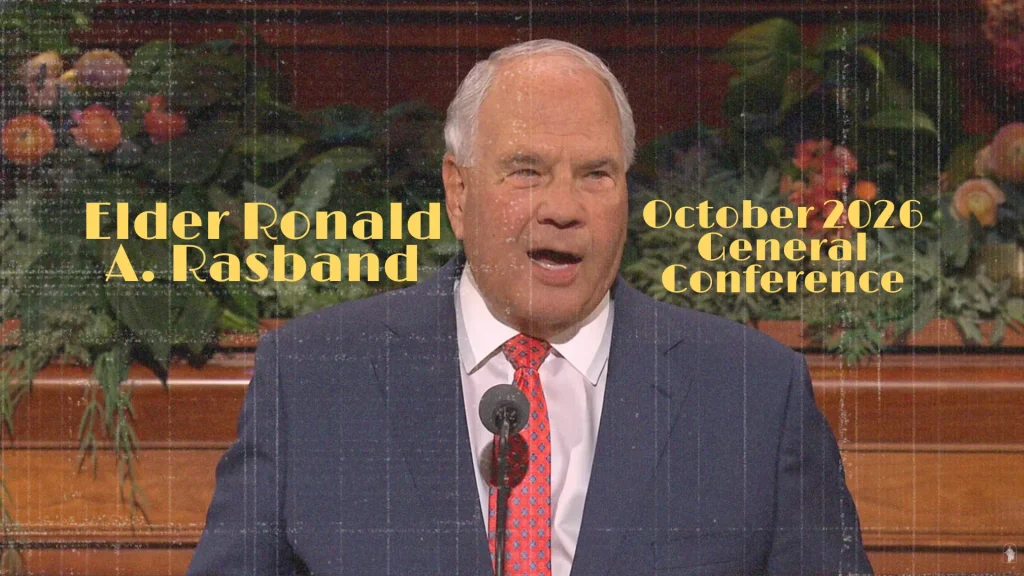
In his General Conference talk, “Love Like Jesus,” Elder Ronald A. Rasband offers a powerful message of hope for anyone who carries heartache over the choices of someone they love.
He reminds us that although we cannot control another person’s agency or change their heart, Jesus Christ can work miracles in ways we cannot.
The Savior understands our grief. He knows the people we love. And His Atonement makes it possible for every person to repent, change, and return to Him.
Elder Rasband teaches that our responsibility is not to force someone back onto the covenant path. Instead, we are invited to love as Jesus Christ loves: with patience, compassion, forgiveness, faith, and hope.
He reminds us that love does not require abandoning our beliefs or approving every decision someone makes. Rather, Christlike love means remaining interested in others’ lives, celebrating their successes, supporting them through difficulties, and ensuring they know they are loved.
Through the examples of Alma the Younger, the prodigal son, and the Savior’s own ministry, Elder Rasband teaches that love can create an environment where people feel safe turning toward Jesus Christ.
He concludes with three invitations: let go of guilt, remember that people matter more than problems, and continue turning to the Savior.
This message offers meaningful opportunities for Relief Society sisters to discuss agency, family relationships, forgiveness, prayer, ministering, the Atonement, and trusting Heavenly Father.
It is particularly relevant for sisters who are navigating difficult family relationships, worrying about loved ones, or learning how to maintain loving connections with people whose beliefs or choices differ from their own.
How to Use This Relief Society Lesson Help
This lesson help follows Elder Rasband’s talk chronologically, dividing it into 10 sections based on the major principles and changes in emphasis throughout his message.
Each section includes:
- Direct quotes from the talk
- An explanation of the doctrine or principle being taught
- 10 engaging Relief Society discussion questions
- 5 object lessons with instructions and teaching applications
- 10 personal sharing prompts
The goal is not to cover all 100 discussion questions, 50 object lessons, and 100 sharing prompts in one lesson. Instead, teachers can select the material that best meets the spiritual needs of their class.
Because this talk addresses deeply personal family experiences, teachers should encourage compassion and avoid creating pressure for sisters to disclose private struggles or discuss the choices of family members who are not present.
The most meaningful lessons will direct attention toward Jesus Christ and help sisters leave with greater hope, greater love, and a renewed desire to follow His example.
Section 1: The Heartache of Watching Loved Ones Turn Away from the Gospel
Understanding the Principle
Elder Rasband begins his message by speaking directly to those whose hearts ache because someone they love has stepped away from the Lord.
He acknowledges that this experience can create profound emotional and spiritual burdens.
When a loved one makes choices we do not understand or agree with, we may experience fear, sadness, disappointment, guilt, or uncertainty.
Sometimes we replay past conversations and wonder whether different words or actions might have changed the outcome.
Elder Rasband recognizes that our efforts to bring loved ones closer to Jesus Christ can sometimes create additional distance, especially when those efforts become arguments, demands, or repeated correction.
This opening section invites us to consider an important question:
How can we continue loving someone deeply without allowing our fear for them to control the relationship?
Direct Quotes from the Talk
“My dear brothers and sisters, my message is for everyone whose heart aches for loved ones who have turned away from the Lord, stepped away from obedience to God’s laws, breached their covenants, and left behind a string of broken hearts, becoming, as the Bible says, ‘tossed to and fro.’”
“As the Apostle Paul described, you may feel ‘burdened excessively,’ beyond your strength, weighed down as if being ‘pressed out of measure.’ If I asked for a show of hands of how many feel that way, hands would shoot up in this hall and around the world.”
“Most of us have faced such anguish in our families or circle of friends. I know Sister Rasband and I have.”
“In our grief, we continuously ponder the whys, hows, and what ifs. We feel we have failed. We spend sleepless nights going over how we tried to draw our loved ones close to Jesus Christ and the Spirit.”
“We preach, cajole, argue, demand, lecture, ignore, sit them down to watch general conference, and even send them links to the talks, like this one, but to no avail. If anything, these efforts can cause a greater rift.”
10 Relief Society Discussion Questions
- Why do you think Elder Rasband begins his talk by acknowledging the heartache people experience over loved ones?
- What emotions might someone experience when a family member steps away from the gospel?
- Why do we sometimes blame ourselves for the decisions of people we love?
- How can sincere efforts to help someone spiritually unintentionally create distance in a relationship?
- What is the difference between inviting someone to come unto Christ and pressuring them to change?
- How can we recognize when our concern for someone is beginning to affect the way we treat them?
- Why is it important to remember that even faithful families experience difficult circumstances?
- How can we support someone who is grieving over the spiritual choices of a loved one?
- What might it look like to maintain a loving relationship when conversations about religion have become difficult?
- How can we find peace when we have done everything we know how to do and circumstances still have not changed?
5 Object Lesson Ideas
1. The Tangled String
Materials: A length of string or yarn.
Tie several knots in the string.
Explain that strained relationships can become increasingly complicated when fear, frustration, and repeated arguments are added.
Pull tightly on the string to show how some knots become more difficult to loosen under tension.
Discuss how patience, gentleness, and understanding can create opportunities for healing.
Teaching application: Sometimes our desire to fix a relationship can create more tension. Christlike love invites us to approach others with patience rather than force.
2. The Heavy Backpack
Materials: Backpack and several books.
Place books in the backpack, each representing an emotion such as fear, guilt, disappointment, or worry.
Discuss how concern for a loved one can become emotionally exhausting.
Invite sisters to consider how they might turn these burdens over to the Savior.
Teaching application: Jesus Christ understands the weight of our emotional burdens and invites us to seek His help.
3. The Two Chairs
Materials: Two chairs.
Place the chairs facing each other.
Explain that relationships can become strained when every interaction turns into an attempt to correct or convince.
Turn the chairs so they sit side by side.
Discuss how companionship, listening, and shared experiences can strengthen relationships.
Teaching application: Sometimes maintaining connection is more important than winning an argument.
4. The Unfinished Letter
Materials: Paper and pens.
Invite sisters to privately write a few words they wish they could express to someone they love.
Encourage them to focus on compassion rather than correction.
They do not need to share or send the letter.
Teaching application: Prayerful reflection can help us examine whether our words communicate the love we intend.
5. The Open Hands
Materials: None.
Ask sisters to make a tight fist.
Discuss how tightly holding onto an outcome can create emotional strain.
Then invite them to open their hands.
Explain that trusting Heavenly Father does not mean we stop caring; it means we acknowledge that we cannot control another person’s choices.
Teaching application: We can love deeply while releasing the expectation that we must determine another person’s spiritual journey.
10 Personal Sharing Prompts
- Share a time when you learned that loving someone did not mean agreeing with every decision they made.
- Describe an experience when listening helped strengthen a difficult relationship.
- Tell about a time when you felt overwhelmed by concern for someone you love.
- Share how prayer has helped you navigate a challenging family relationship.
- Describe a moment when you realized that your approach to helping someone needed to change.
- Tell about someone who showed you patience during a difficult period of your life.
- Share a lesson you have learned about communicating love during disagreements.
- Describe an experience when you found peace despite uncertainty about a loved one’s future.
- Tell about a time when compassion accomplished more than correction.
- Share what helps you remember that Heavenly Father loves your family members individually.
Section 2: Agency Is Part of Heavenly Father’s Divine Plan
Understanding the Principle
After acknowledging the pain of watching loved ones make difficult choices, Elder Rasband reminds us of a foundational doctrine: everyone has agency.
We cannot choose faith, repentance, or discipleship for another person.
Even when we know the blessings that come from following Jesus Christ, each individual must decide whether to accept His invitation.
Elder Rasband uses Lehi’s vision of the tree of life to illustrate how people can become distracted, deceived, or drawn away from the path leading to God’s love.
This principle teaches that respecting agency is an essential part of loving as Jesus Christ loves.
We can teach truth, share testimony, extend invitations, and demonstrate love.
But we cannot force spiritual conversion.
Direct Quotes from the Talk
“By divine design, brothers and sisters, everyone must choose for themselves to follow Jesus Christ.”
“The Book of Mormon prophet Lehi viewed in a dream ‘numberless concourses of people … pressing forward’ to the tree of life, which is the love of Jesus Christ.”
“But ‘there arose a mist of darkness,’ and some ‘wandered off,’ setting up residence in the growing skyline of great and spacious buildings.”
“The adversary’s deceit leads to confusion and misery. He can promise no life eternal, no life with God the Father, and no peace. Not now. Not ever!”
10 Relief Society Discussion Questions
- Why is agency essential to Heavenly Father’s plan of happiness?
- What does it mean that everyone must choose for themselves to follow Jesus Christ?
- Why can it be difficult to respect another person’s agency when we believe their choices may bring unhappiness?
- How does Lehi’s vision illustrate the spiritual challenges people face?
- What might the mists of darkness represent in our lives today?
- How can we continue extending loving invitations without trying to control someone’s decisions?
- What is the difference between respecting agency and becoming indifferent to someone’s spiritual well-being?
- How does Jesus Christ demonstrate respect for individual choice?
- How can understanding agency help reduce guilt or anxiety over another person’s decisions?
- How can we teach children and loved ones the importance of agency while maintaining loving relationships?
5 Object Lesson Ideas
1. The Fork in the Road
Materials: Picture of a forked road.
Display a road that divides into two paths.
Discuss how each person must make decisions about the direction of their life.
Explain that we can provide guidance and encouragement, but we cannot walk another person’s path for them.
Teaching application: Agency is a divine gift that allows individuals to choose their response to Jesus Christ.
2. The Compass
Materials: Compass.
Explain that a compass can provide direction, but it cannot force someone to follow it.
Discuss how scriptures, prophets, and the Holy Ghost provide spiritual direction.
Teaching application: Heavenly Father offers guidance while allowing us to choose whether to follow it.
3. Lehi’s Vision
Materials: Picture of the tree of life.
Invite sisters to identify the tree, iron rod, mists of darkness, and great and spacious building.
Discuss how these symbols relate to spiritual choices.
Teaching application: The Savior’s love remains available even when people struggle to remain on the covenant path.
4. The Invitation Card
Materials: A simple invitation card.
Discuss the difference between offering an invitation and demanding attendance.
Connect this to inviting others to participate in gospel experiences.
Teaching application: Loving invitations respect agency.
5. The Open Door
Materials: Picture of an open door.
Discuss how an open door represents an invitation rather than a command.
Ask how we can help others know that our love and willingness to maintain a relationship remain open.
Teaching application: We can create relationships where people feel welcomed without feeling controlled.
10 Personal Sharing Prompts
- Share a time when you learned to respect another person’s agency.
- Describe an experience when someone allowed you to make an important decision for yourself.
- Tell about a moment when you felt Heavenly Father guiding you without forcing you.
- Share how understanding agency has changed the way you approach family relationships.
- Describe a time when you learned to offer invitations with greater patience.
- Tell about someone who respected your choices while continuing to love you.
- Share an experience when you recognized the importance of personal conversion.
- Describe how Lehi’s vision has influenced your understanding of discipleship.
- Tell about a time when you had to trust someone else’s ability to make decisions.
- Share what helps you remember that agency is part of Heavenly Father’s plan.
Section 3: Turn Your Despair Over to Jesus Christ
Understanding the Principle
After discussing agency and the adversary’s influence, Elder Rasband asks how we can respond when we fear for the spiritual well-being of someone we love.
His answer is to turn our despair over to Jesus Christ.
He reminds us that the battle ultimately belongs to the Lord.
We cannot change another person’s heart through our own power, but the Savior understands their needs, circumstances, and potential.
Heavenly Father loves His children even more perfectly than we do.
Through the Atonement of Jesus Christ, there is always a way to repent and return to Him.
This principle offers reassurance to those who feel responsible for bringing someone back to the gospel.
We can remain faithful, prayerful, and loving without assuming that the entire responsibility rests upon us.
Direct Quotes from the Talk
“How do we reset the clock while the adversary works overtime to destroy God’s plan of happiness?”
“Gratefully, the answer is in the Old Testament: ‘Be not afraid nor dismayed … ; for the battle is not yours, but God’s.’”
“Listen carefully. I ask you to turn over to Jesus Christ your despair for those wayward souls.”
“We cannot change their hearts, but He can; He is a God of miracles.”
“We love our family members and friends profoundly, but they are foremost children of our Father in Heaven, who knows and loves them even more than we do.”
“Our Father, the great Elohim, gave His Beloved Son the authority and power necessary to heal all His children.”
“That is the good news of the gospel. By the power of Jesus Christ’s Atonement, there is always a way back!”
10 Relief Society Discussion Questions
- What does it mean that the battle belongs to God?
- Why might it be difficult to turn our despair over to Jesus Christ?
- What is the difference between trusting the Savior and giving up on someone?
- How does remembering that our loved ones are Heavenly Father’s children change our perspective?
- Why is it comforting to know that God loves our family members more perfectly than we do?
- What does it mean that Jesus Christ can change hearts?
- How can we continue exercising faith when we cannot see spiritual progress in someone we love?
- What does the Savior’s Atonement teach us about the possibility of repentance and change?
- How can we recognize when we are carrying responsibilities that belong to the Savior?
- What would it look like to more fully entrust a loved one’s spiritual future to Jesus Christ?
5 Object Lesson Ideas
1. The Burden Basket
Materials: Basket, paper, and pens.
Invite sisters to privately write down a worry or burden.
Place the papers in the basket as a symbol of entrusting those concerns to Jesus Christ.
Teaching application: We can continue loving and serving while allowing the Savior to carry what is beyond our control.
2. The Small and Large Hands
Materials: Pictures of a child’s hand and an adult’s hand.
Discuss how our abilities are limited compared with the Savior’s infinite power.
Teaching application: Jesus Christ possesses the wisdom and power necessary to accomplish what we cannot.
3. The Bridge
Materials: Picture of a bridge.
Explain that the Savior’s Atonement makes a return to Heavenly Father possible.
Teaching application: Through Jesus Christ, repentance and reconciliation with God remain possible.
4. The Locked Box
Materials: Small box with a lock and key.
Discuss how we cannot force another person’s heart to change.
Connect this to the Savior’s ability to invite transformation through His grace and the Holy Ghost.
Teaching application: Conversion must be personally chosen, even though the Savior provides the power to change.
5. The Written Promise
Materials: Card with the words “There is always a way back.”
Display the phrase.
Invite sisters to discuss what it teaches about hope and repentance.
Teaching application: The Atonement of Jesus Christ provides a path forward for those who turn to Him.
10 Personal Sharing Prompts
- Share a time when you had to turn a burden over to Heavenly Father.
- Describe an experience when you learned that you could not change another person’s heart.
- Tell about a moment when trusting Jesus Christ brought you peace.
- Share how the doctrine of repentance has strengthened your hope.
- Describe a time when you witnessed meaningful spiritual change.
- Tell about an experience when prayer helped you release anxiety.
- Share what helps you remember that Heavenly Father loves your family.
- Describe a moment when you recognized the Savior’s power in someone’s life.
- Tell about a time when you learned to trust God’s timing.
- Share what the promise of a way back means to you.
Section 4: The Atonement of Jesus Christ Is Evidence of His Perfect Love
Understanding the Principle
Elder Rasband next focuses on the Savior’s infinite love.
He reminds us that Jesus Christ suffered for the sins, disappointments, and sorrows of God’s children.
The Savior understands both the person who has wandered and the loved ones who are grieving.
His Atonement provides hope for repentance, healing, forgiveness, and spiritual transformation.
Elder Rasband summarizes the Savior’s reassuring message in a simple phrase: “I’ve got this!”
This does not mean every relationship will immediately be restored or that every loved one will make the choices we hope for.
It means that Jesus Christ understands every person and every circumstance more perfectly than we do.
We can trust Him while continuing to act in faith.
Direct Quotes from the Talk
“By His Atonement from the Garden of Gethsemane to the cross on Golgotha, He paid for the sins and bore the disappointments that wrack their souls and yours.”
“In the vernacular, Jesus Christ says to all who grieve, ‘I’ve got this!’”
“Jesus Christ is the perfect embodiment of love.”
“Love is the centerpiece of His gospel and the essence of being like Him.”
“Love can positively influence those who have strayed.”
“The first great commandment is to ‘love the Lord thy God with all thy heart, and with all thy soul, and with all thy mind.’”
“And the second great commandment is ‘Love thy neighbour as thyself.’”
“As the Primary song says, ‘As I have loved you, love one another.’”
10 Relief Society Discussion Questions
- What does the Atonement of Jesus Christ teach us about His love?
- Why is it meaningful that the Savior understands both those who have wandered and those who grieve for them?
- What does Elder Rasband mean when he says the Savior’s message is “I’ve got this”?
- How can trusting Jesus Christ help us respond with greater patience?
- Why is love central to the gospel rather than simply one commandment among many?
- How do the first and second great commandments work together?
- What does it mean to love others as Jesus Christ loves them?
- How can we demonstrate Christlike love when someone’s choices differ from our beliefs?
- How does understanding the Savior’s sacrifice help us become more forgiving?
- What might change in our relationships if we consistently remembered that love is the essence of becoming like Christ?
5 Object Lesson Ideas
1. The Heart and the Cross
Materials: Paper heart and picture of Jesus Christ.
Place the heart beside the picture.
Discuss how the Savior’s sacrifice reveals the depth of His love.
Teaching application: Christlike love is demonstrated through sacrifice, compassion, and a willingness to serve.
2. The Two Great Commandments
Materials: Two paper hearts.
Write “Love God” on one and “Love Others” on the other.
Discuss how the commandments are connected.
Teaching application: Our love for Heavenly Father should influence how we treat His children.
3. The Umbrella
Materials: Umbrella.
Open the umbrella.
Discuss how the Savior’s love offers refuge and hope.
Clarify that His love does not remove every consequence or difficulty, but His Atonement makes healing and redemption possible.
Teaching application: Jesus Christ offers spiritual refuge to all who turn to Him.
4. The Reflection
Materials: Mirror.
Invite sisters to consider how their actions can reflect the Savior’s love.
Teaching application: Becoming like Jesus Christ requires learning to love as He loves.
5. The Gift
Materials: Wrapped gift.
Discuss how the Savior’s Atonement is an incomparable gift.
Invite sisters to consider how gratitude for that gift should influence their relationships.
Teaching application: Receiving the Savior’s love should inspire us to extend love to others.
10 Personal Sharing Prompts
- Share a time when you felt the Savior’s love during a difficult experience.
- Describe how the Atonement has influenced the way you treat others.
- Tell about someone who has demonstrated Christlike love toward you.
- Share a moment when you felt reassured that Jesus Christ understood your circumstances.
- Describe an experience when choosing love strengthened a relationship.
- Tell about a time when the Savior helped you become more forgiving.
- Share how the two great commandments influence your daily decisions.
- Describe a moment when you recognized the Savior’s love for someone else.
- Tell about an experience when trusting Christ helped you feel less anxious.
- Share what the phrase “Love is the centerpiece of His gospel” means to you.
Section 5: Christlike Love Means Staying Connected Without Condemning
Understanding the Principle
Elder Rasband then explains what loving like Jesus looks like in practice.
He teaches that love does not mean approving every decision or abandoning our beliefs.
Instead, love is demonstrated through genuine interest, kindness, encouragement, patience, and continued connection.
We can celebrate another person’s successes, support them through challenges, and remain present in their lives.
Elder Rasband also emphasizes the importance of the Holy Ghost and the counsel to trust the Lord rather than relying exclusively upon our own understanding.
This section offers a particularly meaningful opportunity to discuss how to maintain healthy relationships when religious beliefs or life choices differ.
Christlike love allows us to remain faithful to our convictions while treating others with dignity and respect.
Direct Quotes from the Talk
“Love is not stepping back or sanctioning others’ decisions and actions.”
“Love is being interested in their lives, their successes, and their challenges.”
“Love is being there with arms outstretched and a cheerful countenance.”
“Love is lifting with faith and hope in our Lord and Savior.”
“Love relies upon the calming influence of the Holy Ghost.”
“The book of Proverbs teaches, ‘Trust in the Lord with all thine heart; and lean not unto thine own understanding … , and he [will] direct thy paths.’”
“The path is marked by love.”
“President Dallin H. Oaks has counseled: ‘Let us avoid what is harsh and hateful. Let us seek to be holy, like our Savior.’”
“That holiness comes when we are peacemakers, when we are charitable, patient, forgiving, and kind.”
10 Relief Society Discussion Questions
- What is the difference between loving someone and approving every choice they make?
- How can we maintain our beliefs while showing genuine respect for others?
- Why is taking an interest in someone’s everyday life an important expression of love?
- What does it mean to be present with arms outstretched and a cheerful countenance?
- How can the Holy Ghost help us respond with patience during disagreements?
- Why might kindness accomplish more than repeated correction?
- What does it mean to be a peacemaker in a family experiencing religious differences?
- How can we demonstrate love without making someone feel like a project to be fixed?
- Why is it important to continue celebrating the successes of loved ones whose beliefs differ from ours?
- What could change in our relationships if we made charity, patience, forgiveness, and kindness our primary goals?
5 Object Lesson Ideas
1. The Open Arms
Materials: Picture of someone welcoming another person.
Discuss the difference between open arms and crossed arms.
Invite sisters to consider how body language, tone, and actions communicate love.
Teaching application: Christlike love creates an atmosphere of welcome and safety.
2. The Relationship Bridge
Materials: Building blocks.
Use blocks to build a bridge.
Label the blocks with qualities such as kindness, patience, listening, and forgiveness.
Teaching application: Relationships are strengthened through consistent acts of love.
3. The Two Circles
Materials: Paper and marker.
Draw two overlapping circles.
Label one “My Beliefs” and the other “Our Relationship.”
Discuss how maintaining personal convictions and maintaining loving relationships are not mutually exclusive.
Teaching application: Faithfulness to God and respect for others can coexist.
4. The Kindness Filter
Materials: Strainer or filter.
Discuss how we can pause before speaking and consider whether our words are necessary, kind, and likely to build trust.
Teaching application: The Holy Ghost can help us communicate with greater wisdom.
5. The Welcome Mat
Materials: Small welcome mat or picture of one.
Discuss what it means to help others feel welcome in our homes and lives.
Teaching application: Our relationships can communicate love even when beliefs differ.
10 Personal Sharing Prompts
- Share a time when someone loved you without agreeing with all your decisions.
- Describe an experience when patience helped strengthen a relationship.
- Tell about a moment when the Holy Ghost helped you respond kindly.
- Share how you have learned to maintain relationships despite differences.
- Describe someone who consistently makes others feel welcome.
- Tell about a time when listening created greater understanding.
- Share an experience when forgiveness helped restore peace.
- Describe how your understanding of charity has developed.
- Tell about a time when kindness helped soften a difficult conversation.
- Share one way you have learned to demonstrate love through everyday actions.
Section 6: Faithful Prayer Can Influence Generations
Understanding the Principle
Elder Rasband next teaches that love is expressed through prayer.
He shares the account of Alma the Younger, who rebelled against God and worked to lead others away from the Church.
Alma’s father prayed faithfully for him.
When an angel appeared to Alma the Younger, the angel explained that the prayers of his father and others had been heard.
Elder Rasband emphasizes that Alma’s father may have prayed for years before witnessing the remarkable transformation of his son.
This experience teaches the importance of persistent prayer.
Although prayer does not eliminate another person’s agency or guarantee a particular outcome, it allows us to seek Heavenly Father’s help and express our love through faith.
It also reminds us that spiritual change may occur on a timetable we cannot predict.
Direct Quotes from the Talk
“Love is expressed in prayer.”
“In the Book of Mormon, Alma the Younger, talented and smooth-talking, ‘had rebelled against … God’ and ‘had not kept his holy commandments.’”
“An angel, ‘with a voice of thunder,’ declared, ‘The Lord hath heard the prayers of his people, and also the prayers of his servant, Alma, who is thy father; for he has prayed with much faith concerning thee that thou mightest be brought to [a] knowledge of the truth … that the prayers of his servants might be answered according to their faith.’”
“His father, Alma, had prayed for weeks, months, years, maybe decades.”
“For three long days and nights, young Alma ‘was racked with eternal torment.’”
“Somewhere deep within came his father’s teachings of the coming of Jesus Christ ‘to atone for the sins of the world.’”
“Alma cried in his heart, ‘O Jesus, thou Son of God, have mercy on me.’”
“The love of the Savior filled him ‘with joy.’ He became a mighty prophet and a major figure in the Book of Mormon.”
10 Relief Society Discussion Questions
- What does the experience of Alma the Younger teach about the power of prayer?
- Why is it significant that Alma’s father continued praying despite his son’s rebellion?
- How can persistent prayer strengthen us even when circumstances do not change?
- What does this account teach about Heavenly Father’s awareness of our loved ones?
- Why is it important to remember that prayer does not remove another person’s agency?
- What role did Alma’s earlier gospel teachings play in his eventual repentance?
- How can we continue planting spiritual seeds without knowing when they may grow?
- What does Alma’s transformation teach about the power of Jesus Christ to redeem?
- How can we pray for loved ones in ways that express faith rather than fear?
- What can we learn from the joy Alma experienced after turning to Jesus Christ?
5 Object Lesson Ideas
1. The Prayer Jar
Materials: Jar and slips of paper.
Invite sisters to write the names of people they wish to remember in prayer.
Encourage them to continue praying with faith and love.
Teaching application: Prayer is one way we can consistently express concern for others.
2. The Seed
Materials: Seed and small pot of soil.
Plant a seed.
Discuss how growth takes time and may not be visible immediately.
Teaching application: Spiritual influence can continue long after a teaching moment or conversation.
3. The Family Prayer Photograph
Materials: Picture of a family praying.
Discuss how prayer can influence relationships across generations.
Teaching application: Prayer helps us invite Heavenly Father’s influence into our families.
4. The Timeline of Alma
Materials: Paper timeline.
Mark Alma’s rebellion, his father’s prayers, the angel’s visit, his repentance, and his later ministry.
Discuss how spiritual change may unfold over time.
Teaching application: The Lord can work through experiences and influences we cannot predict.
5. The Reminder Card
Materials: Index cards.
Invite sisters to write “Pray with Faith” on a card.
Encourage them to place it somewhere that will remind them to pray for those they love.
Teaching application: Consistent prayer can become a meaningful expression of Christlike love.
10 Personal Sharing Prompts
- Share a time when prayer strengthened your relationship with someone.
- Describe an experience when you continued praying despite uncertainty.
- Tell about a moment when you recognized an answer to prayer.
- Share how Alma’s story has influenced your understanding of repentance.
- Describe a time when someone’s prayers blessed your life.
- Tell about an experience when you learned to trust Heavenly Father’s timing.
- Share how prayer has helped you respond more lovingly to another person.
- Describe a moment when you witnessed spiritual growth in someone.
- Tell about a gospel teaching that remained meaningful long after you first heard it.
- Share what helps you continue praying with hope.
Section 7: Jesus Christ Has Already Paid the Price to Bring Us Home
Understanding the Principle
After sharing Alma’s transformation, Elder Rasband returns to the Savior’s Atonement.
He reminds us that Jesus Christ invites the weary to take His yoke upon them and find rest.
The Savior has already paid the price for sin.
He understands the people we love and the challenges they face.
His sacrifice demonstrates a love beyond anything we can fully comprehend.
This principle invites us to trust the Savior’s ability to redeem rather than believing that another person’s spiritual future depends entirely upon our efforts.
Jesus Christ has already accomplished what no other person could accomplish.
Through Him, repentance, forgiveness, and eternal life are possible.
Direct Quotes from the Talk
“‘Take my yoke upon you, and learn of me,’ our Savior says, ‘ … and ye shall find rest unto your souls.’”
“Brothers and sisters, Jesus Christ pulls more than His weight.”
“His Atonement is witness of His all-encompassing love for each one of us.”
“Brutal as it was for Him, His Atonement was crucial for our eternal journey.”
“Remember, ‘Greater love hath no man than this, that a man lay down his life for his friends.’”
“He has already paid for the sins and errant choices of all of God’s children, including those for whom you and I grieve.”
“He knows them. He knows their hearts; He loves them.”
“He gave His very life to bring them home, all the way home.”
10 Relief Society Discussion Questions
- What does the Savior’s invitation to take His yoke upon us teach about His willingness to help?
- What does Elder Rasband mean when he says Jesus Christ pulls more than His weight?
- How does the Atonement demonstrate the Savior’s love for every person?
- Why is it comforting to know that Jesus Christ understands the hearts of our loved ones?
- How can we avoid placing the responsibility for someone else’s salvation entirely upon ourselves?
- What does it mean that the Savior gave His life to bring us home?
- How can understanding the Atonement help us respond with greater compassion?
- Why is repentance an expression of hope rather than shame?
- How does the Savior’s sacrifice influence the way we view people who are struggling spiritually?
- What does this section teach about the relationship between love, grace, and redemption?
5 Object Lesson Ideas
1. The Yoke Illustration
Materials: Picture of two animals working together under a yoke.
Discuss how a yoke allows a burden to be shared.
Connect this to the Savior’s invitation to rely upon Him.
Teaching application: Jesus Christ offers strength and rest as we learn of Him and follow Him.
2. The Heavy Load
Materials: Heavy bag and two volunteers.
Invite one volunteer to hold the bag briefly.
Have the second volunteer help support it.
Discuss the difference assistance can make.
Teaching application: The Savior’s grace provides strength beyond our own.
3. The Open Gate
Materials: Picture of an open gate.
Discuss how the Atonement of Jesus Christ opens the way for repentance and return.
Teaching application: The Savior makes redemption possible.
4. The Heart
Materials: Paper heart.
Write “He Knows Them” on the heart.
Discuss the Savior’s perfect understanding of each person.
Teaching application: Jesus Christ knows our loved ones more completely than we do.
5. The Gift Box
Materials: Wrapped box.
Discuss the gift of the Atonement.
Invite sisters to consider how gratitude for this gift influences their faith.
Teaching application: The Savior’s sacrifice is the foundation of our hope.
10 Personal Sharing Prompts
- Share how the Atonement has strengthened your relationship with Jesus Christ.
- Describe a time when you felt the Savior helping you carry a burden.
- Tell about an experience when repentance brought you peace.
- Share how your understanding of grace has changed.
- Describe a moment when you recognized the Savior’s love for another person.
- Tell about a scripture that has strengthened your faith in redemption.
- Share how the Savior’s sacrifice influences your relationships.
- Describe a time when you learned to trust Jesus Christ more fully.
- Tell about an experience when you felt spiritually renewed.
- Share what it means to you that the Savior gave His life to bring us home.
Section 8: The Prodigal Son Teaches Us to Keep Love Available
Understanding the Principle
Elder Rasband next shares the parable of the prodigal son.
The son chose to leave home and pursue a life that eventually left him in desperate circumstances.
When he returned, his father did not respond with rejection.
Instead, the father saw him from a distance, felt compassion, and ran to welcome him.
Elder Rasband asks what brought the son back.
His answer is love.
The son knew where he could find it.
This parable offers a powerful model for families and relationships.
We cannot control when or whether someone chooses to return to the gospel.
But we can strive to create relationships characterized by compassion, forgiveness, and welcome.
The father’s example reminds us that love can remain available even during separation.
Direct Quotes from the Talk
“Remember the prodigal son who chose to leave his safe moorings for ‘riotous living.’”
“He lost his fortune and his self-respect, and he returned home in a wretched state.”
“‘When he was yet a great way off, his father saw him, and had compassion, and ran [to him].’”
“‘He was lost’ and now was ‘found.’”
“What brought him back? It was love.”
“He knew where to find it.”
“Love, brothers and sisters, is the answer to connecting with all of our loved ones.”
“Our Father extends His protective arms to us and to those still distant from Him and His Son.”
“He asks us to do the same.”
“Jesus Christ beckons, ‘Come unto me, all ye that labour and are heavy laden, and I will give you rest.’”
10 Relief Society Discussion Questions
- What stands out to you about the father’s response to the prodigal son?
- Why is it significant that the father ran to meet his son?
- What does Elder Rasband mean when he says the son knew where to find love?
- How can we help loved ones know that our love remains available?
- What is the difference between welcoming someone and approving every decision they have made?
- How does the father’s example reflect Heavenly Father’s love?
- Why is forgiveness essential to maintaining strong relationships?
- How can we create homes where people feel safe seeking help?
- What does this parable teach about the possibility of repentance and change?
- How can we follow the father’s example when someone we love is struggling?
5 Object Lesson Ideas
1. The Open Door
Materials: Picture of an open door.
Discuss how an open door can symbolize welcome and continued connection.
Teaching application: We can communicate that our love remains available.
2. The Welcome Home Sign
Materials: Paper sign reading “Welcome Home.”
Discuss the father’s response to his returning son.
Teaching application: Forgiveness and compassion can help create an atmosphere of healing.
3. The Empty Chair
Materials: Empty chair.
Discuss how families may experience the absence of loved ones who have become distant.
Invite sisters to consider ways to maintain connection.
Teaching application: Love can continue even when circumstances are not what we hoped.
4. The Running Father
Materials: Picture illustrating the prodigal son.
Discuss the father’s eagerness to welcome his son.
Teaching application: Heavenly Father’s love is active, compassionate, and inviting.
5. The Family Table
Materials: Picture of a family gathered around a table.
Discuss how shared meals, celebrations, and ordinary activities can strengthen relationships.
Teaching application: Love is often communicated through consistent everyday connection.
10 Personal Sharing Prompts
- Share a time when someone welcomed you after a difficult experience.
- Describe an experience when forgiveness strengthened a relationship.
- Tell about someone who consistently makes others feel loved.
- Share how the parable of the prodigal son has influenced your testimony.
- Describe a time when you learned to keep a relationship open despite differences.
- Tell about an experience when compassion helped someone feel accepted.
- Share how your understanding of Heavenly Father’s love has changed.
- Describe a moment when you felt welcomed back after making a mistake.
- Tell about a family tradition that helps loved ones feel connected.
- Share what the phrase “He knew where to find it” means to you.
Section 9: Let Go of Guilt and Remember That People Matter More Than Problems
Understanding the Principle
As Elder Rasband approaches the conclusion of his message, he offers three practical suggestions.
His first invitation is to let go of guilt.
He reminds us that we should never give up on those we love.
His second invitation is to remember President Thomas S. Monson’s counsel that people should never become less important than the problems we are trying to solve.
These principles are closely connected.
When we feel guilty about someone’s choices, we may become consumed with trying to fix the situation.
But our desire to solve a problem can sometimes overshadow the relationship itself.
Elder Rasband invites us to focus on loving people rather than allowing their difficulties to define our interactions.
This section offers a meaningful opportunity to discuss compassion, personal responsibility, and maintaining healthy relationships.
Direct Quotes from the Talk
“I close with three suggestions to help us find rest:”
“First, let go of any guilt.”
“We fail only when we give up and stop trying, so never, never give up on those you love.”
“Remember the example of Alma praying for his son.”
“Second, follow the admonition of President Thomas S. Monson: ‘Never let a problem to be solved become more important than a person to be loved.’”
10 Relief Society Discussion Questions
- Why might parents or family members feel guilty about another person’s decisions?
- What does it mean to let go of guilt while continuing to love someone?
- How can we distinguish between appropriate personal responsibility and unnecessary self-blame?
- Why is it important to remember that a person is more than their problems?
- How can our desire to fix a situation unintentionally damage a relationship?
- What does it mean to never give up on someone while respecting their agency?
- How can we demonstrate continued love without trying to control outcomes?
- What does President Monson’s counsel teach about Christlike priorities?
- How can we help someone feel valued even when we disagree with their choices?
- What might change if we focused more on strengthening relationships than solving every disagreement?
5 Object Lesson Ideas
1. The Problem and the Person
Materials: Two cards labeled “Problem” and “Person.”
Place the cards on a table.
Discuss how easily attention can become focused on the problem.
Move the “Person” card to the center.
Teaching application: Christlike love requires us to see individuals as children of God rather than problems to solve.
2. The Heavy Stone
Materials: Small stone.
Explain that the stone represents guilt.
Invite sisters to consider the emotional weight of carrying responsibility for another person’s choices.
Teaching application: We can acknowledge our own mistakes and repent when needed without assuming responsibility for another person’s agency.
3. The Relationship Plant
Materials: Small plant.
Discuss how relationships require consistent care.
Explain that nurturing a relationship may involve patience, kindness, and time.
Teaching application: Love is demonstrated through ongoing effort rather than immediate results.
4. The Unfinished Project
Materials: Partially completed craft or puzzle.
Discuss how some problems remain unresolved for long periods.
Ask how we can continue loving someone even when circumstances remain unfinished.
Teaching application: Relationships should not depend upon achieving a particular outcome.
5. The Reminder Card
Materials: Index cards.
Write President Monson’s counsel on the cards.
Invite sisters to consider placing the reminder somewhere visible.
Teaching application: Remembering that people matter more than problems can influence our everyday conversations.
10 Personal Sharing Prompts
- Share a time when you learned to release unnecessary guilt.
- Describe an experience when someone valued you despite your mistakes.
- Tell about a moment when you realized a relationship mattered more than winning an argument.
- Share how President Monson’s counsel has influenced your life.
- Describe a time when patience helped preserve a relationship.
- Tell about someone who continued showing you love during a difficult season.
- Share how you have learned to separate a person’s worth from their choices.
- Describe an experience when forgiveness helped you move forward.
- Tell about a time when you chose connection over correction.
- Share what helps you remember that every person is a beloved child of God.
Section 10: Jesus Christ Is the Answer—Trust Him and Build Your Life Upon His Rock
Understanding the Principle
Elder Rasband concludes with his third suggestion: remember that Jesus Christ is the answer.
He invites us to seek the Savior through scripture study, the teachings of Church leaders, and sincere prayer.
He reminds us that Jesus Christ will not leave us comfortless.
Elder Rasband then offers an apostolic promise.
Although the adversary may influence loved ones and create storms of uncertainty, those who build their lives upon Jesus Christ can find spiritual stability.
The choices of others may cause grief, but they do not have to destroy our own faith.
By placing our trust in Jesus Christ, we can remain grounded in hope, love, and peace.
His concluding invitation summarizes the message of the entire talk:
Trust Him. He’s got this!
Direct Quotes from the Talk
“Third, remember Jesus Christ is the answer.”
“He is, always has been, and always will be.”
“Seek Him through study of the scriptures and words of prophets, apostles, men and women leaders who are devoted to serving the Lord.”
“And pray. Pray mightily to our Heavenly Father in the name of Jesus Christ.”
“He will not leave us ‘comfortless.’”
“I promise you, as an Apostle of the Lord Jesus Christ, that when the devil sends ‘forth his mighty winds’ pulling loved ones off course, ‘his mighty storm … shall have no power … to drag you down to the gulf of misery and endless wo, because of the rock upon which ye are built.’”
“If that rock is Jesus Christ.”
“Trust Him. He’s got this!”
10 Relief Society Discussion Questions
- What does it mean that Jesus Christ is the answer?
- How can scripture study strengthen us during difficult family circumstances?
- Why is prayer essential when we feel powerless to change a situation?
- What does the Savior’s promise not to leave us comfortless mean to you?
- How can we build our lives more firmly upon the rock of Jesus Christ?
- Why is it important to protect our own faith while supporting loved ones?
- How can we maintain spiritual stability when circumstances around us feel uncertain?
- What does Elder Rasband’s apostolic promise teach about the Savior’s power?
- How can trusting Jesus Christ help us respond with greater love rather than fear?
- What is one action you feel inspired to take after studying this talk?
5 Object Lesson Ideas
1. The Rock and the Sand
Materials: Two small containers, one filled with sand and one holding a stable rock.
Place a small object on each surface.
Discuss the importance of building our lives upon a firm foundation.
Teaching application: Faith in Jesus Christ provides spiritual stability during life’s storms.
2. The Anchor
Materials: Small anchor or picture of one.
Discuss how an anchor helps keep something from drifting.
Teaching application: Jesus Christ provides hope and stability when circumstances are uncertain.
3. The Scripture
Materials: Scriptures.
Invite sisters to identify a passage that helps them trust the Savior.
Teaching application: Scripture study can strengthen our faith and invite the Holy Ghost.
4. The Storm Picture
Materials: Picture of a storm.
Discuss how storms can represent challenges we cannot control.
Ask how faith in Jesus Christ helps us remain spiritually grounded.
Teaching application: The Savior offers strength even when difficulties remain.
5. The Trust Card
Materials: Cards reading “Trust Him. He’s got this!”
Invite sisters to take a card home as a reminder.
Teaching application: We can entrust our worries and loved ones to Jesus Christ while continuing to act with faith and love.
10 Personal Sharing Prompts
- Share a time when trusting Jesus Christ helped you find peace.
- Describe a scripture that has strengthened you during a difficult experience.
- Tell about a moment when prayer helped you feel closer to Heavenly Father.
- Share how your testimony of Jesus Christ has helped you navigate uncertainty.
- Describe a time when you felt spiritually grounded despite difficult circumstances.
- Tell about an experience when the Holy Ghost brought you comfort.
- Share how the teachings of prophets and apostles have strengthened your faith.
- Describe a moment when you recognized the Savior’s influence in a relationship.
- Tell about a time when you learned to trust Heavenly Father’s timing.
- Share what Elder Rasband’s invitation “Trust Him. He’s got this!” means to you personally.
Conclusion: Love Like Jesus and Trust Him with the Rest
Elder Ronald A. Rasband’s message, “Love Like Jesus,” offers reassurance to anyone whose heart aches over the choices of someone they love.
It reminds us that although we cannot control another person’s decisions, we can continue extending Christlike love.
We can pray with faith.
We can demonstrate patience.
We can listen with compassion.
We can maintain relationships even when beliefs and choices differ.
And we can trust Jesus Christ to accomplish what we cannot.
Throughout his message, Elder Rasband teaches that love is not passive.
It is expressed through genuine interest, encouragement, forgiveness, kindness, and continued connection.
The Savior’s example demonstrates that love does not require us to abandon truth or approve every decision.
Instead, love invites us to see others as Heavenly Father sees them: beloved children with divine potential.
Through the examples of Alma the Younger and the prodigal son, Elder Rasband reminds us that repentance and spiritual change are possible through Jesus Christ.
Alma’s father prayed faithfully for his son.
The father of the prodigal son remained ready to welcome his child home.
Both examples demonstrate the importance of patience, hope, and enduring love.
Perhaps one of the most comforting principles in this talk is that we are not responsible for accomplishing what only the Savior can accomplish.
We cannot change another person’s heart through force or persuasion.
But Jesus Christ understands every individual perfectly.
He knows their circumstances, their struggles, and their potential.
Through His Atonement, He provides the way for repentance, healing, and redemption.
Our responsibility is to continue loving, praying, inviting, and following His example.
Using This Lesson Help in Relief Society
This talk provides an opportunity for Relief Society sisters to strengthen their understanding of Christlike love and the importance of respecting agency.
Teachers can use the discussion questions to explore the relationship between love, family relationships, forgiveness, prayer, and trusting Jesus Christ.
The object lessons can help illustrate principles such as releasing guilt, maintaining loving connections, and building faith upon the Savior.
The personal sharing prompts invite sisters to strengthen one another through experiences of compassion, forgiveness, answered prayers, and spiritual growth.
Because the subject of loved ones leaving the gospel can be deeply personal, teachers should approach the lesson with sensitivity.
Some sisters may have children, spouses, siblings, or close friends who no longer participate in the Church.
Others may have experienced judgment or strained relationships because of differences in belief.
The goal should not be to encourage sisters to share private details about loved ones or speculate about their spiritual standing.
Instead, the lesson can help sisters focus on what they can personally do to become more like Jesus Christ.
Teachers may also emphasize that continuing to love someone does not require tolerating harmful behavior or abandoning appropriate boundaries.
Christlike love can include both compassion and wisdom.
A Final Invitation for Your Relief Society Lesson
Consider concluding the lesson by inviting sisters to reflect on three questions:
1. Is there someone in my life who needs to feel more of my love and less of my concern about changing them?
2. What burden or worry about a loved one do I need to more fully entrust to Jesus Christ?
3. What is one specific way I can demonstrate Christlike love this week?
Allow a few moments for quiet reflection.
You might invite sisters to write down a name, a prompting, or a simple act of love they feel inspired to offer.
Then conclude with Elder Rasband’s three invitations:
Let go of guilt. Remember that people matter more than problems. Keep Jesus Christ at the center of your faith.
His final testimony provides a fitting reminder:
“Trust Him. He’s got this!”
This message invites us to replace fear with faith, guilt with hope, and attempts to control with Christlike love.
We may not be able to change another person’s heart.
We may not know when or how their spiritual journey will unfold.
But we can continue to love them.
We can continue to pray.
We can continue to trust the Savior.
And as we learn to love like Jesus, we can find peace in knowing that every person we care about is already known and perfectly loved by Him.


Leave a Reply