Introduction: Learning to See Others as Jesus Christ Sees Them
Have you ever felt invisible?
Perhaps you were surrounded by people but felt that no one truly noticed you. Maybe you were struggling with something difficult, yet everyone around you seemed unaware. Or perhaps you have experienced a season when your responsibilities, mistakes, circumstances, or perceived limitations began to define how you saw yourself.
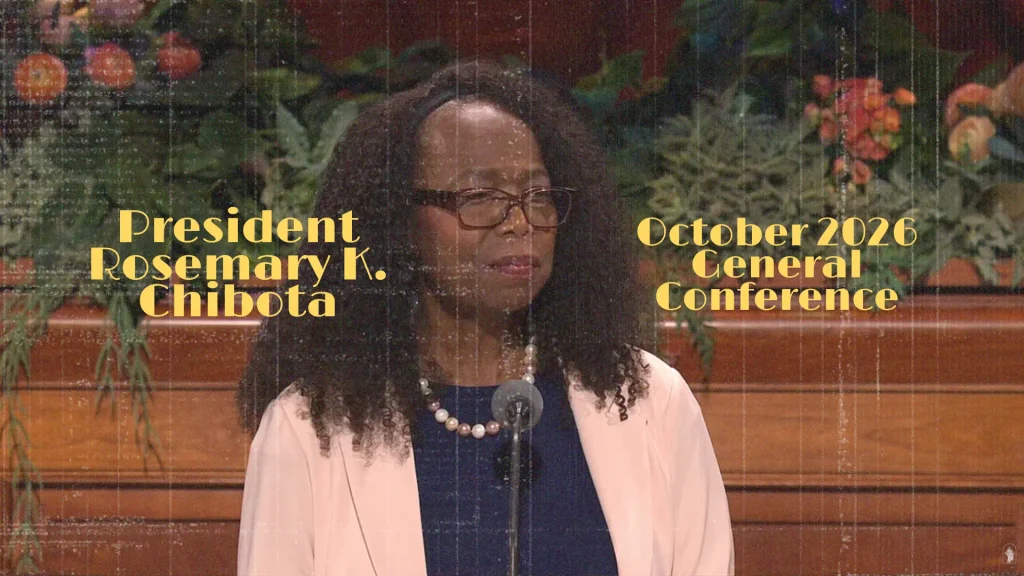
In her General Conference talk, “A Child of God,” President Rosemary K. Chibota teaches a powerful truth about our divine identity and the importance of helping others recognize theirs.
She begins by introducing the southern African greeting sawubona, which means, “I see you.”
This greeting represents something much deeper than acknowledging another person’s presence. It communicates respect, belonging, and recognition of their inherent worth.
President Chibota teaches that Jesus Christ perfectly exemplified this principle throughout His mortal ministry.
Where others saw social status, physical limitations, mistakes, or circumstances, the Savior saw beloved children of Heavenly Father.
He recognized their individual needs, understood their divine potential, and ministered to them with compassion.
President Chibota invites us to develop that same ability.
She teaches that seeing others as children of God can transform the way we minister, build relationships, serve in our callings, and interact with people in our homes, wards, workplaces, and communities.
But her message goes even deeper.
She reminds us that we must also learn to see ourselves as Heavenly Father sees us.
The world often encourages us to define ourselves through labels, accomplishments, responsibilities, mistakes, or perceived inadequacies.
Yet our eternal identity is not something we earn through achievement.
We are children of God because of who we are, not because of what we accomplish.
Through Jesus Christ, we can rise above the labels and limitations that distort our understanding of our divine worth.
This lesson offers meaningful opportunities for Relief Society sisters to discuss divine identity, compassion, ministering, self-worth, personal revelation, and the Savior’s ability to help us recognize our eternal potential.
It is especially relevant for sisters who struggle with feelings of inadequacy, comparison, loneliness, or uncertainty about their purpose.
It also provides practical ways to strengthen relationships and create a greater sense of belonging within Relief Society.
How to Use This Relief Society Lesson Help
This lesson help follows President Chibota’s talk chronologically, dividing it into 10 discussion sections based on the major principles and changes in emphasis throughout her message.
Each section includes:
- Direct quotations from the talk
- A doctrinal explanation and teaching focus
- 10 engaging Relief Society discussion questions
- 5 object lessons with explanations and teaching applications
- 10 personal sharing prompts
The material is designed to provide teachers with a variety of options rather than a script that must be followed in its entirety.
Teachers can prayerfully select the discussion questions, activities, and personal sharing opportunities that best meet the needs of their class.
The goal is to help sisters leave Relief Society with a deeper understanding of their divine identity and a greater desire to see and love others as Jesus Christ does.
Section 1: Sawubona—The Power of Helping Others Feel Seen
Understanding the Principle
President Chibota begins her message by sharing the meaning of the southern African greeting sawubona.
Although it can be translated as “I see you,” its meaning extends far beyond simply noticing another person’s physical presence.
It communicates respect, love, concern, belonging, and recognition of another person’s humanity.
This principle invites us to consider how often we interact with people without truly seeing them.
We may pass neighbors, coworkers, ward members, or even family members without recognizing their individual needs or experiences.
Sometimes our conversations become routine.
We ask how someone is doing without taking the time to hear their answer.
President Chibota’s introduction reminds us that acknowledging another person’s worth can be a meaningful expression of Christlike love.
Helping someone feel seen does not always require an extraordinary act of service.
Sometimes it begins with remembering their name, offering genuine attention, or communicating that their presence matters.
Direct Quotes from the Talk
“As a child, I learned that greetings in my culture communicate love, concern, respect, and belonging.”
“My daughter recently reminded me of the significance of the southern African greeting sawubona, which means, ‘I see you.’”
“This greeting is much more than a simple ‘hello.’ It is an acknowledgment of another person’s worth and humanity.”
“It communicates, ‘I recognize you. I respect you. You matter.’”
10 Relief Society Discussion Questions
- What stands out to you about the meaning of sawubona?
- How is truly seeing someone different from simply noticing their presence?
- Why is feeling recognized and valued important to our emotional and spiritual well-being?
- What are some ways people can feel invisible even when surrounded by others?
- How can remembering someone’s name communicate respect and belonging?
- What is the difference between a routine greeting and a meaningful acknowledgment?
- How can we become more intentional about noticing people in our everyday interactions?
- Why might small acts of recognition have a lasting influence on someone’s life?
- How could the principle of sawubona change the atmosphere in our Relief Society?
- What might happen in our homes and communities if we consistently communicated, “You matter”?
5 Object Lesson Ideas
1. The Name Tag
Materials: Blank name tags and markers.
Give each sister a name tag.
Invite them to write their name and, if comfortable, one interest, quality, or experience that is meaningful to them.
Discuss how knowing someone’s name is only the beginning of understanding who they are.
Teaching application: Every person has a unique identity, story, and divine worth. Christlike love invites us to look beyond surface-level interactions.
2. The Empty Chair
Materials: One empty chair.
Place an empty chair near the front of the room.
Ask sisters to consider who might feel overlooked in their ward, neighborhood, workplace, or family.
Discuss how they could help someone feel included.
Teaching application: Recognizing those who feel unseen is an important part of creating Christlike belonging.
3. The Mirror
Materials: Small mirror.
Invite sisters to look briefly into the mirror.
Ask them to consider what Heavenly Father sees when He looks at them.
Then discuss how that same divine worth exists in every person they encounter.
Teaching application: Seeing others as children of God begins with understanding their eternal worth.
4. The Greeting Comparison
Materials: None.
Demonstrate two different greetings.
First, offer a distracted greeting while looking away.
Then offer a warm greeting with eye contact and genuine attention.
Ask sisters to identify the difference.
Teaching application: The way we acknowledge others can communicate either indifference or love.
5. The Sawubona Card
Materials: Index cards.
Write the following words on a card:
“I recognize you. I respect you. You matter.”
Invite sisters to reflect on someone who might need to feel this message.
Teaching application: Small, sincere expressions of recognition can strengthen relationships and communicate Christlike love.
10 Personal Sharing Prompts
- Share a time when someone helped you feel genuinely seen.
- Describe an experience when remembering someone’s name made a difference.
- Tell about a moment when you felt overlooked or invisible.
- Share how someone’s kindness helped you feel that you belonged.
- Describe a time when you made an intentional effort to include another person.
- Tell about someone who consistently makes others feel important.
- Share an experience when a simple greeting developed into a meaningful friendship.
- Describe a moment when you realized someone needed more attention or compassion.
- Tell about a time when you felt Heavenly Father reminding you of your worth.
- Share one way the principle of sawubona could influence your daily interactions.
Section 2: Jesus Christ Sees Beyond Labels and Recognizes Every Child of God
Understanding the Principle
After introducing sawubona, President Chibota turns to the Savior’s example.
Throughout His mortal ministry, Jesus Christ consistently recognized individuals whom others overlooked, judged, or misunderstood.
He ministered to people who were marginalized because of their circumstances, physical conditions, or social standing.
He saw the woman at the well.
He saw the leper.
He saw the blind man.
He saw the child.
He even loved the rich young man who ultimately chose to walk away from Him.
This example is particularly meaningful because it teaches that Christlike love does not depend upon another person’s response.
The Savior loved the rich young man even though the young man did not accept His invitation.
President Chibota reminds us that Jesus Christ sees people according to their eternal identity rather than the labels the world places upon them.
Direct Quotes from the Talk
“The Savior Jesus Christ perfectly exemplified this principle.”
“Throughout His ministry, He truly saw the people around Him.”
“He saw the woman at the well, the leper, the blind man, and the child.”
“Where others saw labels, He saw beloved sons and daughters of God.”
“Even of the rich young man who later walked away from Him sorrowing, the scriptures say, ‘[And] Jesus beholding him loved him.’”
10 Relief Society Discussion Questions
- What do the Savior’s interactions with the woman at the well, the leper, and the blind man teach about how He sees people?
- Why is it significant that Jesus Christ often ministered to people whom society overlooked?
- What does it mean to see someone beyond their circumstances or reputation?
- How can labels prevent us from recognizing another person’s divine worth?
- What stands out to you about the Savior loving the rich young man even though he walked away?
- How can we demonstrate Christlike love when someone makes choices we do not understand or agree with?
- Why is it important to separate a person’s worth from their actions?
- How can studying the Savior’s ministry help us become more compassionate?
- What assumptions might prevent us from seeing people as Jesus Christ sees them?
- How would our relationships change if we consistently remembered that every person is a beloved child of God?
5 Object Lesson Ideas
1. The Labeled Box
Materials: Box with several labels attached.
Write labels such as “shy,” “successful,” “struggling,” or “different” on the box.
Remove the labels one by one.
Discuss how labels can never fully describe a person’s identity.
Teaching application: Jesus Christ sees beyond outward appearances and recognizes eternal worth.
2. The Glasses
Materials: Pair of glasses.
Explain that glasses change how clearly we see.
Invite sisters to consider how the gospel changes the way we view others.
Teaching application: Understanding divine identity helps us see people through a more Christlike perspective.
3. The Scripture Portraits
Materials: Pictures of individuals from the Savior’s ministry.
Display pictures of the woman at the well, the leper, and the rich young man.
Discuss what the Savior recognized in each person.
Teaching application: Jesus Christ ministers to individuals according to their needs and divine potential.
4. The Heart Behind the Label
Materials: Paper heart and sticky notes.
Cover the heart with sticky notes containing different labels.
Remove the notes to reveal the heart.
Teaching application: A person’s divine worth exists beyond the descriptions or judgments placed upon them.
5. The Open Invitation
Materials: Invitation card.
Discuss the Savior’s interaction with the rich young man.
Explain that the Savior offered an invitation and continued to love him even when he walked away.
Teaching application: Christlike love respects agency and does not depend upon receiving the response we hope for.
10 Personal Sharing Prompts
- Share a time when someone looked beyond a label or assumption about you.
- Describe an experience when you learned more about someone you had misunderstood.
- Tell about a moment when the Savior’s example helped you become more compassionate.
- Share a scripture story that has influenced how you see others.
- Describe a time when you learned to love someone despite differences.
- Tell about someone who demonstrated Christlike acceptance toward you.
- Share an experience when you recognized another person’s divine potential.
- Describe a moment when you felt the Savior understood you personally.
- Tell about a time when you changed your opinion of someone after getting to know them.
- Share what the Savior’s love for the rich young man teaches you about unconditional love.
Section 3: Christlike Compassion Begins When We Notice Someone in Need
Understanding the Principle
President Chibota continues by sharing two scriptural examples of people who were truly seen.
First, she describes the Savior’s experience at the pool of Bethesda.
There, Jesus Christ noticed a man who had suffered with an infirmity for 38 years.
While others had passed him by, the Savior recognized his need and ministered to him.
President Chibota then references the good Samaritan.
Rather than allowing cultural differences or social labels to influence his response, the Samaritan recognized a person in need and chose to act.
These examples teach that Christlike compassion requires more than simply recognizing suffering.
It invites action.
Sometimes that action involves meaningful sacrifice.
Other times it begins with something as simple as learning someone’s name.
Direct Quotes from the Talk
“One of my favorite sawubona moments in the Savior’s ministry occurred at the pool of Bethesda.”
“There Jesus saw a man who had suffered with an infirmity for 38 years.”
“Where others had walked past him for years, the Savior saw him, ministered to him, and healed him.”
“The good Samaritan also chose to see.”
“Rather than allowing labels or differences to distract him, he saw a child of God in need and acted.”
“The Savior’s example and the good Samaritan’s compassion are not beyond our reach.”
“Often, helping others feel seen as children of God begins with something as simple as learning their name.”
10 Relief Society Discussion Questions
- What does the Savior’s experience at the pool of Bethesda teach about recognizing individual needs?
- Why might people have overlooked the man who had suffered for 38 years?
- What is the difference between noticing someone’s suffering and responding to it?
- How did the good Samaritan demonstrate that compassion can overcome social differences?
- Why is it important to recognize the humanity of people whose experiences differ from ours?
- How can we become more attentive to those who may feel overlooked?
- What are some simple ways to minister without waiting for a formal assignment?
- Why might learning someone’s name be an important first step in service?
- How can the Holy Ghost help us recognize opportunities to minister?
- What does this section teach about the relationship between compassion and action?
5 Object Lesson Ideas
1. The First Aid Kit
Materials: First aid kit.
Display the kit and discuss how supplies are only useful when someone recognizes a need and takes action.
Teaching application: Christlike compassion includes a willingness to respond to suffering.
2. The Name Card
Materials: Blank cards.
Invite sisters to write the name of someone they would like to get to know better.
Encourage them to make a simple effort to connect during the week.
Teaching application: Ministering can begin with personal recognition.
3. The Good Samaritan Picture
Materials: Picture of the good Samaritan.
Invite sisters to identify the choices the Samaritan made.
Discuss what those choices reveal about his priorities.
Teaching application: Compassion involves recognizing needs and acting despite differences.
4. The Helping Hands
Materials: Paper hand cutouts.
Invite sisters to write simple acts of service on the paper hands.
Discuss how small actions can communicate divine love.
Teaching application: We can become instruments in Heavenly Father’s hands through everyday service.
5. The Unnoticed Object
Materials: Small object placed somewhere in the classroom before the lesson.
Ask sisters whether they noticed it.
Discuss how easily we overlook things that are not drawing our attention.
Connect the activity to people who may be quietly struggling.
Teaching application: Developing spiritual awareness helps us recognize needs that might otherwise go unnoticed.
10 Personal Sharing Prompts
- Share a time when someone noticed a need you had not expressed.
- Describe an experience when you felt prompted to help someone.
- Tell about a moment when a small act of service made a meaningful difference.
- Share how the parable of the good Samaritan has influenced your life.
- Describe a time when you learned to look beyond differences.
- Tell about someone who consistently notices people in need.
- Share an experience when learning someone’s name strengthened a connection.
- Describe a moment when you felt the Savior’s love through another person’s actions.
- Tell about a time when serving someone helped you understand them better.
- Share what helps you recognize opportunities to minister.
Section 4: Small Acts of Recognition Can Communicate God’s Love
Understanding the Principle
President Chibota next shares a personal experience involving her daughter.
During a parent-teacher conference, a school janitor approached President Chibota and her husband to thank them for their daughter.
He explained that she regularly greeted him, remembered his name, and helped him clean up after lunch.
His emotional response revealed how meaningful those simple interactions had been.
The janitor explained that very few students knew his name.
But President Chibota’s daughter saw him.
This experience demonstrates that helping others feel valued does not require extraordinary abilities or resources.
It often requires attention, kindness, and consistency.
President Chibota then connects this experience to the doctrine that every person is a beloved child of God.
She also shares how understanding this truth influenced the effectiveness of missionaries who served under her leadership.
Direct Quotes from the Talk
“During our daughter’s final parent-teacher conference, a school janitor approached my husband and me.”
“With tears in his eyes, he thanked us for our daughter.”
“He explained that she regularly greeted him, knew his name, and even helped him clean up after lunch.”
“He told us, ‘Very few students know my name. Your daughter sees me.’”
“President Dallin H. Oaks reminded us that ‘all mortals are beloved children of God.’”
“As mission leaders, we found that missionaries who understood and taught this truth were more effective in helping others come unto Christ.”
10 Relief Society Discussion Questions
- Why do you think the janitor was so deeply affected by President Chibota’s daughter?
- What does this experience teach about the importance of everyday kindness?
- Why might certain people feel overlooked because of their responsibilities or social position?
- How can remembering someone’s name communicate genuine respect?
- What can children teach adults about recognizing the worth of others?
- How does understanding that everyone is a child of God influence the way we serve?
- Why might missionaries who understand divine identity be more effective in helping others come unto Christ?
- How can we avoid treating people differently based on their occupation, appearance, or circumstances?
- What small acts of recognition could strengthen our ward or community?
- How can we teach children to notice and value people who may be overlooked?
5 Object Lesson Ideas
1. The Name Tag
Materials: Name tags.
Display a name tag.
Discuss how knowing someone’s name communicates recognition.
Invite sisters to learn the name of someone they do not know well.
Teaching application: Remembering names is a simple way to acknowledge individual worth.
2. The Thank-You Note
Materials: Blank cards.
Invite sisters to write a thank-you note to someone whose service often goes unnoticed.
Teaching application: Gratitude can help others feel valued and appreciated.
3. The Hidden Helper
Materials: Pictures of different community workers.
Display pictures of janitors, teachers, custodians, and other workers.
Discuss how their contributions bless others.
Teaching application: Every person deserves dignity and respect regardless of their responsibilities.
4. The Small Coin
Materials: Coin.
Discuss how something small can still possess value.
Connect the illustration to simple acts of kindness.
Teaching application: Small actions can have meaningful spiritual influence.
5. The Ripple Effect
Materials: Bowl of water and a small pebble.
Drop the pebble into the water and observe the ripples.
Discuss how one act of kindness can influence another person’s day and relationships.
Teaching application: Small expressions of love can have effects beyond what we immediately recognize.
10 Personal Sharing Prompts
- Share a time when someone remembered your name and made you feel valued.
- Describe an experience when a small act of kindness had a lasting impact.
- Tell about someone whose quiet service deserves greater recognition.
- Share how a child has taught you something about compassion.
- Describe a moment when you felt appreciated for something others usually overlooked.
- Tell about a time when you intentionally thanked someone for their work.
- Share an experience when kindness helped build a friendship.
- Describe someone who consistently treats everyone with respect.
- Tell about a time when you felt Heavenly Father’s love through another person.
- Share one simple way you could help someone feel seen this week.
Section 5: Pray to See Others as the Savior Sees Them
Understanding the Principle
After sharing her daughter’s experience, President Chibota offers a direct invitation.
She pleads with disciples of Jesus Christ to pray for the ability to see others as He sees them.
This is more than a suggestion to become friendlier or more observant.
It is an invitation to seek spiritual transformation.
Our natural perspectives are often limited by personal experiences, assumptions, preferences, and judgments.
Through prayer and the influence of the Holy Ghost, Heavenly Father can help us recognize the divine worth of others.
President Chibota teaches that when we see people through the Savior’s eyes, love and service naturally follow.
She also reminds us that Heavenly Father often meets His children’s needs through other people.
This means our efforts to recognize and serve others may become answers to their prayers.
Direct Quotes from the Talk
“I plead with you as disciples of Jesus Christ to pray to see others as He sees them and to treat them accordingly.”
“Remember, ‘Jesus said love ev’ryone; treat them kindly too.’”
“When we see others through the Savior’s eyes, love and service naturally follow.”
“President Spencer W. Kimball taught, ‘God does notice us, and … it is usually through another person that he meets our needs.’”
10 Relief Society Discussion Questions
- Why do you think President Chibota specifically invites us to pray to see others differently?
- How can prayer change the way we perceive another person?
- What might prevent us from seeing people as the Savior sees them?
- How does the Holy Ghost help us recognize another person’s needs?
- Why does Christlike service often begin with a change in perspective?
- What does President Kimball’s teaching reveal about how Heavenly Father answers prayers?
- How can we become more willing to act upon impressions to serve?
- What is the difference between serving out of obligation and serving because we recognize divine worth?
- How might our ministering change if we prayed specifically to see others as Heavenly Father sees them?
- What can we do to become more receptive to spiritual promptings throughout the day?
5 Object Lesson Ideas
1. The Different Lenses
Materials: Two pairs of glasses or colored transparent sheets.
Discuss how lenses can change what we see.
Connect the illustration to seeking Heavenly Father’s perspective.
Teaching application: Prayer and the Holy Ghost can help us see beyond our assumptions.
2. The Prayer Card
Materials: Index cards.
Invite sisters to write:
“Heavenly Father, help me see others as Thou seest them.”
Encourage them to use this prayer during the week.
Teaching application: Seeking spiritual guidance can help us recognize opportunities to love and serve.
3. The Puzzle Piece
Materials: Single puzzle piece and a completed puzzle.
Show the single piece.
Discuss how we often see only a small part of another person’s life.
Teaching application: Heavenly Father understands each person more completely than we do.
4. The Helping Hands
Materials: Paper hand cutouts.
Invite sisters to write ways they can become answers to another person’s prayers.
Teaching application: Heavenly Father often works through willing disciples.
5. The Spiritual Pause
Materials: None.
Invite sisters to pause quietly for a moment.
Ask them to consider whether someone comes to mind who might need encouragement.
Teaching application: Quiet reflection and prayer can help us become more attentive to the Holy Ghost.
10 Personal Sharing Prompts
- Share a time when prayer changed how you viewed another person.
- Describe an experience when the Holy Ghost prompted you to reach out.
- Tell about a moment when someone became an answer to your prayers.
- Share how your understanding of ministering has developed.
- Describe a time when you recognized someone’s needs more clearly after praying.
- Tell about an experience when serving someone changed your perspective.
- Share how you have learned to recognize spiritual promptings.
- Describe a moment when you felt Heavenly Father guiding your interactions.
- Tell about someone who has helped you feel seen by God.
- Share what helps you become more attentive to the needs of others.
Section 6: Jesus Christ Sees Our Divine Potential, Not Just Our Present Circumstances
Understanding the Principle
President Chibota next teaches that Jesus Christ sees more than who we are today.
He also sees who we can become.
Because of His perfect knowledge and love, the Savior recognizes our divine potential even when we struggle to see it ourselves.
We may focus on our weaknesses, mistakes, limitations, or unfinished progress.
But Jesus Christ understands our eternal identity and the possibilities available through His Atonement.
This principle is especially meaningful for those who struggle with feelings of inadequacy.
Our present circumstances do not define the limits of our eternal potential.
Through the Savior’s grace, repentance, and covenant relationship with Him, we can continue becoming more like Heavenly Father.
Direct Quotes from the Talk
“The Savior sees our divine potential and, as the scriptures teach, ‘calleth those things which be not as though they were.’”
“He sees not only who we are but who we can become.”
“Through His atoning sacrifice, He makes that divine potential possible for all of us.”
10 Relief Society Discussion Questions
- What does it mean that Jesus Christ sees who we can become?
- How does the Savior’s perspective differ from the way we often view ourselves?
- Why might it be difficult to recognize our own divine potential?
- How does the Atonement make spiritual growth and transformation possible?
- What is the difference between worldly potential and divine potential?
- How can we help others recognize possibilities they may not see in themselves?
- Why is it important to remember that spiritual growth is a lifelong process?
- How can repentance help us move beyond past mistakes?
- What does this teaching reveal about the Savior’s hope for us?
- How might our daily choices change if we remembered that Jesus Christ sees our eternal potential?
5 Object Lesson Ideas
1. The Seed and the Tree
Materials: Seed and picture of a mature tree.
Display the seed.
Ask sisters what it has the potential to become.
Discuss how Heavenly Father sees possibilities beyond our present circumstances.
Teaching application: Spiritual growth takes time, but our potential is greater than what we presently see.
2. The Unfinished Painting
Materials: Partially completed artwork.
Discuss how an unfinished painting does not reveal the complete vision of the artist.
Teaching application: Heavenly Father understands our eternal potential even while we are still growing.
3. The Caterpillar and Butterfly
Materials: Pictures of a caterpillar and butterfly.
Discuss the process of transformation.
Clarify that spiritual growth occurs through Jesus Christ rather than through a predetermined natural process.
Teaching application: The Savior’s grace makes meaningful change possible.
4. The Mirror and the Promise
Materials: Mirror and card reading “Who I Can Become.”
Place the card beside the mirror.
Invite sisters to consider how the Savior sees their eternal potential.
Teaching application: Our divine identity includes possibilities beyond our present limitations.
5. The Building Blueprint
Materials: Simple blueprint or building plan.
Discuss how a blueprint represents what something can become.
Teaching application: Heavenly Father has a plan for His children, and Jesus Christ makes eternal growth possible.
10 Personal Sharing Prompts
- Share a time when someone recognized potential in you that you did not see.
- Describe an experience when the Savior helped you overcome a weakness.
- Tell about a moment when you felt encouraged to grow spiritually.
- Share how repentance has helped you recognize new possibilities.
- Describe a time when you learned not to define yourself by a mistake.
- Tell about someone who helped you develop confidence in your abilities.
- Share how your understanding of divine potential has changed.
- Describe an experience when you felt Heavenly Father guiding your growth.
- Tell about a time when you recognized spiritual progress in someone else.
- Share what it means to you that Jesus Christ sees who you can become.
Section 7: Our Eternal Identity Matters More Than Worldly Labels
Understanding the Principle
After teaching about divine potential, President Chibota turns to the way we view ourselves.
She warns that the world often encourages us to define ourselves through labels.
These labels may describe our responsibilities, accomplishments, circumstances, weaknesses, or social identities.
Some labels may be useful in everyday life.
But they cannot fully capture our eternal identity.
President Chibota teaches that being a child of God is not something we achieve through success or personal accomplishments.
It is an identity we inherit.
This truth is particularly meaningful in a world where personal worth is often associated with productivity, appearance, financial success, or recognition.
Our divine worth does not increase when we achieve something impressive.
Nor does it disappear when we experience failure.
Direct Quotes from the Talk
“Seeing others as children of God also influences the way we see ourselves, yet the world encourages us to see ourselves and others differently.”
“The world invites us to focus on labels rather than eternal identity.”
“However, labels can never fully capture who we truly are.”
“Living prophets have taught that our eternal identity matters far more than any worldly identifier.”
“Our identity is not something we achieve; it is something we inherit as beloved sons and daughters of God.”
10 Relief Society Discussion Questions
- What are some labels the world encourages us to use when defining ourselves?
- Why can labels sometimes distort our understanding of our worth?
- What does it mean that our divine identity is inherited rather than achieved?
- How does this truth challenge the world’s definition of success?
- Why is it important to separate personal worth from accomplishments?
- How can comparison influence the way we see ourselves?
- What labels might prevent someone from recognizing their divine identity?
- How can remembering that we are children of God influence our confidence?
- What role does Jesus Christ play in helping us understand our eternal identity?
- How might our lives change if we consistently placed divine identity above worldly labels?
5 Object Lesson Ideas
1. The Label-Covered Mirror
Materials: Mirror and removable sticky notes.
Cover the mirror with labels such as “not enough,” “busy,” “successful,” “struggling,” or “imperfect.”
Remove the labels.
Discuss how worldly descriptions can obscure our understanding of divine identity.
Teaching application: Our identity as children of God exists beyond temporary labels.
2. The Price Tag
Materials: Price tag.
Discuss how the world often assigns value based on accomplishments or appearance.
Explain that divine worth is not determined by worldly measurements.
Teaching application: Every child of God possesses inherent worth.
3. The Resume
Materials: Sample resume.
Discuss how resumes summarize accomplishments and experiences.
Ask whether a resume could ever fully describe a person’s eternal identity.
Teaching application: Our worth is greater than our achievements.
4. The Name Card
Materials: Card reading “Child of God.”
Invite sisters to consider how this identity influences their understanding of themselves.
Teaching application: Divine identity should be central to the way we define ourselves.
5. The Foundation
Materials: Building blocks.
Write “Child of God” on a large foundational block.
Place smaller blocks representing responsibilities and accomplishments above it.
Teaching application: Our eternal identity should provide the foundation for the other roles we fulfill.
10 Personal Sharing Prompts
- Share a time when you struggled with a label placed upon you.
- Describe an experience when you learned that your worth was not determined by accomplishments.
- Tell about a moment when comparison affected how you saw yourself.
- Share how understanding divine identity has strengthened your confidence.
- Describe a time when someone helped you recognize your worth.
- Tell about an experience when you learned to separate your identity from a responsibility or role.
- Share how your understanding of being a child of God has changed.
- Describe a moment when the Holy Ghost reminded you of your divine worth.
- Tell about a time when you overcame feelings of inadequacy.
- Share what the statement “Our identity is not something we achieve” means to you.
Section 8: Jesus Christ Can Lift Us Above Feelings of Inadequacy and Limitation
Understanding the Principle
President Chibota then shares a personal experience involving her calling as Primary General President.
When President Dallin H. Oaks extended the calling, he reminded her that the Lord knew her.
This reassurance helped ease her feelings of inadequacy.
President Chibota teaches that Heavenly Father’s view of us is more complete and hopeful than our own.
She reminds us that Jesus Christ can lift us above the labels and limitations that weigh upon us.
Our eternal identity remains constant even when circumstances change, mistakes occur, or others misunderstand us.
This principle offers reassurance to sisters who struggle with feelings of not being enough.
We may feel inadequate in our callings, families, employment, relationships, or personal discipleship.
But Heavenly Father knows us individually.
He sees our present circumstances and our eternal potential.
Direct Quotes from the Talk
“Like many people, I have sometimes viewed myself through the lens of such labels.”
“When President Oaks extended my new calling, he told me, ‘You’ve been called for who you are. The Lord knows you.’”
“In that moment I was reminded that God’s view of us is always more complete and more hopeful than our own.”
“This eased my feelings of inadequacy.”
“Whatever labels may weigh heavily upon you today, Jesus Christ can raise you above them.”
“His grace is sufficient to lift you above every label and limitation.”
“Before we were students, athletes, employees, parents, citizens, or leaders, we were spirit children of our Heavenly Father.”
“That eternal identity does not change when circumstances change, when we make mistakes, or when others misunderstand us.”
“He loves you. He knows you. He sees you as you are now and sees who you will become.”
“He has a plan for your life, and Jesus Christ is at the center of that plan!”
10 Relief Society Discussion Questions
- Why do you think President Chibota experienced feelings of inadequacy when receiving her calling?
- What is comforting about the reminder that the Lord knows us?
- How does Heavenly Father’s perspective differ from our own self-criticism?
- What does it mean that God’s view of us is more complete and hopeful?
- How can the Savior’s grace help us overcome feelings of inadequacy?
- Why is it important to remember that our divine identity does not change with circumstances?
- How can we develop confidence without relying entirely upon our own abilities?
- What does this experience teach about accepting callings and responsibilities?
- How can we help others recognize their worth when they feel inadequate?
- What might change if we truly believed that Heavenly Father sees both who we are and who we can become?
5 Object Lesson Ideas
1. The Heavy Labels
Materials: Small stones and a container.
Write labels such as “failure,” “inadequate,” or “not enough” on removable stickers attached to the stones.
Place them in the container.
Discuss how negative labels can become emotionally burdensome.
Remove the labels.
Teaching application: Jesus Christ can help us move beyond distorted beliefs about our worth.
2. The Mirror of Truth
Materials: Mirror and card reading “Beloved Child of God.”
Place the card beside the mirror.
Invite sisters to consider how Heavenly Father sees them.
Teaching application: Divine identity is more reliable than negative self-perceptions.
3. The Unfinished Project
Materials: Partially completed craft.
Discuss how unfinished work still has value and potential.
Teaching application: Our worth does not depend upon reaching perfection in mortality.
4. The Foundation Stone
Materials: Large stone.
Write “Child of God” on a piece of paper and place it beside the stone.
Discuss how eternal identity provides stability during changing circumstances.
Teaching application: Our divine identity remains constant even when other aspects of life change.
5. The Encouragement Letter
Materials: Paper and pens.
Invite sisters to write a short message of encouragement to themselves using truths taught in the talk.
Teaching application: Remembering gospel truths can help us challenge feelings of inadequacy.
10 Personal Sharing Prompts
- Share a time when you felt inadequate in a calling or responsibility.
- Describe an experience when someone reminded you of your strengths.
- Tell about a moment when you felt Heavenly Father knew you personally.
- Share how the Savior has helped you overcome self-doubt.
- Describe a time when you learned to trust divine help rather than your own abilities.
- Tell about an experience when your circumstances changed but your faith remained steady.
- Share how understanding grace has influenced your confidence.
- Describe a moment when you recognized your worth despite a mistake.
- Tell about someone who helped you see yourself more positively.
- Share what it means to you that God’s view of you is more hopeful than your own.
Section 9: Divine Identity Influences Our Choices and Helps Us Recognize Those Who Feel Unseen
Understanding the Principle
President Chibota next connects divine identity with daily decisions and personal revelation.
She references President Russell M. Nelson’s teaching that embracing our divine identity influences the major decisions we make.
When we remember who we are, we become more intentional about how we live and how we treat others.
President Chibota then shares an experience involving a coworker who seemed isolated.
She prayed to know how she could help him.
As she followed simple spiritual promptings, she began including him, and their friendship grew.
This experience demonstrates that recognizing divine worth is not merely an abstract belief.
It should influence our actions.
When we ask Heavenly Father to help us recognize those who feel unseen, He can guide us toward opportunities to strengthen relationships and provide encouragement.
Direct Quotes from the Talk
“President Russell M. Nelson taught us that embracing our divine identity influences every major decision in our lives.”
“As we seek the Savior’s perspective, He will often guide us to those who need to be seen.”
“Years ago I prayed to know how I could help a coworker who seemed isolated.”
“As I acted on simple promptings to include him, our friendship grew.”
“I learned that when we ask Heavenly Father to help us see others, He guides us to those who feel unseen.”
“You too can make a difference in someone’s life today simply by seeing them and acknowledging them.”
“Remember that every person has divine worth.”
“When we see one another through the Savior’s eyes, hearts change, relationships deepen, and faith grows.”
10 Relief Society Discussion Questions
- How does understanding our divine identity influence the decisions we make?
- Why might remembering that we are children of God change how we treat others?
- What stands out to you about President Chibota praying for guidance regarding her coworker?
- How can the Holy Ghost help us recognize people who feel isolated?
- Why are simple acts of inclusion often spiritually significant?
- What does this experience teach about acting on small promptings?
- How can we become more intentional about including people who are new or unfamiliar?
- Why might loneliness be difficult to recognize in others?
- How can seeing others through the Savior’s eyes strengthen relationships?
- What opportunities might Heavenly Father place before us if we regularly prayed to recognize those who feel unseen?
5 Object Lesson Ideas
1. The Empty Seat
Materials: Empty chair.
Place an empty chair near the front of the room.
Discuss how someone may be physically present in a group but still feel excluded.
Teaching application: Christlike inclusion requires intentional attention.
2. The Friendship Chain
Materials: Strips of paper and tape.
Invite sisters to write simple acts of inclusion on paper strips.
Connect the strips into a chain.
Teaching application: Small acts of kindness can build meaningful relationships.
3. The Compass
Materials: Compass.
Discuss how the Holy Ghost can guide us toward opportunities to serve.
Teaching application: Personal revelation can influence our everyday interactions.
4. The Invitation
Materials: Invitation card.
Discuss how inviting someone to participate in an activity can help them feel included.
Teaching application: Inclusion often begins with simple invitations.
5. The Ripple Effect
Materials: Bowl of water and pebble.
Drop the pebble into the water.
Observe the ripples.
Discuss how one act of kindness can influence relationships beyond the original interaction.
Teaching application: Small actions can create lasting positive effects.
10 Personal Sharing Prompts
- Share a time when the Holy Ghost prompted you to include someone.
- Describe an experience when you felt isolated and someone reached out.
- Tell about a moment when prayer helped you recognize another person’s needs.
- Share how understanding divine identity has influenced your decisions.
- Describe a time when a small invitation strengthened a friendship.
- Tell about someone who consistently includes others.
- Share an experience when acting on a prompting blessed your life.
- Describe a moment when you recognized that someone needed encouragement.
- Tell about a time when kindness helped someone feel that they belonged.
- Share how you have seen relationships deepen through Christlike service.
Section 10: Three Invitations to See Ourselves and Others as Children of God
Understanding the Principle
President Chibota concludes her message with three practical invitations.
First, she encourages us to learn the name of someone who may feel unseen.
Second, she invites us to pray to see others as Heavenly Father sees them.
Third, she encourages us to replace worldly labels with three eternal truths:
Child of God. Child of the covenant. Disciple of Jesus Christ.
These invitations provide a practical way to apply the doctrines taught throughout her message.
They also connect our divine identity with our covenant relationship with Heavenly Father and our commitment to follow Jesus Christ.
President Chibota concludes by returning to the greeting sawubona.
She testifies that Heavenly Father and Jesus Christ see us.
They know our names, circumstances, gifts, and divine potential.
As we learn to see ourselves and others through Their perspective, our homes, wards, schools, and communities can become places of belonging, healing, and love.
Direct Quotes from the Talk
“This week, I invite you to:
- Learn the name of someone who may feel unseen.
- Pray to see others as Heavenly Father sees them.
- Replace worldly labels with these eternal truths: Child of God. Child of the covenant. Disciple of Jesus Christ.”
“My dear friends, I leave you a final sawubona. I see you.”
“More important, your Heavenly Father sees you.”
“Your Savior, Jesus Christ, sees you.”
“They know your name, your circumstances, your gifts, and your divine potential.”
“As we learn to see ourselves and one another as They do, our homes, wards, schools, and communities will become places of belonging, healing, and love.”
10 Relief Society Discussion Questions
- Which of President Chibota’s three invitations stands out to you most?
- Why is learning someone’s name a meaningful expression of Christlike love?
- How can prayer help us recognize people who feel unseen?
- What does it mean to identify ourselves as children of the covenant?
- How does being a disciple of Jesus Christ influence the way we treat others?
- Why is it important to replace worldly labels with eternal truths?
- What does it mean to you that Heavenly Father knows your name and circumstances?
- How can Relief Society become a greater place of belonging and healing?
- What changes might occur in our homes if we consistently saw one another through the Savior’s eyes?
- What is one specific action you feel inspired to take after studying President Chibota’s message?
5 Object Lesson Ideas
1. The Three Identity Cards
Materials: Three cards.
Write the following phrases on separate cards:
“Child of God”
“Child of the Covenant”
“Disciple of Jesus Christ”
Discuss what each identity teaches about our relationship with Heavenly Father and Jesus Christ.
Teaching application: Eternal identity and covenant discipleship should guide our choices.
2. The Sawubona Reminder
Materials: Small cards reading “I See You.”
Invite sisters to take a card home.
Encourage them to think of someone who might need greater recognition.
Teaching application: We can intentionally help others feel valued.
3. The Prayer Commitment
Materials: Paper and pens.
Invite sisters to write a personal prayer they want to offer during the week.
Teaching application: Prayer can help us develop greater spiritual awareness and compassion.
4. The Belonging Circle
Materials: None.
Invite sisters to form a circle or imagine one if space is limited.
Discuss what makes a group feel welcoming and inclusive.
Teaching application: Christlike belonging requires intentional love and participation.
5. The Mirror and the Name
Materials: Mirror and a card reading “Known by Heavenly Father.”
Invite sisters to consider what it means that Heavenly Father knows them personally.
Teaching application: Our divine worth is individual, eternal, and recognized by God.
10 Personal Sharing Prompts
- Share what it means to you to be a child of God.
- Describe an experience when you felt Heavenly Father knew you personally.
- Tell about a time when someone helped you feel that you belonged.
- Share how your covenants influence your identity.
- Describe a moment when you felt inspired to reach out to someone.
- Tell about an experience when remembering your divine identity strengthened you.
- Share how discipleship has influenced the way you treat others.
- Describe a time when you recognized Heavenly Father’s love through another person.
- Tell about a small act of kindness that made a lasting difference.
- Share which of President Chibota’s invitations you hope to apply this week.
Conclusion: When We See Others as Children of God, Love and Belonging Grow
President Rosemary K. Chibota’s General Conference message, “A Child of God,” reminds us that one of the most meaningful ways we can follow Jesus Christ is by learning to see others as He sees them.
Throughout His mortal ministry, the Savior consistently recognized individuals whom others overlooked.
He saw people beyond their circumstances, mistakes, limitations, or social standing.
He saw beloved children of Heavenly Father.
And He ministered to them with compassion.
President Chibota invites us to develop that same perspective.
Through the meaning of sawubona, she teaches that acknowledging another person’s worth can communicate love, respect, and belonging.
Her daughter’s experience with the school janitor demonstrates that even simple acts of recognition can have a profound influence.
Remembering someone’s name, offering genuine attention, or including someone who feels isolated can help them recognize that they matter.
But President Chibota’s message is not only about how we see others.
It is also about how we see ourselves.
She reminds us that worldly labels cannot fully define our eternal identity.
Our worth is not determined by accomplishments, responsibilities, mistakes, or circumstances.
We are beloved children of Heavenly Father.
That identity existed before mortality and continues throughout eternity.
Through Jesus Christ, we can overcome the limitations and labels that distort our understanding of who we are.
His grace makes spiritual growth and transformation possible.
And because He knows us perfectly, He sees not only our present circumstances but also our divine potential.
Using This Lesson Help in Relief Society
This talk provides an opportunity for Relief Society sisters to strengthen their understanding of divine identity and Christlike compassion.
Teachers can use the discussion questions to explore the relationship between self-worth, discipleship, ministering, personal revelation, and belonging.
The object lessons can help illustrate how worldly labels influence our perspectives and how the Savior invites us to see ourselves and others differently.
The personal sharing prompts encourage sisters to recognize experiences when they felt seen, valued, included, or spiritually strengthened.
Because this lesson addresses feelings of inadequacy, loneliness, and personal identity, teachers should create an atmosphere where sisters feel comfortable participating without pressure to share deeply personal experiences.
Some sisters may be struggling with difficult circumstances that affect how they see themselves.
Others may feel isolated or disconnected from their ward community.
This lesson can help remind every sister that she possesses eternal worth and that Heavenly Father knows her individually.
It can also encourage sisters to become more attentive to those who may feel overlooked.
A Final Invitation for Your Relief Society Lesson
Consider concluding the lesson by inviting sisters to reflect on three questions:
1. What worldly label or limitation do I need to replace with the truth that I am a beloved child of God?
2. Is there someone in my ward, family, workplace, or community who may feel unseen?
3. What can I do this week to help someone recognize their divine worth?
Allow a few moments for quiet reflection.
You might invite sisters to write down a name, a prompting, or a simple act of kindness they feel inspired to offer.
Then conclude with President Chibota’s final testimony:
“My dear friends, I leave you a final sawubona. I see you. More important, your Heavenly Father sees you. Your Savior, Jesus Christ, sees you. They know your name, your circumstances, your gifts, and your divine potential.”
This testimony reminds us that Heavenly Father is aware of every one of His children.
He knows our struggles.
He recognizes our gifts.
He understands our circumstances.
And He sees possibilities within us that we may not yet recognize.
As we seek to see ourselves and others through His perspective, we can help create homes, wards, and communities where people feel valued, supported, and loved.
We are children of God. We are known by Him. And as disciples of Jesus Christ, we have the opportunity to help others recognize that they are known and loved by Him too.


Leave a Reply