Introduction: What Does It Really Mean to Take Upon Ourselves the Name of Jesus Christ?
Every Sunday, as members of The Church of Jesus Christ of Latter-day Saints partake of the sacrament, we renew sacred covenants with Heavenly Father.
Among those covenants is our willingness to take upon ourselves the name of Jesus Christ.
But what does that actually mean?
Is taking upon ourselves His name simply identifying as a Christian? Does it mean attending church, accepting callings, or openly sharing our beliefs?
Or is the Savior inviting us to something much deeper?
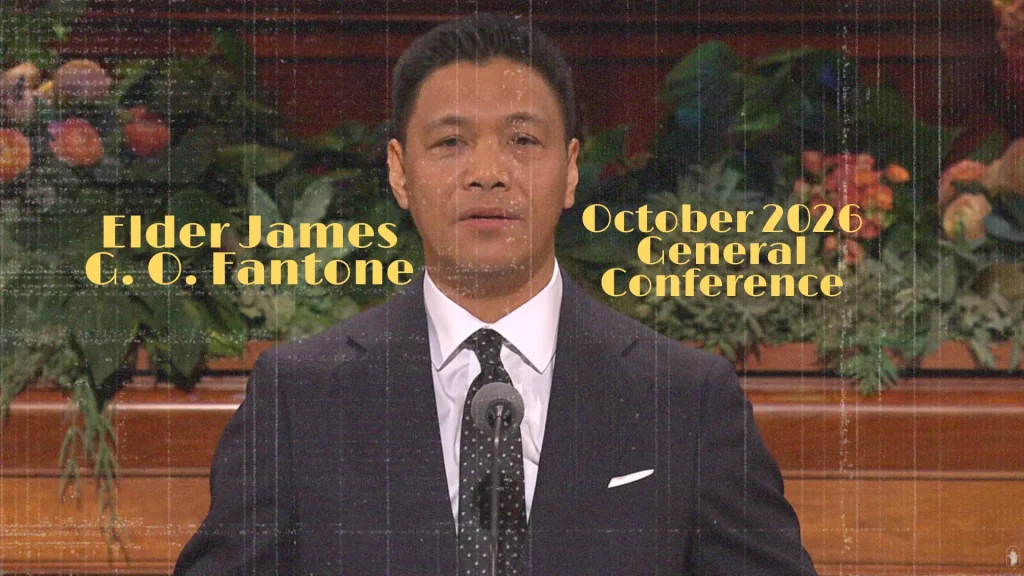
In his General Conference talk, “Take Upon Us His Name,” Elder James G. O. Fantone teaches that taking upon ourselves the name of Jesus Christ is more than a declaration of religious identity.
It is a lifelong commitment to become more like Him.
Through a simple experience involving his daughter’s school enrollment documents, Elder Fantone introduces a powerful distinction between merely adding Christ’s name to our own and truly taking His name upon ourselves through covenant discipleship.
He then turns to the scriptures to explain that taking upon ourselves the Savior’s name requires a determination to serve Him throughout our lives.
And one of the most meaningful ways we serve Jesus Christ is by serving Heavenly Father’s children.
Elder Fantone shares touching experiences from his childhood, when his parents repeatedly opened their modest home to people in need.
He also recounts the transformation he witnessed in missionaries who initially struggled with homesickness and discouragement but eventually developed a deep love for the people they served.
These experiences illustrate an important gospel principle:
As we lose ourselves in the service of others, we do more than bless their lives. Through Jesus Christ, our own hearts can be changed.
Service becomes more than an obligation.
It becomes an expression of our covenant relationship with the Savior and an opportunity to become more like Him.
This message offers meaningful opportunities for Relief Society sisters to reflect on their personal discipleship, their understanding of sacred covenants, and the ways they can serve others with greater love.
It also provides a powerful reminder that Christlike service does not always require extraordinary resources, formal assignments, or public recognition.
Sometimes it begins with recognizing a need and choosing to respond.
How to Use This Relief Society Lesson Help
This lesson help follows Elder Fantone’s talk in chronological order, dividing it into 9 discussion sections according to the major changes in his message.
Each section includes:
- Direct quotations from Elder Fantone’s talk, emphasizing longer, meaningful passages
- A doctrinal explanation and teaching focus
- 10 engaging Relief Society discussion questions
- 5 object lesson ideas with teaching applications
- 10 personal sharing prompts to encourage meaningful experiences and testimony sharing
Altogether, this resource includes 90 discussion questions, 45 object lessons, and 90 personal sharing prompts.
Teachers do not need to use every activity or question.
Instead, prayerfully select the sections that will best meet the needs of the sisters in your Relief Society.
The goal is to help sisters deepen their understanding of what it means to take upon themselves the name of Jesus Christ and recognize how covenant discipleship can transform their hearts.
Section 1: What’s in a Name? Understanding the Sacred Significance of Jesus Christ’s Name
Understanding the Principle
Elder Fantone begins his message by sharing a humorous but meaningful experience involving his youngest daughter’s school enrollment.
After completing their service as mission leaders in the Philippines Antipolo Mission, Elder Fantone and his wife helped their daughter enroll in a home-school program.
While submitting the necessary paperwork, Elder Fantone mistakenly wrote his own name where his daughter’s name was required.
Because his daughter’s name was Amanda James Fantone, he quickly corrected the mistake by adding “Amanda” before the name he had already written.
What initially seemed like an insignificant administrative error eventually prompted a profound spiritual reflection.
Elder Fantone began pondering the question, “What’s in a name?”
His thoughts turned to King Benjamin’s teaching that salvation comes only through the name of Jesus Christ.
This connection introduces an essential doctrine: the name of Jesus Christ is not simply a religious symbol or designation.
It represents the divine identity, authority, mission, and saving power of the Redeemer.
We cannot save ourselves through our own names, accomplishments, or righteousness.
Salvation is possible only through Jesus Christ and His infinite Atonement.
Elder Fantone’s experience creates an opportunity to consider how seriously we understand the name we have covenanted to take upon ourselves.
Direct Quotes from the Talk
“Upon arriving, I handed the paperwork to the registrar. She passed a document back, pointed to a line at the bottom, and asked me to write my daughter’s name and sign above it. However, my mind was preoccupied. I mistakenly thought she had instructed me to write my name.”
“With full confidence, I wrote ‘James Fantone’ and signed. A few seconds later, I realized my error.”
“‘Well,’ I thought, ‘no big deal. This is an easy fix.’ You see, our youngest daughter’s name is Amanda James Fantone. So I simply added ‘Amanda’ right before my own name, and the error was quickly fixed.”
“Later, in a quiet moment of reflection, a profound question and a familiar scripture came to my mind. The question: What’s in a name? And the scripture, from King Benjamin: ‘There shall be no other name given nor any other way nor means whereby salvation can come unto the children of men, only in and through the name of Christ, the Lord Omnipotent’ (Mosiah 3:17).”
Doctrinal Connection: Mosiah 3:17
King Benjamin teaches that salvation comes only through Jesus Christ.
This means that while our individual names represent our personal identities, the name of Jesus Christ represents the only source of redemption and eternal salvation.
Taking His name upon ourselves is therefore inseparable from our relationship with Him.
It involves recognizing our dependence upon His grace and our commitment to follow Him.
10 Relief Society Discussion Questions
- Why do you think Elder Fantone begins his talk with a simple mistake involving his daughter’s name?
- What significance do names carry in our families, cultures, and relationships?
- How is the name of Jesus Christ different from every other name?
- What does Mosiah 3:17 teach about the Savior’s role in our salvation?
- Why is it important to understand that salvation comes through Jesus Christ rather than our own accomplishments?
- How can pondering familiar gospel phrases help us discover deeper spiritual meaning?
- What does the name of Jesus Christ personally represent to you?
- How does understanding the sacredness of His name influence the way we speak about Him?
- Why might the Lord invite us to take His name upon ourselves rather than simply believe in Him?
- How can remembering the significance of the Savior’s name influence our everyday decisions?
5 Object Lesson Ideas
1. The Name Tag
Materials: Blank name tag and marker.
Write a person’s name on the tag.
Discuss how names communicate identity and belonging.
Then display a card reading “Jesus Christ.”
Ask sisters to consider what it means to willingly associate their lives with His name.
Teaching application: Taking upon ourselves the Savior’s name involves more than identification. It invites a covenant commitment to follow Him.
2. The Enrollment Form
Materials: Sample registration form.
Create a simple form with a blank for a name.
Explain Elder Fantone’s experience.
Discuss the difference between adding a name to a document and allowing a covenant relationship with Jesus Christ to influence our lives.
Teaching application: The Savior invites us to something deeper than a symbolic declaration.
3. The Signature
Materials: Paper and pen.
Invite sisters to consider what their signature represents on an important document.
Discuss how signing often communicates personal commitment.
Connect the illustration to sacred covenants.
Teaching application: Covenants involve a willing commitment to Heavenly Father, not merely an outward designation.
4. The Gift Box
Materials: Wrapped gift.
Discuss the gift of salvation made possible through Jesus Christ.
Ask what would happen if someone believed they could provide that gift entirely through their own efforts.
Teaching application: We depend upon the Savior’s Atonement for salvation.
5. The Scripture Card
Materials: Card containing Mosiah 3:17.
Display the scripture and invite sisters to identify its central doctrine.
Teaching application: Jesus Christ is the only source of salvation, and His name carries eternal significance.
10 Personal Sharing Prompts
- Share what the name of Jesus Christ means to you personally.
- Describe an experience when a familiar scripture took on new meaning.
- Tell about a moment when you felt especially grateful for the Savior’s Atonement.
- Share how your understanding of Jesus Christ has deepened over time.
- Describe a time when reflecting on your covenants strengthened your faith.
- Tell about an experience when you felt the Savior’s name brought peace or reassurance.
- Share a scripture about Jesus Christ that has influenced your testimony.
- Describe how your relationship with the Savior affects your identity.
- Tell about someone whose reverence for Jesus Christ has influenced you.
- Share what it means to you that salvation comes only through the Savior.
Section 2: Taking Upon Ourselves His Name Is More Than Religious Identification
Understanding the Principle
After sharing his experience with the enrollment documents, Elder Fantone explains the spiritual contrast he recognized.
Adding a name to a document is simple.
But taking upon ourselves the name of Jesus Christ is not merely a matter of adding a religious label to our identity.
The Savior’s invitation is much more personal and transformative.
Elder Fantone reminds us of the Savior’s warning about people who draw near to Him with their lips while their hearts remain far from Him.
This teaching encourages us to examine the difference between outward religious participation and inward discipleship.
We may attend church, fulfill assignments, or identify ourselves as followers of Jesus Christ.
But the Savior desires more than outward expressions of devotion.
He invites us to give Him our hearts.
Taking upon ourselves His name means allowing our covenant relationship with Him to influence our priorities, desires, decisions, and treatment of others.
It is not simply about being known as a Christian.
It is about becoming more like Christ.
Direct Quotes from the Talk
“Pondering this, I began to see a significant spiritual contrast between my administrative quick fix and our Savior’s sacred invitation.”
“The Savior’s invitation is not merely for us to add His name to our name like a badge of religious affiliation.”
“The Savior warned, ‘[Some] draw near to me with their lips, but their hearts are far from me’ (Joseph Smith—History 1:19).”
“His invitation is for us to take upon us His name.”
“It is an invitation to become more like Him through covenant keeping.”
“The resurrected Lord asked, ‘Have they not read the scriptures, which say ye must take upon you the name of Christ, which is my name?’ (3 Nephi 27:5).”
Doctrinal Connection: 3 Nephi 27:5
When the resurrected Savior appeared to His disciples in the Americas, He taught them the importance of taking upon themselves His name.
This principle connects discipleship with covenant identity.
To take upon ourselves the name of Jesus Christ is to willingly identify with Him and strive to live according to His teachings.
Our commitment should influence both our outward behavior and our inward desires.
10 Relief Society Discussion Questions
- What is the difference between adding Christ’s name to our identity and truly taking His name upon ourselves?
- Why might it be possible to participate in religious activities without giving our hearts fully to the Savior?
- What does the Savior’s warning about lips and hearts teach us about discipleship?
- How can we recognize when our worship has become routine rather than meaningful?
- Why does covenant keeping help us become more like Jesus Christ?
- What does it mean to represent the Savior in our everyday interactions?
- How can our private choices reveal the depth of our commitment to Christ?
- Why is inward conversion more important than outward religious appearance?
- How can we invite the Savior to change our desires rather than simply our behavior?
- What is one area of your life where taking upon yourself Christ’s name could become more meaningful?
5 Object Lesson Ideas
1. The Badge and the Heart
Materials: Name badge and paper heart.
Display the badge and heart side by side.
Discuss how a badge identifies someone outwardly while the heart represents inward commitment.
Teaching application: The Savior invites us to offer Him our hearts, not merely display religious identification.
2. The Empty Cup
Materials: Empty cup.
Display the cup and discuss how something can appear complete on the outside while remaining empty within.
Connect this to outward religious participation without meaningful devotion.
Teaching application: True discipleship requires sincere inward commitment.
3. The Uniform
Materials: Picture of a uniform.
Discuss how wearing a uniform identifies someone with a particular organization.
Ask whether wearing the uniform alone guarantees that someone fulfills its responsibilities.
Teaching application: Taking upon ourselves Christ’s name includes living according to His teachings.
4. The Roots and Leaves
Materials: Picture of a tree.
Discuss how leaves are visible while roots remain hidden.
Connect roots to inward faith and covenant commitment.
Teaching application: Outward discipleship is strengthened by inward conversion.
5. The Reflection Mirror
Materials: Mirror.
Invite sisters to consider whether their choices increasingly reflect the Savior’s character.
Teaching application: Covenant discipleship involves becoming more like Jesus Christ.
10 Personal Sharing Prompts
- Share a time when your understanding of discipleship became more personal.
- Describe an experience when you felt prompted to change your heart.
- Tell about a moment when you realized that outward obedience needed deeper spiritual meaning.
- Share how covenant keeping has influenced your character.
- Describe a time when you tried to represent Jesus Christ through your actions.
- Tell about an experience when the Savior helped change your desires.
- Share what sincere worship means to you.
- Describe a moment when you recognized a difference between routine participation and meaningful discipleship.
- Tell about someone whose Christlike character inspires you.
- Share how you hope to become more like Jesus Christ.
Section 3: Taking Upon Ourselves Christ’s Name Requires a Lifelong Determination to Serve Him
Understanding the Principle
Elder Fantone next asks two important questions.
How do we truly take upon ourselves the name of Jesus Christ?
And how should that commitment appear in our everyday lives?
He turns to the teachings of Moroni for an answer.
Moroni taught that those who were baptized took upon themselves the name of Christ with a determination to serve Him to the end.
This scripture reveals that taking upon ourselves the Savior’s name is not a temporary commitment.
It is a lifelong expression of discipleship.
Elder Fantone then connects this principle to King Benjamin’s teaching that when we serve others, we serve God.
Together, these scriptures establish a powerful relationship between covenant keeping and Christlike service.
We demonstrate our commitment to Jesus Christ by loving and serving Heavenly Father’s children.
This does not mean that service replaces faith, repentance, ordinances, or other covenant responsibilities.
Rather, service is an essential expression of our devotion to the Savior.
Direct Quotes from the Talk
“How do we, as covenant children of God, truly take upon ourselves the name of Jesus Christ? How does that manifest in our daily lives?”
“I love the simple yet profound answer taught by the prophet Moroni.”
“He recorded that none were baptized ‘save they took upon them the name of Christ, having a determination to serve him to the end’ (Moroni 6:3).”
“Taking upon us His name requires a lifelong determination to serve Him.”
“And King Benjamin provided the divine key: ‘When ye are in the service of your fellow beings ye are only in the service of your God’ (Mosiah 2:17).”
Doctrinal Connection: Moroni 6:3 and Mosiah 2:17
Moroni connects baptism with taking upon ourselves the name of Christ and committing to serve Him.
King Benjamin teaches that serving others is a way of serving God.
These teachings remind us that covenant discipleship should influence the way we treat people.
Our commitment to Jesus Christ is demonstrated through love, compassion, and willingness to help others.
10 Relief Society Discussion Questions
- What does Moroni 6:3 teach about the relationship between baptism and service?
- Why is the phrase “determination to serve him to the end” significant?
- How does serving others demonstrate our commitment to Jesus Christ?
- What does King Benjamin’s teaching reveal about the spiritual importance of service?
- Why is service an essential part of covenant discipleship?
- How can we develop a lifelong desire to serve rather than viewing service as an occasional assignment?
- What is the difference between serving out of obligation and serving out of love?
- How can we serve the Savior during seasons when our time, energy, or resources are limited?
- Why is it important to recognize that small acts of kindness are meaningful forms of service?
- How might our approach to ministering change if we consistently remembered that serving others is serving God?
5 Object Lesson Ideas
1. The Covenant Path
Materials: Paper footprints.
Arrange footprints along a path.
Write words such as “Baptism,” “Covenants,” “Service,” and “Discipleship” on the footprints.
Teaching application: Taking upon ourselves Christ’s name involves continuing commitment throughout life.
2. The Helping Hands
Materials: Paper hand cutouts.
Invite sisters to write simple ways they can serve others.
Teaching application: Service is a practical expression of covenant discipleship.
3. The Two Scripture Cards
Materials: Cards containing Moroni 6:3 and Mosiah 2:17.
Display the scriptures side by side.
Ask sisters to identify how the teachings connect.
Teaching application: Our covenant commitment to Christ includes serving Heavenly Father’s children.
4. The Lifelong Timeline
Materials: Long strip of paper.
Draw a timeline representing different stages of life.
Discuss how opportunities to serve may change as circumstances change.
Teaching application: Lifelong discipleship can take different forms during different seasons.
5. The Gift of Time
Materials: Clock.
Discuss how time can be a meaningful gift.
Invite sisters to identify small ways they can offer attention, encouragement, or support.
Teaching application: Service does not always require money or extraordinary resources.
10 Personal Sharing Prompts
- Share how your understanding of baptismal covenants has developed.
- Describe an experience when serving someone strengthened your relationship with Jesus Christ.
- Tell about a time when you felt the Holy Ghost guiding you to serve.
- Share what lifelong discipleship means to you.
- Describe an act of service that had unexpected spiritual significance.
- Tell about someone who demonstrates a consistent commitment to serving others.
- Share how your opportunities to serve have changed during different seasons of life.
- Describe a moment when you recognized that serving someone was an expression of love for God.
- Tell about a time when a small act of kindness made a meaningful difference.
- Share how you hope to become more intentional about serving the Savior.
Section 4: Christlike Service Begins with Recognizing the Needs of Others
Understanding the Principle
After teaching that serving others is an essential expression of covenant discipleship, Elder Fantone shares experiences from his childhood.
He grew up in a modest three-bedroom home.
Despite having limited space, his parents demonstrated a willingness to sacrifice their own comfort to help others.
When his mother learned that a former student could not continue his vocational education because his family could not afford housing near the school, Elder Fantone’s parents opened their home.
They offered the young man the bedroom normally used by Elder Fantone and his brother.
This experience demonstrates that Christlike service begins with recognizing another person’s need.
Elder Fantone’s parents did not wait for someone to assign them a service project.
They saw an opportunity to help and acted.
Their willingness to serve reflected a desire to help another person reach his potential.
This example invites us to consider how we respond when we recognize someone struggling.
Direct Quotes from the Talk
“I was blessed to grow up in a home where serving others was taught through examples.”
“We lived in a modest, three-bedroom bungalow—one room for me and my brother, one for our two older sisters, and one for our parents.”
“I distinctly remember a season when the boys’ room was not available for us to use.”
“My mother, a public school teacher, learned that one of her recently graduated students could not pursue his vocational studies because his family could not afford housing near the school.”
“Desiring to help him fulfill his potential, my parents opened our home and offered him the boys’ room.”
10 Relief Society Discussion Questions
- What stands out to you about Elder Fantone’s parents opening their home to a former student?
- Why is recognizing another person’s needs an important part of Christlike service?
- What sacrifices did Elder Fantone’s family make to help this young man?
- How can service help others develop their potential?
- Why might meaningful service require us to change our own plans or expectations?
- How can parents and other adults teach children to serve through example?
- What opportunities to serve might we overlook because they seem inconvenient?
- How can we recognize needs that people may feel uncomfortable expressing?
- Why is it important to serve in ways that preserve another person’s dignity?
- How can we develop greater willingness to respond when we recognize a need?
5 Object Lesson Ideas
1. The Open Door
Materials: Picture of an open door.
Discuss what an open door can symbolize.
Connect the illustration to Elder Fantone’s parents welcoming someone into their home.
Teaching application: Christlike service often involves making room for others in our lives.
2. The Empty Chair
Materials: Chair.
Place an empty chair near the front of the room.
Ask sisters to consider who might need encouragement, friendship, or support.
Teaching application: Recognizing needs is the first step toward meaningful service.
3. The Small House
Materials: Picture or drawing of a small house.
Discuss how Elder Fantone’s family served despite limited space.
Teaching application: Generosity is not determined solely by the amount of resources we possess.
4. The Backpack
Materials: Backpack.
Place several books inside to represent burdens.
Invite sisters to consider ways they can help lighten another person’s load.
Teaching application: Service can help others move forward when challenges make progress difficult.
5. The Helping Hands
Materials: Paper hand cutouts.
Invite sisters to write acts of service that do not require money.
Teaching application: Every disciple can find meaningful ways to help others.
10 Personal Sharing Prompts
- Share a time when someone recognized a need you had not expressed.
- Describe an experience when you sacrificed something to help another person.
- Tell about someone who taught you the importance of service through example.
- Share how your family or upbringing influenced your understanding of service.
- Describe a time when helping someone required flexibility.
- Tell about an experience when you witnessed extraordinary generosity.
- Share how serving someone helped you better understand their circumstances.
- Describe a moment when you felt prompted to offer help.
- Tell about someone whose kindness helped you move forward during a difficult time.
- Share what Elder Fantone’s family example teaches you about Christlike love.
Section 5: Making Room for Others Is an Expression of Christlike Love
Understanding the Principle
Elder Fantone continues describing the example of his parents.
On another occasion, their family learned about vulnerable children who needed a safe place to stay.
Once again, his parents opened their home.
This time, the children stayed in the bedroom normally used by Elder Fantone’s sisters.
Elder Fantone then shares a touching reflection.
He believes that if Mary and Joseph had come to his parents’ home in Bethlehem seeking a place for the Savior’s birth, his parents would have offered their own room.
This statement reveals the spirit behind their service.
They were willing to make room for others because they recognized their needs and desired to help.
Christlike service is not always convenient.
It may require sacrifice, flexibility, patience, or personal discomfort.
But Elder Fantone’s experience reminds us that serving others can become a sacred expression of love for Jesus Christ.
His family’s example should inspire generosity without suggesting that everyone must provide housing or make sacrifices beyond their capacity. Service should be guided by wisdom, safety, available resources, and personal revelation.
Direct Quotes from the Talk
“During another season, it was the girls’ room that was occupied by someone else.”
“When the Relief Society president in the ward spoke of a vulnerable family whose children desperately needed a safe place to stay, my parents, without hesitation, opened our doors, and some of the children indefinitely moved into our sisters’ room.”
“I believe with all my heart that if my parents had lived in Bethlehem when Joseph was searching for a place for Mary to give birth, and if by chance they knocked on our door, and if the boys’ and girls’ rooms were occupied, my parents would have gladly offered their room.”
10 Relief Society Discussion Questions
- What does Elder Fantone’s second childhood experience teach about generosity?
- Why is the willingness to make room for others an important expression of Christlike love?
- What spiritual meaning do you find in Elder Fantone’s comparison to Mary and Joseph?
- How can we make room for others without necessarily opening our physical homes?
- Why might meaningful service require us to sacrifice personal convenience?
- How can Relief Society sisters help individuals and families who feel vulnerable or unsupported?
- What role does compassion play in recognizing when someone needs a safe place?
- How can we balance generosity with the responsibilities and limitations of our own families?
- What can we learn from Elder Fantone’s parents about responding to opportunities for service?
- How can we develop hearts that are more willing to welcome and include others?
5 Object Lesson Ideas
1. The Full Table
Materials: Several chairs around a table.
Arrange the chairs closely together.
Discuss how making room for another person may require adjustments.
Teaching application: Christlike love sometimes requires us to change our expectations to include others.
2. The Open Door
Materials: Picture of a door.
Discuss how an open door can represent hospitality, friendship, and inclusion.
Teaching application: We can welcome others through many forms of service.
3. The Extra Place Setting
Materials: Plate, cup, and utensils.
Set an additional place at a table.
Discuss how making room for someone can communicate belonging.
Teaching application: Inclusion is a meaningful expression of Christlike love.
4. The Bethlehem Picture
Materials: Picture of Mary, Joseph, and the infant Jesus.
Discuss Elder Fantone’s reflection about what his parents would have done.
Teaching application: Serving those in need can reflect our love for the Savior.
5. The Expanding Circle
Materials: String.
Create a small circle with the string.
Gradually enlarge it.
Discuss how our circle of concern can expand to include more people.
Teaching application: Christlike charity invites us to look beyond our immediate relationships.
10 Personal Sharing Prompts
- Share a time when someone made room for you in their life.
- Describe an experience when you helped someone feel welcome.
- Tell about someone who demonstrates generous hospitality.
- Share how your understanding of Christlike inclusion has grown.
- Describe a time when you adjusted your plans to help another person.
- Tell about an experience when you felt included during a difficult season.
- Share how you have seen Relief Society sisters support vulnerable individuals.
- Describe a moment when an act of hospitality strengthened a relationship.
- Tell about someone whose generosity has influenced your discipleship.
- Share one way you could make more room for others in your life.
Section 6: Service Is Part of the Eternal Life We Are Becoming Prepared to Live
Understanding the Principle
After sharing the examples of his parents, Elder Fantone quotes President Marion G. Romney.
President Romney teaches that service is not simply something we endure during mortality in order to qualify for celestial blessings.
Rather, service is part of the very nature of exalted life.
This teaching expands our understanding of why Heavenly Father invites us to serve.
Service is not merely a requirement to complete.
It is an opportunity to develop Christlike attributes.
As we serve, we can become more charitable, patient, compassionate, humble, and attentive to others.
We begin to develop the kind of character that reflects the Savior.
This principle also changes how we view service assignments.
Instead of asking only what must be accomplished, we can ask what Heavenly Father is helping us become.
Direct Quote from the Talk
“President Marion G. Romney taught this eternal truth: ‘Service is not something we endure on this earth so we can earn the right to live in the celestial kingdom. Service is the very fiber of which an exalted life in the celestial kingdom is made.’”
Doctrinal Connection: Becoming Like Jesus Christ
President Romney’s teaching reminds us that the gospel is not simply about completing a list of religious responsibilities.
It is about becoming more like Heavenly Father and Jesus Christ.
Service helps us develop divine attributes because it invites us to love others as the Savior loves them.
The purpose is not to earn salvation through service.
Salvation and exaltation are possible through Jesus Christ, His Atonement, and the covenant path He provides.
Our service becomes an expression of faith and a means of spiritual transformation.
10 Relief Society Discussion Questions
- What stands out to you about President Romney’s statement?
- How does this teaching change the way we understand service?
- Why is service more than a requirement or responsibility?
- What Christlike attributes can develop through serving others?
- How can service help prepare us for eternal life?
- What is the difference between enduring service and finding joy in service?
- How can we avoid viewing service as a checklist of completed assignments?
- Why is becoming more like Jesus Christ more important than simply accomplishing tasks?
- How can we develop a genuine love for serving others?
- What might change in our Relief Society if we viewed service as part of our eternal development?
5 Object Lesson Ideas
1. The Fabric
Materials: Piece of woven fabric.
Show the fabric and discuss how individual threads form something stronger together.
Connect the illustration to President Romney’s phrase “the very fiber.”
Teaching application: Christlike service is woven into the character we are striving to develop.
2. The Checklist
Materials: Checklist.
Write several service activities on the list.
Discuss the difference between completing tasks and developing love.
Teaching application: Service should help transform our hearts, not merely fill our schedules.
3. The Growing Plant
Materials: Plant.
Discuss how consistent care allows growth.
Teaching application: Repeated opportunities to serve can help us develop Christlike attributes.
4. The Heart
Materials: Paper heart.
Write words such as “Charity,” “Patience,” “Compassion,” and “Humility” on the heart.
Discuss how service can help develop these qualities.
Teaching application: Christlike service shapes our character.
5. The Mirror
Materials: Mirror.
Invite sisters to consider what attributes of Jesus Christ they hope to reflect more fully.
Teaching application: Service provides opportunities to become more like the Savior.
10 Personal Sharing Prompts
- Share how service has influenced your character.
- Describe an experience when serving someone helped you develop patience.
- Tell about a time when service brought unexpected joy.
- Share how your understanding of charity has changed.
- Describe someone who seems to find genuine happiness in serving others.
- Tell about an experience when service helped you become more compassionate.
- Share how a calling or assignment influenced your spiritual growth.
- Describe a moment when you realized that service was changing you.
- Tell about someone whose life reflects Christlike charity.
- Share what President Romney’s teaching means to you personally.
Section 7: Serving Despite Discouragement Can Lead to a Change of Heart
Understanding the Principle
Elder Fantone next shares experiences from his service as a mission president.
During interviews with new missionaries, he frequently encountered young men and women who were struggling with homesickness, loneliness, and discouragement.
Some questioned whether they could continue serving.
Yet despite those feelings, they chose to pray, put on their missionary name tags, and continue their work.
Over time, Elder Fantone witnessed a remarkable transformation.
The same missionaries who once felt that their missions were moving painfully slowly eventually expressed deep love for the people they served.
They no longer wanted their missions to end.
Elder Fantone asks whether time itself had changed.
His answer is simple.
The missionaries had changed.
This example illustrates how Christlike service can transform our perspective.
The circumstances may remain difficult, but our hearts can become more focused on loving others.
It is also important to recognize that not every person experiences this transformation on the same timeline. Some missionaries and other disciples continue to face significant emotional or physical challenges. Seeking appropriate support is compatible with faithful service.
Direct Quotes from the Talk
“I witnessed this same courageous service in our remarkable full-time missionaries.”
“As a mission president, I held regular interviews. In their first few months, it was not uncommon for some to sit across from me in tears and say, ‘President, I am so sad, lonely, and homesick. The days feel so long and time is so slow; I don’t even know if I can last for three more months.’”
“Yet these valiant missionaries got on their knees, put on their name tags, and went out to serve anyway.”
“A year later those exact same missionaries would sit in my office with glowing faces and say, ‘President, I am so happy! I love the people, and I love this work. But time is moving too fast—I don’t want this to end!’”
“Every time I witnessed this transformation, I marveled. ‘Did time actually change?’”
“You and I know the answer. Time did not change—the missionaries did.”
“The work did not change—the workers did.”
“Our missionaries changed.”
10 Relief Society Discussion Questions
- What stands out to you about the missionaries’ experiences?
- Why might serving others be difficult when we feel discouraged or lonely?
- What does it mean to continue serving even when our feelings have not yet changed?
- How can prayer help us find strength during difficult responsibilities?
- Why is Elder Fantone’s statement “Time did not change—the missionaries did” so meaningful?
- How can serving others change the way we view our circumstances?
- What role does love play in transforming our experience with service?
- Why is it important to be patient with ourselves during spiritual growth?
- How can we support people who are struggling with responsibilities or callings?
- What does this example teach about the relationship between perseverance, service, and conversion?
5 Object Lesson Ideas
1. The Clock
Materials: Clock.
Display the clock.
Discuss how time moves consistently even though our experience of it can feel different.
Connect the illustration to the missionaries’ transformation.
Teaching application: Service can change our perspective even when our circumstances remain similar.
2. The Before-and-After Cards
Materials: Two cards.
Write “Discouragement” on one card and “Love for Others” on the other.
Discuss how the missionaries’ focus changed over time.
Teaching application: Christlike service can help transform our desires.
3. The Missionary Name Tag
Materials: Picture or example of a missionary name tag.
Discuss what the name tag represents.
Ask why the missionaries’ decision to continue serving was meaningful.
Teaching application: Taking upon ourselves Christ’s name involves acting upon our commitment even during difficult moments.
4. The Growing Plant
Materials: Small plant.
Discuss how growth takes time and consistent nourishment.
Teaching application: Spiritual transformation is often gradual.
5. The Perspective Window
Materials: Paper frame.
Hold the frame around different objects in the room.
Discuss how changing our focus can influence what we notice.
Teaching application: Developing love for others can change how we experience service.
10 Personal Sharing Prompts
- Share a time when serving others changed your perspective.
- Describe an experience when you continued fulfilling a responsibility despite discouragement.
- Tell about a calling or assignment that became more meaningful over time.
- Share how prayer has helped you persevere through challenges.
- Describe a moment when your love for others increased through service.
- Tell about someone whose dedication to serving inspired you.
- Share an experience when something difficult eventually became meaningful.
- Describe a time when your attitude changed even though your circumstances remained similar.
- Tell about a moment when you recognized spiritual growth in yourself.
- Share what the missionaries’ transformation teaches you about discipleship.
Section 8: Losing Ourselves in Christlike Service Can Bring a Mighty Change of Heart
Understanding the Principle
After sharing the transformation of the missionaries, Elder Fantone explains the doctrine behind their experiences.
He teaches that when we genuinely take upon ourselves the name of Jesus Christ and lose ourselves in serving others, something miraculous can happen.
Our hearts can change.
He connects this transformation to Alma the Younger’s teaching about experiencing a mighty change of heart.
This change is deeper than simply becoming happier or more satisfied with our circumstances.
It involves genuine conversion.
As we turn toward Jesus Christ and serve His children, our desires, priorities, and attitudes can become more aligned with His.
Elder Fantone then quotes King Benjamin’s question about knowing a master whom we have not served.
This scripture invites us to consider how service strengthens our relationship with the Savior.
We come to know Jesus Christ not only by learning about Him but also by striving to follow His example.
Direct Quotes from the Talk
“When we genuinely take upon ourselves the name of Jesus Christ by losing ourselves in the service of others, something miraculous happens.”
“We experience what Alma the Younger referred to as a ‘mighty change’ in our hearts (Alma 5:14)—the kind of change that leads to true conversion and not merely personal elation.”
“King Benjamin asked this penetrating question: ‘For how knoweth a man the master whom he has not served, and who is a stranger unto him, and is far from the thoughts and intents of his heart?’ (Mosiah 5:13).”
Doctrinal Connection: Alma 5:14 and Mosiah 5:13
Alma asks whether we have experienced a mighty change in our hearts.
King Benjamin teaches that we cannot truly know a master whom we have not served.
Together, these scriptures invite us to examine the relationship between service and conversion.
Christlike service can help us develop a deeper love for Jesus Christ because we are actively seeking to follow His example.
As we serve, we can become more aware of His compassion, patience, humility, and love.
Through His grace, our hearts can gradually become more like His.
10 Relief Society Discussion Questions
- What does it mean to experience a mighty change of heart?
- How is true conversion different from temporary happiness?
- Why can serving others deepen our relationship with Jesus Christ?
- What does King Benjamin’s question teach about coming to know the Savior?
- How can service change our desires and priorities?
- Why is it important to recognize that spiritual transformation comes through Jesus Christ?
- What is the relationship between charity and conversion?
- How can we tell whether service is helping us become more Christlike?
- Why might spiritual change happen gradually rather than immediately?
- What can we do to invite a greater change of heart through discipleship?
5 Object Lesson Ideas
1. The Changed Heart
Materials: Two paper hearts.
Write words such as “Self-Focused” and “Christ-Focused” on separate hearts.
Discuss how the Savior can help change our desires.
Teaching application: Conversion involves transformation of the heart.
2. The Clay
Materials: Modeling clay.
Shape the clay into one form, then reshape it.
Discuss how clay can be changed through careful work.
Clarify that spiritual transformation involves our agency and the Savior’s grace.
Teaching application: Jesus Christ can help us become different from who we were before.
3. The Mirror
Materials: Mirror.
Invite sisters to consider how serving others helps them reflect the Savior’s character.
Teaching application: Christlike service provides opportunities for spiritual transformation.
4. The Growing Seed
Materials: Seed and plant.
Discuss how growth begins small and develops over time.
Teaching application: Conversion can occur through gradual, consistent discipleship.
5. The Scripture Connection
Materials: Cards containing Alma 5:14 and Mosiah 5:13.
Display both scriptures.
Ask sisters to explain how they relate to one another.
Teaching application: Serving Jesus Christ and experiencing conversion are closely connected.
10 Personal Sharing Prompts
- Share a time when service changed your heart.
- Describe an experience when you felt closer to Jesus Christ through helping someone.
- Tell about a moment when your desires became more aligned with the Savior’s teachings.
- Share how your understanding of conversion has developed.
- Describe a time when you recognized spiritual growth in yourself.
- Tell about someone whose service reflects deep conversion.
- Share how the Savior has helped change your attitude toward another person.
- Describe an experience when serving someone increased your compassion.
- Tell about a time when you recognized that discipleship was changing your priorities.
- Share what experiencing a mighty change of heart means to you.
Section 9: Take Upon His Name by Lifting, Loving, and Serving Others
Understanding the Principle
Elder Fantone concludes his message by returning to the central invitation of his talk.
The Savior does not simply invite us to add His name to our identity.
He invites us to take His name upon ourselves through sacred covenants and a lifelong commitment to serve.
Elder Fantone emphasizes that this commitment should involve our whole souls.
We are invited to serve with all our heart, might, mind, and strength.
He then bears his personal testimony of Jesus Christ and expresses his determination to serve Him faithfully to the end.
His concluding witness reminds us that Christlike service is not merely a way to accomplish good things.
It is part of how we come to know the Savior and discover our divine purpose.
As we lose ourselves in His service, we can find Him and come to understand more fully who we are as His disciples.
Direct Quotes from the Talk
“My beloved brothers and sisters, the Savior’s invitation is not for us to merely add His name to our names.”
“His invitation is for us to take upon us His name by covenant and to serve Him with all our heart, might, mind, and strength—by lifting, loving, and serving our fellow men.”
“I stand before you today as a witness of His living reality.”
“I have made a sacred covenant to take upon myself the name of Jesus Christ, and I am determined to strive to serve Him faithfully to the end.”
“I testify that He lives, that this is His restored Church, and that as we lose our lives in His service, we will find Him and we will find ourselves.”
10 Relief Society Discussion Questions
- What does it mean to serve Jesus Christ with all our heart, might, mind, and strength?
- How does Elder Fantone’s conclusion summarize the central message of his talk?
- Why is taking upon ourselves Christ’s name a lifelong commitment?
- What does it mean to lose ourselves in the service of others?
- How can serving others help us discover our divine purpose?
- Why is it important to serve with love rather than simply fulfill responsibilities?
- How can we make Christlike service a more natural part of our daily lives?
- What does Elder Fantone’s testimony teach about the relationship between service and knowing Jesus Christ?
- How can we remain committed to serving the Savior during difficult seasons?
- What is one way you feel inspired to more fully take upon yourself the name of Jesus Christ?
5 Object Lesson Ideas
1. The Name of Christ Card
Materials: Card reading “Jesus Christ.”
Display the card.
Invite sisters to reflect on what it means to take His name upon themselves.
Teaching application: Covenant discipleship involves a lifelong commitment to follow the Savior.
2. The Heart, Hands, and Mind
Materials: Paper heart, hand cutout, and picture of a brain.
Use the objects to represent serving with our heart, might, mind, and strength.
Teaching application: Christlike service involves our desires, efforts, thoughts, and abilities.
3. The Helping Hands
Materials: Paper hand cutouts.
Invite sisters to write one act of service they feel inspired to offer.
Teaching application: Taking upon ourselves Christ’s name should influence our actions.
4. The Mirror
Materials: Mirror.
Invite sisters to consider how their discipleship helps them become more like Jesus Christ.
Teaching application: Serving others can help us discover and develop our divine potential.
5. The Covenant Commitment Card
Materials: Index cards.
Invite sisters to privately write one way they hope to serve Jesus Christ more intentionally.
Teaching application: Spiritual impressions can lead to meaningful action.
10 Personal Sharing Prompts
- Share what taking upon yourself the name of Jesus Christ means to you.
- Describe an experience when serving others strengthened your testimony.
- Tell about a time when you felt the Savior’s love while helping someone.
- Share how covenant keeping has influenced your priorities.
- Describe a moment when you recognized your divine purpose through service.
- Tell about someone whose life reflects a commitment to Jesus Christ.
- Share how your desire to serve has changed over time.
- Describe an experience when you felt the Savior guiding your efforts.
- Tell about a time when service helped you understand yourself more clearly.
- Share one way you hope to more fully represent Jesus Christ in your daily life.
Conclusion: Taking Upon Ourselves the Name of Jesus Christ Changes Who We Become
Elder James G. O. Fantone’s General Conference message, “Take Upon Us His Name,” reminds us that covenant discipleship is much more than identifying ourselves as followers of Jesus Christ.
It is an invitation to become more like Him.
Through a simple mistake involving his daughter’s enrollment documents, Elder Fantone introduces a meaningful distinction between adding a name and truly taking a name upon ourselves.
The Savior does not simply ask us to display His name.
He invites us to honor it through our covenants, our choices, and our willingness to serve others.
Elder Fantone teaches that taking upon ourselves the name of Jesus Christ requires a lifelong determination to serve Him.
And as King Benjamin taught, one of the most meaningful ways we serve God is by serving His children.
The examples of Elder Fantone’s parents demonstrate that Christlike service often involves recognizing a need and willingly making sacrifices to help someone else.
Their modest home became a place of refuge and opportunity because they chose to prioritize the needs of others.
The missionaries Elder Fantone served with demonstrate another important principle.
As we continue serving, even when it feels difficult, our hearts can begin to change.
The work itself may not become easier.
Our circumstances may not immediately improve.
But through Jesus Christ, our desires, attitudes, and love for others can deepen.
Elder Fantone’s statement captures this transformation:
“Time did not change—the missionaries did. The work did not change—the workers did. Our missionaries changed.”
This is one of the central messages of his talk.
Christlike service does not simply change what we do. Through the Savior’s grace, it can change who we become.
What This Means for Relief Society Sisters
This message offers meaningful encouragement for sisters in every season of life.
Some may be serving in demanding Church callings.
Others may be caring for young children, supporting aging parents, working long hours, or facing personal challenges that limit their time and energy.
Some may have abundant opportunities to serve outside their homes.
Others may be offering quiet, consistent service that few people ever notice.
Elder Fantone’s message reminds us that the spiritual significance of service is not measured solely by its visibility or scale.
A sincere act of compassion can be an expression of our covenant commitment to Jesus Christ.
Service may involve offering encouragement, listening to someone who is struggling, helping a neighbor, supporting a family member, or responding to a prompting from the Holy Ghost.
What matters is the love and discipleship behind our actions.
As we seek to serve with greater charity, we invite the Savior to change our hearts.
Using This Lesson Help in Relief Society
This lesson provides opportunities for meaningful discussion about baptismal covenants, Christlike service, charity, sacrifice, and spiritual conversion.
Teachers can use the discussion questions to help sisters explore what it means to take upon themselves the name of Jesus Christ.
The object lessons can illustrate the difference between outward religious identification and inward commitment.
The personal sharing prompts can encourage sisters to reflect upon experiences when serving others brought them closer to the Savior.
Because service can sometimes become associated with exhaustion, guilt, or unrealistic expectations, teachers should emphasize that faithful discipleship looks different during different seasons of life.
The purpose of this lesson is not to encourage sisters to take on more responsibilities than they can reasonably fulfill.
Instead, it is to help them recognize the spiritual meaning of the service they already offer and prayerfully consider how they can become more like Jesus Christ.
A Final Invitation for Your Relief Society Lesson
Consider concluding the lesson by inviting sisters to reflect upon three questions:
1. Am I simply identifying myself as a follower of Jesus Christ, or am I allowing my covenants to change my heart?
2. Who in my life might need to experience the Savior’s love through an act of service?
3. How can I more fully take upon myself the name of Jesus Christ in my everyday choices?
Allow a few moments for quiet reflection.
You might invite sisters to write down the name of someone they feel inspired to serve or a specific way they hope to become more Christlike.
Then conclude with Elder Fantone’s testimony:
“I testify that He lives, that this is His restored Church, and that as we lose our lives in His service, we will find Him and we will find ourselves.”
This testimony reminds us that the purpose of covenant discipleship is not merely to accomplish good works.
It is to come unto Jesus Christ and become more like Him.
As we lift, love, and serve others, we can develop a deeper relationship with the Savior and experience the mighty change of heart that comes through His grace.
Taking upon ourselves the name of Jesus Christ is more than something we promise. It is a sacred commitment that can shape how we live, how we love, and who we become.


Leave a Reply